

P1720 on 2008-2012 Ford Escape: Vehicle Speed Circuit Malfunction Explained
On a 2009-2012 Ford Escape with the 6F35 transmission, this code almost always points to a failed Output Speed Sensor (OSS) that is integrated into the internal molded lead frame. This is a complex repair requiring removal of the valve body, costing $600-$900. For 2008 models with the CD4E transmission, it's often a simpler external sensor or wiring issue.
- P1720 on a Ford Escape means there's a fault in the speedometer's speed signal circuit.
- The repair difficulty depends heavily on the model year. 2009-2012 models have an internal sensor that is much harder to replace than the external sensor on most 2008 models.
- Symptoms are serious and affect drivability; expect an erratic speedometer and harsh transmission shifting.
- Do not confuse this with an ABS wheel speed sensor issue; P1720 points specifically to the transmission's output speed sensing circuit.
- Due to the complexity of the repair on 2009-2012 models, professional diagnosis and service are strongly recommended.
What's Unique About the 2008-2012 Ford Escape
The 2008-2012 Ford Escape spans a critical transmission change. The 2008 models typically use the older 4-speed CD4E transmission, where the Vehicle Speed Sensor (VSS) is an externally accessible part. However, from 2009-2012, the Escape was equipped with the 6F35 6-speed automatic. On this newer transmission, the Output Speed Sensor (OSS) that triggers this fault is located internally. More specifically, it is often part of a larger component called the molded lead frame, which is bolted to the valve body inside the transmission. This design makes the repair significantly more labor-intensive than a simple external sensor swap.
Symptoms You May Notice
- Inoperative or erratic speedometer (may read zero while driving)
- Harsh or delayed transmission shifting
- Check Engine light is on
- Wrench light may be illuminated
- ABS and/or Traction Control warning lights may illuminate
- Cruise control not working
- Vehicle may feel like it's starting in the wrong gear (e.g., 3rd or 5th)
- Sudden, hard kick or bang when shifting into Drive or Reverse
- Replacing the ABS wheel speed sensors. While these also measure speed, the P1720 code on a Ford specifically points to the transmission's output speed sensor circuit used for the speedometer and shift control, not the ABS sensors.
Most Likely Causes
- Failed Internal Molded Lead Frame / Output Speed Sensor (OSS) 🔴 High Probability → Shop Transmission Valve Body This applies specifically to 2009-2012 models with the 6F35 transmission. The sensor and its circuitry are integrated into a 'molded lead frame' inside the transmission, constantly exposed to hot fluid, which leads to electronic failure. Ford issued TSB 10-1-7 and later the superseding TSB 13-6-8 for related codes (P0720, P0722) on this transmission due to failures of this component.
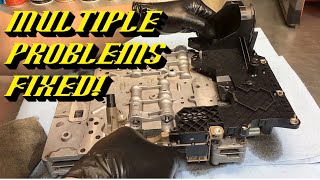
How to confirm: A professional technician will use a scan tool to monitor the OSS signal. If the signal is absent or erratic while the vehicle is moving, and external wiring is confirmed to be good, the internal lead frame assembly is the likely culprit. The presence of codes P0720 and P0722 together strongly points to this internal failure. 🎬 See this molded lead frame replacement walkthrough
Typical fix: Replace the molded lead frame assembly, which contains the OSS. This requires draining the transmission fluid, removing the oil pan, and then removing the valve body to access the part. The transmission fluid and pan gasket must also be replaced.
Est. part cost: $90-$150 for the lead frame assembly - Failed External Vehicle Speed Sensor (VSS) 🟡 Medium Probability → Shop Drive Shaft Sensor This is the common cause on 2008 models with the 4-speed CD4E automatic transmission. Being mounted externally, these sensors are exposed to the elements, making them susceptible to corrosion and physical damage.
How to confirm: Locate the sensor on the outside of the transaxle. Inspect the sensor and its connector for damage or corrosion. The sensor's signal can be tested with a capable scan tool or an oscilloscope. It is a two-wire sensor.
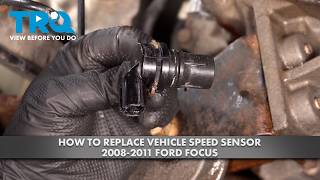
Typical fix: Unbolt and replace the faulty sensor. This is a relatively simple DIY repair that involves removing the driver-side splash shield for access. 🎬 Watch: How to replace an external speed sensor
Est. part cost: $30-$70 - Damaged Wiring or Connectors 🟡 Medium Probability Wiring running to the transmission can be damaged by road debris, heat from the exhaust, or corrosion over time. This can affect both internal (at the main bulkhead connector) and external sensor types.
How to confirm: Perform a visual inspection of the wiring harness leading to the transmission speed sensor(s). Check for chafed, broken, or corroded wires. Perform a continuity test on the signal and ground wires from the sensor connector to the PCM.
Typical fix: Repair or replace the damaged section of the wiring harness.
Est. part cost: $10-$50
Rare But Worth Checking
- Faulty Instrument Cluster: The code specifically mentions the 'Meter' circuit. In some Ford systems, an internal failure within the instrument cluster can disrupt the speed signal processing and trigger this code. This is rare and should only be considered after the sensor and wiring have been thoroughly ruled out. Some owners report issues with the LCD screen on the cluster failing, though not always tied to this specific code.
- Powertrain Control Module (PCM) Failure: → Shop Engine Control Module (ECM) While very rare, the PCM itself can fail and be unable to correctly process the speed sensor signal. This is a last resort after all other possibilities have been exhausted and should be diagnosed by a professional.
Diagnosis Steps
- Scan for all codes in the PCM and TCM. Note any other codes that are present, especially P0720 or P0722, as they strongly indicate a sensor/circuit failure.
- Determine the transmission type. Check if the vehicle is a 2008 (likely 4-speed CD4E) or a 2009-2012 (likely 6-speed 6F35) to determine if the sensor is internal or external.
- Use a scan tool with live data capability to monitor the Vehicle Speed Sensor (VSS) or Output Speed Sensor (OSS) PID. Check if the reading corresponds to the actual speed of the vehicle while driving.
- If the sensor is external (2008 models), inspect the sensor and its electrical connector for damage, corrosion, or loose connections. Test the sensor's resistance and voltage output with a multimeter.
- For all models, inspect the main transmission harness connector for pushed-out pins, corrosion, or damage before assuming an internal fault.
- Test the wiring. Check for continuity, shorts to ground, and shorts to power on the wires between the sensor connector and the control module.
- If the sensor is internal (2009-2012 models) and the external wiring is confirmed to be good, the internal molded lead frame is the most likely cause. This requires internal transmission work to replace.
- As a final step if all else fails, the instrument cluster and PCM circuits should be professionally tested.
Parts You'll Likely Need
- Transmission Molded Lead Frame
(OEM #9L8Z-7G276-A (superseded by FD8Z-7G276-B))— This is the most common component to fail on 2009-2012 models with the 6F35 transmission. It contains the OSS and its internal wiring.
Trusted brands: Motorcraft
OEM price range: $90-$150
Aftermarket price range: $70-$120 - External Vehicle Speed Sensor (VSS/OSS) — This is the most common part to fail on the 2008 model with the CD4E transmission.
Trusted brands: Motorcraft, Standard Motor Products (SMP), Delphi
OEM price range: $50-$90
Aftermarket price range: $30-$70 - Automatic Transmission Fluid — Required when replacing an internal speed sensor, as the transmission pan must be dropped. The 6F35 transmission requires Motorcraft MERCON LV fluid.
Trusted brands: Motorcraft MERCON LV
OEM price range: $8-$12 per quart
Aftermarket price range: $6-$10 per quart - Transmission Pan Gasket — Must be replaced anytime the transmission pan is removed to prevent leaks.
Trusted brands: Motorcraft, Fel-Pro, Mahle
OEM price range: $20-$40
Aftermarket price range: $10-$25
Related Codes That Often Appear With This One
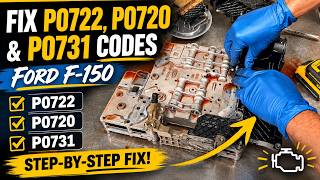
- P0720 — This is a generic OBD-II code for 'Output Speed Sensor Circuit Malfunction'. It often appears alongside P1720 as they both point to a failure of the same sensor or circuit.
- P0722 — This code means 'Output Speed Sensor No Signal'. It indicates a complete loss of the signal, often caused by a failed sensor or a complete break in the wiring, and is frequently seen with P1720 when the internal lead frame fails.
Technical Service Bulletins (TSBs) & Recalls
- TSB 10-1-7: Addresses codes P0720 and P0722 on 2009-2010 Escapes with the 6F35 transmission, pointing to a faulty internal Output Speed Sensor or lead frame connector.
Platform-Specific Known Issues
- For 2009-2012 models with the 6F35 transmission, the failure of the internal molded lead frame is a well-documented issue. Ford issued Technical Service Bulletin (TSB) 10-1-7 for codes P0720 and P0722, which directly relates to an open circuit in the internal OSS sensor or the main control lead frame. This was later superseded by TSB 13-6-8, which also addresses these codes and symptoms like starting in 5th gear, and calls for the replacement of the molded lead frame.
Mechanic-Grade Diagnostic Values
- CD4E (2008) VSS Resistance — expected: 560 - 680 Ohms. Failure: A reading outside this range indicates a faulty sensor.
- 6F35 (2009-2012) Shift Solenoid Resistance (SSA, SSB, SSC, SSD, TCC, LPC) — expected: 4.00 - 5.89 Ohms at 68-86°F (20-30°C). Failure: Resistance outside this range indicates a faulty solenoid. While not the OSS, this is a key test when the valve body is removed for lead frame replacement.
- Wiring Continuity Test (PCM to Transmission Connector) — expected: < 5 Ohms. Failure: Resistance greater than 5 ohms indicates an open or high-resistance circuit that needs repair.
Scan Tool Commands That Help
- Ford IDS / FORScan: Clear Transmission Adaptive Tables — This is a mandatory step after replacing the transmission, valve body, or molded lead frame on the 6F35 transmission. Failure to reset the adaptive memory can result in poor shift quality and continued issues.
- Ford IDS / FORScan: Transmission Characterization Update (Solenoid Strategy Programming) — Required when a new transmission or valve body is installed. The new component will have a new 7-digit Solenoid Body ID and 13-digit Solenoid Body Strategy that must be programmed into the PCM. This is NOT typically required for only replacing the lead frame.
Wiring & Ground Locations
- 6F35 (2009-2012) PCM Connector C175T Pins — At the Powertrain Control Module (PCM), which is typically located on the firewall in the engine bay.. These are the specific pins for the Output Speed Sensor (OSS) circuit. Pin 25 (Brown/Green wire) is the OSS signal, and Pin 36 (Brown/Blue wire) is the signal return. Testing for continuity and voltage at these pins can isolate a wiring fault from an internal transmission failure.
- G104 (example ground) — Typically located on the engine block or transmission bell housing.. A poor ground connection for the PCM or transmission can cause erratic sensor readings and trigger various codes, including P1720. It's crucial to ensure all ground points are clean and tight, especially after a transmission swap or major engine work.
OEM Part Supersession History
9L8Z-7G276-A→FD8Z-7G276-B— The original molded lead frame design was prone to failure due to heat and vibration causing cracks in the internal circuits for the speed sensors. The updated part is presumed to have improved materials or construction to enhance durability.
Model Year Variations Within This Range
- 2008: Primarily uses the 4-speed CD4E transmission with an external, easily accessible Vehicle Speed Sensor (VSS). Diagnosis focuses on the external sensor and its wiring.
- 2009-2012: Uses the 6-speed 6F35 transmission. The Output Speed Sensor (OSS) is internal, integrated into the molded lead frame which is attached to the valve body. This makes the repair significantly more complex and labor-intensive.
Diagnostic Flowchart
Other Known Issues on This Vehicle
Issues unrelated to this code that are worth knowing about as an owner of this generation:
- Electric Power Steering (EPS) Failure 🔴 High — Very common across the generation. Can occur intermittently at any mileage. A recall (14S05) was issued. (Ref: NHTSA Recall 14V284)
- Rear Shock Tower / Wheel Well Rust 🔴 High — Extremely common, especially in the salt belt. The right rear shock tower is notoriously prone to rusting completely through, causing the shock to detach. Often becomes critical after 8-12 years. (Ref: Recall for 2001-2004 models, but the issue persists in the 2008-2012 generation without a recall.)
- General 6F35 Transmission Problems 🟠 Medium → Shop Transmission Assembly — Aside from the lead frame issue, the 6F35 transmission is known for harsh shifting, shuddering, and premature wear, often linked to fluid breakdown.
- Faulty Ignition Coils 🟡 Low — A common cause for engine misfires and rough running, particularly on the V6 model where the rear bank is difficult to access.
- Defective EGR Valve 🟡 Low — Can get stuck open or closed, leading to a rough idle, lack of power, and a check engine light.
- EVAP System Purge Valve Failure 🟡 Low — Common failure causing an EVAP-related check engine light (e.g., P0456).
Used vs. New Parts: Buying Guide for This Vehicle
When a used part is the smart pick: For the 2008 model with the external CD4E sensor, a used sensor from a low-mileage donor vehicle is a reasonable option if on a tight budget, as it's an easy part to swap if it fails. For the 2009-2012 6F35 transmission, using a used molded lead frame is strongly discouraged due to the high failure rate of the part and the high labor cost to install it. The risk of premature failure of the used part is too high.
Donor-vehicle mileage cap: roughly under 60000 miles for the part to have meaningful remaining life.
What to inspect on the donor part:
- For external sensors, check the plastic connector for cracks or brittleness.
- Ensure the pins inside the connector are clean and free of corrosion.
- Ask for the donor vehicle's mileage and avoid parts from high-mileage cars.
OEM-only on this vehicle (don't cheap out):
- Molded Lead Frame (2009-2012): Given the known issues with the original design, using a new OEM (Motorcraft) part is the safest bet to ensure longevity and avoid a repeat repair.
Aftermarket brands forum-validated for this vehicle:
- Standard Motor Products (SMP)
- Delphi (for external VSS)
Brands owners have reported issues with on this vehicle:
- No-name, unbranded electronic parts from online marketplaces should be avoided, especially for the internal molded lead frame, as quality control can be poor.
Real Owner Stories
Aggregated from forums and TSBs cited above. Mileages and costs reflect what owners reported in those sources.
2013 Ford Raptor
Symptoms: Wrench light illuminated, the speedometer stopped working, and the vehicle was shifting unexpectedly from 1st gear directly into 5th gear.
What fixed it: Replacement of the molded lead frame as specified in TSB 13-6-8.
Source hint: f150forum.com - 'Tsb 13-6-8'
2009 Ford Escape (6F35 Transmission)
Symptoms: The vehicle experienced an open circuit in the internal OSS sensor or the main control lead frame, resulting in diagnostic codes P0720 and P0722.
What fixed it: Replacement of the internal Output Speed Sensor or lead frame connector per TSB 10-1-7.
Source hint: TSB 10-1-7
Related OBD-II Codes
Frequently Asked Questions
Does TSB 13-6-8 apply to my 2012 Ford Escape with the 6-speed transmission?
My 2008 Escape speedometer is erratic; is this the same internal lead frame issue found in newer models?
Can I use a used molded lead frame to fix my 2010 Escape to save money?
Why is my Ford Escape starting in 3rd or 5th gear when the P1720 code is present?
Are there any other major issues I should look out for on my 2008-2012 Escape while fixing this code?
Is the Mercury Mariner affected by the same speed sensor problems as the Escape?
Helpful Videos

We Have This Part in Stock

The information in this article is provided for general reference and educational purposes only. Vehicle specifications, procedures, and part compatibility can vary by production date, trim level, and region. Always consult your vehicle's factory service manual and verify part numbers before purchasing or performing repairs. Safety-critical components such as airbags, seat belts, and braking systems should be installed by a qualified professional.
- Ford Escape:
- 🧭 Diagnostic Flowchart
- 🎬 Helpful Videos
- 🛍️ Shop This Part
- What's Unique About the 2008-2012 Ford Escape
- Symptoms You May Notice
- Most Likely Causes
- Rare But Worth Checking
- Diagnosis Steps
- Parts You'll Likely Need
- Related Codes That Often Appear With This One
- Technical Service Bulletins (TSBs) & Recalls
- Platform-Specific Known Issues
- Mechanic-Grade Diagnostic Values
- Scan Tool Commands That Help
- Wiring & Ground Locations
- OEM Part Supersession History
- Model Year Variations Within This Range
- Other Known Issues on This Vehicle
- Used vs. New Parts: Buying Guide for This Vehicle
- Real Owner Stories
- 2013 Ford Raptor
- 2009 Ford Escape (6F35 Transmission)
- Related OBD-II Codes
- Frequently Asked Questions
- 🎟️ Get 5% Off