

P1720 on 2013-2017 Honda Accord: Vehicle Speed (Meter) Circuit Malfunction Causes and Fixes
On a 2013-2017 Honda Accord, code P1720 almost always means the transmission output speed sensor has failed. This can cause a flashing 'D' light, erratic shifting, and a dead speedometer. Replacing the sensor is a common, DIY-friendly fix costing around $30-$90 for the part. It is crucial to get the correct part number for your specific transmission (CVT for 4-cyl, 6-speed auto for V6).
- P1720 on your 2013-2017 Accord points directly to a problem with the transmission output speed sensor circuit.
- The most common symptoms are a dead speedometer, harsh shifting, and a flashing 'D' light on the dash.
- The fix is almost always replacing the output speed sensor, which is a low-cost part and a manageable DIY job for most.
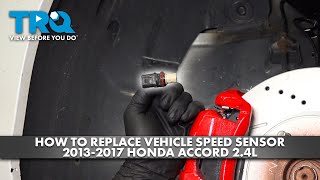
- The sensor is located on the front of the transmission and can be accessed from the driver's side wheel well.
- Do not confuse this transmission sensor with the ABS wheel speed sensors; they are different parts.
What's Unique About the 2013-2017 Honda Accord
The 2013-2017 Honda Accord (9th generation) primarily uses a Continuously Variable Transmission (CVT) for 4-cylinder models and a traditional 6-speed automatic for V6 models. While the P1720 code points to the same component on both—the output speed sensor—the exact part number and location can differ slightly. This issue is a very common and straightforward diagnosis on this platform, with the sensor itself being the failure point far more often than complex wiring or computer issues. It is critical to differentiate this transmission-mounted sensor from the ABS wheel speed sensors.
Symptoms You May Notice
- Check Engine Light is on
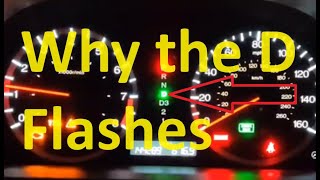
- Flashing 'D' (Drive) indicator light on the dashboard
- Speedometer is inoperative or reads 0 mph while driving
- Erratic, harsh, or delayed transmission shifting
- Vehicle may enter 'limp mode', getting stuck in a low gear
- Cruise control will not engage
- In some cases, the transmission may seem to go into neutral while accelerating, with the engine revving high before a gear engages with a jerk.
- Replacing the ABS wheel speed sensors. P1720 and P0720 specifically relate to the speed sensor on the transmission, not the ones at the wheels used for the Anti-lock Brake System.
- Assuming the entire transmission has failed. Due to the severe shifting symptoms, it's easy to assume a major internal failure. However, these symptoms are classic for a simple sensor failure on this vehicle.
- Replacing the Input/Turbine Speed Sensor. The transmission has both an input and an output sensor. P1720/P0720 points specifically to the output sensor. A fault with the input sensor would typically set a P0715 or P0717 code.
Most Likely Causes
- Faulty Transmission Output Speed Sensor 🔴 High Probability → Shop Transmission Assembly The sensors on this generation are known to fail over time due to heat cycles, vibration, and internal electronics degradation. It is the most common cause for this code.
How to confirm: After confirming the code with a scanner, the most definitive test is to replace the sensor. You can also use a scan tool with live data to monitor the output speed sensor signal while driving; if the signal is erratic or drops to zero while the car is moving, the sensor is bad. A more advanced test involves checking for approximately 5.0 volts at the sensor's signal wire connector with the key on.
Typical fix: Replace the transmission output speed sensor. This sensor is located on the front of the transmission housing, accessible from the driver's side wheel well.
Est. part cost: $30-$90 - Damaged Wiring or Electrical Connector 🟡 Medium Probability The wiring harness leading to the sensor is located near the wheel well, making it susceptible to damage from road debris, moisture, or corrosion. A poor connection at the PCM is also a possibility, though less common.
How to confirm: Visually inspect the wiring harness and connector for any signs of fraying, breaks, corrosion, or pushed-out pins. Perform a continuity test on the wires between the sensor connector and the PCM to check for opens or shorts to ground.
Typical fix: Repair the damaged section of the wiring harness or clean/replace the corroded connector.
Est. part cost: $5-$50
Rare But Worth Checking
- Faulty Powertrain Control Module (PCM): → Shop Engine Control Module (ECM) This is very uncommon. Before condemning the PCM, you must exhaustively rule out the sensor and all related wiring. A PCM failure would likely be accompanied by other, unrelated trouble codes.
Diagnosis Steps
- Read the trouble codes with an OBD-II scanner to confirm P1720 and check for any other related codes like P0720.
- Inspect the transmission fluid. Check if the fluid level is correct and if its condition is good (not burnt or black). While unlikely to be the direct cause, low or old fluid can exacerbate transmission issues.
- Locate the output speed sensor. On the 2013-2017 Accord, it's on the front of the transmission, accessible by removing the driver's side front wheel and the plastic inner fender liner.
- Inspect the sensor's electrical connector and wiring harness. Look for any visible damage, corrosion, or loose connections. Wiggle the harness while monitoring sensor data (if possible) to check for intermittent faults.
- For a more advanced check, disconnect the sensor connector. With the ignition ON, use a multimeter to check for approximately 5.0V between the signal wire terminal in the connector and a good ground. If voltage is correct, the wiring to the PCM is likely good.
- If the wiring appears intact and passes voltage checks, the most common and cost-effective next step is to replace the output speed sensor.
- When replacing, use a 10mm socket to remove the single retaining bolt. The sensor can be stuck; gently wiggle and twist it with pliers to work it out. Be careful not to break it off in the transmission case.
- Before installing the new sensor, lubricate its O-ring with a small amount of fresh automatic transmission fluid (Honda ATF DW-1 for 6-speed Auto or HCF-2 for CVTs) to ensure a proper seal and prevent damage.
- Install the new sensor, ensuring it is fully seated. Secure the bolt (torque to 9 ft-lbs), and reconnect the electrical connector until it clicks.
- Clear the trouble codes with the OBD-II scanner and perform a test drive to ensure the speedometer works, the 'D' light is not flashing, and the transmission shifts smoothly.
Parts You'll Likely Need
- Transmission Output Speed Sensor (for CVT / 4-Cylinder)
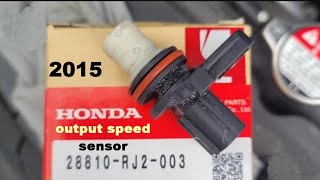
(OEM #28810-RJ2-003)— This is the primary component that fails and causes the P1720 code on the 4-cylinder models with the CVT.
Trusted brands: Honda (Genuine), Beck/Arnley, NTK, Delphi
OEM price range: $70-$120
Aftermarket price range: $30-$90 - Transmission Output Speed Sensor (for 6-Speed Auto / V6)
(OEM #28810-R90-003)— This is the corresponding sensor for the V6 models equipped with the 6-speed automatic transmission. It is different from the CVT sensor.
Trusted brands: Honda (Genuine), Beck/Arnley, Standard Motor Products (SMP)
OEM price range: $60-$100
Aftermarket price range: $30-$70
Related Codes That Often Appear With This One
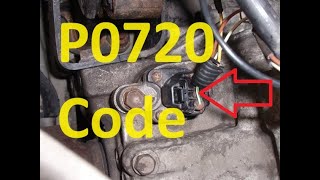
- P0720 — This is the generic SAE equivalent of the Honda-specific P1720 code. They both indicate a fault in the output speed sensor circuit and frequently appear together. 🎬 Watch: Causes and fixes for the P0720 code
- P0721 — This code indicates the output speed sensor signal is present but erratic or out of the expected range, while P1720/P0720 often means the signal is missing entirely. Both point to the same faulty component.
- P0500 — This is a generic code for Vehicle Speed Sensor (VSS) Malfunction. Since the transmission output sensor often serves as the primary VSS, this code can appear alongside P1720/P0720.
Technical Service Bulletins (TSBs) & Recalls
- 17-017: Judder from the Torque Converter Lock-Up Clutch (due to deteriorated ATF)
- 13-053: Surge, Hesitation, or Judder on Light Acceleration from a Stop (CVT models)
- 16-002: Starter Grinds or Spins at Startup (V6 Models)
Platform-Specific Known Issues
- Honda Service Bulletin 17-017 addresses a judder from the torque converter on 2013-17 Accords, caused by deteriorated transmission fluid. The fix involves a software update and a transmission fluid flush. While not a direct cause of P1720, it highlights the importance of using correct, fresh fluid for transmission health on this platform.
- Honda Service Bulletin 13-053 was issued for 2013-2014 Accords with the L4 CVT for a surge or hesitation, requiring updated hardware and software.
- Honda Service Bulletin 16-002 addresses a grinding or spinning noise from the starter on 2013-2016 V6 models. The cause is improper clearance between the starter and torque converter ring gear. The fix involves replacing the starter and rotating the torque converter by one bolt hole.
Mechanic-Grade Diagnostic Values
- Sensor Connector Voltage Reference — expected: Approximately 5.0 Volts DC. Failure: No voltage or significantly low voltage indicates a problem with the PCM or the wiring between the PCM and the sensor.
- Sensor Connector Ground — expected: Near 0 Ohms of resistance to a known good chassis ground.. Failure: High resistance (an open) or any significant resistance reading indicates a bad ground connection, which can cause erratic sensor readings.
- Scan Tool Live Data — expected: A smooth increase in the 'Output Shaft Speed' or 'Countershaft Speed' value as the vehicle accelerates.. Failure: The value stays at 0, drops out intermittently, or jumps erratically while the vehicle is in motion.
Scan Tool Commands That Help
- Honda Diagnostic System (HDS): Data List Display — This is the primary function used to diagnose P1720. A technician will select the transmission data list and monitor the 'Countershaft Speed' or 'Output Shaft Speed' parameter in real-time during a test drive to watch for signal dropouts or erratic readings.
- Honda Diagnostic System (HDS): Snapshot Function — If the fault is intermittent, this function can be used to capture all sensor data at the exact moment the fault occurs (the 'trigger event'), helping to confirm the speed sensor was the parameter that failed.
- Honda Diagnostic System (HDS): Clear DTCs / Reset PCM — This is used after the repair is completed to clear the P1720 code and reset the PCM's learned values. A test drive is required afterward to confirm the fix was successful.
Wiring & Ground Locations
- G101 — Typically mounted on the driver's side of the intake manifold or directly on the transmission housing.. This is a main ground point for the engine and transmission sensor harness. A loose or corroded G101 ground can cause a floating or noisy ground reference for the output speed sensor, leading to erratic signals and intermittent P1720/P0720 codes that are difficult to diagnose.
- Output Speed Sensor Connector — On the front of the transmission, visible after removing the driver's side front wheel and inner fender liner. It is the black electrical connector, located near a blue connector (which is for the transmission fluid temperature sensor).. This is the direct connection point for the sensor. It is exposed to road debris and moisture, making it a common point for corrosion, pushed-out pins, or wiring damage that directly causes the P1720 circuit code.
Real Owner Repair Stories
- YouTube channel 'Fix It Angel' (2015 Honda Accord (CVT)) — Check Engine Light with code P0720, flashing 'D' light, speedometer not working.
❌ Tried (didn't work) The video directly addresses the fix, but warns of a potential follow-up issue.
✅ What actually fixed it Replacing the output speed sensor (the one with the black connector) located behind the driver's side wheel fixed the P0720 code. The video creator noted that if the new sensor is not seated perfectly, a new code, P0793 (Intermediate Shaft Speed Sensor Circuit No Signal), can appear, which requires re-seating the sensor. - YouTube channel 'OMCB Automobile Electric' (Honda vehicle (model not specified, but symptoms are identical)) — Flashing 'D' light and transmission codes stored.
❌ Tried (didn't work) Initial diagnosis pointed towards a pressure control solenoid.
✅ What actually fixed it The actual cause was three open circuits (broken wires) in the transmission wiring harness. The damage occurred because the harness was snagged and pulled when a starter motor was previously replaced, breaking the wires inside the loom. Repairing the broken wires resolved the issue.
"I Checked Everything" — The Actual Cause
- In one documented case, a flashing 'D' light and transmission codes were not caused by a faulty sensor or solenoid, but by damaged wiring. The harness connector had been pulled and the wires broken internally during a previous starter motor replacement. A visual inspection of the sensor and connector would have appeared normal, but a continuity test of the harness wires revealed the open circuit.
OEM Part Supersession History
28810-R90-003→28810-R90-013— Standard part revision by the manufacturer.
Heads up: The new part number (28810-R90-013) is the correct replacement and is fully compatible.28810-RJ2-003→N/A— This part number remains current for the 4-Cylinder CVT models within this generation.
Model Year Variations Within This Range
- 2016-2017: A mid-cycle refresh occurred for the 2016 model year, which included revised styling, an aluminum hood, and the introduction of the Honda Sensing suite of safety features on more trims. However, the core powertrains (2.4L CVT and 3.5L 6-AT) and the associated speed sensors remained the same. The diagnosis and repair for code P1720 are identical across the 2013-2017 range.
Diagnostic Flowchart
Other Known Issues on This Vehicle
Issues unrelated to this code that are worth knowing about as an owner of this generation:
- Defective Starter / Grinding on Startup 🔴 High — Very common on 2013-2015 models, affecting both 4-cylinder and V6. Tends to appear around 50,000 miles but can happen earlier. (Ref: TSB 16-002 (for V6 models))
- VTC Actuator Rattle on Cold Start 🟠 Medium — Extremely common on the 2.4L 4-cylinder (K24W) engine. The rattle lasts for about 2 seconds on a cold start and is a well-known quirk of the K-series engine family. (Ref: TSB 09-010 (for earlier models, but the issue and fix persist))
- Excessive Oil Consumption 🟠 Medium — Reported by a significant number of owners with the 2.4L 4-cylinder engine. Often attributed to carbon buildup on piston rings.
- Driveshaft Corrosion and Failure 🔴 High — Affects 2013 models with the 4-cylinder/CVT powertrain, primarily in 'salt-belt' states. A corroded driveshaft can break. (Ref: NHTSA Recall 20V-769)
Used vs. New Parts: Buying Guide for This Vehicle
When a used part is the smart pick: For this specific repair, buying a used transmission speed sensor from a salvage yard is NOT recommended. It is a relatively low-cost electronic part known to fail over time. The labor involved in accessing the sensor outweighs the minimal cost savings of a used part with unknown remaining life.
What to inspect on the donor part:
- Not applicable as a used part is not recommended.
OEM-only on this vehicle (don't cheap out):
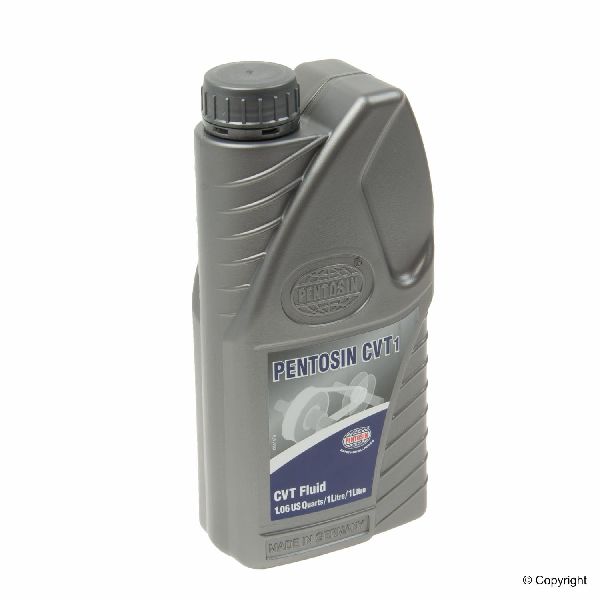
- Transmission Fluid: While the sensor itself can be aftermarket, it is strongly recommended to use only genuine Honda HCF-2 fluid for CVT models or Honda ATF DW-1 for 6-speed automatic models. Using incorrect fluid types is a known cause of transmission judder, hesitation, and premature wear.
Aftermarket brands forum-validated for this vehicle:
- NTK
- Delphi
- Beck/Arnley
- Standard Motor Products (SMP)
Brands owners have reported issues with on this vehicle:
- No specific brands are consistently reported as problematic on forums, but ultra-low-cost, unbranded sensors from online marketplaces carry a higher risk of being dead-on-arrival or having a short service life.
Real Owner Stories
Aggregated from forums and TSBs cited above. Mileages and costs reflect what owners reported in those sources.
2013 Honda Accord L4 CVT
Symptoms: Owner experienced early CVT jerkiness and hesitation while accelerating from a stop.
What fixed it: Updated hardware and software as specified in TSB 13-053.
Source hint: DriveAccord.net thread titled '2013 accord problems'
2013 Honda Accord EX-L
Symptoms: Intermittent weird starter problems and grinding noises at startup.
What fixed it: Replacing the starter and following TSB procedures for clearance issues.
Source hint: Honda-Tech thread 'intermittent weird starter problems my 13 accord ex-l'
2013 Honda Accord
Symptoms: Total loss of gears and a grinding noise, which the owner initially feared was a catastrophic transmission failure.
What fixed it: Repairing a broken axle.
Source hint: Reddit r/Cartalk thread 'transmission 2013 honda accord'
Related OBD-II Codes
Frequently Asked Questions
My 2013 Accord CVT is jerking during light acceleration; does TSB 13-053 apply to me?
I have a 2015 Accord V6 and hear a grinding noise when I start the car. Is this related to P1720?
What specific transmission fluid should I use when replacing the output speed sensor on my 2014 Accord?
My speedometer stopped working and the 'D' light is flashing; is the output speed sensor the likely culprit?
Does Honda Service Bulletin 17-017 apply to the P1720 code?
Where is the output speed sensor located on the 9th generation Accord?
Helpful Videos
We Have This Part in Stock

The information in this article is provided for general reference and educational purposes only. Vehicle specifications, procedures, and part compatibility can vary by production date, trim level, and region. Always consult your vehicle's factory service manual and verify part numbers before purchasing or performing repairs. Safety-critical components such as airbags, seat belts, and braking systems should be installed by a qualified professional.
- Honda Accord:
- 🧭 Diagnostic Flowchart
- 🎬 Helpful Videos
- 🛍️ Shop This Part
- What's Unique About the 2013-2017 Honda Accord
- Symptoms You May Notice
- Most Likely Causes
- Rare But Worth Checking
- Diagnosis Steps
- Parts You'll Likely Need
- Related Codes That Often Appear With This One
- Technical Service Bulletins (TSBs) & Recalls
- Platform-Specific Known Issues
- Mechanic-Grade Diagnostic Values
- Scan Tool Commands That Help
- Wiring & Ground Locations
- Real Owner Repair Stories
- "I Checked Everything" — The Actual Cause
- OEM Part Supersession History
- Model Year Variations Within This Range
- Other Known Issues on This Vehicle
- Used vs. New Parts: Buying Guide for This Vehicle
- Real Owner Stories
- 2013 Honda Accord L4 CVT
- 2013 Honda Accord EX-L
- 2013 Honda Accord
- Related OBD-II Codes
- Frequently Asked Questions
- 🎟️ Get 5% Off