

OBD-II Code P1732: Comprehensive Guide to Transmission Control Faults
What P1732 means, why it triggers, and how to fix it for good
- P1732 is a manufacturer-specific code that requires looking up your exact make and model, as it means a CVT stepper motor failure on a Nissan but a PDK distance sensor failure on a Porsche.
- On 2003-2016 Nissan and Infiniti CVTs, P1732 almost exclusively points to a failed stepper motor, requiring a $400-$700 valve body repair.
- Audi, VW, and Porsche vehicles trigger this code when internal mechatronic or distance sensors fail, often costing $2,500 to $5,000 to fix at an independent specialist.
- Honda owners can often resolve P1732 with a DIY-friendly external shift solenoid replacement costing under $150 in parts.
- Do not drive with an active P1732 code; forcing a transmission in limp mode causes cascading clutch and gear damage that turns a $500 sensor replacement into an $8,000 rebuild.
What Does P1732 Mean?
P1732 is a manufacturer-specific diagnostic trouble code (DTC) indicating a critical fault within the automatic transmission's control system. Its precise meaning varies by vehicle brand. For Nissan and Infiniti, it points to a Continuously Variable Transmission (CVT) stepper motor failure. For Audi, VW, and Porsche, it signals a failed shift rod position or distance sensor within the DSG/PDK dual-clutch transmission. Ford, Honda, and Hyundai associate it with shift solenoids, speed sensors, or the Transmission Control Module (TCM).
Technical definition: There is no universal SAE/OBD-II definition for P1732. Common definitions include 'Displacement Sensor for Shift Rod 5/7' (Porsche/Audi), 'Gear Ratio Error' (Nissan), '2-3 Shift Malfunction' (Ford), and 'Control Module High Voltage' (Jeep). In every instance, the Transmission Control Module (TCM) detects a critical fault preventing it from properly controlling or monitoring gear shifts.
Can I Drive With P1732?
No — Do Not Drive. Do not drive. The transmission enters 'limp mode' with limited gears or fails to engage entirely, leaving you stranded. Continuing to drive causes a cascade of failures, turning a sensor replacement into a full transmission rebuild. For example, a faulty sensor in a DSG/PDK leads to clutch pack overheating and mechatronic unit damage, increasing repair costs from $1,500 to over $8,000.
Common Causes
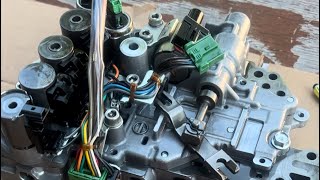
- Failed CVT Stepper Motor (Nissan/Infiniti) (Very Common) — On Nissan and Infiniti vehicles equipped with a CVT, a faulty stepper motor is the primary culprit. This motor controls the movement of the transmission's pulleys to change gear ratios; its failure causes poor acceleration and limp mode.
- Failed Transmission Distance/Position Sensor (VAG/Porsche) (Very Common) — For Audi, VW, and Porsche vehicles with DSG or PDK transmissions, the leading cause is the failure of an internal distance or position sensor tracking shift rod movement. These sensors fail from heat and internal fluid contamination.
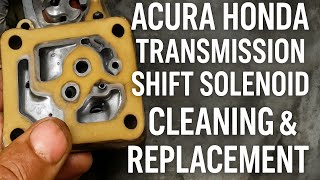
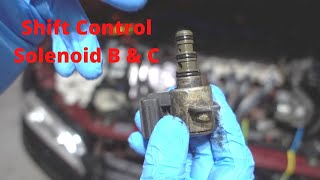
- Stuck or Failed Shift Solenoid (Honda) (Common) — For many Honda models, P1732 specifically points to a stuck shift solenoid 'B' or 'C'. These solenoids control the flow of fluid to engage different gears and fail due to internal wear or dirty fluid.
- Faulty Transmission Control Module (TCM) (Common) — The TCM fails due to internal circuit board cracks, software corruption, or electrical shorts. This is a notorious issue in Ford's DPS6 transmission and frequently affects Audi/VW mechatronic units.
- Low or Contaminated Transmission Fluid (Common) — Old, dirty, or low fluid causes hydraulic pressure drops, overheating, and solenoid malfunctions that trigger a P1732 code. Burnt-smelling or dark fluid indicates severe internal wear.
- Failing Battery or Poor Ground Connection (Less Common) — Modern transmissions require stable voltage. A weak battery or corroded ground straps cause erratic behavior in the TCM and sensors, generating false codes. This is highly prevalent in voltage-sensitive European vehicles.
- Damaged Wiring or Corroded Connectors (Less Common) — The wiring harness connecting the TCM to the transmission degrades from engine heat, vibrations, or road debris. Corroded connector pins lead to intermittent signal loss and fault codes.
- Faulty Input/Output Speed Sensor (Hyundai/Kia) (Rare) — On certain Hyundai and Kia models, a faulty rear wheel speed sensor provides an implausible signal to the control modules, disrupting traction control and transmission shift strategy.
Symptoms
- Transmission Enters 'Limp Mode' — The vehicle locks into a single gear (often 2nd or 3rd) to prevent damage, resulting in sluggish acceleration and high engine RPM at highway speeds.
- Flashing 'PRNDS' Light or Check Engine Light — The computer illuminates the Check Engine Light. In DSG-equipped cars (Audi/VW), the gear indicator on the dashboard flashes continuously.
- Inability to Select Gears or Move — The car fails to engage Drive or Reverse, especially after coming to a stop. Restarting the car temporarily resolves the issue in early failure stages.
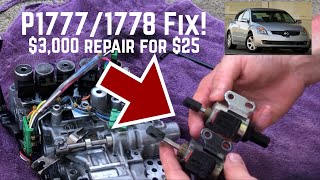
- Complete Loss of Acceleration — A hallmark symptom in Nissans with a failed stepper motor: pressing the gas pedal does nothing or results in extremely slow, strained movement. 🎬 Watch: Replacing a Nissan CVT stepper motor to fix weak acceleration.
- Harsh, Jerky, or Delayed Shifting — Shifts feel abrupt, clunky, or have a noticeable delay, particularly when the vehicle is cold or navigating stop-and-go traffic.
Diagnostic Flowchart
Tap your situation to follow the diagnostic path that matches what you're seeing on this code.
Common Fixes & Costs
- Replace CVT Stepper Motor (Nissan/Infiniti) — Parts: $30-$70, Labor: $400-$600, ~4.5 hr book time (Professional)
- Replace PDK Distance Sensor (Porsche) — Parts: $1,000-$1,600, Labor: $1,500-$3,000, ~12.0 hr book time (Professional)
- Repair or Replace Mechatronic Unit (Audi/VW) — Parts: $1,500-$4,000, Labor: $800-$1,500, ~5.0 hr book time (Professional)
- Replace Shift Solenoid Pack (Honda) — Parts: $150-$300, Labor: $200-$400, ~1.5 hr book time (Intermediate)
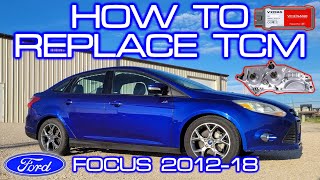
- Replace Transmission Control Module (TCM) (Ford) — Parts: $600-$900, Labor: $300-$500, ~2.0 hr book time (Professional)
- Transmission Fluid and Filter Service — Parts: $75-$200, Labor: $150-$300, ~1.0 hr book time (DIY)
Used vs. New Parts: Buying Guide
When a used part is worth it: For high-cost electronic components like a Ford TCM or a complete Audi/VW Mechatronic unit, a remanufactured part from a reputable seller offers significant savings, especially on older vehicles.
Donor-vehicle mileage cap: roughly under 80000 miles for the part to have meaningful remaining life.
Donor quality checklist:
- Verify the exact part number matches; transmission modules are rarely interchangeable.
- Inquire if the TCM/Mechatronic unit has been 'divorced' or reset, as many are VIN-locked to the donor car.
- Purchase exclusively from sellers offering a minimum 90-day warranty.
Decision logic:
- If The part is a known wear item like a sensor or solenoid and is relatively inexpensive new → buy new to ensure maximum lifespan and avoid repeat labor costs.
- If The vehicle is over 10 years old and the repair cost with a new part exceeds 50% of the vehicle's value → a warrantied remanufactured module is a financially sound choice.
- If The part is a complete transmission assembly (e.g., used PDK) → ensure it comes from a low-mileage, accident-damaged vehicle and includes a warranty.
Warranty tradeoff: Used parts typically carry a 30-90 day warranty. Remanufactured parts offer 1-year warranties. New OEM parts carry a 1-2 year warranty, but only if installed by an authorized dealer.
Worst-case if a used part fails: $800-$2000 if a used electronic module fails after the warranty period, requiring a second part purchase and repeat labor.
What Happens If You Wait — Timeline
- 0-4 weeks: Intermittent fault. Check Engine Light appears occasionally. Symptoms like a single harsh shift or brief hesitation occur when the transmission is hot. (MPG impact: 0-5%% · Added cost: $0)
- 1-3 months: Consistent fault. Limp mode engages frequently. A bad sensor sends consistently bad data, causing the TCM to command incorrect shifts, which begins wearing out clutch packs. (MPG impact: 5-15%% · Added cost: $200-$500 (Premature clutch/belt wear begins))
- 3-6 months: Cascading failure. The initial electronic failure causes significant mechanical damage. A bad DSG sensor leads to burnt clutch packs; a failed CVT stepper motor destroys the belt and pulleys. (MPG impact: 15-25%% · Added cost: $2,000-$4,000 (Clutch packs or a full valve body are now required))
- 6+ months: Catastrophic failure. The transmission makes grinding noises, fails to engage any gear, or gets permanently stuck. A full rebuild or replacement is the only option. (MPG impact: N/A (undrivable)% · Added cost: $5,000-$15,000+ (Full transmission replacement cost))
Cost of Not Fixing It
- Immediate: Vehicle becomes undrivable, getting stuck in gear or failing to move, leaving you stranded. Limp mode causes excessive engine wear. (Added cost: $200+ (Towing and diagnostic fees))
- Weeks to Months: A failing sensor causes cascading damage. Incorrect clutch engagement leads to severe clutch pack wear and overheating of the mechatronic unit. (Added cost: $2,000-$5,000 (Upgrading from a sensor repair to a full mechatronic unit and clutch pack replacement))
- 6+ Months: Catastrophic transmission failure. A burnt-out CVT or mechanically destroyed DSG/PDK requires a complete replacement. (Added cost: $5,000-$15,000+ (Full transmission replacement))
Diagnosis Steps
- Scan for All Transmission Codes
Use a professional-grade OBD-II scanner to read codes from the Transmission Control Module (TCM). Note all codes present; P1732 is rarely alone and sibling codes provide the exact failure point.
Tools: Advanced OBD-II Scanner (Beginner) - Research Manufacturer-Specific Causes & TSBs
Search your exact year, make, model, and 'P1732' online to confirm the most likely cause (e.g., stepper motor for a 2010 Nissan Rogue). Check for Technical Service Bulletins (TSBs) or extended warranties.
Tools: Internet Access (Beginner) - Check Transmission Fluid and Battery Health
Verify the transmission fluid is at the correct level and lacks a burnt smell. Test the battery and check the main engine/transmission ground straps. A voltage drop over 0.2 volts across a ground strap confirms an electrical fault.
Tools: Gloves, Rag, Multimeter (Beginner) - Inspect External Wiring and Connectors
Visually inspect the main transmission wiring harness for melting, chafing, or physical damage. Unplug the main connector and check for corrosion, moisture, or bent pins.
Tools: Flashlight, Mirror (Intermediate) - Pro Tip (Nissan): Test the CVT Stepper Motor
Measure the resistance between the pins of the stepper motor using a multimeter. A healthy motor reads approximately 15 Ohms for each of its two coils. An open circuit or short confirms a failed motor.
Tools: Multimeter (Advanced) - Pro Tip (Honda): Test Shift Solenoid Resistance
Disconnect the solenoid connector and measure coil resistance. For Honda shift solenoids ('B' or 'C'), a healthy reading is 12-25 Ohms. A reading of 0 Ohms (short) or OL (open circuit) confirms failure.
Tools: Multimeter (Advanced) - Pro Tip (VAG/Porsche): Analyze Sensor Data
Access the live data blocks for the transmission gear position sensors using VCDS or PIWIS. Shift through the gears. A faulty sensor shows an 'implausible signal', freezes, or displays values not corresponding to the selected gear.
Tools: VCDS, ODIS, or PIWIS Diagnostic Tool (Professional) - Pro Tip (Ford): Test TCM Power, Grounds, and Communication
Identify the power and ground pins on the TCM connector using a wiring diagram. Verify battery voltage (12.0-12.6V) at power pins and <0.1V resistance to ground. If power/ground are good but the scanner cannot communicate with the TCM, the module has failed.
Tools: Professional Scan Tool, Multimeter, Wiring Diagram (Professional)
When This Code Triggers (Freeze-Frame Conditions)
- Transmission Fluid Temperature: 80-110°C (176-230°F) (The fault frequently occurs when the transmission is fully warmed up, as heat exacerbates electronic sensor and stepper motor failures.)
- Engine RPM: 1200-2800 RPM (Triggers during light to moderate acceleration when the TCM commands a gear shift.)
- Vehicle Speed: 20-60 mph (32-97 km/h) (Sets during city or highway driving when the transmission actively shifts through forward gears.)
- Gear Selector Position: Drive (D) (Detected when the transmission is in a forward drive gear and a shift fails to execute or report correctly.)
Related Codes
- P1731, P1733, P1734, P1735 — In Porsche and VAG vehicles, these point to different shift rod displacement sensors. Seeing them alongside P1732 confirms a total failure of the sensor pack inside the transmission.
- P173A, P173B, P173C, P173D — In Audi/VW vehicles, these point to 'implausible signals' from the four gear position sensors within the DQ200 DSG mechatronic unit, strongly suggesting internal mechatronic failure.
- P1777, P1778 — Specific to Nissan, directly implicating the CVT stepper motor. P1777 points to an electrical circuit failure, while P1778 indicates a functional performance error.
- P0700 — A generic 'gateway' code indicating the TCM has stored a fault. It always accompanies specific codes like P1732 and simply means 'check the TCM for more codes'.
Climate & Environmental Factors
- High Heat: Hot climates and heavy traffic degrade transmission fluid rapidly, destroying its hydraulic properties. This is the leading cause of failure for internal electronics like CVT stepper motors and DSG mechatronic units.
- Cold Weather: DSG/PDK transmissions exhibit sluggish shifting below 14°F (-10°C). Thick, cold fluid delays hydraulic actuation, occasionally triggering temporary 'implausible signal' faults until the transmission warms up.
- High Humidity / Moisture: Moisture penetrates weathered connector seals, corroding pins and causing intermittent electrical connections. This triggers false fault codes for external components like the TCM.
How to Talk to a Mechanic About This Code
Say this: "I have a [Year, Make, Model] with a P1732 transmission code and it's [describe symptom, e.g., stuck in limp mode]. Based on my research, the likely cause is the [mention specific part, e.g., CVT stepper motor, PDK distance sensor, Ford TCM]. Please start the diagnosis there."
This signals you are an informed consumer. It directs the technician to the most probable cause, saving diagnostic time and preventing a broad, expensive 'shotgun' approach.
Avoid saying:
- 'My transmission is acting weird, can you fix it?' (Invites expensive guesses).
- 'Just do whatever it takes to fix it.' (Gives the shop a blank check).
- Accepting a repair estimate over the phone without a physical inspection.
Questions to ask before authorizing the repair:
- Can you provide a detailed, written estimate breaking down parts and labor costs?
- For a Porsche/VAG, are you recommending a component-level repair or a full transmission replacement?
- For a Ford/Nissan, have you checked if my VIN is covered under any extended warranty programs?
- What is the warranty on the proposed repair, for both parts and labor?
Where to Take It: Dealer vs Independent vs Chain
- Dealer:
Recommended first stop ONLY to check for warranty coverage. If not covered, seek a second opinion from a specialist.
Best for: Vehicles under warranty or known warranty extensions (Ford DPS6 TCM, Nissan CVT)., Complex electronic programming required after a component replacement.
Downsides: Highest labor rates., Defaults to replacing entire expensive assemblies (e.g., Porsche PDK transmission) instead of repairing internal components. (Typical cost: +50% vs. baseline) - Independent Shop:
Best choice for most P1732 repairs on out-of-warranty vehicles, especially brand-specific specialists.
Best for: Out-of-warranty vehicles where cost is a major factor., Shops specializing in your vehicle's brand (e.g., a German auto specialist)., Component-level repairs that dealers refuse to do.
Downsides: Quality varies widely; look for ATRA membership or ASE certifications., May lack the latest dealer-specific software for programming new modules. (Typical cost: +0% vs. baseline) - Chain Shop:
AVOID for P1732 diagnosis and repair. This code requires specialization not found at general service chains.
Best for: Simple, unrelated maintenance like oil changes or tires.
Downsides: Technicians lack specialized training for complex internal transmission work (DSG, PDK, CVT)., Business model incentivizes upselling unnecessary services. (Typical cost: -10% vs. baseline)
When to Walk Away From the Repair
If the estimated repair cost for the P1732 fault exceeds 50% of the car's private-party value, it is time to seriously consider walking away.
- Car worth $25000, fix is $4500: Fix it. The repair cost is only 18% of the car's value.
- Car worth $6000, fix is $3500: Borderline. The repair is 58% of the car's value. Get a second opinion and evaluate the car's overall health.
- Car worth $4000, fix is $3000: Walk away. The repair cost is 75% of the vehicle's value. It is not financially sensible to repair.
What Scan Tool You Need for This Code
Minimum: A scanner that reads manufacturer-specific codes from the Transmission Control Module (TCM) and displays live data streams.
A basic $20 code reader only shows generic engine codes. To diagnose P1732, you MUST see the specific fault definition from the transmission module and view live sensor data.
Budget: BlueDriver Pro (~$99) — Connects to a smartphone app to read and clear transmission codes, view freeze frame data, and stream live transmission data.
Mid-range: Foxwell NT510 Elite (~$180) — Offers brand-specific software providing dealer-level diagnostics. Reads live data from shift rod position sensors and performs adaptations crucial for DSG/PDK repairs.
Professional: Autel MaxiCOM MK808BT (~$550) — Provides full-system, bi-directional control. Performs mandatory TCM programming and adaptive learning procedures required after replacing a Ford TCM or Audi/VW Mechatronic unit.
Rent vs buy: Auto parts stores offer free code reading to confirm P1732. However, their loaner tools cannot access detailed TCM data. Buying a capable scanner is a wise investment for proper diagnosis.
How to Clear the Code After You Fix It
- Use an advanced OBD-II scan tool to clear fault codes from the TCM.
- Perform a manufacturer-specific relearn or adaptation procedure (e.g., 'Basic Settings' for DSG, 'TCM Adaptive Learning' for Ford).
- Conduct a specific drive cycle to allow the TCM to adapt to the new components.
Drive cycle (~20 minutes): Cold start and idle for 3 minutes. Accelerate gently through all forward gears. Drive at a steady highway speed for 10 minutes. Perform several gentle stops and starts. DSG/PDK units require specific gear-selection sequences via the scan tool.
Readiness monitors affected: Transmission Components, Comprehensive Component Monitor
Before emissions retest: drive at least 50 miles to fully set monitors.
Watch out for:
- Clearing the code without performing the mandatory adaptation procedure results in harsh shifting and the code's immediate return.
- Using a basic code reader that only clears ECU codes fails to erase the fault from the TCM.
- Skipping the complex relearn procedure for DSG, PDK, or Ford DPS6 transmissions guarantees continued drivability issues.
Will This Fail Emissions / State Inspection?
Yes — this code typically fails an OBD-II emissions inspection.
- California: An illuminated Check Engine Light results in an automatic failure. All OBD-II readiness monitors must be 'Ready', requiring a specific drive cycle after repair.
- New York: A vehicle with an active Check Engine Light automatically fails the emissions portion of the annual state inspection.
- Texas: In the 17 counties requiring emissions testing, an active P1732 code causes an automatic failure. The vehicle cannot be registered until repaired.
Most Commonly Affected Vehicles
- Nissan Altima, Murano, Maxima, Rogue (2003-2016) — Uses the RE0F09A/B or RE0F10A CVT. The stepper motor is a well-documented, extremely common failure point resulting in class-action lawsuits.
- Audi A3, A4, S4, TT (2003-2017) — Equipped with 6-speed (DQ250) and 7-speed (DQ200, DL501) DSG transmissions. The internal mechatronic unit housing the sensors is a known weak point.
- Volkswagen Golf, Jetta, Passat, GTI (2003-2018) — Shares DSG technology with Audi. The 7-speed dry clutch DQ200 gearbox is highly prone to mechatronic failures triggering position sensor codes.
- Porsche 911 (997/991), Panamera (970), Boxster/Cayman (987/981) (2009-2018) — The ZF 7DT PDK transmission suffers from internal distance sensor pack failures. Part numbers 97031708500 and 97031708530 are common replacements.
- Honda Accord, Civic, CR-V, Pilot (2003-2013) — P1732 indicates a problem in the shift control system, specifically pointing to a stuck shift solenoid valve B or C.
- Ford Focus, Fiesta (2011-2016) — Uses the problematic DPS6 'PowerShift' dual-clutch automatic. The code accompanies TCM failure, subject to extended warranties.
- Hyundai & Kia Sonata, Santa Fe / Optima, Sorento (2006-2019) — P1732 points to a fault with a rear wheel speed sensor, causing an 'implausible signal' that disrupts transmission logic.
- Infiniti G37, FX35 (2005-2013) — Shares CVT and automatic transmission components with Nissan, making them susceptible to identical stepper motor issues.
Manufacturer-Specific Notes
- Nissan/Infiniti: Nissan extended the CVT warranty on millions of vehicles. For many 2012-2017 models, the warranty was extended to 7 years/84,000 miles. For older 2003-2010 models, it doubled to 10 years/120,000 miles. Always check VIN eligibility with a dealer before paying for repairs.
- Porsche: The official dealer repair for a P1732 distance sensor failure is a complete PDK transmission replacement costing over $25,000. Independent specialists use aftermarket replacement sensors to repair the transmission for roughly $3,000-$5,000.
- Audi/Volkswagen: Audi offers warranty extensions for mechatronic issues, such as Program U49 (15 years/150,000 miles for 2017-2018 A3s) and Program U54 (9 years/90,000 miles for 2010-2012 S4/S5s). Check your VIN with a dealer to confirm eligibility.
- Ford: Under Customer Satisfaction Program 14M02, Ford extended the warranty on the DPS6 TCM to 10 years or 150,000 miles for 2011-2016 Focus and Fiesta models. Always check for coverage before paying for a TCM replacement.
Real Owner Stories
2011 Porsche 911 (997.2) at 75K miles with PDK
Owner experienced a 'Transm. fault. Poss. no R gear' message. The car went into limp mode and eventually failed to engage any gear. Codes P1731, P1732, P1733, and P1734 were present.
Outcome: The owner found an independent Porsche specialist who replaced the faulty sensor pack with an aftermarket T-Design unit. Total cost was $4,500, saving over $20,000.
Lesson: Dealers quote full transmission replacements for Porsche PDK distance sensor failures. Always seek an independent specialist who performs component-level repairs.
2017 Nissan Rogue at 60K Kms
After driving for 3 hours, the Check Engine Light illuminated. The car hesitated to accelerate from a stop, with RPMs spiking before engaging.
Outcome: Diagnosis revealed a failing CVT stepper motor. Given the classic symptoms of hot-hesitation, the owner replaced the valve body assembly for $800.
Lesson: On Nissan CVTs, hesitation and high RPMs when hot are classic signs of stepper motor/valve body failure. Fluid changes do not fix mechanical faults.
2004 Honda CR-V at 170K miles
The vehicle hesitated between shifts, causing RPM spikes before the next gear engaged.
Outcome: The owner purchased aftermarket shift solenoids for $30 and replaced them in their driveway. The new external solenoids completely fixed the shifting hesitation.
Lesson: Honda shifting problems are frequently caused by inexpensive, external shift solenoids. Investigate this DIY-friendly fix before condemning the transmission.
2012 Ford Focus (DPS6) at 85K miles
Car experienced intermittent loss of power, a no-start condition, and lost reverse gear entirely.
Outcome: The dealer diagnosed a failed TCM. The $1,200 repair was completely covered under Ford's Customer Satisfaction Program 14M02. The owner paid nothing.
Lesson: Always check your VIN against manufacturer warranty extensions (like Ford's 14M02 for the TCM) before paying out of pocket.
How to Prevent This Code From Triggering
- Perform transmission fluid and filter changes at recommended intervals. (Every 30,000-60,000 miles.) — Maintains hydraulic pressure, removes contaminants, and cools sensitive electronics like sensors and solenoids.
- Install an auxiliary transmission cooler. (One-time upgrade for hot climates or towing.) — Heat is the primary killer of transmission electronics. An external cooler keeps fluid temperatures stable, dramatically extending the life of CVTs and DSG mechatronic units.
- Come to a complete stop before shifting from Drive to Reverse. (Daily habit.) — Prevents immense mechanical shock on gearbox internals, reducing wear on the shift forks and sensors that trigger P1732.
- Clean battery terminals and check main ground straps. (Every 1-2 years.) — Ensures the TCM receives a stable voltage supply, preventing erratic electronic behavior and false fault codes.
Frequently Asked Questions
Can a transmission fluid change fix a P1732 code?
It is highly unlikely. If the code triggers due to low fluid causing hydraulic pressure issues, a fluid change helps. However, if a sensor, motor, or module has failed electronically, new fluid will not fix the broken component.
What is the most common misdiagnosis for P1732?
The most expensive mistake is replacing the entire transmission when only one internal component failed. Dealerships frequently quote a $25,000 PDK replacement for Porsches when an independent shop replaces just the sensor for $4,000. Another error is replacing the TCM when a simple ground wire is loose.
Is it expensive to fix code P1732?
Costs vary dramatically by manufacturer. A Honda solenoid replacement costs $150-$400, while a Nissan stepper motor repair runs $500-$700. Audi/VW mechatronic repairs cost $2,500-$4,000, and Porsche PDK sensor replacements typically run $3,000-$5,000.
Can I fix P1732 myself?
Replacing a Honda shift solenoid is feasible for an intermediate DIYer. However, replacing internal components like a CVT stepper motor or a PDK/DSG sensor requires specialized tools, transmission disassembly, and electronic calibration. These are strictly professional-level repairs.
Will clearing the P1732 code make it go away?
No. Clearing the code only erases the log temporarily. The TCM re-runs its diagnostic checks immediately, and the code returns as soon as you shift gears.
What does 'implausible signal' mean for a sensor?
An 'implausible signal' means the sensor data is physically impossible or outside the expected range. For example, if a sensor reports that two gears are engaged simultaneously, the TCM flags the signal as implausible and sets a fault code.
Why does my car get stuck in one gear (limp mode)?
Limp mode is a self-preservation strategy. When the TCM detects a critical fault like P1732, it locks the transmission into a single gear to prevent catastrophic mechanical damage from incorrect shifting.
Key Takeaways
- P1732 is a manufacturer-specific code that requires looking up your exact make and model, as it means a CVT stepper motor failure on a Nissan but a PDK distance sensor failure on a Porsche.
- On 2003-2016 Nissan and Infiniti CVTs, P1732 almost exclusively points to a failed stepper motor, requiring a $400-$700 valve body repair.
- Audi, VW, and Porsche vehicles trigger this code when internal mechatronic or distance sensors fail, often costing $2,500 to $5,000 to fix at an independent specialist.
- Honda owners can often resolve P1732 with a DIY-friendly external shift solenoid replacement costing under $150 in parts.
- Do not drive with an active P1732 code; forcing a transmission in limp mode causes cascading clutch and gear damage that turns a $500 sensor replacement into an $8,000 rebuild.
Helpful Videos


Shop the Parts Behind P1732
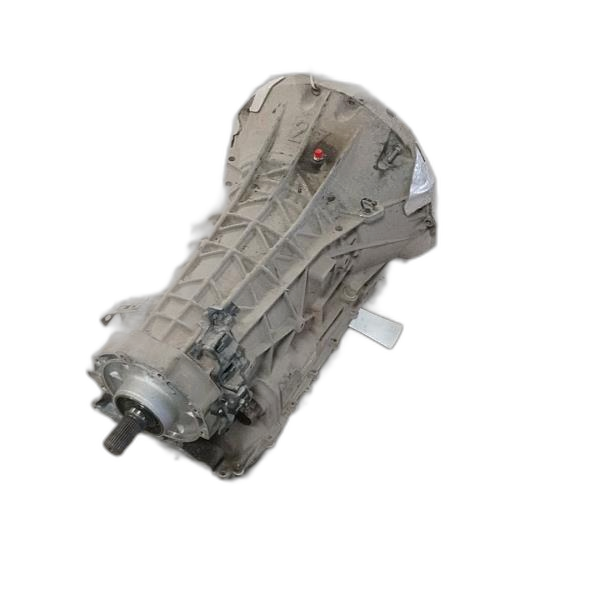
Below are the parts most often responsible for code P1732, ranked by how frequently each one is the actual culprit (per the diagnosis above). Tap any to see what we have for your vehicle.



The information in this article is provided for general reference and educational purposes only. Vehicle specifications, procedures, and part compatibility can vary by production date, trim level, and region. Always consult your vehicle's factory service manual and verify part numbers before purchasing or performing repairs. Safety-critical components such as airbags, seat belts, and braking systems should be installed by a qualified professional.
- 🧭 Diagnostic Flowchart
- 🎬 Helpful Videos
- 🛍️ Shop This Part
- What Does P1732 Mean?
- Can I Drive With P1732?
- Common Causes
- Symptoms
- Common Fixes & Costs
- Used vs. New Parts: Buying Guide
- What Happens If You Wait — Timeline
- Cost of Not Fixing It
- Diagnosis Steps
- When This Code Triggers (Freeze-Frame Conditions)
- Related Codes
- Climate & Environmental Factors
- How to Talk to a Mechanic About This Code
- Where to Take It: Dealer vs Independent vs Chain
- When to Walk Away From the Repair
- What Scan Tool You Need for This Code
- How to Clear the Code After You Fix It
- Will This Fail Emissions / State Inspection?
- Most Commonly Affected Vehicles
- Manufacturer-Specific Notes
- Real Owner Stories
- 2011 Porsche 911 (997.2) at 75K miles with PDK
- 2017 Nissan Rogue at 60K Kms
- 2004 Honda CR-V at 170K miles
- 2012 Ford Focus (DPS6) at 85K miles
- How to Prevent This Code From Triggering
- Frequently Asked Questions
- Can a transmission fluid change fix a P1732 code?
- What is the most common misdiagnosis for P1732?
- Is it expensive to fix code P1732?
- Can I fix P1732 myself?
- Will clearing the P1732 code make it go away?
- What does 'implausible signal' mean for a sensor?
- Why does my car get stuck in one gear (limp mode)?
- Key Takeaways
- 🎟️ Get 5% Off