

OBD-II Code P1733: 3-4 Shift Malfunction
What P1733 means, why it triggers, and how to fix it
- Code P1733 indicates a 3-4 gear shift failure, but the exact definition ranges from a stuck Honda solenoid to a faulty VW shifter switch.
- Low transmission fluid and failed shift solenoids cause over 60% of P1733 codes, making fluid inspection your mandatory first diagnostic step.
- Stop driving immediately; operating in limp mode overheats the transmission and turns a $300 solenoid replacement into a $4,000 complete rebuild.
- Verify solenoid health by testing internal resistance with a multimeter; a healthy Honda solenoid reads between 12 and 25 ohms.
- Test your battery before replacing transmission parts, as low voltage frequently triggers false P1733 codes in complex systems like the Porsche PDK.
What Does P1733 Mean?
P1733 is a manufacturer-specific OBD-II code indicating the Powertrain Control Module (PCM) or Transmission Control Module (TCM) detected a malfunction shifting into or out of 3rd or 4th gear. The computer commanded a specific gear, but rotational speed sensors reported incorrect gear ratios. This discrepancy points to a hydraulic, mechanical, or electrical failure within the transmission system.
Technical definition: The SAE definition for P1733 is '3-4 Shift Malfunction' or 'Shift Malfunction E'. The PCM/TCM detects a discrepancy between the commanded gear state and the actual gear ratio calculated from input and output speed sensors. The exact meaning is highly manufacturer-specific. On Honda models, it translates to 'Shift Solenoid Valve D Stuck ON' or 'A/T Clutch Pressure Control Solenoid Valve C Stuck OFF'. For Porsche, it relates to the 'Displacement Sensor for shift rod gears'. For Volkswagen, it means 'Tiptronic Switch Down Circuit Short To Ground'. In Chrysler vehicles, it specifies a '4C Pressure Switch Sense Circuit' fault.
Can I Drive With P1733?
Yes, but not recommended You can drive a short distance in 'limp mode' (limited to 2nd or 3rd gear under 40 mph), but doing so risks severe damage. Driving in limp mode spikes transmission heat and forces a failing solenoid to burn out clutch packs. Pull over safely and tow the vehicle to prevent a $400 solenoid repair from becoming a $4,000 rebuild.
Common Causes
- Low or Dirty Transmission Fluid (Very Common) — Low fluid reduces the hydraulic pressure needed to engage clutches. Dirty or burnt fluid contains abrasive metal shavings and clutch material that clog passages and cause solenoids or valves to stick.
- Failed Shift Solenoid (Very Common) — Shift solenoids direct hydraulic fluid to engage gears. When a 3-4 shift solenoid fails electrically, gets stuck, or clogs with debris, the transmission cannot execute the gear change.
- Wiring or Connector Issues (Common) — Damaged wires, corroded pins, or loose connections between the TCM and transmission interrupt critical voltage signals, causing immediate shift faults.
- Faulty Transmission Speed Sensor (Common) — The TCM uses input and output speed sensors to verify gear engagement. Incorrect, erratic, or missing readings trick the TCM into detecting a shift malfunction.
- Faulty or Failing Battery / Low Voltage (Less Common) — Modern transmissions require stable voltage. A weak battery causes unpredictable control module behavior and erroneous fault codes, particularly in complex systems like Porsche's PDK. Always test voltage first.
- Faulty Transmission Control Module (TCM) or Software (Less Common) — The TCM itself fails or runs corrupted software, misinterpreting sensor data. On Porsches, multiple sensor codes (P1733 and P1734) point directly to a faulty PDK control unit rather than simultaneous sensor failures.
- Internal Mechanical Failure (Rare) — Worn clutch packs, failing torque converters, broken shift forks, or warped valve bodies cause this code. This is usually accompanied by significant metal shavings in the fluid.
Symptoms
- Harsh, Delayed, or Failed Shifting — The transmission shifts roughly, bangs into gear, or hesitates significantly when attempting to shift into 3rd or 4th gear.
- Transmission Stuck in Limp Mode — The transmission locks into a single gear (often 2nd or 3rd) to prevent damage, severely limiting vehicle speed and RPM.
- Transmission Slipping — Engine RPMs flare up during a shift attempt without a corresponding increase in vehicle speed, indicating the clutch is failing to engage.
- Inability to Engage Gears — The vehicle does not move in Drive or Reverse, revving as if in neutral. This is a primary symptom in Porsche PDK failures.
- Check Engine Light is On (also visible on scanner) — The Malfunction Indicator Lamp (MIL) illuminates. A dedicated transmission warning light or blinking 'D' indicator also appears on many models.
Diagnostic Flowchart
Tap your situation to follow the diagnostic path that matches what you're seeing on this code.
Common Fixes & Costs
- Transmission Fluid and Filter Change — Parts: $50-$150, Labor: $100-$250, ~1.5 hr book time (DIY)
- Replace Shift Solenoid — Parts: $50-$200, Labor: $150-$400, ~2.5 hr book time (Intermediate)
- Replace Transmission Speed Sensor — Parts: $30-$120, Labor: $100-$250, ~1.5 hr book time (Intermediate)
- Repair Wiring or Replace Connector — Parts: $10-$50, Labor: $150-$400, ~2 hr book time (Intermediate)
- Replace Porsche PDK Sensor Pack — Parts: $700-$1200, Labor: $1000-$1800, ~12 hr book time (Professional)
- Replace Transmission Control Module (TCM) — Parts: $200-$1000, Labor: $150-$400, ~2 hr book time (Professional)
DIY vs Professional
- Transmission Fluid and Filter Change 🟢 Beginner
Tools: Socket set, drain pan, funnel, torque wrench, new fluid and filter/gasket. - Replace External Speed Sensor 🟢 Beginner
Tools: Socket set or wrench. - Replace Shift Solenoid (in pan) 🟢 Beginner
Tools: Socket set, torque wrench, drain pan, new fluid, gasket, and potentially Torx bits. - Repair Wiring or Replace Connector 🟢 Beginner
Tools: Multimeter, wire strippers, crimpers, heat shrink tubing, soldering iron. - Replace Porsche PDK Sensor Pack 🟢 Beginner
Tools: Vehicle lift, transmission jack, specialized Porsche (PIWIS) diagnostic tool, engine support tools.
Used vs. New Parts: Buying Guide
When a used part is worth it: Buying used solenoids is not recommended as they are sensitive to fluid contamination. If the vehicle is over 15 years old and the budget is extremely tight, a used solenoid from a reputable salvage yard is a temporary solution.
Donor-vehicle mileage cap: roughly under 60000 miles for the part to have meaningful remaining life.
Donor quality checklist:
- Verify the donor vehicle had low mileage and was not scrapped due to transmission failure.
- Match the part number exactly.
- Ask for a 30-90 day functional warranty.
Decision logic:
- If The part is a simple external sensor and the vehicle is high mileage → A used sensor is a reasonable gamble to save money.
- If The part is an internal solenoid or solenoid pack → Buy a new aftermarket part from a known brand (Rostra, SMP, Denso) or a new OEM part. Labor costs outweigh used part savings.
- If The vehicle is a luxury or performance model (Porsche PDK) → Only use new OEM or specialized aftermarket parts. The risk of a faulty used part is a $10,000+ failure.
Warranty tradeoff: Used parts offer a 30-90 day warranty covering only the part. New aftermarket parts include a 1-3 year warranty. New OEM parts carry a 1-year warranty.
Worst-case if a used part fails: $400-$800 if a used solenoid fails after installation, requiring repeat labor costs.
What Happens If You Wait — Timeline
- 0-1 month: Code P1733 is set. The vehicle intermittently enters limp mode. Shifting feels delayed or harsh. (MPG impact: 5-10%% · Added cost: $0)
- 1-3 months: The vehicle consistently enters limp mode. Clutch slippage generates excessive heat, degrading the transmission fluid. (MPG impact: 10-20%% · Added cost: $50-$150 in wasted fuel and accelerated fluid breakdown.)
- 3-6 months: Sustained high temperatures severely damage the 3-4 clutch pack. Friction material circulates in the fluid, clogging the filter and damaging the valve body. (MPG impact: 20-30%% · Added cost: $1,500-$2,500 (Requires a partial rebuild with a new clutch pack and valve body cleaning).)
- 6+ months: Catastrophic failure. The 3-4 clutch pack is completely burned out. The transmission fails to engage any gear. (MPG impact: N/A (Vehicle is likely undrivable)% · Added cost: $3,500-$7,000+ (Requires a complete transmission rebuild or replacement).)
Cost of Not Fixing It
- 0-1 month: Vehicle gets stuck in limp mode (2nd or 3rd gear), causing poor acceleration and a 10-25% drop in fuel economy. Driving is difficult and unsafe in traffic. (Added cost: Negligible, besides increased fuel cost.)
- 1-3 months: Continued driving with a slipping shift generates excessive heat. This degrades the transmission fluid, accelerates wear on clutch packs, and damages seals. (Added cost: $200-$500 for a fluid flush and replacement of a now-damaged solenoid.)
- 3+ months: Catastrophic internal transmission failure. Excessive heat and friction burn out the clutch pack, warp the valve body, and destroy the torque converter. (Added cost: $3,500-$6,000+)
Diagnosis Steps
- Scan for All Related Codes
Use a professional OBD-II scanner to read codes from the TCM. Look for speed sensor codes (P0715-P0723) or solenoid codes (P0750-P0774). Multiple codes (e.g., P1733 and P1734) point toward a wiring or module issue rather than isolated part failures. Record all freeze-frame data.
Tools: Advanced OBD-II Scanner (Beginner) - Check Transmission Fluid Level and Condition
Check the fluid with the engine warm and running on a level surface. Fluid must be at the 'Full' mark, appear pink/red, and smell normal. Low fluid requires topping off. Dark, burnt, or metallic fluid requires a change and indicates internal wear.
Tools: Rag, Transmission Dipstick (if equipped) (Beginner) - Inspect Wiring and Connectors
Visually inspect the main transmission wiring harness. Look for chafing, melting, corrosion, or fluid contamination. Disconnect the main harness connector and check for bent or corroded pins.
Tools: Flashlight, Electrical Contact Cleaner (Intermediate) - Analyze Live Data PIDs
Monitor live data PIDs while driving. Watch Transmission Fluid Temperature (TFT), Input Speed Sensor (ISS) RPM, Output Speed Sensor (OSS) RPM, and solenoid duty cycle. A discrepancy between ISS and OSS confirms a slip condition. Erratic sensor readings pinpoint the failing component.
Tools: Advanced OBD-II Scanner with Live Data (Advanced) - Perform a Solenoid Active Test
Command the TCM to energize the suspected solenoid using a bi-directional scan tool. Listen for a distinct 'click' from the transmission. No click confirms a failed solenoid or a broken power/ground wire.
Tools: Bi-directional Scan Tool (Advanced) - Test Solenoid Resistance
Disconnect the solenoid connector and measure resistance across its pins. Honda models typically specify 12-25 ohms; Chrysler models specify 1-3 ohms. An open (infinite) or shorted (near zero) reading requires solenoid replacement.
Tools: Multimeter, Vehicle-Specific Service Manual (Advanced) - Perform a Voltage Drop Test
Test the solenoid's power and ground circuits under load. Connect a multimeter from battery positive to the solenoid power pin. A reading above 0.5 volts indicates excessive wiring resistance. Repeat for the ground side (max 0.2 volts).
Tools: Multimeter, Alligator Clips, Wiring Diagram (Professional) - Check Transmission Line Pressure
Connect a pressure gauge to the transmission test ports. Compare idle and wide-open throttle pressures against manufacturer specs. Low pressure indicates a failing pump or internal leak; high pressure points to a stuck regulator valve.
Tools: Transmission Pressure Gauge Kit (0-400 PSI), Service Manual (Advanced) - Analyze Solenoid Waveform
Connect an oscilloscope to the solenoid command wire at the TCM. The waveform must show a clean square wave. Voltage drops or excessive electrical noise indicate a failing TCM driver or a solenoid failing under load.
Tools: Digital Storage Oscilloscope, Back-probe Pins (Professional)
When This Code Triggers (Freeze-Frame Conditions)
- Engine Coolant Temp: 180-210°F (The fault logs when the engine is fully warmed up and the transmission fluid is at normal operating temperature.)
- RPM: 1800-2800 RPM (The code sets during a steady-state cruise or light acceleration when the TCM attempts the 3-4 upshift.)
- Engine Load: 25-60% (Occurs under moderate engine load, not during aggressive wide-open-throttle acceleration.)
- Vehicle Speed: 35-55 mph (Triggered at the specific speed range where the 3-4 shift is commanded.)
Related Codes
- P0780 — P0780 is a generic 'Shift Malfunction' code. P1733 is the manufacturer-specific version. If both are present, P1733 provides the focused diagnostic path (the 3-4 shift circuit).
- P1734 — A common companion to P1733 in Porsche PDK transmissions. Seeing P1731-P1735 together confirms a systemic problem with the PDK sensor pack or control unit.
- P0750-P0774 — These codes point to electrical faults in specific shift solenoid circuits. P1733 indicates the physical result of the failed shift. A code like P0768 alongside P1733 confirms the solenoid circuit is the root cause.
- P0700 — P0700 is a generic PCM code indicating the TCM has stored a fault. Ignore P0700 and scan the TCM directly to retrieve the actionable P1733 code.
Climate & Environmental Factors
- High Humidity / Moisture: Moisture accelerates corrosion on wiring connectors and pins. This increases electrical resistance, leading to voltage drops and weak signals for solenoids and sensors.
- Extreme Cold: Transmission fluid becomes highly viscous in extreme cold, causing delayed shifting on initial startup. This triggers a general shift fault if the fluid is old or the wrong type.
- Road Salt: Salt spray severely accelerates corrosion of external wiring harnesses and connectors, leading to rapid electrical failures.
How to Talk to a Mechanic About This Code
Say this: "I have a P1733 transmission code and the car is in limp mode. I'd like to schedule a diagnostic. Can you tell me if your technicians are ASE certified in transmission repair and what your diagnostic process involves before recommending a rebuild?"
Signals you understand the code is serious and requires proper diagnosis. It pushes them to explain their process, discouraging a quick recommendation for a full rebuild.
Avoid saying:
- 'My transmission is acting weird.'
- 'Just fix it, whatever it takes.'
- 'I got a quote from another shop for $500.'
Questions to ask before authorizing the repair:
- Can you provide a detailed, written estimate breaking down parts and labor?
- Based on your diagnosis, what is the specific point of failure? Is it electrical, hydraulic, or mechanical?
- What is the warranty on this repair, in both miles and months?
- If you are recommending a rebuild, will the work be done in-house or sent out to another facility?
Where to Take It: Dealer vs Independent vs Chain
- Dealer:
Best for: Vehicles under powertrain warranty, Complex, manufacturer-specific issues like Porsche PDK sensor failures, Access to proprietary diagnostic tools (e.g., Porsche PIWIS)
Downsides: Highest labor rates, often 1.5-2x more than independent shops., Frequently defaults to full component replacement instead of targeted repairs. (Typical cost: +75% vs. baseline) - Independent Shop:
Best fit for most common P1733 causes. For complex systems like Porsche PDK, a highly-vetted independent specialist is far cheaper than a dealer.
Best for: Out-of-warranty vehicles., Diagnosing and replacing common failure parts like solenoids, sensors, and valve bodies., Finding a specialist with deep experience in a particular manufacturer.
Downsides: Quality varies widely; thorough vetting through reviews and ASE certifications is crucial., May lack expensive, dealer-specific tools required for complex calibrations. (Typical cost: +0% vs. baseline) - Chain Shop:
Acceptable for a fluid change, but AVOID for diagnosing the root cause of a P1733 code.
Best for: Basic fluid and filter changes.
Downsides: Technician skill is highly variable., Lack the in-depth diagnostic equipment for complex internal transmission work., May upsell unnecessary services. (Typical cost: -10% vs. baseline)
When to Walk Away From the Repair
If the total estimated repair cost exceeds 50% of the car's private-party value, consider selling or trading it in.
- Car worth $5000, fix is $2800: Borderline. The repair is over 50% of the car's value. Get a second opinion and assess the car's overall health before proceeding.
- Car worth $15000, fix is $3500: Fix it. The repair cost is well under the 50% threshold and extends the life of a valuable vehicle.
- Car worth $3000, fix is $3200: Walk away. The repair cost exceeds the vehicle's value. It is not an economically sound investment.
What Scan Tool You Need for This Code
Minimum: A scanner that reads manufacturer-specific transmission codes (TCM) and views live data for transmission sensors.
A basic $20 code reader only shows a generic P0700 code. It cannot access the specific P1733 code stored in the TCM or view live sensor data needed to diagnose the problem.
Budget: BlueDriver Pro (~$100) — Connects to a smartphone app to read manufacturer-specific transmission codes, view freeze-frame data, and graph live data from transmission sensors.
Mid-range: Foxwell NT510 Elite / NT604 Elite (~$180) — Provides deep manufacturer-specific diagnostics for the TCM. Reads specific codes, views live data streams, and performs bi-directional control to command a solenoid 'click' test.
Professional: Autel MaxiCOM MK808 / MaxiDiag MD806 Pro (~$500-800) — Offers full bi-directional control to actively test solenoids. Provides comprehensive live data and performs transmission-specific relearn procedures after a repair.
Rent vs buy: Auto parts stores scan codes for free, but diagnosing P1733 requires seeing live data while driving. A mid-range scanner is a necessary purchase for any serious DIY attempt.
How to Clear the Code After You Fix It
- Use a professional OBD-II scan tool to clear the diagnostic trouble code from the TCM.
- Perform a complete transmission drive cycle to allow the TCM to relearn shift points and verify the repair.
Drive cycle (~20 minutes): Start the vehicle and idle for 3 minutes. Drive in stop-and-go city traffic for 10 minutes through all lower gears. Drive on a highway at a steady 55 mph for 10 minutes to test higher gears and torque converter lockup. Safely stop and let the vehicle cool down.
Readiness monitors affected: Comprehensive Component Monitor, Catalyst Monitor, Evaporative System Monitor
Before emissions retest: drive at least 50 miles to fully set monitors.
Watch out for:
- Clearing the code without fixing the underlying problem results in the code returning immediately.
- Disconnecting the battery erases all readiness monitors, causing an automatic emissions test failure.
- Some vehicles require a specific relearn procedure using a bi-directional scan tool after TCM replacement.
Will This Fail Emissions / State Inspection?
Yes — this code typically fails an OBD-II emissions inspection.
- California: An illuminated Check Engine Light from P1733 is an automatic failure. A complete OBD-II drive cycle must be performed to set all readiness monitors to 'Ready' before a re-test.
- New York: An active P1733 code causes an automatic emissions failure. After clearing the code, 2001 and newer vehicles are allowed only one 'Not Ready' monitor to pass.
- Texas: In the 17 counties requiring emissions testing, an active P1733 code causes the vehicle to fail the OBD-II inspection.
Most Commonly Affected Vehicles
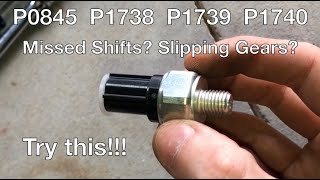
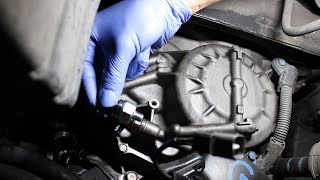
- Honda Accord, CR-V, Odyssey, Pilot (2005-2012) — Highly prone to issues with the 3rd clutch pressure switch and specific solenoids. The code means 'Shift Solenoid D Stuck ON' or 'Clutch Pressure Control Solenoid C Stuck OFF'. Solenoid resistance must be 12-25 ohms.
- Acura TL, MDX, RDX (2004-2009) — Shares transmission designs with Honda, making them susceptible to identical solenoid and pressure switch failures.
- Porsche Panamera, 911 (997/991), Cayman/Boxster (981/718) (2009-2016) — On PDK transmissions, P1733 points to a shift rod displacement sensor failure. If seen with P1731-P1735, it confirms a faulty sensor pack requiring transmission removal and PIWIS calibration.
- Volkswagen / Audi Jetta, Passat, GTI, A4, A6 (with Tiptronic) (2002-2010) — Defined as 'Tiptronic Switch Down Circuit Short To Ground', indicating a problem with the manual shift selector assembly (F189 switch) in the center console, not an internal transmission fault.
- Kia / Hyundai Sorento, Terracan (2003-2008) — On 4WD models, P1733 indicates 'Rear Speed sensor voltage High', pointing to a fault with the transfer case speed sensor or wiring.
- Chrysler/Dodge/Jeep Various with 41TE/A604, 42RLE, 45RFE transmissions (1995-2012) — Relates to the '4C Pressure Switch Sense Circuit', pointing to the pressure switch assembly within the valve body that monitors the 4th gear clutch circuit.
- Chevrolet / GMC Various trucks and SUVs (2001-2007) — Defined as 'Retarder Temperature Sensor Circuit Low', relating to an auxiliary braking system (Allison transmission retarder) rather than primary shifting clutches.
- BMW Various models with ZF transmissions (2004-2013) — A manufacturer-specific code indicating an 'Internal Error' within the Transmission Control Module (EGS/TCM), requiring module replacement.
Manufacturer-Specific Notes
- Honda/Acura: P1733 specifically relates to 'Shift Solenoid Valve D Stuck ON' or 'A/T Clutch Pressure Control Solenoid Valve C Stuck OFF'. Diagnosis requires testing specific solenoids for 12-25 Ohms resistance and performing active scan tool tests.
- Porsche: In PDK transmissions, P1733 points to a 'Displacement Sensor' fault. A weak battery triggers this code erroneously. If the battery is healthy and P1733/P1734 appear together, the internal PDK distance sensor pack requires replacement.
- Volkswagen/Audi: On Tiptronic models, P1733 indicates a 'Tiptronic Switch Down Circuit Short To Ground'. This points to the manual gear selector switch (F189) in the cabin, often caused by a dislodged magnet on the shifter circuit board.
- Chrysler/Dodge/Jeep: Defined as '4C Pressure Switch Sense Circuit'. This points to the pressure switch assembly within the valve body. Always perform a pressure test to rule out a hydraulic cross-leak before replacing the solenoid pack.
Real Owner Stories
2007 Honda CR-V at 115K miles with P1733 & P0780
Check Engine Light and blinking 'D' light came on. Transmission was stuck in limp mode with harsh engagement into Drive.
What they tried:
- Performed a transmission fluid drain and fill, but the problem persisted.
- Scanned codes, revealing P1733 and P0780.
- Suspected the Clutch Pressure Control Solenoid 'C' based on Honda definitions.
Outcome: Replaced the 'C' clutch pressure control solenoid. Shifting returned to normal, and the warning lights cleared.
Lesson: For Hondas, P1733 is highly specific. Researching the exact definition for your model points directly to the faulty solenoid, avoiding unnecessary diagnostic time.
2011 Porsche Panamera at 80K miles with P1733 & P1734
Vehicle displayed a 'Transmission Fault' warning and would not engage any gear. The dealer quoted $15,000 for a full transmission replacement.
What they tried:
- A shop diagnosed codes P1733 and P1734, pointing to shift rod displacement sensor faults.
Outcome: An independent shop replaced the internal sensor pack (PN: 97031708500) and performed a PIWIS recalibration. The repair cost $2,800, saving over $12,000.
Lesson: On Porsche PDKs, multiple P173x codes confirm the internal sensor pack failed. Avoid the dealership's full replacement quote by finding an independent specialist to replace the sensor pack.
2004 Audi A6 Quattro with P1733
The Tiptronic manual shifting mode stopped working. Normal 'D' automatic mode worked fine.
What they tried:
- Scanned the car and found code P1733 'Tiptronic Down Switch (F189): Short to Ground'.
- Disassembled the shifter assembly in the center console.
Outcome: Discovered a small magnet had fallen out of its plastic holder on the shifter's circuit board. Repositioned the magnet, restoring Tiptronic functionality for $0.
Lesson: For VW/Audi, P1733 points specifically to the shifter assembly in the cabin. Check for a dislodged magnet before replacing the expensive shifter unit.
2008 Dodge Grand Caravan with P0988 (4C Pressure Switch Rationality)
Vehicle went into limp mode. A scan revealed a pressure switch rationality code for the 4C circuit, a common Chrysler fault related to P1733.
What they tried:
- Replaced the solenoid pack, but the code returned.
- Checked the wiring harness for shorts; no issues found.
Outcome: A pressure gauge connected to the 4C port revealed 10 PSI of residual pressure in 2nd gear (should be zero). The cause was a cross-leak in the valve body. Replacing the valve body fixed the issue.
Lesson: Don't automatically replace the solenoid pack on Chrysler vehicles. Perform a pressure test to confirm hydraulic cross-leaks in the valve body.
How to Prevent This Code From Triggering
- Perform regular transmission fluid and filter changes. (Every 30,000-60,000 miles.) — Clean fluid maintains hydraulic pressure and prevents abrasive debris from clogging shift solenoids.
- Use only the manufacturer-specified transmission fluid. (Every fluid change.) — Using the wrong fluid leads to clutch slippage, overheating, and improper solenoid operation.
- Maintain a healthy battery and electrical system. (Annually inspect battery terminals and test voltage.) — A weak battery provides unstable voltage, causing the TCM to trigger false codes and command shifts incorrectly.
- Install an auxiliary transmission cooler. (Once, for vehicles used for towing.) — Reduces fluid temperature, extending the life of the fluid, seals, and electronic components.
- Address engine and transmission warning lights promptly. (Immediately.) — Ignoring a minor solenoid issue allows a slipping clutch to generate excessive heat, leading to a full transmission rebuild.
Frequently Asked Questions
What are the most common misdiagnosis mistakes for P1733?
A common mistake is replacing parts without a full diagnosis. Technicians often replace a shift solenoid when the real problem is a corroded wire, a bad ground, or contaminated fluid. Always check the battery and charging system first, as low voltage triggers false transmission codes.
Can I fix a P1733 code myself?
A DIY fluid change or external speed sensor replacement is manageable for beginners. However, if the issue requires dropping the valve body, pressure testing, or complex electrical diagnosis, stop and take it to a professional. Mistakes inside the transmission cause catastrophic damage.
How much does it cost to fix P1733?
Costs range from $150 for a fluid change to $600 for a shift solenoid replacement. Porsche PDK sensor repairs at independent shops run $2,000-$3,000, avoiding the dealer's $15,000 transmission replacement. If internal damage occurred, expect rebuild costs exceeding $3,500.
Will clearing the code fix the problem?
No, clearing the code only turns off the check engine light temporarily. The underlying physical or electrical fault remains active. The TCM detects the fault again during the next 3-4 shift attempt, and the code returns immediately.
Is a P1733 code serious?
Yes, P1733 is a severe code requiring immediate attention. Ignoring it leads to irreversible transmission damage. A simple solenoid issue quickly cascades into a burnt-out clutch pack, forcing an expensive transmission rebuild.
What does it mean if my car won't shift out of park with a P1733?
A critical transmission fault like P1733 disables the shift interlock on some vehicles, preventing you from moving the gear selector out of Park. This safety measure indicates the TCM detected a severe problem where driving causes immediate damage.
Can a bad alternator or battery cause code P1733?
Yes, transmission control modules and solenoids are highly sensitive to voltage drops. A failing battery or alternator provides unstable voltage, causing the TCM to behave erratically and set false codes. Always test the battery and charging system before beginning complex transmission diagnostics.
Key Takeaways
- Code P1733 indicates a 3-4 gear shift failure, but the exact definition ranges from a stuck Honda solenoid to a faulty VW shifter switch.
- Low transmission fluid and failed shift solenoids cause over 60% of P1733 codes, making fluid inspection your mandatory first diagnostic step.
- Stop driving immediately; operating in limp mode overheats the transmission and turns a $300 solenoid replacement into a $4,000 complete rebuild.
- Verify solenoid health by testing internal resistance with a multimeter; a healthy Honda solenoid reads between 12 and 25 ohms.
- Test your battery before replacing transmission parts, as low voltage frequently triggers false P1733 codes in complex systems like the Porsche PDK.
Helpful Videos

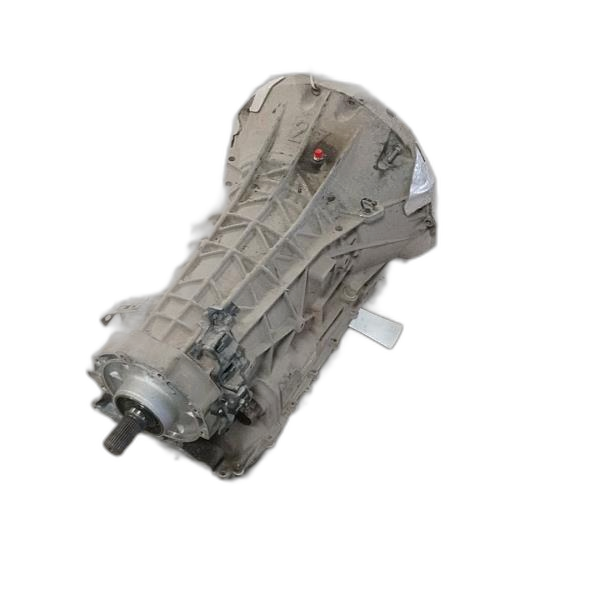
Shop the Parts Behind P1733
Below are the parts most often responsible for code P1733, ranked by how frequently each one is the actual culprit (per the diagnosis above). Tap any to see what we have for your vehicle.


The information in this article is provided for general reference and educational purposes only. Vehicle specifications, procedures, and part compatibility can vary by production date, trim level, and region. Always consult your vehicle's factory service manual and verify part numbers before purchasing or performing repairs. Safety-critical components such as airbags, seat belts, and braking systems should be installed by a qualified professional.
- 🧭 Diagnostic Flowchart
- 🎬 Helpful Videos
- 🛍️ Shop This Part
- What Does P1733 Mean?
- Can I Drive With P1733?
- Common Causes
- Symptoms
- Common Fixes & Costs
- DIY vs Professional
- Used vs. New Parts: Buying Guide
- What Happens If You Wait — Timeline
- Cost of Not Fixing It
- Diagnosis Steps
- When This Code Triggers (Freeze-Frame Conditions)
- Related Codes
- Climate & Environmental Factors
- How to Talk to a Mechanic About This Code
- Where to Take It: Dealer vs Independent vs Chain
- When to Walk Away From the Repair
- What Scan Tool You Need for This Code
- How to Clear the Code After You Fix It
- Will This Fail Emissions / State Inspection?
- Most Commonly Affected Vehicles
- Manufacturer-Specific Notes
- Real Owner Stories
- 2007 Honda CR-V at 115K miles with P1733 & P0780
- 2011 Porsche Panamera at 80K miles with P1733 & P1734
- 2004 Audi A6 Quattro with P1733
- 2008 Dodge Grand Caravan with P0988 (4C Pressure Switch Rationality)
- How to Prevent This Code From Triggering
- Frequently Asked Questions
- What are the most common misdiagnosis mistakes for P1733?
- Can I fix a P1733 code myself?
- How much does it cost to fix P1733?
- Will clearing the code fix the problem?
- Is a P1733 code serious?
- What does it mean if my car won't shift out of park with a P1733?
- Can a bad alternator or battery cause code P1733?
- Key Takeaways
- 🎟️ Get 5% Off