

P1738 on 2017-2020 Audi A3: Mechatronic Clutch Sensor Fault Guide
P1738 is not a standard Audi fault code, but it almost certainly points to a failure of the clutch position sensors in the S-Tronic transmission's Mechatronic unit. This typically triggers Audi-specific codes P1735 and P1736. The most reliable fix involves replacing the entire mechatronic circuit board with a repair kit (OEM Part No. 0GC927711H), a professional job costing between $1,200 and $2,800.
- P1738 is a generic code; the real Audi faults are P1735 and P1736, pointing to failed clutch position sensors.
- This is a critical failure that makes the vehicle unsafe to drive. Do not ignore it.
- The repair is complex and not DIY-friendly. It involves removing the Mechatronic unit from inside the transmission.
- The fix is to replace the small sensors on the Mechatronic board, not the entire expensive transmission.
- Always use an Audi-specific scan tool for diagnosis; a generic reader can be misleading.
What's Unique About the 2017-2020 Audi A3
The Audi A3 in this year range uses a 7-speed dual-clutch transmission (DSG), specifically the DQ381 (VW/Audi code 0GC). These gearboxes are known for failures of the clutch position/pressure sensors, which are integrated into the Mechatronic control unit's printed circuit board (PCB). Unlike a simple external sensor, this failure requires removing the complex Mechatronic unit from inside the transmission. While individual sensors can be de-soldered, the more common and reliable repair is to replace the entire circuit board assembly, making it a significantly more involved and costly repair.
Symptoms You May Notice
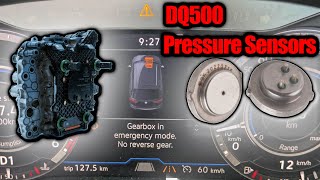
- "Gearbox Malfunction: You can continue driving" or "Gearbox malfunction: Please stop vehicle and select P" message on the dashb 🎬 Watch: How to handle a gearbox in emergency mode.oard.
- Flashing PRNDS indicator on the instrument cluster.
- Transmission enters 'limp mode,' often stuck in a single gear (like 2nd or 3rd).
- Inability to select Reverse.
- Car only has odd gears (1, 3, 5, 7) or only even gears (2, 4, 6, R).
- Harsh, jerky, or delayed gear shifts, especially in stop-and-go traffic or when hot.
- Complete loss of drive as if the car is in neutral.
- Shuddering when pulling away from a stop.
- Replacing the entire transmission. While the fault is serious, it is often limited to the serviceable Mechatronic unit, not the mechanical gears or clutches themselves.
- Replacing clutch packs. Unless there is evidence of slipping (verified through live data) or overheating, the clutch packs are usually not the cause of these specific electrical fault codes.
Most Likely Causes
- Failure of Mechatronic Printed Circuit Board (PCB) / Clutch Position Sensors 🔴 High Probability The sensors integrated into the DQ381 Mechatronic circuit board are a known weak point. They can fail electrically or their solder joints can crack due to heat cycles and vibration, leading to intermittent or total loss of signal.
How to confirm: Scan the transmission control module (TCM, Address 02) with an Audi-specific tool (like VCDS or ODIS). The definitive evidence is the presence of codes P173500 and/or P173600. Live data may show erratic or non-existent readings from the clutch position sensors. A key test is to check live data with the engine off; the pressure sensors should read 0.00 bar, and deviations greater than +/- 0.20 bar indicate a fault.
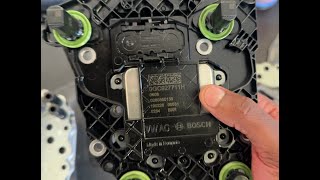
Typical fix: The Mechatronic unit is removed from the transmission. The entire printed circuit board containing the faulty sensors is replaced with a new repair kit (Part No. 0GC927711H). This is preferred over de-soldering individual sensors for reliability. The unit is then reinstalled, filled with new fluid, and a basic settings/adaptation procedure is performed using dealer-level software. 🎬 Watch: A step-by-step DIY guide for the DQ381 repair.
Est. part cost: $400-$800 for the circuit board repair kit.
Rare But Worth Checking
- Mechatronic Wiring Harness/Connector Failure: While less common than sensor failure, the internal wiring of the Mechatronic unit or the main external connector to the transmission can become damaged from fluid intrusion or vibration, causing similar electrical faults.
- Complete Mechatronic Unit Failure: → Shop Transmission Valve Body In some cases, the hydraulic portion or the main processor of the Mechatronic unit may fail, requiring a full replacement or more comprehensive rebuild rather than just a circuit board swap. This is significantly more expensive.
- Internal Auxiliary Hydraulic Pump Failure: A known issue covered by Audi campaign '34L4' involves bolts on an internal auxiliary pump backing out, which can cause catastrophic gearbox failure. While the symptoms are different (often starting with noise), it's another known major fault within the DQ381.
Diagnosis Steps
- Confirm the symptoms, noting which gears are unavailable (odd or even) and what warning messages are displayed.
- Perform a full vehicle scan using an Audi-compatible diagnostic tool like VCDS or ODIS. Do not rely on a generic OBD-II reader.
- Check for fault codes P173500 and P173600 in the transmission control module (TCM, Address 02). Their presence is a strong confirmation.
- With the ignition on but the engine off, check the live data for clutch pressure sensors in the measuring blocks. Faulty sensors will often show a pressure reading that is out of specification (not 0.00 bar), does not change, or is clearly implausible.
- Check the transmission fluid level and condition. While not the primary cause, low or burnt fluid can indicate other transmission problems that may need to be addressed.
- If codes P1735/P1736 are present and live data confirms an out-of-spec pressure reading with the engine off, the diagnosis is confirmed as a failed 🎬 See these expert tips for a successful sensor repair. Mechatronic circuit board/sensor assembly. The next step is removal and repair of the unit.
Parts You'll Likely Need
- Mechatronic Printed Circuit Board Repair Kit
(OEM #0GC927711H)— This is the official Audi repair kit that replaces the entire circuit board containing the failure-prone clutch position sensors. It is the most common and reliable fix for P1735/P1736 faults.
Trusted brands: Audi/VW Genuine Part
OEM price range: $500-$800
Aftermarket price range: $400-$600 (Remanufactured) - DSG Transmission Fluid
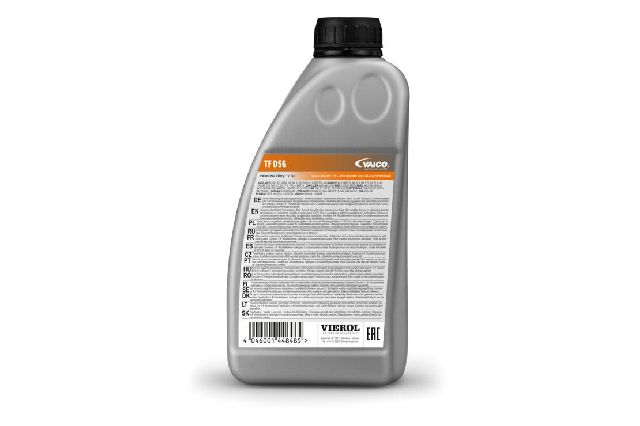
(OEM #G055529A2)— The transmission fluid must be drained to remove the Mechatronic unit and refilled with new fluid upon reinstallation. Approximately 5-6 liters are needed for a drain and fill.
Trusted brands: Audi OEM, Liqui Moly 8100, Fuchs Titan FFL-2
OEM price range: $25-$35 per liter
Aftermarket price range: $15-$25 per liter - DSG Transmission Filter Kit
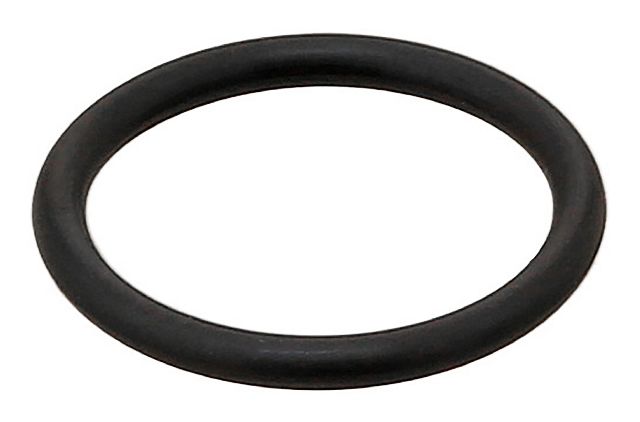
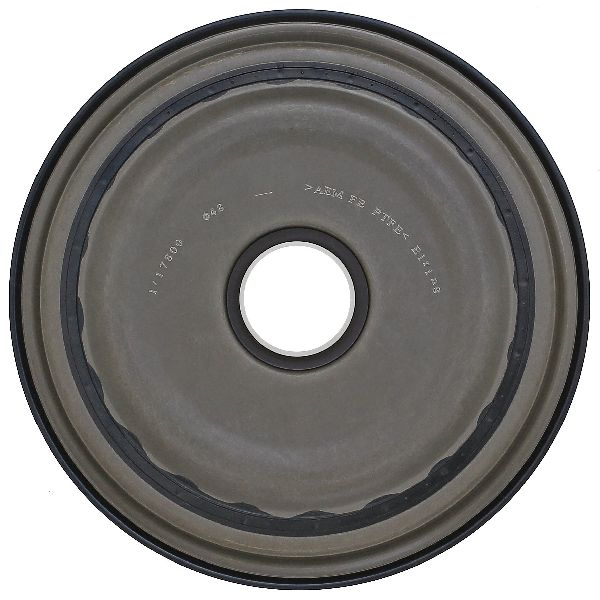
(OEM #0GC325183A)— The external filter and housing o-ring should always be replaced when servicing the transmission fluid.
Trusted brands: Audi OEM, Mahle, Vaico
OEM price range: $40-$60
Aftermarket price range: $20-$40
Related Codes That Often Appear With This One
- P173500 — This is the specific VAG fault code for 'Position Sensor for Clutch 1 Electrical Malfunction', which is the root cause.
- P173600 — This is the specific VAG fault code for 'Position Sensor for Clutch 2 Electrical Malfunction'. It often appears with P1735 as the sensors are on the same circuit board and prone to the same failure.
- P175E00 — This code for 'Clutch 1 closes unintentionally' can appear after a sensor repair if the basic settings/adaptation procedure is not performed correctly.
- P17BF — This code relates to the hydraulic pump for the mechatronic unit and can sometimes appear alongside sensor faults if the system is struggling to maintain pressure due to erratic commands or limp mode activation.
Technical Service Bulletins (TSBs) & Recalls
- TSB 2070217/3 (NHTSA ID 10242910): Directly addresses DTCs P173500 and P173600. It confirms the workshop finding of a 'gearbox warning lamp' and instructs technicians on the procedure to replace the 'contact plate' (the circuit board) within the mechatronic unit.
Platform-Specific Known Issues
- The DQ381 7-speed S-Tronic transmission used in this platform has a widely recognized issue with premature failure of the clutch position sensors on the Mechatronic board. This is a design flaw acknowledged by the availability of a specific circuit board repair kit from Audi.
- A formal TSB (2070217/3, also referenced as TPI 2049499/1) exists for this exact issue, guiding technicians to replace the control unit (circuit board) for P173500 and P173600 faults.
Mechanic-Grade Diagnostic Values
- Clutch pressure sensors 1 and 2 live data values — expected: 0.00 bar. Failure: A deviation of +/- 0.20 bar indicates a developing fault. The fault code is typically set when the deviation reaches 0.25–0.35 bar.
Hidden / Shadow Codes Worth Checking
- 10666: Internal Diagnostic Fault Code Cluster (DFCC) for P173500 - Position sender for clutch 1, electric fault. (see via Appears in logs from dealer-level diagnostic tools like ODIS.)
- 10668: Internal Diagnostic Fault Code Cluster (DFCC) for P173600 - Position sender for clutch 2, electric fault. (see via Appears in logs from dealer-level diagnostic tools like ODIS.)
Scan Tool Commands That Help
- ODIS (Official Dealer Software): Guided Functions - Replace Control Module — This is the official procedure used after installing the new mechatronic circuit board. It connects to VAG servers to code the new part to the vehicle, update software, and perform necessary adaptations. It may also be required for component protection adaptation.
- VCDS (Ross-Tech) or similar professional tools: Basic Settings & Adaptation — After the physical repair, a basic settings procedure must be run to allow the TCU to relearn the clutch positions and pressure points. This is mandatory for the transmission to function correctly.
- ODIS / VCDS: Full Adaptation Value Reset — This is a critical step beyond a simple 'Basic Settings'. If new codes like P175E00 (Clutch closes unintentionally) appear after the repair, it's necessary to fully reset all stored adaptation values, especially the clutch characteristic curve, and then perform the relearn procedure.
Real Owner Repair Stories
- YouTube channel 'Torque Automotive' (Seat Leon 2.0 TSI (shares DQ381 platform with Audi A3)) — Car getting stuck in odd-numbered gears, going into limp mode, and logging fault code P173500 (Position sensor for clutch 1 electronical malfunction).
❌ Tried (didn't work) After sending the mechatronic unit out for repair and reinstalling it, the car was stuck in 2nd gear with a new fault: 'Gearbox in emergency mode' and code P175E00 (Clutch one unpredictable).
✅ What actually fixed it Performing a full basic setting reset via a diagnostic tool solved the secondary P175E00 code and restored normal transmission function.
OEM Part Supersession History
0GC927711G (and B, C variants)→0GC927711H— Likely an updated revision to improve reliability of the integrated sensors.
Heads up: 0GC927711H is generally backwards compatible with older versions like G, C, and B for the DQ381 transmission.
Diagnostic Flowchart
Other Known Issues on This Vehicle
Issues unrelated to this code that are worth knowing about as an owner of this generation:
- Premature Water Pump & Thermostat Housing Failure 🔴 High — Very common, often occurs between 40,000 and 80,000 miles. The plastic housing becomes brittle and cracks, causing coolant leaks. (Ref: Subject of class-action lawsuits and TSBs like A1923442071515_1. A warranty extension was offered in some cases.)
- Panoramic Sunroof Leaks and Rattles 🟠 Medium — Commonly reported. Clogged drain tubes or failed perimeter seals can cause water to leak into the headliner and cabin electronics. (Ref: TSB A6023662054480_3 provides repair information for panoramic sunroofs.)
- MIB Infotainment System Glitches 🟡 Low — Frequently reported by owners. Issues include the screen freezing, failing to retract, or general software bugs.
- Start-Stop System Malfunction 🟡 Low — A common complaint for the 2017-2020 models, where the system may malfunction, sometimes affecting power steering assist upon restart.
Used vs. New Parts: Buying Guide for This Vehicle
When a used part is the smart pick: A used part is generally not recommended due to component protection and unknown history. A 'remanufactured' or 'rebuilt' mechatronic circuit board (TCU) is a very common and cost-effective alternative to a brand new unit. Many services rebuild your original unit, which avoids coding issues. Some vendors sell remanufactured units with the immobilizer defeated ('IMMO OFF'), making them plug-and-play before the mandatory basic settings procedure.
What to inspect on the donor part:
- For a remanufacturing service, look for vendors that offer a lifetime warranty.
- Ensure the service includes full bench testing under simulated load and temperature conditions.
- Prefer vendors who explicitly state they use higher-quality, upgraded components than the original OEM standard.
- If buying a remanufactured board, confirm it has had new, high-quality pressure sensors installed (OEM is Bosch).
OEM-only on this vehicle (don't cheap out):
- Mechatronic Circuit Board Repair Kit (0GC927711H): While remanufacturing services are popular, if buying the part outright, the genuine VW/Audi kit is the most reliable option.
- DSG Transmission Fluid (G055529A2): Use only genuine fluid or a reputable aftermarket brand (e.g., Fuchs, Liqui Moly) that explicitly meets the G055529A2 specification.
Aftermarket brands forum-validated for this vehicle:
- Bosch (for individual pressure sensors, as they are the OEM supplier).
- Fuchs Titan FFL-2 (for DSG fluid).
- Liqui Moly 8100 (for DSG fluid).
Brands owners have reported issues with on this vehicle:
- Unbranded, low-cost pressure sensors sourced from marketplaces have been reported to fail during the post-installation calibration/basic settings procedure.
Real Owner Stories
Aggregated from forums and TSBs cited above. Mileages and costs reflect what owners reported in those sources.
2019 Audi A3
Symptoms: The car only had even gears available and was showing fault code P1735.
What fixed it: The mechatronic unit was repaired by replacing internal parts as guided by a TSB, rather than replacing the entire unit. This required ODIS software for the post-repair software update.
Source hint: Ross-Tech Forums - Thread '2019 Audi A3 DSG P1735'
Related OBD-II Codes
Frequently Asked Questions
Is there an official Audi TSB for the 'Gearbox Malfunction' warning on my 2017-2020 A3?
Do I have to replace the entire expensive Mechatronic unit for a P1738-related fault?
Can my local mechanic diagnose this with a standard OBD-II code reader?
My friend's 2019 VW GTI has the exact same symptoms. Is it the same problem?
How can a mechanic be 100% sure it's the sensor board before taking the transmission apart?
Is it safe to buy a used Mechatronic unit from a salvage yard to save money?
Helpful Videos
We Have This Part in Stock


The information in this article is provided for general reference and educational purposes only. Vehicle specifications, procedures, and part compatibility can vary by production date, trim level, and region. Always consult your vehicle's factory service manual and verify part numbers before purchasing or performing repairs. Safety-critical components such as airbags, seat belts, and braking systems should be installed by a qualified professional.
- Audi A3:
- 🧭 Diagnostic Flowchart
- 🎬 Helpful Videos
- 🛍️ Shop This Part
- What's Unique About the 2017-2020 Audi A3
- Symptoms You May Notice
- Most Likely Causes
- Rare But Worth Checking
- Diagnosis Steps
- Parts You'll Likely Need
- Related Codes That Often Appear With This One
- Technical Service Bulletins (TSBs) & Recalls
- Platform-Specific Known Issues
- Mechanic-Grade Diagnostic Values
- Hidden / Shadow Codes Worth Checking
- Scan Tool Commands That Help
- Real Owner Repair Stories
- OEM Part Supersession History
- Other Known Issues on This Vehicle
- Used vs. New Parts: Buying Guide for This Vehicle
- Real Owner Stories
- 2019 Audi A3
- Related OBD-II Codes
- Frequently Asked Questions
- 🎟️ Get 5% Off