

P1738 on 2016-2021 Mazda CX-3: Automatic Transaxle Internal Malfunction Guide
Code P1738 on a 2016-2021 Mazda CX-3 indicates an internal automatic transmission malfunction. It's often caused by contaminated fluid leading to stuck oil pressure switches in the valve body. The fix typically involves replacing the control valve body assembly, a costly repair best left to professionals. In some cases, a full transmission replacement is required.
- P1738 on a Mazda CX-3 is a serious code for an internal transmission malfunction.
- The most likely cause, confirmed by Mazda TSBs, is a faulty or contaminated transmission valve body.
- This is not a DIY-friendly repair; it requires professional diagnosis and service.
- The repair often involves replacing the entire valve body, which is expensive.
- Ignoring the code can lead to complete transmission failure and higher repair costs.
What's Unique About the 2016-2021 Mazda CX-3
Mazda has acknowledged this issue across many of its SKYACTIV-G models with the FW6A-EL 6-speed automatic transmission, including the CX-3, through multiple Technical Service Bulletins (TSBs). TSB 05-004/19, which supersedes several earlier bulletins, explicitly states that contamination in the transmission fluid can cause internal oil pressure switches (A and/or B) to stick, triggering P1738 and other related codes. This isn't just a random failure; it's a documented pattern for this specific transmission family, leading Mazda to issue specific repair procedures focusing on the valve body.
Diagnostic Flowchart
Tap your situation to follow the diagnostic path that matches what you're seeing on this vehicle.
Symptoms You May Notice
- Check Engine Light is on
- Automatic Transaxle (A/T) warning light is on.
- Harsh or erratic shifting.
- Transmission may be stuck in one gear (fail-safe mode).
- Inability to use manual shift mode.
- Reduced vehicle performance.
- Inhibits i-stop control.
- Replacing individual solenoids when the entire valve body is contaminated or faulty. Mazda sells the valve body as a complete, flow-tested mechatronic unit for this reason.
- Assuming the transmission is completely bad without first inspecting the valve body, which is the most common failure point documented in TSBs.
- Replacing the battery, as a low battery can cause multiple warning lights on Mazdas, but it will not resolve a persistent P1738 code.
Most Likely Causes
- Contaminated Automatic Transmission Fluid (ATF) 🔴 High Probability → Shop Transmission Assembly Mazda TSBs #05-004/19 and others explicitly state that contamination entering the oil passages is the primary cause for the pressure switches sticking within the valve body.
How to confirm: Inspect the ATF fluid. If it is dark, burnt-smelling, or contains visible debris, it is contaminated. However, the contamination causing the switches to stick is internal and may not be obvious from a dipstick check alone. The presence of a large amount of foreign material in the oil pan during inspection is a key indicator.
Typical fix: In very mild cases, a fluid flush might help, but often the damage is already done. The official fix often involves replacing the affected oil pressure switches or the entire valve body assembly.
Est. part cost: $100-$250 for fluid and filter - Faulty Transmission Valve Body 🔴 High Probability → Shop Transmission Valve Body The valve body houses the oil pressure switches and solenoids that are known to fail due to contamination. TSBs point to these components sticking as the root cause. Mazda's own repair procedure for this code, especially when seen with other pressure switch codes, is to replace the control valve body assembly.
How to confirm: A technician will perform pressure tests and electronic diagnostics. If fluid is clean and solenoids test okay individually but the problem persists with codes like P0842, P0847, etc., the valve body is the confirmed culprit per Mazda's TSBs.
Typical fix: Replacement of the entire control valve body assembly, which comes as a pre-programmed mechatronic unit including the TCM and solenoids.
Est. part cost: $950-$1400 for an OEM part. - Low Automatic Transmission Fluid (ATF) Level 🟡 Medium Probability → Shop Transmission Assembly
How to confirm: Check the transmission fluid level according to the manufacturer's procedure. An incorrect level can cause pressure drops and erratic behavior. This is the first step in Mazda's own diagnostic procedure for P1738.
Typical fix: Top off the fluid to the correct level with Mazda Genuine ATF FZ and inspect for leaks.
Est. part cost: $20-$40 for a quart of Mazda-specific ATF
Rare But Worth Checking
- Complete Transmission Failure: → Shop Transmission Assembly In some cases, especially if driving continued with symptoms, the P1738 code can be the final indicator of a catastrophic internal failure. Mazda's official diagnostic tree for P1738 without other codes sometimes points directly to 'Replace the automatic transaxle'.
- Faulty Transmission Control Module (TCM): → Shop Transmission Assembly While less common than the mechanical parts, the TCM itself can fail. However, on these models, the TCM is typically part of the valve body assembly and is replaced with it. In some earlier cases, only a TCM software update was required.
Diagnosis Steps
- Verify the code with a professional OBD-II scanner that can read transmission codes.
- Check the automatic transmission fluid (ATF) level and condition. This is the first step in the official Mazda diagnostic procedure.
- Inspect for any visible leaks around the transmission pan and seals.
- Consult Mazda Technical Service Bulletins (TSBs), particularly #05-004/19 and #05-002-23, to understand the known issue.
- Using an advanced scan tool, check for other accompanying DTCs (P0780, P0842, etc.) which strongly point to the valve body issue.
- If fluid is low, adjust to the correct level, clear codes, and test drive for at least 5 minutes to see if the code returns.
- If codes persist, the next step is to drop the transmission oil pan and inspect the valve body for debris or damage. If significant debris is found, the oil strainer (Part # FZ01-21-500) should also be replaced.
- Based on Mazda's TSBs, if P1738 is present with related pressure switch codes, the recommended repair is to replace the control valve body.
- After replacement, an 'Initial Learning Procedure' must be performed using a Mazda diagnostic tool (M-MDS).
- If a new valve body does not resolve the issue, or if P1738 was the only code present, a more severe internal transmission problem is likely, which may require a full rebuild or replacement.
Parts You'll Likely Need
- Automatic Transmission Valve Body
(OEM #FZ21-21-100J)— This is the most common failure point for this code, as documented by Mazda's own service bulletins. It contains the pressure switches that get stuck due to contamination and is sold as a complete assembly.
Trusted brands: Mazda (OEM)
OEM price range: $950-$1400.
Aftermarket price range: $250-$500 (Remanufactured, use with caution as they may not be programmed correctly) - Mazda Genuine ATF FZ Automatic Transmission Fluid
(OEM #0000-FZ-113E-01)— The correct fluid is required when replacing the valve body or servicing the transmission. Approximately 4-5 quarts are needed for a valve body service.
Trusted brands: Mazda (OEM)
OEM price range: $20-$30 per quart - Transmission Oil Strainer (Filter)
(OEM #FZ01-21-500)— Recommended to be replaced during a valve body service, especially if contamination is the suspected cause.
Trusted brands: Mazda (OEM)
OEM price range: $40-$50
Aftermarket price range: $20-$30
Related Codes That Often Appear With This One
- P0780 — Indicates a 'Gear Shifting Malfunction' and is frequently cited alongside P1738 in Mazda TSBs as part of the same fault pattern.
- P0842 — Relates to 'Oil Pressure Switch No. 1 Stuck On' and points directly to the valve body issue described in TSBs.
- P0847 — Relates to 'Oil Pressure Switch No. 2 Stuck On' and points directly to the valve body issue described in TSBs.
- P0872 — Relates to 'Oil Pressure Switch No. 3 Stuck On' and points directly to the valve body issue described in TSBs.
- P0877 — Relates to 'Oil Pressure Switch No. 4 Stuck On' and points directly to the valve body issue described in TSBs.
Technical Service Bulletins (TSBs) & Recalls
- 05-002-23: A recent TSB from May 2023 that lists P1738 among a group of DTCs related to the check engine and automatic transaxle warning lights for a wide range of Mazda models.
- 05-004/19: Supersedes many earlier bulletins (like 05-004/18, 05-005/16, etc.) and provides the most detailed explanation. It identifies the cause as stuck oil pressure switches (A and/or B) in the valve body due to contamination and applies to 2016-2019 CX-3 models, among others.
- 05-005/13: An older TSB for early SKYACTIV models that also identified P1738 and recommended replacing the valve body with a 'new programmed' unit.
Platform-Specific Known Issues
- Mazda has issued multiple TSBs (e.g., #05-002-23, #05-004/19) regarding this code on the CX-3 and other models with the SKYACTIV 6-speed automatic transmission. The bulletins confirm the cause is often contamination causing oil pressure switches in the valve body to stick. The fix has evolved from replacing individual switches in older bulletins to replacing the entire valve body assembly in newer ones.
Mechanic-Grade Diagnostic Values
- Oil Pressure Switch Continuity Test — expected: The switch should show a closed circuit (low resistance, near 0 ohms) when at rest and an open circuit (infinite resistance, 'OL') when sufficient air pressure is applied to its port.. Failure: The switch is faulty if it is stuck open (always 'OL') or stuck closed (always near 0 ohms) regardless of pressure.
Hidden / Shadow Codes Worth Checking
- PXXXX:00: Mazda diagnostic trouble codes, including P1738, are often displayed with a ':00' suffix. This does not indicate a separate sub-code but is part of the standard display format in the Mazda M-MDS. The diagnosis relies on the pattern of primary codes stored together, not on hidden codes. (see via Mazda M-MDS or an advanced professional scan tool capable of reading manufacturer-specific transmission codes.)
Scan Tool Commands That Help
- Mazda M-MDS (or equivalent): Initial Learning Procedure — This procedure is mandatory after replacing the control valve body or individual oil pressure switches. It allows the TCM to learn the characteristics of the new hydraulic components. Failure to perform this step will result in continued shifting problems.
- Mazda M-MDS (or equivalent): Mechanical System Test — This is a guided diagnostic test performed after the Initial Learning Procedure to verify that the mechanical and hydraulic systems of the transmission are functioning correctly after a repair.
Wiring & Ground Locations
- N/A for this code — Not Applicable. The official Mazda diagnostic procedure for DTC P1738 explicitly states 'SYSTEM WIRING DIAGRAM: Not applicable'. This is because the fault is defined as an internal transaxle malfunction where the specific location cannot be determined by the TCM. The diagnostic path focuses on internal components (fluid, valve body, clutches) rather than external wiring or grounds.
Real Owner Repair Stories
- AliExpress Product Review / Guide (2014 Mazda 6 (Uses same FW6A-EL transmission family)) — Hesitation when shifting from 2nd to 3rd gear.
❌ Tried (didn't work) Replacing the engine oil pressure sensor.
✅ What actually fixed it After finding code P0842 ('Transmission Fluid Pressure Sensor/Switch 'B' Circuit Low'), replacing the correct part—the FW6A-EL transmission valve body oil pressure switch—resolved the issue immediately.
OEM Part Supersession History
Individual Oil Pressure Switches / TCM Software→Control Valve Body Assembly— Mazda's recommended repair procedure has evolved. Early TSBs (circa 2013-2015) sometimes called for only a TCM software update or replacement of individual oil pressure switches A and B due to contamination.
Heads up: Later TSBs (like 05-004/19) and workshop manuals now more commonly recommend replacing the entire control valve body assembly. This suggests that replacing only the switches may be an incomplete fix, as contamination could be widespread within the valve body or the design of the replacement assembly may be improved.
Model Year Variations Within This Range
- 2016-2021: The primary variation within this period is not a specific part change on the vehicle, but the evolution of the official repair procedure documented in Technical Service Bulletins. A repair performed in 2016 based on TSBs at the time might have involved only replacing pressure switches, whereas the same issue addressed in 2020 would more likely result in a full valve body replacement per the latest superseding TSBs.
We Have This Part in Stock

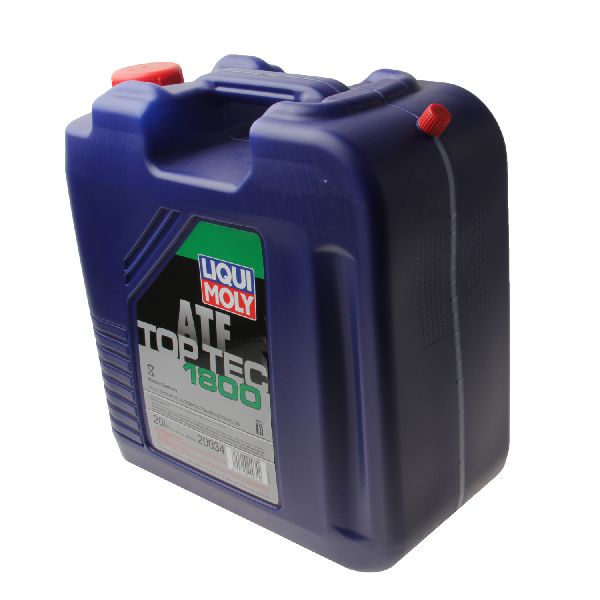
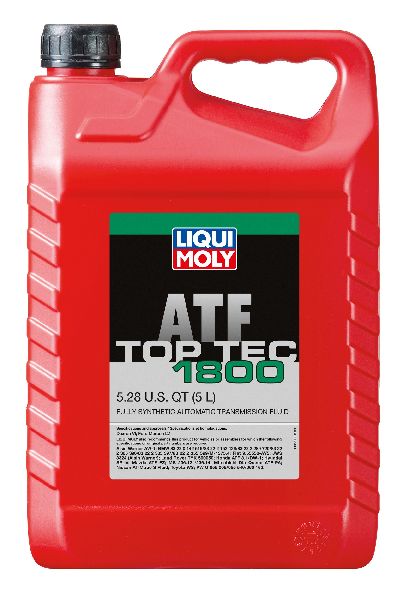
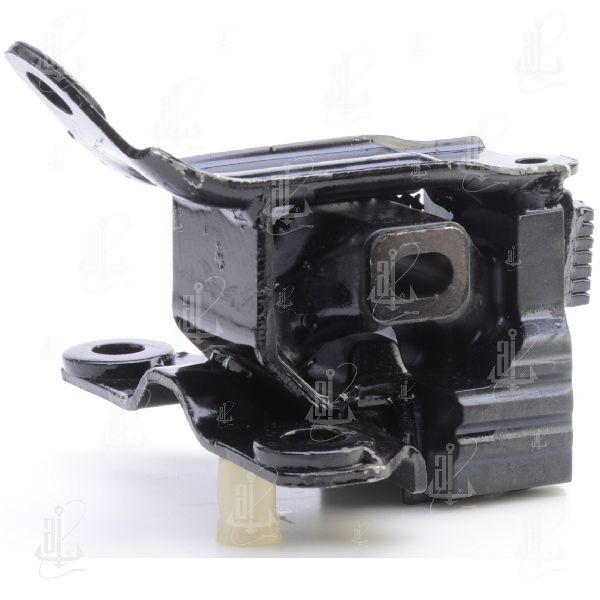
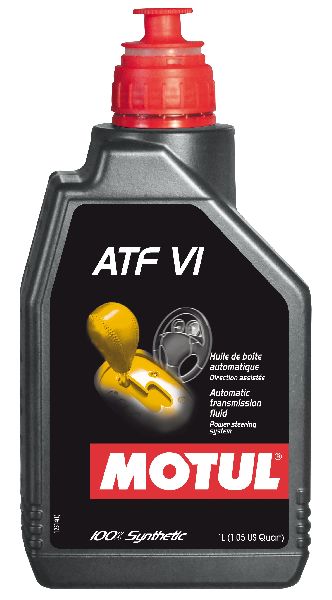

The information in this article is provided for general reference and educational purposes only. Vehicle specifications, procedures, and part compatibility can vary by production date, trim level, and region. Always consult your vehicle's factory service manual and verify part numbers before purchasing or performing repairs. Safety-critical components such as airbags, seat belts, and braking systems should be installed by a qualified professional.
- Mazda CX-3:
- 🧭 Diagnostic Flowchart
- 🛍️ Shop This Part
- What's Unique About the 2016-2021 Mazda CX-3
- Symptoms You May Notice
- Most Likely Causes
- Rare But Worth Checking
- Diagnosis Steps
- Parts You'll Likely Need
- Related Codes That Often Appear With This One
- Technical Service Bulletins (TSBs) & Recalls
- Platform-Specific Known Issues
- Mechanic-Grade Diagnostic Values
- Hidden / Shadow Codes Worth Checking
- Scan Tool Commands That Help
- Wiring & Ground Locations
- Real Owner Repair Stories
- OEM Part Supersession History
- Model Year Variations Within This Range
- 🎟️ Get 5% Off