

P1738 on 2017-2022 Volkswagen Golf: DSG Clutch Sensor Fault Explained
This code indicates a failure of a clutch position sensor inside the DSG automatic transmission's Mechatronics unit. The vehicle may enter 'limp mode' or fail to shift correctly. The fix is not a full transmission replacement, but a professional repair of the Mechatronics unit's internal circuit board, costing between $1,200 and $2,800.
- P1738 on a 2017-2022 Golf means there's a serious fault with a clutch position sensor in the DSG transmission.
- Expect symptoms like a 'Gearbox Malfunction' warning, limp mode, and harsh or failed shifting.
- This is NOT a DIY repair. It requires a transmission specialist with VW-specific tools.
- The correct fix is to replace the internal circuit board of the Mechatronics unit (Part No. 0GC927711H), not the entire unit or transmission.
- Do not continue to drive the vehicle, as it is unsafe. Have it towed to a qualified repair shop.
What's Unique About the 2017-2022 Volkswagen Golf
The 2017-2022 Golf (both Mk7.5 and Mk8 generations) heavily utilizes the 7-speed DQ381 wet-clutch DSG transmission. This specific transmission model is known to have issues with the internal circuit board of its Mechatronics unit, where the clutch position sensors are located. The failure is so common that VW Group has established a specific repair procedure and parts kit, avoiding the need for a full, costly Mechatronics unit or transmission replacement. This issue is shared across many VAG vehicles using the DQ381, including the Audi A3, VW Tiguan, and Skoda Kodiaq.
Generation note: This issue affects the entire 2017-2022 range, which includes the Volkswagen Golf Mk7.5 (2017-2021) and the Golf Mk8 (2020-2022). Both generations use the DQ381 7-speed DSG transmission (VW code 0GC), which is prone to this specific Mechatronics sensor failure.
Symptoms You May Notice
- "Gearbox Malfunction: You can continue driving" message on the dashboard
- "Transmission in emergency mode" warning 🎬 Watch: How to diagnose and fix the emergency mode errorlight
- Flashing gear indicator (PRNDS)
- Transmission gets stuck in one gear or fails to shift
- Vehicle only allows use of odd (1, 3, 5, 7) or even (2, 4, 6) gears
- Harsh, jerky, or delayed gear engagement
- Inability to select Reverse
- Vehicle shudders or jolts when shifting or taking off
- Replacing the entire Mechatronics unit. This is unnecessary and excessively expensive, as the fault is almost always isolated to the replaceable internal circuit board/sensor assembly. Many independent specialists can perform the board-level repair for a fraction of the cost.
- Replacing the entire transmission. This is an extreme and incorrect diagnosis for an internal electronic fault within the Mechatronics unit.
Most Likely Causes
- Mechatronics Internal Circuit Board (Contact Plate) Failure 🔴 High Probability The clutch position sensors are integrated into this circuit board. These sensors, often made by Bosch, are known to degrade prematurely due to constant heat cycles and vibration within the transmission, leading to electrical failure. This is a well-documented design weakness in the DQ381 transmission.
How to confirm: A professional scan with a VW-specific tool (like VCDS or ODIS) will show fault codes P173500 and/or P173600 stored in the transmission control module (address 02). With the ignition on (engine off), the faulty sensor will show a pressure reading outside the normal calibrated value. A healthy sensor should read 0.00 bar; a deviation of +/- 0.20 bar indicates a defect, and the fault code is typically set with a deviation of 0.25-0.35 bar.
Typical fix: The Mechatronics unit is removed from the transmission, and the internal circuit board containing the faulty sensors is replaced with a new repair kit. The unit is then reinstalled, filled with new fluid, and a basic settings adaptation is performed using diagnostic software.
Est. part cost: $400-$700 for the OEM repair kit.
Rare But Worth Checking
- Wiring Harness Damage: While less common than internal failure, damage to the wiring harness leading to the transmission can cause identical symptoms. This should be inspected before condemning the Mechatronics unit.
- Low or Contaminated DSG Fluid: Extremely overdue fluid service can lead to poor hydraulic performance and debris that may affect Mechatronics function. Checking the fluid level and condition is a preliminary step, though it is rarely the root cause of these specific electrical fault codes.
- Cross-System Sensor Faults: While P1738 is primarily a transmission code in modern VWs, it has historically appeared in other contexts. For example, NHTSA ODI #10911348 notes a case where a repairman diagnosed P1738 and P1739 as indicating frontal crash sensors for the driver and passenger sides in a different Volkswagen model.
Diagnosis Steps
- Scan the vehicle with a VW/Audi-specific diagnostic tool (like VCDS or ODIS) to confirm the presence of P173500 and/or P173600 in the transmission module (address 02).
- With the engine off and ignition on, check live data for the clutch pressure sensors. A healthy sensor should read 0.00 bar. A reading deviating by more than +/- 0.20 bar indicates a faulty sensor.
- Check the DSG fluid level and condition. Ensure it is not low or contaminated, though this is unlikely to be the root cause.
- Visually inspect the transmission wiring harness and connectors for any signs of damage, corrosion, or loose connections. Pay attention to the main ground point on the gearbox housing.
- Reference Audi TSB 2070217/3, which details the diagnostic and repair procedure for this exact issue on the identical 0GC transmission.
- If codes P1735/P1736 are present and wiring is intact, the failure is confirmed to be the internal Mechatronics circuit board.
- Proceed with the removal of the Mechatronics unit and replacement of the internal contact plate/circuit board.
Parts You'll Likely Need
- Mechatronics Circuit Board Repair Kit
(OEM #0GC927711H)— This is the specific part designed by VW Group to fix the common clutch position sensor failure without replacing the entire Mechatronics unit.
Trusted brands: Volkswagen Genuine
OEM price range: $400-$700
Aftermarket price range: N/A - DSG Transmission Fluid
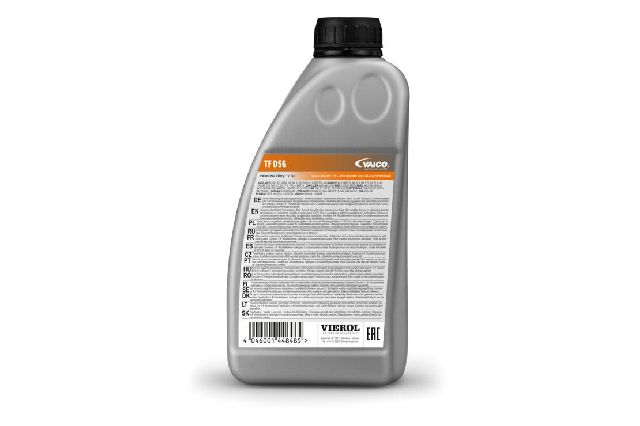
(OEM #G055529A2)— The transmission fluid must be drained to remove the mechatronics unit. It must be refilled with the correct specification fluid. Approximately 6 liters are needed.
Trusted brands: Volkswagen Genuine, LIQUI MOLY 8100
OEM price range: $20-$30 per liter
Aftermarket price range: $15-$25 per liter - DSG Filter Kit
(OEM #0GC325183A)— The external filter and O-ring should be replaced any time the DSG fluid is changed.
Trusted brands: Volkswagen Genuine
OEM price range: $30-$50
Aftermarket price range: $20-$40 - Mechatronics Service Kit — A comprehensive kit including one-time-use bolts for the mechatronics unit (9x N10554002), a new drain bolt, and various seals is highly recommended for the job.
Trusted brands: New German Performance
OEM price range: $100-$150
Aftermarket price range: N/A
Related Codes That Often Appear With This One
- P1735 / P173500 — This is the VW-specific code for 'Position Sensor for Clutch 1 Electrical Malfunction'. P1738 is often the generic version of this code.
- P1736 / P173600 — This is the VW-specific code for 'Position Sensor for Clutch 2 Electrical Malfunction'. This code directly corresponds to the P1738 fault.
- P176F — This code for 'Clutch 2 Closes Unintentionally' can appear alongside the sensor faults as a direct consequence of the control unit not knowing the clutch's true position.
- P1701 — This code for 'Transmission Control Module Locked' can appear after the initial sensor fault, complicating diagnosis if not addressed in the correct order.
Technical Service Bulletins (TSBs) & Recalls
- Audi TSB 2070217/3: Addresses 'Gearbox Malfunction' warnings with DTCs P173500 and P173600, instructing technicians to replace the mechatronic internal circuit board.
Platform-Specific Known Issues
- An official Technical Service Bulletin (TSB 2070217/3) exists for Audi models like the A3 which use the identical DQ381 (0GC) transmission, outlining the exact repair procedure for fault codes P173500 and P173600 by replacing the circuit board. This TSB is the de facto guide for this repair across all affected VAG brands.
Mechanic-Grade Diagnostic Values
- Clutch Position/Pressure Sensor Actual Value (Live Data) — expected: 0.00 bar. Failure: A deviation of +/- 0.20 bar indicates a defect. The fault code is typically set with a deviation between 0.25 bar and 0.35 bar.
- Transmission Fluid Temperature for Basic Settings — expected: Greater than 15°C (ideally 40-60°C). The procedure may fail if the temperature is too low or gets too hot.. Failure: Procedure will not start or will abort if the temperature is outside the required range.
Scan Tool Commands That Help
- VCDS (VAG-COM): Basic Settings - Group [Specific to UDS controllers, often auto-detected] — This must be performed after replacing the mechatronics circuit board or the entire mechatronics unit to allow the TCM to learn the new component tolerances, clutch engagement points, and gear shift paths.
- ODIS (Official Dealer Software): Guided Functions -> Replace Mechatronic Unit (Control Unit) / Basic Setting for Gearbox — This is the dealer-level guided procedure that not only performs the basic settings but also handles the immobilizer adaptation required when a new control unit is installed.
- OBDeleven: Basic Settings of Transmission — Used after component replacement. The user should also perform 'Reset all adaptations' and 'Reset gear selector data' beforehand for a clean setup.
Wiring & Ground Locations
- Ground Point 14 — On the gearbox housing itself. This is a critical ground connection for the transmission system.. A poor ground at this location can cause a variety of transmission-related electrical faults and communication errors, potentially mimicking an internal mechatronics failure. It should be checked for corrosion and tightness before condemning expensive components.
- Main Engine Bay Earth Point — On the bulkhead, behind and above the battery, identified by a cluster of brown wires.. This is a primary grounding point for many systems in the engine bay. While not specific to the transmission, a fault here can cause widespread electrical issues that may affect the TCM.
- Mechatronics Unit Connector — On the front of the DSG transmission, where the main vehicle harness connects to the mechatronics unit.. This is the single point of electrical connection for the entire mechatronics unit, including the faulty sensors. Damage, corrosion, or a loose connection here will cause communication loss and fault codes.
Real Owner Repair Stories
- Reddit user TrvpDrugs (2019 Jetta GLI, 60,000 miles) — Unspecified symptoms leading to a mechatronics failure diagnosis.
❌ Tried (didn't work) The user was concerned the dealer was jumping straight to replacement without checking fluid/filter.
✅ What actually fixed it The dealer replaced the entire mechatronics unit. The initial quote was $3,600, but after the service manager opened a 'goodwill claim' with VW, the final cost to the owner was reduced to $1,200. The owner confirmed the dealer checked fluid levels before proceeding with the replacement. - YouTube user Ntsieni Tshikhakhisa (VW Golf (Mk7/7.5 implied)) — Initial diagnosis was a failed mechatronics unit.
❌ Tried (didn't work) Replacing the entire mechatronics unit with a brand new one (part ending in 'H') did not solve the problem. The issue was then diagnosed as a failed internal clutch pack.
✅ What actually fixed it The ultimate fix required dropping the gearbox a second time and replacing the clutch pack. This story serves as a counter-example where the common P173x codes were not the root cause, but a symptom of a larger mechanical failure that the new mechatronics unit could not overcome. - NHTSA ODI #10911348 — An owner reported that warning lights were on and a repairman diagnosed the issue as codes P1738 and P1739, which were interpreted as indicating the frontal crash sensors for the driver and passenger sides.
When the Usual Fixes Don't Work
- In one documented case, a vehicle owner replaced the entire mechatronics unit to resolve shifting issues, only to find the problem persisted. The ultimate cause was a failed internal clutch pack, which had to be replaced by removing the transmission again. This highlights that while the P1735/P1736 codes almost always point to the mechatronics circuit board, it's not impossible for them to be a secondary symptom of a more severe mechanical failure within the gearbox.
OEM Part Supersession History
0GC927711G→0GC927711H— Part revision and improvement by the manufacturer. The 'H' version is the most current and commonly supplied repair kit.
Heads up: While some sources suggest G, H, and J variants are interchangeable, it is critical to use the part number specified by the dealer or TSB for the specific vehicle VIN to avoid compatibility issues. Using an incorrect variant can lead to incorrect voltage outputs and further transmission damage.
Diagnostic Flowchart
Other Known Issues on This Vehicle
Issues unrelated to this code that are worth knowing about as an owner of this generation:
- Water Pump / Thermostat Housing Leak 🔴 High — Very common, typically occurs between 40,000 and 100,000 km. The plastic housing is prone to cracking from heat cycles. (Ref: VW has revised the part multiple times, but no formal recall exists. It is a widely acknowledged design flaw.)
- Leaking Panoramic Sunroof 🟠 Medium — Common issue due to clogged drain tubes or faulty seals, leading to water ingress in the cabin, headliner staining, and potential damage to electronics. (Ref: Subject of a class-action lawsuit (Gjonbalaj v. Volkswagen) with a settlement providing warranty extensions and reimbursement for some repairs.)
- Carbon Buildup on Intake Valves 🟡 Low — A consequence of direct injection (TSI) engines. Becomes noticeable between 60,000 and 100,000 km, causing rough idle and hesitation. Requires periodic cleaning (walnut blasting).
- Infotainment System Glitches (Mk8) 🟡 Low — Particularly common on early Mk8 models (2020-2021), involving screen freezes, unresponsiveness, and issues with driver assistance warnings. Often addressed with software updates. (Ref: Multiple software updates have been issued by dealers to address these concerns.)
Used vs. New Parts: Buying Guide for This Vehicle
When a used part is the smart pick: A complete, used Mechatronics unit from a verified low-mileage (<30,000 miles) donor vehicle could be a cost-effective alternative to a new unit from the dealer, but it carries significant risk. The internal circuit board is a known failure point, so a used part may have a limited lifespan. A used part makes more sense if the seller offers a warranty.
Donor-vehicle mileage cap: roughly under 30000 miles for the part to have meaningful remaining life.
What to inspect on the donor part:
- Verify the donor vehicle's VIN to confirm mileage and part compatibility.
- Inspect the unit for any external damage, especially to the connectors.
- Ask for proof the unit was functional when removed.
- Prioritize sellers who offer a warranty, even if it's only for 6-12 months.
OEM-only on this vehicle (don't cheap out):
- Mechatronics Circuit Board Repair Kit (0GC927711H): This is a specialized part manufactured by Bosch for VW Group. There are no known, reliable aftermarket equivalents. Using a genuine part is critical for this repair.
- DSG Transmission Fluid (G055529A2): While high-quality aftermarket fluids exist, using genuine VW fluid eliminates any risk of fluid incompatibility, which can cause its own shifting problems.
Aftermarket brands forum-validated for this vehicle:
- LIQUI MOLY (8100 Dual Clutch Oil): Widely regarded in enthusiast communities as a high-quality OEM-equivalent fluid for DSG transmissions.
Brands owners have reported issues with on this vehicle:
- Generic 'universal' transmission fluids.
- Unbranded, no-name Mechatronics repair kits or sensors from online marketplaces, as they often fail quickly or are incompatible.
Real Owner Stories
Aggregated from forums and TSBs cited above. Mileages and costs reflect what owners reported in those sources.
2019 Volkswagen Jetta GLI (Mk7) — 60000 miles
Symptoms: Transmission failure leading to a dealer quote for a full mechatronics unit replacement.
What fixed it: Replacement of the mechatronics unit, fluid, and labor, partially covered under a 'goodwill claim' with VW of America.
Cost: $1,200-$1,200
Source hint: Reddit (r/Volkswagen) thread titled '3600 to replace mechatronics unit'
2017-2022 Volkswagen Golf (DQ381 Gearbox)
Symptoms: Vehicle in emergency mode and inability to select Reverse gear.
What fixed it: Replacement of the internal mechatronic circuit board/sensors.
Source hint: YouTube (Hounslow Motors Ltd) video regarding DQ381 gearbox repair
Related OBD-II Codes
Frequently Asked Questions
Does Audi TSB 2070217/3 apply to my Volkswagen Golf with the DQ381 transmission?
My Golf is stuck in emergency mode and won't select Reverse; is this related to P1738?
Can I just replace the faulty sensor on my Golf's mechatronics unit?
Is there a way to confirm the sensor is bad before I pay for a mechatronics repair?
Should I buy a used mechatronics unit for my Golf to save money?
Are there other common issues I should look out for on my 2017-2022 Golf while it's in the shop?
Helpful Videos
We Have This Part in Stock

The information in this article is provided for general reference and educational purposes only. Vehicle specifications, procedures, and part compatibility can vary by production date, trim level, and region. Always consult your vehicle's factory service manual and verify part numbers before purchasing or performing repairs. Safety-critical components such as airbags, seat belts, and braking systems should be installed by a qualified professional.
- Volkswagen Golf:
- 🧭 Diagnostic Flowchart
- 🎬 Helpful Videos
- 🛍️ Shop This Part
- What's Unique About the 2017-2022 Volkswagen Golf
- Symptoms You May Notice
- Most Likely Causes
- Rare But Worth Checking
- Diagnosis Steps
- Parts You'll Likely Need
- Related Codes That Often Appear With This One
- Technical Service Bulletins (TSBs) & Recalls
- Platform-Specific Known Issues
- Mechanic-Grade Diagnostic Values
- Scan Tool Commands That Help
- Wiring & Ground Locations
- Real Owner Repair Stories
- When the Usual Fixes Don't Work
- OEM Part Supersession History
- Other Known Issues on This Vehicle
- Used vs. New Parts: Buying Guide for This Vehicle
- Real Owner Stories
- 2019 Volkswagen Jetta GLI (Mk7) — 60000 miles
- 2017-2022 Volkswagen Golf (DQ381 Gearbox)
- Related OBD-II Codes
- Frequently Asked Questions
- 🎟️ Get 5% Off