

OBD-II Code P1739: Comprehensive Guide to a Manufacturer-Specific Fault
What P1739 means, why it triggers, and how to fix it for Honda, Acura, VW, Kia, and more
- On Honda and Acura vehicles, P1739 indicates a failed 3rd clutch pressure switch, requiring a simple $40-$70 sensor replacement.
- On Hyundai and Kia 4WD models, P1739 flags a transfer case encoder fault, not a transmission issue.
- A flashing 'D' or 'D4' light alongside the Check Engine Light confirms a transmission pressure fault on Hondas.
- Driving more than 50 miles with an active P1739 code causes accelerated clutch wear, turning a $150 repair into a $3,000 transmission rebuild.
What Does P1739 Mean?

P1739 is a manufacturer-specific diagnostic trouble code (DTC). For Honda and Acura models, it indicates the Powertrain Control Module (PCM) detects an electrical fault with the 3rd clutch pressure switch. This switch confirms the correct hydraulic fluid pressure engages third gear. When the PCM receives an unexpected voltage signal from this switch, it triggers the check engine light. For Hyundai, Kia, or VW, this code points to entirely different systems like the transfer case or Tiptronic shifter.
Technical definition: The definition of P1739 is manufacturer-specific. The most common definitions are: * **Honda / Acura:** Problem in 3rd Clutch Pressure Switch Circuit. * **Nissan:** Automatic Transmission Oil Pressure Switch Malfunction. * **Subaru:** Front Speed Sensor Circuit Malfunction. * **Hyundai:** General Position Encoder Fault (related to the transfer case). * **Kia:** General Position Encoder Fault or Antilock Brake System (ABS) Enable Relay Fault. * **Volkswagen:** Tiptronic Switch Up Circuit Short To Ground. * **Other European Makes (e.g., Peugeot):** Gearbox Input Speed Signal Fault.
Can I Drive With P1739?
Yes, But With Caution. You can drive the vehicle for short distances, but extended driving causes accelerated wear on clutch packs. Expect harsh shifting and potential slipping. Limit driving to a trip of less than 50 miles to a repair shop; prolonged driving turns a $150 sensor replacement into a $3,000 transmission rebuild due to overheating and mechanical damage.
Common Causes

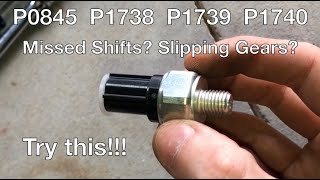
- Failed 3rd Clutch Pressure Switch (Very Common) — The internal diaphragm of the switch stiffens with age and fails to report pressure correctly, even when hydraulic pressure is normal.
- Low, Dirty, or Clogged Transmission Fluid (Common) — Low, burnt, or debris-filled fluid fails to create the stable hydraulic pressure required for the switch to operate. Debris also clogs the small passages leading to the switch.
- Damaged Wiring or Battery Acid Corrosion (Less Common) — The wiring harness or connector shorts to ground or corrodes, interrupting the signal. On Hondas, leaking battery acid frequently drips onto the transmission housing, destroying the switch connector.
- Faulty Transmission Shift Solenoid (Less Common) — Stuck or failing shift solenoids restrict fluid flow to the clutches, causing an out-of-range pressure reading that triggers the switch fault.
- Internal Transmission Failure (Rare) — A failing clutch pack or worn internal seal prevents proper pressure buildup in the 3rd gear circuit, accompanied by severe slipping and drivability issues.
- Faulty Powertrain Control Module (PCM) (Very Rare) — The vehicle's computer rarely fails, but when it does, it misinterprets the pressure switch signal. Consider this only after exhaustively testing the wiring and switch.
Symptoms

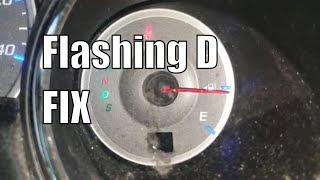
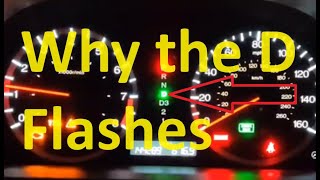
- Flashing 'D' or 'D4' Light — The 'Drive' indicator light on the instrument cluster flashes to signal a transmission-related fault on Honda and Acura vehicles. 🎬 See what a flashing D light means for your transmission
- Check Engine Light On — The Malfunction Indicator Lamp (MIL) illuminates on the dashboard.
- Harsh or Delayed Shifting — The transmission slams into gear, hesitates between shifts, or shifts at incorrect times, particularly around third gear.
- Car Surges or Lurches When Stopped — The vehicle surges forward while stopped at a light because the transmission struggles to disengage a gear due to the pressure fault.
- Transmission Slipping or Skipping Gears (also visible on scanner) — The transmission slips out of gear, skips 3rd gear entirely, or enters 'limp mode' (stuck in 2nd or 3rd gear) to prevent damage.
Diagnostic Flowchart
Tap your situation to follow the diagnostic path that matches what you're seeing on this code.
Common Fixes & Costs
- Replace the Faulty Clutch Pressure Switch — Parts: $40-$70, Labor: $60-$150, ~1.0 hr book time (DIY)
- Transmission Fluid Drain and Fill (3x) — Parts: $70-$150, Labor: $100-$200, ~1.5 hr book time (DIY)
- Repair Damaged Wiring or Connector — Parts: $10-$30, Labor: $120-$300, ~2.0 hr book time (Intermediate)
- Replace Transmission Shift Solenoid — Parts: $50-$150, Labor: $120-$300, ~2.0 hr book time (Intermediate)
- Replace/Repair Transfer Case Position Encoder — Parts: $100-$300, Labor: $200-$400, ~3.0 hr book time (Advanced)
Used vs. New Parts: Buying Guide
When a used part is worth it: Buying a used pressure switch is never recommended. The failure is caused by age and wear, so a used part has a high likelihood of failing immediately.
Donor-vehicle mileage cap: roughly under 20000 miles for the part to have meaningful remaining life.
Donor quality checklist:
- Match the part number exactly. Honda has several superseded part numbers; ensure it fits your VIN.
- Avoid parts with any signs of corrosion on the connector or housing.
Decision logic:
- If The part is a clutch pressure switch for a Honda/Acura. → Buy a new OEM or high-quality aftermarket part. The cost is low ($40-$70) and the risk of a used part failing is extremely high.
- If The part has a known wear-out failure mode (like this switch). → Always favor new. The internal diaphragm is a wear item.
Warranty tradeoff: Used parts from a salvage yard typically have a 30-90 day warranty. New aftermarket parts often carry a 1-year to limited lifetime warranty. New OEM parts have a 1-year warranty.
Worst-case if a used part fails: $100-$250 if a used part fails after installation, representing the cost of repeat labor and purchasing a new switch.
What Happens If You Wait — Timeline
- 0-2 months: Code is set, Check Engine Light and/or flashing 'D' light is on. Shifting feels slightly harsher than normal, or a delay is noticeable when the transmission is cold. (MPG impact: 0-5%% · Added cost: $0)
- 2-6 months: Harsh, delayed, or erratic shifts become frequent. The transmission slips or hesitates around 3rd gear. The car enters 'limp mode' intermittently. (MPG impact: 5-10%% · Added cost: $50-150 in wasted fuel and accelerated fluid degradation.)
- 6-12 months: Repeated hard shifting causes mechanical damage. The 3rd gear clutch pack wears excessively, generating heat and debris that contaminates the fluid. (MPG impact: 10-15%% · Added cost: $500-$1,200 (Damage to the 3rd gear clutch pack and shift solenoids).)
- 12+ months: Catastrophic failure. Worn clutch material circulates throughout the transmission, clogging the filter and damaging other clutch packs. The transmission fails to engage any gear. (MPG impact: 15-25%+% · Added cost: $2,500-$4,000 (A complete transmission rebuild or replacement is required).)
Cost of Not Fixing It
- 0-1 month: Annoying and harsh shifting, flashing 'D' light, and a 5-10% drop in fuel economy due to inefficient transmission operation. The vehicle enters 'limp mode' intermittently. (Added cost: Negligible, primarily in wasted fuel.)
- 1-6 months: Accelerated wear on the 3rd gear clutch pack and related components due to repeated hard shifts and slipping. Transmission fluid degrades rapidly from excess heat. (Added cost: $300-$800 if only the affected clutch pack and solenoids need replacement.)
- 6+ months: Catastrophic transmission failure. Worn clutch material contaminates the entire transmission, clogging fluid passages, destroying other clutch packs, and damaging the valve body. (Added cost: $2500-$4000 for a complete transmission rebuild or replacement.)
Diagnosis Steps
- Scan for Additional Codes
Use an OBD-II scanner to confirm P1739. Codes like P0730 (Incorrect Gear Ratio) or P0780 (Shift Malfunction) often accompany P1739 and confirm a performance issue resulting from the electrical fault.
Tools: OBD-II Scanner (Beginner) - Check Transmission Fluid Level and Condition
Verify the transmission fluid level on a level surface with a warm engine. Reddish-pink fluid is normal; brown or black fluid with a burnt smell indicates internal damage.
Tools: Rag or paper towel (Beginner) - Inspect Wiring, Connector, and Battery Area
Locate the 3rd gear pressure switch on the transmission housing (often under the battery tray on Hondas). Visually inspect the electrical connector and wiring for frayed wires, fluid contamination, or battery acid corrosion.
Tools: Flashlight (Beginner) - Monitor Live Data with a Scan Tool
Monitor the '3rd Clutch Pressure Switch' PID while driving. The PID must read 'OFF' or 'OPEN' in all gears except 3rd. When shifting into 3rd, it must change to 'ON' or 'CLOSED'. No change confirms a circuit fault.
Tools: Advanced OBD-II Scanner (Intermediate) - Test the Pressure Switch Resistance
Disconnect the switch's electrical connector. Measure resistance between the switch's single terminal and the transmission case (ground). A reading near 0 ohms indicates an internal short, requiring replacement. A high reading (over 10 megohms) is normal for an open switch.
Tools: Multimeter (Intermediate) - Test the Pressure Switch Signal Voltage
With the key ON and engine OFF (gear not engaged), the PCM sends battery voltage (~12V) to the switch. If voltage is 0V, trace the wire back to the PCM for an open circuit or short to ground.
Tools: Multimeter (Intermediate) - Manually Ground the Circuit
Disconnect the pressure switch connector and use a jumper wire to connect the harness signal wire directly to ground. If the scan tool PID changes state, the wiring to the PCM is good, isolating the fault to the switch.
Tools: Jumper wire, OBD-II Scanner (Intermediate) - Test Circuit Voltage at the PCM
Disconnect PCM connector 'B'. Measure voltage between terminal B24 and ground with the ignition ON. 12V confirms the PCM is sending the signal. Check for continuity to ground to rule out a short.
Tools: Multimeter, Vehicle-specific wiring diagram (Advanced) - Check Internal Transmission Pressure
Connect a hydraulic pressure gauge to the transmission's test ports. Measure actual fluid pressure in the 3rd gear circuit. A significant pressure drop when 3rd gear is commanded indicates internal mechanical failure, requiring a transmission shop.
Tools: Transmission pressure gauge set, Factory Service Manual (Advanced)
When This Code Triggers (Freeze-Frame Conditions)
- Engine Coolant Temp: 180-205°F (Vehicle is fully warmed up after several minutes of driving.)
- RPM: 1800-2800 RPM (During light to moderate acceleration when the transmission commands a shift into 3rd gear.)
- Engine Load: 25-60% (The engine is under a moderate load, not idling or at wide-open throttle.)
- Vehicle Speed: 25-45 mph (The code sets as the vehicle accelerates through the speed range for 3rd gear.)
Related Codes
- P0730 — This code for 'Incorrect Gear Ratio' is a direct symptom of the P1739 electrical fault. The PCM sets P1739 for the voltage error, and P0730 when it detects the mechanical result: a mismatch between engine speed and output speed because the gear didn't engage correctly. Fixing P1739 resolves P0730.
- P0780 — Meaning 'Shift Malfunction,' this indicates the transmission failed to shift into the commanded gear. P1739 points to the specific electrical cause (3rd gear switch), while P0780 indicates the overall mechanical shifting process failed.
- P0845 / P1740 — These are codes for the 2nd and 4th gear clutch pressure switches. If only P1739 is present, the fault is isolated to the 3rd gear switch. If multiple codes appear, it signals a widespread issue like low fluid or multiple switches failing from age.
- P0700 — This is a generic 'Transmission Control System Malfunction' code stored by the Engine Control Module (ECM). It signals that a specific fault is stored in the Transmission Control Module (TCM). You must scan the TCM to find the underlying P1739 code.
Climate & Environmental Factors
- Age and Mileage: The internal diaphragm of the pressure switch becomes stiff and brittle over millions of pressure cycles, leading to failure.
- Corrosion: In regions using road salt or with high humidity, corrosion destroys wiring. For switches located under the battery tray, a leaking battery causes severe corrosion on the connector.
How to Talk to a Mechanic About This Code
Say this: "I have a P1739 code on my Honda Accord and the 'D' light is flashing. I'd like to book a diagnostic appointment. Based on my research, this is likely an issue with the 3rd clutch pressure switch circuit. Can you please test the switch, its connector, and wiring to confirm the fault before recommending a major repair?"
This signals you are an informed consumer. It directs the mechanic to the most probable cause (a cheap sensor) and requests specific diagnostic actions, preventing them from immediately quoting a multi-thousand dollar transmission replacement.
Avoid saying:
- 'My transmission is acting weird, can you fix it?'
- 'My check engine light is on, I don't know why.'
- 'Just replace the transmission.'
Questions to ask before authorizing the repair:
- Did you test the pressure switch itself? What was the resistance reading?
- Did you confirm there is correct voltage at the switch's connector and back to the PCM?
- Can you show me the old part when the repair is done?
- Is there any evidence of major internal damage, like metal shavings in the transmission fluid, that justifies a transmission replacement?
- What is the warranty on the new switch and your labor?
Where to Take It: Dealer vs Independent vs Chain
- Dealer:
Recommended for non-Honda/Acura versions of this code or if the vehicle is under warranty. For a common Honda/Acura fault, a dealer is an expensive option for a simple repair.
Best for: Vehicles under warranty, Uncommon P1739 faults (e.g., VW Tiptronic, Hyundai/Kia transfer case), Complex electrical diagnostics if an independent shop can't find the fault
Downsides: Highest labor rates, often 30-50% more than independent shops., Quick to recommend a full transmission replacement instead of a component-level repair. (Typical cost: +40% vs. baseline) - Independent Shop:
Best fit for the vast majority of P1739 cases, especially on Honda and Acura models. A reputable independent shop performs the repair cost-effectively.
Best for: Out-of-warranty Honda/Acura vehicles with the common P1739 code., Owners seeking a better price than the dealership.
Downsides: Quality and expertise vary widely. Look for ASE certifications., May lack specific diagnostic tools for less common vehicle makes. (Typical cost: +0% vs. baseline) - Chain Shop:
Use with caution. Acceptable for a free code scan, but do not rely on them for an accurate diagnosis. They frequently misdiagnose P1739 as needing a new transmission.
Best for: Basic code scanning (often free)., Simple part replacement IF the diagnosis is already certain.
Downsides: Technician skill varies dramatically., High pressure to upsell services like unnecessary transmission flushes., Lack in-depth diagnostic capability beyond reading the code. (Typical cost: -10% vs. baseline)
When to Walk Away From the Repair
If the estimated repair cost exceeds 50% of the car's private-party value, seriously consider selling the car as-is or trading it in.
- Car worth $3000, fix is $150: Fix it. This is the classic P1739 scenario on an older Honda. The repair cost is minor compared to the car's value.
- Car worth $3000, fix is $3500: Walk away. A quote for a full transmission replacement on a car of this value is a clear signal to get a second opinion or sell the vehicle.
- Car worth $7000, fix is $800: Borderline - likely fix it. This represents a complex wiring repair or a transfer case fix on a Kia/Hyundai. The cost is significant but below the 50% threshold.
What Scan Tool You Need for This Code
Minimum: A scanner that reads manufacturer-specific transmission codes and displays live data PIDs (Parameter IDs).
A basic $20 code reader only shows the P1739 code. It cannot show the live on/off status of the pressure switch as you drive, which is essential for confirming if the switch or the wiring is the problem.
Budget: Innova 1000 / BlueDriver Pro (~$100) — These Bluetooth scanners connect to a smartphone app and display live data. This allows a DIYer to watch the 3rd clutch pressure switch PID change from 'Off' to 'On' during a test drive to confirm a diagnosis.
Mid-range: Foxwell NT510 Elite / Launch Creader Elite (~$150) — These handheld scanners offer enhanced, manufacturer-specific diagnostics for brands like Honda. They provide reliable access to transmission PIDs and read/clear codes from all vehicle modules.
Professional: Autel MaxiCOM MK808 / Foxwell NT710 (~$450-600) — Provides full bidirectional control, allowing you to command solenoids and actuators on and off for testing. This capability is invaluable if the problem is complex, like a sticking shift solenoid.
Rent vs buy: AutoZone or O'Reilly read codes for free, but their in-store tools are basic readers and cannot show the live data needed for a proper P1739 diagnosis. To diagnose the issue yourself, buy a scanner with live data capabilities.
How to Clear the Code After You Fix It
- Reconnect any disconnected components (e.g., battery).
- Use an OBD-II scan tool to erase the Diagnostic Trouble Codes (DTCs).
- Perform a complete drive cycle to allow the vehicle's readiness monitors to run.
Drive cycle (~30 minutes): From a cold start, idle for 2-3 minutes. Drive in mixed city traffic for 15 minutes, including several stops. Drive on a highway at a steady 50-60 mph for at least 10 minutes. Safely coast down without braking for at least 5-10 seconds. Park and shut off the engine.
Readiness monitors affected: Comprehensive Component Monitor, Catalyst Monitor, EVAP System Monitor
Before emissions retest: drive at least 100 miles to fully set monitors.
Watch out for:
- Disconnecting the battery clears the code but resets all readiness monitors, causing an automatic emissions test failure.
- The code returns immediately if the underlying mechanical or electrical fault remains.
- Not driving long enough leaves readiness monitors 'Not Ready', preventing an emissions test from completing.
Will This Fail Emissions / State Inspection?
Yes — this code typically fails an OBD-II emissions inspection.
- California: An illuminated Check Engine Light is an automatic failure. After repair, all required readiness monitors must be set to 'Ready'. This requires driving 50-100 miles over several drive cycles before a retest.
- New York: A P1739 code with the Check Engine Light on results in an automatic inspection failure.
- Texas: An active Check Engine Light is an automatic failure. After clearing the code, you can have at most one readiness monitor 'Not Ready' (or two for model years 1996-2000) to pass.
Most Commonly Affected Vehicles
- Honda Accord (1998-2007) — Extremely common on both 4-cylinder and V6 models. The 3rd gear switch part number is often 28600-P7Z-003 or the updated 28610-RKE-004.
- Acura TL (1999-2008) — These models, especially the 2nd gen (1999-2003), are notorious for P1739. The updated part number is often 28610-RKE-004.
- Acura CL (2001-2003) — Shares the same problematic V6 automatic transmission as the Acura TL and Honda Accord.
- Honda Odyssey (1999-2006) — The automatic transmissions in these minivans were subject to a warranty extension and a class-action settlement by Honda due to high failure rates.
- Acura MDX (2001-2006) — The early V6 transmissions in the MDX platform frequently trigger this code.
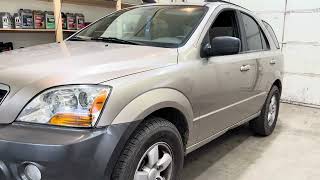
- Kia Sorento (2007-2009) — P1739 relates to a 'General Position Encoder Fault' within the 4x4 transfer case system, not a transmission pressure switch.
- Hyundai Terracan (2001-2007) — P1739 indicates a 'General position encoder Fault' related to the transfer case control unit (TCCU).
- Volkswagen Various with Tiptronic (1998-2010) — P1739 points to a 'Tiptronic Switch Up Circuit Short To Ground', related to the manual gear selection function in the shifter assembly.
- Honda Pilot (2003-2007) — Uses a similar V6 and transmission setup to the Odyssey and MDX, making it susceptible to the same 3rd clutch pressure switch failures.
Manufacturer-Specific Notes

- Honda / Acura: P1739 almost exclusively points to the '3rd Clutch Transmission Fluid Pressure Switch Circuit'. The 'D4' or 'D' light flashes along with the Check Engine Light. Honda acknowledged widespread transmission problems during this era through class-action settlements.
- Hyundai / Kia: On 4WD models, P1739 indicates a 'General Position Encoder Fault' within the transfer case, not the main transmission. Diagnose the transfer case control unit (TCCU) and shift motor.
- Volkswagen: This code is specific to the Tiptronic shifting system and indicates a short to ground in the 'Up' shift switch circuit. Diagnosis focuses on the shifter assembly itself, not the transmission.
- Subaru: P1739 indicates a fault in the 'Front Speed Sensor Circuit', a wheel speed sensor critical for the ABS and VDC systems, completely unrelated to transmission pressure.
Real Owner Stories
1998 Honda Accord with 229K miles - The Classic Fix
Check Engine Light came on with hard shifting. Autozone scanned codes P1739 and P0730 and recommended a transmission replacement.
What they tried:
- Added Lucas transmission additive, which did not help.
- Drained overfilled fluid, which did not help.
- Replaced the 3rd clutch pressure switch based on advice from a different auto parts store.
Outcome: Replacing the pressure switch cleared the P1739 code. The shifting problem remained until the owner discovered the transmission fluid was a half-quart low. Topping it off resolved the hard shifting.
Lesson: Do not automatically trust a recommendation for a full transmission replacement for P1739. It is often a simple sensor, and always verify the fluid level is correct after the repair.
2003 Acura TL-S - Misdiagnosis and Confusion
Check Engine Light on, scanned code P1739. Owner was confused by conflicting forum advice suggesting a transmission flush, cleaning the switch, or replacing it.
What they tried:
- Replaced the 3rd pressure switch.
- Reset the Check Engine Light by pulling the #13 fuse.
- The code immediately returned after a short drive.
Outcome: The initial switch replacement did not fix the issue, suggesting the problem was intermittent, related to wiring, or a faulty new part.
Lesson: A part replacement is not a guaranteed fix. If the code returns immediately, it points towards a wiring issue or a faulty new part. Cleaning the switch is ineffective.
2008 Kia Sorento 4x4 - An Entirely Different System
4WD system was not engaging properly, triggering codes P1739 (General Position Encoder Fault) and P1733 (Rear Speed Sensor Voltage High).
What they tried:
- Inspected wiring and connectors to the transfer case control module (TCCU).
- Performed a continuity test on the wiring harness between the TCCU and the transfer case motor.
- Found a broken wire in the harness, likely from off-road damage.
Outcome: Repairing the single broken wire in the harness resolved the fault. The P1739 code was related to the transfer case encoder, not the transmission pressure switches.
Lesson: For Kia/Hyundai, P1739 points to the 4WD system. Do not waste time or money on transmission pressure switches; diagnosis must focus on the transfer case and wiring harness.
How to Prevent This Code From Triggering
- Perform regular transmission fluid drain-and-fills. (Every 30,000-60,000 miles.) — Clean fluid maintains correct hydraulic pressure, lubricates components, and prevents heat buildup. Always use Honda Genuine ATF-DW1 or a certified equivalent.
- Install an external transmission cooler. (Once, especially if you tow or live in a hot climate.) — Heat kills automatic transmissions. An external cooler significantly reduces fluid temperature, extending the life of all internal components, including pressure switches.
- Check for and neutralize battery corrosion. (During every oil change.) — On many Hondas, a leaking battery drips acid directly onto the transmission case and wiring harnesses below. Cleaning corrosion prevents electrical faults.
Frequently Asked Questions
Is P1739 a serious code?
It is moderately serious. While it won't stop your car immediately, ignoring it causes harsh shifting and leads to premature wear and costly internal transmission damage.
Can I fix P1739 myself?
Yes, replacing the pressure switch on Honda and Acura vehicles is a very DIY-friendly repair. The switch is located on the outside of the transmission and requires basic hand tools. On some models, removing the battery tray provides the easiest access.
How much does it cost to fix P1739 in 2024?
Replacing a faulty pressure switch on a Honda/Acura costs between $100 and $220 at an independent repair shop. Doing it yourself costs $40-$70 for an OEM part.
Will changing the transmission fluid fix P1739?
Only if degraded or low fluid causes a hydraulic pressure drop. If the switch failed internally, new fluid will not fix it.
My mechanic says I need a new transmission for a P1739 code. Is this true?
It is highly unlikely. This code usually points to a $50 external sensor that has failed. Unless the fluid contains heavy metal shavings, get a second opinion before agreeing to a $3,000 transmission replacement.
Can I just clean the pressure switch instead of replacing it?
No, cleaning the switch is ineffective. The failure is internal, where the diaphragm becomes stiff and no longer operates correctly. Cleaning external contacts does not solve mechanical failure.
What happens if you don't fix P1739?
Ignoring P1739 leads to harsh shifts and potential limp mode. Repeated harsh engagement causes excessive heat and wear on the clutch packs, leading to a complete transmission failure.
Do I need to use an OEM pressure switch?
It is highly recommended to use an OEM part. Cheaper aftermarket switches frequently fail prematurely or are calibrated incorrectly, causing the code to return.
Key Takeaways
- On Honda and Acura vehicles, P1739 indicates a failed 3rd clutch pressure switch, requiring a simple $40-$70 sensor replacement.
- On Hyundai and Kia 4WD models, P1739 flags a transfer case encoder fault, not a transmission issue.
- A flashing 'D' or 'D4' light alongside the Check Engine Light confirms a transmission pressure fault on Hondas.
- Driving more than 50 miles with an active P1739 code causes accelerated clutch wear, turning a $150 repair into a $3,000 transmission rebuild.
Helpful Videos
Shop the Parts Behind P1739
Below are the parts most often responsible for code P1739, ranked by how frequently each one is the actual culprit (per the diagnosis above). Tap any to see what we have for your vehicle.



The information in this article is provided for general reference and educational purposes only. Vehicle specifications, procedures, and part compatibility can vary by production date, trim level, and region. Always consult your vehicle's factory service manual and verify part numbers before purchasing or performing repairs. Safety-critical components such as airbags, seat belts, and braking systems should be installed by a qualified professional.
- 🧭 Diagnostic Flowchart
- 🎬 Helpful Videos
- 🛍️ Shop This Part
- What Does P1739 Mean?
- Can I Drive With P1739?
- Common Causes
- Symptoms
- Common Fixes & Costs
- Used vs. New Parts: Buying Guide
- What Happens If You Wait — Timeline
- Cost of Not Fixing It
- Diagnosis Steps
- When This Code Triggers (Freeze-Frame Conditions)
- Related Codes
- Climate & Environmental Factors
- How to Talk to a Mechanic About This Code
- Where to Take It: Dealer vs Independent vs Chain
- When to Walk Away From the Repair
- What Scan Tool You Need for This Code
- How to Clear the Code After You Fix It
- Will This Fail Emissions / State Inspection?
- Most Commonly Affected Vehicles
- Manufacturer-Specific Notes
- Real Owner Stories
- 1998 Honda Accord with 229K miles - The Classic Fix
- 2003 Acura TL-S - Misdiagnosis and Confusion
- 2008 Kia Sorento 4x4 - An Entirely Different System
- How to Prevent This Code From Triggering
- Frequently Asked Questions
- Is P1739 a serious code?
- Can I fix P1739 myself?
- How much does it cost to fix P1739 in 2024?
- Will changing the transmission fluid fix P1739?
- My mechanic says I need a new transmission for a P1739 code. Is this true?
- Can I just clean the pressure switch instead of replacing it?
- What happens if you don't fix P1739?
- Do I need to use an OEM pressure switch?
- Key Takeaways
- 🎟️ Get 5% Off