

OBD-II Code P1746: Pressure Control Solenoid 'A' Open Circuit
What P1746 means, why it triggers, and how to fix it
- P1746 indicates an open electrical circuit in the transmission's Pressure Control Solenoid 'A', a failure most common in 1997-2017 Ford, Mazda, and Jaguar vehicles.
- Driving with P1746 forces the transmission into maximum line pressure, causing harsh shifts that will destroy internal clutch packs within 50 to 100 miles.
- Always test the external wiring harness and connector pins for proper resistance (typically 3.0-8.0 ohms) before spending $250 to $450 replacing the solenoid.
- On 2011-2017 Ford F-150s with the 6R80 transmission, P1746 frequently points to a failed molded lead frame, an $800-$1,200 repair often covered by Ford Customer Satisfaction Program 19N01.
What Does P1746 Mean?

P1746 indicates the Powertrain Control Module (PCM) or Transmission Control Module (TCM) detects a broken electrical connection (open circuit) to the transmission's Pressure Control Solenoid 'A'. This solenoid regulates the hydraulic fluid pressure required for smooth gear changes.
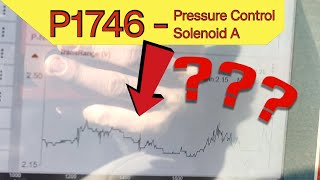
Technical definition: The SAE definition for P1746 is "Pressure Control Solenoid 'A' Open Circuit". The computer monitors voltage feedback from the Electronic Pressure Control (EPC) solenoid circuit. If it detects an out-of-range value indicating a loss of continuity, it sets this code.
Can I Drive With P1746?
Yes, But With Caution. You can drive, but do not exceed 50 miles. The transmission defaults to maximum line pressure, causing harsh, slamming shifts that destroy internal clutch packs, seals, and bands. Continued driving turns a $300 solenoid repair into a $3,000 transmission rebuild.
Common Causes

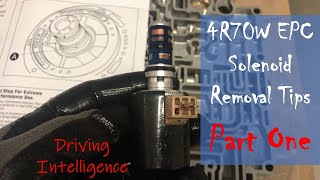
- Faulty Pressure Control (EPC) Solenoid (Very Common) — The internal coil winding breaks, creating an open circuit. This prevents the solenoid from regulating fluid pressure. The break is often intermittent, occurring only when the transmission is cold.
- Damaged Wiring, Connectors, or Pins (Common) — Wires leading to the solenoid fray, break, or corrode. Moisture intrusion at the main transmission connector corrodes pins or pushes them out of the housing, creating an open circuit. This is frequently misdiagnosed as a failed solenoid.
- Low or Contaminated Transmission Fluid (Common) — Low or dirty fluid forces the solenoid to work harder, causing overheating and electrical failure. Debris also jams the solenoid mechanically.
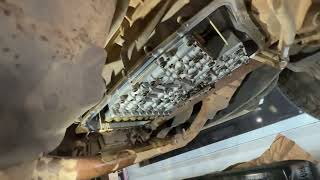
- Internal Transmission Valve Body Issues (Less Common) — Worn or clogged internal passages in the valve body mimic solenoid failure. On Ford 6R80 transmissions, a worn valve body or lead frame is the primary cause of persistent P1746 codes. 🎬 Watch: Step-by-step Ford 6R80 lead frame replacement tutorial.
- Faulty Transmission Control Module (TCM) or Powertrain Control Module (PCM) (Less Common) — The driver circuit within the control module fails, stopping it from sending the correct signal or reading feedback from the solenoid.
- Poor Ground Connection (Less Common) — A corroded or loose ground wire for the transmission or TCM creates high resistance, triggering P1746 even if the power-side wiring is intact.
- Faulty Transmission Range Sensor (Rare) — On specific vehicles like the Mazda 626, an erratic Transmission Range Sensor sends bad voltage signals, confusing the computer and indirectly triggering a P1746 code. 🎬 See why this Mazda sensor is often misdiagnosed.
Symptoms

- Harsh or Delayed Shifting — Gears slam into place or delay significantly because the transmission defaults to maximum line pressure to protect itself.
- Transmission Stuck in 'Limp Mode' — The transmission locks into a single gear (usually 2nd or 3rd) to prevent further damage, causing poor acceleration and high RPMs at highway speeds.
- Check Engine Light or Transmission Warning Light On — The PCM illuminates a dashboard warning light to alert the driver of the electrical fault.
- Failure to Engage Gears — The vehicle fails to move in Drive or Reverse, or refuses to shift into specific gears.
- Reduced Fuel Economy — Inefficient shifting and limp mode force the engine to run at higher RPMs, consuming 5-15% more fuel.
- Transmission Overheating (also visible on scanner) — Incorrect line pressure increases internal friction, spiking transmission temperatures and triggering a dashboard warning.
Diagnostic Flowchart

Tap your situation to follow the diagnostic path that matches what you're seeing on this code.
DIY vs Professional
- Replace the Pressure Control (EPC) Solenoid 🟢 Beginner
Tools: Socket set (8mm, 10mm), torque wrench (in-lbs), drain pan, fluid pump, transmission fluid, new filter, multimeter. - Repair Damaged External Wiring Harness 🟢 Beginner
Tools: Multimeter, wire strippers, wire cutters, heat shrink tubing, soldering iron, dielectric grease. - Replace Transmission Lead Frame Assembly (Ford 6R80) 🟢 Beginner
Tools: Torx set (T27, T30), torque wrench (in-lbs), fluid pump, assembly lube, angled pliers, 8-10 quarts Mercon LV fluid.
Used vs. New Parts: Buying Guide
When a used part is worth it: Never use a used EPC solenoid. The labor cost to drop the transmission pan makes installing a used internal electronic part a massive financial risk.
Donor-vehicle mileage cap: roughly under 80000 miles for the part to have meaningful remaining life.
Donor quality checklist:
- Verify the donor vehicle was not scrapped for transmission failure.
- Match the part number exactly.
- Avoid parts from flood-damaged vehicles.
Decision logic:
- If Part is an EPC solenoid or lead frame → Buy new OEM or high-quality aftermarket. The risk of premature failure on a used part is too high.
- If The cost of the new part is less than the labor cost to install it → Always buy new. Do not risk paying labor twice.
Warranty tradeoff: Used parts offer a 30-90 day warranty. New OEM parts carry a 1-2 year warranty.
Worst-case if a used part fails: $400-$1200 for repeat labor and a second replacement part.
What Happens If You Wait — Timeline
- 0-1 month: Check Engine Light illuminates. Shifts slam into gear as the transmission defaults to maximum line pressure. Vehicle enters intermittent limp mode. (MPG impact: 5-10%% · Added cost: $0-$50 in wasted fuel)
- 1-4 months: Constant high-pressure shifts cause accelerated wear on internal soft parts. Clutch packs, seals, and bands degrade rapidly under stress. (MPG impact: 10-15%% · Added cost: $800-$1,500 for clutch pack replacement.)
- 4-8 months: Clutch material wears away, causing slipping. High pressure cracks hard parts like clutch drums. Fluid burns and fills with debris. (MPG impact: 15-25%% · Added cost: $1,800-$3,500 for a major rebuild.)
- 8+ months: Catastrophic failure. The transmission fails to engage any gear, leaving the vehicle stranded. (MPG impact: N/A% · Added cost: $2,500-$5,000+ for full transmission replacement.)
Cost of Not Fixing It
- 0-1 month: Harsh, slamming shifts and a 5-15% drop in fuel economy. (Added cost: $20-$60 in extra fuel.)
- 1-6 months: Accelerated wear on transmission clutch packs and bands due to constant maximum line pressure. (Added cost: $1,500+ in internal repairs.)
- 6+ months: Catastrophic internal transmission damage. Cracked clutch drums and destroyed valve bodies require a complete rebuild. (Added cost: $2,500 - $4,500+)
When This Code Triggers (Freeze-Frame Conditions)
- Engine Coolant Temp: Varies; <100°F or 180-200°F (Triggers during initial cold start or when fully warmed up.)
- RPM: 1500-2500 (Occurs during a gear shift under light to moderate acceleration.)
- Vehicle Speed: 10-55 mph (Logs at various speeds when the transmission commands a gear shift.)
- Engine Load: 20-50% (Happens during steady cruise or gentle acceleration.)
Related Codes
- P0700 — A generic Transmission Control System Malfunction code. It commands the Check Engine Light on and tells you to scan the TCM for the specific P1746 code.
- P1747 — Indicates an EPC Solenoid 'A' Short Circuit. A multimeter test shows infinite resistance (OL) for P1746 (Open), but near-zero resistance for P1747 (Short).
- P0750 — Relates to Shift Solenoid 'A'. If P0750 appears with P1746, it proves a common power/ground harness issue or a faulty TCM, rather than multiple simultaneous solenoid failures.
- P0713 — Transmission Fluid Temperature Sensor High Input. Severe overheating caused by the P1746 fault damages the TFT sensor, triggering P0713.
Climate & Environmental Factors
- Cold Weather: If P1746 appears only when cold, it indicates an intermittent open in the solenoid's internal coil. The microscopic break separates when cold and expands to make contact when heated.
- High Humidity / Salt Belt Regions: Moisture and road salt corrode external transmission harness connector pins, creating high resistance or a complete open circuit.
- Extreme Heat: Excessive temperatures from towing break down the insulation on the solenoid coil windings, leading to a short (P1747) or an open (P1746).
How to Talk to a Mechanic About This Code
Say this: "I have a P1746 code and harsh shifting. Before replacing any parts, please test the EPC solenoid's resistance and check the wiring harness for continuity from the solenoid connector to the TCM. I need a written estimate detailing the diagnostic findings before proceeding."
This directs the technician to perform a proper electrical diagnosis instead of just swapping the solenoid, preventing misdiagnosis and unnecessary costs.
Avoid saying:
- 'My transmission is acting weird, can you fix it?' (Invites a high quote for a full rebuild).
- 'The internet says I need a new solenoid.' (Leads them to replace it without testing the wiring).
- 'Just do whatever it takes to fix it.' (Removes your ability to control costs).
Questions to ask before authorizing the repair:
- What was the resistance reading on the EPC solenoid? Was it open, shorted, or within spec?
- Did you find the open circuit in the solenoid itself, the external wiring harness, or the connector?
- Can you show me the old part you are replacing?
- What is the warranty on the parts and labor for this specific repair?
Where to Take It: Dealer vs Independent vs Chain
- Dealer:
Recommended only if the vehicle is under warranty or has a known manufacturer-specific fault (e.g., Honda, BMW).
Best for: Vehicles under warranty., Known manufacturer-specific issues like the Ford 6R80 lead frame., Complex diagnostics on newer or European vehicles.
Downsides: Highest labor rates., Prefers replacing entire assemblies (like valve bodies) rather than single components. (Typical cost: +50% vs. baseline) - Chain Shop:
AVOID. The risk of being sold an unnecessary $3,000 rebuild for a simple wiring issue is very high.
Best for: Routine maintenance like fluid changes.
Downsides: High pressure to upsell to a full transmission rebuild., Lacks expertise to diagnose complex electrical issues. (Typical cost: -10% vs. baseline)
When to Walk Away From the Repair
If the estimated repair cost exceeds 50% of the car's private-party value, it is not worth fixing. For cars over 150,000 miles, lower this threshold to 40%.
- Car worth $3500, fix is $1800: Walk away. The repair cost is over 50% of the car's value. Put the money toward a replacement vehicle.
- Car worth $10000, fix is $900: Fix it. The repair cost is well below the 50% threshold and restores full vehicle function.
- Car worth $2000, fix is $450: Borderline, but likely worth fixing. This low-cost repair makes the car drivable and sellable for its full value.
What Scan Tool You Need for This Code
Minimum: A scanner that reads manufacturer-specific transmission codes (TCM codes) and views live transmission data.
A generic $20 code reader only shows engine codes and misses the P1746 code stored in the TCM. Without live data, you cannot diagnose intermittent faults.
Budget: FOXWELL NT604 Elite (~$90) — Reads and clears codes from the Transmission system, accessing the specific P1746 code from the TCM.
Mid-range: Foxwell NT510 Elite / BlueDriver Pro (~$150) — Offers live data streaming for transmission parameters, allowing you to monitor solenoid commands and fluid temperature.
Professional: Autel MaxiCOM MK808BT / XTOOL D7 (~$450-600) — Offers bidirectional control to actively command the EPC solenoid on and off, confirming if the solenoid works or if the fault is in the wiring without disassembly.
Rent vs buy: Auto parts stores scan codes for free, but their scanners often miss TCM codes. Buying a budget-level scanner capable of reading transmission codes is a mandatory investment for this repair.
How to Clear the Code After You Fix It
- Use an OBD-II scan tool to clear DTCs from the TCM and PCM.
- Use the scan tool to reset transmission adaptive learning tables.
- Perform a transmission adaptive learning drive cycle.
Drive cycle (~30 minutes): Warm the vehicle to operating temperature. On a level road, accelerate gently from a stop, allowing shifts through all gears up to 55 mph. Brake gently to a complete stop and hold the brake for 10 seconds. Repeat 5-7 times to relearn shift points.
Readiness monitors affected: Catalyst Monitor, Evaporative System Monitor, O2 Sensor Monitor
Before emissions retest: drive at least 100 miles to fully set monitors.
Watch out for:
- Clearing the code immediately before an emissions test results in an automatic failure due to 'Not Ready' monitors.
- Disconnecting the battery fails to clear codes from the TCM on modern vehicles.
- The code returns immediately if the open circuit was not physically repaired.
Will This Fail Emissions / State Inspection?
Yes — this code typically fails an OBD-II emissions inspection.
- California: An active Check Engine Light results in an automatic smog check failure.
- New York: The NYVIP3 inspection includes an OBD-II scan. A P1746 code is an automatic failure.
- Texas: Vehicles automatically fail if the Malfunction Indicator Lamp (MIL) is commanded on.
Most Commonly Affected Vehicles
- Ford F-150 (1997-2017) — Common on 4R70W, 4R100, and 6R80 transmissions. For 2011-2017 models, the molded lead frame connector is the primary failure point.
- Ford Explorer / Ranger (1997-2011) — Seen in 5R55E/W/S transmissions, where the solenoid pack fails and must be replaced as a single unit.
- Jaguar XJ8 / XK8 (1998-2003) — The ZF 5HP24 transmission electrical connector sleeve leaks fluid, wicking up the harness and corroding connections.
- Mazda B-Series / 626 (1998-2009) — Shares transmissions with Ford. On the 626, an erratic transmission range sensor triggers this code.
- Honda Civic (2006-2015) — P1746 indicates a 'Hydraulic Control System Error' related to a stuck valve in the valve body, not an EPC open circuit.
- BMW 3-Series, 5-Series (E46, E39) (1998-2006) — P1746 points to a 'Transmission Control Module Output Stage' failure, meaning the TCM itself requires replacement.
Manufacturer-Specific Notes
- Honda / Acura: P1746 means "Hydraulic Control System Error" or "Cut Valve A Stuck OFF". This points to a mechanical valve body issue or contaminated fluid, not an electrical fault.
- Ford: On 2011+ 6R80 transmissions, internal molded lead frame failures are subject to recalls. Ford Customer Satisfaction Program 19N01 and NHTSA recall 26V237 cover PCM updates and lead frame replacements.
- Volkswagen / Audi: P1746 (code 18154) means "Transmission Solenoid Power Relay: Electrical Malfunction," pointing to the Mechatronics unit's power supply.
- Jaguar: The transmission electrical connector sleeve leaks fluid into the wiring harness, causing corrosion and an open circuit. Replace the sleeve and clean the harness.
Real Owner Stories
2000 Jaguar VDP with 'GEARBOX FAILURE' light
The 'GEARBOX FAILURE' warning light appeared with code P1746. The owner noticed occasional fluid drops in the garage.
What they tried:
- Restarted the car, but the code remained.
- Checked the transmission fluid and found it a liter low.
- Verified the transmission electrical connector was tight and clean.
Outcome: Topping off the transmission fluid resolved the issue. The low fluid level, caused by a loose pan bolt, triggered the fault.
Lesson: Always check transmission fluid level and condition before assuming a major electrical failure. Low fluid triggers fault codes by starving the solenoids.
2000 Mazda 626 2.0L with shifting problems and P1746
The car shifted poorly and logged P1746. A transmission shop failed to diagnose the issue.
What they tried:
- Monitored live data for the Transmission Range (TR) sensor voltage.
- Observed erratic TR sensor voltage during a test drive.
- Noted the EPC voltage became erratic exactly when the range sensor signal destabilized.
Outcome: Replacing the Transmission Range Sensor stabilized the voltage readings and resolved the P1746 code and shifting issues.
Lesson: Faulty sensor inputs indirectly trigger solenoid codes. Do not replace the solenoid without verifying related sensor data first.
2004 Ford Lightning with flashing O/D light and P1746
Immediately after replacing steering wheel cruise control switches, the O/D light flashed and logged P1746.
What they tried:
- Checked visible wiring for burns or damage.
- Ordered new solenoids to drop the pan.
- Realized the issue started exactly after the switch repair.
Outcome: The owner discovered they ordered the wrong solenoids (individual vs. block). The root cause was an electrical short introduced during the steering wheel switch repair, not a failed solenoid.
Lesson: If a fault appears immediately after a repair, the root cause is the repair. Re-trace your steps and check all disturbed connectors before ordering parts.
How to Prevent This Code From Triggering
- Perform regular transmission fluid and filter changes (Every 30,000 to 60,000 miles) — Clean fluid lubricates and cools solenoids. Contaminated fluid clogs solenoid passages, causing overheating and electrical failure.
- Use only manufacturer-specified transmission fluid (At every fluid change) — Incorrect fluid causes chemical incompatibilities that destroy delicate seals and electronic components inside solenoids.
- Install an external transmission cooler (One-time installation for towing or hot climates) — Heat destroys transmission electronics. An external cooler stabilizes fluid temperatures and prevents solenoid coil burnout.
- Inspect external wiring and connectors (Annually) — Applying dielectric grease to connectors prevents moisture intrusion and corrosion, stopping open circuits before they form.
Frequently Asked Questions
What is an EPC solenoid?
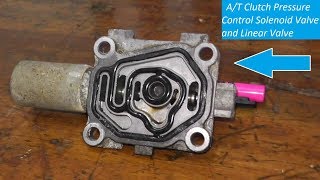
An Electronic Pressure Control (EPC) solenoid is an electro-hydraulic valve that controls fluid pressure inside your automatic transmission. The car's computer sends a variable electrical signal to it, adjusting hydraulic pressure for smooth gear shifts.
What are the most common misdiagnosis mistakes for P1746?
The most common mistake is replacing the EPC solenoid without testing the circuit. An open circuit is frequently caused by a broken wire, a corroded pin in the main connector, or a bad ground. Always verify manufacturer-specific definitions, as Honda uses this code for hydraulic valve issues.
Can a bad ground cause a P1746 code?
Yes. An electrical circuit requires a complete path from power to ground. If the ground connection for the solenoid circuit or the Transmission Control Module (TCM) is corroded, the computer interprets this as an open circuit.
Can I fix P1746 myself?
Simple external wiring repairs are DIY-friendly. Replacing the solenoid is an intermediate job requiring a torque wrench, fluid pump, and careful pan removal. Replacing a Ford 6R80 lead frame is an advanced job with a high risk of transmission damage if critical steps are missed.
How much does it cost to fix P1746?
Replacing the EPC solenoid typically costs $250 to $450 at an independent shop. If the solenoid is part of a larger pack, expect $300 to $700. Ford 6R80 lead frame replacements cost $800 to $1,200.
Will a transmission flush fix P1746?
A transmission flush will not fix an electrical open circuit. However, if dirty fluid caused the solenoid to overheat and fail, changing the fluid and filter is a mandatory part of the solenoid replacement process.
What does it mean if P1746 only happens when cold?
This is a classic sign of an intermittent failure within the EPC solenoid itself. The internal coil winding has a microscopic break that separates when cold. As the transmission warms up, the metal expands and makes contact, temporarily resolving the open circuit.
Is P1746 a serious code?
Yes. While the car remains drivable, the resulting harsh shifting and maximum line pressure cause accelerated wear on internal clutches and bands. Ignoring this code turns a minor electrical repair into a $3,000 transmission rebuild.
Key Takeaways
- P1746 indicates an open electrical circuit in the transmission's Pressure Control Solenoid 'A', a failure most common in 1997-2017 Ford, Mazda, and Jaguar vehicles.
- Driving with P1746 forces the transmission into maximum line pressure, causing harsh shifts that will destroy internal clutch packs within 50 to 100 miles.
- Always test the external wiring harness and connector pins for proper resistance (typically 3.0-8.0 ohms) before spending $250 to $450 replacing the solenoid.
- On 2011-2017 Ford F-150s with the 6R80 transmission, P1746 frequently points to a failed molded lead frame, an $800-$1,200 repair often covered by Ford Customer Satisfaction Program 19N01.
Helpful Videos



The information in this article is provided for general reference and educational purposes only. Vehicle specifications, procedures, and part compatibility can vary by production date, trim level, and region. Always consult your vehicle's factory service manual and verify part numbers before purchasing or performing repairs. Safety-critical components such as airbags, seat belts, and braking systems should be installed by a qualified professional.
- 🧭 Diagnostic Flowchart
- 🎬 Helpful Videos
- What Does P1746 Mean?
- Can I Drive With P1746?
- Common Causes
- Symptoms
- DIY vs Professional
- Used vs. New Parts: Buying Guide
- What Happens If You Wait — Timeline
- Cost of Not Fixing It
- When This Code Triggers (Freeze-Frame Conditions)
- Related Codes
- Climate & Environmental Factors
- How to Talk to a Mechanic About This Code
- Where to Take It: Dealer vs Independent vs Chain
- When to Walk Away From the Repair
- What Scan Tool You Need for This Code
- How to Clear the Code After You Fix It
- Will This Fail Emissions / State Inspection?
- Most Commonly Affected Vehicles
- Manufacturer-Specific Notes
- Real Owner Stories
- 2000 Jaguar VDP with 'GEARBOX FAILURE' light
- 2000 Mazda 626 2.0L with shifting problems and P1746
- 2004 Ford Lightning with flashing O/D light and P1746
- How to Prevent This Code From Triggering
- Frequently Asked Questions
- What is an EPC solenoid?
- What are the most common misdiagnosis mistakes for P1746?
- Can a bad ground cause a P1746 code?
- Can I fix P1746 myself?
- How much does it cost to fix P1746?
- Will a transmission flush fix P1746?
- What does it mean if P1746 only happens when cold?
- Is P1746 a serious code?
- Key Takeaways
- 🎟️ Get 5% Off