

OBD-II Code P1747: Transmission Pressure Control Solenoid 'A' Short Circuit
A comprehensive guide to what P1747 means, its causes, and how to fix it for good.
- Code P1747 on Ford, Lincoln, and Mercury vehicles guarantees an electrical short in the Electronic Pressure Control (EPC) solenoid circuit, not a mechanical failure.
- Verify your manufacturer's specific code definition first; on Hondas, P1747 indicates a stuck valve body component, while on VWs it signals a TCU power relay failure.
- Expect violent shifting, a flashing 'O/D OFF' light, and the transmission locking into 2nd or 3rd gear (limp mode) within 10 miles of the code triggering.
- Driving with an active P1747 code destroys clutch packs within 1 to 3 months, turning a $300 solenoid replacement into a $3,000 transmission rebuild.
- Always test the external wiring harness for continuity to ground before spending $300+ replacing the internal EPC solenoid, as chafed wires are a frequent misdiagnosis.
What Does P1747 Mean?

P1747 means the Powertrain Control Module (PCM) detects a short circuit in the Electronic Pressure Control (EPC) solenoid 'A'. This solenoid acts as a precise valve regulating hydraulic pressure within the automatic transmission. A short circuit disrupts this control, causing severe shifting problems.
Technical definition: SAE defines P1747 as "Electronic Pressure Control Solenoid 'A' - Short Circuit." On Ford vehicles, the PCM performs a self-test by sending a small electrical pulse to the solenoid and measuring the resulting magnetic field's 'signature.' An incorrect signature due to a short triggers the code.
Can I Drive With P1747?
No, not recommended Driving with a P1747 code is dangerous. The transmission shifts violently, gets stuck in one gear ('limp mode'), or fails to engage. Continuing to drive causes rapid internal transmission damage, including burnt clutches, turning a $300 repair into a $3,000 rebuild.
Common Causes

- Failed Electronic Pressure Control (EPC) Solenoid (Very Common) — The electromagnetic coil inside the EPC solenoid shorts out over time. Low-quality aftermarket solenoids also fail prematurely, causing persistent codes.
- Damaged External Wiring Harness or Connector (Common) — Wiring running from the PCM to the transmission melts against hot exhaust components, chafes against the engine block, or suffers from corroded connector pins, causing a direct short to ground.
- Damaged Internal Transmission Wiring Harness (Common) — The wiring harness inside the transmission oil pan degrades in hot fluid. The insulation becomes brittle and cracks, causing wires to short against each other or the transmission case.
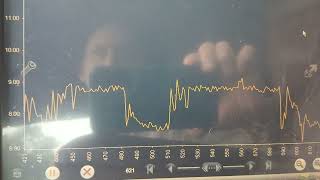
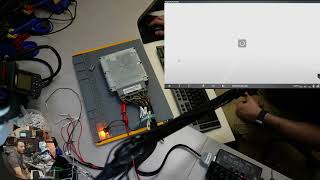
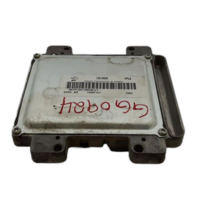
- Faulty Powertrain Control Module (PCM) (Less Common) — The internal driver circuit controlling the EPC solenoid fails and shorts internally. This falsely reports a solenoid issue and is a frequent point of misdiagnosis. 🎬 See a full diagnosis of P1747 and PCM repair
Symptoms

- Check Engine Light is On — The PCM illuminates the Malfunction Indicator Lamp (MIL) immediately upon detecting the short circuit.
- Harsh, Erratic, or Delayed Shifting — The vehicle slams into gear, shifts at incorrect RPMs, or delays heavily when moving into Drive or Reverse.
- Flashing Overdrive ('O/D OFF') Light — A specific indicator of a transmission-related fault on Ford, Lincoln, and Mercury vehicles.
- Transmission Enters 'Limp Mode' — The transmission defaults to a single gear (often 2nd or 3rd) to prevent further damage, severely limiting acceleration.
- Engine Lacks Power or Stalls — Erratic pressure control causes the torque converter clutch to lock up incorrectly, stalling the engine when coming to a stop.
Diagnostic Flowchart

Tap your situation to follow the diagnostic path that matches what you're seeing on this code.
Common Fixes & Costs

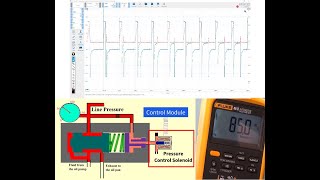
- Replace EPC Solenoid or Solenoid Block 🎬 Watch: Safety tips for replacing the EPC solenoid — Parts: $50-$350, Labor: $250-$500, ~3 hr book time (Intermediate)
- Replace Internal Transmission Wiring Harness — Parts: $30-$150, Labor: $250-$450, ~3 hr book time (Intermediate)
- Repair or Replace External Wiring Harness — Parts: $20-$100, Labor: $150-$400, ~2.5 hr book time (Professional)
- Replace Powertrain Control Module (PCM) — Parts: $200-$800, Labor: $100-$250, ~1 hr book time (Professional)
Used vs. New Parts: Buying Guide
When a used part is worth it: Never recommended for electronic solenoids due to high failure risk. Only consider for an old, high-mileage vehicle where the budget is under $300.
Donor-vehicle mileage cap: roughly under 60000 miles for the part to have meaningful remaining life.
Donor quality checklist:
- Exact part number and connector color match.
- No visible signs of corrosion or physical damage.
Decision logic:
- If The part is a solenoid or electronic module → Buy new OEM or a quality remanufactured unit from a specialist.
Warranty tradeoff: Used solenoids carry a 30-day warranty at best. New aftermarket parts carry 1-year warranties, saving you from paying repeat labor to drop the transmission pan.
Worst-case if a used part fails: $500
What Happens If You Wait — Timeline
- 0-2 Weeks: Code sets, Check Engine Light appears. Shifting is intermittently harsh. PCM defaults to maximum line pressure. (MPG impact: 0-5%% · Added cost: $0)
- 2 Weeks - 3 Months: Shifting becomes consistently violent. Transmission enters limp mode frequently. High line pressure accelerates wear on clutch packs. (MPG impact: 5-10%% · Added cost: $100)
- 3-6 Months: Excessive pressure burns friction material off clutch packs. Transmission slips. Fluid smells burnt. (MPG impact: 10-15%% · Added cost: $1,500)
- 6+ Months: Catastrophic internal failure. Clutch packs are destroyed. Vehicle is undrivable. (MPG impact: N/A% · Added cost: $3,500)
Cost of Not Fixing It
- 0-1 Month: Violent shifting, stalling, and limp mode. High safety risk and noticeable drop in fuel economy. (Added cost: $0)
- 1-3 Months: Incorrect line pressure burns out clutch packs and scores internal hard parts. (Added cost: $800 - $1,500)
- 3+ Months: Catastrophic internal transmission failure requiring a complete rebuild or replacement. (Added cost: $2,500 - $5,000+)
Diagnosis Steps
- Scan for All Powertrain Codes
Read all stored codes. Codes for other solenoids (P0750, P0755) point toward a shared wiring harness issue or blown fuse rather than a single failed EPC solenoid.
Tools: OBD-II Scanner (Beginner) - Inspect External Wiring Harness and Main Connector
Thoroughly inspect the harness from the PCM to the transmission. Look for melted plastic near the exhaust, chafed insulation, or fluid/corrosion inside the main transmission connector.
Tools: Flashlight, inspection mirror (Intermediate) - Isolate the Short: Harness vs. Transmission
Disconnect the main transmission electrical connector. Check for continuity to ground on the EPC solenoid control wire pin on the engine harness side. Continuity means the short is in the external wiring or PCM. No continuity means the fault is inside the transmission.
Tools: Multimeter, vehicle-specific wiring diagram (Advanced) - Live Data EPC Voltage Test
Monitor the 'EPC Voltage' PID. With the engine running, voltage must vary with throttle input. A constant 0.0 volts confirms the PCM detected a short to ground and shut down the circuit.
Tools: Advanced OBD-II Scanner with live data (Professional) - Drop Transmission Pan and Inspect Internals
Drain the fluid and remove the oil pan. Visually inspect the internal wiring harness for cracked plastic, especially at the EPC solenoid connector.
Tools: Socket set, drain pan, gasket scraper (Advanced) - Resistance Test the EPC Solenoid
Unplug the EPC solenoid. Measure resistance between its two pins. A reading near zero Ohms indicates a dead internal short. (e.g., Ford 4R70W spec is typically 2.48-5.66 Ohms).
Tools: Multimeter, service manual (Advanced) - Test the PCM Driver Circuit
If all wiring and the solenoid test good, disconnect the PCM and check the EPC control wire for a short to ground directly at the PCM connector. If clear, the PCM internal driver has failed.
Tools: Multimeter, vehicle-specific wiring diagram (Professional)
When This Code Triggers (Freeze-Frame Conditions)
- Transmission Fluid Temp: 140-210°F (The fault often hardens once the transmission reaches full operating temperature.)
- Engine RPM: 1300-2500 RPM (Triggers during light acceleration when upshifts are commanded.)
- Vehicle Speed: 30-60 mph (Sets during steady city or highway cruising.)
Related Codes
- P1746 — The opposite of P1747 ('EPC Solenoid - Open Circuit'). P1747 is a short (near-zero resistance), while P1746 is a broken wire (infinite resistance).
- P0731, P0732, P0733, P0734 — Incorrect Gear Ratio codes. These are symptoms of the clutch slippage caused by the incorrect line pressure from the P1747 fault.
- P0750, P0755, P0743 — Shift and TCC solenoid codes. Seeing these alongside P1747 guarantees a shared wiring failure or blown fuse, not multiple simultaneous solenoid failures.
Climate & Environmental Factors
- Road Salt and Moisture: Salt and water penetrate the main transmission connector, accelerating corrosion on copper pins. This creates a bridge between circuits, causing a short.
- High Exhaust Heat: Harnesses routed near exhaust manifolds melt over time, exposing copper wire and causing a direct short to the chassis.
How to Talk to a Mechanic About This Code
Say this: "I have a P1747 code for an EPC solenoid short circuit. I need a diagnostic appointment to determine if the short is in the external harness, the PCM, or inside the transmission before replacing any parts."
Directs the mechanic to perform a proper electrical diagnosis to isolate the short, preventing unnecessary internal parts replacement.
Avoid saying:
- 'My transmission is acting weird.'
- 'Just fix whatever's wrong.'
Questions to ask before authorizing the repair:
- Did you perform a continuity test to ground on the external harness to isolate the short?
- If the short is internal, did you test the resistance of the EPC solenoid itself?
- If the solenoid and wiring are good, how did you confirm the PCM is the failure point?
Where to Take It: Dealer vs Independent vs Chain
- Dealer:
Safe but expensive. Best for PCM programming if required.
Best for: Vehicles under powertrain warranty., Complex diagnoses requiring OEM software.
Downsides: Highest labor rates., May recommend complete transmission replacement prematurely. (Typical cost: +50% vs. baseline) - Independent Shop:
Best overall fit. A transmission specialist diagnoses this efficiently without dealer markup.
Best for: Out-of-warranty vehicles., Transmission specialists.
Downsides: Diagnostic capabilities vary. (Typical cost: +0% vs. baseline) - Chain Shop:
AVOID. High risk of misdiagnosis and unnecessary upsells.
Best for: Routine maintenance (oil, tires).
Downsides: Lack deep diagnostic experience for complex electrical issues. (Typical cost: -10% vs. baseline)
When to Walk Away From the Repair
If the estimated repair cost exceeds 50% of the car's Kelley Blue Book (KBB) private-party value, consider selling the car as-is.
- Car worth $4000, fix is $500: Fix it. This is a standard repair cost.
- Car worth $3000, fix is $2500: Walk away. The repair cost is over 50% of the vehicle's value.
What Scan Tool You Need for This Code
Minimum: A scanner that reads manufacturer-specific transmission codes and views live data PIDs like EPC voltage.
A $20 reader only shows the code. It cannot display the live data needed to determine if the fault is electrical (0 volts from the PCM) or mechanical.
Budget: FORScan with ELM327 Adapter (for Ford) (~$40) — Provides access to all Ford-specific modules and live data, including EPC voltage PIDs, essential for diagnosis.
Mid-range: Foxwell NT510 Elite (~$150) — Reads transmission codes and graphs live data to confirm symptoms like EPC voltage dropping out.
Professional: Autel MaxiCOM MK808 (~$500) — Provides bidirectional control to command solenoids directly and resets transmission adaptive tables post-repair.
Rent vs buy: Invest in a mid-range scanner. Free auto parts store scans lack the live data required for this code.
How to Clear the Code After You Fix It
- Clear all DTCs using an OBD-II scan tool.
- Clear the Transmission Adaptive Tables (Keep Alive Memory) in the PCM.
- Perform a complete transmission relearn drive cycle.
Drive cycle (~20 minutes): Cold start and idle for 3 minutes. Accelerate gently to 55 mph and hold for 3 minutes. Coast to 20 mph without braking. Accelerate moderately to 60 mph and hold for 5 minutes. Coast to a stop.
Readiness monitors affected: Comprehensive Component Monitor
Before emissions retest: drive at least 50 miles to fully set monitors.
Watch out for:
- Disconnecting the battery does not clear transmission adaptive memory on modern vehicles.
- The code returns immediately if the underlying electrical short was not physically repaired.
Will This Fail Emissions / State Inspection?
Yes — this code typically fails an OBD-II emissions inspection.
- All States: An active P1747 code illuminates the Check Engine Light, causing an automatic failure of any OBD-II emissions inspection.
Most Commonly Affected Vehicles
- Ford F-150 (1997-2010) — Extremely common on 4R70W, 4R75W, and 4R100 transmissions. 1997-2003 models frequently suffer harness damage near O2 sensors.
- Ford Explorer / Mountaineer (2002-2010) — Prone to this code on 5R55W/S/E transmissions. Usually requires replacing the entire integrated solenoid block.
- Ford Mustang (1996-2004) — 4R70W transmissions frequently report P1747, solved by replacing the EPC solenoid and internal harness.
- Ford Crown Victoria / Grand Marquis (1998-2011) — High failure rate for the EPC solenoid. Faulty PCMs are also a documented root cause for these models.
- Honda Civic (2006-2011) — P1747 means 'Cut Valve A Stuck ON'. This is a hydraulic/mechanical issue within the valve body, not an electrical short.
- Volkswagen Passat / Jetta (1998-2005) — Indicates 'TCU Power Supply Relay Open/Short to Ground,' pointing to a control module power issue.
- Jaguar S-Type / X-Type (2000-2008) — Uses Ford-derived transmissions (5R55N). P1747 indicates a pressure control solenoid short, identical to Ford diagnostics.
Manufacturer-Specific Notes
- Ford / Lincoln / Mercury: Ford PCMs use an 'inductive signature' test, checking the magnetic field's electrical kickback. A wrong signature sets P1747 instantly, often before severe drivability symptoms appear.
- Honda / VW / BMW: P1747 has completely different, non-electrical meanings on these makes. Always use a manufacturer-specific definition to avoid replacing the wrong parts.
Real Owner Stories
1997 Ford F-150 - The Misdiagnosis Chase
Truck went into limp mode and threw code P1747. Dealer replaced internal harness ($1300), code returned. Owner replaced EPC solenoid, code returned.
What they tried:
- Replaced internal harness.
- Replaced EPC solenoid.
- Sent PCM for bench testing (passed).
Outcome: Issue remained unresolved, highlighting the difficulty of diagnosing a persistent P1747. The owner suspected a faulty PCM despite it passing a bench test, or a highly elusive wiring short.
Lesson: Replacing parts without isolating the short with a multimeter is costly. PCMs can fail under real-world heat/load even if they pass a static bench test.
2002 Ford Expedition - The Multi-Code Wiring Nightmare
Vehicle wouldn't drive over 30 MPH, flashing O/D light. Scan revealed P1747, P0750, P0755, and P0743.
What they tried:
- Changed transmission fluid and filter (no change).
Outcome: Owner found the main transmission electrical connector completely soaked in fluid. Cleaning the connector with electrical cleaner permanently cleared all codes.
Lesson: A cluster of transmission solenoid codes almost never indicates multiple failed solenoids. It guarantees a single common failure point, like a fluid-soaked connector or blown fuse.
How to Prevent This Code From Triggering
- Change transmission fluid and filter (Every 30,000-60,000 miles) — Clean fluid dissipates heat, reducing the chance of electrical failure from solenoid overheating.
- Inspect and protect external wiring harnesses (During every oil change) — Prevents the harness from melting against the exhaust or chafing on the chassis.
- Clean and apply dielectric grease to the main transmission connector (Every 3 years) — Prevents moisture and road salt from causing corrosion and short circuits.
Frequently Asked Questions
What does the EPC solenoid actually do?
It acts like a highly precise electronic faucet for transmission fluid pressure. The PCM sends a variable electrical signal to the solenoid, dictating how much to open or close. This regulates the main hydraulic pressure that engages clutch packs, allowing the transmission to shift gears.
Can I just clear the code and keep driving?
You can clear the code, but it returns immediately when the PCM runs its self-test. Because P1747 indicates a hard electrical short, ignoring it causes unpredictable shifting and catastrophic transmission damage. Stop driving until the short is repaired.
Is the EPC solenoid inside or outside the transmission?
The EPC solenoid is located inside the transmission. To access it, you must drain the transmission fluid and remove the oil pan. It typically bolts directly to the valve body.
Will changing the transmission fluid fix a P1747 code?
No, changing the fluid cannot fix an electrical short circuit. While fresh fluid helps mechanical components, P1747 strictly indicates a failed electronic part or damaged wire. The underlying electrical fault requires physical repair or replacement.
My mechanic replaced the solenoid, but the code came back. What now?
If a new solenoid doesn't fix the issue, the fault lies in the wiring or the computer. Meticulously inspect the external wiring harness for a short to ground, especially near hot exhaust pipes. If the wiring is pristine, test the PCM's driver circuit for an internal failure.
What is the most common misdiagnosis for P1747?
The most common mistake is replacing the EPC solenoid without testing the external wiring harness first. Shops often replace the internal solenoid only to have the code return because the actual problem was a chafed wire shorting to the chassis.
Should I use an OEM or aftermarket solenoid?
Always use a high-quality OEM or top-tier aftermarket brand like Bosch for the EPC solenoid. Cheap, remanufactured solenoid packs are frequently faulty out of the box. Using subpar parts causes the P1747 code to persist, forcing you to do the job twice.
Can a bad battery cause a P1747 code?
While low battery voltage causes strange electronic issues, it rarely causes a direct P1747 short circuit code. However, on vehicles like Jaguars, voltage under 10 volts triggers multiple false transmission codes. Always ensure your battery and alternator are healthy before deep electrical diagnostics.
Key Takeaways
- Code P1747 on Ford, Lincoln, and Mercury vehicles guarantees an electrical short in the Electronic Pressure Control (EPC) solenoid circuit, not a mechanical failure.
- Verify your manufacturer's specific code definition first; on Hondas, P1747 indicates a stuck valve body component, while on VWs it signals a TCU power relay failure.
- Expect violent shifting, a flashing 'O/D OFF' light, and the transmission locking into 2nd or 3rd gear (limp mode) within 10 miles of the code triggering.
- Driving with an active P1747 code destroys clutch packs within 1 to 3 months, turning a $300 solenoid replacement into a $3,000 transmission rebuild.
- Always test the external wiring harness for continuity to ground before spending $300+ replacing the internal EPC solenoid, as chafed wires are a frequent misdiagnosis.
Helpful Videos



Shop the Parts Behind P1747
Below are the parts most often responsible for code P1747, ranked by how frequently each one is the actual culprit (per the diagnosis above). Tap any to see what we have for your vehicle.



The information in this article is provided for general reference and educational purposes only. Vehicle specifications, procedures, and part compatibility can vary by production date, trim level, and region. Always consult your vehicle's factory service manual and verify part numbers before purchasing or performing repairs. Safety-critical components such as airbags, seat belts, and braking systems should be installed by a qualified professional.
- 🧭 Diagnostic Flowchart
- 🎬 Helpful Videos
- 🛍️ Shop This Part
- What Does P1747 Mean?
- Can I Drive With P1747?
- Common Causes
- Symptoms
- Common Fixes & Costs
- Used vs. New Parts: Buying Guide
- What Happens If You Wait — Timeline
- Cost of Not Fixing It
- Diagnosis Steps
- When This Code Triggers (Freeze-Frame Conditions)
- Related Codes
- Climate & Environmental Factors
- How to Talk to a Mechanic About This Code
- Where to Take It: Dealer vs Independent vs Chain
- When to Walk Away From the Repair
- What Scan Tool You Need for This Code
- How to Clear the Code After You Fix It
- Will This Fail Emissions / State Inspection?
- Most Commonly Affected Vehicles
- Manufacturer-Specific Notes
- Real Owner Stories
- 1997 Ford F-150 - The Misdiagnosis Chase
- 2002 Ford Expedition - The Multi-Code Wiring Nightmare
- How to Prevent This Code From Triggering
- Frequently Asked Questions
- What does the EPC solenoid actually do?
- Can I just clear the code and keep driving?
- Is the EPC solenoid inside or outside the transmission?
- Will changing the transmission fluid fix a P1747 code?
- My mechanic replaced the solenoid, but the code came back. What now?
- What is the most common misdiagnosis for P1747?
- Should I use an OEM or aftermarket solenoid?
- Can a bad battery cause a P1747 code?
- Key Takeaways
- 🎟️ Get 5% Off