

OBD-II Code P1749: Transmission Component Fault
What P1749 means, why it triggers, and how to fix it for good
- Identify your vehicle's specific P1749 definition first; it means a failed Throttle Valve Actuator on a Dodge, but an Electronic Pressure Control solenoid on a Ford.
- On 2005-2009 Dodge Ram trucks, replace the Transmission Throttle Valve Actuator (TTVA) only after jumping the 5-volt reference to the signal wire to rule out a wiring failure.
- For 1990s-2000s Ford vehicles, fixing P1749 requires dropping the transmission pan to replace the Electronic Pressure Control (EPC) solenoid, costing between $300 and $550.
- Do not drive with an active P1749 code for more than a few days; sustained incorrect line pressure burns out clutch packs, turning a $200 sensor swap into a $4,000 transmission rebuild.
What Does P1749 Mean?
P1749 is a manufacturer-specific transmission code. For Ford, it indicates a failed pressure control solenoid. For Dodge/Chrysler, it signals a faulty transmission throttle valve actuator. For BMW or Volkswagen, it points to a solenoid communication error or transmission control module fault. In all cases, the computer detects a key transmission component failing to respond to electrical commands.
Technical definition: The SAE/ISO definition for P1749 varies by manufacturer. Common definitions include 'Electronic Pressure Control Solenoid Failed Low' (Ford, Mazda), 'Transmission Throttle Valve Position Sensor Circuit Low' (Dodge, Chrysler), or 'Secondary Pressure Solenoid Communication Error' (BMW).
Can I Drive With P1749?
Yes, But With Caution. You can drive short distances, but do not commute. The transmission shifts harshly, unpredictably, or locks into one gear (limp mode). Continuing to drive accelerates wear; constant harsh shifting and incorrect line pressure burns out clutch packs, turning a $300 solenoid repair into a $4,000 transmission rebuild. Limit driving to reaching a repair shop.
Common Causes
- Failed Transmission Throttle Valve Actuator (TTVA) (Dodge/Chrysler) (Very Common) — On Dodge vehicles with the 48RE transmission, the TTVA motor controls transmission pressure based on throttle input. The internal position sensor or motor wears out, causing the returned voltage signal to drop below the acceptable threshold.
- Damaged or Corroded Wiring/Connectors (Very Common) — Exposed transmission wiring harnesses frequently fray, short to ground, or suffer from corroded connector pins. On Dodge Ram trucks, the TTVA wiring is highly vulnerable to heat and road debris, causing intermittent voltage drops or outright circuit failure. This also includes pinched wires from prior transmission repairs.
- Failed Electronic Pressure Control (EPC) Solenoid (Ford/Mazda) (Common) — On Ford vehicles, the EPC solenoid fails internally. This solenoid manages the hydraulic pressure that controls shifting and torque converter lockup, leading to erratic line pressure when it shorts or opens.
- Failed Mechatronic Seals (BMW) (Common) — On BMWs with ZF 6HP transmissions, P1749 communication errors stem from hardened, cracked rubber seals inside the transmission. The bridge seal and four tube seals between the mechatronic unit and the transmission case fail, causing a severe loss of hydraulic pressure.
- Sticking Valve in Valve Body (Less Common) — The electrical actuator might function perfectly while the mechanical valve it controls binds. On Dodge 48RE transmissions, the throttle valve wears a groove in its valve body bore and sticks. The ECM detects the actuator struggling against the stuck valve and triggers P1749.
- Low or Dirty Transmission Fluid (Less Common) — Severely contaminated or low fluid causes solenoids and valves to bind, leading to erratic behavior, overheating, and eventual electrical faults.
- Faulty Powertrain or Transmission Control Module (PCM/TCM) (Rare) — The computer controlling the transmission fails, sending incorrect signals or misinterpreting correct ones. Consider this only after exhausting all wiring and component tests.
Symptoms
- Harsh or Erratic Shifting — The transmission slams into gear, delays shifts, or shifts at the wrong times. Dodge trucks refuse to shift out of first gear until 2,500 RPM. BMWs exhibit a harsh flare or bang when shifting between 4th and 5th gear.
- Vehicle Enters 'Limp Mode' — The transmission locks into a single gear (usually 2nd or 3rd) to prevent internal damage, severely limiting acceleration and top speed.
- Check Engine Light is On — The ECM detects the fault and illuminates the malfunction indicator lamp (MIL) on the dashboard.
- Torque Converter Lock-up Issues — Ford vehicles exhibit a shudder at highway speeds or fluctuating engine RPMs as the torque converter fails to lock due to incorrect line pressure.
- Loss of Manual Shift Control — On BMWs, shifting operates normally in automatic 'D' mode, but using the manual or sport shift mode triggers harsh engagement and forces limp mode.
Diagnostic Flowchart
Tap your situation to follow the diagnostic path that matches what you're seeing on this code.
Common Fixes & Costs
- Replacing the Transmission Throttle Valve Actuator (TTVA) (Dodge/Chrysler) — Parts: $100-$450, Labor: $75-$150, ~0.8 hr book time (DIY)
- Replacing the Electronic Pressure Control (EPC) Solenoid (Ford/Mazda) — Parts: $40-$100, Labor: $250-$450, ~2.5 hr book time (Intermediate)
- Repairing Damaged Wiring or Connector — Parts: $10-$50, Labor: $120-$250, ~1.5 hr book time (Intermediate)
- Replacing Mechatronic Bridge and Tube Seals (BMW) — Parts: $50-$150, Labor: $600-$1200, ~5 hr book time (Professional)
- Replacing the Powertrain/Transmission Control Module (PCM/TCM) — Parts: $500-$1400, Labor: $150-$300, ~2 hr book time (Professional)
DIY vs Professional
- Replacing the Transmission Throttle Valve Actuator (TTVA) (Dodge/Chrysler) 🟢 Beginner
Tools: Basic hand tools (ratchet, 1/2" socket, extension). - Replacing the Electronic Pressure Control (EPC) Solenoid (Ford/Mazda) 🟢 Beginner
Tools: Jack and jack stands, drain pan, socket set, torque wrench, transmission fluid pump. - Replacing Mechatronic Bridge and Tube Seals (BMW) 🟢 Beginner
Tools: Vehicle lift, Torx/E-Torx socket set, torque wrench, fluid pump, diagnostic tool for temperature monitoring and adaptation resets.
Used vs. New Parts: Buying Guide
When a used part is worth it: For external electronic components like the Dodge TTVA, a used part from a reputable salvage yard is cost-effective. For internal wear items like solenoids or seals, always buy new due to the high labor cost of accessing them.
Donor-vehicle mileage cap: roughly under 60000 miles for the part to have meaningful remaining life.
Donor quality checklist:
- Verify the donor vehicle was not scrapped due to transmission failure.
- Match the part number exactly to avoid compatibility issues.
- Avoid donors with visible corrosion on electrical connectors.
Decision logic:
- If The part is internal (e.g., Ford EPC solenoid, BMW seals) and labor is a significant cost → Always buy new. The risk of a used part failing and requiring a second labor-intensive repair is too high.
- If The part is external and easy to replace (e.g., Dodge TTVA) and the budget is tight → A used part with a 90-day warranty is an acceptable risk.
- If The part is a control module (TCM/PCM) → Favor new or professionally remanufactured units to avoid VIN-locking or programming issues.
Warranty tradeoff: Used parts offer a 30-90 day warranty on the part only. New aftermarket parts offer 1-year warranties. New OEM parts offer 1-2 year warranties, sometimes including labor if dealer-installed.
Worst-case if a used part fails: $400-$1500 if a used internal part fails, primarily due to repeating the labor.
What Happens If You Wait — Timeline
- 0-1 month: Check Engine Light illuminates. Symptoms remain intermittent, such as occasional harsh shifts or slight engagement delays. The vehicle enters limp mode sporadically. (MPG impact: 0-5%% · Added cost: $0)
- 1-3 months: Shifting problems become consistent. Harsh 1-2 shifts or shift flares occur daily. Limp mode triggers frequently. Transmission fluid begins overheating from slipping components. (MPG impact: 5-15%% · Added cost: $50-$150 in wasted fuel.)
- 3-6 months: Sustained incorrect line pressure causes permanent mechanical damage. Clutch packs burn and glaze. The torque converter suffers damage from shuddering. Fluid turns dark and smells burnt. (MPG impact: 10-20%% · Added cost: $800-$2,000 for torque converter replacement and burnt clutch packs.)
- 6+ months: Catastrophic failure. Clutch packs burn out completely, circulating metal debris through the valve body. The vehicle loses all forward gears. A simple solenoid fix is no longer possible. (MPG impact: 20-30%+% · Added cost: $3,000-$7,000 for a complete transmission rebuild or replacement.)
Cost of Not Fixing It
- 0-1 month: Noticeable harsh shifting, potential for being stuck in limp mode, and a 5-10% drop in fuel economy due to inefficient gear selection. (Added cost: Negligible, aside from fuel costs.)
- 1-6 months: Incorrect line pressure accelerates wear on transmission clutch packs and bands. Transmission fluid overheats and burns, losing lubricating properties. (Added cost: $800-$2,000 for torque converter damage or replacement of burnt clutch packs.)
- 6+ months: Catastrophic internal transmission failure. Burnt clutches, a damaged valve body, and a failed torque converter necessitate a complete rebuild. (Added cost: $3,000-$7,000 for a complete transmission rebuild or replacement.)
Diagnosis Steps
- Identify Your Vehicle's Code Definition
Confirm what P1749 means for your specific vehicle. Search '[Your Car's Make] P1749' to determine if you are diagnosing a Ford EPC solenoid, a Dodge TTVA, or a BMW module fault. This dictates the entire diagnostic path.
Tools: Internet access (Beginner) - Pro Tip: The 'Jumper Wire' Test (Dodge)
For Dodge vehicles, clear existing codes and disconnect the TTVA harness. Use a jumper wire to connect the 5-volt supply pin to the TTVA position sensor signal pin on the harness side. Turn the ignition on (engine off) and scan for codes. If P1750 (Circuit High) appears, the wiring and ECM are perfect, proving the TTVA is faulty. If P1750 does not set, the wiring or ECM is bad.
Tools: Jumper wire, OBD-II Scanner (Advanced) - Test the Component Resistance (Ford)
For a Ford EPC solenoid, test internal resistance with a multimeter. At room temperature, the EPC solenoid must measure between 3.0 and 6.0 ohms. Infinite resistance (OL) means it is open; near zero indicates a short.
Tools: Multimeter, Service manual with connector pinout (Intermediate) - Visually Inspect Wiring and Connectors
Locate the relevant component connector. Inspect the wiring harness for chafing, melting, or broken wires. Verify the connector seats securely and check for green corrosion on the pins.
Tools: Flashlight (Beginner) - Test Circuit for Power and Ground
Using a multimeter, verify correct voltage at the component's connector. For the Dodge TTVA, verify a 5-volt reference signal from the computer on the supply circuit. Lack of voltage confirms a wiring break or faulty ECM.
Tools: Multimeter, Vehicle-specific wiring diagram (Intermediate) - Test Component Voltage Range (Dodge)
Back-probe the signal wire at the TTVA connector. With the key on, voltage sits around 3.7 volts at rest. Press the accelerator pedal to the floor; voltage must smoothly decrease to 0.7 volts. If voltage sticks or jumps erratically, the internal sensor failed.
Tools: Multimeter, Back-probe pins (Advanced) - Check Transmission Fluid
Verify fluid level and condition. Fluid must be at the 'FULL' mark, bright red, and free of burnt odors. Burnt fluid indicates internal clutch damage requiring more than an electrical repair.
Tools: Rag, Dipstick (if equipped) (Beginner) - Monitor Live Data (All Makes)
Use an advanced scan tool to monitor transmission PIDs. For Ford, compare 'EPC Desired PSI' against 'EPC Actual PSI'. For Dodge, monitor 'TTVA Position' response to throttle input. Discrepancies isolate the failure.
Tools: Advanced OBD-II Scanner (Advanced)
When This Code Triggers (Freeze-Frame Conditions)
- Engine Coolant Temp: 180-210°F (The fault is most often detected when the vehicle reaches full operating temperature.)
- Engine RPM: 1500-2500 RPM (The code sets during steady-state cruising or light acceleration, rarely during high-RPM shifts.)
- Vehicle Speed: 35-55 mph (Highway or city cruising speeds trigger the fault as the transmission attempts to maintain gear or lock the torque converter.)
- Engine Load: 20-50% (Appears under moderate engine load when the transmission control module expects a specific pressure or actuator response that fails to occur.)
Related Codes
- P1754 — On Dodge vehicles, 'Transmission Throttle Valve Actuator Stuck' appears alongside P1749. The electrical fault (P1749) prevents the motor from working, causing it to stick (P1754).
- P1750 — This 'Circuit High' code is the opposite of P1749. Technicians intentionally trigger P1750 by jumping the 5-volt reference to the signal wire to prove the wiring and ECM are functional.
- P0740 — On Ford vehicles, a failing EPC solenoid (P1749) causes incorrect line pressure, preventing the Torque Converter Clutch from engaging and triggering P0740 as a secondary symptom.
- P0700 — A generic transmission fault code indicating the TCM stored a specific code. It always accompanies P1749.
Climate & Environmental Factors
- Cold Weather: Extreme cold thickens transmission fluid, straining solenoids. More importantly, cold causes rubber seals to contract and harden, exposing leaks in BMW mechatronic seals and triggering pressure loss codes.
- High Humidity / Road Salt: Moisture and road salt penetrate weathered wiring harnesses. This causes green corrosion on connector pins, increasing electrical resistance and triggering low voltage codes like P1749.
How to Talk to a Mechanic About This Code
Say this: "I have a [Vehicle Year/Make/Model] with a P1749 code and harsh shifting. I know this code is manufacturer-specific, and for my car, it points to the [TTVA or EPC solenoid]. I'd like to schedule a diagnostic to confirm the failure of that specific part and its circuit before replacing anything."
This signals you understand the specific nature of the code for your vehicle and expect a targeted diagnosis. It prevents the shop from starting with a costly transmission teardown.
Avoid saying:
- 'My transmission is acting weird.'
- 'My check engine light is on, can you fix it?'
- 'Just do whatever it takes to fix it.'
Questions to ask before authorizing the repair:
- For a Dodge: Did you perform the jumper wire test to confirm the TTVA is faulty and not the wiring or ECM?
- For a Ford: What was the resistance measurement of the EPC solenoid, and did you check for a discrepancy between desired and actual line pressure?
- For a BMW: Did you confirm a hydraulic pressure leak at the mechatronic seals before recommending a mechatronic unit replacement?
- Can you provide a written estimate with a worst-case scenario price?
- What is the warranty on both the parts and labor for this specific repair?
Where to Take It: Dealer vs Independent vs Chain
- Dealer:
Recommended for complex BMW/VW cases or vehicles under warranty. Otherwise, an independent specialist is more cost-effective.
Best for: Vehicles under warranty., Complex repairs on German vehicles (BMW, VW) requiring manufacturer-specific tools and software for adaptation resets., Rare PCM/TCM failures requiring factory-level programming.
Downsides: Highest labor rates., Defaults to replacing entire expensive assemblies (like a BMW mechatronic unit) when a smaller seal repair suffices. (Typical cost: +50% vs. baseline) - Independent Shop:
Best overall fit, especially a transmission-focused independent shop. They offer the best balance of expertise and value for Ford and Dodge vehicles.
Best for: Out-of-warranty vehicles with well-known P1749 causes (Dodge TTVA, Ford EPC solenoid)., Transmission-specific independent shops with deep diagnostic experience., Cost-sensitive repairs requiring direct communication with the technician.
Downsides: Quality and expertise vary greatly; vetting is crucial., May lack expensive, specialized tools for the latest German models. (Typical cost: +0% vs. baseline) - Chain Shop:
Use with caution. Acceptable for straightforward external part swaps, but avoid for internal transmission work or complex diagnosis.
Best for: Simple, external repairs like the Dodge TTVA replacement if you cannot DIY.
Downsides: High pressure to upsell services; pushes for full transmission rebuilds when minor repairs suffice., Technicians lack deep expertise in complex internal transmission diagnostics. (Typical cost: -10% vs. baseline)
When to Walk Away From the Repair
If the estimated repair cost exceeds 40-50% of the car's private-party value, seriously consider selling the vehicle as-is or trading it in.
- Car worth $12000, fix is $400: Fix it. The repair cost is a small fraction of the vehicle's value.
- Car worth $6000, fix is $1800: Borderline. The repair is 30% of the car's value. Get a second opinion and assess overall vehicle health before proceeding.
- Car worth $5000, fix is $3500: Walk away. The repair cost is 70% of the car's value and not a sound financial decision.
What Scan Tool You Need for This Code
Minimum: A scanner that reads manufacturer-specific transmission codes and displays live data PIDs.
A $20 basic code reader only shows the P1749 code. It cannot display the live sensor data (like TTVA position voltage or EPC desired vs. actual pressure) required to confirm the diagnosis.
Budget: BlueDriver Pro (~$99) — Reads and clears transmission codes and displays live data streams on your smartphone, sufficient for diagnosing common Dodge and Ford issues.
Mid-range: Foxwell NT510 Elite / Innova 5610 (~$150) — Offers manufacturer-specific software and bidirectional controls. Reads advanced PIDs for BMW/VW and performs transmission adaptation resets.
Professional: Autel MaxiCOM MK808S (~$450) — Provides full bidirectional control to command solenoids directly, offers advanced graphing, and has OEM-level diagnostic functions for all makes.
Rent vs buy: Buy. Auto parts stores rent basic readers that lack the live data and manufacturer-specific functions needed for a proper P1749 diagnosis. Investing in a tool saves money on diagnostic fees.
How to Clear the Code After You Fix It
- Use an OBD-II scan tool to clear P1749 and related codes like P0700.
- For Dodge TTVA replacement, turn the ignition to 'ON' (engine off) for 30-60 seconds to calibrate the new actuator.
- Perform a complete drive cycle to run readiness monitors and confirm the fix.
Drive cycle (~30 minutes): Cold start the vehicle, idle for 3 minutes, drive in mixed city traffic (25-40 mph) with several stops, and finish with steady highway driving (55-60 mph) for 10 minutes.
Readiness monitors affected: Comprehensive Component Monitor (CCM), Transmission-related monitors
Before emissions retest: drive at least 100 miles to fully set monitors.
Watch out for:
- Disconnecting the battery clears the code but resets all readiness monitors, causing an automatic emissions test failure.
- Failing to perform the 30-second key-on calibration for a new Dodge TTVA causes the code to reappear immediately.
Will This Fail Emissions / State Inspection?
Yes — this code typically fails an OBD-II emissions inspection.
- California: An active Check Engine Light from P1749 is an automatic failure. A full drive cycle must be completed to set readiness monitors before re-testing.
- New York: An illuminated MIL due to P1749 results in an automatic emissions failure. Only one readiness monitor is allowed to be 'Not Ready' to pass.
- Texas: In emissions-testing counties, an active P1749 code causes an automatic failure. Drive 50-100 miles after clearing the code to reset readiness monitors.
Most Commonly Affected Vehicles
- Dodge Ram 2500/3500 (2005-2009) — Trucks with the 48RE automatic transmission commonly experience failures of the Transmission Throttle Valve Actuator (TTVA).
- Ford F-150 (1993-2003) — Models equipped with the 4R70W or E4OD/4R100 transmissions are prone to Electronic Pressure Control (EPC) solenoid failures.
- Ford Mustang (1994-2004) — Mustangs with the 4R70W transmission develop faults with the EPC solenoid, leading to shifting problems.
- Ford Crown Victoria / Mercury Grand Marquis (1993-2005) — These vehicles widely used the 4R70W transmission and experience frequent EPC solenoid failures.
- Ford Explorer (1996-2001) — Explorers using the 5R55E transmission are highly susceptible to EPC solenoid issues.
- BMW 3-Series (E90), 5-Series (E60), X5 (E70) (2006-2013) — On ZF 6HP transmissions, P1749 points to failing seals within the mechatronic unit, requiring bridge and tube seal replacement.
- Honda Odyssey (2011-2017) — P1749 indicates a 'Pressure Control Solenoid Failed Low' condition, causing severe transmission judder.
- Volkswagen Jetta, Golf, Passat (2005-2015) — P1749 indicates an internal malfunction in the Transmission Control Module (TCM) rather than a specific solenoid failure.
Manufacturer-Specific Notes
- Dodge/Chrysler: After replacing the TTVA, you must turn the ignition to the 'ON' position for 30 seconds without starting the engine. This allows the ECM to calibrate the new part's zero position. Skipping this step causes immediate code return.
- Ford: The EPC solenoid sits inside the transmission oil pan. Its failure causes severe torque converter shudder. If replacing the solenoid fails to fix the issue, the PCM itself is likely faulty.
- BMW: P1749 is a communication error for a pressure solenoid. The repair rarely involves the solenoid itself; it requires replacing the internal bridge seal and tube seals that leak hydraulic pressure.
Real Owner Stories
2007 Dodge Ram 3500 5.9L Cummins - Easy Fix
Check engine light illuminated with codes P1749 and P1754. The transmission refused to shift out of first gear until 2,500 RPM.
What they tried:
- Performed the jumper wire test by disconnecting the TTVA and jumping the 5V reference to the signal wire.
- The test successfully set the opposite code (P1750), confirming the wiring and ECM were fully functional.
Outcome: Replaced the TTVA. Performed the required recalibration by turning the key to 'ON' for one minute, cycling it three times to let the ECM learn the zero position. The shifting issue resolved completely.
Lesson: The jumper wire test definitively proves a bad TTVA before spending money. The post-install key-cycle calibration is mandatory; skipping it causes the code to return immediately.
2007 Dodge Ram 2500 - Misdiagnosis Story
Truck threw P1749 and P1754 daily. Clearing the code temporarily restored normal driving. A shop recently performed transmission work.
What they tried:
- Inspected the TTVA electrical connector and found it packed with grease and missing its locking tab.
- Cleaned the connector and secured it with zip-ties, which temporarily improved shifting.
- Ordered and spliced in a new connector pigtail from the dealer.
Outcome: The TTVA was perfectly fine. The previous shop broke the connector lock, causing intermittent signal loss over bumps.
Lesson: Always inspect recent shop work first. A loose connector perfectly mimics a failed component. Visual inspections save hundreds of dollars in unnecessary parts.
2007 BMW 335i (E90) - Internal Seal Failure
Car entered limp mode on the highway with a gear monitoring fault (BMW's version of P1749) and a 2-second delay shifting from Reverse to Drive.
What they tried:
- Suspected an internal hydraulic pressure leak common to ZF 6HP transmissions.
- Dropped the transmission pan and replaced the mechatronic sleeves, bridge seal, solenoids, and fluid.
Outcome: The old mechatronic bridge seal was cracked in half, causing massive pressure loss. Replacing the seals and solenoids restored perfect shifting.
Lesson: On BMW ZF transmissions, P1749 usually points to cracked internal rubber seals, not just electrical solenoids. Replace all mechatronic seals whenever dropping the pan.
How to Prevent This Code From Triggering
- Perform regular transmission fluid and filter changes. (Every 30,000 to 60,000 miles.) — Clean fluid maintains hydraulic properties and prevents varnish buildup, allowing solenoids and valves to move freely. It dissipates heat, extending the life of rubber seals and electronics.
- Inspect and protect external wiring harnesses. (Annually, or when working near the transmission.) — Exposed harnesses chafe and corrode. Applying dielectric grease to connector seals and using protective wire loom prevents moisture intrusion and low voltage faults.
- Install an auxiliary transmission cooler. (Once, especially if towing or living in a hot climate.) — Heat destroys transmissions. An auxiliary cooler keeps fluid temperatures stable, preventing fluid breakdown and protecting internal seals and electronic components from heat stress.
- Use high-quality solenoids and seals during repairs. (During any transmission repair.) — For internal components where labor is expensive, use OEM or top-tier aftermarket parts. Cheap parts fail prematurely, forcing you to pay for the same labor-intensive repair twice.
Frequently Asked Questions
Can I fix P1749 myself?
Yes, if you have a Dodge Ram, replacing the external TTVA is a simple 30-minute DIY job. Ford EPC solenoid replacements require dropping the transmission pan, making it an intermediate task. BMW mechatronic seal repairs are advanced and best left to professionals.
What happens if I ignore code P1749?
Ignoring this code causes progressively worse shifting, poor fuel economy, and constant limp mode events. Harsh shifting and incorrect pressures quickly burn out internal clutches. This turns a minor electrical repair into a $4,000+ transmission rebuild.
I replaced the TTVA on my Dodge, but the code came back. What did I miss?
You likely have a wiring issue or failed to calibrate the new part. Before replacing the TTVA, always perform a jumper wire test to confirm the wiring harness and ECM are functional. After installation, you must turn the ignition to 'ON' for 30 seconds to calibrate the new actuator.
My scanner says P1749 is an EPC solenoid, but my VW/BMW shop says it's the TCM. Why?
P1749 is a manufacturer-specific code, meaning its definition changes based on the car brand. A generic scanner defaults to the Ford definition (EPC Solenoid), while VW uses it for a TCM internal malfunction. Always use the manufacturer-specific definition to avoid replacing the wrong parts.
Will clearing the code fix the problem?
No. Clearing the code only turns off the check engine light temporarily. The code returns as soon as the computer runs its self-test, usually within a few minutes of driving.
Is the sensor part of the actuator on a Dodge Ram?
Yes. On Dodge trucks with the 48RE transmission, the throttle valve position sensor is integrated into the TTVA assembly. You cannot replace just the sensor; you must replace the entire actuator.
How much does it cost to fix code P1749?
Costs vary widely by vehicle make and the specific failure. A Dodge Ram TTVA replacement costs $150-$400, while a Ford EPC solenoid repair runs $300-$550. BMW mechatronic seal repairs range from $800 to $2,000 at a specialist shop.
Key Takeaways
- Identify your vehicle's specific P1749 definition first; it means a failed Throttle Valve Actuator on a Dodge, but an Electronic Pressure Control solenoid on a Ford.
- On 2005-2009 Dodge Ram trucks, replace the Transmission Throttle Valve Actuator (TTVA) only after jumping the 5-volt reference to the signal wire to rule out a wiring failure.
- For 1990s-2000s Ford vehicles, fixing P1749 requires dropping the transmission pan to replace the Electronic Pressure Control (EPC) solenoid, costing between $300 and $550.
- Do not drive with an active P1749 code for more than a few days; sustained incorrect line pressure burns out clutch packs, turning a $200 sensor swap into a $4,000 transmission rebuild.
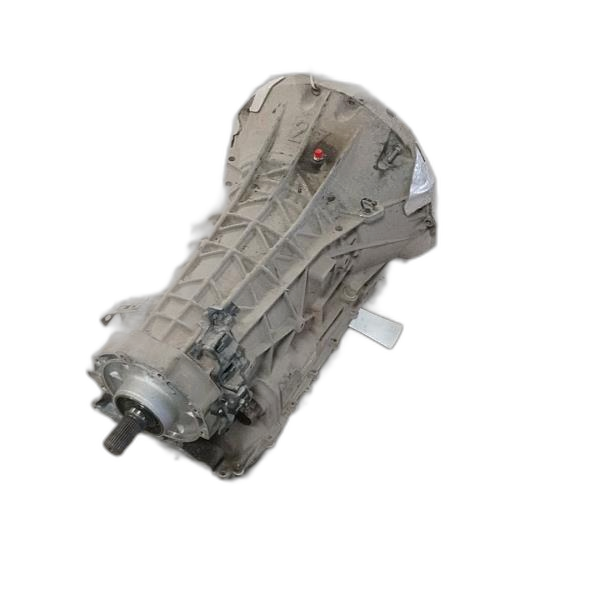
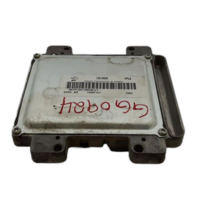
Shop the Parts Behind P1749
Below are the parts most often responsible for code P1749, ranked by how frequently each one is the actual culprit (per the diagnosis above). Tap any to see what we have for your vehicle.


The information in this article is provided for general reference and educational purposes only. Vehicle specifications, procedures, and part compatibility can vary by production date, trim level, and region. Always consult your vehicle's factory service manual and verify part numbers before purchasing or performing repairs. Safety-critical components such as airbags, seat belts, and braking systems should be installed by a qualified professional.
- 🧭 Diagnostic Flowchart
- 🛍️ Shop This Part
- What Does P1749 Mean?
- Can I Drive With P1749?
- Common Causes
- Symptoms
- Common Fixes & Costs
- DIY vs Professional
- Used vs. New Parts: Buying Guide
- What Happens If You Wait — Timeline
- Cost of Not Fixing It
- Diagnosis Steps
- When This Code Triggers (Freeze-Frame Conditions)
- Related Codes
- Climate & Environmental Factors
- How to Talk to a Mechanic About This Code
- Where to Take It: Dealer vs Independent vs Chain
- When to Walk Away From the Repair
- What Scan Tool You Need for This Code
- How to Clear the Code After You Fix It
- Will This Fail Emissions / State Inspection?
- Most Commonly Affected Vehicles
- Manufacturer-Specific Notes
- Real Owner Stories
- 2007 Dodge Ram 3500 5.9L Cummins - Easy Fix
- 2007 Dodge Ram 2500 - Misdiagnosis Story
- 2007 BMW 335i (E90) - Internal Seal Failure
- How to Prevent This Code From Triggering
- Frequently Asked Questions
- Can I fix P1749 myself?
- What happens if I ignore code P1749?
- I replaced the TTVA on my Dodge, but the code came back. What did I miss?
- My scanner says P1749 is an EPC solenoid, but my VW/BMW shop says it's the TCM. Why?
- Will clearing the code fix the problem?
- Is the sensor part of the actuator on a Dodge Ram?
- How much does it cost to fix code P1749?
- Key Takeaways
- 🎟️ Get 5% Off