

P1758 on 2010-2012 Audi A5 Cabriolet: Terminal 15 Voltage Supply Open Circuit Guide
P1758 on a 2010-2012 Audi A5 Cabriolet indicates a power loss to the transmission's computer (TCM). This is almost always caused by an internal failure of the Mechatronics unit inside the DL501/0B5 S-Tronic transmission, not a simple fuse. The failure is typically on the internal circuit boards, a well-documented issue. This is a complex, expensive repair requiring a professional specialist.
- P1758 on this vehicle means the transmission's computer has lost power.
- This is almost never a simple fuse or relay; it's a known internal failure of the Mechatronics unit inside the S-Tronic transmission.
- Look for a combination of codes P1758, P179E, P0700, and P060A to confirm the diagnosis.
- The repair is complex and expensive, requiring a professional with Audi-specific tools and experience.
- Do not continue to drive the vehicle, as it may become stranded without warning.
What's Unique About the 2010-2012 Audi A5 CABRIOLET
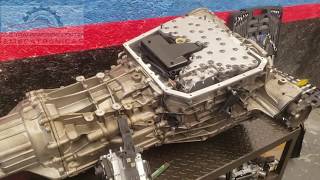
The 2010-2012 A5 Cabriolet uses the DL501 (also known as 0B5) 7-speed S-Tronic dual-clutch transmission. This gearbox integrates its complex electronics (TCM) and hydraulics into a single 'Mechatronics' unit housed inside the transmission. While this design allows for fast shifting, it also makes the internal circuit boards a common point of failure due to poor contact areas and heat. Unlike many vehicles where a power supply code might point to an external fuse or relay, on this specific platform, P1758 is a well-documented symptom of an internal Mechatronics circuit board failure, an issue Audi has addressed in multiple technical service bulletins.
Diagnostic Flowchart
Tap your situation to follow the diagnostic path that matches what you're seeing on this vehicle.
Symptoms You May Notice
- "Gearbox malfunction: you can continue driving" message on the driver information system
- Vehicle will not crank or start
- Inability to shift out of Park
- Flashing gear indicator (PRNDS) on the dashboard
- Vehicle enters limp mode with limited gear availability (e.g., no reverse or gears above 1st)
- Warning lights for transmission (EPC), parking brake, and steering may illuminate
- A noticeable 'clunk' from the transmission when the fault occurs
- Complete loss of drive while operating
- Replacing the battery without checking the charging system and Mechatronics unit. While a bad battery can cause issues, it's rarely the root cause of this specific code combination.
- Replacing external relays or fuses without confirming the primary internal fault. The issue is almost always inside the transmission when P1758 is paired with other TSB-specified codes.
- Replacing the entire Mechatronics unit when only the circuit board repair kit was needed. This can increase the repair cost by thousands of dollars.
Most Likely Causes
- Internal Mechatronics Circuit Board / Sensor Module Failure 🔴 High Probability The DL501 S-Tronic transmission in this generation is known for failures of the internal printed circuit boards (PCBs) and the integrated sensor module. Heat, vibration, and poor internal contact areas on the circuit board lead to cracks in solder joints or component failure, causing an open circuit. This is a widely acknowledged design flaw.
How to confirm: A professional scan tool (like VCDS or ODIS) is needed. The presence of P1758 alongside codes P179E (Drive position sensor), P0700 (Transmission control system malfunction), and P060A (Internal control module performance) is a definitive sign of this failure, as documented in Audi TSB 2032211. The TSB specifically notes that for this diagnosis, P179E should be logged first in the DTC environmental data.
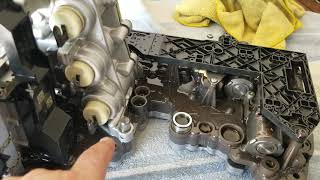
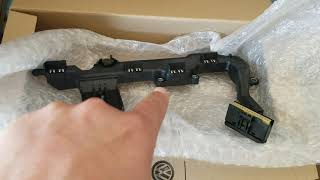
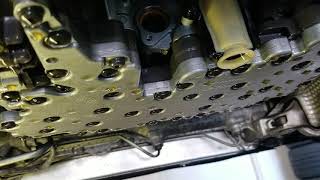
Typical fix: Replace the faulty sensor module and circuit boards inside the Mechatronics unit using a dedicated repair kit 🎬 Watch: How to install the circuit board repair kit. (e.g., part number 0B5398009F). This requires removing the Mechatronics unit from the transmission. In severe cases, or if the valve body is also damaged, the entire Mechatronics unit must be replaced.
Est. part cost: $300-$800 for a repair kit; $2000-$4000+ for a replacement Mechatronics unit.
Rare But Worth Checking
- Damaged Transmission Wiring Harness or Connector: → Shop Transmission Assembly While less common than internal failure, the main 16-pin round electrical connector on the transmission case can become damaged or corroded from water ingress, interrupting the power supply. It's worth inspecting this external connector before condemning the internal unit.
- Faulty Power Supply Relay or Fuse: A faulty Terminal 15 relay (often a black cube relay labeled '645' located under the driver's dashboard) or a related fuse could cause this issue. Fuse panels are located on both sides of the dashboard and in the luggage compartment. This is rare compared to the Mechatronics failure but is a much simpler and cheaper fix, making it worth checking early in the diagnosis.
- Weak or Failing Battery: On B8/B8.5 platforms, a weak or failing battery can cause a myriad of seemingly unrelated electrical faults, including transmission communication errors. Low voltage can disrupt the TCM's operation. While it's rarely the root cause of P1758 specifically, it should be tested and ruled out.
Diagnosis Steps
- Scan the Transmission Control Module (TCM, Address 02) with an Audi-specific scan tool like VCDS or ODIS.
- Confirm the presence of P1758. Note if it is accompanied by P179E, P0700, and P060A. Check the DTC environmental data to see if P179E was logged first. This combination strongly indicates an internal Mechatronics failure as per TSB 2032211.
- As a preliminary check, inspect the fuses for the TCM. Fuse panels are located in the dashboard on the driver's and passenger's side, and in the luggage compartment.
- Locate and test the Terminal 15 power supply relay (J329). On B8 models, this is often a black relay marked '645' located in the relay carrier under the driver's side dashboard.
- Inspect the main round 16-pin electrical connector (T16r) on the side of the transmission for any signs of corrosion, fluid intrusion, or damaged pins.
- If external wiring, fuses, and relays are confirmed to be good, the fault is internal to the Mechatronics unit. The unit must be removed from the transmission for repair or replacement.
Parts You'll Likely Need
- Mechatronics Repair Kit
(OEM #0B5398009F)— This is the most common and cost-effective fix. The kit contains the two replacement printed circuit boards (PCBs) and sensor module that fail internally, causing the P1758 code. This part number has been superseded multiple times (from A, B, C, D, E, to F); always verify the latest version with a dealer.
Trusted brands: Audi Genuine, Hamburg Technic
OEM price range: $400-$800
Aftermarket price range: $300-$600 - Mechatronics Unit
(OEM #0B5927156K)— If the circuit boards are too damaged, if there is a hydraulic failure in the valve body, or if a shop is not equipped to do the board-level repair, a complete (new or remanufactured) Mechatronics unit is required. Part number varies by specific vehicle configuration and has many revisions. This is significantly more expensive.
Trusted brands: Audi Genuine
OEM price range: $2500-$4000+
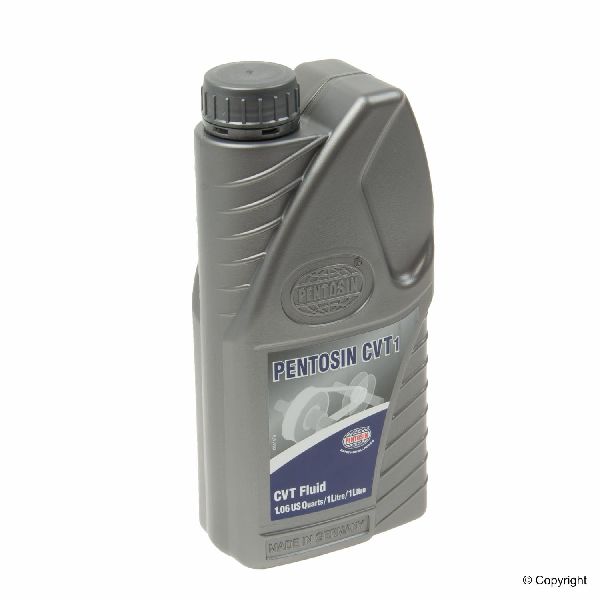
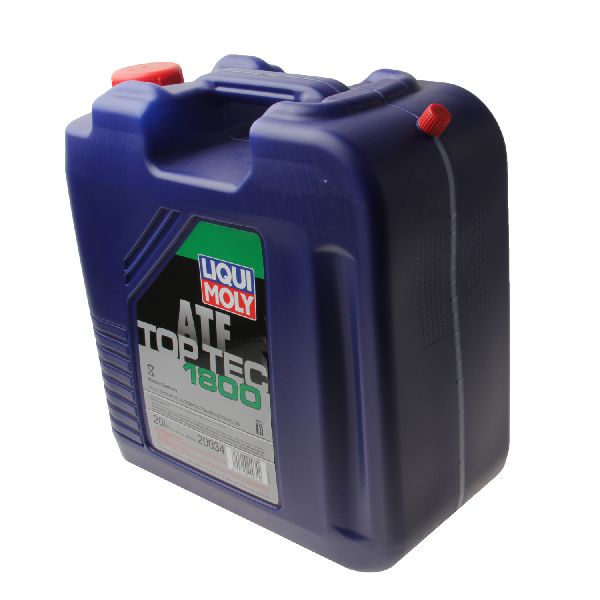
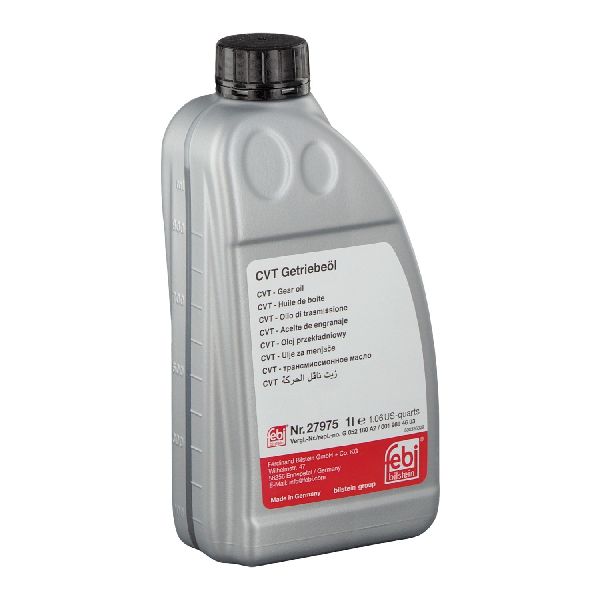
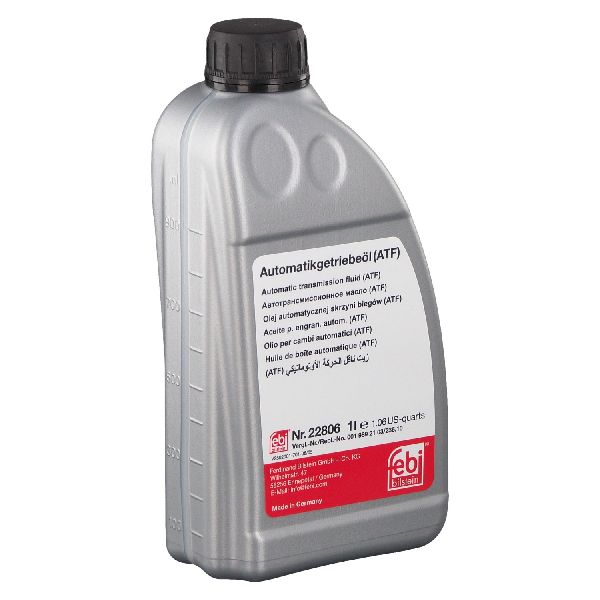
Aftermarket price range: $1500-$2500 - S-Tronic Transmission Fluid (ATF)
(OEM #G052529A2)— The transmission fluid must be drained to access the Mechatronics unit. Approximately 7 liters are required for a refill. Using the correct OEM fluid is critical, as additives in other fluids can damage the circuit boards.
Trusted brands: Audi Genuine
OEM price range: $25-$40 per liter
Aftermarket price range: $15-$25 per liter
Related Codes That Often Appear With This One
- P179E — This code for 'Drive position sensor electrical error' is a primary indicator of the internal Mechatronics fault. TSB 2032211/2 states this code is often logged first when this specific failure occurs.
- P0700 — This is a generic code that simply means the Transmission Control Module has detected a fault and has lit the check engine light. It confirms the problem is in the transmission system.
- P060A — This code for 'Internal control module monitoring processor performance' points directly to a failure within the TCM itself, reinforcing the diagnosis of a faulty Mechatronics unit.
- P17D8 — This code for 'Torque Limitation Due To Clutch Temperature' is another common fault with the DL501 that can indicate Mechatronics issues or fluid/clutch problems, sometimes appearing alongside the primary electrical fault codes.
Technical Service Bulletins (TSBs) & Recalls
- 2032211 / A351619 / A351623: Gearbox warning light on, explicit
Platform-Specific Known Issues
- Audi has issued multiple Technical Service Bulletins (TSBs) for the S-Tronic (DL501/0B5) transmission. TSB #2032211 (with revisions like A351619, A351623) is the most relevant. It specifically links the combination of DTCs P1758, P179E, P0700, and P060A to a failure of the internal sensor module and circuit boards, requiring replacement with the repair kit.
- The failure is so common that many independent shops specialize in this repair, and some owners report dealer quotes for a full Mechatronics replacement exceeding $7,500, while a specialist repair with a kit can be done for under $3,000.
Mechanic-Grade Diagnostic Values
- Terminal 15 Voltage at Transmission Connector (T16r) — expected: Battery Voltage (approx. 12V) with ignition on. Failure: 0V or significantly low voltage indicates an open circuit in the supply wiring or relay.
- Mechatronic Solenoid Resistance (VFS Clutch Solenoids N436, N440) — expected: 4.8 Ω (± 0.1 Ω) at 25°C (77°F). Failure: A reading that is significantly higher (open) or lower (short) indicates a failed solenoid.
- Mechatronic Solenoid Resistance (Clutch Oil Pressure Solenoids N435, N439) — expected: 16.0 Ω (± 0.1 Ω) at 25°C (77°F) for Gen 1 Valve Body. Failure: A reading that is significantly higher (open) or lower (short) indicates a failed solenoid.
- Mechatronic Solenoid Resistance (Main Pressure Solenoid N472) — expected: 4.2 Ω (± 0.1 Ω) at 25°C (77°F). Failure: A reading that is significantly higher (open) or lower (short) indicates a failed solenoid.
Scan Tool Commands That Help
- VCDS or ODIS: Basic Settings - Erase counter for start and stop processes — This is the first step in the adaptation sequence after replacing the Mechatronics unit or repair kit. It resets learned clutch engagement points to factory defaults.
- VCDS or ODIS: Basic Settings - Clutch valve calibration — This function must be run after a repair to calibrate the operating range and pressure limits of the new clutch control valves. The car should not be driven without performing this.
- VCDS or ODIS: Basic Settings - Distance sensor calibration — This calibrates the sensors that track the position of the gear selector forks. Clunking noises from the transmission are normal during this procedure.
- VCDS or ODIS: Basic Settings - Clutch engagement point adaptation — This is a final step where the TCM carefully engages the clutches to 'feel' the bite point, ensuring smooth takeoffs.
Wiring & Ground Locations
- J329 (Terminal 15 Supply Relay) — In the relay carrier located under the driver's side dashboard, often behind the headlight switch. It is typically a black, cube-shaped relay marked '645'.. This relay provides the ignition-switched power to the TCM. A failure of this relay will directly cause a P1758 code by cutting power to the transmission's control unit.
- T16r Connector — The main 16-pin round electrical connector on the driver's side of the DL501 transmission case.. This is the single point of electrical connection for the entire Mechatronics unit. P1758 signifies a loss of power on the Terminal 15 pin within this connector. A visual inspection for corrosion or damage here is a key diagnostic step.
- TCM Fuse Panel — Fuses for the transmission are located in multiple places: the fuse panel on the driver's side of the dashboard, the passenger's side of the dashboard, and in the luggage compartment on the right side.. A blown fuse can cause the P1758 code, and while it's a rare cause compared to internal failure, it's a simple check that should be performed early.
Real Owner Repair Stories
- Darkside Developments YouTube Channel (Audi A5 B8 3.0 TDI with DL501 S-Tronic) — Clutch slipping issues, particularly after performance tuning.
❌ Tried (didn't work) Software adjustments and playing with torque limiters did not resolve the mechanical slipping.
✅ What actually fixed it The shop installed a Mechatronic repair kit (solenoids, etc.). However, after reassembly, the car would not start and the gear shifter lights were dead. They discovered the main electrical plug on the Mechatronics unit was not seated correctly. After draining the fluid again, removing the unit, and having a specialist correctly reseat the connector and reinstall the unit, the car was fixed and ran properly. - Ross-Tech Forums user (2011 B8 Audi S4, 55k miles) — P179E and P179F codes ('Selector Lever Sensor' fault), 'gearbox malfunction' message, limp mode when at operating temperature.
❌ Tried (didn't work) A repair shop replaced the selector lever sensor module and internal harness per the Audi TSB. When that didn't work, they performed the same repair a second time with new parts, assuming the first set was faulty. The problem persisted.
✅ What actually fixed it The shop's final recommendation was to replace the entire transmission, which the owner was skeptical of. This story serves as a cautionary tale that even following the TSB with the correct repair kit may not work if there is a deeper, undiagnosed issue or if the repair itself was performed incorrectly, leading to an expensive and likely unnecessary full transmission replacement recommendation.
"I Checked Everything" — The Actual Cause
- For code P1758, the equivalent of a 'smoke test clean' scenario is when all external fuses and relays test perfectly fine. In these cases, where the external power supply components are confirmed good, the root cause is almost invariably the internal printed circuit board (PCB) of the Mechatronics unit, which has developed an open circuit due to heat and vibration.
OEM Part Supersession History
0B5398009A / B / C / D / E→0B5398009F— Revisions to improve reliability of the internal printed circuit boards and sensor module.
Heads up: A DIY repair guide noted that the contents of the 'F' revision kit differed from instructions written for an older kit, containing different quantities and shapes of swarf protectors. This can cause confusion during installation.Metal ATF Pipes (inside transmission)→Plastic ATF Pipes (e.g., 0B5315105TC)— Updated design for fluid transfer to the Mechatronics unit.
Heads up: When replacing old metal pipes with the new plastic style, the original metal retaining bracket must NOT be refitted, as it is not required and will not fit correctly.
Model Year Variations Within This Range
- 2010-2012: These B8 platform vehicles use the earlier 'Gen 1' or 'Gen 1.5' DL501 S-Tronic transmission, which is known to be more susceptible to the Mechatronics circuit board failure causing P1758. Later B8.5 (2013+) and C7 platform cars use a 'Gen 2' DL501 which is considered more reliable, though not immune to failure.
Helpful Videos
We Have This Part in Stock



The information in this article is provided for general reference and educational purposes only. Vehicle specifications, procedures, and part compatibility can vary by production date, trim level, and region. Always consult your vehicle's factory service manual and verify part numbers before purchasing or performing repairs. Safety-critical components such as airbags, seat belts, and braking systems should be installed by a qualified professional.
- Audi A5 CABRIOLET:
- 🧭 Diagnostic Flowchart
- 🎬 Helpful Videos
- 🛍️ Shop This Part
- What's Unique About the 2010-2012 Audi A5 CABRIOLET
- Symptoms You May Notice
- Most Likely Causes
- Rare But Worth Checking
- Diagnosis Steps
- Parts You'll Likely Need
- Related Codes That Often Appear With This One
- Technical Service Bulletins (TSBs) & Recalls
- Platform-Specific Known Issues
- Mechanic-Grade Diagnostic Values
- Scan Tool Commands That Help
- Wiring & Ground Locations
- Real Owner Repair Stories
- "I Checked Everything" — The Actual Cause
- OEM Part Supersession History
- Model Year Variations Within This Range
- 🎟️ Get 5% Off