

OBD-II Code P1759: Front Brake Solenoid Valve Function Malfunction
What P1759 means, why it triggers, and how to fix it for good
- P1759 indicates a functional failure of a shift control solenoid, locking the transmission in a 3rd or 4th gear limp mode.
- On 2004-2015 Nissan and Infiniti vehicles, the most common cause is a cracked solder joint on the internal TCM, repairable for under $150 in parts.
- For 1998-2004 Dodge and Jeep models, P1759 means 'Governor Pressure Above 3 PSI at 0 MPH,' requiring a $450 replacement of the governor pressure solenoid and sensor.
- Never accept a $3,500+ full transmission replacement quote without a second opinion, as P1759 is frequently resolved with a component-level repair.
- Do not diagnose the transmission on Hyundai diesel vehicles with this code, as P1759 indicates a fuel pressure sensor malfunction on those models.
What Does P1759 Mean?

P1759 means your car's Transmission Control Module (TCM) detected a functional failure in the front brake solenoid. This solenoid controls hydraulic fluid pressure to apply an internal clutch pack or 'brake band,' holding a planetary gearset stationary to achieve specific gear ratios. When it malfunctions, the transmission cannot shift correctly.
Technical definition: For Nissan/Infiniti, P1759 is 'Front Brake Solenoid Valve Function,' indicating a mechanical or functional problem with the solenoid's operation. For Chrysler/Jeep/Dodge, it translates to 'Governor Pressure Above 3 PSI in Gear with 0 MPH,' pointing to a governor pressure sensor circuit fault. For Hyundai diesels, it refers to a fuel pressure sensor issue.
Can I Drive With P1759?
Yes, But With Caution. You can drive, but doing so risks severe damage. The transmission enters 'limp mode,' locking into 3rd or 4th gear. This causes dangerously slow acceleration and forces the transmission to overheat, potentially turning a $500 component repair into a $3,500 full replacement.
Common Causes

- Broken solder joint on the Transmission Control Module (TCM) (Very Common) — On Nissan/Infiniti RE5R05A transmissions (mid-2004+), a specific pin connecting the front brake solenoid circuit on the TCM board cracks. This creates an intermittent open circuit that worsens as the transmission heats up.
- Faulty Governor Pressure Solenoid or Sensor (Dodge/Jeep) (Common) — On Dodge/Jeep 42RE/46RE transmissions, the governor pressure sensor incorrectly reads pressure when the vehicle is stopped. A faulty governor pressure solenoid or sensor triggers this code.
- Faulty Front Brake Solenoid (Common) — The solenoid fails electrically (internal coil shorts or opens) or sticks mechanically from debris or wear.
- Degraded or Incorrect ATF (Common) — Low, contaminated, or incorrect transmission fluid causes solenoids to stick, overheat, or operate erratically.
- Damaged wiring or connectors (Less Common) — Corroded, frayed, or shorted wires interrupt the solenoid signal. Water intrusion in the main transmission connector after driving through deep puddles is a frequent culprit.
- Faulty Transmission Valve Body (Less Common) — Metallic debris clogs small passages in the valve body, or the body warps, causing internal pressure leaks even with a functional solenoid.
- Failed Transmission Control Module (TCM) or Powertrain Control Module (PCM) (Rare) — Complete internal failure of the control module requires replacing the entire unit. Rule out wiring and component failures first.
Symptoms

- Transmission stuck in one gear (Limp Mode) — The transmission enters a 'fail-safe' mode to prevent damage, locking into 3rd or 4th gear.
- Extremely poor acceleration from a stop — Because the vehicle is stuck in a high gear, it feels sluggish and slow to accelerate from a standstill.
- Harsh or 'Banging' shifts — The transmission slams into gear because hydraulic pressure is not controlled correctly.
- Check Engine Light or A/T Check Light is on — The TCM illuminates the Check Engine Light and flashes a dedicated 'A/T' warning light on some vehicles.
- Inability to use manual shift mode — Manual or sport shifting modes are disabled when the transmission is in limp mode.
- Increased fuel consumption — Inefficient shifting and fixed high-gear operation force the engine to work harder, ruining gas mileage.
Diagnostic Flowchart

Tap your situation to follow the diagnostic path that matches what you're seeing on this code.
Common Fixes & Costs
- Repair TCM Solder Joint (Nissan/Infiniti) — Parts: $50-$150, Labor: $400-$700, ~4.5 hr book time (Advanced)
- Replace Governor Pressure Solenoid & Sensor (Dodge/Jeep) — Parts: $100-$250, Labor: $250-$500, ~2.5 hr book time (Intermediate)
- Replace Front Brake Solenoid/Solenoid Pack — Parts: $70-$300, Labor: $400-$850, ~4 hr book time (Intermediate)
- Transmission Fluid and Filter Change — Parts: $75-$200, Labor: $150-$300, ~1.5 hr book time (DIY)
- Replace Transmission Valve Body with TCM — Parts: $800-$1,500, Labor: $1,800-$2,500, ~5 hr book time (Professional)
- Replace Transmission Control Module (TCM) — Parts: $800-$1,100, Labor: $950-$1,400, ~2.5 hr book time (Professional)
Used vs. New Parts: Buying Guide
When a used part is worth it: A used valve body or TCM from a low-mileage vehicle is cost-effective for older vehicles where a new part exceeds the car's value.
Donor-vehicle mileage cap: roughly under 80000 miles for the part to have meaningful remaining life.
Donor quality checklist:
- Verify the donor vehicle's VIN to ensure it wasn't scrapped for transmission issues.
- Match part numbers exactly.
- Ensure the donor TCM is from the same model year range to avoid programming conflicts.
Decision logic:
- If The failure is the common Nissan/Infiniti TCM solder joint → Repair the existing TCM. A used TCM likely has the same inherent defect.
- If The vehicle is over 10 years old and the budget is tight → A used valve body or solenoid pack from a reputable salvage yard is a reasonable choice.
- If The part is a single, inexpensive solenoid → Buy new. The labor cost to drop the pan is too high to risk using a part with an unknown history.
Warranty tradeoff: Used parts typically carry a 30-90 day part-only warranty. Aftermarket new parts offer 1-year to lifetime warranties. A used part failure leaves you responsible for repeat labor costs.
Worst-case if a used part fails: $500-$1200 if a used internal part fails after installation, requiring repeat labor.
What Happens If You Wait — Timeline
- First Occurrence: The Check Engine Light illuminates, and the transmission enters 'limp mode,' locking in 3rd or 4th gear. Acceleration is severely limited. (MPG impact: 5-10%% · Added cost: $0)
- 0-2 months: Limp mode becomes persistent. On Nissan/Infiniti, the fault reliably appears every time the transmission warms up. Harsh 'banging' shifts occur. (MPG impact: 10-20%% · Added cost: $50-$200 in wasted fuel and increased stress on engine mounts.)
- 2-6 months: Operating in a single high gear generates excessive heat, breaking down fluid and glazing internal clutch packs. Transmission slippage begins. (MPG impact: 15-25%% · Added cost: $1,500-$3,500 (A transmission rebuild is now required due to burned clutches).)
- 6+ months: Catastrophic internal failure. Prolonged overheating warps the valve body and destroys the torque converter. The vehicle loses all ability to move. (MPG impact: N/A (Vehicle likely undrivable)% · Added cost: $4,000-$8,000 (Requires a complete replacement transmission).)
Cost of Not Fixing It
- 0-1 month: Continuous operation in 'limp mode' causes extremely poor drivability and a 10-20% drop in fuel economy. (Added cost: $50-$150 in wasted fuel.)
- 1-6 months: Driving in a fixed high gear generates excessive heat, damaging seals and internal clutch packs, causing slipping. (Added cost: $1,500-$3,500 for a transmission rebuild.)
- 6+ months: Catastrophic transmission failure. Prolonged overheating warps the valve body and destroys the torque converter. (Added cost: $4,000-$8,000 for a complete replacement transmission.)
Diagnosis Steps
- Scan for All Transmission Codes
Use an OBD-II scanner capable of reading transmission codes. P1759 accompanied by P1757 ('Front Brake Solenoid Circuit') strongly points to the Nissan TCM solder joint failure.
Tools: OBD-II Scanner (with TCM capability) (Beginner) - Check Transmission Fluid Level and Condition
With the engine warm and running in Park, inspect the fluid. It must be at the 'FULL' mark and bright red. Milky/pink fluid signifies catastrophic coolant contamination from a failed radiator cooler.
Tools: Rag/paper towel (Beginner) - Inspect External Wiring and Connectors
Visually inspect the transmission wiring harness. Look for chafed wires or corrosion at the main connector. If moisture is found, clean the connector with electrical contact cleaner and seal with dielectric grease.
Tools: Flashlight, Electrical Contact Cleaner, Dielectric Grease (Intermediate) - [Pro Tip] Analyze Live Scanner Data (Nissan/Infiniti)
Monitor solenoid amperage draw. A reading of 0.0 amps when the solenoid should be energized (0.6 to 0.8 amps) points to an open circuit, confirming the TCM solder joint failure.
Tools: Advanced OBD-II Scanner with CAN capability (Advanced) - [Pro Tip] Analyze Live Scanner Data (Dodge/Jeep)
Monitor 'Desired Governor Pressure' vs. 'Actual Governor Pressure'. At 0 MPH in gear, both must be 0 PSI. If actual pressure reads higher (e.g., 20 PSI), the governor pressure sensor or solenoid is faulty.
Tools: Advanced OBD-II Scanner (Advanced) - Drop the Transmission Pan for Visual Inspection
Remove the pan to inspect the fluid for excessive metal shavings on the magnet. This provides access to the valve body, TCM, and solenoids.
Tools: Socket set, drain pan, new pan gasket, transmission fluid (Intermediate) - Inspect the TCM for Broken Solder Joints (Nissan/Infiniti)
On RE5R05A transmissions, inspect the TCM bolted to the valve body. Open the TCM case and look for a visible crack at the solder point on the center pin for the front brake solenoid.
Tools: Socket set, Allen keys, Soldering iron, Magnifying glass (Advanced) - [Pro Tip] Test Solenoid Resistance
Disconnect the solenoid connector and measure resistance. For Nissan RE5R05A, the Front Brake Solenoid measures ~3.3 ohms. For Dodge 42RE/46RE, the Governor Pressure Solenoid measures 3.8-4.0 ohms. 'OL' indicates a failed solenoid.
Tools: Multimeter, Service Manual (for pinout) (Advanced) - Check for a Grounded Solenoid Circuit
Touch one multimeter probe to a solenoid pin and the other to the metal body of the solenoid. The reading must be 'OL' (Open Loop). Continuity indicates the solenoid is internally grounded and requires replacement.
Tools: Multimeter (Advanced)
When This Code Triggers (Freeze-Frame Conditions)
- Transmission Fluid Temperature: 180-220°F (82-104°C) (The Nissan/Infiniti TCM solder joint fault triggers most often when the transmission is fully warmed up.)
- Vehicle Speed: 0 MPH or 35-55 MPH (For Dodge/Jeep, the code triggers when pressure is detected at a stop. For Nissan/Infiniti, it triggers during a gear change at cruising speed.)
- Gear Commanded: Shift from 3-4 or 4-5 (The TCM logs the fault when it commands a shift requiring the front brake solenoid to change state, but the action fails to complete.)
- Engine RPM: 1500-2500 RPM (The code sets during steady-state cruising or light acceleration, not typically during aggressive driving.)
Related Codes
- P1757 — This code for 'Front Brake Solenoid Circuit' is the most common companion to P1759 on Nissan/Infiniti. P1757 points to the electrical failure, while P1759 points to the resulting functional failure. They are fixed with the same repair.
- P0700 — A generic code set by the PCM to turn on the Check Engine Light. It simply means 'go look in the TCM for the real code,' which is P1759.
- P0745 — A generic code for 'Pressure Control Solenoid 'A' Malfunction'. Focus diagnosis on the specific component identified by P1759.
- U1000 — A CAN communication code seen alongside P1757/P1759 on Nissans. The electrical fault in the TCM disrupts network communication. Fixing P1759 resolves U1000.
Climate & Environmental Factors
- High Ambient Temperature / Heat Soak: As the transmission heats up, thermal expansion causes the cracked solder joint on Nissan/Infiniti TCMs to separate, creating an open circuit and triggering limp mode.
- High Humidity / Water Exposure: Driving through deep puddles causes moisture intrusion in the main transmission wiring harness connector. This corrosion creates high resistance, triggering P1759.
- Extreme Cold: Extreme cold thickens transmission fluid, exacerbating pre-existing mechanical issues with sticky solenoids.
How to Talk to a Mechanic About This Code
Say this: "I have a [Your Year/Make/Model] with a P1759 code and it's going into limp mode. I'd like to schedule a diagnostic. Based on my research, for this vehicle, it's often a specific component like the TCM solder joint (for Nissan/Infiniti) or the governor pressure sensor (for Dodge/Jeep). I'd like you to focus the diagnosis there before quoting a full transmission replacement."
This signals you are an informed customer. It directs the technician to the most probable cause and sets the expectation that you will not blindly accept a quote for a full transmission replacement.
Avoid saying:
- 'My transmission is broken, how much to fix it?'
- 'My check engine light is on, can you just look at it?'
- 'Just do whatever you think is best.'
Questions to ask before authorizing the repair:
- For a Nissan/Infiniti: Did you inspect the TCM for a broken solder joint or test the solenoid resistance?
- For a Dodge/Jeep: Can you show me the live data from the scanner showing the 'Actual' vs. 'Desired' governor pressure at 0 MPH?
- What is the warranty on this specific repair, covering both parts and labor?
- Is the quoted price for an OEM part or an aftermarket part?
- If you are recommending a transmission replacement, can you explain why a component-level repair isn't possible?
Where to Take It: Dealer vs Independent vs Chain
- Dealer:
Use if under warranty. Otherwise, a specialist is often better and cheaper.
Best for: Vehicles still under powertrain warranty., When you want an OEM part and are less sensitive to cost., If a complex TCM reprogramming is required after the fix.
Downsides: Highest labor rates., More likely to recommend a complete valve body or transmission replacement instead of a component-level repair. (Typical cost: +50% vs. baseline) - Independent Shop:
Best Fit, IF you find a transmission specialist. A general independent mechanic may misdiagnose the issue.
Best for: Out-of-warranty vehicles where cost is a major factor., Finding a shop that specializes in transmission repair., Getting specific component-level repairs done (like a TCM solder repair).
Downsides: Quality and expertise vary widely. You must find a shop with specific experience with this transmission issue. (Typical cost: +0% vs. baseline) - Chain Shop:
AVOID for P1759 diagnosis and repair. Only use for a preliminary fluid change if you suspect that is the issue.
Best for: Simple fluid and filter changes.
Downsides: Technicians often lack the specialized knowledge for complex internal transmission diagnostics., High pressure to upsell may lead to unnecessary recommendations., Least likely to perform a component-level fix like soldering. (Typical cost: -10% vs. baseline)
What Scan Tool You Need for This Code
Minimum: A scanner that can read manufacturer-specific transmission codes and view live transmission data.
A basic $20 code reader only shows a generic P0700 code. It cannot read the specific P1759 code from the TCM, nor can it display the critical live data needed to confirm the diagnosis.
Budget: BlueDriver Pro (~$100) — Reads enhanced transmission codes for most major makes. Displays live data, which is essential for diagnosing the Dodge/Jeep governor pressure issue.
Mid-range: Foxwell NT510 Elite (~$180) — Offers brand-specific software with deep diagnostic capabilities, including reading TCM live data streams and performing transmission-specific active tests.
Professional: Autel MaxiCOM MK808 / MK808S (~$500) — Provides full bidirectional control and OE-level diagnostics. Performs advanced functions like transmission 'quick learn' procedures after a repair.
Rent vs buy: Buying a capable scanner like the BlueDriver is often a better investment, as it saves you a $150+ diagnostic fee at a shop.
How to Clear the Code After You Fix It
- Use an OBD-II scan tool to clear all diagnostic trouble codes (DTCs).
- For Nissan/Infiniti, perform the 'Accelerator Pedal Released Position Learning' and 'Throttle Valve Closed Position Learning' procedures.
- Perform a complete transmission drive cycle to allow the TCM to relearn shift points.
Drive cycle (~30 minutes): Start the engine cold and idle for 5 minutes. Drive for 15-20 minutes in mixed city/highway conditions, including several stops. Include 5 minutes of steady driving at 55-60 mph. Allow the vehicle to cool down completely.
Readiness monitors affected: Comprehensive Component Monitor, Catalyst (CAT) Monitor, Oxygen (O2) Sensor Monitor
Before emissions retest: drive at least 100 miles to fully set monitors.
Watch out for:
- Disconnecting the battery clears the code but resets all readiness monitors, guaranteeing an emissions test failure.
- The code returns immediately if the underlying mechanical or electrical fault is not repaired.
- Skipping manufacturer-specific relearn procedures results in poor shifting even after a successful repair.
Will This Fail Emissions / State Inspection?
Yes — this code typically fails an OBD-II emissions inspection.
- California: An illuminated Check Engine Light results in an automatic failure. A full drive cycle must be completed to set readiness monitors before a retest.
- New York: An active P1759 code causes the vehicle to fail the OBD-II emissions portion of the NYS DMV inspection.
- Texas: In the 17 counties requiring emissions testing, an active P1759 is an automatic failure. You must drive 50-100 miles after clearing the code to set readiness monitors.
- Arizona: A vehicle is rejected if more than one monitor is 'not ready' on a 2001+ model. Clearing P1759 resets these monitors, requiring a drive cycle.
Most Commonly Affected Vehicles
- Nissan Titan, Armada, Frontier, Xterra, Pathfinder (2004-2015) — Extremely common on RE5R05A transmissions due to the TCM solder joint failure. Nissan TSB NTB10-003a addresses this code.
- Infiniti G35, FX35, FX45, M45, QX56 (2003-2010) — Shares the RE5R05A transmission TCM failure. Mid-2004 and newer models have the internal TCM on the valve body.
- Jeep Grand Cherokee (WJ) (1999-2004) — On the 42RE or 45RFE transmission, P1759 points to a faulty Governor Pressure Sensor or Solenoid.
- Dodge Ram 1500, Dakota, Durango (1998-2004) — This code on Dodge trucks with 42RE/46RE transmissions requires replacing the governor pressure solenoid and sensor inside the pan.
- Honda Accord, Odyssey, Pilot (1998-2007) — P1759 relates to a fault in the torque converter lock-up system, often a clogged linear solenoid.
- Kia Sorento (2003-2009) — The code points to a fault with a specific clutch solenoid, typically replaced as a pack.
- Hyundai Various Diesel Models (2005-2015) — P1759 refers to a malfunction in the fuel pressure sensor circuit on the common rail, entirely unrelated to the transmission.
- Subaru Legacy, Outback (1999-2004) — Points to a failure of the low clutch timing solenoid within the 4EAT transmission.
Manufacturer-Specific Notes
- Nissan/Infiniti: The failure is almost always a cracked solder pin on the TCM inside the transmission for mid-2004+ models. Nissan does not sell the solenoids individually, only as a complete valve body assembly.
- Chrysler/Jeep/Dodge: The code definition is 'Governor Pressure Above 3 PSI in Gear with 0 MPH'. The fix is to replace the governor pressure solenoid and sensor as a pair. TSB 21-002-02 addresses this.
- Honda/Acura: Diagnosis should focus on the torque converter lock-up clutch (TCC) solenoid and pressure switches, which are often mounted externally on the transmission case.
- Hyundai: On Hyundai diesel vehicles, P1759 is a fuel system code for the 'Fuel Pressure Sensor Malfunction' and has absolutely nothing to do with the transmission.
Real Owner Stories
2005 Infiniti G35 Coupe with limp mode when hot
Car ran fine cold, but after 15 minutes of driving, it hesitated and stuck in a high gear with codes P1757 and P1759.
What they tried:
- Considered replacing the entire valve body.
- Decided to inspect the TCM for the common solder joint failure based on forum advice.
Outcome: The owner dropped the transmission pan and found a visible crack on the center pin for the front brake solenoid. Re-soldering the pin cost under $150 in fluid and supplies, permanently resolving the codes.
Lesson: For Nissan/Infiniti RE5R05A transmissions, symptoms that worsen with heat are a classic sign of the TCM solder joint failure. This repair saves thousands compared to replacing the transmission.
2004 Nissan Titan with sudden limp mode and no acceleration
The truck suddenly lost power and would not accelerate. A scanner showed code P1759.
What they tried:
- Feared a complete transmission failure.
- Added transmission fluid and discovered a massive leak from a burst transmission cooler hose.
Outcome: The owner replaced the ruptured hose and performed a full fluid drain and fill with Matic-J ATF. The $50 repair completely resolved the P1759 code and limp mode.
Lesson: Catastrophic fluid loss mimics severe internal failure. Always check the fluid level and inspect for external leaks before assuming the worst.
2006 Dodge Ram 1500 with P1759 and harsh shifting
The truck experienced harsh shifts and threw code P1759 ('Governor Pressure Above 3 PSI in Gear with 0 MPH').
What they tried:
- Used a scan tool to confirm 'Actual Governor Pressure' read high at a stop while 'Desired Governor Pressure' was zero.
Outcome: The mechanic dropped the pan and replaced the Governor Pressure Solenoid and Sensor as a kit. The $450 repair fixed the issue.
Lesson: On Dodge/Jeep products, P1759 is highly specific. Verifying governor pressure readings with a scan tool definitively points to replacing the solenoid and sensor.
2005 Nissan Pathfinder with P1757 & P1759, misdiagnosed
Vehicle stuck in 3rd gear. A general mechanic quoted a full transmission replacement for $3,500.
What they tried:
- Took the vehicle to a transmission specialist for a second opinion.
- The specialist inspected the main transmission harness connector.
Outcome: The connector had water intrusion. The technician cleaned the pins, applied dielectric grease, and cleared the codes. The problem was resolved for one hour of labor.
Lesson: Never accept a full transmission replacement quote for P1759 without a second opinion. Environmental factors like water intrusion perfectly mimic major internal failures.
How to Prevent This Code From Triggering
- Perform regular transmission fluid and filter changes (Every 30,000-60,000 miles) — Clean fluid lubricates moving parts and maintains correct hydraulic pressure, preventing solenoids from sticking or clogging.
- Use only the manufacturer-specified transmission fluid (Every fluid change) — Incorrect fluid alters friction properties and swells seals, leading to solenoid and clutch pack damage.
- Install an auxiliary external transmission cooler (One-time upgrade, especially for towing vehicles) — Heat destroys automatic transmissions. An external cooler stabilizes fluid temperatures, reducing stress on solenoids and the TCM while bypassing the factory radiator cooler to prevent coolant contamination.
- Inspect and clean external wiring harness connectors (Every 2-3 years or after driving in deep water) — Corrosion on the main transmission connector causes high resistance and triggers false solenoid codes. Dielectric grease repels moisture.
Frequently Asked Questions
My mechanic quoted me $4,000 for a new transmission. Is this necessary for a P1759 code?
It is highly unlikely. Many shops lack the specific knowledge to diagnose the internal TCM or solenoid and quote a full replacement because it is easier. Always get a second opinion from a transmission specialist, as the repair is often a fraction of that cost.
Can a transmission fluid change fix code P1759?
Yes, but only if the problem is caused by low, severely degraded, or incorrect fluid. A drain-and-fill is an excellent first diagnostic step due to its low cost. If the code returns, a deeper mechanical or electrical issue is the cause.
What does 'Front Brake Solenoid' mean? Is it part of my car's brakes?
No, it has nothing to do with the wheel brakes. In automatic transmissions, a 'brake' is an internal clutch pack or band that holds a planetary gear set stationary to create different gear ratios. The 'Front Brake Solenoid' controls the hydraulic pressure applying this internal brake.
My car has P1759 and the problems get worse when it's hot. What does that mean?
This is a classic symptom of the cracked TCM solder joint on Nissan and Infiniti vehicles. As transmission fluid heats up, the metal expands, causing the crack to widen and creating an open circuit. This triggers the fault and limp mode.
Is P1759 an engine code or a transmission code?
It is a transmission code. The fault originates from the Transmission Control Module (TCM), not the Engine Control Module (ECM).
Can I just clear the code and keep driving?
You can clear the code, but it returns immediately once the TCM runs its self-test. Clearing the code does not fix the underlying problem and will not prevent limp mode.
I drove through a heavy storm and now this code is present. Are they related?
Yes. Water intrusion into the main external transmission harness connector causes a short, triggering P1757 and P1759. Disconnect, dry, and clean this connector before attempting major internal repairs.
Key Takeaways
- P1759 indicates a functional failure of a shift control solenoid, locking the transmission in a 3rd or 4th gear limp mode.
- On 2004-2015 Nissan and Infiniti vehicles, the most common cause is a cracked solder joint on the internal TCM, repairable for under $150 in parts.
- For 1998-2004 Dodge and Jeep models, P1759 means 'Governor Pressure Above 3 PSI at 0 MPH,' requiring a $450 replacement of the governor pressure solenoid and sensor.
- Never accept a $3,500+ full transmission replacement quote without a second opinion, as P1759 is frequently resolved with a component-level repair.
- Do not diagnose the transmission on Hyundai diesel vehicles with this code, as P1759 indicates a fuel pressure sensor malfunction on those models.
Helpful Videos
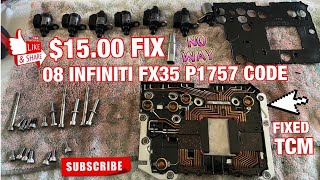

Shop the Parts Behind P1759
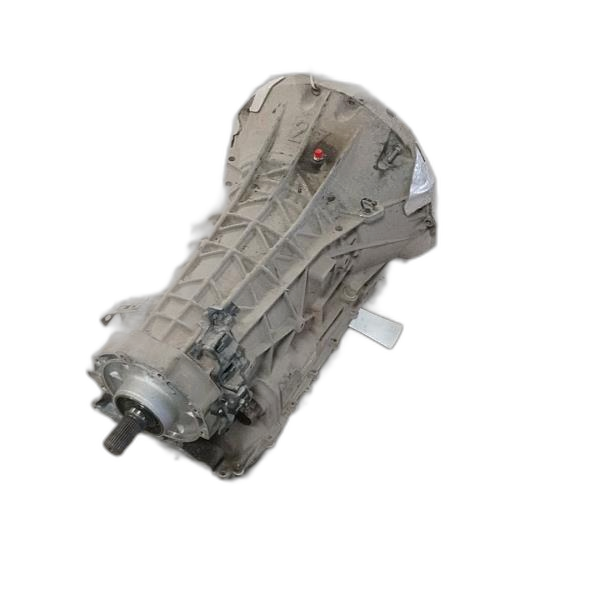
Below are the parts most often responsible for code P1759, ranked by how frequently each one is the actual culprit (per the diagnosis above). Tap any to see what we have for your vehicle.


The information in this article is provided for general reference and educational purposes only. Vehicle specifications, procedures, and part compatibility can vary by production date, trim level, and region. Always consult your vehicle's factory service manual and verify part numbers before purchasing or performing repairs. Safety-critical components such as airbags, seat belts, and braking systems should be installed by a qualified professional.
- 🧭 Diagnostic Flowchart
- 🎬 Helpful Videos
- 🛍️ Shop This Part
- What Does P1759 Mean?
- Can I Drive With P1759?
- Common Causes
- Symptoms
- Common Fixes & Costs
- Used vs. New Parts: Buying Guide
- What Happens If You Wait — Timeline
- Cost of Not Fixing It
- Diagnosis Steps
- When This Code Triggers (Freeze-Frame Conditions)
- Related Codes
- Climate & Environmental Factors
- How to Talk to a Mechanic About This Code
- Where to Take It: Dealer vs Independent vs Chain
- What Scan Tool You Need for This Code
- How to Clear the Code After You Fix It
- Will This Fail Emissions / State Inspection?
- Most Commonly Affected Vehicles
- Manufacturer-Specific Notes
- Real Owner Stories
- 2005 Infiniti G35 Coupe with limp mode when hot
- 2004 Nissan Titan with sudden limp mode and no acceleration
- 2006 Dodge Ram 1500 with P1759 and harsh shifting
- 2005 Nissan Pathfinder with P1757 & P1759, misdiagnosed
- How to Prevent This Code From Triggering
- Frequently Asked Questions
- My mechanic quoted me $4,000 for a new transmission. Is this necessary for a P1759 code?
- Can a transmission fluid change fix code P1759?
- What does 'Front Brake Solenoid' mean? Is it part of my car's brakes?
- My car has P1759 and the problems get worse when it's hot. What does that mean?
- Is P1759 an engine code or a transmission code?
- Can I just clear the code and keep driving?
- I drove through a heavy storm and now this code is present. Are they related?
- Key Takeaways
- 🎟️ Get 5% Off