

OBD-II Code P1760: Transmission Solenoid Circuit Malfunction
What P1760 means, why it triggers, and how to fix it
- Verify the exact P1760 definition for your vehicle make, as it means 'Linear Solenoid Malfunction' on a Toyota but 'Overrun Clutch Solenoid' on a Nissan.
- Test the solenoid's resistance with a multimeter (typically 5 to 40 ohms) before replacing it to rule out wiring or control module failures.
- Stop driving immediately if the transmission enters 'limp mode' or shifts harshly, as driving more than 50 miles can burn the clutches and cause a $3,000 rebuild.
- Check for a faulty Engine Control Module (ECM) on 2001-2003 Toyota RAV4s, as a known defect causes false P1760 codes that require a $200 ECM repair rather than new solenoids.
What Does P1760 Mean?

The P1760 code signifies the Powertrain Control Module (PCM) or Transmission Control Module (TCM) detected an electrical fault in a transmission solenoid circuit. This solenoid is an electro-hydraulic valve directing fluid to control gear shifts, line pressure, or torque converter lockup. When its circuit fails, the transmission cannot shift correctly, causing poor performance and internal damage.
Technical definition: P1760 is a manufacturer-specific code. For Toyota, it is 'Linear Solenoid for Line Pressure Control Circuit Malfunction' (SLT). For Nissan, it is 'Overrun Clutch Solenoid Valve'. For Ford, it means 'Pressure Control Solenoid A Short Circuit'. For GM, it indicates 'TCM Supply Voltage Interrupted'. In all cases, it points to an electrical fault in the transmission control system.
Can I Drive With P1760?
Yes, but not recommended You can drive, but the vehicle often enters a 'limp mode' with limited gear access and speed. Limit driving strictly to reaching a safe place or repair shop. Continuing to drive with harsh shifting or slipping generates excessive heat, quickly degrading transmission fluid and burning clutches. Driving more than 50 miles turns a simple $300 solenoid repair into a $3,000 transmission rebuild.
Common Causes

- Faulty Transmission Solenoid (Very Common) — The solenoid fails electrically due to an open or shorted internal coil, or mechanically by sticking open or closed.
- Damaged Wiring Harness or Connectors (Common) — Wires fray, short to ground, or break due to heat and vibration. Connectors loosen, corrode, or fill with transmission fluid, disrupting the electrical signal.
- Low, Dirty, or Burnt Transmission Fluid (Common) — Low fluid causes pressure drops, while contaminated fluid contains metallic debris that clogs solenoid passages and blocks valve movement.
- Faulty TCM or PCM (Less Common) — The computer's internal driver circuit fails, or a software glitch falsely reports a solenoid problem. This is a notorious defect on 2001-2003 Toyota RAV4s.
- Poor Electrical Grounds (Less Common) — A corroded or loose ground wire causes a voltage drop, mimicking a solenoid failure and leading to misdiagnosis.
- Internal Transmission Mechanical Failure (Rare) — A mechanical issue within the valve body triggers this code. This is a last resort diagnosis after ruling out electrical faults.
Symptoms

- Check Engine Light is On — The Malfunction Indicator Lamp (MIL) illuminates on the dashboard to alert the driver of a fault.
- Harsh, Erratic, or Delayed Shifting — The vehicle shifts abruptly with a noticeable clunk, shifts at incorrect times, or delays heavily before engaging.
- Flashing Overdrive (O/D) Light — On Fords and Nissans, a flashing O/D light accompanies the Check Engine Light to indicate a transmission-specific fault.
- Fails to Move or No Reverse — The vehicle delays significantly or fails to engage Drive or Reverse. On some Hyundais, this code specifically prevents Reverse engagement.
- Transmission Stuck in 'Limp Mode' (also visible on scanner) — The transmission defaults to a single gear (often 2nd or 3rd) to prevent damage, resulting in extremely poor acceleration.
Diagnostic Flowchart

Tap your situation to follow the diagnostic path that matches what you're seeing on this code.
Common Fixes & Costs
- Replace Transmission Solenoid — Parts: $50-$150, Labor: $150-$400, ~2.5 hr book time (Intermediate)
- Replace Transmission Solenoid Pack — Parts: $150-$400, Labor: $200-$500, ~3 hr book time (Intermediate)
- Replace or Repair ECM/TCM — Parts: $250-$1500, Labor: $100-$300, ~0.8 hr book time (Professional)
- Repair or Replace Wiring Harness — Parts: $20-$250, Labor: $200-$700, ~4 hr book time (Professional)
- Transmission Fluid and Filter Change — Parts: $50-$150, Labor: $100-$250, ~1.2 hr book time (DIY)
DIY vs Professional
- Replace Transmission Solenoid/Solenoid Pack — Beginner: No
Tools: Socket set, torque wrench, transmission fluid pump, drain pan, new fluid, new pan gasket, service manual. - Replace or Repair ECM/TCM — Beginner: Yes (Replacement); No (Repair)
Tools: Basic hand tools (socket set or screwdriver) to access and remove the module. - Repair Wiring Harness — Beginner: No
Tools: Multimeter, wire strippers, soldering iron/crimp connectors, heat shrink tubing, wiring diagrams.
Used vs. New Parts: Buying Guide
When a used part is worth it: For a high-mileage vehicle where budget is the primary concern, a used solenoid or solenoid pack from a low-mileage donor vehicle is a cost-effective, albeit risky, solution. Source it from a reputable salvage yard offering at least a 30-day warranty.
Donor-vehicle mileage cap: roughly under 80000 miles for the part to have meaningful remaining life.
Donor quality checklist:
- Verify the donor vehicle was not scrapped due to transmission failure.
- Match the part number exactly; visual similarities can be deceiving.
- Inspect connectors for corrosion or damage.
Decision logic:
- If The part is a known high-failure item with internal wear (e.g., variable force solenoids). → Buy new OEM or a quality aftermarket brand. The risk of premature failure on a used part is too high.
- If The vehicle is older (>150k miles) and the cost of a new OEM part is prohibitive. → A used part is a reasonable gamble, but understand it may not last as long as a new part.
- If The cost of labor to access the part is high (3+ hours). → Buy new. The potential cost of repeating the labor to replace a faulty used part negates the initial savings.
Warranty tradeoff: Used parts typically offer a 30-90 day functional warranty, covering the part only, not labor. New aftermarket parts usually provide a 1-year to limited lifetime warranty. New OEM parts carry a 1-year warranty.
Worst-case if a used part fails: $300-$800. If the used part fails after the warranty period, you must pay for a new part plus the full cost of labor for a second time.
What Happens If You Wait — Timeline
- 0-1 month: Check Engine Light is on. Symptoms are intermittent. You notice slightly harsher shifts or a brief delay engaging a gear. The vehicle enters 'limp mode' sporadically. (MPG impact: 5-10%% · Added cost: $0-$50 in wasted fuel. At this stage, the problem is almost certainly confined to the solenoid/wiring, a sub-$500 repair.)
- 1-3 months: Limp mode becomes more frequent. Harsh, banging shifts are now the norm. The excessive line pressure or slipping generates significant heat, starting to break down the transmission fluid. (MPG impact: 10-20%% · Added cost: $200-$500. The transmission fluid is now burnt. Clutch surfaces are beginning to glaze and wear from the heat and harsh engagement.)
- 3-6 months: Catastrophic damage is imminent. The burnt fluid has lost its lubricating properties. Clutch packs are burnt, and the valve body is contaminated with friction material. (MPG impact: 20-30%% · Added cost: $2,000-$3,500. The transmission is beyond a simple repair. It requires a complete rebuild to replace worn clutches, seals, and damaged hard parts.)
- 6+ months: Complete transmission failure. The vehicle stops moving altogether. Internal hard parts are broken from the constant banging shifts or lack of lubrication. (MPG impact: N/A (vehicle is likely undrivable)% · Added cost: $4,000-$8,000+. A complete replacement with a remanufactured or new transmission is now the only option.)
Cost of Not Fixing It
- Immediate (0-1 Month): Severe drivability issues, including harsh shifting, being stuck in one gear (limp mode), and poor fuel economy. The vehicle is unreliable and unsafe to drive in traffic. (Added cost: Negligible, but risk of being stranded is high.)
- Short-Term (1-6 Months): Driving in limp mode or with constant harsh shifts generates excessive heat, which rapidly degrades the transmission fluid. This leads to clutch material wear and contamination of the valve body. (Added cost: $200-$500 for a transmission flush and filter change that may not solve the progressing mechanical damage.)
- Long-Term (6+ Months): Catastrophic internal transmission failure. Burnt clutches, a damaged valve body, and a failed torque converter are common outcomes. The transmission requires a complete rebuild or replacement. (Added cost: $2,000-$5,000+, turning a sub-$500 electrical repair into a major mechanical overhaul.)
Diagnosis Steps
- Scan for Trouble Codes
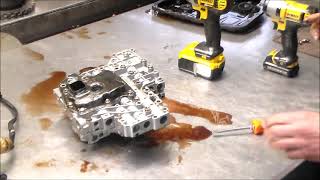
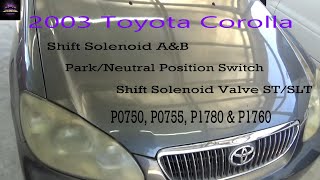
Use an OBD-II scanner to read the trouble codes. Note the P1760 code and any other related codes. 🎬 Watch: A complete walkthrough of P1760 diagnosis and repair. If the code returns immediately after clearing, it indicates a 'hard fault' or a constant electrical problem.
Tools: OBD-II Scanner (Beginner) - Check Transmission Fluid Level and Condition
Ensure the vehicle is on a level surface and check the transmission fluid. Note if the fluid is low, dark brown/black, or has a burnt smell, which indicates internal wear and the need for more than just a solenoid replacement.
Tools: Rag, Dipstick (if applicable) (Beginner) - Inspect Wiring and Connectors
Visually inspect the entire wiring harness going to the transmission. Look for chafed wires, melting near exhaust components, or corrosion. Unplug the main transmission connector and check for bent pins or fluid intrusion.
Tools: Flashlight, Mirror (Intermediate) - Test the Solenoid's Resistance at the Connector
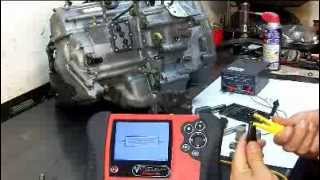
Using a digital multimeter, measure the resistance of the solenoid at the transmission connector. Compare your reading to the manufacturer's specifications. 🎬 See how to test transmission solenoid resistance with a multimeter. An infinite reading (OL) means an open circuit, and a near-zero reading indicates a short.
Tools: Digital Multimeter, Vehicle Service Manual (Intermediate) - Check for Power and Ground at the Solenoid
With the key on (engine off), use a multimeter to check for battery voltage (typically 9-14.5V) on the power feed wire at the solenoid connector. Check the ground circuit for continuity to a known good ground. A lack of power points to a wiring or TCM issue.
Tools: Digital Multimeter, Vehicle Service Manual (Advanced) - PRO TIP: Comparative Resistance Check
On vehicles with a solenoid pack (like Nissan), simple on/off solenoids have nearly identical resistance values (around 20-40 ohms). By testing all of them at the connector, you can quickly condemn the faulty solenoid if its reading is drastically different.
Tools: Digital Multimeter, Wiring Diagram (Advanced) - Test the Solenoid's Operation Directly (Click Test)
If you have direct access to the solenoid, briefly apply a fused 12V power source to its terminals. A healthy solenoid produces an audible 'click'. No click indicates a failed solenoid. Do not apply power for more than a second.
Tools: Fused Jumper Wires, 12V Power Source (Advanced) - Advanced: Check Live Data PIDs
Using an advanced scan tool, monitor live data PIDs related to the transmission. Compare live readings like 'Solenoid Duty Cycle' and 'Line Pressure' to the desired values specified in the service manual to see if the computer's command matches the sensor feedback.
Tools: Advanced OBD-II Scan Tool, Service Manual (Advanced) - PRO TIP: Solenoid Waveform Analysis
For variable-force solenoids, use an oscilloscope. Backprobe the signal and ground wires at the TCM. A healthy solenoid shows a clear square wave pattern (Pulse Width Modulation). A flat line or garbled pattern indicates a wiring or TCM driver failure.
Tools: Oscilloscope (Lab Scope), Service Manual (Professional) - Advanced: Hydraulic Pressure Testing
Connect a pressure gauge to the transmission's line pressure test port. At idle in Park, the pressure may be excessively high (e.g., over 150 PSI when it should be 50-75 PSI). This confirms the hydraulic effect of the electrical fault.
Tools: Transmission Pressure Gauge Set, Service Manual (Professional)
When This Code Triggers (Freeze-Frame Conditions)
- Engine Coolant Temp: 175-210°F (80-99°C) (The fault is typically logged when the engine and transmission are at full operating temperature.)
- Engine RPM: 1200-2500 RPM (Often occurs during light acceleration or steady-state cruising, not typically during hard acceleration or at idle.)
- Vehicle Speed: 25-55 mph (40-90 kph) (The code frequently sets during city or highway cruise conditions as the computer actively commands the line pressure solenoid.)
- Throttle Position: 15-40% (The fault is most likely to be detected under a steady throttle, where the computer expects a stable voltage or duty cycle from the solenoid circuit.)
Related Codes
- P0750, P0753, P0755, P0758 — These are codes for specific shift solenoids (A, B, C, D). On a 2001-2003 Toyota RAV4, seeing P1760 alongside these codes is a strong indication of a failed Engine Control Module (ECM) rather than multiple simultaneous solenoid failures.
- P0740 - P0744 — These codes relate to the Torque Converter Clutch (TCC) solenoid circuit. A TCC fault typically causes symptoms at highway cruising speeds, whereas P1760 symptoms are tied to gear-to-gear shifting problems.
- P1747 — This is another Ford-specific code. P1760 on a Ford is often 'Pressure Control Solenoid A Short Circuit'. P1747 is 'Pressure Control Solenoid A Circuit Malfunction'. They appear together and indicate a complex wiring or solenoid issue.
- P0960 - P0971 — This range of codes relates to pressure control solenoids (A, B, C). They are the standardized SAE equivalent of some manufacturer-specific P1760 definitions and point to the same type of electrical circuit faults.
Climate & Environmental Factors
- Cold Weather: Extremely cold temperatures cause transmission fluid to thicken, slightly delaying shift feel. It does not directly cause an electrical circuit code like P1760, but a pre-existing marginal solenoid issue becomes more apparent in cold weather.
- High Heat: High ambient temperatures and heavy use increase transmission operating temperature. Heat increases electrical resistance. A solenoid coil with borderline high resistance is pushed out of its specified range when hot, triggering the P1760 code.
- Humidity / Water: High humidity and water intrusion are significant factors. Moisture accelerates corrosion on wiring connectors, pins, and grounds. Water seeping into a connector causes a short circuit between pins, directly leading to a P1760 fault.
How to Talk to a Mechanic About This Code
Say this: "I have a P1760 transmission code and the vehicle is shifting harshly and going into limp mode. I would like to schedule a diagnostic to test the specific solenoid circuit. I want to confirm if the issue is the solenoid itself, the wiring, or the control module before authorizing any repairs."
This signals that you understand the code is for a specific electrical circuit and not a general transmission failure. It directs the shop to perform a proper electrical diagnosis (testing resistance, voltage, and grounds) rather than immediately quoting a costly and potentially unnecessary transmission rebuild.
Avoid saying:
- 'My transmission is slipping, I think it needs to be replaced.'
- 'My check engine light is on, can you just fix it?'
- 'Just do whatever you think is best.'
Questions to ask before authorizing the repair:
- What were the results of the solenoid resistance test? What was the ohm reading?
- Did you confirm that the solenoid is receiving power and has a good ground at the connector?
- Have you checked for any Technical Service Bulletins (TSBs) for this code on my specific vehicle?
- Can you provide a written estimate that breaks down the cost of parts and labor?
- What is the warranty on the proposed repair, for both parts and labor?
Where to Take It: Dealer vs Independent vs Chain
- Dealer:
A strong choice for known electronic quirks or if the vehicle is under warranty, but will be the most expensive option for an out-of-warranty repair.
Best for: Vehicles still under powertrain warranty., Complex, known manufacturer-specific issues like the Toyota RAV4 ECM failure., When you want a guaranteed OEM part and a nationwide warranty.
Downsides: Highest labor rates, often 1.5-2x more than independent shops., Defaults to replacing larger, more expensive assemblies rather than repairing a specific component. (Typical cost: +50% vs. baseline) - Chain Shop:
AVOID. P1760 requires nuanced electrical diagnosis that is beyond the scope of most chain shops. The risk of an expensive misdiagnosis is very high.
Best for: Simple, unrelated maintenance like oil changes or tires.
Downsides: Technician skill and diagnostic capability are highly inconsistent., Business model encourages upselling, leading to misdiagnosis (e.g., quoting a full rebuild for a simple solenoid issue)., Least likely to have the expertise for manufacturer-specific electronic quirks. (Typical cost: -10% vs. baseline)
When to Walk Away From the Repair
If the estimated repair cost exceeds 50% of the car's private-party market value, you should seriously consider selling the car as-is instead of repairing it.
- Car worth $4000, fix is $2200: Walk away. The repair cost is 55% of the car's value. It is not a sound financial decision.
- Car worth $12000, fix is $700: Fix it. The repair is less than 6% of the vehicle's value and will restore its function and worth.
- Car worth $3000, fix is $800: Borderline. The repair is 27% of the car's value. If the rest of the car is in excellent condition and you plan to keep it for several more years, the repair may be worthwhile. Get a second opinion before proceeding.
What Scan Tool You Need for This Code
Minimum: A scanner that can read manufacturer-specific transmission codes (P1xxx codes) and view live transmission data PIDs (Parameter IDs).
A basic $20 code reader likely only shows generic 'P0' codes and cannot see the P1760 code at all. To diagnose this problem, you need to see what the Transmission Control Module (TCM) is doing by viewing live data like solenoid duty cycle, line pressure, and transmission fluid temperature.
Budget: BlueDriver Pro Scan Tool (~$100) — Reads manufacturer-specific transmission codes, provides freeze-frame data, and allows you to graph live data PIDs for the transmission. This is often enough to see if a solenoid is being commanded on and if its related sensors are responding.
Mid-range: Foxwell NT510 Elite (~$180) — Offers all the features of the budget pick, plus bi-directional controls. This allows you to actively command the specific solenoid on and off to test its function directly through the scan tool, which is a huge advantage for confirming a diagnosis before buying parts.
Professional: Autel MaxiCOM MK808S (~$450) — Provides full bi-directional control, deep access to all vehicle modules, and performs special transmission functions like resetting adaptive shift points after a repair. This is professional-level capability that ensures you can complete the entire diagnostic and repair process correctly.
Rent vs buy: For P1760, a free rental scanner from an auto parts store is a good first step to confirm the code, but it likely won't have the live data or bi-directional features needed for a full diagnosis. If you plan to do more than just read the code, buying a mid-range scanner is a worthwhile investment.
How to Clear the Code After You Fix It
- Use an OBD-II scan tool to clear the P1760 and any related fault codes.
- Perform a complete drive cycle to allow the vehicle's computer to run its self-tests (readiness monitors).
- Rescan the vehicle after the drive cycle to ensure the code has not returned.
Drive cycle (~30 minutes): A generic drive cycle includes: 1) Cold start (engine off for 8+ hours). 2) Idle for 2-3 minutes. 3) Drive in the city at 25-40 mph for 10 minutes with several complete stops. 4) Drive on the highway at a steady 55-60 mph for 5-10 minutes. 5) Return to city driving for 5 minutes. 6) Park and idle for 1-2 minutes before shutting off the engine.
Readiness monitors affected: Comprehensive Component Monitor, Catalyst Monitor, Evaporative System Monitor
Before emissions retest: drive at least 100 miles to fully set monitors.
Watch out for:
- Simply clearing the code without performing a drive cycle results in a failed emissions test due to 'Not Ready' monitors.
- The code returns immediately if the underlying electrical fault was not correctly repaired.
- Some vehicles require very specific speed and time conditions to set certain monitors, and a generic drive cycle may not be sufficient.
Will This Fail Emissions / State Inspection?
Yes — this code typically fails an OBD-II emissions inspection.
- California: An illuminated Check Engine Light is an automatic failure. After repair, a full drive cycle must be completed as CARB requires most readiness monitors to be set to 'Ready' before a test can pass.
- New York: The NYS DMV inspection includes an OBD-II scan. A P1760 code causes an automatic failure. The vehicle cannot be inspected until the repair is made and the code is cleared.
- Texas: In the 17 counties requiring emissions testing, an active P1760 code results in a failed test. After the fix, the vehicle must be driven to reset the readiness monitors before it can be re-inspected.
Most Commonly Affected Vehicles
- Toyota RAV4, Corolla, Camry (2000-2010) — These models are known for issues with the line pressure control (SLT) solenoid. Notably, 2001-2003 RAV4 models have a very high failure rate of the ECM, which mimics solenoid failure.
- Nissan Altima, Maxima, Quest, Frontier (1999-2012) — Frequently experience P1760 due to failure of the overrun clutch solenoid. This is often part of a solenoid pack.
- Ford F-150, Taurus, Expedition (1999-2008) — On these Fords, P1760 points to a short in the pressure control solenoid (EPC) circuit, causing high line pressure, harsh shifts, and a flashing O/D light.
- Lexus ES, RX, LS (2000-2007) — Similar to their Toyota counterparts, these models set a P1760 for a malfunction in the line pressure control (SLT) solenoid circuit.
- Infiniti Various Models (2000-2010) — Shares the same 'Overrun Clutch Solenoid Valve' issue as Nissan, as they use similar Jatco transmissions.
- Chevrolet / GMC K-Series Trucks (e.g., K3500) (2000-2006) — On trucks with Allison transmissions, P1760 means 'TCM Supply Voltage Interrupted'. This points to a power or ground supply issue to the module, not a solenoid fault.
- Hyundai Veracruz, ix55 (2007-2012) — On these models, P1760 refers to a fault with 'Shift Solenoid-Valve C (SLC3)', which causes a failure to engage Reverse gear.
- MINI Countryman (R60) (2010-2016) — Owners report recurring transmission faults and limp mode associated with P1760, often requiring solenoid pack replacement.
Manufacturer-Specific Notes
- Toyota/Lexus: For 2001-2003 RAV4s, a known ECM manufacturing defect causes false solenoid codes (including P1760), harsh shifting, and hesitation. The correct repair is to replace or repair the ECM, not the transmission solenoids.
- Nissan/Infiniti: P1760 indicates a problem with the Overrun Clutch Solenoid. A failure here puts the transmission into 'limp mode,' locking it in a higher gear (like 3rd), causing extremely sluggish acceleration from a stop.
- Ford: Ford's P1760 definition points to a short circuit in the pressure control (PC) solenoid. This forces the transmission to maximum line pressure as a fail-safe, resulting in very harsh, abrupt shifts and a flashing Overdrive 'O/D' light.
- Chevrolet/GMC: On some trucks with Allison transmissions, P1760 means 'TCM Supply Voltage Interrupted'. This is a log code indicating the TCM lost power improperly on the last key-off cycle, often caused by a weak battery or loose terminal.
Real Owner Stories
2002 Toyota RAV4 at 115K miles with harsh shifting
Check Engine Light came on, accompanied by a very harsh 2-3 shift and occasional hesitation from a stop. Codes P1760, P0753, and P0758 were present.
Outcome: The owner declined the solenoid replacement. They removed the ECM themselves, sent it to a repair service for $200, and reinstalled it. The harsh shifting was immediately gone, and the codes did not return.
Lesson: On a 2001-2003 RAV4, multiple solenoid codes appearing together almost always point to a faulty ECM, not multiple failed solenoids. Replacing the solenoids would have been a costly misdiagnosis.
2001 Nissan Quest at 150K miles with 'no power'
Vehicle felt extremely sluggish from a stop, as if taking off in a high gear. The Check Engine Light was on with code P1760 (Overrun Clutch Solenoid Circuit).
Outcome: The technician replaced the entire solenoid pack. This required dropping the transmission pan and valve body. The total repair cost was approximately $650. The vehicle's power was restored, and the code was resolved.
Lesson: For Nissan's P1760, limp mode is a primary symptom. A quick resistance check at the harness connector confirms a bad solenoid without disassembling the transmission, saving diagnostic time.
2004 Ford F-150 with flashing O/D light
While driving, the Overdrive (O/D) light on the shifter started flashing, the Check Engine Light came on, and every shift became brutally harsh and jerky.
Outcome: The EPC solenoid was replaced. The repair involved dropping the transmission pan, replacing the solenoid, a new pan gasket, and fresh fluid. The cost was around $400. After the repair, the shifting returned to normal.
Lesson: On many Ford vehicles, a flashing O/D light combined with harsh shifts is a tell-tale sign of an EPC solenoid failure. The harshness is a direct result of the fail-safe mode, not necessarily a sign of catastrophic mechanical damage.
How to Prevent This Code From Triggering
- Perform regular transmission fluid and filter changes (Every 30,000-60,000 miles) — Clean fluid prevents abrasive particles and sludge from clogging solenoid passages and causing them to stick or fail. It also maintains proper hydraulic pressure and cooling.
- Use only the manufacturer-specified transmission fluid (Every fluid change) — Using the wrong fluid type causes chemical damage to seals and O-rings within the solenoids, leading to leaks and pressure loss.
- Install an auxiliary transmission cooler (Once, especially for vehicles used for towing or in hot climates) — Excess heat is a primary cause of solenoid failure. An auxiliary cooler keeps the fluid temperature stable, protecting the solenoid's delicate internal coils and seals from heat damage.
- Periodically inspect and clean main electrical grounds (Every 30,000 miles or during major service) — The transmission's solenoids rely on a clean ground path. A corroded ground strap causes erratic voltage and triggers false solenoid codes.
Frequently Asked Questions
What is the most common misdiagnosis for P1760?
The biggest mistake is immediately replacing the solenoid without testing. On 2001-2003 Toyota RAV4s, a faulty ECM is the known cause, making solenoid replacement a waste of money. Always check for simple wiring issues or corroded grounds first.
Can I fix the P1760 code myself?
You can perform basic diagnostics like checking fluid and inspecting wiring. However, replacing the solenoid usually requires draining fluid and removing the transmission oil pan and valve body. This is a messy, complex job best left to experienced DIYers or professionals.
Will changing the transmission fluid fix a P1760 code?
It is highly unlikely. While a fluid change is good maintenance, it will not fix a solenoid that has already failed electrically or seized mechanically. If debris caused the code, the internal damage is likely already done.
If the code comes back immediately after clearing, what does that mean?
This indicates a 'hard fault.' The problem is a constant electrical failure, such as a completely severed wire, an unplugged connector, or a dead solenoid coil.
What is a transmission solenoid pack?
Many modern vehicles group multiple transmission solenoids into a single, non-serviceable block called a solenoid pack. If one solenoid fails, you must replace the entire expensive assembly.
Can a bad battery cause a P1760 code?
Yes, particularly on GM trucks with Allison transmissions where P1760 means 'TCM Supply Voltage Interrupted.' Low system voltage during startup or a loose battery terminal triggers this code. Always verify battery health before digging into the transmission.
Is a P1760 code expensive to fix?
Costs vary widely based on the root cause. A single solenoid replacement costs $200 to $550, while a solenoid pack ranges from $350 to $900. If the ECM requires replacement, costs can exceed $1,500 at a dealership.
Key Takeaways
- Verify the exact P1760 definition for your vehicle make, as it means 'Linear Solenoid Malfunction' on a Toyota but 'Overrun Clutch Solenoid' on a Nissan.
- Test the solenoid's resistance with a multimeter (typically 5 to 40 ohms) before replacing it to rule out wiring or control module failures.
- Stop driving immediately if the transmission enters 'limp mode' or shifts harshly, as driving more than 50 miles can burn the clutches and cause a $3,000 rebuild.
- Check for a faulty Engine Control Module (ECM) on 2001-2003 Toyota RAV4s, as a known defect causes false P1760 codes that require a $200 ECM repair rather than new solenoids.
Helpful Videos

Shop the Parts Behind P1760
Below are the parts most often responsible for code P1760, ranked by how frequently each one is the actual culprit (per the diagnosis above). Tap any to see what we have for your vehicle.
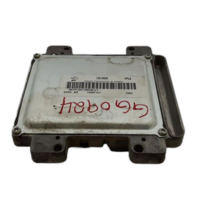
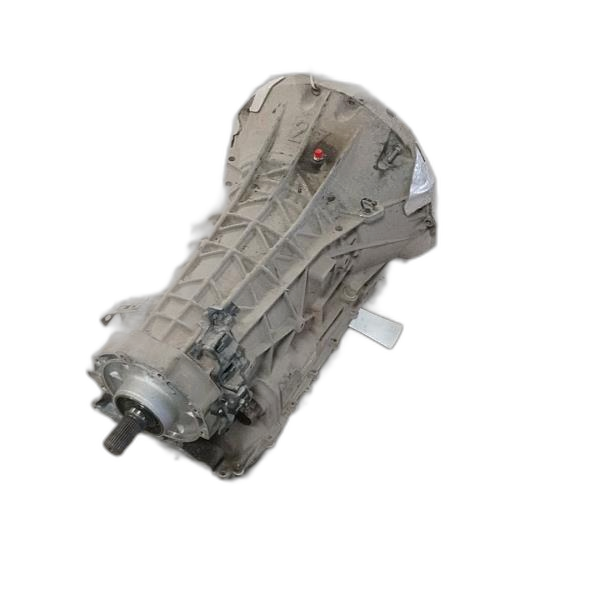

The information in this article is provided for general reference and educational purposes only. Vehicle specifications, procedures, and part compatibility can vary by production date, trim level, and region. Always consult your vehicle's factory service manual and verify part numbers before purchasing or performing repairs. Safety-critical components such as airbags, seat belts, and braking systems should be installed by a qualified professional.
- 🧭 Diagnostic Flowchart
- 🎬 Helpful Videos
- 🛍️ Shop This Part
- What Does P1760 Mean?
- Can I Drive With P1760?
- Common Causes
- Symptoms
- Common Fixes & Costs
- DIY vs Professional
- Used vs. New Parts: Buying Guide
- What Happens If You Wait — Timeline
- Cost of Not Fixing It
- Diagnosis Steps
- When This Code Triggers (Freeze-Frame Conditions)
- Related Codes
- Climate & Environmental Factors
- How to Talk to a Mechanic About This Code
- Where to Take It: Dealer vs Independent vs Chain
- When to Walk Away From the Repair
- What Scan Tool You Need for This Code
- How to Clear the Code After You Fix It
- Will This Fail Emissions / State Inspection?
- Most Commonly Affected Vehicles
- Manufacturer-Specific Notes
- Real Owner Stories
- 2002 Toyota RAV4 at 115K miles with harsh shifting
- 2001 Nissan Quest at 150K miles with 'no power'
- 2004 Ford F-150 with flashing O/D light
- How to Prevent This Code From Triggering
- Frequently Asked Questions
- What is the most common misdiagnosis for P1760?
- Can I fix the P1760 code myself?
- Will changing the transmission fluid fix a P1760 code?
- If the code comes back immediately after clearing, what does that mean?
- What is a transmission solenoid pack?
- Can a bad battery cause a P1760 code?
- Is a P1760 code expensive to fix?
- Key Takeaways
- 🎟️ Get 5% Off