

OBD-II Code P1767: A Manufacturer-Specific Transmission Fault
The Ultimate Guide: What P1767 Means, Manufacturer Variations, and How to Fix It
- Identify your vehicle's specific P1767 definition first, as this code means a failed TCM solder joint on a Nissan but a simple $20 bad relay on a Dodge.
- Expect an electrical fault—such as a shorted wiring harness, a stuck solenoid, or a corroded CAN bus connection—rather than a mechanical gear failure.
- Prepare for severe drivability issues, including the transmission locking into 2nd or 3rd gear (limp mode) and refusing to shift or accelerate past 40 mph.
- Stop driving immediately to prevent a $150 solenoid or relay issue from destroying the torque converter and forcing a $4,000+ complete transmission rebuild.
What Does P1767 Mean?
P1767 is a manufacturer-specific powertrain code indicating the vehicle's computer, most often the Transmission Control Module (TCM), detects an electrical fault in a control circuit. Because its meaning is not standardized, it serves as a flag for a wide array of issues, from a faulty solenoid to a communication network error. The computer triggers this code when it detects a voltage, resistance, or signal from a component that falls outside the expected operating range.
Technical definition: The official SAE/ISO definition for P1767 is highly manufacturer-specific. Key variations include: Torque Converter Clutch (TCC) Circuit Malfunction (Ford, Mazda), Transmission Relay Output Always On (Chrysler/Dodge/Jeep), High and Low Reverse Clutch Solenoid Valve Fault (Nissan/Infiniti), Output Shaft Speed Sensor System Fault (Mitsubishi), ABS Active Signal/CAN Communication Error (Kia/Hyundai), DCCD Steering Angle Sensor Fault (Subaru), Throttle Angle Signal Stuck On (Volkswagen/Audi), CAN Data Bus, Rear Wheel Speed Signal Fault (BMW), and Hydraulic Multiplexer Fault (Porsche).
Can I Drive With P1767?
Yes, But With Caution. Driving is possible but strongly discouraged. Depending on the manufacturer, the transmission shifts harshly, gets stuck in a single gear ('limp mode'), or fails to accelerate from a stop, creating a significant safety hazard in traffic. For Ford torque converter clutch faults, continued driving overheats the transmission fluid, accelerating internal wear and forcing a complete transmission rebuild costing upwards of $4,000. For Kia/Hyundai communication faults, the ABS and stability control disable, increasing stopping distances and skid risks.
Common Causes
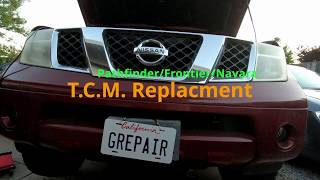
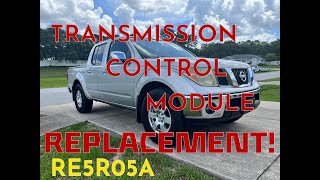
- Internal TCM Solder Joint Failure (Nissan/Infiniti) (Very Common) — On Nissan and Infiniti vehicles with the RE5R05A transmission, a cracked solder joint on the TCM circuit board causes this code. The TCM sits directly on the valve body inside the hot transmission pan, making it highly vulnerable to thermal stress.
- Faulty Transmission Control Relay (Chrysler/Dodge) (Very Common) — On Chrysler and Dodge vehicles, P1767 points to a transmission control relay stuck in the 'on' position. The relay's internal contacts weld together, supplying constant, unwanted power to the TCM.
- Faulty Transmission Solenoid (Very Common) — Solenoids are electro-hydraulic valves managing fluid flow for shifting. They fail electrically (open/shorted coil) or mechanically (clogged), causing severe shift problems on brands like Ford and Mazda.
- Wiring Harness or Connector Damage (Common) — Transmission wiring is vulnerable to heat, vibration, and road debris. Chafed wires, short circuits, or fluid-contaminated connectors disrupt critical signals to the TCM.
- Water Intrusion into Control Modules (Kia/Hyundai) (Common) — On Kia and Hyundai SUVs, the 4WD Electronic Control Unit (TCCU) sits in a vulnerable cabin area. Rain or snowmelt corrodes the circuit board, causing a P1767 CAN bus error.
- Faulty Sensor or Reluctor Ring (Less Common) — Depending on the make, a faulty output shaft speed sensor (Mitsubishi), a malfunctioning steering angle sensor (Subaru), or a damaged reluctor ring triggers the code.
- Low or Dirty Transmission Fluid (Less Common) — Burnt or debris-filled fluid fails to provide the hydraulic pressure needed for solenoid operation, indirectly triggering electrical fault codes.
- Software Glitch (Porsche) (Rare) — On 2012-2014 Porsche PDK transmissions, a software bug incorrectly detects a hydraulic multiplexer fault. A dealer software update resolves this.
Symptoms
- Transmission is Stuck in One Gear (Limp Mode) — To prevent catastrophic damage, the TCM engages a 'fail-safe' or 'limp mode', locking the transmission into a single gear (often 2nd or 3rd). This results in poor acceleration and high engine RPM at highway speeds.
- Harsh, Erratic, or Delayed Shifting — The vehicle slams into gear, hesitates, or shifts at incorrect times as the TCM struggles to control the transmission with faulty signal information.
- Inability to Engage Reverse Gear — On Nissan models where the code points to the 'High and Low Reverse Clutch Solenoid', a primary symptom is the complete inability to select or engage the reverse gear.
- Failure to Accelerate from a Stop — A common symptom on some Nissan models. The vehicle feels as if it is in neutral when pressing the accelerator from a standstill, posing a serious safety risk.
- ABS, 4WD, or DCCD Warning Lights On — For vehicles where P1767 is a communication error (Kia, Hyundai, BMW) or a related system fault (Subaru), warning lights illuminate for the Anti-lock Brakes (ABS), 4-Wheel Drive (4WD), or the Driver's Control Centre Differential (DCCD).
- Check Engine Light or Transmission Warning Light is On — The Powertrain or Transmission Control Module requests the Malfunction Indicator Lamp (MIL) be illuminated to alert the driver of a detected fault.
- No-Crank, No-Start Condition — When the fault involves a communication breakdown between the TCM and the main engine computer (ECU) or security system, the engine refuses to crank or start.
Diagnostic Flowchart
Tap your situation to follow the diagnostic path that matches what you're seeing on this code.
Common Fixes & Costs
- Replace Transmission Control Relay (Chrysler/Dodge) — Parts: $15-$30, Labor: $0-$50, ~0.5 hr book time (DIY)
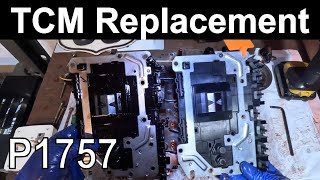
- Replace Transmission Valve Body with TCM (Nissan/Infiniti) — Parts: $700-$1200, Labor: $400-$800, ~4.5 hr book time (Professional)
- Replace Transmission Solenoid(s) — Parts: $100-$300, Labor: $250-$600, ~2.5 hr book time (Intermediate)
- Repair Damaged Wiring or Connectors — Parts: $10-$50, Labor: $150-$400, ~1.5 hr book time (Intermediate)
- Replace 4WD Control Unit (TCCU) (Kia/Hyundai) — Parts: $800-$1500, Labor: $150-$300, ~1.5 hr book time (Professional)
- Perform PDK Software Update (Porsche) — Parts: $0, Labor: $300-$500, ~2 hr book time (Professional)
- Replace Transmission Control Lever Knob (Chevy Malibu) — Parts: $50-$100, Labor: $100-$200, ~0.8 hr book time (DIY)
DIY vs Professional
- Replace Transmission Control Relay (Chrysler/Dodge) 🟢 Beginner
Tools: None (for swapping), Multimeter (for testing). - Repair Damaged Wiring 🟢 Beginner
Tools: Multimeter, wire strippers, crimpers, heat shrink tubing, soldering iron. - Replace External Sensor (e.g., Mitsubishi Output Speed Sensor) 🟢 Beginner
Tools: Socket set, multimeter for verification. - Replace 4WD Control Unit (TCCU) (Kia/Hyundai) 🟢 Beginner
Tools: Basic hand tools (socket set), trim removal tools. - Replace Transmission Solenoid(s) 🟢 Beginner
Tools: Full socket set, torque wrench, drain pan, new fluid, new gasket. - Replace Valve Body with TCM (Nissan/Infiniti) 🟢 Beginner
Tools: Specialized transmission tools, advanced scan tool for programming/relearn.
Used vs. New Parts: Buying Guide
When a used part is worth it: For the common Nissan/Infiniti RE5R05A fault, a professionally remanufactured valve body/TCM assembly is often a better choice than a used one. A used part from a salvage yard carries a high risk of having the same internal solder joint failure or being contaminated from a failed radiator in the donor car.
Donor-vehicle mileage cap: roughly under 60000 miles for the part to have meaningful remaining life.
Donor quality checklist:
- Verify the exact part number; there are many variations of the RE5R05A valve body.
- Choose a remanufactured unit over a used one, as remanufacturers typically correct known factory flaws and test the component.
- Avoid used units unless the history is known and you can confirm the donor vehicle did not suffer from the common coolant/transmission fluid cross-contamination issue.
Decision logic:
- If The part is a complex electronic/hydraulic assembly like a valve body with an integrated TCM. → Strongly favor a new or professionally remanufactured part with a warranty.
- If The vehicle is older (>150k miles) and the budget is extremely tight. → A used part is a gamble but is a temporary solution. Expect a significantly shorter lifespan.
- If The failed part is a simple external component like a relay or sensor. → A used part from a low-mileage vehicle is often a safe and cost-effective option.
Warranty tradeoff: Used parts from a salvage yard typically offer a 30-90 day warranty on the part only. Remanufactured parts often come with a 1-year to lifetime warranty that covers labor. New OEM parts have a 1-2 year warranty if installed by a dealer.
Worst-case if a used part fails: $600-$1200 if a used valve body/TCM fails after installation, as you will have to pay for the labor a second time plus the cost of another part.
What Happens If You Wait — Timeline
- 0-1 month: Check Engine Light is on. For TCC faults (Ford), a slight drop in highway MPG occurs. For relay faults (Dodge), there may be no symptoms other than the light. For communication faults (Kia), ABS/4WD lights illuminate. (MPG impact: 0-5%% · Added cost: $0-$50 in wasted fuel)
- 1-3 months: Symptoms become more noticeable. For TCC faults, a shudder is felt at highway speeds (45-65 mph). For solenoid faults (Nissan), shifts become harsh or delayed. The vehicle intermittently enters 'limp mode'. (MPG impact: 5-15%% · Added cost: $50-$200 in wasted fuel and increased fluid stress)
- 3-6 months: Driving in limp mode becomes more frequent. A failing TCC solenoid causes significant transmission fluid overheating, accelerating wear on internal seals and clutches. A stuck relay (Dodge) causes intermittent no-start conditions or a dead battery. (MPG impact: 15-25%% · Added cost: $800-$1,800 (A failing TCC solenoid destroys the torque converter, requiring its replacement).)
- 6+ months: Catastrophic failure is imminent. Debris from a destroyed torque converter contaminates the entire transmission, including the valve body, coolers, and clutch packs. The transmission fails completely, leaving the vehicle stranded. Continued driving in limp mode burns out clutches. (MPG impact: 25%+% · Added cost: $3,500-$7,000 (The entire transmission requires a rebuild or replacement due to widespread internal contamination and damage).)
Cost of Not Fixing It
- 0-1 Month: Reduced fuel economy (up to 10-20%) due to inefficient shifting or lack of torque converter lockup. Increased risk of being stranded or causing an accident due to unpredictable transmission behavior like limp mode or failure to accelerate. (Added cost: $50-$150 in wasted fuel.)
- 1-6 Months: Accelerated wear on transmission fluid and internal clutches from excessive heat and slipping. For TCC-related faults (Ford), this destroys the torque converter. For solenoid faults (Nissan), this leads to clutch pack damage. (Added cost: $800-$2,500 for a torque converter or clutch pack replacement, on top of the original repair.)
- 6+ Months: Catastrophic transmission failure. Debris from the initial failed components (like a torque converter) contaminates the entire system, including the valve body and new solenoids, requiring a complete transmission rebuild or replacement. (Added cost: $3,500-$7,000+ for a full transmission replacement.)
Diagnosis Steps
- Scan for All Codes and Identify Specific Definition
Use an advanced OBD-II scanner capable of reading manufacturer-specific transmission codes. Document P1767 and any other codes (like P0700 or U-codes). Research the exact definition of P1767 for your vehicle's make, model, and year, as this guides your entire diagnosis.
Tools: Advanced OBD-II Scanner (Beginner) - Test the Transmission Control Relay (Chrysler/Dodge)
If your vehicle defines P1767 as 'Relay Output Always On', locate the transmission control relay in the fuse box. Swap it with an identical relay (e.g., for the horn) and clear the codes. If the code does not return, the original relay is faulty.
Tools: Multimeter, Vehicle-specific fuse/relay diagram (Beginner) - Inspect External Wiring and Connectors
Perform a thorough visual inspection of the transmission wiring harness. Look for chafing, melting near the exhaust, and corrosion. Ensure the main connector at the transmission case and related modules (e.g., ABS, 4WD ECU) are clean, dry, and securely fastened.
Tools: Flashlight, Inspection Mirror (Intermediate) - Check Transmission Fluid Level and Condition
Verify the transmission fluid is at the correct level and in good condition. It should be pinkish-red and not smell burnt. Dark, brown, or metallic-flecked fluid indicates internal wear and the need for service.
Tools: Rag, Dipstick (if equipped) (Beginner) - [Pro Tip] Test CAN Bus Resistance (Kia/Hyundai)
For communication-related faults, disconnect the battery. Access the Diagnostic Link Connector (DLC) and measure the resistance between Pin 6 (CAN High) and Pin 14 (CAN Low). A healthy network reads approximately 60 Ω. A reading of 120 Ω indicates an open circuit; near 0 Ω indicates a short.
Tools: Digital Multimeter (Advanced) - [Pro Tip] Test Solenoid Resistance (Nissan/Ford)
Disconnect the suspect solenoid and measure its resistance. The Nissan High/Low Reverse Clutch Solenoid measures approximately 3.3 Ohms. A reading far outside the manufacturer's range, or showing an open (infinite resistance) or short (near-zero resistance), indicates a failed solenoid.
Tools: Digital Multimeter, Socket Set, Drain Pan (Advanced) - [Pro Tip] Analyze Solenoid Live Data
Using a capable scan tool, monitor the amperage of the transmission solenoids during operation. Most solenoids operate between 0.0 and 0.8 amps. No reading or an erratic reading points to a circuit or TCM fault.
Tools: Advanced Scan Tool with Live Data (Advanced) - [Pro Tip] Test Sensor Resistance and Live Data (Subaru/Mitsubishi)
For speed or steering angle sensor faults, use a multimeter to verify the sensor's resistance matches factory specs (e.g., 560-680 Ω for Mitsubishi output speed sensors). Use a scan tool to monitor live data; values should change smoothly and logically with physical input.
Tools: Advanced Scan Tool, Digital Multimeter (Advanced) - Inspect Internal Wiring and TCM Solder Joints (Nissan)
Drain the fluid and remove the transmission oil pan. Visually inspect the internal harness for broken wires. On Nissan RE5R05A transmissions, carefully inspect the solder joints on the TCM mounted to the valve body, as this is a known failure point.
Tools: Socket set, Drain pan, Gasket scraper, Torque wrench (Advanced) - Test the Transmission Control Module (TCM)
If all wiring, connectors, relays, sensors, and solenoids test good, the final possibility is a failed TCM. Stop DIY and tow the vehicle to a transmission specialist if internal testing requires an oscilloscope or if a replacement module needs VIN-specific programming.
Tools: Advanced diagnostic tools, Oscilloscope (Professional)
When This Code Triggers (Freeze-Frame Conditions)
- Engine Coolant Temp: 185-210°F (85-99°C) (The fault often appears after the vehicle reaches full operating temperature.)
- Vehicle Speed: 40-60 mph (65-97 kph) (Many P1767 variants, especially Ford's TCC circuit fault, trigger during steady highway cruising when torque converter lock-up is commanded.)
- Engine RPM: 1500-2500 RPM (The code frequently sets under light to moderate engine load at a steady throttle, not during hard acceleration or deceleration.)
- Gear: Top Gear (e.g., 4th, 5th, or 6th) (The fault logs when the transmission is in its highest gear and the computer expects the torque converter clutch to engage for maximum efficiency.)
Related Codes
- P0700 — This code means 'Transmission Control System Malfunction'. It is a general fault code set by the ECM when the TCM stores a more specific code. If you see P0700, it confirms the problem is in the transmission system, and the P1767 is the specific fault that needs to be addressed.
- P0720 — This code is for an 'Output Speed Sensor Circuit Malfunction'. On Mitsubishi vehicles, P1767 is a manufacturer-specific version of P0720. If both codes appear, it strongly confirms the fault is with the output speed sensor or its circuit.
- U0121 — This code means 'Lost Communication With Anti-Lock Brake System (ABS) Module'. On Kia and Hyundai vehicles where P1767 is a CAN bus error, you will likely see U0121 as well. P1767 is the specific manufacturer code, while U0121 is the generic code for the same communication fault.
- P1770 — This code for 'Clutch Solenoid Circuit Malfunction' is closely related to P1767 on makes like Ford and Mazda. If they appear together, it points more strongly toward a fault in the solenoid pack or valve body rather than a simple wiring issue.
Climate & Environmental Factors
- High Humidity / Water Exposure: Moisture penetrates connectors, fuse boxes, and control module housings, leading to corrosion on pins and circuit boards. This increases electrical resistance and causes intermittent shorts, triggering communication-based P1767 codes like those on Kia/Hyundai vehicles.
- Extreme Cold: Cold temperatures cause transmission fluid to thicken, increasing hydraulic resistance. This strains solenoids and causes delayed or harsh shifting. It also causes seals and gaskets to contract and harden, leading to pressure drops that indirectly contribute to fault codes.
- Thermal Cycling (Hot-to-Cold): Repeated expansion and contraction from temperature changes puts stress on electronic components. This is a primary contributor to solder joint failure, such as the well-known issue on the Nissan RE5R05A TCM located inside the hot transmission pan.
How to Talk to a Mechanic About This Code
Say this: "I have a [Your Vehicle's Make, Model, Year] with a P1767 code. I've researched it and understand for my car it points to a [Relay issue / TCM solder joint / TCC solenoid / CAN bus error]. I'd like to schedule a diagnostic to confirm this specific fault before we discuss replacing any major components."
This signals to the shop that you are an informed consumer. It focuses the technician's diagnostic time on the most probable cause, preventing them from starting with a broad and expensive 'shotgun' approach or immediately quoting a full transmission replacement.
Avoid saying:
- 'My transmission is acting weird, just fix it.'
- 'My check engine light is on, can you look at it?' (This is too vague and invites upselling).
- 'Just do whatever you think is best.' (This gives the shop a blank check).
Questions to ask before authorizing the repair:
- Based on the specific definition of P1767 for my car, what was the exact point of failure you found in your diagnosis?
- Will you provide me with the old parts after the repair is complete?
- What is the warranty on the parts and labor for this specific repair?
- Does this repair require any special programming or a transmission relearn procedure afterward?
Where to Take It: Dealer vs Independent vs Chain
- Dealer:
Necessary for specific software or warranty issues. For most out-of-warranty P1767 faults, a specialist independent shop is more cost-effective.
Best for: Vehicles under powertrain warranty., Manufacturer-specific software updates (Porsche PDK)., Complex electronic resets for latched codes (Subaru DCCD).
Downsides: Highest labor rates, often 1.5-2x more than independent shops., Prefer to replace large assemblies rather than performing smaller, targeted repairs. (Typical cost: +50% vs. baseline) - Independent Shop:
Best choice for most common P1767 repairs on out-of-warranty vehicles, provided you choose a reputable transmission specialist.
Best for: Out-of-warranty vehicles where the cause is well-documented (e.g., Nissan TCM, Ford TCC solenoid, Dodge relay)., Owners seeking a better price than the dealership.
Downsides: Quality varies greatly. It's crucial to find a shop that specializes in transmissions or your specific vehicle make., Lack the expensive, proprietary tools needed for certain software-level repairs. (Typical cost: +0% vs. baseline) - Chain Shop:
AVOID for P1767 diagnosis and repair. The diagnostic complexity is too high, and the risk of misdiagnosis and being oversold is significant.
Best for: Simple, routine maintenance like oil changes or brake jobs.
Downsides: Technicians often lack the specialized training for complex transmission diagnostics., High pressure to upsell; incorrectly recommend a full transmission replacement for a simpler electrical fault. (Typical cost: -10% vs. baseline)
When to Walk Away From the Repair
If the estimated repair cost exceeds 50% of the car's private-party value, you should seriously consider selling or trading in the vehicle instead of repairing it.
- Car worth $4000, fix is $2200: Walk away. The repair cost is over 50% of the car's value. It's not a sound financial decision.
- Car worth $15000, fix is $1800: Fix it. The repair cost is well below the 50% threshold and restores a significant asset.
- Car worth $3000, fix is $250: Fix it. Even on a low-value car, a minor repair cost is easily justified to keep it running.
What Scan Tool You Need for This Code
Minimum: A scanner that can read manufacturer-specific transmission codes (TCM) and view live data. A basic code reader that only shows generic 'P' codes is not sufficient.
A basic $20 scanner will likely only show P0700 ('Transmission Control System Malfunction') without the specific P1767 code. It cannot read the live data (like solenoid amperage, sensor values, or transmission fluid temperature) needed to diagnose the actual cause, leading you to guess and replace the wrong parts.
Budget: BlueDriver Pro (~$100) — Reads and clears transmission-specific codes for many domestic and import brands. Can display some live transmission data, but lacks access to deeper manufacturer-specific parameters.
Mid-range: Foxwell NT530 or Autel MaxiCOM MK808 (~$150-500) — Offers deep, manufacturer-specific diagnostics for transmission systems. Can view detailed live data streams, perform bidirectional controls to test components, and initiate service functions like a transmission relearn procedure after a repair.
Professional: Autel MaxiSys MS906Pro or Launch X431 Series (~$600-1500) — Provides full, OE-level diagnostic capabilities. Can perform advanced coding and programming, which is necessary when replacing a TCM or valve body. This is dealer-level functionality for professional shops or very advanced DIYers.
Rent vs buy: For a one-time fix, some auto parts stores offer free loaner tools, but verify their scanners can read transmission-specific codes, as many cannot. If you plan to do your own maintenance regularly, buying a mid-range scanner is a worthwhile investment that will save you money on diagnostic fees over time.
How to Clear the Code After You Fix It
- Ensure the underlying fault has been physically repaired.
- Reconnect the battery if it was disconnected for the repair.
- Use a compatible OBD-II scan tool to erase the Diagnostic Trouble Codes (DTCs) from the TCM and ECM.
Drive cycle (~30 minutes): A generic transmission drive cycle involves: 1. Cold start the vehicle and let it idle for 2-3 minutes. 2. Drive in stop-and-go traffic for about 15 minutes, making sure to come to a complete stop several times. 3. Drive for at least 5 minutes at a steady highway speed (e.g., 55 mph). 4. Gently accelerate and decelerate through all gears multiple times. 5. Allow the vehicle to cool down completely (e.g., overnight) and repeat if necessary.
Readiness monitors affected: Comprehensive Component Monitor (CCM), Catalyst (CAT) Monitor, Evaporative System (EVAP) Monitor
Before emissions retest: drive at least 100 miles to fully set monitors.
Watch out for:
- Simply clearing the code with a scanner without performing a repair will result in the code returning almost immediately.
- Disconnecting the battery will clear the code but also resets all OBD-II readiness monitors, which will cause an automatic failure at an emissions testing station.
- Some manufacturer-specific procedures, like a transmission relearn, require a specialized scan tool after the repair.
Will This Fail Emissions / State Inspection?
Yes — this code typically fails an OBD-II emissions inspection.
- California: An illuminated Check Engine Light from code P1767 is an automatic failure. All required OBD-II readiness monitors must be set to 'Ready'. After a repair and clearing the code, a specific drive cycle must be completed, which takes over 100 miles of driving.
- New York: The NYS DMV inspection includes an OBD-II scan. Any powertrain fault code that turns on the MIL, including P1767, will result in an immediate test failure.
- Texas: In counties requiring emissions testing (like Harris, Dallas, Tarrant), an active P1767 code will cause the vehicle to fail the inspection. After repair, you must complete a drive cycle to reset the readiness monitors before a re-test.
Most Commonly Affected Vehicles
- Nissan/Infiniti Xterra, G35, 350Z, Frontier, Titan, Armada (2002-2013) — On models with the RE5R05A transmission, P1767 points to the 'High and Low Reverse Clutch Solenoid Valve'. The problem is very frequently a broken solder joint on the TCM, which is attached to the valve body inside the transmission. Replacing the entire valve body assembly is the common repair.
- Kia/Hyundai Sportage, Sorento, Tucson (2005-2010) — P1767 indicates a 'CAN bus communication error' between the ABS module and the 4WD control unit (TCCU). It is often caused by wiring issues or a water-damaged 4WD ECU. Kia issued a service campaign (SC297) for newer models like the Seltos to add a protective cover.
- Chrysler/Dodge/Jeep PT Cruiser, Dakota, Intrepid, Ram Trucks (2001-2005) — The code typically means 'Transmission Relay Output Always On', pointing to a stuck relay or a short in the power supply circuit to the TCM. On some models like the 2001 Dakota, it points specifically to the governor pressure solenoid circuit.
- Ford Focus, F-150, Explorer (1998-2010) — For Ford, P1767 usually indicates a 'Torque Converter Clutch Circuit Malfunction'. This points to a problem with the TCC solenoid or its wiring, preventing the torque converter from locking up at cruising speeds, which reduces fuel economy and increases heat.
- Volkswagen/Audi A4, Passat, Jetta (2000-2010) — On many VW and Audi vehicles, P1767 is defined as 'Throttle Angle Signal Stuck On'. This suggests a problem with the throttle position sensor or its circuit providing an implausible signal to the transmission control unit.
- BMW 3 Series, 5 Series, X5 (2006-2013) — For BMW, P1767 points to a CAN bus issue, specifically 'CAN data bus, wheel speed sensor - rear axle - signal'. This indicates the TCM is not receiving a valid rear wheel speed signal from the ABS/DSC module, which disables stability control.
- Subaru Impreza WRX/STI (2006-2007) — On models with the Driver's Control Centre Differential (DCCD), P1767 specifically points to a fault with the 'DCCD Steering Angle Sensor'. This code becomes 'latched' (permanently stored) after steering or suspension work and requires a special dealer procedure to clear.
- Chevrolet Malibu (2016) — A specific GM Technical Service Bulletin (16-NA-375) states that P1767 is caused by faulty upshift/downshift switch circuits within the shift lever. The recommended fix is to replace the entire transmission control lever knob.
- Porsche 911 Carrera (991.1), Boxster/Cayman (981) (2012-2016) — P1767 indicates a 'Hydraulic Multiplexer Fault' in the PDK transmission. This is most often a software error. Porsche issued a workshop campaign (WD09) to reprogram the PDK control unit to fix this.
Manufacturer-Specific Notes
- Nissan / Infiniti: On the popular RE5R05A transmission, P1767 almost always means an issue with the 'High and Low Reverse Clutch Solenoid'. The root cause is often a cracked solder joint on the TCM, which is part of the valve body assembly inside the pan. Repairing the joint or replacing the valve body is the fix.
- Chrysler / Dodge / Jeep: The code is commonly defined as 'Transmission Relay Output Always On.' This means the TCM is seeing voltage from its power relay even when the relay should be off. The cause is usually a cheap, easily replaceable relay whose contacts have welded shut.
- Kia / Hyundai: P1767 is defined as an 'ABS Active Signal (CAN Error).' This is a communication network problem, not a mechanical transmission failure. Diagnosis must focus on the CAN wiring between the 4WD control module (TCCU) and the ABS module, or a potentially water-damaged TCCU.
- Subaru: On WRX/STI models with DCCD, P1767 indicates a 'Steering Angle Sensor' fault. This code becomes permanently 'latched' in memory if the steering wheel is misaligned during an alignment or parts replacement. It requires a special dealer tool (like SSM-III) to perform a reset and clear the code.
- Porsche: For 2012-2016 models with a PDK transmission, P1767 ('Hydraulic Multiplexer Fault') is most often a software bug. Before attempting any expensive hardware repairs, a dealer or specialist must check if workshop campaign WD09 (a software update) has been performed.
- Chevrolet: GM issued Technical Service Bulletin 16-NA-375 for the 2016 Malibu, stating that P1767 is caused by a fault in the upshift/downshift switch in the gear selector knob, requiring knob replacement.
Real Owner Stories
2005 Nissan Frontier, 155K miles - The Classic TCM Failure
Check engine light on, transmission stuck in 5th gear (limp mode), and unable to engage reverse. Threw code P1767 for High/Low Reverse Clutch Solenoid.
What they tried:
- Initially suspected a bad solenoid.
- After research on forums, learned about the common TCM solder joint failure on the RE5R05A transmission.
- Owner opted to purchase a remanufactured valve body with the TCM already installed, as soldering the tiny joint was beyond their skill level.
Outcome: Replaced the entire valve body/TCM assembly. The part cost approximately $800. After installation and a fluid refill, the code was cleared and did not return. Transmission shifting and reverse function were restored to normal.
Lesson: On Nissan/Infiniti vehicles with the RE5R05A transmission, P1767 is almost always a faulty TCM, not the solenoid itself. Replacing the valve body assembly is the most reliable, though expensive, DIY-unfriendly fix.
2002 Dodge Dakota, 120K miles - An Easy, $20 Fix
Check engine light came on with code P1767, 'Transmission Relay Output Always On'. The owner noticed the battery seemed to be draining faster than usual but had no other drivability symptoms.
What they tried:
- Researched the code and found it pointed directly to the transmission control relay in the main fuse box (Power Distribution Center).
- Located the relay using the diagram on the fuse box lid.
- Swapped the transmission relay with the identical horn relay next to it as a test. The horn still worked, and after clearing the code, the P1767 did not return.
Outcome: The original relay was faulty. A new relay was purchased from an auto parts store for under $20. The problem was resolved in minutes with no tools required.
Lesson: For Chrysler/Dodge products, always investigate the simplest solution first. A P1767 code is very often just a bad relay, which is one of the cheapest and easiest fixes for any DTC.
2006 Subaru WRX STI, 85K miles - The Post-Repair Headache
Immediately after having the steering rack replaced, the DCCD warning light started flashing and the system was locked. A scan revealed a 'latched' P1767 code for the steering angle sensor.
What they tried:
- The owner returned to the shop that did the steering rack replacement. The shop tried to clear the code, but it came back instantly.
- They replaced the steering angle sensor with a new one, but the fault persisted, even after trying multiple new sensors.
- The owner found a forum thread describing how this code is permanently stored in the sensor's memory if it's misaligned during a repair.
Outcome: The issue was not a broken sensor, but a software flag within the sensor's memory. A specialized shop with advanced tools (like FreeSSM or a dealer's SSM-III) was required to perform a specific reset procedure to clear the latched fault. In some extreme cases, the sensor's memory chip (EEPROM) must be manually reprogrammed.
Lesson: On a Subaru with DCCD, if P1767 appears after steering or alignment work, do not immediately replace the sensor. The code is likely 'latched' and requires a specific electronic reset procedure that a standard OBD-II scanner cannot perform.
How to Prevent This Code From Triggering
- Perform regular transmission fluid and filter changes (Every 30,000-60,000 miles) — Clean fluid prevents abrasive particles from clogging or damaging sensitive solenoid valves and valve body passages. It also maintains proper hydraulic pressure and cooling.
- Protect wiring harnesses from abrasion and heat (During any under-hood or under-vehicle maintenance) — Electrical faults are a primary cause of P1767. Use split-loom tubing or braided sheathing to protect wires from chafing against the chassis or melting on hot exhaust components. Ensure all harnesses are securely fastened and not dangling.
- Periodically inspect and clear water drain pathways (Annually, especially before rainy seasons) — Clogged sunroof drains, cowl drains (below the windshield), and A/C evaporator drains cause water to leak inside the cabin, damaging control modules like the TCCU in a Kia/Hyundai or the BCM/TCM in other vehicles.
- Apply dielectric grease to critical connectors (Whenever a major electrical connector is disconnected) — Applying a thin layer of silicone-based dielectric grease to the pins and seals of connectors for the TCM, ABS module, or main transmission harness creates a moisture barrier, preventing corrosion that leads to high resistance and intermittent signals.
Frequently Asked Questions
Why does the meaning of code P1767 vary so much between car brands?
Codes in the 'P0xxx' range are standardized by the SAE for all vehicles. However, 'P1xxx' codes are reserved for manufacturers to provide more specific diagnostic information about their unique systems. This allows them to create codes for specific solenoids, sensors, or software issues not covered by the generic set.
What is the most common misdiagnosis for P1767?
The most frequent error is replacing the wrong part due to the code's ambiguity. For instance, a technician might replace an entire transmission on a Nissan when only a solder joint on the TCM needed repair. On a Kia, the transmission is often blamed when the actual problem is a simple wiring issue between the ABS and 4WD modules.
Can I fix a P1767 code by just changing the transmission fluid?
It is extremely unlikely. While low or dirty fluid causes numerous shifting problems and requires correction, P1767 indicates a specific electrical circuit or communication fault that a fluid change cannot fix.
My scanner only shows P1767. How do I know which problem my car has?
The critical first step is to search the internet for your car's specific make, model, year, and 'P1767'. This tells you whether to investigate a solenoid (Nissan), a relay (Dodge), a sensor (Subaru), or a wiring network (Kia).
Can a weak battery or bad ground cause a P1767 code?
Yes, absolutely. A weak battery, corroded terminals, or a poor chassis ground causes low or unstable voltage, leading to unpredictable behavior from control modules. This generates false communication codes like P1767.
What are the symptoms of a bad transmission control relay?
For vehicles like Chrysler/Dodge where P1767 points to a stuck relay, you experience a battery that drains overnight, a no-start condition, or simply the Check Engine Light with no other initial symptoms.
How do you reset the Transmission Control Module (TCM)?
A 'soft reset' is performed by disconnecting the vehicle's battery for 30 minutes, while a 'hard reset' requires a professional scan tool. However, resetting the module only temporarily clears the code. It does not fix the underlying physical or electrical problem, and the code returns immediately upon detection.
What is 'limp mode'?
Limp mode, or fail-safe mode, is a protective feature where the TCM detects a serious fault and locks the transmission into a single, safe gear (usually 2nd or 3rd). This prevents further damage and allows the driver to 'limp' to a repair shop.
Is it safe to clear the code and keep driving?
You can clear the code to see if it was a one-time glitch, but if it returns, a persistent problem exists. Ignoring a transmission code is a major gamble that leads to severe internal damage, leaves you stranded, or causes an accident if the transmission fails unpredictably in traffic.
Key Takeaways
- Identify your vehicle's specific P1767 definition first, as this code means a failed TCM solder joint on a Nissan but a simple $20 bad relay on a Dodge.
- Expect an electrical fault—such as a shorted wiring harness, a stuck solenoid, or a corroded CAN bus connection—rather than a mechanical gear failure.
- Prepare for severe drivability issues, including the transmission locking into 2nd or 3rd gear (limp mode) and refusing to shift or accelerate past 40 mph.
- Stop driving immediately to prevent a $150 solenoid or relay issue from destroying the torque converter and forcing a $4,000+ complete transmission rebuild.
Helpful Videos

Shop the Parts Behind P1767
Below are the parts most often responsible for code P1767, ranked by how frequently each one is the actual culprit (per the diagnosis above). Tap any to see what we have for your vehicle.


The information in this article is provided for general reference and educational purposes only. Vehicle specifications, procedures, and part compatibility can vary by production date, trim level, and region. Always consult your vehicle's factory service manual and verify part numbers before purchasing or performing repairs. Safety-critical components such as airbags, seat belts, and braking systems should be installed by a qualified professional.
- 🧭 Diagnostic Flowchart
- 🎬 Helpful Videos
- 🛍️ Shop This Part
- What Does P1767 Mean?
- Can I Drive With P1767?
- Common Causes
- Symptoms
- Common Fixes & Costs
- DIY vs Professional
- Used vs. New Parts: Buying Guide
- What Happens If You Wait — Timeline
- Cost of Not Fixing It
- Diagnosis Steps
- When This Code Triggers (Freeze-Frame Conditions)
- Related Codes
- Climate & Environmental Factors
- How to Talk to a Mechanic About This Code
- Where to Take It: Dealer vs Independent vs Chain
- When to Walk Away From the Repair
- What Scan Tool You Need for This Code
- How to Clear the Code After You Fix It
- Will This Fail Emissions / State Inspection?
- Most Commonly Affected Vehicles
- Manufacturer-Specific Notes
- Real Owner Stories
- 2005 Nissan Frontier, 155K miles - The Classic TCM Failure
- 2002 Dodge Dakota, 120K miles - An Easy, $20 Fix
- 2006 Subaru WRX STI, 85K miles - The Post-Repair Headache
- How to Prevent This Code From Triggering
- Frequently Asked Questions
- Why does the meaning of code P1767 vary so much between car brands?
- What is the most common misdiagnosis for P1767?
- Can I fix a P1767 code by just changing the transmission fluid?
- My scanner only shows P1767. How do I know which problem my car has?
- Can a weak battery or bad ground cause a P1767 code?
- What are the symptoms of a bad transmission control relay?
- How do you reset the Transmission Control Module (TCM)?
- What is 'limp mode'?
- Is it safe to clear the code and keep driving?
- Key Takeaways
- 🎟️ Get 5% Off