

P1775 on 2005-2010 Chrysler 300: Solenoid Valve and Limp Mode Fixes
P1775 on a Chrysler 300 almost always means the transmission valve body is worn, causing a valve to stick and forcing the car into 'limp mode'. The most common fix is replacing the entire valve body, not just the solenoid pack. Expect a shop repair to cost between $800 and $1,500.
- P1775 on your Chrysler 300 means the transmission is stuck in 'limp mode' because it can't shift into 1st gear.
- The most common symptom is a hard clunk or jerk when you slow to a stop.
- DO NOT just replace the solenoid pack. The problem is almost always a worn-out valve body, which is a more involved repair.
- This is not a DIY-friendly job. Professional service is highly recommended due to the complexity of internal transmission work.
- Always use Mopar ATF+4 fluid when servicing this transmission.
What's Unique About the 2005-2010 Chrysler 300
The 42RLE automatic transmission used in this generation of Chrysler 300 is well-known for this specific problem across many Chrysler, Dodge, and Jeep vehicles. The issue is rarely the electronic solenoid pack that people often replace first. The true cause is typically mechanical wear inside the transmission's valve body, where a steel valve slowly wears out its channel in the softer aluminum housing, eventually causing it to bind. The problem is so common that aftermarket companies like Sonnax have developed specific kits to ream the valve bore and install an oversized, more durable valve as an alternative to replacing the entire valve body. Chrysler has even issued documents advising technicians not to replace the solenoid for this code, but to inspect the valve body itself.
Symptoms You May Notice
- A harsh 'clunk' or 'jerk' when slowing to a stop, typically below 5 MPH.
- Vehicle is stuck in a single gear (usually 2nd), also known as 'limp mode'.
- Sluggish or weak acceleration from a complete stop, as the car is starting in 2nd gear.
- Check Engine Light is illuminated on the dashboard.
- Replacing only the transmission solenoid pack. Chrysler technical documents and numerous forum posts specifically warn against this, as the problem is almost always the mechanical valve/bore in the valve body itself.
- Replacing the entire transmission when only the valve body is faulty.
Most Likely Causes
- Worn Transmission Valve Body Bore 🔴 High Probability → Shop Transmission Valve Body The 42RLE transmission's aluminum valve body is known to wear where the steel Solenoid Switch Valve (SSV) rides, causing the valve to stick. This is a well-documented design flaw.
How to confirm: A technician must remove the transmission pan and valve body to inspect the SSV bore for scoring and wear. A vacuum test on the valve body can also confirm internal leaks caused by the wear. A minimum of 16 in-Hg is recommended after repair.
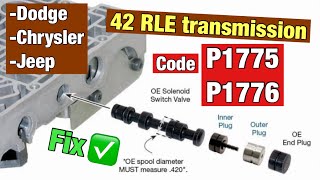
Typical fix: Replace the entire valve body with a new or remanufactured unit that has updated, more durable components. Alternatively, a specialist can ream the original valve body and install a Sonnax oversized valve kit (part #92835-01K). 🎬 Watch: Understanding how the solenoid switch valve latches and fails.
Est. part cost: $300-$600 - Sticking Solenoid Switch Valve (SSV) 🟡 Medium Probability Varnish and debris in old or incorrect transmission fluid can cause the valve itself to become sticky, even if the bore is not severely worn. The 42RLE is sensitive to fluid quality.
How to confirm: During a valve body inspection, the valve can be manually removed and checked to see if it moves freely within its bore.
Typical fix: The valve is part of the valve body assembly. While some specialists can ream the bore and install an oversized valve, the common repair is to replace the valve body assembly.
Est. part cost: $300-$600 - Faulty Transmission Solenoid Pack ⚪ Low Probability → Shop Transmission Assembly While the solenoid pack can fail, it is often replaced mistakenly for this code. The actual valve is mechanical and located in the valve body, not the electronic solenoid pack. However, a solenoid failure can cause other shifting issues.
How to confirm: A technician can test the solenoid's resistance and function with a specialized scan tool or multimeter. The resistance for the L/R, OD, UD, and 2/4 solenoids should be approximately 1.7 ohms.
Typical fix: Replace the transmission solenoid pack. This is often done as a preventative measure at the same time as a valve body replacement.
Est. part cost: $100-$250 - Low or Degraded ATF+4 Fluid ⚪ Low Probability The 42RLE is known to be sensitive to fluid level and quality. While low fluid is unlikely to be the sole cause of a stuck valve, it can exacerbate wear and cause erratic behavior.
How to confirm: Check the transmission fluid dipstick. The fluid should be at the correct level and appear clean and pink/red. Burnt, brown, or fluid with glittery metal flakes indicates a serious problem.
Typical fix: Perform a transmission fluid and filter change using only Mopar ATF+4 fluid. This is unlikely to fix an already stuck valve but is essential maintenance and a first step in diagnosis.
Est. part cost: $80-$150
Rare But Worth Checking
- Outdated Powertrain Control Module (PCM) Software: → Shop Engine Control Module (ECM) In some cases, Chrysler has released software updates that can change shift logic and fix certain transmission codes. TSB 18-043-17 is one such example, though it primarily addresses shudder issues. It's worth checking with a dealer for any applicable re-flashes before performing expensive hardware repairs.
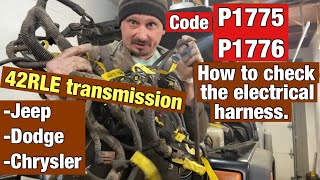
- Wiring Harness Damage: Damage to the wiring between the PCM/TCM and the transmission can cause communication errors or shorts, potentially triggering this code. A visual inspection of the harness, especially where it runs near hot or moving parts, is warranted. 🎬 See how to properly inspect the transmission electrical harness.
Diagnosis Steps
- Verify the code with an OBD-II scanner.
- Check the transmission fluid level and condition. Ensure it is full and not burnt. Use only ATF+4 fluid.
- Check for any available Technical Service Bulletins (TSBs) or software updates for the TCM at a dealership. TSBs like 18-043-17 have been issued for 42RLE shift quality issues.
- Inspect the transmission wiring harness for any visible damage, chafing, or corrosion at the connectors.
- If the fluid is okay and software is up to date, the next step is to inspect the internal components.
- Have a qualified technician drop the transmission pan and remove the valve body.
- Inspect the Solenoid Switch Valve and its bore for scoring, wear, or sticking. A vacuum test can quantitatively measure wear.
- Based on the inspection, replace the valve body with a remanufactured unit or repair the existing one with a Sonnax kit. It is also recommended to replace the solenoid pack at the same time.
- Install a new transmission filter and pan gasket, and refill with the correct amount of ATF+4 fluid.
- Perform a transmission 'quick learn' procedure with a compatible scan tool to reset shift adapts.
Parts You'll Likely Need
- Transmission Valve Body
(OEM #68051180AA)— This is the primary point of failure for code P1775, as the bore for the Solenoid Switch Valve wears out over time.
Trusted brands: Mopar (OEM), Sonnax (offers repair kits and complete valve bodies), Rostra, ATS Diesel
OEM price range: $500-$700
Aftermarket price range: $300-$500 - Transmission Solenoid Pack
(OEM #04800171AA, 5143151AA)— While not usually the root cause, it is often replaced as a preventative measure when the valve body is serviced.
Trusted brands: Mopar (OEM), Standard Motor Products (SMP), ATP
OEM price range: $200-$300
Aftermarket price range: $100-$180 - Sonnax Solenoid Switch Valve Kit
(OEM #92835-01K)— For specialists, this kit allows the original valve body to be repaired by reaming the worn bore and installing an oversized, improved valve, which can be a more permanent fix than a standard replacement valve body.
Trusted brands: Sonnax
Aftermarket price range: $50-$80 - Transmission Filter and Pan Gasket Kit — These must be replaced any time the transmission pan is removed for service.
Trusted brands: Mopar (OEM), Wix, ATP
OEM price range: $40-$70
Aftermarket price range: $20-$40 - Mopar ATF+4 Transmission Fluid — The 42RLE transmission requires this specific fluid type. Using other fluids can cause damage and shifting problems.
Trusted brands: Mopar
OEM price range: $10-$15 per quart
Related Codes That Often Appear With This One
- P0700 — This is a generic code indicating that a specific fault is stored in the Transmission Control Module (TCM). It almost always appears alongside a more specific transmission code like P1775, essentially acting as a 'check engine light' for the transmission.
- P1776 — This code indicates the same Solenoid Switch Valve is stuck in the opposite position ('Latched in Low/Reverse'). It points to the exact same failing component (the valve/valve body) and often appears with P1775.
Technical Service Bulletins (TSBs) & Recalls
- A Chrysler technical document (referenced as TT9000197) explicitly states not to replace the solenoid assembly for a P1775 code and points to the valve body as the cause.
- TSB 21-015-07: While primarily for a shudder condition, this TSB involves software updates and potential TCC solenoid replacement for Chrysler transmissions of this era, highlighting that software and electronic components are sometimes involved in fixing shift quality complaints.
Platform-Specific Known Issues
- Owner Experience: Don't Ignore P1775 — A Jeep owner with the same 42RLE transmission reported getting codes P0700 and P1775 and experiencing sluggish acceleration. After finding online advice suggesting it might be a minor electrical issue or fluid problem, they continued to drive the vehicle. The problem worsened, and a fluid change revealed significant debris. Ultimately, the continued operation in limp mode caused enough internal damage to require a complete transmission replacement with a remanufactured unit. This serves as a strong warning that driving with P1775 can quickly escalate a valve body repair into a much more expensive transmission rebuild.
Mechanic-Grade Diagnostic Values
- Solenoid Coil Resistance — expected: 1.5 - 2.5 ohms. Failure: Readings outside this range indicate a faulty solenoid coil.
- Transmission Case Connector Pinout (10-way connector) — expected: Pin 3: 12V Input, Pin 7: L/R Solenoid, Pin 1: OD Solenoid, Pin 2: UD Solenoid, Pin 4: 2/4 Solenoid.. Failure: This pinout is required for manually testing solenoid resistance or checking for wiring faults between the TCM and the transmission.
- Sonnax Valve Bore Vacuum Test — expected: 16 in-Hg (minimum). Failure: A reading below 16 inches of Mercury after reaming and installing a Sonnax oversized valve kit indicates an improper seal or a warped valve body casting.
Scan Tool Commands That Help
- Chrysler WiTech or equivalent professional scan tool: Quick Learn Procedure — This procedure must be performed after replacing the valve body or solenoid pack. It resets the transmission's adaptive learning memory, allowing the TCM to learn the hydraulic characteristics of the new components for proper shift timing.
- Bi-directional scan tool: L/R Pressure Switch State PID Monitoring — A technician can monitor the 'L/R Pressure Switch State' PID while commanding a shift into 1st gear. If the switch state (e.g., 'Open' or 'Closed') does not change, it provides electronic confirmation that the Solenoid Switch Valve is physically stuck, validating the P1775 code.
Wiring & Ground Locations
- Transmission Case Connector — On the driver's side of the 42RLE transmission case. It is a 10-pin circular connector.. This is the main electrical interface between the TCM and the entire solenoid pack. Checking for moisture or corrosion here is a key first step in diagnosing any electrical fault. The pinout is required to test individual solenoid circuits.
- G300 — Below the driver's side (left) 'B' pillar.. This is a primary body ground point. While not directly for the transmission, poor grounds can introduce electrical noise and voltage issues that can affect the TCM and cause erratic behavior or false codes.
- Powertrain Control Module (PCM/TCM) — In the engine compartment, typically on the passenger side firewall. The PCM contains the integrated TCM on this platform.. All signals to and from the transmission originate or end here. The wiring harness between the PCM and the transmission connector is a potential point of failure due to chafing or heat damage.
Real Owner Repair Stories
- SWBCrawler (Jeep Forum/Blog) (Jeep Wrangler LJ (uses same 42RLE transmission)) — Check Engine Light with codes P0700 and P1775, sluggish acceleration from a stop.
❌ Tried (didn't work) Continuing to drive the vehicle, performing a transmission fluid flush and refill.
✅ What actually fixed it The owner ignored the initial code, believing it might be a minor issue. Continued driving in limp mode generated excessive debris and heat, causing catastrophic internal damage. The ultimate fix was a complete transmission replacement with a Jasper remanufactured unit. - YouTube user 'Curmudgeon Transmission' (Vehicle with 42RLE transmission) — Chronic P1775 code that kept returning.
❌ Tried (didn't work) Replacing the solenoid assembly twice, replacing the valve body twice, running new wires from the computer to the transmission, and replacing the computer (PCM/TCM).
✅ What actually fixed it The video documents the extreme frustration with a persistent P1775. The technician's next step was to replace the low/reverse accumulator piston and cover, and install a plate stiffener, suspecting a loss of hydraulic integrity was causing the code, even after replacing all the usual components. This highlights that in very rare, chronic cases, the issue can be a hydraulic leak elsewhere in the circuit that mimics the SSV failure.
OEM Part Supersession History
5143151AA→04800171AA— Standard part number update by Mopar.
Heads up: These part numbers for the solenoid pack are generally interchangeable for the 2005-2010 model years.
Model Year Variations Within This Range
- All (2005-2010): The original Solenoid Switch Valve (SSV) can have two different diameters for its large spool: .420" or .453". It is critical to measure the original valve before ordering a Sonnax repair kit, as the kits are specific to one size. For example, kit 92835-32K fits the .420" valve, while kit 92835-31K is for the .453" valve. Attempting to install the wrong kit will fail.
Diagnostic Flowchart
Other Known Issues on This Vehicle
Issues unrelated to this code that are worth knowing about as an owner of this generation:
- 2.7L V6 Engine Oil Sludge 🔴 High — Very common, especially on poorly maintained engines. Can occur at any mileage but risk increases significantly with extended oil change intervals. Caused by a combination of poor crankcase ventilation, high operating temps, and potential coolant leaks from the internal water pump. (Ref: No recall, but was the subject of class-action lawsuits.)
- Front Suspension Clunk/Rattle 🟠 Medium — Extremely common. Owners report noises over bumps starting as early as 50,000 miles. Usually caused by worn sway bar bushings or end links, but can also be tension struts or ball joints.
- Shifter Stuck in Park ('Pink Thingy' Failure) 🟠 Medium — Very common on 2005-2007 models. A small plastic lever in the shifter assembly breaks, preventing the car from being shifted out of Park. (Ref: No recall for this specific mechanical failure. Aftermarket metal replacements (like Dorman 924-706) are the preferred permanent fix.)
- Power Window Regulator/Motor Failure 🟡 Low — Common. The window may stop working, make noise, or drop into the door. Often caused by broken wires in the rubber boot between the door and the car body, but can also be a failed regulator or motor.
- 2.7L V6 Water Pump Failure 🔴 High — A known failure point. The water pump is driven by the timing chain and located behind the timing cover. A leak from its gasket can contaminate the engine oil with coolant, leading to sludge and catastrophic engine failure if not addressed immediately.
Used vs. New Parts: Buying Guide for This Vehicle
When a used part is the smart pick: Given the high labor cost, a complete, low-mileage used transmission from a reputable salvage yard can sometimes be a cost-effective alternative to having a shop diagnose and repair just the valve body, especially if the vehicle's value is low. However, buying a used valve body or solenoid pack by itself is strongly discouraged, as it will likely have the same wear-related issues as the part being replaced.
Donor-vehicle mileage cap: roughly under 80000 miles for the part to have meaningful remaining life.
What to inspect on the donor part:
- Check the transmission fluid from the donor vehicle if possible. It should be pink or red and not smell burnt.
- Ask for a vehicle history report on the donor car to check for reported accidents or maintenance issues.
- Inspect the transmission case for any cracks or damage from the salvage process.
- Ensure the warranty period from the salvage yard is at least 90 days.
OEM-only on this vehicle (don't cheap out):
- Mopar ATF+4 Transmission Fluid: The 42RLE is notoriously sensitive to fluid type. Using anything other than a licensed ATF+4 fluid is a major risk that can lead to shift problems and premature failure.
Aftermarket brands forum-validated for this vehicle:
- Sonnax: Universally recognized as the premier solution for fixing the root cause of P1775 with their oversized valve kits and remanufactured valve bodies.
- ATS Diesel Performance: Offers performance-oriented, upgraded valve bodies designed to correct factory flaws and improve durability.
- Rostra: A well-known name in the transmission parts industry for replacement solenoids and valve bodies.
Brands owners have reported issues with on this vehicle:
- Unbranded, 'white box' solenoid packs from online marketplaces. Forum discussions often contain stories of these parts failing quickly or being dead-on-arrival. The risk of having to re-do the labor far outweighs the initial cost savings.
Real Owner Stories
Aggregated from forums and TSBs cited above. Mileages and costs reflect what owners reported in those sources.
Jeep with 42RLE transmission
Symptoms: Sluggish acceleration and codes P0700 and P1775 were present. A fluid change revealed significant debris.
What fixed it: The owner continued to drive the vehicle, which caused enough internal damage to require a complete transmission replacement with a remanufactured unit.
Source hint: Owner Experience: Don't Ignore P1775
Jeep Liberty (KJ/KK)
Symptoms: Vibration and loss of torque, with the transmission downshifting on its own. Codes P1775 and P1776 were stored.
What fixed it: Forum members confirmed this points to a mechanical failure requiring a transmission rebuild or replacement.
Source hint: Jeep KJ and KK Liberty Forum: https://www.jeepkj.com/threads/transmission-problem-error-p1775-and-p1776.67138/
Related OBD-II Codes
Frequently Asked Questions
My mechanic wants to replace the solenoid pack for code P1775 on my 2006 Chrysler 300. Is this the correct fix?
Why does my Chrysler 300 jerk harshly when I slow down to a stop with the check engine light on?
Do I have to replace the entire expensive valve body, or is there a cheaper repair for P1775?
Why is my 300 so slow to accelerate from a stop since the P1775 code appeared?
Is it safe to keep driving my car with the P1775 code active?
What type of transmission fluid should I use in my 2005-2010 Chrysler 300 with the 42RLE transmission?
My wife's 2007 Jeep Liberty has the same symptoms. Could it be the same P1775 issue?
Helpful Videos
We Have This Part in Stock


The information in this article is provided for general reference and educational purposes only. Vehicle specifications, procedures, and part compatibility can vary by production date, trim level, and region. Always consult your vehicle's factory service manual and verify part numbers before purchasing or performing repairs. Safety-critical components such as airbags, seat belts, and braking systems should be installed by a qualified professional.
- Chrysler 300:
- 🧭 Diagnostic Flowchart
- 🎬 Helpful Videos
- 🛍️ Shop This Part
- What's Unique About the 2005-2010 Chrysler 300
- Symptoms You May Notice
- Most Likely Causes
- Rare But Worth Checking
- Diagnosis Steps
- Parts You'll Likely Need
- Related Codes That Often Appear With This One
- Technical Service Bulletins (TSBs) & Recalls
- Platform-Specific Known Issues
- Mechanic-Grade Diagnostic Values
- Scan Tool Commands That Help
- Wiring & Ground Locations
- Real Owner Repair Stories
- OEM Part Supersession History
- Model Year Variations Within This Range
- Other Known Issues on This Vehicle
- Used vs. New Parts: Buying Guide for This Vehicle
- Real Owner Stories
- Jeep with 42RLE transmission
- Jeep Liberty (KJ/KK)
- Related OBD-II Codes
- Frequently Asked Questions
- 🎟️ Get 5% Off