

P1775 on 2005-2010 Chrysler 300C 5.7L: Solenoid Switch Valve Fixes
P1775 on a Chrysler 300C almost always means the transmission valve body is worn out, causing a valve to stick. The fix is to replace the entire valve body, not just the solenoid pack. Expect a shop repair to cost between $800 and $1,500. Driving in the resulting 'limp mode' can quickly escalate the repair cost.
- P1775 is a transmission code indicating a mechanically stuck Solenoid Switch Valve, not a bad solenoid.
- The most common symptom is a harsh clunk or jerk when slowing to a stop.
- The correct fix is almost always to replace the entire transmission valve body due to a worn-out valve bore.
- Do not replace only the solenoid pack; this is a common misdiagnosis that will not solve the problem.
- Continued driving in limp mode can cause severe transmission damage, so address this issue promptly.
What's Unique About the 2005-2010 Chrysler 300C
The 5.7L HEMI in the first-generation 300C uses a Mercedes-designed NAG1 (also known as W5A580 or 722.6) 5-speed automatic transmission. A known weakness in this transmission is the design of the valve body. The steel Solenoid Switch Valve (SSV) constantly moves within a softer, raw aluminum bore. Over tens of thousands of miles, this bore wears into an oval shape, allowing the valve to jam. This is a mechanical wear issue, not an electronic failure, which is why simply replacing the solenoid pack will not fix the problem.
Symptoms You May Notice
- Harsh clunk or jerk when slowing to a stop (typically below 5 mph).
- Vehicle is stuck in 'limp mode', usually locked in 2nd gear.
- Very sluggish acceleration from a complete stop.
- Check Engine Light is illuminated.
- Replacing the transmission solenoid pack. A Chrysler technical document specifically advises against replacing the solenoid assembly for a P1775 code, as the fault lies with the mechanical valve in the valve body, not the electronics.
Most Likely Causes
- Worn Solenoid Switch Valve (SSV) Bore in Valve Body 🔴 High Probability → Shop Transmission Valve Body The steel valve wears out the softer aluminum bore it rides in over time, causing it to stick. This is a well-documented design issue in the NAG1/W5A580 transmission.
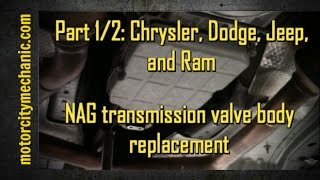
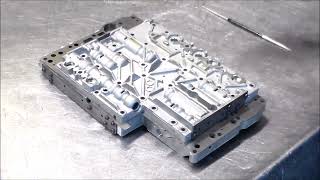
How to confirm: A technician will confirm by ruling out other possibilities and inspecting the valve body once removed. The presence of code P1775 combined with the classic 'clunk when stopping' symptom is a strong indicator. A quantitative vacuum test on the valve body bore can also measure the wear. 🎬 Watch: How to inspect and rebuild the NAG1 valve body
Typical fix: Replace the entire transmission valve body with a new or remanufactured unit. Some transmission shops can ream the worn bore and install an oversized valve or sleeve kit from a company like Sonnax.
Est. part cost: $350-$700
Rare But Worth Checking
- Sticking Solenoid Switch Valve: In rare cases, the valve itself may be sticking due to debris or varnish from old transmission fluid, not a worn bore. A fluid and filter change might help, but it's unlikely to be a permanent fix if the bore is worn.
- Faulty Powertrain Control Module (PCM): → Shop Engine Control Module (ECM) This is extremely rare. The PCM should only be considered after the valve body and wiring have been thoroughly checked by a professional.
- Wiring Harness Issue: A short or break in the wiring harness between the PCM/TCM and the transmission could theoretically cause this code, but it is far less common than the mechanical valve body failure.
Diagnosis Steps
- Verify the code with a quality OBD-II scanner.
- Check the transmission fluid level and condition. Low or dirty fluid can cause various issues, though it's not the typical root cause for P1775.
- Check for any available PCM/TCM software updates from Chrysler, as some TSBs have addressed transmission issues with a reflash. However, for this specific vehicle and code, a mechanical repair is almost always required.
- If symptoms and codes point to the SSV, the next step is to drop the transmission pan.
- Remove and inspect the valve body. A transmission specialist can check the SSV for free movement within its bore. A vacuum test is the definitive way to measure bore wear.
- If the valve sticks or the bore fails the vacuum test, replace the valve body assembly.
- Install the new valve body, a new transmission filter, and pan gasket.
- Refill with the correct Mopar ATF+4 transmission fluid. Using the wrong fluid can cause shifting problems and damage.
- Perform a transmission 'quick learn' procedure with a compatible scan tool to calibrate the new components.
Parts You'll Likely Need
- Transmission Valve Body
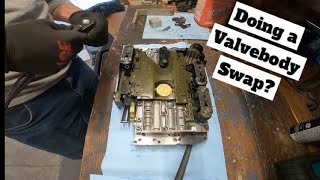
(OEM #52108308AC)— This is the primary failure point. The bore for the Solenoid Switch Valve wears out, requiring replacement of the entire assembly. Remanufactured units often have a sleeved, more durable bore to prevent recurrence. 🎬 Watch: How to swap solenoids onto a new valve body
Trusted brands: Mopar (OEM), Sonnax (remanufactured/repair kits), Rostra
OEM price range: $500-$990
Aftermarket price range: $350-$600 - Transmission Filter and Pan Gasket Kit
(OEM #5013470AC)— These must be replaced any time the transmission pan is removed for service.
Trusted brands: Mopar (OEM), Wix, ATP
OEM price range: $40-$70
Aftermarket price range: $20-$40 - Mopar ATF+4 Transmission Fluid
(OEM #68218057AC)— This is the required fluid type for the NAG1/W5A580 transmission. Using the wrong fluid can cause shifting problems and damage. A valve body replacement requires 6-8 quarts.
Trusted brands: Mopar
OEM price range: $10-$15 per quart
Aftermarket price range: $8-$12 per quart
Related Codes That Often Appear With This One
- P0700 — This is a generic code that means the Transmission Control Module (TCM) has stored a fault. It acts as a 'check engine light' for the transmission and will almost always accompany P1775.
- P1776 — This code indicates the same Solenoid Switch Valve is stuck in the opposite (Low/Reverse) position. It's caused by the exact same failure of the valve sticking in its bore and often appears with P1775.
Technical Service Bulletins (TSBs) & Recalls
- TT9000197: A Chrysler technical document that explicitly states not to replace the solenoid assembly for a P1775 code and points to the valve body as the cause.
Platform-Specific Known Issues
- Owner Experience with P1775 and P0700: A user on DodgeForum.com with a similar Chrysler platform vehicle described the classic P1775 symptoms: a harsh 'clunking' downshift when coming to a stop and hesitation when shifting from reverse to drive. A transmission service did not fix the issue, and a master technician on the forum confirmed the likely cause was the valve body.
Mechanic-Grade Diagnostic Values
- Resistance of Shift Solenoids (1-2/4-5, 2-3, 3-4) — expected: 4.0 - 4.5 Ohms. Failure: Reading significantly higher (open) or lower (short) than the expected range.
- Resistance of Pressure Control Solenoids (Line Pressure, Shift Modulating) — expected: 5.0 - 5.5 Ohms. Failure: Reading significantly outside the expected range.
- Resistance of Torque Converter Clutch (TCC) Solenoid — expected: ~2.5 - 2.7 Ohms. Failure: Reading significantly outside the expected range.
- Solenoid Voltage Supply at TCM Connector (Pin 38) — expected: 11-14V with Key On, Engine Off. Failure: A significantly lower voltage, such as 3.7V, can indicate the TCM has detected a fault and has reduced the output voltage.
Hidden / Shadow Codes Worth Checking
- TRS Code (Event Data): This is not a DTC, but a manufacturer-specific data point logged with the P1775/P1776 fault. If it reads 'TR2', it indicates the manual valve was not fully in the Overdrive position, suggesting a shift cable adjustment issue. If it reads 'OD', it confirms the issue is internal, pointing towards the sticking Solenoid Switch Valve. (see via Requires a dealer-level scan tool (like Chrysler's WiTech) or a high-end professional scanner capable of reading manufacturer-specific freeze-frame data.)
Scan Tool Commands That Help
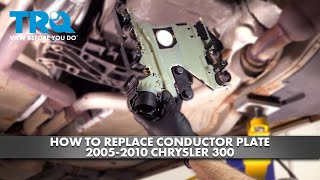
- Chrysler WiTech or equivalent professional bidirectional scanner: Transmission Adaptations / Quick Learn — This is a mandatory procedure after replacing the valve body or conductor plate. It resets the transmission's learned shift adaptives and allows the TCM to calibrate to the new components for proper shift quality.
- Professional bidirectional scanner: Solenoid Actuation Tests — Can be used to command individual solenoids on and off to check for an electrical response. However, for P1775, the failure is typically the mechanical valve sticking in its bore, so the solenoid may still 'click' electrically while the hydraulic valve remains stuck.
Wiring & Ground Locations
- Transmission Control Module (TCM) — Located under the driver's side of the instrument panel, typically to the left of the steering column.. This is the primary location for performing remote electrical tests (resistance checks) of all transmission solenoids without having to drop the pan, allowing a technician to quickly rule out an electrical failure.
- TCM Connector (for testing) — The main harness connector plugging into the TCM under the dash.. Pin 38 is the common power/ground for all solenoids. Probing between pin 38 and the individual solenoid pins (14, 15, 16, 17, 36, 37) allows for a complete electrical health check of the solenoids and conductor plate wiring from the driver's seat.
Real Owner Repair Stories
- 2CarPros Forum User (Chrysler vehicle with similar 42RLE transmission, but behavior is identical to NAG1 issue.) — Initially had shifting problems (P0841), which were seemingly fixed by replacing the solenoid pack. However, after the solenoid pack replacement, the vehicle developed the classic P1775 symptom: a hard jerk when coming to a stop below 5 MPH.
❌ Tried (didn't work) Replacing the solenoid pack (this actually *caused* the P1775 symptom to appear)., A transmission 'quick learn' procedure, which the vehicle would not accept.
✅ What actually fixed it The forum advice and technician response pointed directly to replacing the valve body as the necessary next step, confirming that the new solenoid pack could not overcome the mechanical sticking of the valve in the worn valve body bore. - Chrysler Sebring / 200 Convertible Club User (2002 Chrysler Convertible with 152k miles) — Classic hard 2nd-to-1st downshift problem.
❌ Tried (didn't work) The user had not yet attempted a repair but was seeking advice.
✅ What actually fixed it The dealer diagnosis for code P1775 was a recommendation to replace both the Transmission Valve Body and the Solenoid Pack, confirming this is a common and known failure mode recognized by dealerships.
OEM Part Supersession History
52108308AB→52108308AC— Standard part revision by the manufacturer, likely for minor improvements or supplier changes.
Heads up: The parts are interchangeable; 52108308AC is the correct service replacement part.OEM Valve Body Bore→Sonnax Overlap Control Valve Sleeve Kit (68942-05K)— The aftermarket Sonnax kit addresses the root design flaw by allowing a worn aluminum bore to be reamed out and replaced with a highly wear-resistant metal sleeve, preventing the valve from sticking again.
Heads up: This is not a direct replacement part, but a repair kit that requires specialized tools (reamer) to install into the existing valve body. It is an alternative to replacing the entire valve body assembly.
Diagnostic Flowchart
Other Known Issues on This Vehicle
Issues unrelated to this code that are worth knowing about as an owner of this generation:
- MDS Lifter / Camshaft Failure 🔴 High — Common, especially on higher-mileage engines or those with extended oil change intervals. A ticking noise is the primary warning sign.
- Front Suspension Clunks and Rattles 🟠 Medium — Very common. Noises often appear even at relatively low mileage due to wear.
- Shifter Stuck in Park ('Pink Thingy' Failure) 🟠 Medium — Extremely common, especially on 2005-2007 models. Failure is due to plastic fatigue over time.
- Dropped Valve Seats (Pre-2009 Models) 🔴 High — A known issue on early 5.7L HEMI engines, though less frequent than MDS failure.
Used vs. New Parts: Buying Guide for This Vehicle
When a used part is the smart pick: For this specific P1775 repair, a used valve body from a junkyard is almost never a smart choice. The failure is due to mechanical wear of the valve bore over time, and a used part is highly likely to have the same wear or will develop it soon.
Donor-vehicle mileage cap: roughly under 50000 miles for the part to have meaningful remaining life.
What to inspect on the donor part:
- If forced to use a donor part, source it from the lowest-mileage vehicle possible.
- Ensure the donor vehicle was not involved in a severe front-end collision that could have damaged the transmission.
- Ask for the vehicle's history to see if the transmission fluid was ever serviced.
OEM-only on this vehicle (don't cheap out):
- Transmission Control Module (TCM) - If the TCM itself is faulty (a rare cause), using a new or correctly programmed OEM unit is critical to avoid compatibility issues.
Aftermarket brands forum-validated for this vehicle:
- Sonnax (for valve body repair kits and high-quality remanufactured valve bodies).
- Reputable transmission remanufacturers (e.g., Reman-Transmission, Jasper) who explicitly state they test and re-sleeve wear-prone valves in the valve body.
Brands owners have reported issues with on this vehicle:
- Unknown, no-name valve bodies from online marketplaces. The quality control on the valve bore tolerances is critical, and low-quality rebuilds may fail quickly.
Real Owner Stories
Aggregated from forums and TSBs cited above. Mileages and costs reflect what owners reported in those sources.
2005 Chrysler 300C 5.7L HEMI
Symptoms: A harsh 'clunking' downshift when coming to a stop and hesitation when shifting from reverse to drive. The vehicle also threw a P0700 companion code.
What fixed it: Replacement of the valve body as confirmed by a master technician.
Source hint: DodgeForum.com - '2-1 rough downshift, fault code P1775...'
2006 Chrysler 300C 5.7L HEMI
Symptoms: Experienced issues with the solenoid switch valve being latched in the L/R position, resulting in codes P1775 and P1776.
What fixed it: Replacing the entire valve body assembly.
Source hint: LXForums.com - 'p1776-solenoid-switch-valve-latched-in-l-r-position.181829/'
Related OBD-II Codes
Frequently Asked Questions
I'm seeing a P1775 code on my 2006 Chrysler 300C; should I start by replacing the solenoid assembly?
My 300C clunks hard when I slow down to about 5 mph. Is this related to the P1775 code?
Can I use any transmission fluid to refill my NAG1 transmission after a valve body repair?
Is there a specific part or kit recommended for fixing the worn valve body bore on the 5.7L HEMI models?
My car is stuck in 2nd gear and won't accelerate well from a stop. Is this 'limp mode'?
Does the P1775 issue affect other vehicles similar to my Chrysler 300C?
Helpful Videos
We Have This Part in Stock


The information in this article is provided for general reference and educational purposes only. Vehicle specifications, procedures, and part compatibility can vary by production date, trim level, and region. Always consult your vehicle's factory service manual and verify part numbers before purchasing or performing repairs. Safety-critical components such as airbags, seat belts, and braking systems should be installed by a qualified professional.
- Chrysler 300C:
- 🧭 Diagnostic Flowchart
- 🎬 Helpful Videos
- 🛍️ Shop This Part
- What's Unique About the 2005-2010 Chrysler 300C
- Symptoms You May Notice
- Most Likely Causes
- Rare But Worth Checking
- Diagnosis Steps
- Parts You'll Likely Need
- Related Codes That Often Appear With This One
- Technical Service Bulletins (TSBs) & Recalls
- Platform-Specific Known Issues
- Mechanic-Grade Diagnostic Values
- Hidden / Shadow Codes Worth Checking
- Scan Tool Commands That Help
- Wiring & Ground Locations
- Real Owner Repair Stories
- OEM Part Supersession History
- Other Known Issues on This Vehicle
- Used vs. New Parts: Buying Guide for This Vehicle
- Real Owner Stories
- 2005 Chrysler 300C 5.7L HEMI
- 2006 Chrysler 300C 5.7L HEMI
- Related OBD-II Codes
- Frequently Asked Questions
- 🎟️ Get 5% Off