

P1775 on 2005-2010 Chrysler 300C SRT-8: Transmission Limp Mode Causes and Fixes
On a 300C SRT-8, P1775 is typically caused by a faulty transmission conductor plate or TCC solenoid, forcing the car into 'limp mode'. The most common fix is to replace the conductor plate, solenoids, and connector sleeve inside the transmission pan, costing between $600 and $1,200 at a shop.
- P1775 on a 300C SRT-8 will put the car in 'limp mode' and requires prompt attention to avoid further damage.
- Unlike V6 models, the problem is likely the electro-hydraulic conductor plate or a solenoid, not a worn valve body.
- The most effective repair is to replace the conductor plate, TCC solenoid, and the leaking-prone electrical connector sleeve all at once.
- This is not a beginner-friendly DIY repair; professional service is strongly recommended.
- Always use the correct Mopar ATF+4 specification fluid when refilling the transmission.
What's Unique About the 2005-2010 Chrysler 300C SRT-8
🎬 Watch: How one owner saved his SRT8 300's transmissionThe 300C SRT-8 uses a robust Mercedes-Benz NAG1 (also called W5A580 or 722.6) transmission, which is different from the 42RLE transmission found in V6 Chrysler 300 models. While P1775 on the V6 models is almost always due to a worn-out valve body bore, this is NOT a common issue on the SRT-8's NAG1 transmission. Instead, problems on this platform usually stem from the electro-hydraulic conductor plate or the solenoids themselves, which are mounted to the valve body. The conductor plate is a known weak point on the 722.6 family of transmissions used across many Mercedes, Chrysler, Dodge, and Jeep vehicles.
Symptoms You May Notice
- Vehicle stuck in 'limp mode' (will not shift out of 2nd gear)
- Harsh clunk or jerk when slowing to a stop (under 5 mph)
- Check Engine Light is on
- Extremely sluggish acceleration from a standstill
- Inability to shift into 1st gear
- Vehicle may feel like it's starting in a higher gear
- Replacing only the solenoid pack without the conductor plate.
- Assuming the valve body bore is worn out, which is a common issue on the V6 model's 42RLE transmission but not the SRT-8's NAG1.
- Using the incorrect transmission fluid (Mopar ATF+4 instead of Shell ATF 134 / MB 236.14 spec).
Most Likely Causes
- Faulty Conductor Plate 🔴 High Probability The conductor plate is a known failure point on the NAG1/722.6 transmission. It contains integrated plastic speed sensors (Input and Output) and electrical pathways that can develop hairline cracks or faults over time due to heat cycles, leading to erratic signals and solenoid-related codes.
How to confirm: A technician will use a high-end scan tool to monitor transmission sensor data and solenoid commands. Often, codes for speed sensor faults (like P0715) will accompany P1775, strongly pointing to the conductor plate. Visual inspection of the plate for cracks upon removal is the ultimate confirmation.
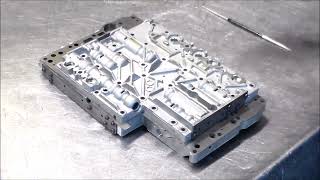
Typical fix: Replace the conductor plate, along with the electrical connector sleeve and a transmission fluid and filter change. This is the most common and effective repair. 🎬 See this step-by-step 722.6 conductor plate replacement walkthrough
Est. part cost: $150-$350 - Failed TCC/Lockup Solenoid 🟡 Medium Probability The solenoids that control shifting and TCC lockup can fail electrically or become clogged with metallic debris over time, causing them to stick. The TCC solenoid is responsible for engaging and disengaging the torque converter clutch.
How to confirm: A scan tool can command the solenoids on and off to test their function. A technician can also test the solenoid's electrical resistance with a multimeter after removing the valve body (it should be within a specific Ohm range).
Typical fix: Replace the faulty solenoid. It is common practice to replace the entire solenoid pack or at least the TCC solenoid and the conductor plate at the same time, as the labor to access them is identical.
Est. part cost: $50-$150 for a single solenoid - Leaking Electrical Connector Sleeve 🟡 Medium Probability The O-rings on the 13-pin electrical connector sleeve are a very common leak point on the NAG1 transmission. Transmission fluid can wick up the wiring harness into the Transmission Control Module (TCM), causing short circuits and a wide range of fault codes, including P1775.
How to confirm: Visually inspect the 13-pin connector where the harness plugs into the transmission (passenger side, near the front). If fluid is present, the sleeve is leaking. 🎬 Watch: How to fix this common transmission adapter plug leak It's also critical to unplug the harness at the TCM and check for fluid there.
Typical fix: Replace the electrical connector sleeve. This is inexpensive and should be done anytime the transmission pan is removed for other service. If fluid has reached the TCM, it must be carefully cleaned with electrical contact cleaner.
Est. part cost: $10-$25 - Low or Contaminated Transmission Fluid ⚪ Low Probability → Shop Transmission Assembly
How to confirm: Check the transmission fluid level using the special service tool (this transmission has no dipstick). Note the fluid's color and smell; it should be bright red and not smell burnt. The correct fluid is Shell ATF 134 or equivalent, NOT Mopar ATF+4.
Typical fix: Perform a transmission fluid and filter change using the correct Shell ATF 134 / MB 236.14 specification fluid.
Est. part cost: $120-$220 for fluid and filter
Rare But Worth Checking
- Faulty Valve Body: → Shop Transmission Valve Body While not common for this specific failure mode on the NAG1, a valve body can still have issues with sticking valves or clogged passages due to debris, though it's much less likely than a conductor plate or solenoid failure. This is in contrast to the V6 models' 42RLE transmission, where a worn valve body is the primary cause.
- Faulty Transmission Control Module (TCM): → Shop Transmission Assembly In very rare cases, the TCM itself can fail, especially if it has been contaminated with fluid from a leaking connector sleeve. This should only be considered after all other possibilities, including wiring issues, have been exhaustively ruled out.
Diagnosis Steps
- Verify the transmission fluid level and condition using the appropriate dipstick tool and ensure the correct fluid type (Shell ATF 134 spec) is being used.
- Scan the Transmission Control Module (TCM) for all stored codes. Note any codes that accompany P1775, such as P0700 or speed sensor codes like P0715.
- Inspect the 13-pin transmission electrical connector for any signs of fluid leakage. If wet, the connector sleeve needs replacement.
- If the connector is leaking, disconnect the wiring harness at the TCM and inspect the module's pins for fluid contamination. Clean with contact cleaner if necessary.
- Drop the transmission pan and inspect for excessive metal debris on the magnet, which would indicate a more severe internal failure.
- Remove the valve body assembly from the transmission.
- Replace the conductor plate, TCC solenoid (or all solenoids), and the 13-pin connector sleeve as a set. This is the most common and reliable repair.
- Reinstall the valve body with a new filter and pan gasket.
- Fill the transmission with the correct type and amount of fluid.
- Clear all diagnostic trouble codes and perform a transmission re-learn or adaptation procedure with a capable scan tool if required by the service manual.
Parts You'll Likely Need
- Transmission Conductor Plate
(OEM #52108308AC (Mopar), 1402701261 (Mercedes-Benz))— This is the most common failure point on the NAG1 transmission that leads to solenoid and speed sensor codes like P1775.
Trusted brands: Mopar, Febi, Dorman, Vaico
OEM price range: $250-$350
Aftermarket price range: $150-$250 - Torque Converter Clutch (TCC) Solenoid
(OEM #52108314AB)— This specific solenoid controls the torque converter lockup and can fail, causing the P1775 code.
Trusted brands: Mopar, Bosch, Rostra
OEM price range: $100-$150
Aftermarket price range: $50-$100 - Transmission Electrical Connector Sleeve
(OEM #68021352AA)— The O-rings on this part frequently fail, causing fluid leaks that can damage electrical components. It should be replaced anytime the valve body is serviced.
Trusted brands: Mopar, Febi, Vaico
OEM price range: $15-$25
Aftermarket price range: $10-$20 - Transmission Filter and Pan Gasket Kit
(OEM #52108325AA)— Required for any service that involves dropping the transmission pan.
Trusted brands: Mopar, Wix, ATP, Mann-Filter
OEM price range: $40-$60
Aftermarket price range: $20-$40 - NAG1 / 722.6 Transmission Fluid
(OEM #Shell ATF 134 / MB 236.14 Spec)— The NAG1 transmission requires a specific fluid. Using standard ATF+4 will cause shifting problems
Related Codes That Often Appear With This One
- P0700 — This is a generic code that simply means the Transmission Control Module (TCM) has stored a fault. It acts as a 'check engine light' for the transmission and will almost always appear with a more specific code like P1775.
- P1776 — This code indicates the same Solenoid Switch Valve is stuck in the opposite (Low/Reverse) position. It points to the same set of failing components (conductor plate, solenoid, valve body).
- P0715 — This code indicates a fault with the transmission's input speed sensor. Since this sensor is integrated into the conductor plate, a P0715 code appearing alongside P1775 strongly suggests the conductor plate is the root cause.
Technical Service Bulletins (TSBs) & Recalls
- TSB 21-013-08: This TSB addresses harsh 2-1 downshifts on NAG1-equipped vehicles and involves a software update to the TCM. While not a direct fix for a P1775 caused by a hard part failure, ensuring the TCM software is up-to-date is a good practice during diagnosis.
- TSB 21-009-07: This TSB relates to a 1-2 shift hunt on a different (48RE) transmission and is not relevant to the P1775 code on a 300C SRT-8.
Mechanic-Grade Diagnostic Values
- TCC (PWM) Solenoid Resistance — expected: 2.0 - 4.0 Ohms (ideally around 2.7-3.0 Ohms). Failure: A reading outside this range indicates a failed solenoid coil.
- 1-2/4-5, 2-3, and 3-4 Shift Solenoid Resistance — expected: 2.5 - 6.5 Ohms (ideally around 4.0-4.5 Ohms). Failure: A reading outside this range, or a significant deviation between solenoids, points to a faulty unit.
- Modulation Pressure Control (MPC) & Shift Pressure Control (SPC) Solenoid Resistance — expected: 2.5 - 6.5 Ohms (ideally around 5.0-5.5 Ohms). Failure: A reading outside of the specified range indicates a solenoid failure.
- Sensor Supply Voltage at TCM — expected: 4.8 - 7.2 Volts. Failure: Voltage outside this range indicates a problem with the TCM or the wiring to the conductor plate sensors.
Scan Tool Commands That Help
- wiTECH (Dealer Tool) or equivalent (JScan, etc.): Reset Learned Adaptives / Reset Adaptive Values — This function must be performed after replacing the valve body, conductor plate, solenoids, or the entire transmission to clear old calibration data and force the TCM to relearn shift pressures and timing with the new components.
- wiTECH (Dealer Tool) or equivalent: Quick Learn / Adaptation Drive Learn Procedure — After resetting the adaptive values, this procedure guides the technician through a specific drive cycle to allow the TCM to quickly and properly calibrate itself to the new hardware. This involves specific temperature ranges (140°F - 212°F), coast-downs, and moderate acceleration cycles.
- wiTECH (Dealer Tool) or equivalent: Store Learned Adaptives — This command can be used to manually save the newly learned values after the drive cycle without having to wait the standard 10 minutes for the TCM to auto-store them.
Wiring & Ground Locations
- Transmission Control Module (TCM) — Located inside the cabin, under the driver's side dashboard, typically below the steering column.. This is the control center for the transmission. It's a critical inspection point for fluid contamination wicked up from a leaking 13-pin connector. All remote electrical tests of the solenoids and sensors are performed at the TCM's main connector.
- TCM Connector (for remote testing) — The main electrical plug at the Transmission Control Module.. Technicians can test the resistance of all transmission solenoids from this connector without dropping the pan. Pin 38 is the common power supply for the solenoids. The TCC solenoid is tested between pins 17 & 38. Shift solenoids are tested between their respective pins (14, 15, 16) and pin 38.
- 13-Pin Transmission Case Connector — Passenger side of the transmission housing, near the front.. This is the main electrical connection to the transmission's internal components (conductor plate, solenoids). It is the location of the frequently-leaking connector sleeve O-rings.
Real Owner Repair Stories
- YouTube channel 'ANDERZÉN' (Mercedes-Benz ML55 AMG (uses the identical 722.6/NAG1 transmission)) — After a full transmission service, the vehicle would get stuck in 2nd gear (limp mode) once the transmission reached operating temperature.
❌ Tried (didn't work) A full transmission fluid and filter service did not resolve the issue.
✅ What actually fixed it The problem was resolved by replacing the transmission conductor plate. The heat-related failure was indicative of failing solder joints or sensors on the original plate.
OEM Part Supersession History
52108308AB→52108308AC— Standard part revision and update by Mopar.
Heads up: The new part number (52108308AC) is a direct replacement for the old one and is fully compatible.
Diagnostic Flowchart
Other Known Issues on This Vehicle
Issues unrelated to this code that are worth knowing about as an owner of this generation:
- Shifter Stuck in Park ('Pink Thingy' Failure) 🟠 Medium — Very common on 2005-2007 models. A small pink plastic lever in the shifter assembly breaks, preventing the car from being shifted out of Park. (Ref: No recall, but a well-known issue. Aftermarket billet aluminum replacements are a popular permanent fix.)
- Front Suspension Clunking/Squeaking 🟠 Medium — Common after 50,000 miles. Caused by worn tension struts (forward lower control arms), sway bar bushings, or outer tie rod ends.
- Dropped Valve Seats 🔴 High — A rare but catastrophic failure mode for the 6.1L HEMI. The powdered metal valve seats can fracture and drop into the cylinder, causing severe engine damage. Often happens without warning.
- Power Window Motor/Regulator Failure 🟡 Low — Common for front windows to stop working. The cause can be a failed motor, a broken regulator cable, or broken wiring in the door jamb boot.
- ESP/BAS Warning Lights 🟡 Low — Often caused by a failing wheel speed sensor, but can also be triggered by a faulty steering angle sensor or clockspring.
Used vs. New Parts: Buying Guide for This Vehicle
When a used part is the smart pick: A complete, used valve body assembly with the conductor plate and solenoids can be a viable option if it's from a verified low-mileage vehicle that was wrecked for non-drivetrain reasons. The mechanical valve body itself is very durable.
Donor-vehicle mileage cap: roughly under 80000 miles for the part to have meaningful remaining life.
What to inspect on the donor part:
- Verify the mileage of the donor vehicle.
- Inspect the 13-pin connector socket on the donor transmission for any signs of fluid leakage or cracked plastic.
- If possible, ask the seller to drain a small amount of fluid; it should be reddish and not smell burnt or contain excessive metal particles.
- Ensure the donor vehicle did not have any transmission-related fault codes prior to being dismantled.
OEM-only on this vehicle (don't cheap out):
- None for this repair. The core components are Mercedes-Benz designed, and high-quality aftermarket versions are widely available and trusted.
Aftermarket brands forum-validated for this vehicle:
- Conductor Plate: Febi, Vaico, Dorman
- Solenoids: Bosch, Rostra
- Filter/Gasket: Wix, Mann-Filter, ATP
Brands owners have reported issues with on this vehicle:
- Unbranded, no-name conductor plates sold at a very low cost on marketplace sites are a gamble and may have a high failure rate.
Real Owner Stories
Aggregated from forums and TSBs cited above. Mileages and costs reflect what owners reported in those sources.
2006 Chrysler 300C SRT-8 6.1L
Symptoms: The vehicle experienced classic symptoms of being stuck in gear (limp mode).
What fixed it: Replacement of the conductor plate, solenoids, and the 13-pin connector plug.
Source hint: 300CForums.com - Thread titled 'Limp Mode - P1775 Code'
2006-2010 Chrysler 300C SRT-8 6.1L
Symptoms: Sudden onset of limp mode accompanied by codes P0700 and P1775.
What fixed it: Replacing the conductor plate and the 13-pin electrical connector sleeve.
Source hint: LXForums.com - Thread 'P0700 and P1775... limp mode'
2005-2010 Chrysler 300C SRT-8 6.1L
Symptoms: 2-1 rough downshift and fault code P1775.
What fixed it: Replacing the valve body components, specifically the conductor plate and solenoids.
Source hint: DodgeForum.com - Thread '2-1 rough downshift, fault code P1775...'
Related OBD-II Codes
Frequently Asked Questions
Does TSB 21-013-08 apply to my 300C SRT-8 if I have code P1775?
Can I use Mopar ATF+4 to top off my 2005-2010 300C SRT-8 transmission?
Is the 'Pink Thingy' failure related to my P1775 transmission code?
Why is my SRT-8 stuck in 2nd gear and refusing to shift?
How can I check the transmission fluid level on my 6.1L HEMI 300C?
Does TSB 21-009-07 provide a fix for my P1775 code?
Helpful Videos

We Have This Part in Stock


The information in this article is provided for general reference and educational purposes only. Vehicle specifications, procedures, and part compatibility can vary by production date, trim level, and region. Always consult your vehicle's factory service manual and verify part numbers before purchasing or performing repairs. Safety-critical components such as airbags, seat belts, and braking systems should be installed by a qualified professional.
- Chrysler 300C SRT-8:
- 🧭 Diagnostic Flowchart
- 🎬 Helpful Videos
- 🛍️ Shop This Part
- What's Unique About the 2005-2010 Chrysler 300C SRT-8
- Symptoms You May Notice
- Most Likely Causes
- Rare But Worth Checking
- Diagnosis Steps
- Parts You'll Likely Need
- Related Codes That Often Appear With This One
- Technical Service Bulletins (TSBs) & Recalls
- Mechanic-Grade Diagnostic Values
- Scan Tool Commands That Help
- Wiring & Ground Locations
- Real Owner Repair Stories
- OEM Part Supersession History
- Other Known Issues on This Vehicle
- Used vs. New Parts: Buying Guide for This Vehicle
- Real Owner Stories
- 2006 Chrysler 300C SRT-8 6.1L
- 2006-2010 Chrysler 300C SRT-8 6.1L
- 2005-2010 Chrysler 300C SRT-8 6.1L
- Related OBD-II Codes
- Frequently Asked Questions
- 🎟️ Get 5% Off