

P1775 on 2012-2019 Porsche 911: PDK Transmission Fault Explained
On a 2012-2019 Porsche 911, code P1775 is a PDK transmission fault indicating a protective measure cannot be performed. It almost always points to an internal electronic failure, most commonly the transmission's distance/speed sensor unit. This is a complex, high-cost repair requiring a specialist, as dealers often suggest a full transmission replacement costing upwards of $25,000.
- P1775 on a 991-generation Porsche 911 is a serious transmission fault that requires immediate attention from a specialist.
- The most likely cause is a failed internal PDK distance/speed sensor, not a catastrophic mechanical failure.
- Do not automatically accept a dealership quote for a full transmission replacement. Seek a second opinion from an independent Porsche specialist who can perform internal PDK repairs.
- This fault is almost always accompanied by other codes (P173x, P084x) that are crucial for an accurate diagnosis.
- Repair is complex and expensive, but replacing the faulty sensor is thousands of dollars cheaper than replacing the entire transmission.
What's Unique About the 2012-2019 Porsche 911
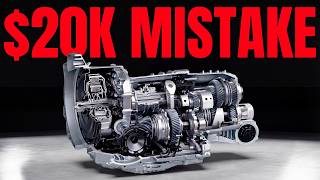
The 2012-2019 Porsche 911 (991.1 and 991.2 generations) uses the ZF-made 7DT series PDK transmission (specifically 7DT45 for Carrera and 7DT70 for Turbo models). While robust mechanically, its complex internal electronics are a known weak point. 🎬 Watch: The ugly truth behind PDK gearbox failures. Unlike many transmission issues, P1775 is rarely caused by major mechanical failure like stripped gears. Instead, it's typically triggered by the failure of internal sensors that monitor temperatures, pressures, and shift rod positions. Porsche's official service policy often leads to recommending a complete transmission replacement, an extremely expensive job ($25,000-$40,000), when a more targeted repair of the internal sensor unit by an independent specialist is often possible for a fraction of the cost.
Diagnostic Flowchart
Tap your situation to follow the diagnostic path that matches what you're seeing on this vehicle.
Generation note: This issue affects both the 991.1 (2012-2016) and 991.2 (2016.5-2019) generations of the Porsche 911, as they both use versions of the 7DT PDK transmission. The failure of the internal distance/speed sensor is the most common cause across this entire range, and also affects the preceding 997.2 generation and contemporary 981 Boxster/Cayman models.
Symptoms You May Notice
- "Transmission Fault" or "Gearbox Fault" message on the dashboard.
- "Transm. fault. Poss. no R gear. Drive on poss." warning.
- "Transmission Emergency Run" warning on the dash.
- Vehicle enters limp mode, often stuck in a single gear (e.g., 3rd or 5th).
- Inability to select reverse or any gear, car acts as if in neutral.
- Harsh or jerky shifting.
- Flashing gear indicator (PRND) on the dash.
- Car revs slightly when put in gear but does not move.
- Problems appear or worsen significantly when the transmission is hot.
- Replacing the entire PDK transmission. Dealers often default to this expensive option ($25,000+), but independent specialists have proven that targeted repairs to internal sensors or solenoids are usually successful and far more economical.
Most Likely Causes
- Faulty PDK Distance/Speed Sensor Unit 🔴 High Probability The sensor unit is located inside the transmission, where it is exposed to heat and contaminated fluid. Over time, heat cycles can cause the sensor's plastic housing to deform or the electronics to fail. Conductive metallic particles from normal clutch wear accumulate on magnetic surfaces, which can short the sensitive electronics. This is widely cited as the single most common major PDK failure.
How to confirm: Diagnosis with a Porsche PIWIS tool is required. The presence of codes P1731, P1732, P1733, P1734, or P1735 alongside P1775 is a strong indicator of distance sensor failure. In some cases, a failing distance sensor can drag down the 5V reference voltage, causing other seemingly unrelated codes.
Typical fix: The transmission must be removed and partially disassembled to replace the internal sensor unit. Independent specialists and aftermarket suppliers (like T-Design) have developed robust replacement sensors and repair procedures. This repair costs a fraction of a full transmission replacement.
Est. part cost: $500-$1500 for an aftermarket replacement sensor unit. - Faulty Pressure Sensor or Solenoid 🟡 Medium Probability The hydraulic solenoids and pressure sensors within the mechatronics unit (valve body) are critical for clutch operation and gear changes. They are susceptible to failure from heat and fluid contamination, sometimes failing only when the transmission fluid is hot.
How to confirm: A PIWIS scan showing pressure-related codes like P0841, P0846, P17B1, or P17B2 alongside P1775 points to this issue. These faults often manifest as implausible clutch activation pressure.
Typical fix: Requires removing the mechatronics unit (valve body) to replace the specific failed solenoid or pressure sensor. The system must be recalibrated with a PIWIS tool afterward.
Est. part cost: $200-$800 for individual sensors or solenoids. A remanufactured valve body can be around $850, with new OEM units costing much more. - Software/Calibration Issue ⚪ Low Probability As per TSB #09-26, Porsche has identified that certain permanent fault entries can be logged incorrectly. This is especially relevant after a component replacement, if the battery has been disconnected, or if a previous repair was performed without the mandatory calibration.
How to confirm: A Porsche dealer or specialist with a PIWIS tool can check the software version and attempt a PDK recalibration. The TSB specifically mentions this as a diagnostic step for P1775.
Typical fix: Perform a full PDK clutch and shift fork calibration using a PIWIS tool. If the code returns immediately, the cause is hardware-related.
Est. part cost: $0 (labor for calibration only)
Rare But Worth Checking
- Damaged Wiring Harness or Connectors: While less common than internal failures, the wiring leading to the transmission can be damaged by road debris, improper service, or even rodents, causing communication errors that trigger faults like P1775. Corrosion at grounding points can also cause electrical issues.
- Failed Transmission Control Unit (TCU): → Shop Transmission Assembly The TCU (part of the mechatronics unit) can fail, but it's more common for the sensors that feed it information to be the root cause. A code like P1870 (PDK control unit internal fault) may accompany P1775 in this case, though even this can sometimes be triggered by a sensor fault.
Diagnosis Steps
- Perform a full vehicle scan with a Porsche-specific diagnostic tool (PIWIS) to retrieve all fault codes from the transmission control unit. Do not rely on a generic OBD-II scanner.
- Document all codes. Look for groupings, such as P1775 with distance sensor codes (P173x) or pressure sensor codes (P17Bx).
- Check for applicable Technical Service Bulletins (TSBs), such as TSB #09-26, which suggests specific diagnostic paths for permanent fault entries.
- Observe symptoms in relation to temperature. If faults only appear when the transmission is hot, it strongly suggests an electronic component (sensor/solenoid) is failing under thermal stress.
- Attempt a PDK clutch and shift fork recalibration using the PIWIS tool. In some software-related cases, or after a battery disconnect, this can resolve the issue. If it fails, the problem is hardware.
- If a distance sensor fault (P173x) is present, this is the most likely culprit. The sensor requires replacement.
- If pressure faults (P17Bx) are present, investigate the pressure sensors and solenoids within the mechatronics unit.
- Inspect the main electrical connector and wiring harness at the transmission for any signs of physical damage, corrosion, or rodent activity.
Parts You'll Likely Need
- PDK Distance/Speed Sensor Repair Kit
(OEM #Not sold separately by Porsche. Aftermarket kits replace equivalents of 0501325775, 0501327105, 0501324703.)— This is the single most common failure point within the PDK transmission that leads to major faults. The original sensor fails due to heat and contamination.
Trusted brands: T-Design
OEM price range: N/A (Not sold separately by Porsche)
Aftermarket price range: $500 - $1500 - PDK Mechatronics Unit (Valve Body) — If multiple solenoids or pressure sensors have failed, or if the unit itself is faulty, the entire mechatronics assembly may need to be replaced or rebuilt.
Trusted brands: ZF (OEM)
OEM price range: $2800 - $5000
Aftermarket price range: $850 - $3000 (rebuilt) - PDK Transmission Pan and Fluid Kit — The transmission fluid (Pentosin FFL-3) and filter pan must be replaced as part of any internal PDK service.
Trusted brands: Porsche (OEM), ZF (OEM)
OEM price range: $300 - $500
Aftermarket price range: $200 - $400
Related Codes That Often Appear With This One
- P1731 - P1735 — These codes directly point to a failure of the distance/displacement sensor for the shift rods, which is the most common root cause of major PDK faults that trigger P1775.
- P17B1 / P17B2 — These codes indicate implausible clutch activation pressure, pointing to a fault with the pressure sensors or solenoids in the mechatronics unit.
- P1870 — This code indicates a PDK control unit internal fault. It can signify a true TCU failure but is often triggered as a secondary fault by a failing sensor, such as the distance sensor.
- P071400 — This code for the transmission fluid temperature sensor is explicitly mentioned in TSB #09-26 as appearing with P1775.
- P184900 — Also mentioned in TSB #09-26 as a related permanent fault entry in the transmission electronics control unit.
Technical Service Bulletins (TSBs) & Recalls
- TSB #09-26: This technical bulletin from Porsche addresses the specific combination of permanent fault memory entries P1775, P071400, and P184900 in the transmission control unit, providing a specific diagnostic path for technicians.
Platform-Specific Known Issues
- Dealer Replacement vs. Independent Repair: A major issue for owners is the dealership tendency to quote a full transmission replacement for $25,000-$40,000. In contrast, independent specialists can often perform a targeted repair of the failed internal sensor for $4,000-$8,000.
- Rennlist Community Knowledge Base: The Rennlist forums, particularly the long-running thread "Guide to Repairing a PDK Transmission," have been instrumental in crowd-sourcing knowledge, repair procedures, and specialist tool information, empowering owners and independent shops to tackle these repairs.
Helpful Videos



We Have This Part in Stock


The information in this article is provided for general reference and educational purposes only. Vehicle specifications, procedures, and part compatibility can vary by production date, trim level, and region. Always consult your vehicle's factory service manual and verify part numbers before purchasing or performing repairs. Safety-critical components such as airbags, seat belts, and braking systems should be installed by a qualified professional.
- Porsche 911:
- 🧭 Diagnostic Flowchart
- 🎬 Helpful Videos
- 🛍️ Shop This Part
- What's Unique About the 2012-2019 Porsche 911
- Symptoms You May Notice
- Most Likely Causes
- Rare But Worth Checking
- Diagnosis Steps
- Parts You'll Likely Need
- Related Codes That Often Appear With This One
- Technical Service Bulletins (TSBs) & Recalls
- Platform-Specific Known Issues
- 🎟️ Get 5% Off