

P1775 on 2013 Ram 3500: Solenoid Switch Valve Causes and Fixes
On a 2013 Ram 3500, code P1775 means the transmission's Solenoid Switch Valve is stuck. This often causes harsh shifting and can put the truck in limp mode. The most common fixes are replacing the transmission solenoid pack or the entire valve body, which can cost between $500 and $1,500 at a shop.
- P1775 on a 2013 Ram 3500 points to a stuck Solenoid Switch Valve in the 68RFE transmission.
- Before replacing expensive hardware, check if your truck's computer has the latest software, as multiple TSBs recommend a PCM flash for this code.
- The most common mechanical fixes involve replacing the solenoid pack or the entire valve body due to known wear issues.
- Symptoms typically include a harsh jerk when stopping and the truck going into limp mode.
- This is not a beginner-friendly DIY repair; professional service is strongly recommended due to the complexity of working inside the transmission.
What's Unique About the 2013-2013 Ram 3500
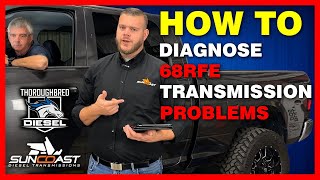
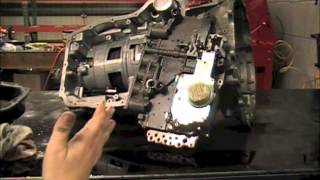
The 2013 Ram 3500, especially those with the 6.7L Cummins engine, 🎬 Watch: A professional guide to diagnosing common 68RFE transmission problems. is equipped with the 68RFE automatic transmission. This transmission family is known for issues related to the valve body and solenoid pack. The Solenoid Switch Valve (SSV) bore within the aluminum valve body can wear over time from the steel valve oscillating within it, causing the valve to stick or create hydraulic cross-leaks. This is a well-documented weakness, leading to codes like P1775 and drivability problems. Several manufacturer TSBs have been issued that involve software updates to the PCM to change the diagnostic sensitivity for this code, acknowledging that false or intermittent triggers can occur. These updates change the code from a one-trip fault to a two-trip fault, making it less likely to trigger the check engine light from a momentary glitch.
Diagnostic Flowchart
Tap your situation to follow the diagnostic path that matches what you're seeing on this vehicle.
Symptoms You May Notice
- Check Engine Light (Malfunction Indicator Lamp) is on.
- Vehicle enters 'limp mode,' often stuck in 3rd or 4th gear.
- Harsh jerk or clunk when coming to a stop as the transmission fails to downshift to 1st gear.
- Failure of the torque converter clutch to engage or disengage properly.
- Delayed or failed engagement when shifting into Drive or Reverse.
- Transmission holds first gear much longer than usual before a hard shift into the next gear.
- Replacing only the torque converter without addressing the valve body or solenoid issue.
- Rebuilding the entire transmission when only a valve body or solenoid pack replacement was needed.
- Replacing the solenoid pack when the root cause is a worn valve bore in the valve body.
Most Likely Causes
- Sticking Solenoid Switch Valve (SSV) in Valve Body 🔴 High Probability → Shop Transmission Valve Body The aluminum valve body bore is prone to wear from the constant movement of the steel SSV, creating a loose fit and allowing the valve to jam or leak pressure. Debris in the fluid accelerates this wear.
How to confirm: A technician must remove the transmission valve body to physically inspect the valve for free movement. The valve body may also be vacuum tested at specific ports to check for leaks.
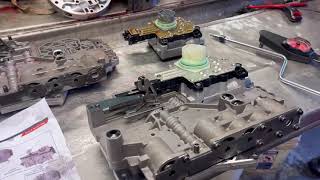
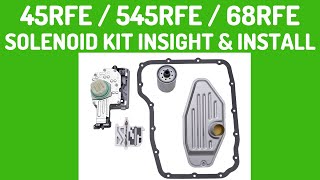
Typical fix: For minor wear, a technician can ream the bore and install an oversized valve kit like the Sonnax 92835-32K or TransGo RFE-SV420-NT. If wear is severe or the casting is warped, the entire valve body is replaced, often with an upgraded billet or remanufactured unit. 🎬 See how to upgrade your valve body and solenoid pack.
Est. part cost: $40-$1200 - Faulty Transmission Solenoid Pack 🔴 High Probability → Shop Transmission Assembly The solenoid pack is a complex electronic and hydraulic component that is a common failure point on 68RFE transmissions. It includes solenoids and pressure switches that can fail electrically or mechanically, leading to incorrect pressure readings and commands.
How to confirm: After ruling out wiring issues and confirming the SSV moves freely, replacing the solenoid pack is the next logical step. This is the official recommendation if the physical valve is not found to be sticking.
Typical fix: Replace the entire solenoid/TRS assembly. This part is located on the valve body and is often replaced at the same time as a valve body service.
Est. part cost: $300-$500 - Outdated Powertrain Control Module (PCM) Software 🟡 Medium Probability → Shop Engine Control Module (ECM) Chrysler/Ram released multiple software updates to change the sensitivity and diagnostic parameters for setting this and other transmission codes. TSB 18-043-17 specifically changes P1775 from a one-trip to a two-trip fault to prevent false MIL illumination.
How to confirm: A dealer or qualified shop must use a wiTECH scan tool to check the current software calibration ID against the latest available updates for the vehicle's VIN.
Typical fix: Reprogram (flash) the PCM to the latest software version. This should always be done before replacing any hardware to rule out a software-related issue.
Est. part cost: $0-$200 - Low or Dirty Transmission Fluid ⚪ Low Probability → Shop Transmission Assembly While not specific to this platform, low fluid levels can cause pressure issues, and dirty/contaminated fluid containing metal flakes can cause valves and solenoids to stick, accelerating bore wear.
How to confirm: Check the transmission fluid level and condition according to the manufacturer's procedure. Look for a burnt smell or metallic particles in the fluid.
Typical fix: Perform a transmission fluid and filter change using ATF+4 fluid. If the fluid is full of debris, it indicates a more severe internal problem is likely underway.
Est. part cost: $100-$250
Rare But Worth Checking
- Wiring Harness or Connector Issue: An open or short circuit in the wiring between the PCM and the transmission solenoid connector can mimic an internal failure. A visual inspection and continuity check should be performed before condemning expensive parts.
- Failed Powertrain Control Module (PCM): → Shop Engine Control Module (ECM) This is very rare, but the internal drivers in the PCM that control the transmission solenoids can fail. This should only be considered after all other possibilities have been exhausted.
Diagnosis Steps
- Check for any Technical Service Bulletins (TSBs) related to your vehicle's VIN. Specifically, TSB 18-043-17 (which supersedes 18-091-16) recommends a PCM software update as a primary step.
- Using a capable scan tool, check for other transmission-related DTCs, especially P0841.
- Check the transmission fluid level and condition. Ensure it is full of clean ATF+4 fluid and not burnt or contaminated.
- Inspect the transmission wiring harness and the main round connector for any visible damage, corrosion, or loose connections.
- If software is up to date and fluid is good, the next step is to test the internal components. This involves dropping the transmission oil pan.
- Remove the valve body assembly.
- Inspect the Solenoid Switch Valve (SSV) and its plugs within the valve body for sticking, scoring, or free movement.
- If the SSV is sticking due to bore wear, either replace the valve body or have it repaired with an oversized valve kit from a brand like Sonnax or TransGo.
- If the SSV moves freely, the issue is likely the solenoid pack. Replace the solenoid/TRS assembly.
- Reinstall the valve body, new filter, and pan. Refill with the correct type of ATF+4 fluid.
- Perform a transmission 'Quicklearn' procedure with a wiTECH scan tool to allow the PCM to adapt to the new components. A gentle drive may be possible to get to a shop for this procedure.
Parts You'll Likely Need
- Transmission Solenoid Pack
(OEM #68353383AC (Supersedes 5170877AA, 52119435AF, and others))— This is the complete electronic control unit on the valve body and a very common failure point for the 68RFE transmission that causes P1775.
Trusted brands: Mopar, Dorman, Standard Motor Products
OEM price range: $400-$550
Aftermarket price range: $250-$400 - Transmission Valve Body — If the bore for the Solenoid Switch Valve is worn, the entire valve body often needs to be replaced with a remanufactured or upgraded unit that has a sleeved, repaired bore.
Trusted brands: Mopar, BD Diesel, RevMax, Next Gen Drivetrain
OEM price range: $800-$1200
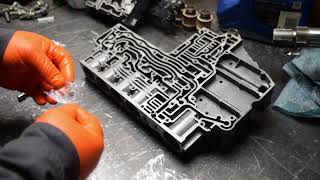
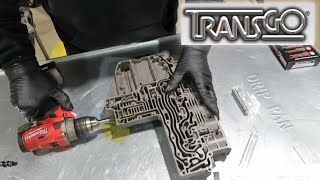
Aftermarket price range: $600-$1000 - Solenoid Switch Valve Repair Kit — For mechanics comfortable with valve body work, this inexpensive kit provides an oversized v 🎬 Watch: How to install the TransGo solenoid switch valve repair kit.
Related Codes That Often Appear With This One
- P1776 — This code is for the same Solenoid Switch Valve being latched in the opposite (Low/Reverse) position. They often point to the same root cause of a sticking valve or worn bore.
- P0841 — This code for 'LR Pressure Switch Rationality' is directly related to the PCM's ability to confirm the position of the Solenoid Switch Valve. Diagnostic procedures for P1775 often start by checking for P0841.
- P0871 — This code for 'OD Pressure Switch Rationality' can also be caused by a worn SSV bore, as it creates cross-leaks that affect other pressure circuits.
- P0933 / P0934 / P0935 — These codes relate to the main hydraulic line pressure sensor and often appear alongside other transmission hydraulic faults. Software updates were also issued to address them.
- U0100 — This indicates a loss of communication with the PCM. Severe electrical issues in the transmission harness can sometimes cause network communication problems.
Technical Service Bulletins (TSBs) & Recalls
- 18-043-17 (Supersedes 18-091-16): Involves reprogramming the PCM. For P1775, this update changes the diagnostic from a one-trip fault to a two-trip fault to reduce the likelihood of a false Malfunction Indicator Lamp (MIL) illumination for intermittent issues.
- 18-057-15 REV A: Also lists P1775 as a code addressed by a PCM software update.
- 18-018-13 REV. D: An earlier PCM flash update that also addresses various diagnostic improvements and requires a 'Quicklearn' procedure be performed on 68RFE-equipped trucks after the update.
Platform-Specific Known Issues
- Valve Body Bore Wear: → Shop Transmission Valve Body The primary design weakness leading to P1775 on the 68RFE is the aluminum valve body. The steel Solenoid Switch Valve constantly oscillates within the softer aluminum bore, eventually causing wear that allows the valve to stick or leak hydraulic pressure. This is a known issue across the RFE transmission family.
- Software Sensitivity: Chrysler/Ram has released numerous software updates for the Powertrain Control Module (PCM). These updates often adjust the sensitivity for setting transmission fault codes like P1775. Before any hardware replacement, ensuring the PCM has the latest software is critical, as it may resolve the issue on its own by preventing false triggers.
Mechanic-Grade Diagnostic Values
- Solenoid Coil Resistance — expected: Approximately 1.3 Ohms for most solenoids (Low/Reverse, 2C, 4C, UD, OD).. Failure: A reading that is significantly higher (open circuit) or lower (short circuit).
- Pressure Control Solenoid Resistance — expected: Approximately 4.9 Ohms.. Failure: A reading that is significantly higher or lower than the specification.
- Transmission Speed Sensor Resistance — expected: Approximately 535 Ohms at room temperature.. Failure: An open or shorted reading.
- Live Data - Line Pressure (Stock Tune) — expected: Commanded pressure should not exceed 160 PSI. At idle with brake applied, pressure should be ~125 PSI. At idle with brake released, pressure should drop to ~60 PSI.. Failure: Actual pressure significantly failing to meet commanded pressure (indicates a leak or failing pump), or commanded pressure being unexpectedly low.
Scan Tool Commands That Help
- wiTECH, Launch, Autel, Snap-on: Quicklearn Procedure — This is mandatory after replacing the valve body or solenoid pack. It allows the TCM to learn the hydraulic characteristics (Clutch Volume Indexes or CVIs) of the new components to ensure proper shift quality.
- wiTECH: Pressure Switch Test (with Miller tool #8333) — This is a dealer-level test to verify the integrity of the pressure switch sense circuits between the PCM/TCM and the transmission, isolating the wiring from the internal components.
- Professional Scan Tool (e.g., Bosch ADS series): Solenoid Bi-directional Control — To manually command a specific solenoid on or off while monitoring line pressure or switch states to confirm if the solenoid is mechanically and electrically responding to commands from the TCM.
Wiring & Ground Locations
- Transmission Solenoid/TRS Assembly Connector — On the left (driver's) side of the 68RFE transmission case. It is a large, black, round connector.. This is the main electrical interface for the entire valve body. Corrosion, pushed-out pins, or harness damage here can directly cause P1775 and other transmission codes.
- Main Engine/Chassis Ground Strap — There are several critical grounds. A primary one runs from the battery negative terminal to the engine block. Another important strap often connects from the back of the cylinder head to the firewall/body.. Poor grounding can cause electrical noise and voltage drops, leading the TCM to misinterpret sensor data or fail to properly actuate solenoids, potentially triggering false codes.
- (T50) L/R Pressure Switch Sense Circuit — This is a specific wire within the harness running from the PCM/TCM to the main transmission connector.. The diagnostic procedure for P1775 involves checking this specific circuit for shorts to other wires in the harness, indicating it is a key data line for the TCM to monitor the SSV's position.
Real Owner Repair Stories
- 2CarPros Forum (2003 Chrysler Concorde (different vehicle, but identical code behavior and RFE family transmission)) — Initially had codes P0841 and P0700 with shifting problems. After replacing the solenoid pack, the original codes were fixed but new code P1775 appeared along with a harsh jerk when coming to a stop.
❌ Tried (didn't work) A new solenoid pack fixed the original issue but created the P1775. A transmission shop attempted a 'Quicklearn' procedure, but claimed the car would not accept it.
✅ What actually fixed it The final fix was not posted, but the expert recommendation was to check wiring and then replace the valve body. The owner's subsequent questions about accumulator spring placement suggest a possible cause was incorrect reassembly of the valve body during the solenoid pack replacement.
OEM Part Supersession History
Various (e.g., 5170877AA, 52119435AF)→68353383AC (White Connector)— Updates and revisions to address failure points.
Heads up: For 2011-2018 models like the 2013 Ram 3500, the original solenoid pack has a grey connector. It can be replaced by the updated white connector pack (68353383AC). However, the blue connector pack (e.g., 68456067AA) used on 2019+ models is NOT compatible with earlier transmissions.
Model Year Variations Within This Range
- 2013: The 2013 Ram 3500 uses the 'Gen 2' 68RFE valve body, which has 5 check balls. This is different from the 'Gen 1' (2007.5-2010) valve bodies that used 7 check balls. This is a critical detail for anyone disassembling the valve body for service.
Helpful Videos
We Have This Part in Stock

The information in this article is provided for general reference and educational purposes only. Vehicle specifications, procedures, and part compatibility can vary by production date, trim level, and region. Always consult your vehicle's factory service manual and verify part numbers before purchasing or performing repairs. Safety-critical components such as airbags, seat belts, and braking systems should be installed by a qualified professional.
- Ram 3500:
- 🧭 Diagnostic Flowchart
- 🎬 Helpful Videos
- 🛍️ Shop This Part
- What's Unique About the 2013-2013 Ram 3500
- Symptoms You May Notice
- Most Likely Causes
- Rare But Worth Checking
- Diagnosis Steps
- Parts You'll Likely Need
- Related Codes That Often Appear With This One
- Technical Service Bulletins (TSBs) & Recalls
- Platform-Specific Known Issues
- Mechanic-Grade Diagnostic Values
- Scan Tool Commands That Help
- Wiring & Ground Locations
- Real Owner Repair Stories
- OEM Part Supersession History
- Model Year Variations Within This Range
- 🎟️ Get 5% Off