

P1776 on 2002-2005 Saturn Vue: Understanding an Undefined CVT Code
The specific meaning of code P1776 for a 2002-2005 Saturn Vue is not defined in available service documents. Any transmission code on the VTi CVT is a major concern, often indicating severe internal problems that may require transmission replacement. The transmission was known to be so problematic that GM discontinued its use and settled a class-action lawsuit.
- P1776 does not have a confirmed definition for the 2002-2005 Saturn Vue.
- Do NOT use definitions from Chrysler, Dodge, or Nissan to diagnose this code on a Saturn.
- The VTi CVT in this vehicle is notoriously unreliable; any transmission code is a sign of a potentially imminent and expensive failure.
- The most common repair for a serious fault in this transmission is a complete replacement, which often costs more than the vehicle's value.
- Professional diagnosis is mandatory; do not attempt DIY repairs or replace parts based on speculation.
What's Unique About the 2002-2005 Saturn Vue
The 2002-2005 Saturn Vue with the 2.2L engine used a continuously variable transmission (CVT) known as the VTi VT25-E. This transmission is infamous for its extremely high failure rate, primarily related to the internal steel push belt breaking. GM halted production of the VTi in early 2004 due to durability concerns and extended the warranty to 5 years/75,000 miles, but failures commonly occurred just outside this window. The issues were so widespread that GM was the subject of a class-action lawsuit for the more than 90,000 Saturn Vue and Ion vehicles equipped with the VTi. Therefore, any transmission-related trouble code, especially an undefined one like P1776, is a very strong indicator of a significant, and likely terminal, problem within the CVT unit itself.
Symptoms You May Notice
- Check Engine Light is on
- Vehicle enters 'limp mode' with reduced power, sometimes limited to 20 mph.
- Transmission slipping, surging, or shuddering
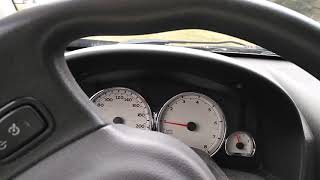
- Whining or grinding noise from the transmission 🎬 Watch: Hear what a failing VTi transmission sounds like while driving.
- Harsh or erratic engagement into gear, sometimes with a loud jerk.
- Complete loss of movement in Drive or Reverse. 🎬 See this guide on common signs your CVT is failing.
- Failure to engage Drive when the vehicle is warm, but Reverse works.
- Applying diagnostic steps for P1776 from other manufacturers (like Chrysler or Nissan) to this vehicle.
- Replacing the Transmission Control Module (TCM) when the transmission itself has a catastrophic internal mechanical failure.
Most Likely Causes
- Catastrophic Internal CVT Failure 🔴 High Probability The VTi VT25-E transmission is widely known for a high rate of failure, often due to the internal steel push belt breaking or internal seals failing. The failure rate is estimated to be near 90% by 100,000 miles. These transmissions were considered non-serviceable by many dealers.
How to confirm: Diagnosis by a transmission specialist is required. This often involves checking for specific fault codes with an advanced scanner, checking fluid condition (if possible), and ultimately, internal inspection or confirmation of no-power transfer.
Typical fix: Complete replacement of the transmission with a remanufactured unit or a used unit from a donor vehicle. Some owners have attempted to swap in a conventional 4-speed automatic from other GM vehicles, but this is a complex, custom job requiring different control modules and wiring.
Est. part cost: $2000-$4500 - Transmission Control Module (TCM) Failure ⚪ Low Probability → Shop Transmission Assembly While less common than mechanical failure, electronic modules can fail from heat and vibration. However, a faulty TCM is often misdiagnosed when the root cause is the transmission itself.
How to confirm: A professional scan tool that can communicate with the TCM is needed to check for communication errors and internal faults. A key indicator is if the scanner cannot communicate with the TCM at all.
Typical fix: Replacement of the TCM and potentially reprogramming. It's critical to ensure the replacement TCM is for the VTi CVT, as modules from other transmissions are not compatible.
Est. part cost: $100-$300
Diagnosis Steps
- Verify the presence of the P1776 code with a high-quality OBD-II scanner capable of reading transmission codes.
- Check and document any other stored trouble codes, especially P0700, which confirms a transmission-specific fault.
- Recognize that the definition for P1776 is uncertain for this vehicle and avoid replacing parts based on definitions from other car brands.
- Check transmission fluid level and condition. Note that this model does not have a traditional dipstick, making this difficult without shop equipment. Dark, burnt, or metallic fluid indicates severe internal wear.
- Given the extremely high probability of major internal failure with the VTi CVT, the most prudent step is to have the vehicle towed to a reputable transmission shop for professional diagnosis.
- A professional will use an advanced scan tool to check for communication with the TCM and monitor any available data PIDs before recommending an internal inspection or transmission replacement.
Parts You'll Likely Need
- Remanufactured VTi VT25-E CVT Transmission — Due to the extremely high failure rate of this transmission and the lack of available new internal parts, complete replacement is the most common and often only viable repair for a serious internal fault.
Trusted brands: Jasper Engines & Transmissions, Certified Transmission
OEM price range: N/A
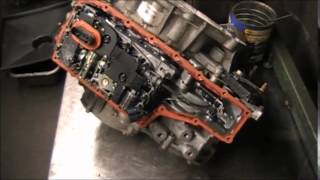
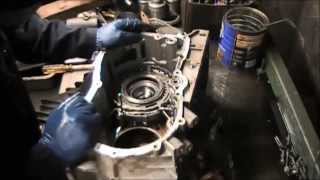
Aftermarket price range: $2500-$4500 - CVT Push Belt — For specialists attempting a rebuild, the steel push belt is the most common point of failure. 🎬 Watch: A mechanic's teardown of the Saturn Vue CVT unit. Aftermarket belts are available.
OEM price range: N/A
Aftermarket price range: $60-$100
Related Codes That Often Appear With This One
- P0700 (Transmission Control System Malfunction): This is a generic code indicating the TCM has stored a fault.
- P0717 (Input/Turbine Speed Sensor Circuit No Signal): A loss of signal from this sensor can occur during transmission failure.
- P0741 (Torque Converter Clutch Circuit Performance or Stuck Off): Can be triggered by internal hydraulic pressure loss related to a larger failure.
Technical Service Bulletins (TSBs) & Recalls
- TSB #03-07-30-051A: Addresses a low-speed grind noise, hesitation, or lack of power on 2003-2004 Vues with the VT25-E. The fix involves reprogramming the TCM and adding a new fluid additive, but it does not apply to a catastrophic failure.
Platform-Specific Known Issues
- The VTi (VT25-E) CVT transmission used from 2002-2005 is a known major failure point on these vehicles, with a failure rate approaching 90% by 100,000 miles.
- A class-action lawsuit was filed against GM regarding the high failure rate of this transmission in Saturn Vue and Ion models, which was eventually settled.
- Production of this transmission was halted in early 2004 due to durability concerns with the steel push belt.
- Even replacement transmissions were known to fail, with some owners reporting being on their third or fourth unit.
Mechanic-Grade Diagnostic Values
- Transmission Fluid Temperature (TFT) Sensor Voltage — expected: 0.24V to 5.0V. Failure: A voltage reading below 0.24V will set a P0712 (Low Input) code.
- Continuity check on sensor wiring harness — expected: Close to 0 ohms. Failure: A reading of OL (Open Line) indicates a break in the wire. A resistance value significantly higher than 1 ohm indicates high resistance in the circuit, which can cause sensor errors.
- Sensor Reference Voltage (VREF) from TCM/PCM — expected: 4.0 to 6.0 volts. Failure: A voltage outside this range indicates a problem with the control module's power supply or an internal fault.
Hidden / Shadow Codes Worth Checking
- Manufacturer-Specific Internal Codes: The P1776 code is not listed in official GM diagnostic trouble code charts for the VT25-E transmission. This strongly suggests that P1776 is a generic fault reported by the PCM when the TCM has stored a more specific, non-public fault code internally. These internal codes can often only be read by a dealer-level scan tool like the GM Tech2. (see via GM Tech2 or equivalent high-end diagnostic scanner with manufacturer-specific software.)
Wiring & Ground Locations
- G105 — At the left rear of the engine.. This is a primary engine harness ground. A poor connection here can cause erratic behavior from multiple components, including the TCM and its sensors, potentially leading to phantom or incorrect trouble codes.
- Main Engine Harness Ground — On the back of the engine block, located above the starter and directly under the #4 intake manifold runner, secured by a 10mm bolt with two ring terminals.. This is a critical ground point for the engine controls. Corrosion or a loose connection here is a known cause for various electrical issues and could theoretically trigger an undefined transmission code as the TCM loses a reliable ground reference.
- TCM (Transaxle Control Module) — In the engine compartment on the left side, near the underhood fuse block.. Knowing the physical location is essential for visually inspecting the module and its connectors for corrosion, damage, or loose connections, which should be done before condemning the module itself.
Real Owner Repair Stories
- SaturnFans.com Forum (2003-2004 Saturn Vue with VTi CVT) — Complete transmission failure.
❌ Tried (didn't work) Replacing the failed VTi CVT with another used or remanufactured VTi unit, only to have it fail again.
✅ What actually fixed it A complete conversion from the VTi CVT to a conventional automatic transmission (like the 4-speed 4T45-E) or a 5-speed manual transmission from a donor vehicle. This is a complex job that requires swapping the transmission, axles, ECM, TCM, and modifying the wiring harness, but is considered a permanent fix.
OEM Part Supersession History
Varies by year→24222126 (for 2003-2005 models)— Module updates and consolidation.
Heads up: The Transmission Control Module (TCM) for the VTi CVT is VIN-specific. A replacement module, whether new or from a salvage yard, MUST be reprogrammed with the vehicle's VIN using dealer-level software to function. It is not a plug-and-play part.
Model Year Variations Within This Range
- 2002-2005 (I4 Engine Only): The problematic VTi CVT was only ever paired with the 2.2L L61 I4 engine. V6 models used a conventional 5-speed automatic transmission (and switched to a Honda-sourced V6 and transmission in 2004) and are not affected by this issue.
- 2005: For the 2005 model year, GM began phasing out the VTi CVT and offered a conventional 4-speed automatic transmission as an option for the 4-cylinder Vue. Therefore, not all 2005 4-cylinder Vues have the problematic CVT.
Diagnostic Flowchart
Other Known Issues on This Vehicle
Issues unrelated to this code that are worth knowing about as an owner of this generation:
- 2.2L Ecotec Timing Chain Failure 🔴 High — Common around 100,000 miles. Symptoms include a rattling noise on cold startup. Failure can cause catastrophic engine damage. (Ref: TSB #03-06-01-017 was issued to install an updated oiler nozzle to improve lubrication for 2002-2003 models.)
- Ignition Switch Failure / Recall 🔴 High — Widespread enough to trigger a major recall (GM Recall No. 14350). The key could be removed when not in the 'Off' position, leading to vehicle rollaway. (Ref: NHTSA RECALL 14V490000)
- Cracked Polymer Body Panels 🟡 Low — The plastic/polymer door and fender panels for which Saturn was known can become brittle with age and UV exposure, leading to cracks, especially from minor impacts.
- Faulty Ignition Coil Module (2.2L Ecotec) 🟠 Medium — The ignition coil cassette (or module) that sits atop the spark plugs is a very common failure item, causing engine misfires (e.g., P0300, P0304).
Used vs. New Parts: Buying Guide for This Vehicle
When a used part is the smart pick: For the VTi VT25-E transmission, a used part almost never makes sense. Given the near-90% failure rate by 100,000 miles, a used unit is considered a 'timebomb' by the owner community. It should only be considered as a very low-cost, short-term solution to make the vehicle drivable for sale, with full disclosure.
Donor-vehicle mileage cap: roughly under 60000 miles for the part to have meaningful remaining life.
What to inspect on the donor part:
- Verify the donor vehicle's mileage is as low as possible.
- If possible, ask for a video of the donor car driving and shifting before it was dismantled.
- Check the color and smell of the fluid from the donor unit if accessible. Any dark, burnt, or metallic appearance is a red flag.
- A warranty from the salvage yard is essential, but be prepared for labor costs not to be covered if the used unit fails.
OEM-only on this vehicle (don't cheap out):
- Transmission Control Module (TCM) - While the part itself can be used, it requires OEM-level software (e.g., via a Tech2 scanner) to be reprogrammed to the new vehicle's VIN. An unprogrammed module will not work.
Aftermarket brands forum-validated for this vehicle:
- Jasper Engines & Transmissions: A widely known remanufacturer with a nationwide warranty, making it a common choice for shops.
- Certified Transmission: Another major remanufacturer often cited as an alternative to Jasper.
Brands owners have reported issues with on this vehicle:
- Jasper Engines & Transmissions (contentious): Despite being a common choice, some professional transmission rebuilders on forums strongly advise against Jasper, citing quality control issues and preferring to work with trusted local, independent transmission shops.
Real Owner Stories
Aggregated from forums and TSBs cited above. Mileages and costs reflect what owners reported in those sources.
2002-2005 Saturn Vue VTi — ~95000 miles
Symptoms: Repeated transmission failures, requiring multiple replacements.
What fixed it: Complete replacement of the transmission.
Cost: $2000-$4500
Source hint: Edmunds.com Car Forums: A lengthy thread under 'Saturn Vue Transmission Problems' where a user notes, 'I'm on my 4th Transmission replacement!'
2003-2004 Saturn Vue VTi
Symptoms: Slipping, noises, and sudden failure.
What fixed it: Complete replacement of the transmission with a remanufactured unit or a used unit from a donor vehicle.
Cost: $2000-$4500
Source hint: SaturnFans.com: A thread titled 'Avoid 03 04 CVT (VTI) Transmissions = Junk'
2004 Saturn Vue VTi
Symptoms: Unspecified transmission failure symptoms leading to discussions about the futility of repair.
What fixed it: Complete replacement of the transmission, as repair is considered futile and swapping in a different transmission type is complex due to incompatible control modules.
Cost: $2000-$4500
Source hint: CarTalk Community: In a thread titled '04 Saturn Vue need help with transmission!'
Related OBD-II Codes
Frequently Asked Questions
My 2004 Saturn Vue has a P1776 code. Is a used transmission a good idea for a replacement?
Will the fix from TSB #03-07-30-051A solve the catastrophic failure indicated by P1776?
I was told the Transmission Control Module (TCM) is the problem. Is this likely?
Why is the transmission in my 2002-2005 Saturn Vue so unreliable?
How can I check the transmission fluid level on my Vue VTi?
My 2003 Saturn Ion has the same symptoms. Does it have the same problematic transmission?
Helpful Videos

We Have This Part in Stock

The information in this article is provided for general reference and educational purposes only. Vehicle specifications, procedures, and part compatibility can vary by production date, trim level, and region. Always consult your vehicle's factory service manual and verify part numbers before purchasing or performing repairs. Safety-critical components such as airbags, seat belts, and braking systems should be installed by a qualified professional.
- Saturn Vue:
- 🧭 Diagnostic Flowchart
- 🎬 Helpful Videos
- 🛍️ Shop This Part
- What's Unique About the 2002-2005 Saturn Vue
- Symptoms You May Notice
- Most Likely Causes
- Diagnosis Steps
- Parts You'll Likely Need
- Related Codes That Often Appear With This One
- Technical Service Bulletins (TSBs) & Recalls
- Platform-Specific Known Issues
- Mechanic-Grade Diagnostic Values
- Hidden / Shadow Codes Worth Checking
- Wiring & Ground Locations
- Real Owner Repair Stories
- OEM Part Supersession History
- Model Year Variations Within This Range
- Other Known Issues on This Vehicle
- Used vs. New Parts: Buying Guide for This Vehicle
- Real Owner Stories
- 2002-2005 Saturn Vue VTi — ~95000 miles
- 2003-2004 Saturn Vue VTi
- 2004 Saturn Vue VTi
- Related OBD-II Codes
- Frequently Asked Questions
- 🎟️ Get 5% Off