

P1778 on 2011-2015 Kia Optima: Transmission Solenoid Fault Causes and Fixes
On a 2011-2015 Kia Optima with a 6-speed automatic, P1778 is almost always a failed transmission solenoid. The fix involves replacing the specific solenoid inside the transmission oil pan, not the entire transmission.
- P1778 on a 2011-2015 Optima is a transmission solenoid fault, NOT a CVT stepper motor issue.
- The most likely cause is a failed 'Engine Clutch Solenoid' or 'TCC Solenoid' inside the transmission.
- The fix is to replace the faulty solenoid and, preferably, the internal wiring harness. Do NOT replace the entire transmission.
- This is a very common issue across many Hyundai and Kia models that use the A6-family 6-speed automatic transmission.
What's Unique About the 2011-2015 Kia OPTIMA
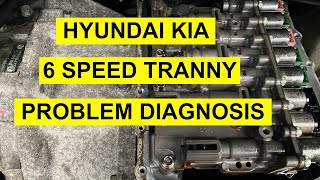
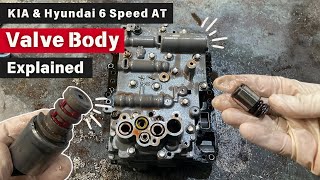
Many online resources incorrectly define P1778 as a 'Stepper Motor' fault related to Continuously Variable Transmissions (CVTs), which is a common and well-documented problem for Nissan vehicles. This is completely wrong for the 2011-2015 Kia Optima, which uses a conventional 6-speed automatic (A6MF1/A6MF2 family). 🎬 Watch: Diagnostic guide for Kia transmission and solenoid issues. Applying the Nissan diagnosis would lead to confusion and incorrect repairs. Kia has specifically identified this code in TSB TSBTRA051R1 as a solenoid failure, providing a clear diagnostic path that avoids misdiagnosis and unnecessary, expensive repairs like replacing the entire transmission.
Diagnostic Flowchart
Tap your situation to follow the diagnostic path that matches what you're seeing on this vehicle.
Symptoms You May Notice
- Check Engine Light is on
- Harsh or erratic shifting, sometimes described as a 'slip-bump' or 'flare' between gears
- Delayed gear engagement from Park to Drive or Reverse
- Transmission may enter 'limp mode' (stuck in one gear, typically 3rd)
- Poor acceleration
- Shuddering at certain speeds, which can be mistaken for TCC shudder
- Replacing the entire transmission. The official Kia TSB explicitly states to replace the solenoids and warns *not* to replace the transaxle for this code.
- Confusing the issue with a CVT 'stepper motor' problem due to incorrect information online for Nissan vehicles.
Most Likely Causes
- Failed Engine Clutch / TCC Solenoid 🔴 High Probability → Shop Transmission Valve Body Kia and Hyundai issued Technical Service Bulletins (TSBTRA051R1 and 19-AT-015H) specifically to address the high failure rate of this and other solenoids in their 6-speed automatic transaxles. The internal wiring harness is also noted as a high-failure component.
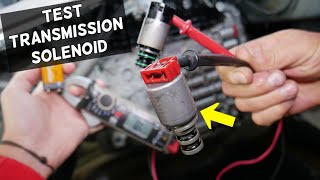
How to confirm: A technician can test the solenoid's resistance with a multimeter after accessing the valve body. The resistance for the on/off solenoids (like the TCC solenoid) should be around 10-11 ohms. A reading of infinity (open) or zero (short) confirms failure. Other solenoids, the Variable Force Solenoids (VFS), will read approximately 5.1-5.3 ohms.
Typical fix: Replace the faulty solenoid. The repair is performed by removing the transmission oil pan to access the valve body where the solenoids are mounted. Many technicians recommend replacing the entire set of 8 solenoids and the internal harness at the same time due to the high labor overlap and common failure rate of all components.
Est. part cost: $80-$150 for a single OEM solenoid, or $150-$250 for a complete aftermarket solenoid kit. - Internal Transmission Wiring Harness Damage 🟡 Medium Probability → Shop Transmission Assembly The internal harness is exposed to heat and transmission fluid, which can cause it to become brittle and fail over time. This is a known weak point in the A6xx series transmissions.
How to confirm: Visually inspect the wiring harness connected to the solenoids for any signs of damage, corrosion, burnt pins, or loose connections once the transmission pan is removed.
Typical fix: Replace the internal harness assembly. This is often done concurrently with solenoid replacement as a preventative measure. The OEM part number is typically 46307-3B650 or similar.
Est. part cost: $50-$100 - Low or Dirty Transmission Fluid ⚪ Low Probability → Shop Transmission Assembly While not a direct cause of an electrical code, fluid that is low or degraded can cause solenoids to work harder and overheat, leading to premature failure. These are 'sealed for life' transmissions with no dipstick, discouraging fluid checks and changes.
How to confirm: Check the transmission fluid level and condition via the fill and overflow plugs on the side of the transmission case. Fluid should be at the correct level, red in color, and not smell burnt. This must be done with the vehicle level and at a specific fluid temperature (122-140°F / 50-60°C).
Typical fix: Perform a transmission fluid drain-and-fill. This is required as part of the solenoid replacement anyway.
Est. part cost: $60-$150 for fluid
Rare But Worth Checking
- Faulty Powertrain Control Module (PCM) or Transmission Control Module (TCM): → Shop Transmission Assembly This is very rare and should only be considered after the solenoid, wiring, and connectors have been confirmed to be good. The TSB suggests this as a final step if DTCs return after solenoid and harness replacement.
- Worn Valve Body Bores: → Shop Transmission Valve Body Gears Magazine notes that valve body bore wear is a significant issue even at lower mileages (as low as 40k miles), causing various shift quality complaints that can mimic solenoid issues. If solenoids and wiring check out, a worn valve body could be the root cause.
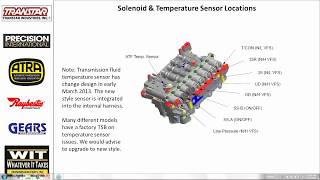
- Faulty Transmission Fluid Temperature Sensor: → Shop Transmission Assembly An out-of-spec transmission fluid temperature sensor can cause a variety of shifting issues and is a well-documented problem. While it may not directly set P1778, the resulting erratic transmission behavior can put stress on solenoids. The sensor is located on the internal wiring harness.
Diagnosis Steps
- Scan the vehicle's computer to confirm P1778 and check for any other related transmission codes.
- Check the transmission fluid level and condition. This requires the vehicle to be level and the fluid to be at operating temperature (122-140°F). Low or burnt fluid can indicate larger problems.
- Lift the vehicle and inspect the external transmission wiring and connectors for any visible damage.
- If external checks are clear, drain the transmission fluid and remove the transmission oil pan (or side cover, depending on model).
- Visually inspect the internal wiring harness leading to the solenoid pack for brittle wires, burnt pins, or damage.
- Locate the specific solenoid associated with P1778 (TCC Solenoid). It is one of eight solenoids on the valve body.
- Test the solenoid's resistance using a multimeter. Disconnect the harness and probe the two pins on the solenoid. The resistance should be approximately 10-11 ohms for the on/off type solenoids. An open circuit (infinite resistance) or a short (near-zero resistance) indicates a failed solenoid.
- If the solenoid tests good, inspect the wiring harness for continuity between the connector and the solenoid pins.
- If the solenoid and harness are good, the fault may lie in the TCM, but this is highly unlikely and should be the last resort.
Parts You'll Likely Need
- Automatic Transmission Control Solenoid (TCC)
(OEM #46313-3B030)— This is the specific ON/OFF solenoid identified by Hyundai/Kia for the TCC circuit, which triggers P1778. It is one of several solenoids on the valve body.
Trusted brands: Kia/Hyundai (OEM), Standard Motor Products (TCS28), Duralast (TCS28)
OEM price range: $90-$140
Aftermarket price range: $70-$120 - Complete Solenoid Kit (8-piece)
(OEM #N/A (Aftermarket Kit))— Due to the high labor cost and the tendency for other solenoids to fail, many owners and shops opt to replace all 8 solenoids at once. Kits are available from aftermarket suppliers.
Trusted brands: Sheng Hai, Various unbranded kits on eBay/Amazon
OEM price range: N/A
Aftermarket price range: $150-$250 - Internal Transmission Wiring Harness
(OEM #46307-3B650)— This is a known high-failure part. It is highly recommended to replace it during a solenoid service to prevent a repeat repair for a different solenoid code in the near future.
Trusted brands: Kia/Hyundai (OEM)
OEM price range: $50-$100
Aftermarket price range: $40-$80 - Transmission Pan Gasket or RTV Sealant
(OEM #UM010 CH046)— The transmission pan must be removed for the repair, requiring a new seal upon reinstallation. The TSB specifies a new gasket for plastic pans and RTV sealant for steel pans.
Trusted brands: Kia (OEM), Permatex
OEM price range: $20-$40
Aftermarket price range: $10-$20
Related Codes That Often Appear With This One
- P0741 — Torque Converter Clutch System fault, part of the same solenoid family addressed in TSB TSBTRA051R1.
- P0743 — Torque Converter Clutch Solenoid circuit fault, part of the same solenoid family addressed in TSB TSBTRA051R1.
- P0753 — Shift Solenoid 'A' Electrical fault, part of the same solenoid family addressed in TSB TSBTRA051R1.
- P0758 — Shift Solenoid 'B' Electrical fault, part of the same solenoid family addressed in TSB TSBTRA051R1.
- P0763 — Shift Solenoid 'C' Electrical fault, part of the same solenoid family addressed in TSB TSBTRA051R1.
- P0768 — Shift Solenoid 'D' Electrical fault, part of the same solenoid family addressed in TSB TSBTRA051R1.
- P0773 — Shift Solenoid 'E' Electrical fault, part of the same solenoid family addressed in TSB TSBTRA051R1.
- P2709 — Shift Solenoid 'F' Electrical fault, part of the same solenoid family addressed in TSB TSBTRA051R1.
Technical Service Bulletins (TSBs) & Recalls
- TSBTRA051R1: '6 SPD A/T SOLENOID REPLACEMENT – MULTIPLE DTCS' - This is the primary Kia bulletin confirming P1778 is a solenoid issue on 6-speed automatics and providing the repair procedure. It explicitly states not to replace the transaxle for this code.
- Hyundai 19-AT-015H (supersedes 14-AT-003): 'ATM SOLENOID DTC...' - This is the Hyundai equivalent TSB, covering a wide range of models including the Sonata, Elantra, and Santa Fe. It provides identical guidance and part information, confirming the issue is systemic to the transmission family, not just the Optima.
Platform-Specific Known Issues
- Known Solenoid & Harness Failure: A widespread issue with solenoid and internal harness failure in the A6MF/A6GF 6-speed automatic transmission prompted Kia/Hyundai to issue TSBs TSBTRA051R1 and 19-AT-015H. These bulletins cover code P1778 among others and explicitly advise replacing the solenoid(s) and harness, not the entire transmission.
- Owner Repair Story: 2011 Hyundai Sonata 2.4L: An owner on a forum with a Sonata (platform mate) reported a P0741 code (often seen with P1778) and harsh shifting. After confirming the TCC solenoid was bad via a resistance test (it showed an open circuit), they replaced the entire solenoid block and internal harness. The repair cost them around $300 in parts and took an afternoon. They reported the transmission shifted 'like new' afterward, highlighting the effectiveness of replacing the solenoids and harness together as a set.
Mechanic-Grade Diagnostic Values
- Resistance of TCC Solenoid (On/Off type) — expected: 10 - 11 ohms. Failure: A reading of infinity (open circuit) or near-zero (short circuit).
- Resistance of Variable Force Solenoids (VFS) — expected: 5.1 - 5.3 ohms. Failure: A reading significantly outside this range indicates a faulty VFS solenoid.
- Transmission Fluid Temperature Sensor Resistance — expected: ~2500 Ohms (2.5k Ohms) at 68°F (20°C). Failure: A reading far from this value at the specified temperature suggests a faulty sensor, which can cause incorrect shifting behavior.
Scan Tool Commands That Help
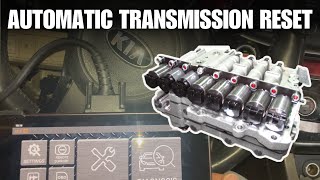
- Kia GDS/KDS (or compatible Autel/Launch scanner): Resetting Auto T/A Values / Init Of TCU Learning — This function must be performed after replacing the transmission, valve body, solenoids, or TCM/PCM to clear the learned shift adaptations. Failure to reset adaptations can result in continued poor shift quality even after the repair is complete.
- Kia GDS/KDS: Actuation Test — This bidirectional test allows a technician to command the TCM to activate specific solenoids. By listening with a stethoscope, a technician can confirm if a solenoid is mechanically clicking, which helps verify the integrity of the wiring and the solenoid's basic function before removing the oil pan.
Wiring & Ground Locations
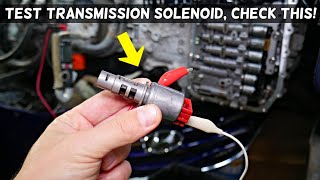
- TCC Solenoid — On the valve body, inside the transmission side pan. It is typically a red-colored, normally-low (NL) variable force solenoid.. This is the specific component that P1778 refers to on non-hybrid models. Correctly identifying it among the eight other solenoids is critical for the repair.
- Main Transmission Connector — External 16-pin connector on the side of the transmission case, connecting the main vehicle harness to the internal transmission harness.. This is the primary point for external electrical testing of the solenoid circuits before opening the transmission. A poor connection or corrosion here can cause P1778.
- Transmission Ground Wire — A ground strap or wire connecting the transmission case directly to the vehicle's chassis or the negative battery terminal.. A loose or corroded transmission ground can cause a floating ground, leading to erratic voltage signals and potentially triggering electrical fault codes for various sensors and solenoids.
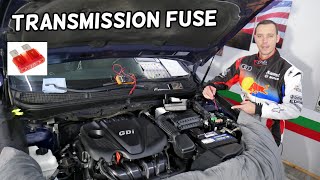
- TCU Fuse (20A) — Located in the engine compartment fuse box, labeled 'TCU'.. This fuse supplies power to the Transmission Control Module. While a blown fuse would likely cause more codes than just P1778, checking it is a fundamental first step in diagnosing any transmission electrical issue.
Real Owner Repair Stories
- YouTube video by 'MotorCarNut' (2015 Kia Optima (A6MF1 Transmission)) — The video addresses general shift quality issues (slip bump, flare up, harsh engagement) that are commonly associated with solenoid failure codes like P1778.
❌ Tried (didn't work) The video focuses on diagnosis rather than failed attempts, but implies that simply changing the fluid without addressing the hardware is often insufficient.
✅ What actually fixed it The video demonstrates the process of accessing the valve body, testing the solenoids with a multimeter to confirm their resistance values (5 ohms for VFS, 10 ohms for on/off), and recommends replacing any that are out of spec.
OEM Part Supersession History
46307-3B610, 46307-3B620→46307-3B650— Part revision and consolidation by the manufacturer.
Heads up: The newer 46307-3B650 harness is the correct replacement for the earlier versions.46313-3B020→46313-3B030— Part revision by the manufacturer.
Heads up: 46313-3B030 is the direct replacement for the TCC solenoid.
Model Year Variations Within This Range
- 2014-2015: For the 2014 model year, the Optima received a facelift with redesigned bumpers and lights, and interior updates including new screens and seats. However, the core powertrain options, including the 2.4L and 2.0L Turbo engines with the 6-speed automatic (A6MF family), remained fundamentally the same, meaning the causes and fixes for P1778 are consistent across the 2011-2015 range.
Helpful Videos





We Have This Part in Stock



The information in this article is provided for general reference and educational purposes only. Vehicle specifications, procedures, and part compatibility can vary by production date, trim level, and region. Always consult your vehicle's factory service manual and verify part numbers before purchasing or performing repairs. Safety-critical components such as airbags, seat belts, and braking systems should be installed by a qualified professional.
- Kia OPTIMA:
- 🧭 Diagnostic Flowchart
- 🎬 Helpful Videos
- 🛍️ Shop This Part
- What's Unique About the 2011-2015 Kia OPTIMA
- Symptoms You May Notice
- Most Likely Causes
- Rare But Worth Checking
- Diagnosis Steps
- Parts You'll Likely Need
- Related Codes That Often Appear With This One
- Technical Service Bulletins (TSBs) & Recalls
- Platform-Specific Known Issues
- Mechanic-Grade Diagnostic Values
- Scan Tool Commands That Help
- Wiring & Ground Locations
- Real Owner Repair Stories
- OEM Part Supersession History
- Model Year Variations Within This Range
- 🎟️ Get 5% Off