

P1778 on 2011-2014 Kia Optima Hybrid: Engine Clutch Solenoid Fault Causes and Fixes
On a 2011-2014 Kia Optima Hybrid, code P1778 indicates a fault with the 'Engine Clutch Solenoid' inside the transmission. This is a known issue covered by a Kia TSB. The fix is to replace the faulty solenoid and often the internal wiring harness, not the entire transmission.
- P1778 on a 2011-2014 Optima Hybrid points to a faulty 'Engine Clutch Solenoid', not a 'Stepper Motor'.
- This is a known issue covered by Kia TSB #TSBTRA051R1 and Hyundai TSB #14-AT-003.
- The correct repair is to replace the solenoid(s) and likely the internal wiring harness (P/N 46307-3B650) inside the transmission, not the entire assembly.
- Symptoms typically include harsh shifting, 'Hybrid System Error' warnings, and the transmission entering 'limp mode'.
- Due to the complexity, professional service is strongly recommended for this repair.
What's Unique About the 2011-2014 Kia OPTIMA HYBRID
It is critical to understand that P1778 on this Kia is NOT the same as on many other vehicles, like Nissan. Many generic code databases incorrectly define P1778 as a 'Stepper Motor' fault related to Continuously Variable Transmissions (CVTs). The 2011-2014 Kia Optima Hybrid uses a conventional 6-speed automatic transaxle (specifically the A6MF2H, part of the A6MF family), not a CVT. Applying the Nissan diagnosis is completely wrong and will lead to confusion. Kia has acknowledged this specific solenoid issue in Technical Service Bulletin (TSB) TRA051R1, confirming it's a known problem with a specific fix for the 'Engine clutch solenoid (HEV)'.
Diagnostic Flowchart
Tap your situation to follow the diagnostic path that matches what you're seeing on this vehicle.
Symptoms You May Notice
- Check Engine Light is on
- "Hybrid System Error" warning on the dash
- Harsh, erratic, or delayed shifting
- Transmission gets stuck in a single gear (limp mode, often 3rd gear)
- Poor or sluggish acceleration
- Shuddering or jerking when the gasoline engine engages
- Delayed engagement when shifting from Park to Drive or Reverse
- Replacing the entire transmission assembly. The official TSB explicitly advises against this, stating that only the solenoids need replacement.
- Diagnosing a 'Stepper Motor' failure. This is the correct diagnosis for a Nissan with a CVT, but is completely incorrect for this Kia's 6-speed automatic transmission.
Most Likely Causes
- Failed Engine Clutch Solenoid 🔴 High Probability This is a known failure point for the A6MF family of transmissions, as documented by Kia's own Technical Service Bulletin (TSBTRA051R1). The solenoids are subject to heat and constant electro-mechanical cycles, leading to eventual failure of the internal coil windings.
How to confirm: A technician will use a scan tool to confirm the code, then test the solenoid's resistance from the main transmission connector. 🎬 Watch: How to diagnose and test solenoids on Kia models A reading that is out of specification (e.g., an open circuit instead of the expected ~5.1 ohms) confirms the failure. The TSB specifically identifies the 'Engine clutch solenoid (HEV)' for code P1778.
Typical fix: Replace the faulty solenoid. The TSB recommends replacing a set of solenoids and the internal wiring harness at the same time for reliability.
Est. part cost: $95-$350 - Faulty Internal Transmission Wiring Harness 🟡 Medium Probability → Shop Transmission Assembly The wiring harness inside the transmission (Part # 46307-3B650) is subjected to constant heat and immersion in fluid, which can cause it to become brittle and fail over time, leading to opens or shorts. It is a very common failure point along with the solenoids.
How to confirm: During solenoid replacement, the technician should perform a continuity and resistance check on the harness itself. Visual inspection may reveal brittle or cracked insulation. Often, it's replaced preventatively due to its high failure rate.
Typical fix: Replace the internal transmission wiring harness (OEM Part #46307-3B650). This is often done whenever the valve body is accessed for solenoid replacement.
Est. part cost: $100-$200 - Low or Dirty Transmission Fluid ⚪ Low Probability → Shop Transmission Assembly These transmissions are often marketed as 'sealed for life' with no dipstick, which discourages routine fluid checks and changes. Over time, fluid breakdown can contribute to component overheating and failure.
How to confirm: Check the transmission fluid level and condition via the fill and overflow plugs on the side of the transmission case. This must be done at a specific temperature (typically 122°F-140°F / 50°C-60°C). Fluid should be at the correct level, red in color, and not smell burnt.
Typical fix: Perform a transmission fluid drain and fill using the correct Kia-specified fluid (SP-IV). If the fluid is very dark or contains debris, it may indicate more severe internal wear.
Est. part cost: $75-$150
Rare But Worth Checking
- Faulty Powertrain Control Module (PCM): This is extremely rare. The PCM should only be considered after all other possibilities, including solenoids and all wiring (internal and external), have been exhaustively tested and ruled out. The related Hyundai TSB advises this as a last resort after replacing the solenoid, harness, and external harness.
Diagnosis Steps
- Verify the code with a professional OBD-II scanner.
- Check the transmission fluid level and condition, ensuring the vehicle is at the correct operating temperature (122°F-140°F / 50°C-60°C). Top off or change if necessary.
- Inspect the external transmission wiring harness and connectors for any visible damage, corrosion, or loose connections.
- Using a multimeter, test the resistance of the Engine Clutch Solenoid circuit from the main transmission connector. Compare the reading to the manufacturer's specification of 5.1 ± 0.3 Ohms at 77°F (25°C). An open or shorted reading points to a problem in the circuit.
- If the circuit test fails, drop the transmission oil pan to access the valve body.
- Visually inspect the internal wiring harness (P/N 46307-3B650) for damage.
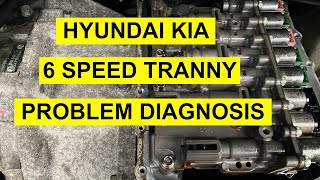
- Test the solenoid directly at its connector on the valve body. 🎬 Watch: How to test the transmission solenoid with a multimeter
- If the solenoid fails the test, replace it. It is highly recommended to replace the entire solenoid kit and internal harness as per TSB TSBTRA051R1.
- Reassemble the transmission with a new pan gasket and fill with the correct type and amount of Kia-specified transmission fluid (SP-IV).
- Clear the trouble codes and use a Kia GDS/KDS scan tool to perform the "Resetting Auto T/A Values" function.
- Perform the adaptive value relearn procedure by driving the vehicle through all gears at a low throttle opening (10-20%) multiple times to ensure smooth shifting.
Parts You'll Likely Need
- Transmission Solenoid Kit
(OEM #46313-3B030 (common individual solenoid))— This is the most common failure part for code P1778, as identified by Kia's TSB. Replacing the full set is recommended for long-term reliability.
Trusted brands: Kia (OEM), Hyundai (OEM), Rostra, Standard Motor Products
OEM price range: $250-$400
Aftermarket price range: $150-$300 - Internal Transmission Wire Harness
(OEM #46307-3B650)— Often fails along with the solenoids due to heat and fluid exposure. It is best practice to replace it when the valve body is accessed.
Trusted brands: Kia (OEM), Hyundai (OEM)
OEM price range: $100-$200
Aftermarket price range: $70-$150
Related Codes That Often Appear With This One
- P0741 — Relates to the Torque Converter Clutch solenoid circuit, which is part of the same solenoid group and covered by the same TSB.
- P0743 — Relates to the Torque Converter Clutch solenoid electrical, part of the same system.
- P0753, P0758, P0763, P0768, P0773 — These are all codes for other shift solenoids (A, B, C, D, E) in the same valve body. The TSB groups them with P1778, indicating a common failure of the solenoid pack.
Technical Service Bulletins (TSBs) & Recalls
- TSBTRA051R1: Addresses multiple solenoid-related DTCs, including P1778, and instructs technicians to replace the 'Engine clutch solenoid (HEV)' rather than the entire transaxle.
- Hyundai 19-AT-015H: The equivalent TSB from Hyundai for the same transmission family, corroborating the diagnosis and repair procedure.
Platform-Specific Known Issues
- The 6-speed automatic transaxle (A6MF2H) used in this generation of Optima and Sonata Hybrids has a documented history of solenoid and internal harness failure, leading to the issuance of TSB TSBTRA051R1.
Mechanic-Grade Diagnostic Values
- Engine Clutch Solenoid (EC-VFS) Resistance — expected: 5.1 ± 0.3 Ohms at 25°C (77°F). Failure: A reading that is significantly higher (open circuit) or lower (short circuit) than the specification.
Scan Tool Commands That Help
- Kia GDS (Global Diagnostic System) / KDS: Resetting Auto T/A Values — This function must be used after replacing the transmission, valve body, solenoids, or PCM. It clears the learned shift adaptations from the control module. Failure to perform this reset can result in continued harsh shifting even after the faulty part is replaced.
- Kia GDS (Global Diagnostic System) / KDS: Adaptive Value Re-Learn (Drive Cycle) — This is a specific driving procedure performed immediately after using the 'Resetting Auto T/A Values' function. The technician must drive the vehicle, accelerating gently (10-20% throttle) through all 6 gears and then decelerating to a stop, repeating the cycle 5 times. This 'teaches' the TCM the correct hydraulic pressures for smooth shifts with the new components.
OEM Part Supersession History
46307-3B610, 46307-3B620→46307-3B650— Improvement in materials or design to increase durability and resistance to heat and transmission fluid.
Heads up: The newer harness 46307-3B650 is backward compatible and replaces the older versions. For 2013 and later models, the transmission temperature sensor is integrated into this harness, making it a recommended upgrade for earlier models which had a separate sensor.
Model Year Variations Within This Range
- 2011-2012: The transmission temperature sensor was a stand-alone component. The updated internal wiring harness (46307-3B650) integrates this sensor and is recommended as an upgrade during repair.
- 2013-2014: The transmission temperature sensor is integrated into the main internal wiring harness from the factory. These model years are specifically listed as using the A6MF2H transmission variant.
Helpful Videos


We Have This Part in Stock

The information in this article is provided for general reference and educational purposes only. Vehicle specifications, procedures, and part compatibility can vary by production date, trim level, and region. Always consult your vehicle's factory service manual and verify part numbers before purchasing or performing repairs. Safety-critical components such as airbags, seat belts, and braking systems should be installed by a qualified professional.
- Kia OPTIMA HYBRID:
- 🧭 Diagnostic Flowchart
- 🎬 Helpful Videos
- 🛍️ Shop This Part
- What's Unique About the 2011-2014 Kia OPTIMA HYBRID
- Symptoms You May Notice
- Most Likely Causes
- Rare But Worth Checking
- Diagnosis Steps
- Parts You'll Likely Need
- Related Codes That Often Appear With This One
- Technical Service Bulletins (TSBs) & Recalls
- Platform-Specific Known Issues
- Mechanic-Grade Diagnostic Values
- Scan Tool Commands That Help
- OEM Part Supersession History
- Model Year Variations Within This Range
- 🎟️ Get 5% Off