

P1778 on 2011-2014 Kia Sportage: Transmission Solenoid Fault Guide
On a 2011-2014 Kia Sportage, code P1778 almost always means a specific transmission solenoid has failed inside the 6-speed A6MF1/A6MF2 automatic transmission. This is a widely known issue confirmed by a Kia TSB. The fix involves replacing the faulty solenoid and often the internal wiring harness, not the entire transmission, at a cost of roughly $350-$750 at a shop.
- P1778 on a 2011-2014 Sportage is a transmission solenoid electrical fault, not a CVT 'stepper motor' issue.
- The most likely cause is a failed Torque Converter Clutch (TCC) solenoid inside the transmission.
- Kia issued a TSB (TSBTRA051R1) for this problem, advising the replacement of the solenoid, not the entire transmission.
- This is not a DIY-friendly repair for beginners; professional service is recommended.
- Consider replacing the full solenoid set and internal wiring harness at the same time to save on future labor costs.
What's Unique About the 2011-2014 Kia SPORTAGE
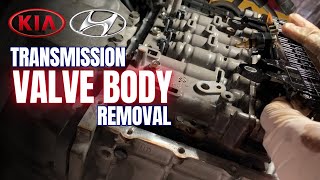
Many online databases and forums incorrectly define P1778 as a 'Stepper Motor' fault. This definition is correct for Nissan vehicles with a Continuously Variable Transmission (CVT), but it is completely wrong for the 2011-2014 Kia Sportage, which uses a conventional 6-speed automatic (A6MF family). Applying the Nissan diagnosis leads to confusion and incorrect repairs. Kia acknowledged a high failure rate for these solenoids by issuing Technical Service Bulletin (TSB) TSBTRA051R1, which specifically instructs technicians to replace the individual solenoids 🎬 Watch: Step-by-step guide to removing and replacing Kia shift solenoids rather than the much more expensive transmission assembly.
Diagnostic Flowchart
Tap your situation to follow the diagnostic path that matches what you're seeing on this vehicle.
Symptoms You May Notice
- Check Engine Light is on
- Harsh, erratic, or delayed shifting
- Transmission getting stuck in one gear (typically 3rd gear, known as 'limp mode')
- Vehicle shuddering at certain speeds
- Poor acceleration
- Delayed engagement when shifting from Park to Drive or Reverse
- Flaring RPMs between shifts
- Replacing the entire transmission assembly. The official Kia TSB TSBTRA051R1 specifically advises against this, recommending the replacement of the individual solenoids instead.
- Confusing the code with a 'Stepper Motor' fault, which applies to different manufacturers (like Nissan) that use CVT transmissions.
Most Likely Causes
- Failed Torque Converter Clutch (TCC) Solenoid 🔴 High Probability Kia and Hyundai issued Technical Service Bulletins (TSBTRA051R1 and 14-AT-003) specifically to address the high failure rate of this and other solenoids in their A6MF 6-speed automatic transaxles.
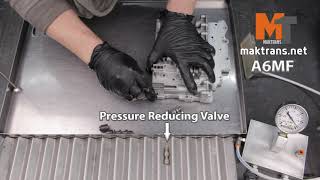
How to confirm: A technician can test the solenoid's resistance with a multimeter after accessing the valve body. The on/off solenoids (typically black connectors, like the TCC solenoid) should have a resistance of around 10-11 ohms. A reading of infinity (open) or zero (short) confirms failure. 🎬 See how to test and clean solenoids on the A6MF1 transmission The TSB also outlines a diagnostic procedure using a GDS scan tool to activate the solenoids.
Typical fix: Replace the faulty solenoid. Many shops and the TSB itself recommend replacing the full set of 8 solenoids and the internal harness at the same time due to the high labor overlap and known failure rates of all components.
Est. part cost: $80-$150 for a single OEM solenoid, $150-$250 for a complete aftermarket kit. - Internal Transmission Wiring Harness Issue 🟡 Medium Probability → Shop Transmission Assembly The internal harness is a known high-failure part, and Kia/Hyundai TSBs often recommend replacing it whenever solenoid work is performed as a preventative measure. The plastic can become brittle from heat cycles, leading to cracked connectors or wires.
How to confirm: Visually inspect the harness for brittle plastic, cracks, or corrosion once the transmission pan is removed. A technician can also test for continuity between the main transmission connector and the PCM.
Typical fix: Replace the internal transmission wiring harness (Part No. 46307-3B650). This is typically done at the same time as solenoid replacement.
Est. part cost: $70-$120 - Low or Contaminated Transmission Fluid ⚪ Low Probability → Shop Transmission Assembly
How to confirm: Check the transmission fluid level and condition. The fluid should be at the correct level, red in color, and not have a burnt smell. This transmission does not have a dipstick and must be checked via a fill/level plug while the vehicle is at operating temperature (122°F~140°F).
Typical fix: Perform a transmission fluid drain and fill using only specified SP-IV fluid. However, if the fluid is very dirty or burnt, it may be a symptom of a larger mechanical issue. This is unlikely to be the sole cause of an electrical code like P1778.
Est. part cost: $60-$150 for fluid
Rare But Worth Checking
- Faulty Powertrain Control Module (TCM/PCM): This is very rare. The TSB advises this as a final step only after replacing the solenoids and harness has failed to resolve the code. The PCM should only be considered as the cause after all other possibilities have been exhaustively tested and ruled out.
Diagnosis Steps
- Scan the vehicle's computer to confirm P1778 and check for any other related transmission codes listed in TSB TSBTRA051R1.
- Check the transmission fluid level and condition. This must be done with the vehicle level and at operating temperature (122°F~140°F) via the side level-checking plug. The fluid should be clean, red, and not have a burnt smell.
- Inspect the external transmission wiring and connectors for any visible damage, corrosion, or loose connections.
- If external checks are clear, drain the transmission fluid and remove the transmission oil pan to access the valve body.
- Visually inspect the internal wiring harness for any signs of damage, such as brittle or cracked plastic connectors.
- Identify the TCC solenoid on the valve body.
- Using a multimeter, test the resistance of the solenoid. It should be approximately 10-11 ohms. An open (infinity) or shorted (zero) reading indicates a failed solenoid.
- If the solenoid tests good, test the wiring harness for continuity from the solenoid connector back to the main transmission connector.
- If the code persists after replacing the likely faulty solenoid and/or harness, the TSB suggests checking the wiring between the transmission and PCM, and as a last resort, replacing the PCM.
Parts You'll Likely Need
- Automatic Transmission Control Solenoid (TCC)
(OEM #46313-3B030)— This is the specific ON/OFF solenoid identified by Kia/Hyundai TSBs for the circuit that triggers code P1778 in non-hybrid models.
Trusted brands: Kia Genuine, Mando, Hyundai Genuine
OEM price range: $90-$140
Aftermarket price range: $50-$90 - Complete Solenoid Kit (8-piece) — Due to the high labor cost to access the valve body and the tendency for other solenoids to fail, many shops replace all 8 solenoids at once as a preventative measure.
Trusted brands: Sonnax, Rostra
OEM price range: N/A
Aftermarket price range: $150-$250 - Internal Transmission Wiring Harness
(OEM #46307-3B650)— This is a known high-failure part and is often replaced alongside the solenoids to prevent future issues. It is a revised part; older versions include 46307-3B610 and 46307-3B620.
Trusted brands: Kia Genuine, Hyundai Genuine
OEM price range: $70-$120
Aftermarket price range: $50-$80
Related Codes That Often Appear With This One
- P0741 — Torque Converter Clutch Circuit Performance or Stuck Off
- P0743 — Torque Converter Clutch Circuit Electrical
- P0748 — Pressure Control Solenoid 'A' Electrical
- P0753 — Shift Solenoid 'A' Electrical
- P0758 — Shift Solenoid 'B' Electrical
- P0763 — Shift Solenoid 'C' Electrical
- P0768 — Shift Solenoid 'D' Electrical
- P0773 — Shift Solenoid 'E' Electrical
- P2709 — Shift Solenoid 'F' Electrical
Technical Service Bulletins (TSBs) & Recalls
- TSBTRA051R1: Addresses the replacement of various shift solenoids on 6-speed automatic transaxles for DTCs including P1778, advising against transaxle replacement.
- Hyundai TSB 14-AT-003: The equivalent bulletin from Hyundai for the same transmission family, also listing P1778 as a solenoid fault.
Platform-Specific Known Issues
- Kia has issued Technical Service Bulletin TSBTRA051R1 regarding this and other solenoid-related codes, instructing technicians to replace the solenoids rather than the entire transaxle. This confirms it is a recognized issue by the manufacturer.
- This solenoid failure is a well-documented weakness across the entire Hyundai/Kia A6MF and A6LF 6-speed transmission family, affecting a wide range of models from 2009 through the late 2010s.
Mechanic-Grade Diagnostic Values
- Resistance of ON/OFF solenoids (e.g., TCC, SSB, SSA) — expected: 10 - 11 Ohms. Failure: A reading of infinity (open circuit) or near zero (short circuit).
- Resistance of Variable Force Solenoids (VFS) — expected: 5.1 - 5.3 Ohms. Failure: A reading significantly outside this range.
- Transmission Fluid Temperature Sensor Voltage — expected: ~3.2 Volts at 104°F (40°C), ~0.29 Volts at 302°F (150°C). Failure: Voltage that does not correspond to the actual fluid temperature, which can cause incorrect shift commands.
Scan Tool Commands That Help
- Kia GDS (Global Diagnostic System): Actuation Test — To individually command each transmission solenoid ON and OFF to verify its mechanical operation (listening for a 'click') and to see if the command triggers a fault code, helping to isolate a specific faulty solenoid or circuit without disassembly.
- Kia GDS (Global Diagnostic System): Vehicle S/W Management — Used to reset transmission adaptive learning values after replacing solenoids or the valve body. Failing to reset adaptives can result in continued poor shift quality even after the repair is complete.
Wiring & Ground Locations
- Transmission Ground — A common grounding point for the transmission is a bolt on the transmission case itself, connected via a strap to the chassis.. A poor transmission ground can cause erratic behavior and incorrect readings for all transmission sensors and solenoids, potentially leading to false codes.
- PCM/TCM Ground — On many Kia models, a primary ground bolt for the ECU/TCM is located on the chassis near the fuse panel in the driver's side footwell or in the engine bay near the battery.. The Powertrain Control Module relies on a clean ground reference. A loose or corroded ground can cause the module to misinterpret signals from the transmission, including the solenoid circuits.
- Main Transmission Connector — Located on the front or side of the transmission case, below the battery tray area.. This is the primary connection point between the internal transmission harness (and solenoids) and the main engine harness going to the PCM. It's a critical point for testing continuity and voltage from the PCM.
OEM Part Supersession History
46307-3B610, 46307-3B620→46307-3B650— Revision to improve durability and resistance to heat-related brittleness and wire fatigue.
Model Year Variations Within This Range
- 2011-2014: The 2011-2014 Sportage could be equipped with either the A6MF1 (for 2.0L/2.4L engines) or the A6MF2 (higher torque capacity, also for 2.4L engines). While internally very similar and sharing the same solenoid failure pattern, there can be minor differences in hard parts. It is crucial to identify the specific transmission model, often found on a tag on the case, before ordering internal components.
Helpful Videos


We Have This Part in Stock

The information in this article is provided for general reference and educational purposes only. Vehicle specifications, procedures, and part compatibility can vary by production date, trim level, and region. Always consult your vehicle's factory service manual and verify part numbers before purchasing or performing repairs. Safety-critical components such as airbags, seat belts, and braking systems should be installed by a qualified professional.
- Kia SPORTAGE:
- 🧭 Diagnostic Flowchart
- 🎬 Helpful Videos
- 🛍️ Shop This Part
- What's Unique About the 2011-2014 Kia SPORTAGE
- Symptoms You May Notice
- Most Likely Causes
- Rare But Worth Checking
- Diagnosis Steps
- Parts You'll Likely Need
- Related Codes That Often Appear With This One
- Technical Service Bulletins (TSBs) & Recalls
- Platform-Specific Known Issues
- Mechanic-Grade Diagnostic Values
- Scan Tool Commands That Help
- Wiring & Ground Locations
- OEM Part Supersession History
- Model Year Variations Within This Range
- 🎟️ Get 5% Off