

OBD-II Code P1783: Transmission Overheating Condition & Manufacturer Variations
The Ultimate Guide: What P1783 means, why it triggers, and how to fix it for good
- P1783 definitions vary by brand: it means 'Transmission Over-Temperature' on Fords, but indicates a DSG clutch failure on VW/Audi models.
- Never drive with an active P1783 code; pulling over immediately prevents a $300 sensor repair from becoming a $5,000 transmission rebuild.
- On 2009-2014 Ford F-150s (6R80 transmission), a cracked molded lead frame is the most frequent cause of false P1783 overheating codes.
- Always verify the actual transmission pan temperature with an infrared thermometer before authorizing major repairs; normal operating temperature is 175-220°F.
What Does P1783 Mean?

P1783 is a diagnostic trouble code that most commonly indicates your vehicle's computer has detected a dangerously high transmission fluid temperature. Heat is the number one enemy of an automatic transmission, and this code is a critical warning that severe damage is occurring. The computer sets this code to protect the transmission, often activating a warning light and forcing the vehicle into a reduced-power 'limp mode'. However, the meaning of P1783 varies dramatically between manufacturers, making it crucial to verify the specific definition for your vehicle.
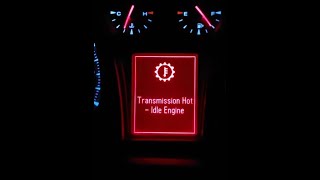
Technical definition: The most common technical definition, primarily used by Ford, is 'Transmission Over-Temperature Condition'. This indicates the Powertrain Control Module (PCM) registered a fluid temperature exceeding the maximum safe limit, typically 270°F (132°C), for a continuous 5-second period. 🎬 Watch: A detailed breakdown of the Ford P1783 code. For other brands, it means entirely different things: 'Gear 5 Incorrect Ratio' (Hyundai/Kia), 'Clutch Torque Adaptation Limit Reached' (Volkswagen/Audi), or 'Transfer N SW Circuit Malfunction' (Toyota).
Can I Drive With P1783?

No — Do Not Drive. You must pull over safely and shut off the engine immediately. Driving with an overheating transmission causes rapid, irreversible damage. Continuing to drive for even a few miles warps clutch plates and hardens seals, turning a $300 sensor or fluid repair into a $5,000 transmission rebuild.
Common Causes

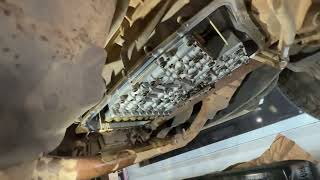
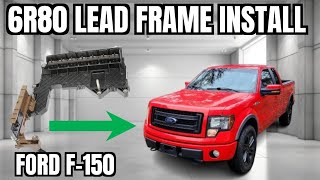
- Faulty Internal Transmission Lead Frame (Ford) (Very Common) — On many modern Ford vehicles (especially the 6R80 transmission), the temperature sensor is integrated into a molded lead frame. 🎬 See this step-by-step 6R80 lead frame replacement walkthrough. Repeated heat cycles cause microscopic cracks in this frame's solder joints, leading to intermittent, false high-temperature readings and erratic shifting.
- Low or Burnt Transmission Fluid (Very Common) — Transmission fluid cools and lubricates the system. When the fluid level drops due to a leak, or the fluid becomes old and loses viscosity, it cannot dissipate heat effectively, causing a rapid temperature spike.
- Internal Transmission Failure (Slipping Clutches/Bands) (Very Common) — Worn internal components like slipping clutches or bands generate extreme friction and heat. This mechanical failure burns the fluid quickly and is almost always accompanied by gear ratio codes like P0731 or P0732.
- Faulty Transmission Fluid Temperature (TFT) Sensor (Common) — The TFT sensor itself fails electrically, sending an incorrect high-temperature signal to the computer even when the transmission is operating at a normal temperature.
- Torque Converter Clutch (TCC) System Malfunction (Common) — If the torque converter clutch fails to lock up or slips excessively, it generates massive amounts of heat. This stems from a faulty TCC solenoid, worn clutch material, or internal hydraulic pressure loss.
- Blocked or Restricted Transmission Cooler/Lines (Common) — The transmission cooler or its lines become clogged with debris or sludge. This traps fluid and prevents it from circulating through the cooling system, baking the transmission from the inside out.
- Heavy Towing or Extreme Driving Conditions (Less Common) — Towing a load exceeding your vehicle's capacity or driving aggressively in steep mountains puts massive strain on the transmission, generating more heat than the stock cooling system can reject.
- Engine Overheating Condition (Less Common) — Because the transmission cooler is often integrated into the engine's radiator, an overheating engine transfers heat directly into the transmission fluid, 🎬 Watch: Common causes for transmission overheating in GM trucks. triggering a secondary overheat.
Symptoms

- Check Engine Light or Flashing 'O/D OFF' Light — The most obvious sign. On many Ford vehicles, a flashing 'Overdrive Off' light specifically indicates a critical transmission fault.
- Limp Mode Activation — The vehicle suddenly loses power and locks into a single gear (usually 2nd or 3rd) to prevent catastrophic failure and allow you to pull over safely.
- Harsh, Erratic, or Delayed Shifting — The transmission slams into gear, hesitates, or takes several seconds to engage when shifting from Park to Drive, caused by thinned-out hot fluid or computer intervention.
- Transmission Slipping — The engine revs up unexpectedly, but the vehicle fails to accelerate, indicating severe internal friction and wear.
- Burning Smell — Overheated transmission fluid emits a distinct, acrid burning smell similar to burnt toast.
- Visible Fluid Leak — Puddles of red or dark brown fluid under the vehicle indicate a leak, the primary cause of low fluid levels.
Diagnostic Flowchart
Tap your situation to follow the diagnostic path that matches what you're seeing on this code.
Common Fixes & Costs
- Replace Internal Lead Frame Assembly (Ford) — Parts: $150-$350, Labor: $500-$1,000, ~4.5 hr book time (Advanced)
- Transmission Fluid and Filter Change — Parts: $60-$150, Labor: $150-$300, ~1.5 hr book time (Intermediate)
- Replace Transmission Fluid Temperature (TFT) Sensor — Parts: $30-$100, Labor: $200-$450, ~2.5 hr book time (Intermediate)
- Flush or Replace Transmission Cooler and Lines — Parts: $100-$450, Labor: $150-$350, ~2.0 hr book time (Intermediate)
- Replace Torque Converter — Parts: $300-$800, Labor: $800-$1,800, ~8.0 hr book time (Professional)
- DSG Mechatronics Unit Repair/Replacement (VW/Audi) — Parts: $1,000-$2,500, Labor: $500-$1,500, ~5.0 hr book time (Professional)
- Rebuild or Replace Transmission — Parts: $2,000-$4,500, Labor: $1,000-$3,000, ~10.0 hr book time (Professional)
DIY vs Professional
- Transmission Fluid and Filter Change — Beginner: Yes, with caution.
Tools: Socket set, torque wrench (in-lbs), large drain pan, fluid pump. - Replace Internal Lead Frame Assembly (Ford) — Beginner: No. Recommended for experienced DIYers only.
Tools: Fluid change tools, Torx sockets (T27/T30), inch-pound torque wrench. - Replace Torque Converter or Transmission — Beginner: No. Professional level.
Tools: Engine hoist/support bar, transmission jack, extensive socket set, torque converter installation handles.
Used vs. New Parts: Buying Guide
When a used part is worth it: Buying a used lead frame or sensor is never recommended due to high labor costs and known wear-out failure modes. A used transmission only makes sense if replacing the entire unit on an older vehicle.
Donor-vehicle mileage cap: roughly under 40000 miles for the part to have meaningful remaining life.
Donor quality checklist:
- Verify the donor vehicle was not scrapped due to transmission issues.
- Match the part number exactly, paying close attention to suffixes (e.g., AL3Z-7G276-D) indicating updated revisions.
- Avoid parts showing discoloration from excessive heat.
Decision logic:
- If The part is an electronic component like a lead frame or TFT sensor → Always buy new OEM or high-quality aftermarket. The labor cost is too high to risk a used part failing.
- If The entire transmission requires replacement on a vehicle worth less than $8,000 → A used transmission from a low-mileage donor is a cost-effective alternative to a $4,000 remanufactured unit.
Warranty tradeoff: Salvage yard parts carry a 30-90 day warranty on the part only, excluding labor. New aftermarket parts offer 1-year to lifetime warranties. New OEM parts usually carry a 2-year warranty.
Worst-case if a used part fails: $1,000 if a used lead frame fails, requiring you to pay for repeat labor, new fluid, and a new part.
What Happens If You Wait — Timeline
- 0-1 month: Initial fault. If electrical, warning lights appear intermittently. If mechanical, fluid temperature exceeds the normal 175-220°F range during high stress. (MPG impact: 0-5%% · Added cost: $0-$100 in wasted fuel from inefficient shifting.)
- 1-3 months: Fluid breaks down. At temperatures above 240°F, fluid oxidizes, varnish forms on internal parts, and seals harden. Slipping becomes noticeable. (MPG impact: 5-10%% · Added cost: $250-$500 for a required full fluid flush.)
- 3-6 months: Accelerated internal wear. Clutch plates glaze and slip severely, generating more heat in a vicious cycle. The torque converter fails to lock. (MPG impact: 10-20%% · Added cost: $1,500-$2,500 for a destroyed torque converter and worn clutch packs.)
- 6+ months: Catastrophic failure. Extreme heat warps hard parts, destroys all seals, and clogs the valve body with debris. The vehicle is undrivable. (MPG impact: 20%+% · Added cost: $3,000-$7,500+ for a complete transmission replacement.)
Cost of Not Fixing It
- Immediate (0-1 month): Driving with a true overheat condition causes rapid fluid breakdown, varnish formation, and hardened seals. The risk of being stranded is extremely high. (Added cost: $3,000-$7,000+ (if you ignore it and cause catastrophic failure))
- 1-3 months: Permanent damage to clutch packs, bands, and the torque converter occurs. Burnt fluid clogs the filter and valve body passages, destroying hydraulic pressure. (Added cost: $3,000-$7,500+)
- 3+ months: Complete transmission failure is guaranteed. The vehicle stops moving entirely. Extreme heat warps hard parts and damages nearby wiring harnesses. (Added cost: $4,000-$8,000+)
Diagnosis Steps
- Scan for All Related Codes
Use an OBD-II scanner to retrieve all PCM and TCM codes. Codes for temperature sensor circuits (P0712, P0713), incorrect gear ratios (P0731-P0735), or TCC faults (P1744) dictate your exact diagnostic path.
Tools: OBD-II Scanner (Beginner) - PRO TIP: Verify the Overheating Condition
Use an infrared thermometer to measure the transmission oil pan temperature. If the pan is over 240°F (115°C), the transmission is genuinely overheating. If the pan is at a normal 175-200°F (79-93°C), the TFT sensor, lead frame, or wiring is faulty.
Tools: Infrared Thermometer (Intermediate) - Check Transmission Fluid Level and Condition
With the engine running and transmission warm, check the dipstick. Healthy fluid is bright red. Dark brown or black fluid that smells burnt confirms severe overheating and fluid breakdown.
Tools: Rag, Gloves (Beginner) - Inspect External Wiring and Connectors
Visually inspect the wiring harness connecting to the transmission case. Look for frayed wires, loose pins, or melted insulation that causes false sensor readings.
Tools: Flashlight (Intermediate) - PRO TIP: Test the TFT Sensor Voltage/Resistance
Disconnect the sensor and measure its resistance with a multimeter. Compare the reading to the manufacturer's temperature-vs-resistance chart. An open (infinite resistance) or shorted (near zero) reading confirms a dead sensor.
Tools: Multimeter, Service Manual (Advanced) - PRO TIP: Monitor Live TCC Slip Data
Using an advanced scan tool, monitor 'TCC Slip Speed' while driving at cruising speeds. When locked, this value must be near zero RPM. Slip exceeding 50 RPM indicates a failing torque converter generating massive heat.
Tools: Advanced OBD-II Scanner (Advanced) - Inspect the Transmission Cooling System
Check the transmission cooler in front of the radiator for debris blockages. Use the infrared thermometer to check the inlet and outlet lines; a lack of temperature drop indicates restricted flow.
Tools: Infrared Thermometer (Intermediate) - PRO TIP: Perform a Line Pressure Test
Connect a pressure gauge to the transmission's line pressure test port. Low pressures cause clutch slippage and overheating, pointing to a failing pump or internal hydraulic leak.
Tools: Transmission Pressure Gauge Kit, Service Manual (Advanced)
When This Code Triggers (Freeze-Frame Conditions)
- Vehicle Speed: 30-65 mph (48-105 kph) (Often occurs during steady-state cruising, stop-and-go traffic, or while towing.)
- Engine Load: 40-80% (The engine is working significantly, generating heat that overwhelms the shared cooling system.)
- TCC Slip Speed: > 75 RPM (If the torque converter clutch is commanded on but shows high slip, it is actively generating extreme heat.)
Related Codes
- P0713 — Means 'Transmission Fluid Temperature Sensor Circuit High Input'. It indicates an electrical open circuit. If present with P1783, the issue is almost certainly a faulty sensor or wiring, not actual overheating.
- P0712 — Means 'Transmission Fluid Temperature Sensor Circuit Low Input', indicating a short to ground. The PCM sets P1783 as a default protective measure when receiving this illogical reading.
- P0731 - P0735 — Indicates 'Incorrect Gear Ratio' (internal slipping). This slippage is the primary mechanical cause of the extreme friction and heat that triggers P1783.
- P1744 — Means 'Torque Converter Clutch System Performance'. Indicates the TCC is slipping when it should be locked, generating massive heat and triggering P1783.
Climate & Environmental Factors
- Hot Climates / High Ambient Temperature: High outside temperatures drastically reduce the efficiency of the transmission cooling system. This accelerates fluid breakdown and makes the transmission highly susceptible to overheating during stop-and-go traffic or towing.
- High Altitude: Reduced air density at high altitudes makes air-cooled transmission coolers less effective. The engine also produces less power, causing the transmission to shift more frequently and generate excess heat.
- Cold Climates: Extreme cold causes transmission seals and gaskets to harden and shrink, leading to fluid leaks. If the fluid level drops unnoticed, the remaining fluid overheats rapidly.
How to Talk to a Mechanic About This Code
Say this: "I have a P1783 code and a flashing O/D light. Before recommending major repairs, can you please verify if the transmission is actually overheating using an infrared thermometer on the pan? Also, please check for related codes like P0713 or P1744."
This guides the mechanic toward a logical diagnostic path, preventing them from jumping to a $5,000 rebuild. It forces them to confirm a true overheat versus a common sensor failure.
Avoid saying:
- 'My transmission is shot.'
- 'My check engine light is on, can you look at it?'
- 'Just do whatever it takes to fix it.'
Questions to ask before authorizing the repair:
- Did you confirm the transmission was actually overheating, and what was the pan temperature?
- If it's not overheating, what is the resistance reading from the TFT sensor compared to spec?
- If recommending a lead frame replacement, is the new part an updated OEM version?
- If recommending a rebuild, what is the warranty on parts and labor?
Where to Take It: Dealer vs Independent vs Chain
- Dealer:
Good choice for warranty work or complex German variations of the code. For an out-of-warranty Ford, an independent specialist is more cost-effective.
Best for: Vehicles still under powertrain warranty, Complex manufacturer-specific issues like VW/Audi Mechatronics
Downsides: Highest labor rates, often double an independent shop, May prefer replacing the entire transmission rather than repairing a lead frame (Typical cost: +50% vs. baseline) - Independent Shop:
Best fit for most P1783 scenarios. Seek out a dedicated transmission shop over a general mechanic.
Best for: Out-of-warranty vehicles where cost is a major factor, Common failures like the Ford lead frame issue, Dedicated transmission specialty shops
Downsides: Quality varies dramatically; vetting through reviews is crucial, May lack specific diagnostic tools for brand-new models (Typical cost: +0% vs. baseline) - Chain Shop:
AVOID for diagnosing P1783. The risk of misdiagnosis (recommending a rebuild for a sensor issue) is too high.
Best for: Simple fluid and filter changes
Downsides: Technician skill with complex transmission diagnostics is highly variable, Often incentivized to sell complete transmission replacements (Typical cost: -10% vs. baseline)
When to Walk Away From the Repair
If the estimated transmission repair cost exceeds 50% of the car's current private-party value, seriously consider selling the vehicle as-is.
- Car worth $5000, fix is $3500: Walk away. The repair cost is 70% of the vehicle's value.
- Car worth $15000, fix is $1800: Fix it. The repair is only 12% of the car's value.
- Car worth $3000, fix is $1800: Borderline. The repair is 60% of the car's value. Get a second opinion.
What Scan Tool You Need for This Code
Minimum: An OBD-II scanner that reads manufacturer-specific transmission codes and displays live data for Transmission Fluid Temperature (TFT).
A basic $20 code reader won't provide the live temperature data needed to verify if the transmission is actually hot or if it's a false sensor reading. Without live data, you are flying blind.
Budget: MOTOPOWER MP69033 or BlueDriver (~$70) — Reads the code and accesses generic live data. You must verify the app supports the TFT PID for your specific vehicle.
Mid-range: Foxwell NT510 Elite or Innova 5610 (~$250) — Offers OEM-level diagnostics, reliably showing live TFT, Torque Converter Slip RPM, and solenoid commands. Essential for distinguishing between a sensor or internal slipping issue.
Professional: Autel MaxiCOM MK808 or XTOOL D7W (~$500-900) — Provides full bidirectional control to command solenoids for testing and performs the mandatory 'transmission relearn' procedure required after replacing a lead frame.
Rent vs buy: For a one-time diagnosis, auto parts stores scan codes for free, but their tools lack live transmission temperature. Buying a mid-range scanner is a wise investment that saves you from a single expensive misdiagnosis.
How to Clear the Code After You Fix It
- Use an OBD-II scan tool to clear all DTCs from the PCM and TCM.
- For Ford models, use a bi-directional scan tool to clear the Transmission Adaptive Tables (KAM).
- Perform the manufacturer-specific drive cycle to allow the transmission to relearn shift points.
Drive cycle (~30 minutes): Let the vehicle cool completely (8+ hours), idle for 5 minutes, then perform 20 minutes of mixed city/highway driving. For Ford adaptive relearns, perform multiple light-throttle accelerations from a stop to 6th gear.
Readiness monitors affected: Comprehensive Component Monitor (CCM), Catalyst Monitor
Before emissions retest: drive at least 100 miles to fully set monitors.
Watch out for:
- Disconnecting the battery clears the code but resets all emissions monitors, guaranteeing a failed inspection.
- Failing to perform the adaptive relearn procedure on modern Fords results in harsh shifting even after a perfect repair.
Will This Fail Emissions / State Inspection?
Yes — this code typically fails an OBD-II emissions inspection.
- California: An active P1783 code causes an automatic smog check failure. After repair, all required readiness monitors must be set to 'Ready' before retesting.
- New York: The NYVIP3 inspection fails any vehicle with an illuminated Check Engine Light from P1783. Only one readiness monitor is allowed to be 'Not Ready'.
- Texas: In emissions-testing counties, an active P1783 fails the OBD-II inspection. The vehicle must be driven extensively after repair to reset monitors.
Most Commonly Affected Vehicles
- Ford F-150 (2004-2018) — Extremely common. 2009-2014 models with the 6R80 transmission are notorious for molded lead frame failures. Earlier 2004-2008 models suffer from O/D servo bore wear causing overheating.
- Ford Explorer (2002-2010) — Equipped with the 5R55W/S transmission, known for servo bore wear and solenoid block failures that lead to slipping and overheating.
- Ford Mustang (2005-2014) — Shares the 5R55S and 6R80 transmissions with the Explorer and F-150, making it susceptible to the exact same lead frame and internal wear issues.
- Ford Ranger (1998-2011) — Uses the 5R44E/5R55E transmission. Overheating is frequently caused by a failing solenoid block or overdrive band issues leading to slippage.
- Chevrolet / GMC Silverado 1500, Sierra 1500 (2014-2024) — Indicates an over-temperature condition linked to heavy towing, torque converter problems in 8-speed/10-speed units, or wiring harness issues (TSB 23-NA-102).
- Volkswagen / Audi Jetta, Golf, GTI, A3, TT (2003-2020) — P1783 means 'Clutch Torque Adaptation Limit Reached' in DSG models. This points to a worn clutch pack or failing mechatronics unit, not a temperature problem.
- Hyundai / Kia Sonata, Optima, Sorento, Elantra (2009-2018) — On 6-speed automatics, P1783 is defined as 'Gear 5 Incorrect Ratio', pointing to an internal mechanical or hydraulic issue related to 5th gear.
- Mazda B-Series, Tribute (2001-2011) — Rebadged Ford models sharing Ford transmissions. P1783 typically means 'Transmission Fluid Temperature High Input', pointing to Ford-specific causes.
Manufacturer-Specific Notes
- Ford: P1783 almost always means 'Transmission Over-Temperature Condition'. A flashing 'O/D Off' light is the classic symptom. On 6R80 transmissions, the molded lead frame is the primary suspect.
- Toyota / Lexus: P1783 means 'Transfer N SW Circuit Malfunction' or a network communication error. It is entirely electrical and has absolutely nothing to do with transmission temperature.
- Volkswagen / Audi: P1783 means 'Clutch Torque Adaptation Limit Reached' on DSG vehicles, pointing to a worn clutch pack or a failing mechatronics unit.
- Hyundai / Kia: P1783 is defined as 'Gear 5 Incorrect Ratio', indicating a slipping condition or hydraulic control problem related to the 5th gear circuit.
Real Owner Stories
2007 Ford F-150 with 5.4L V8
Intermittent 'Trans Fault' message and flashing O/D light after driving 50 miles. The transmission shifted perfectly until the light came on, which disabled overdrive.
What they tried:
- Owner suspected an electrical glitch and restarted the truck to reset it.
- Checked the main electrical connector on the transmission for a secure fit.
Outcome: The cause was a failing internal lead frame. The intermittent fault occurred because a conductor inside the lead frame broke connection only when it expanded from heat.
Lesson: For intermittent P1783 codes with no mechanical symptoms, a failing lead frame is highly probable. Do not assume the transmission is destroyed if shifting is normal when the light is off.
2012 Volkswagen CC with DSG Transmission at 109k miles
Car went into limp mode with a flashing wrench symbol, only allowing 1st gear. The dealer diagnosed the issue and quoted $8,000 for a full transmission replacement.
What they tried:
- Owner scanned the codes and found faults pointing to the mechatronics unit.
- Took the car to an independent VW specialist for a second opinion.
Outcome: The independent shop confirmed the mechatronics unit failed, a known issue on DSG transmissions. They replaced the unit for $2,200, saving the owner nearly $6,000.
Lesson: On VW/Audi DSG vehicles, P1783 points to the mechatronics unit or clutch pack, not overheating. Always get a second opinion if a dealer immediately quotes a full transmission replacement.
2007 F-150 4.6L 2WD with whirring sound
After replacing the transmission cooler and lines, the truck started making a whirring sound on acceleration and threw a P1783 code.
What they tried:
- Owner checked the new cooler lines immediately after the code appeared and found they were cold, indicating zero fluid circulation.
- Verified the transmission fluid level was correct.
Outcome: The diagnosis revealed an internal transmission pump failure preventing fluid from reaching the cooler. The lack of flow caused the transmission to overheat despite the brand-new cooling system.
Lesson: If you get an overheating code, verify fluid is actually flowing. Checking the temperature of the cooler lines proves whether the problem is a lack of flow or a faulty cooler.
How to Prevent This Code From Triggering
- Perform regular transmission fluid and filter changes (Every 30,000-60,000 miles) — Clean fluid maintains viscosity and heat-dissipating properties. Old fluid cannot cool effectively, which is the primary cause of overheating.
- Install an auxiliary transmission cooler (One-time upgrade for towing vehicles) — Provides extra cooling capacity beyond the stock system, keeping fluid temperatures stable under heavy loads.
- Use 'Tow/Haul' mode when carrying heavy loads (Whenever towing or hauling) — Adjusts shift points and increases line pressure, preventing the transmission from hunting for gears and reducing heat-generating slippage.
- Check fluid level regularly and fix leaks (Monthly) — Low fluid levels prevent proper lubrication and heat transfer. A small leak quickly leads to a major overheating failure.
Frequently Asked Questions
What temperature triggers a P1783 code?
On Ford vehicles, the code triggers when the transmission fluid temperature sensor reads above 270°F (132°C) for a sustained period. Normal operating temperature is between 175-220°F (79-104°C).
What is the most common misdiagnosis for P1783?
The biggest mistake is replacing the transmission without verifying if it is actually overheating. Mechanics must use an infrared thermometer on the transmission pan. If temperatures are normal (180-200°F), the problem is a faulty sensor or lead frame, not a mechanical failure.
Can a bad engine thermostat cause a P1783 code?
Yes. Because transmission fluid is cooled by a heat exchanger inside the engine's radiator, an overheating engine transfers heat directly into the transmission, triggering the code.
What is a molded lead frame on a Ford transmission?
A molded lead frame is a plastic and metal component inside the transmission housing the speed and temperature sensors. Cracks in its internal connections are a notorious failure point on 6R80 transmissions, causing false P1783 codes.
Can I just clear the P1783 code and keep driving?
No. If it is a true overheating problem, ignoring it guarantees catastrophic transmission failure. If it is a sensor issue, the code will return immediately and force the vehicle back into limp mode.
How much does it cost to fix P1783?
A simple fluid change costs $150-$300, while replacing a Ford lead frame ranges from $650-$1,200. If the transmission is internally damaged and requires a full rebuild, expect to pay $3,000 to $7,500.
Why is my 'O/D OFF' light flashing?
On Ford, Lincoln, and Mercury vehicles, a flashing 'Overdrive Off' light acts as a Check Engine Light specifically for the transmission. It signals a critical fault like overheating and disables overdrive to protect the unit.
Key Takeaways
- P1783 definitions vary by brand: it means 'Transmission Over-Temperature' on Fords, but indicates a DSG clutch failure on VW/Audi models.
- Never drive with an active P1783 code; pulling over immediately prevents a $300 sensor repair from becoming a $5,000 transmission rebuild.
- On 2009-2014 Ford F-150s (6R80 transmission), a cracked molded lead frame is the most frequent cause of false P1783 overheating codes.
- Always verify the actual transmission pan temperature with an infrared thermometer before authorizing major repairs; normal operating temperature is 175-220°F.
Helpful Videos
Shop the Parts Behind P1783
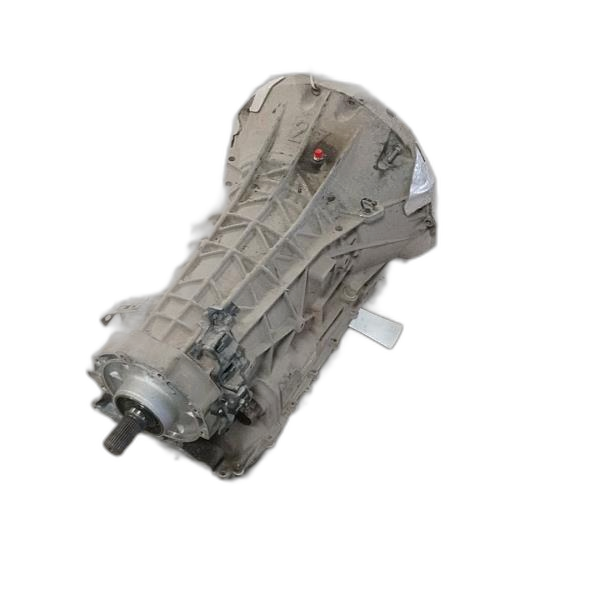
Below are the parts most often responsible for code P1783, ranked by how frequently each one is the actual culprit (per the diagnosis above). Tap any to see what we have for your vehicle.



The information in this article is provided for general reference and educational purposes only. Vehicle specifications, procedures, and part compatibility can vary by production date, trim level, and region. Always consult your vehicle's factory service manual and verify part numbers before purchasing or performing repairs. Safety-critical components such as airbags, seat belts, and braking systems should be installed by a qualified professional.
- 🧭 Diagnostic Flowchart
- 🎬 Helpful Videos
- 🛍️ Shop This Part
- What Does P1783 Mean?
- Can I Drive With P1783?
- Common Causes
- Symptoms
- Common Fixes & Costs
- DIY vs Professional
- Used vs. New Parts: Buying Guide
- What Happens If You Wait — Timeline
- Cost of Not Fixing It
- Diagnosis Steps
- When This Code Triggers (Freeze-Frame Conditions)
- Related Codes
- Climate & Environmental Factors
- How to Talk to a Mechanic About This Code
- Where to Take It: Dealer vs Independent vs Chain
- When to Walk Away From the Repair
- What Scan Tool You Need for This Code
- How to Clear the Code After You Fix It
- Will This Fail Emissions / State Inspection?
- Most Commonly Affected Vehicles
- Manufacturer-Specific Notes
- Real Owner Stories
- 2007 Ford F-150 with 5.4L V8
- 2012 Volkswagen CC with DSG Transmission at 109k miles
- 2007 F-150 4.6L 2WD with whirring sound
- How to Prevent This Code From Triggering
- Frequently Asked Questions
- What temperature triggers a P1783 code?
- What is the most common misdiagnosis for P1783?
- Can a bad engine thermostat cause a P1783 code?
- What is a molded lead frame on a Ford transmission?
- Can I just clear the P1783 code and keep driving?
- How much does it cost to fix P1783?
- Why is my 'O/D OFF' light flashing?
- Key Takeaways
- 🎟️ Get 5% Off