

P1784 on 2012-2013 Mazda MAZDA3: Transmission Valve Body Failure Causes and Fixes
On a 2012-2013 Mazda3 with a SkyActiv engine, code P1784 almost always indicates an internal failure of the transmission valve body, a problem acknowledged by Mazda in Technical Service Bulletin #05-005/13. The fix is a costly replacement of the programmed valve body, requiring professional service and an 'Initial Learning' procedure.
- P1784 on a 2012-2013 SkyActiv Mazda3 is a serious transmission code, not to be ignored.
- The problem is almost certainly a failed transmission valve body, an issue documented by Mazda in TSB #05-005/13.
- A faulty Transmission Control Module (TCM) is another possible, and very common, cause of similar transmission issues on this car.
- The repair is complex and expensive, requiring a professional with Mazda-specific tools for part replacement and programming.
- Do not waste money on simple fluid changes hoping to fix this code; it points to a mechanical or electronic component failure.
What's Unique About the 2012-2013 Mazda MAZDA3
The 2012-2013 Mazda3 was among the first to use the new SkyActiv-Drive automatic transmission (model FW6A-EL). This P1784 code 🎬 See this technical overview of the Skyactiv-Drive FW6A-EL transmission. is a known, widespread issue on early versions of this transmission, so much so that Mazda issued a specific Technical Service Bulletin (TSB 05-005/13) outlining the problem and the fix. Unlike generic transmission codes, P1784 on this car points very directly to a component failure (the valve body) rather than a simple sensor or fluid issue. Additionally, this platform is known for heat-related failures of its Transmission Control Module (TCM), which is mounted directly to the hot transmission case, leading to cracked solder joints and causing similar symptoms. However, for the 2.0L SkyActiv engine, the TCM is integrated into the PCM by the battery box, which is a critical distinction from other Mazda3 models of the era.
Diagnostic Flowchart
Tap your situation to follow the diagnostic path that matches what you're seeing on this vehicle.
Symptoms You May Notice
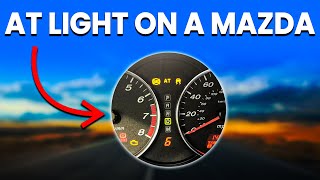
- "AT" (Automatic Transaxle) warning light illuminated on the dashboard 🎬 Watch: What your Mazda's AT light means and how to fix it.
- Check Engine Light (MIL) is on
- Harsh or erratic shifting between gears, especially when cold
- Transmission slipping, where the engine revs but the car doesn't accelerate properly
- Vehicle stuck in one gear (fail-safe or 'limp mode')
- Delayed or no engagement when shifting into Drive or Reverse
- Lurching at low speeds (under 25mph)
- Replacing individual shift solenoids when the TSB indicates the entire valve body assembly is required.
- Performing a simple fluid change and expecting it to fix a mechanical or electronic fault within the valve body or TCM.
- Replacing the entire transmission when only the valve body or TCM is faulty.
- Mistaking a TCM failure (U-codes) for a valve body failure (P-codes) or vice-versa.
Most Likely Causes
- Internal Failure of the Transmission Valve Body 🔴 High Probability → Shop Transmission Valve Body This is a documented issue for early SkyActiv transmissions, specifically addressed by Mazda TSB #05-005/13 for 2012-2013 Mazda3 2.0L SkyActiv models with VINs lower than JM1BL**733728. The internal valves can stick, causing hydraulic pressure faults. Later TSBs clarify this is often due to contamination causing oil pressure switches to stick.
How to confirm: A professional technician will verify the code, check for applicable TSBs, and rule out other causes. If the vehicle matches the TSB criteria (VIN range, presence of P1784, P0780, or P1738), the valve body is the presumed cause.
Typical fix: Replace the control valve body assembly with the updated, pre-programmed part specified by Mazda. An 'Initial Learning' procedure must be performed with a Mazda diagnostic tool (M-MDS) after installation.
Est. part cost: $1000-$1500 - Failed Transmission Control Module (TCM) 🟡 Medium Probability → Shop Transmission Assembly The TCM is mounted directly on top of the transmission, where it is exposed to intense heat and vibration. This design leads to a high rate of failure from thermal stress and cracked internal solder joints.
How to confirm: Diagnosis involves checking for specific TCM-related communication codes (like U0100 or U0101) alongside the P1784. If communication with the TCM is lost, it points to the module itself. A technician may test the module's circuits or send it to a specialist for verification.
Typical fix: Replace the TCM with a new or remanufactured unit. Many owners and repair shops recommend relocating the replacement module to a cooler location away from the transmission (e.g., mounted to the brake lines) to prevent repeat failures. Programming is often required.
Est. part cost: $200-$500 (remanufactured), $900+ (new) - Low or Contaminated Automatic Transmission Fluid (ATF) ⚪ Low Probability → Shop Transmission Assembly While not the primary cause of a P1784, the 'lifetime' fluid can become contaminated. Later TSBs acknowledge that contamination is the root cause of the pressure switches sticking inside the valve body.
How to confirm: Check the transmission fluid level and condition according to the manufacturer's procedure. The fluid should be at the correct level, bright red, and not smell burnt. Significant contamination may be visible in the pan.
Typical fix: Perform a transmission fluid drain-and-fill using the correct Mazda ATF-FZ fluid. This is unlikely to fix an existing P1784 but is critical preventative maintenance and required during a valve body replacement.
Est. part cost: $50-$150
Rare But Worth Checking
- Stuck Oil Pressure Switches due to Contamination:
Diagnosis Steps
- Read all diagnostic trouble codes from the Powertrain Control Module (PCM) and Transmission Control Module (TCM) using an OBD-II scanner.
- Check for any Technical Service Bulletins (TSBs) related to the stored codes for your vehicle's specific year, model, and VIN. For this code, TSB #05-005/13 is highly relevant.
- Inspect the transmission fluid level and condition. Ensure it is clean, full, and of the correct type (Mazda ATF-FZ). Note that this is a sealed transmission with no dipstick, requiring a specific procedure.
- Inspect the transmission wiring harness and connectors for any visible damage, corrosion, or loose connections, paying close attention to the main connector at the TCM.
- If communication codes like U0100 or U0101 are present, the TCM is the primary suspect. Test power and ground to the module before condemning it.
- If only transmission mechanical/hydraulic codes like P1784, P0780, or P1738 are present and the vehicle matches the TSB criteria, the valve body is the primary suspect.
- Professional diagnosis is recommended to confirm the failed component before ordering expensive parts. A dealer or specialist can perform pressure tests and use a Mazda-specific scanner (M-MDS) for deeper analysis.
Parts You'll Likely Need
- Transmission Control Valve Body Assembly
(OEM #PEY0-21-C00 (superseded by PEYC-21-C00))— This is the specific part identified by Mazda in TSB #05-005/13 to fix code P1784 and related issues on affected vehicles.
Trusted brands: Mazda (OEM)
OEM price range: $1200-$1600 - Transmission Control Module (TCM) — A common failure point on this platform due to heat and vibration, causing a wide range of transmission codes and symptoms.
Trusted brands: Mazda (OEM), UpFix (Remanufacturing Service), Circuit Board Medics (Remanufacturing Service)
OEM price range: $900+
Aftermarket price range: $200-$500 (Remanufactured)
Related Codes That Often Appear With This One
- P0780 — This code for 'Gear Shifting Malfunction' is explicitly mentioned in the same TSB as P1784 and points to the same root cause: a faulty valve body.
- P1738 — This code for 'Automatic Transaxle Internal Malfunction' is also listed in the TSB and is triggered by the same valve body issue.
- U0100 / U0101 — These codes indicate a loss of communication with the TCM. If you see these alongside P1784, it strongly suggests the TCM itself is the source of the problem, rather than the valve body.
Technical Service Bulletins (TSBs) & Recalls
- 05-005/13: States that for MIL ON with DTCs including P1784, P0780, and P1738, the solution is to install a new, programmed valve body on affected 2012-2013 Mazda3 SkyActiv models. It specifies the part number and labor hours.
- 05-002/15 & 05-005/14: These are later, superseding bulletins that expanded the issue to more models and identified the root cause as contamination causing internal oil pressure switches to stick. For some vehicles, these TSBs changed the repair procedure to TCM reprogramming or replacing just the switches.
Platform-Specific Known Issues
- Mazda Technical Service Bulletin 05-005/13 specifically addresses this code on 2012-2013 Mazda3 2.0L SkyActiv models with VINs lower than JM1BL**733728, recommending a valve body replacement.
- The repair is covered under the Federal Emission Warranty (96 months / 80,000 miles) and requires prior authorization from Mazda's technical assistance hotline (MASH).
Mechanic-Grade Diagnostic Values
- Pressure Control Solenoid Resistance — expected: 5-7 Ohms. Failure: A resistance reading outside this range indicates a faulty solenoid.
- On/Off Solenoid Resistance — expected: 11-14 Ohms. Failure: A resistance reading outside this range indicates a faulty solenoid.
- ATF Temperature for DTC Detection — expected: 20 °C (68 °F) or more. Failure: The self-diagnostic for P1784 may not run if the transmission fluid is below this temperature.
- ATF Temperature for Initial Learning Procedure — expected: 60–110 °C (140–230 °F). Failure: Attempting the learning procedure outside of this temperature range may cause the process to fail or abort.
Scan Tool Commands That Help
- Mazda M-MDS (or manual sequence): Initial Learning Procedure — This must be performed after replacing the valve body, TCM, or the entire transmission to clear adaptive values and allow the TCM to learn the hydraulic characteristics of the new components.
- Mazda M-MDS / IDS: Module Reprogramming — Used to update the TCM with the latest calibration file as specified in service bulletins. This can sometimes resolve issues by improving the diagnostic logic for detecting faults.
- Mazda M-MDS / IDS: Mechanical System Test — This is a guided diagnostic test performed after a repair to verify that the transmission's mechanical and hydraulic systems are functioning correctly.
Wiring & Ground Locations
- TCM/PCM Module — For 2.0L SkyActiv models, the transmission control functions are integrated into the main PCM/ECU, which is mounted to the side of the battery box in the engine bay. This is different from non-SkyActiv models where the TCM is a separate unit on the transmission case.. Correctly locating the module is the first step for any electrical diagnosis, such as checking for power, ground, or communication issues (U-codes). Technicians may waste time looking for a separate TCM on the transmission that does not exist on this specific sub-model.
- PCM Ground Wires — Within the main electrical connectors that plug into the PCM (mounted to the battery box), there are several black wires that serve as grounds for the module.. A poor ground connection at the PCM/TCM can cause a wide range of erratic behavior and false codes, including communication errors (U-codes) or incorrect sensor readings that could potentially trigger a P1784. Verifying these grounds is a key step before condemning the expensive module.
OEM Part Supersession History
PEY0-21-C00→PEYC-21-C00— Updated part to address internal valve and pressure switch sticking issues.TCM File: PEY0-21PS1-A→TCM File: PE08-21PS1-N— Improved diagnostic logic to reduce false positives for contamination-related pressure switch faults.
Heads up: Loading the incorrect file version during a reflash could cause shifting problems or other issues. The correct file is determined by the vehicle's production date.
Model Year Variations Within This Range
- 2012-2013 (SkyActiv models): On 2.0L SkyActiv engines, the Transmission Control Module (TCM) is not a separate unit mounted on the transmission. Its functions are integrated into the Powertrain Control Module (PCM) located next to the battery. Non-SkyActiv models of the same year have a separate TCM on the transmission housing.
- 2012-2013: Mazda specifies different TCM software calibration files based on the vehicle's production date. Vehicles built before March 31, 2013 use file PEY0-21PS1-A, while those built after use PE08-21PS1-N.
Helpful Videos

We Have This Part in Stock

The information in this article is provided for general reference and educational purposes only. Vehicle specifications, procedures, and part compatibility can vary by production date, trim level, and region. Always consult your vehicle's factory service manual and verify part numbers before purchasing or performing repairs. Safety-critical components such as airbags, seat belts, and braking systems should be installed by a qualified professional.
- Mazda MAZDA3:
- 🧭 Diagnostic Flowchart
- 🎬 Helpful Videos
- 🛍️ Shop This Part
- What's Unique About the 2012-2013 Mazda MAZDA3
- Symptoms You May Notice
- Most Likely Causes
- Rare But Worth Checking
- Diagnosis Steps
- Parts You'll Likely Need
- Related Codes That Often Appear With This One
- Technical Service Bulletins (TSBs) & Recalls
- Platform-Specific Known Issues
- Mechanic-Grade Diagnostic Values
- Scan Tool Commands That Help
- Wiring & Ground Locations
- OEM Part Supersession History
- Model Year Variations Within This Range
- 🎟️ Get 5% Off