

Ultimate P1787 Guide: Causes, Symptoms & Fixes [Pro Advice]
The Most Comprehensive P1787 Resource: What It Means, Why It Triggers, and Exactly How to Fix It
- Check the transmission fluid level and condition first, as low or burnt fluid causes the majority of P1787 triggers and costs under $200 to fix.
- Stop driving immediately to prevent a $500 solenoid replacement from escalating into a $4,000 complete transmission rebuild due to overheating.
- Check for extended warranties before paying for repairs, especially on 2012-2018 Ford Focus models where Ford covers TCM replacements up to 150,000 miles.
- Perform a transmission 'Quick Learn' procedure using a bidirectional scan tool after any physical repair to restore smooth shifting and reset adaptive memory.
What Does P1787 Mean?

While definitions vary by manufacturer, P1787 universally indicates the computer detected a fault during a self-test of the transmission's hydraulic control system. It points directly to a problem with a hydraulic pressure switch, a shift solenoid, or the associated electrical circuit. Common specific meanings include 'OD (Overdrive) Hydraulic Pressure Test Failure' or a '3rd or 4th gear fault'.
Technical definition: The official SAE/ISO definition for P1787 is manufacturer-specific. Common definitions include 'OD (Overdrive) Hydraulic Pressure Test Failure' (Dodge/Chrysler), '2-1 Downshift Error,' 'TGS Lever Position Sensor Error' (Hyundai), 'Reverse Signal Malfunction,' or a general 'Transmission System Problem' (Ford).
Can I Drive With P1787?
Yes, But With Caution. You can drive a short distance, but doing so risks severe damage. The transmission often shifts harshly, gets stuck in a single gear ('limp mode'), or fails to move. Continuing to drive with a slipping transmission turns an $800 solenoid repair into a $4,000 transmission rebuild by overheating fluid and circulating damaging debris.
Common Causes

- Low or Dirty Transmission Fluid (Very Common) — Low fluid prevents the hydraulic system from creating necessary pressure. Dirty or degraded fluid clogs filters and valve body passages, causing components to stick and pressures to drop.
- Failed Transmission Shift Solenoid or Solenoid Pack (Common) — Shift solenoids direct hydraulic fluid to engage gears. Electrical or mechanical failure of a single solenoid or the entire pack disrupts this flow, triggering the code.
- Faulty Transmission Control Module (TCM) (Common) — TCM failure is the primary cause on Ford Focus/Fiesta models with the DPS6 transmission. Internal driver failure triggers solenoid and actuator codes. This requires module replacement and reprogramming. 🎬 See how to replace the TCM on Ford Focus models.
- Faulty Transmission Pressure Switch (Common) — Pressure switches monitor hydraulic circuits. A stuck or failed switch provides incorrect readings to the TCM, triggering the code during pressure tests.
- Clogged Transmission Filter or Internal Passages (Common) — Clutch material and debris restrict fluid flow through the filter over time. This starves the hydraulic pump and lowers line pressure.
- Wiring or Connector Issues (Less Common) — Heat, vibration, and road debris damage the wiring harness. Frayed wires or fluid-contaminated connectors (especially at the main solenoid pack) cause circuit faults.
- Voltage Irregularities or Poor Grounds (Less Common) — A weak battery or corroded ground strap causes unstable voltage, corrupting the transmission's adaptive memory and leading to false codes.
- Internal Mechanical Transmission Failure (Rare) — Worn clutch packs, failing seals, or a weak hydraulic pump cause severe internal pressure loss, accompanied by slipping and grinding noises.
Symptoms

- Check Engine Light is On — The Malfunction Indicator Lamp (MIL) illuminates, often accompanied by the general P0700 transmission fault code.
- Harsh, Delayed, or Erratic Shifting — The transmission shifts roughly, hesitates, or bangs into gear as the TCM struggles to control hydraulic pressure.
- Transmission Stuck in Gear or 'Limp Mode' — The vehicle locks into a single gear (usually 2nd or 3rd) to prevent further internal damage.
- Transmission Slipping — Engine RPM increases without a corresponding increase in vehicle speed, indicating low hydraulic pressure.
- Failure to Shift Into or Out of a Specific Gear — The vehicle refuses to shift into overdrive or struggles to downshift during deceleration.
- Unusual Noises from Transmission — A whining noise indicates a clogged filter or failing pump, while grinding suggests severe mechanical damage.
- Reduced Fuel Economy — Inefficient shifting and failure of the torque converter lock-up clutch force the engine to work harder, decreasing gas mileage.
Diagnostic Flowchart

Tap your situation to follow the diagnostic path that matches what you're seeing on this code.
Common Fixes & Costs
- Transmission Fluid and Filter Change — Parts: $75-$150, Labor: $200-$400 (parts and labor combined), ~1.5 hr book time (Intermediate)
- Replace Transmission Solenoid Pack
— Parts: $250-$700, Labor: $500-$1,100 (parts and labor combined), ~3.5 hr book time
(Intermediate)
Dodge Grand Caravan (41TE/A604): OEM Mopar: 5140429AA (Alt: Borg-Warner, Rostra, Dorman)
Ford Explorer/F-150 (5R55W/S): OEM Motorcraft: 9L2Z-7G391-A (Alt: Bosch, Sonnax) - Replace Transmission Control Module (TCM)
— Parts: $400-$900, Labor: $800-$1,800 (parts and labor combined, including programming), ~2.5 hr book time
(Professional)
Ford Focus (DPS6): OEM Motorcraft: AE8Z-7Z369-F (Alt: Dorman, Cardone) - Replace Transmission Shift Solenoid(s) — Parts: $50-$150 per solenoid, Labor: $250-$500 (parts and labor combined), ~3 hr book time (Intermediate)
- TCM Software Update/Reprogram — Parts: $0, Labor: $150-$300 (labor only), ~1 hr book time (Professional)
- Repair or Replace Transmission Wiring Harness — Parts: $50-$200, Labor: $300-$1,000+ (parts and labor combined), ~5 hr book time (Professional)
Used vs. New Parts: Buying Guide
When a used part is worth it: Used solenoid packs or TCMs suit older vehicles, but remanufactured parts offer superior reliability and warranties.
Donor-vehicle mileage cap: roughly under 80000 miles for the part to have meaningful remaining life.
Donor quality checklist:
- Ensure the part number matches exactly.
- Purchase from a reputable auto recycler offering at least a 90-day warranty.
- For TCMs, verify if the unit requires programming to your vehicle's VIN.
- Avoid parts from flood or fire-damaged vehicles.
Decision logic:
- If Vehicle is under 100K miles and you plan to keep it long-term → Buy a new OEM or high-quality remanufactured part. The longer warranty is worth the cost.
- If Vehicle is over 150K miles and budget is the primary concern → A used part from a low-mileage donor is a reasonable gamble.
- If The part is a Ford DPS6 TCM → Prioritize a new or remanufactured unit with the latest updates. Check for warranty extensions first.
Warranty tradeoff: Used parts typically include a 30-90 day part-only warranty. New and remanufactured parts offer 1-year to lifetime warranties, sometimes including limited labor coverage.
Worst-case if a used part fails: $500-$1500. This represents paying for labor a second time plus the cost of another replacement part.
What Happens If You Wait — Timeline
- 0-1 month: Code is set. Intermittent harsh shifts or brief hesitation. Vehicle occasionally enters 'limp mode' but resets after restarting. (MPG impact: 0-5%% · Added cost: $0-$50 in wasted fuel)
- 1-3 months: Shifting becomes consistently harsh. Transmission slipping becomes noticeable. The transmission fluid starts to overheat and darken. (MPG impact: 5-15%% · Added cost: $800-$2,000 (Slipping causes accelerated wear on clutches; a simple fix escalates to valve body work).)
- 3-6 months: Severe slipping in multiple gears. Fluid is dark black with a burnt smell. The vehicle struggles to move from a stop. (MPG impact: 15-25%% · Added cost: $2,000-$4,000 (Burnt fluid damages clutch packs and the torque converter. A rebuild is inevitable).)
- 6+ months: Catastrophic failure. The transmission no longer engages in any gear and makes loud grinding noises. The vehicle is undriveable. (MPG impact: N/A (Vehicle is inoperable)% · Added cost: $3,000-$7,000+ (A complete transmission rebuild or replacement is required).)
Cost of Not Fixing It
- 0-1 month: Erratic shifting and high risk of being stranded in limp mode. The vehicle's performance is unpredictable and unsafe. (Added cost: Negligible, but safety risk is high.)
- 1-6 months: Slipping causes severe fluid overheating, destroying lubricating properties and accelerating clutch wear. A simple solenoid fix escalates into needing valve body work. (Added cost: $800-$2,000)
- 6+ months: Catastrophic internal transmission failure. Burnt fluid and excessive friction destroy clutch packs and hard parts, requiring a complete transmission rebuild. (Added cost: $3,000-$7,000+)
Diagnosis Steps
- Check the Transmission Fluid
Check the transmission fluid level and condition with the engine warm and running in Park or Neutral. The fluid must be at the 'FULL' mark. Healthy fluid is reddish-pink and smells sweet. Dark brown/black fluid that smells burnt confirms internal wear and contamination.
Tools: Rag or paper towel (Beginner) - Scan for All Related Codes
Use an OBD-II scanner to read codes from the PCM and TCM. P1787 often appears with P0700 (general transmission fault) or specific ratio/solenoid codes. Diagnose other codes first, as they pinpoint the root cause.
Tools: OBD-II Scanner (Beginner) - Inspect the Transmission Wiring and Connectors
Visually inspect the wiring harness going to the transmission. Look for frayed wires, melting, and corrosion. Unplug the main connector to the solenoid pack and check for bent pins or transmission fluid that has wicked up into the connector.
Tools: Flashlight, Safety glasses (Intermediate) - Verify TCM Ground Integrity
Locate the main ground straps for the TCM and transmission case. Unbolt them and clean the contact points with a wire brush until shiny. A voltage drop test from the negative battery terminal to the transmission case must read less than 0.1 volts with the engine running.
Tools: Wire brush, Socket set, Digital Multimeter (Intermediate) - Test Solenoid Pack Resistance
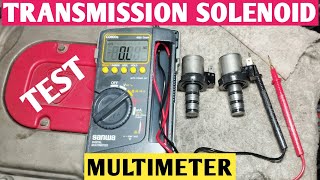
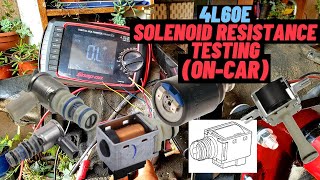
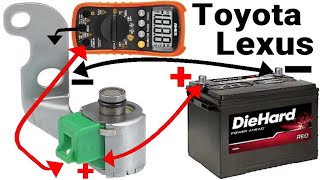
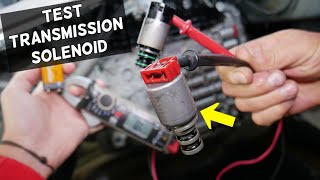
Use a digital multimeter and pinout diagram to test resistance between the common power pin and individual solenoid pins at the connector. Readings outside manufacturer specs (typically 1.5-45 ohms depending on make) confirm a failed solenoid pack.
Tools: Digital Multimeter, Vehicle-specific pinout diagram (Advanced) - Test the Pressure Switch Circuit
Disconnect the TCM and the component. Check for continuity to ground on the signal wire (should be an open circuit). Check for resistance between the appropriate pins at the TCM connector. An infinite reading indicates an open wire; a reading near zero ohms indicates a short.
Tools: Digital Multimeter, Vehicle-specific wiring diagram (Advanced) - Perform a Transmission Line Pressure Test
Connect hydraulic pressure gauges to the test ports on the transmission case. With the engine running, measure actual line pressure in each gear and compare it to manufacturer specifications. Low line pressure confirms a systemic hydraulic fault (pump, filter, major leak).
Tools: Transmission pressure gauge set, Service manual (Professional) - Advanced Electrical Signal Analysis
Use an oscilloscope to monitor the signal from the pressure switch or to the solenoid. You should see a clean square wave pattern when a PWM component is commanded on by a scan tool. A noisy or absent signal confirms a wiring or TCM driver issue.
Tools: Oscilloscope, Advanced Scan Tool (Professional)
When This Code Triggers (Freeze-Frame Conditions)
- Engine Coolant Temp: 180-200°F (The code sets when the vehicle is fully warmed up, as the TCM runs hydraulic tests at normal operating temperature.)
- RPM: 1500-2500 (Triggers during steady-state cruising or light acceleration when the transmission expects to perform a smooth shift.)
- Engine Load: 25-60% (Occurs under light to moderate engine load, rarely during heavy acceleration or deceleration.)
- Vehicle Speed: 35-55 mph (Logged at highway speeds when the transmission attempts to shift into higher gears or engage the torque converter lock-up clutch.)
Related Codes
- P0700 — A general transmission system malfunction code. The TCM stores the specific fault (P1787) and sends P0700 to the PCM to illuminate the Check Engine Light.
- P1788 — Often the electrical opposite of P1787. P1787 indicates an open circuit or short to ground, while P1788 indicates the same circuit is shorted to power.
- P0732 — Indicates 'Gear 2 Incorrect Ratio.' Seeing this alongside P1787 confirms the hydraulic pressure fault is preventing the 2nd gear clutches from engaging.
- P1791 — Indicates 'Loss of Prime.' While P1787 points to a specific hydraulic test failure, P1791 indicates a fundamental failure of the transmission pump to build any pressure.
Climate & Environmental Factors
- Cold Temperatures: Cold weather thickens transmission fluid, slowing flow and pressure buildup. This causes delayed engagement and triggers hydraulic test failures.
- High Humidity and Moisture: High humidity accelerates corrosion on external wiring connectors and grounds, creating electrical resistance and intermittent signals.
How to Talk to a Mechanic About This Code
Say this: "I have a Check Engine Light on and my scanner shows a P1787 transmission code. The car is experiencing [mention specific symptom, e.g., 'harsh shifting']. I authorize one hour of diagnostic time for you to check the fluid, scan for manufacturer-specific codes, and inspect the external wiring. Please call me with your findings and a detailed estimate before proceeding."
This establishes you as an informed customer, sets clear diagnostic boundaries, and prevents premature transmission replacement quotes.
Avoid saying:
- 'My car is acting weird, just fix it.'
- 'My check engine light is on, can you look at it?'
- 'I think I need a new transmission.'
- 'Just do whatever it takes.'
Questions to ask before authorizing the repair:
- What specific diagnostic tests did you perform to arrive at this conclusion?
- Did you check the transmission fluid level and condition?
- Did you test the resistance of the solenoid pack or related sensors?
- Is this repair for a specific component, or are you recommending a full rebuild?
- Can you provide a written estimate breaking down parts and labor?
- What is the warranty on the parts and labor for this specific repair?
Where to Take It: Dealer vs Independent vs Chain
- Dealer:
Recommended only for vehicles under warranty or specific TSBs (like the Ford TCM extension). Otherwise, it is the most expensive option.
Best for: Vehicles under warranty (especially Ford Focus/Fiesta with extended TCM coverage)., Complex, manufacturer-specific software issues or reprograming needs., Newer vehicles requiring proprietary diagnostic tools.
Downsides: Highest labor rates., Defaults to replacing large assemblies rather than repairing internal components., Outsources major transmission rebuilds to specialty shops and adds a markup. (Typical cost: +50% vs. baseline) - Independent Shop:
Seek an ATRA-certified transmission specialty shop. They offer dealer-level expertise at independent labor rates.
Best for: Out-of-warranty vehicles where cost is a major factor., Common, well-documented P1787 issues (e.g., Dodge/Chrysler solenoid packs)., Building a long-term relationship with a mechanic.
Downsides: Quality and expertise vary dramatically., Lacks expensive, dealer-level diagnostic software for the newest models. (Typical cost: +0% vs. baseline) - Chain Shop:
Avoid for P1787 diagnosis. They lack the specialized tools required for complex internal transmission faults.
Best for: Simple fluid and filter changes, but only if you are certain that is the fix.
Downsides: Technician skill varies widely., Lacks in-depth diagnostic tools for complex internal transmission codes., High pressure to upsell services; misdiagnoses complex electronic faults. (Typical cost: -10% vs. baseline)
When to Walk Away From the Repair
Do not fix the transmission if the repair cost exceeds 50% of the vehicle's private-party market value (or 40% for vehicles over 150,000 miles).
- Car worth $8000, fix is $1100: Fix it. The repair cost is well below the 50% threshold.
- Car worth $4000, fix is $2200: Borderline. The cost is over 50% of the car's value. Get a second opinion, and consider selling the vehicle as-is.
- Car worth $2500, fix is $3000: Walk away. The repair cost exceeds the vehicle's value. Do not fix it.
What Scan Tool You Need for This Code
Minimum: A scanner that reads manufacturer-specific transmission codes and views live transmission data, such as fluid temperature and solenoid command status.
Basic code readers often show 'No Codes' or only P0700. Diagnosing P1787 requires direct TCM access.
Budget: BlueDriver Pro Scan Tool (~$100) — Connects to a smartphone app and accesses the TCM on many vehicles to read specific transmission codes and view live data.
Mid-range: Foxwell NT510 Elite / Autel MaxiCOM MK808 (~$150-500) — Offers OE-level diagnostics and bidirectional controls, allowing you to command solenoids on/off or initiate a 'quick learn' procedure after a repair.
Professional: Autel MaxiSys Series (~$1200+) — Provides full professional functionality, including advanced bidirectional controls, TCM programming, and access to detailed OEM repair information.
Rent vs buy: Auto parts stores offer free scanning, but their tools rarely read specific TCM codes. Buying a budget-level scanner that accesses transmission data is mandatory for P1787.
How to Clear the Code After You Fix It
- Reconnect the battery if it was disconnected.
- Use an OBD-II scan tool to clear all diagnostic trouble codes from the TCM and PCM.
- Perform a complete drive cycle or manufacturer-specific 'Quick Learn' procedure to reset adaptive learning.
Drive cycle (~30 minutes): Start with a cold engine. Idle for 2-3 minutes. Drive a mix of city streets and highway, including gentle accelerations and stops. Conclude with 5 minutes of steady driving at 55-60 mph. Many vehicles require a specific scan-tool-initiated adaptive learning procedure after clearing codes.
Readiness monitors affected: Transmission, Comprehensive Component Monitor (CCM), Catalyst, Oxygen (O2) Sensor
Before emissions retest: drive at least 100 miles to fully set monitors.
Watch out for:
- Clearing the code without repairing the fault guarantees the code returns immediately upon the next TCM self-test.
- Taking the vehicle for an emissions test immediately after clearing codes results in a 'Not Ready' failure.
- Forgetting to perform the adaptive relearn procedure leaves the transmission with harsh or erratic shifting.
Will This Fail Emissions / State Inspection?
Yes — this code typically fails an OBD-II emissions inspection.
- California: An active Check Engine Light results in an automatic smog check failure. A full drive cycle must be completed after repairs.
- New York: The NYS inspection includes an OBD-II scan. An illuminated Check Engine Light for P1787 is an automatic failure.
- Texas: In the 17 counties requiring emissions testing, an active Check Engine Light causes an automatic failure.
Most Commonly Affected Vehicles
- Ford Focus (2012-2018) — Extremely common on models with the DPS6 dual-clutch automatic. The code points to a failing TCM. Ford issued Customer Satisfaction Program 14M02, extending the TCM warranty to 10 years or 150,000 miles.
- Dodge / Chrysler Grand Caravan, Town & Country (2001-2007) — P1787 is typically 'OD Hydraulic Pressure Test Failure.' This is frequently caused by a failing solenoid pack. Finding transmission fluid inside the main electrical connector confirms the failure.
- Ford Explorer, F-150 (2002-2010) — On vehicles with 5R55W/S/N transmissions, this code points to a failed solenoid pack or worn servo bores in the transmission case.
- Hyundai Veloster (2012-2017) — P1787 is defined as 'TGS Lever Position Sensor Error,' pointing to a fault with the gear selector sensor, not an internal hydraulic issue.
- Chevrolet / GMC Silverado HD / Sierra HD (2017-2018) — Transmission cooler lines rub against the frame, causing a fluid leak. This leads to low pressure, slipping, and triggers P1787.
- GMC Terrain (2018-2019) — A software anomaly causes this code. The fix is a TCM software update per TSB 18-NA-379.
- Honda Accord / Odyssey (1998-2004) — P1787 points to a failure of the automatic transmission's lock-up clutch solenoid or related hydraulic circuit.
- Subaru Outback / Forester (2010-2019) — Associated with a failing torque converter lock-up solenoid located in the CVT valve body.
Manufacturer-Specific Notes
- Ford: On Focus/Fiesta models with the DPS6, P1787 is caused by a failing TCM. Ford's Program 14M02 extends the TCM warranty to 10 years/150,000 miles.
- Dodge/Chrysler/Jeep: After replacing a solenoid pack, a 'Quick Learn' procedure using a scan tool is mandatory to reset adaptive values and ensure proper shifting.
- Hyundai/Kia: On dual-clutch models, P1787 relates to the gear selector switch. However, similar symptoms are caused by failed electric clutch actuators.
- General Motors (GM): P1787 is often a software glitch requiring a TCM reprogram. Certain codes fail to clear unless the TCM 'goes to sleep' (ignition off, key fob away for 15 minutes).
- Saab: P1787 relates to a fault in the Traction Control System (TCS) throttle position signal circuit, causing harsh shifting when TCS is active.
Real Owner Stories
2001 Dodge Caravan, 157K miles
Vehicle went into limp mode (stuck in 2nd gear) and set P0700 and P1787.
What they tried:
- Replaced both input and output speed sensors based on internet advice - no change.
- Took to a dealer who diagnosed a bad TCU and replaced it with a rebuilt unit - no change.
- Inspected the solenoid pack connector and found it contaminated with transmission fluid.
Outcome: The owner identified the cause as a failed solenoid pack due to fluid in the connector. Replacing the solenoid pack resolved the issue.
Lesson: Visual inspections reveal critical clues. On Dodge/Chrysler vans, P1787 with fluid in the connector is a definitive sign of a bad solenoid pack.
2014 Ford Focus, mileage not specified
Transmission shifted erratically. Check Engine Light was on.
What they tried:
- Took the car to a dealer, who diagnosed a faulty TCM.
- Drove the car for 9,000 miles in manual shift mode while waiting for the backordered part.
Outcome: The TCM was replaced under Ford's warranty extension program (14M02). The transmission shifted smoothly afterward.
Lesson: Always check if your vehicle is covered by Ford's extended warranty program (14M02) before paying for a repair, as TCM replacement is often free.
2002 Dodge Grand Caravan, mileage not specified
Transmission went into limp mode. The owner had a previous, similar issue.
What they tried:
- The first time, the fix was replacing the transmission computer (TCU/TCM).
- The second time, the scan tool showed a shift solenoid code.
Outcome: The owner diagnosed a failed shift solenoid pack and replaced it from the top of the engine bay.
Lesson: Limp mode is caused by different parts over time. A scan tool differentiates between a computer failure and a component failure, preventing misdiagnosis.
How to Prevent This Code From Triggering
- Regular transmission fluid and filter changes (Every 30,000 to 60,000 miles) — Prevents fluid breakdown and removes clutch debris that clogs solenoid passages and the valve body.
- Use only the manufacturer-specified transmission fluid (Every time fluid is added or changed) — Incorrect fluid types damage seals, leading to pressure loss and solenoid malfunction.
- Install an auxiliary transmission cooler (One-time installation for towing or hot climates) — Keeps fluid temperatures stable, preventing fluid breakdown and drastically reducing internal wear.
- Check for and repair fluid leaks promptly (During every oil change) — Prevents low fluid levels, which cause the pump to aerate the fluid and lower hydraulic pressure.
- Avoid aggressive driving and excessive strain (Daily habit) — Hard acceleration generates excess heat and puts high stress on clutches and solenoids.
Frequently Asked Questions
What does P1787 mean on a Ford?
On many Fords, P1787 is a generic code. However, on 2012-2018 Focus and Fiesta models, it points to the faulty dual-clutch transmission control module (TCM). This is often covered by Ford's extended warranty Program 14M02.
Can low transmission fluid cause P1787?
Yes. Low fluid prevents the hydraulic pump from supplying adequate pressure. This causes internal self-tests to fail and triggers the P1787 code.
What is 'limp mode'?
Limp mode is a protective feature where the TCM forces the transmission into a single gear, usually 2nd or 3rd. This limits speed but allows you to drive to a repair shop without causing severe internal damage.
What are the symptoms of a bad transmission pressure switch?
Symptoms include harsh shifting, getting stuck in gear, and an illuminated check engine light. A bad switch provides false feedback to the TCM, resulting in incorrect shift commands even if actual hydraulic pressure is normal.
How much does it cost to fix P1787?
Costs range from $200 for a fluid change to over $1,000 for a solenoid pack or TCM replacement. Major repairs on specific models like the Ford Focus may be covered under warranty extensions. Always diagnose the specific component before estimating costs.
My transmission acted up right after a battery change. Is that related to P1787?
Yes. A power interruption erases the TCM's adaptive memory, which stores learned values for smooth shifting. Performing a 'Quick Learn' procedure with a bidirectional scan tool usually resolves the issue.
I fixed the problem, but the P1787 code won't clear. What should I do?
Some modern vehicles, especially GM models, require the TCM to fully power down before a code clears permanently. Turn the ignition off, lock the doors, and keep the key fob at least 20 feet away for 15 minutes. This allows the module to reset.
Will clearing the code with a scanner fix the problem?
No. Clearing the code only turns off the Check Engine Light temporarily. The light will return as soon as the computer runs its next self-test unless the underlying issue is repaired.
Key Takeaways
- Check the transmission fluid level and condition first, as low or burnt fluid causes the majority of P1787 triggers and costs under $200 to fix.
- Stop driving immediately to prevent a $500 solenoid replacement from escalating into a $4,000 complete transmission rebuild due to overheating.
- Check for extended warranties before paying for repairs, especially on 2012-2018 Ford Focus models where Ford covers TCM replacements up to 150,000 miles.
- Perform a transmission 'Quick Learn' procedure using a bidirectional scan tool after any physical repair to restore smooth shifting and reset adaptive memory.
Helpful Videos






Shop the Parts Behind P1787
Below are the parts most often responsible for code P1787, ranked by how frequently each one is the actual culprit (per the diagnosis above). Tap any to see what we have for your vehicle.


The information in this article is provided for general reference and educational purposes only. Vehicle specifications, procedures, and part compatibility can vary by production date, trim level, and region. Always consult your vehicle's factory service manual and verify part numbers before purchasing or performing repairs. Safety-critical components such as airbags, seat belts, and braking systems should be installed by a qualified professional.
- 🧭 Diagnostic Flowchart
- 🎬 Helpful Videos
- 🛍️ Shop This Part
- What Does P1787 Mean?
- Can I Drive With P1787?
- Common Causes
- Symptoms
- Common Fixes & Costs
- Used vs. New Parts: Buying Guide
- What Happens If You Wait — Timeline
- Cost of Not Fixing It
- Diagnosis Steps
- When This Code Triggers (Freeze-Frame Conditions)
- Related Codes
- Climate & Environmental Factors
- How to Talk to a Mechanic About This Code
- Where to Take It: Dealer vs Independent vs Chain
- When to Walk Away From the Repair
- What Scan Tool You Need for This Code
- How to Clear the Code After You Fix It
- Will This Fail Emissions / State Inspection?
- Most Commonly Affected Vehicles
- Manufacturer-Specific Notes
- Real Owner Stories
- 2001 Dodge Caravan, 157K miles
- 2014 Ford Focus, mileage not specified
- 2002 Dodge Grand Caravan, mileage not specified
- How to Prevent This Code From Triggering
- Frequently Asked Questions
- What does P1787 mean on a Ford?
- Can low transmission fluid cause P1787?
- What is 'limp mode'?
- What are the symptoms of a bad transmission pressure switch?
- How much does it cost to fix P1787?
- My transmission acted up right after a battery change. Is that related to P1787?
- I fixed the problem, but the P1787 code won't clear. What should I do?
- Will clearing the code with a scanner fix the problem?
- Key Takeaways
- 🎟️ Get 5% Off