

OBD-II Code P1788: Comprehensive Diagnosis and Repair Guide
The Ultimate Resource to Understand, Diagnose, and Fix P1788
- P1788 is a manufacturer-specific code that most commonly points to a failed $20 A/T control relay on Mitsubishis, a $300 solenoid block on Fords, or a $60 pressure switch on Hondas.
- Never replace internal transmission parts for a P1788 code without first testing the external electrical system, as a simple 12-volt battery drop or corroded ground wire triggers this exact fault.
- Stop driving immediately if your transmission enters 'limp mode' (stuck in 2nd or 3rd gear); pushing the vehicle further turns a $100 electrical fix into a $3,500+ mechanical rebuild.
- If you own a 2020-2022 Subaru, verify your scanner is reading B1788 instead of P1788, which indicates a free dealer-repaired safety recall (NHTSA #24V-227) for the passenger airbag sensor.
What Does P1788 Mean?
P1788 is a manufacturer-specific diagnostic trouble code (DTC), meaning its definition varies significantly depending on the vehicle's make. It indicates the Powertrain Control Module (PCM) or Transmission Control Module (TCM) detected an electrical fault within a critical transmission circuit. The code triggers when the control module detects that the voltage supplied to the transmission solenoids or the module itself drops below a specific threshold, typically 7 volts.
Technical definition: The official SAE/OBD-II definition for P1788 is set by the manufacturer. Common definitions include: 'Pressure Control Solenoid B Open Circuit' (Ford, Lincoln, Mazda, Jaguar), '2-4 Hydraulic Pressure Switch Circuit' (Honda, Acura, Dodge), and 'A/T Control Relay System Malfunction' (Mitsubishi). The code signifies the controlling computer registered a voltage reading from a specific transmission component that falls outside its expected operating range, indicating an open circuit, short, or power supply failure.
Can I Drive With P1788?
No, recommended The transmission enters a protective 'limp mode,' locking into 2nd or 3rd gear, causing harsh shifting and poor acceleration. Continued driving generates excessive heat, turning a $100 electrical repair into a $3,500 transmission rebuild. Drive only the short distance required to reach a safe location or a qualified repair shop.
Common Causes
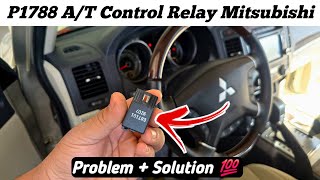
- Faulty Transmission Control Relay (Mitsubishi) (Very Common) — On Mitsubishi vehicles, this is the primary cause. The A/T (Automatic Transmission) control relay provides power to the transmission solenoids and TCM. It fails due to heat and age, causing an intermittent or total loss of power to the transmission's electronic controls.
- Faulty Transmission Solenoid Pack (Ford/Mazda) (Very Common) — For Ford, Lincoln, and Mazda, this code points directly to an open circuit within a pressure control solenoid. In affected transmissions (like the 5R55S/W/E), these solenoids are bundled into a single block that must be replaced as a complete unit. 🎬 See this step-by-step Ford 5R55S solenoid pack replacement walkthrough.
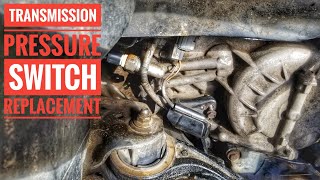
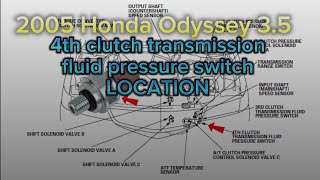
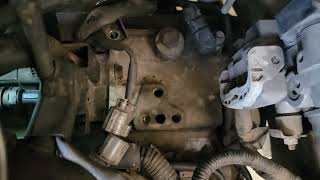
- Failed Transmission Oil Pressure Switch (Honda/Acura) (Common) — On Honda and Acura models, P1788 indicates a fault in a specific gear shaft pressure switch (e.g., the 2-4 clutch pressure switch). These exterior-mounted switches verify commanded hydraulic pressure and fail electrically or leak fluid over time. 🎬 Watch: How to replace Honda and Acura transmission pressure switches.
- Damaged Wiring, Connectors, or Grounds (Common) — The transmission wiring harness is exposed to extreme heat, vibration, and road debris. Frayed, melted, or corroded wires cause open or short circuits. A poor engine ground or corroded battery terminal creates a voltage drop sufficient to trigger the code.
- Low System Voltage (Weak Battery/Alternator) (Less Common) — The transmission control system requires stable battery voltage. A failing battery or weak alternator drops system voltage below the 7-volt threshold, triggering the code. This is the primary suspect if the transmission acts up during engine cranking.
- Low or Dirty Transmission Fluid (Less Common) — Low fluid reduces hydraulic pressure, forcing solenoids to overwork and overheat. Burnt or contaminated fluid causes pressure switches and solenoids to stick, leading to erratic behavior the computer interprets as an electrical fault.
- Failed Transmission Control Module (TCM) (Rare) — The onboard computer controlling the transmission fails rarely. Because it is expensive and requires programming, condemn the TCM only after exhaustively testing and ruling out all wiring, relays, and external components.
Symptoms
- Transmission Stuck in One Gear (Limp Mode) — The TCM forces the transmission into a single gear (usually 2nd or 3rd) to prevent mechanical damage. The vehicle exhibits poor acceleration from a stop and high RPMs at moderate speeds.
- Blinking 'N' or 'D' Light / Blank Gear Indicator — On Mitsubishi vehicles, the neutral light flashes repeatedly when the A/T control relay fails. The P-R-N-D-L display on the instrument cluster often goes blank entirely.
- Harsh, Abrupt, or Delayed Shifting — Before entering limp mode, the transmission slams into gear, hesitates significantly before shifting, or refuses to shift when expected.
- Burning Smell from Transmission — If the transmission slips or operates under high stress due to the fault, the fluid overheats, producing a distinct acrid, burning smell indicating mechanical damage.
- Check Engine Light or A/T Warning Light On (also visible on scanner) — The vehicle's computer illuminates a dashboard warning light to notify the driver of the detected electrical fault.
Diagnostic Flowchart
Tap your situation to follow the diagnostic path that matches what you're seeing on this code.
Common Fixes & Costs
- Replace Automatic Transmission (A/T) Control Relay (Mitsubishi) — Parts: $15-$40, Labor: $50-$75 (DIY friendly), ~0.5 hr book time (DIY)
- Replace Transmission Solenoid Pack/Block (Ford/Mazda) — Parts: $250-$450, Labor: $300-$500 (includes fluid/filter), ~3 hr book time (Intermediate)
- Replace Transmission Oil Pressure Switch(es) (Honda/Acura) — Parts: $50-$90 per switch, Labor: $130-$180, ~1 hr book time (DIY)
- Repair Damaged Wiring or Connector — Parts: $10-$75, Labor: $150-$400, ~2 hr book time (Advanced)
- Transmission Fluid and Filter Service — Parts: $60-$120, Labor: $120-$200, ~1.5 hr book time (DIY)
Used vs. New Parts: Buying Guide
When a used part is worth it: Buying used parts is not recommended for P1788 fixes. Relays and pressure switches are inexpensive new, and the labor to replace them doesn't justify the risk of a used part failing. A used solenoid block is only viable for an older, high-mileage vehicle on a tight budget from a reputable seller with a warranty.
Donor-vehicle mileage cap: roughly under 60000 miles for the part to have meaningful remaining life.
Donor quality checklist:
- Verify the exact part number; Ford solenoid packs have early and late designs that are not interchangeable.
- Ensure the donor vehicle was not scrapped due to transmission failure.
- Inspect electrical connector pins for corrosion or damage.
Decision logic:
- If The part is a relay or external pressure switch → Always buy new. Cost savings are minimal and the risk of premature failure is high.
- If The part is an internal solenoid block and the vehicle is over 150,000 miles → A used part from a low-mileage donor with a 90-day warranty is cost-effective, but a new aftermarket part is a better long-term value.
- If The vehicle is less than 10 years old or has under 100,000 miles → Buy a new OEM or high-quality aftermarket part to ensure longevity and avoid repeat labor costs.
Warranty tradeoff: Used parts typically come with a 30-90 day part-only warranty. New aftermarket parts carry a 1-year to limited lifetime warranty. A used part warranty does not cover the significant labor costs for a second installation if it fails.
Worst-case if a used part fails: $400-$800 if a used solenoid block fails after the warranty period, requiring a full repeat of the labor and the purchase of another part.
What Happens If You Wait — Timeline
- 0-1 Month: Code sets, Check Engine Light illuminates. Vehicle enters 'limp mode' intermittently or constantly. Shifting is harsh and acceleration is poor. Increased stress on engine and transmission mounts. (MPG impact: 10-25%% · Added cost: $50-$150 in wasted fuel.)
- 1-3 Months: Continued driving in limp mode generates excessive heat. Transmission fluid overheats and breaks down, losing its ability to lubricate and cool. A distinct burning smell becomes noticeable. (MPG impact: 20-30%% · Added cost: $200-$400 for a fluid flush service, though internal glazing of clutches begins.)
- 3-6 Months: Burnt fluid causes clutch packs and bands to glaze and slip. Seals harden, leading to internal pressure leaks. Constant harsh shifting from limp mode causes mechanical shock and wear on gears and clutch drums. (MPG impact: 25-40%% · Added cost: $800-$1,500 as a simple solenoid fix now requires a valve body and clutch pack replacement.)
- 6+ Months: Catastrophic failure. Slipping clutches generate extreme heat, destroying themselves and contaminating the entire system with debris. Planetary gear sets or the torque converter fail from stress and contamination. (MPG impact: N/A (Vehicle is likely undrivable)% · Added cost: $2,500-$5,000+ for a complete transmission rebuild or replacement.)
Cost of Not Fixing It
- 0-1 Month: Continued operation in 'limp mode' with harsh shifting and high RPMs. Significant decrease in fuel economy. Increased stress on engine and transmission mounts. (Added cost: $50-$150 in wasted fuel.)
- 1-6 Months: Excessive heat generated from high RPMs and slipping components breaks down the transmission fluid, causing it to burn. This glazes clutch surfaces and hardens seals, causing internal leaks. (Added cost: $250-$500 for a fluid flush and conditioner, though damage is likely permanent.)
- 6+ Months: Catastrophic mechanical failure. Burnt fluid and constant harsh engagement destroy clutch packs, bands, and the torque converter. The initial electrical fault repair is irrelevant, as a complete transmission rebuild is required. (Added cost: $2,500-$5,000+)
Diagnosis Steps
- Perform a Full System Scan
Use a high-quality OBD-II scanner capable of reading manufacturer-specific codes from the TCM. Note all codes. P1788 is often accompanied by P0700 (general transmission fault) or specific solenoid codes (e.g., P1751 on Mitsubishis), which are crucial clues.
Tools: Professional OBD-II Scanner (Beginner) - Check Battery and Charging System
Rule out the power source. Test battery voltage with the engine off (>12.4V) and running (13.5V-14.5V). Ensure battery terminals and main chassis ground straps are clean, tight, and free of corrosion. A simple voltage drop triggers this code.
Tools: Multimeter (Beginner) - Check Transmission Fluid Level and Condition
Ensure the fluid is at the correct level using the manufacturer's procedure. The fluid must be bright red and translucent. Brown, black, or burnt-smelling fluid indicates internal mechanical damage requiring more than an electrical fix.
Tools: Rag, Dipstick (if equipped) (Beginner) - Visually Inspect Wiring and Connectors
Thoroughly inspect the wiring harness running to the transmission case, solenoids, and TCM. Look for melted plastic, chafed wires, and corrosion in the pins of the main connector. Pay special attention to areas near hot exhaust pipes.
Tools: Flashlight, Inspection mirror (Intermediate) - Locate and Test the Specific Component (Relay/Switch/Solenoid)
Using a repair manual, locate the component identified by the code's definition. For Mitsubishi, test the A/T relay (behind the glovebox) by swapping it with an identical relay. For Honda, locate the external pressure switch and test resistance. For Ford, access the solenoid inside the transmission pan.
Tools: Vehicle-specific repair manual, Multimeter, Basic hand tools (Intermediate) - Test the Component's Electrical Circuit for Power and Ground
With the component disconnected and the key on (engine off), use a multimeter to check for power and ground at the connector. You need battery voltage on one pin and a good ground (<0.1V) on another. No voltage points to a wiring/relay issue; no ground points to a broken wire or TCM fault.
Tools: Multimeter, Vehicle-specific wiring diagram (Advanced) - [PRO TIP] Perform a Voltage Drop Test on Power and Ground Circuits
A voltage drop test under load is highly accurate. Connect the red multimeter lead to the battery positive post and the black lead to the power supply pin at the component connector. Energize the circuit; the reading must be less than 0.5V. Repeat for the ground side (black lead on battery negative, red lead on component ground pin); this reading must be less than 0.2V.
Tools: Multimeter with long leads (Advanced) - [PRO TIP] Test Honda/Acura Pressure Switch Circuit Voltage
Unplug the connector from the suspect pressure switch. With the key on, engine off, probe the terminal in the harness connector with a multimeter set to DC volts. You must read a reference voltage, typically 5V or 12V. If voltage is present, the wiring is okay, and the switch failed. If no voltage, there is an open in the harness or TCM.
Tools: Multimeter, Vehicle-specific wiring diagram (Advanced) - [PRO TIP] Test Ford/Mazda Solenoid Resistance
Access the solenoid block connector. Measure resistance between the power and ground pins for the suspect solenoid ('B' or PCS-B). A good solenoid reads between 10 and 15 ohms. A reading of infinity (OL) indicates an open circuit, requiring block replacement. Torque solenoid block bolts to 71 inch-pounds.
Tools: Multimeter, Vehicle-specific wiring diagram, Pinout chart, Inch-pound torque wrench (Advanced) - [PRO TIP] Test Mitsubishi A/T Relay Circuit Voltage
The code sets if the A/T control voltage drops below 7V. Remove the relay and check for constant battery voltage at terminal 4 of the relay socket. With the key on, check for ignition voltage at terminal 2. If either is missing, trace wiring to the fuse box. If powers are good, the relay itself failed.
Tools: Multimeter, Vehicle-specific wiring diagram (Advanced)
When This Code Triggers (Freeze-Frame Conditions)
- Engine Coolant Temp: 180-210°F (82-99°C) (The fault occurs after the vehicle reaches full operating temperature, as heat increases electrical resistance and causes failing relays to malfunction.)
- Transmission Fluid Temp: 175-220°F (79-104°C) (The code frequently sets when the transmission is hot, especially after extended driving, city traffic, or towing.)
- System Voltage: < 9 Volts (For relay-related faults (Mitsubishi), the code sets when the TCM detects voltage supplied by the A/T control relay drops below a critical threshold, typically 7V.)
- Gear Commanded / Actual: During a shift event (e.g., 2-3 shift) (For solenoid or pressure switch faults, the error logs at the precise moment the TCM commands a gear change and does not receive the expected electrical feedback.)
Related Codes
- P0700 — P0700 is a generic 'Transmission Control System Malfunction' code. It is an informational code set by the ECM to turn on the Check Engine Light, indicating a more specific code, like P1788, is stored in the TCM. Always scan the TCM if P0700 is present.
- P1751 — On Mitsubishi vehicles, P1751 ('A/T Control Relay Malfunction') is a companion code to P1788. They set together and point to the exact same failure: the A/T Control Relay. Diagnosing one diagnoses both.
- P0888 — This is a generic code for 'TCM Power Relay Sense Circuit High/Low'. It is functionally identical to the Mitsubishi-specific P1788, indicating the computer is not seeing the correct voltage from the transmission control relay's output. Diagnosis is identical.
- P07xx (Solenoid Codes) — Any code in the P0740-P0799 range refers to a specific solenoid. If you have a specific solenoid code alongside a P1788 that points to a power relay, the power issue is affecting that solenoid's circuit.
Climate & Environmental Factors
- High Ambient Heat / Engine Temperature: This is a primary trigger for the Mitsubishi A/T control relay failure. The relay becomes heat-soaked and its internal contacts fail, cutting power to the transmission controls. The issue appears after 15-30 minutes of driving and resolves after cooling down.
- Cold Weather: Cold temperatures cause transmission fluid to thicken, leading to delayed engagement and harsh shifting. While it does not directly cause an electrical P1788 code, the added strain exacerbates existing mechanical weaknesses in solenoids or switches.
- Humidity / Moisture: High humidity accelerates corrosion on external wiring harnesses, connectors, and ground points. A corroded connector pin or ground strap creates high resistance, causing a voltage drop sufficient to trigger a P1788 code.
How to Talk to a Mechanic About This Code
Say this: "I have a [Your Vehicle Make/Model] with a P1788 code. Based on my research, for this car it points to a [faulty A/T control relay / pressure control solenoid B open circuit / faulty 2-4 pressure switch]. I'd like to schedule a diagnostic to confirm this specific part failed and get a quote for its replacement."
This signals you are an informed customer. It directs them to the most probable cause, saving diagnostic time, and prevents them from immediately quoting a full transmission rebuild. It establishes you expect a specific component diagnosis.
Avoid saying:
- 'My transmission is acting weird.'
- 'My check engine light is on, can you just fix it?'
- 'I think I need a new transmission.'
Questions to ask before authorizing the repair:
- What specific tests did you perform to confirm the [relay/solenoid/switch] is the point of failure?
- Can you confirm you tested the wiring and connector to the component and they are in good condition?
- Is the price quoted for an OEM part or an aftermarket part?
- What is the warranty on both the part and your labor for this specific repair?
Where to Take It: Dealer vs Independent vs Chain
- Dealer:
Recommended for warranty work or the specific Subaru recall. Otherwise, a qualified independent shop is more cost-effective.
Best for: Vehicles under warranty., Diagnosing the Subaru B1788 recall, which MUST be done at a dealer., Complex, late-model vehicles where access to manufacturer-specific tools and software is critical.
Downsides: Highest labor rates., Inclined to replace a component assembly (like a whole valve body) rather than a single part. (Typical cost: +40% vs. baseline) - Independent Shop:
Best choice for most P1788 scenarios, especially if you find a trusted transmission or electrical specialist. They perform the specific, targeted repair needed.
Best for: Out-of-warranty vehicles where cost is a factor., Common P1788 fixes like the Mitsubishi relay, Honda pressure switches, or Ford solenoid pack., Finding a shop specializing in transmissions or automotive electrical systems.
Downsides: Quality and expertise vary widely; vetting is crucial., Lacks the latest specialized tools for very new or complex models. (Typical cost: +0% vs. baseline) - Chain Shop:
AVOID for initial diagnosis. The risk of being sold an unnecessary and expensive rebuild is very high for an electrical code like P1788.
Best for: Getting a second opinion on a quote (sometimes offered for free)., Simple fluid and filter services.
Downsides: High pressure to upsell, leading to recommendations for a full transmission rebuild regardless of the code., Technician skill and diagnostic capability are inconsistent. (Typical cost: -5% vs. baseline)
When to Walk Away From the Repair
If the estimated repair cost exceeds 50% of the car's private-party market value, seriously consider selling or trading in the vehicle.
- Car worth $3500, fix is $850: Fix it. The repair cost is ~24% of the vehicle's value, making it a worthwhile investment.
- Car worth $4000, fix is $2500: Walk away. The repair cost is over 60% of the car's value. A full rebuild is not economical.
- Car worth $8000, fix is $400: Fix it without question. This is a low-cost repair on a vehicle with significant remaining value.
What Scan Tool You Need for This Code
Minimum: A scanner that reads manufacturer-specific codes for the Transmission Control Module (TCM). A basic code reader only shows a generic P0700 code and misses the critical P1788 detail.
A cheap, generic code reader cannot communicate with the TCM. It tells you a transmission fault exists (P0700) but won't provide the specific P1788 code, leaving you unable to identify the actual problem.
Budget: BlueDriver Pro (~$99) — Reads and clears enhanced codes (ABS, Airbag, Transmission) for most major brands. It accesses the P1788 code from the TCM and provides freeze-frame data, sufficient for DIY diagnosis.
Mid-range: Foxwell NT510 Elite (~$180) — Provides manufacturer-specific software with bidirectional control. This allows you to command solenoids on and off to test their function directly, invaluable for confirming a failed solenoid pack.
Professional: Autel MaxiCOM MK808 / Launch CRP919E (~$450-650) — Offers full-system diagnostics, extensive live data graphing, and advanced bidirectional controls. Performs transmission-specific functions like adaptation resets, required after replacing a solenoid pack.
Rent vs buy: For a one-time fix, auto parts stores offer free loaner tools. Verify their scanners read manufacturer-specific transmission codes; many basic loaners cannot. If you plan to do your own maintenance, buying a tool like the BlueDriver is a worthwhile investment.
How to Clear the Code After You Fix It
- Ensure the repair is complete and all connectors are secured.
- Reconnect the battery if disconnected during the repair.
- Use a quality OBD-II scan tool to erase the DTCs from both the ECM and TCM.
- Perform a transmission adaptive pressure relearn procedure if specified by the manufacturer (crucial after solenoid replacement on Ford models).
- Conduct a complete drive cycle to allow the vehicle's readiness monitors to run.
Drive cycle (~20 minutes): A general drive cycle includes: 1. Cold start (vehicle sat for 8+ hours). 2. Idle for 2-3 minutes in Park/Neutral. 3. Drive in city traffic, making several slow, complete stops. 4. Accelerate moderately to a steady highway speed of 55-60 mph and maintain for 5-10 minutes. 5. Safely decelerate to a stop without aggressive braking. 6. Repeat city and highway portions if monitors are not yet set.
Readiness monitors affected: Comprehensive Component Monitor (CCM), Catalyst Monitor, EVAP System Monitor
Before emissions retest: drive at least 50 miles to fully set monitors.
Watch out for:
- Disconnecting the battery clears the code but resets all adaptive learning and readiness monitors, causing an immediate emissions test failure.
- The code returns immediately if the underlying electrical fault is not properly repaired.
- Failure to perform a transmission relearn procedure results in continued harsh shifting even after the part is replaced.
Will This Fail Emissions / State Inspection?
Yes — this code typically fails an OBD-II emissions inspection.
- California: An illuminated Check Engine Light results in an automatic failure of the smog check. After repairs, the vehicle must complete a drive cycle to set all readiness monitors before re-testing.
- New York: The NYS DMV vehicle inspection includes an OBD-II scan. A P1788 code, or any active powertrain code causing the Check Engine Light to be on, is an automatic failure.
- Texas: In the 17 counties requiring emissions testing, an active P1788 code causes an OBD-II test failure. After clearing the code, readiness monitors must be set to 'Ready' to pass.
Most Commonly Affected Vehicles
- Mitsubishi Pajero / Montero (2006-2018) — Extremely common issue. The code points to a faulty A/T Control Relay (Part # MR534632) that fails when hot. Located behind the glove compartment. Symptoms include the flashing 'N' light and loss of gear indicator display.
- Ford Explorer, Ranger, Mustang (1997-2011) — Indicates an open circuit in a pressure control solenoid (PCS) in the 5R55E, 5R55W, or 5R55S transmission. Requires removing the transmission pan to replace the solenoid block.
- Lincoln LS (2000-2006) — Shares the 5R55N/S transmission with Ford. The code means 'Pressure Control Solenoid B Open Circuit' and requires replacement of the internal solenoid block.
- Honda Accord, Odyssey, Pilot (2003-2008) — On V6 models, P1788 means '2-4 Hydraulic Pressure Switch Circuit'. There are typically two switches (Part # 28600-P7W-003 and 28600-P7Z-003) on the transmission case; replace both simultaneously.
- Acura TL, MDX (2001-2007) — Points to a faulty 3rd or 4th clutch transmission fluid pressure switch.
- Jaguar S-Type (2000-2002) — Uses the Ford-derived 5R55N transmission. P1788 points to 'Pressure Control Solenoid B Open Circuit', identical to Ford/Lincoln diagnosis.
- Dodge / Chrysler Caravan, Grand Voyager, Town & Country (1996-2007) — Indicates a '2-4 Hydraulic Pressure Switch Circuit' failure. On some models, it is triggered by a stuck 'Mode Down Switch' on the HVAC control panel, an unrelated issue that must be ruled out first.
- Subaru Outback, Legacy, BRZ (2020-2022) — CRITICAL: On these models, the code is B1788, not P1788. It refers to an 'Occupant Detection Sensor Power Supply' issue. This is a known defect covered by Safety Recall WRA-24 (NHTSA #24V-227). It is a safety system fault, not a transmission fault.
- Mazda B-Series Truck, Tribute (1997-2010) — Sharing platforms with Ford, these vehicles use Ford transmissions. P1788 indicates a pressure control solenoid fault, mirroring the diagnosis for Fords.
Manufacturer-Specific Notes
- Mitsubishi: The P1788 code is almost always caused by a heat-sensitive A/T control relay failure. Symptoms are a flashing neutral light and limp mode after 15-20 minutes of driving. The relay is a common 4-pin relay located behind the glove box.
- Ford / Lincoln / Mazda: The code means 'Pressure Control Solenoid 'B' Open Circuit'. In the 5R55E/W/S transmissions, solenoids are integrated into a single block. Technicians replace the entire solenoid block and servo bore sleeves simultaneously to prevent repeat failures. TSB 04-24-21 addresses related issues.
- Honda / Acura: The code points to an external '2-4' or '3rd/4th Clutch' pressure switch. There are two or three on the case, and it is highly recommended to replace all of them at the same time. TSB 12-064 addresses software updates that improve shift quality.
- Subaru: Extreme caution is required. On 2020-2022 models, this issue manifests as a B1788 code, not P1788, and is related to the Occupant Detection System (ODS) in the passenger seat. It disables the passenger airbag. This is covered by Safety Recall WRA-24 and TSB 18-217-22R.
- Dodge / Chrysler: P1788 has two wildly different meanings. It is a '2-4 Hydraulic Pressure Switch Circuit' fault, or it means 'Mode Down Switch Performance,' indicating a stuck button on the climate control panel. A scan tool with accurate definitions is essential.
Real Owner Stories
2009 Mitsubishi Montero at 120K miles - Easy Fix
After driving for 20 minutes, the 'N' light flashed, the transmission slammed into gear, and stuck in 3rd (limp mode). The check engine light illuminated. After cooling down, it drove normally for a short while before returning.
What they tried:
- Scanned the codes and found P1788 (A/T Control Relay) and P1751.
- Located the A/T control relay behind the glove box based on forum advice.
Outcome: The owner swapped the faulty A/T relay (Part # MR534632) with an identical horn relay for testing. The problem disappeared. They purchased a new relay for $20 and resolved the issue permanently.
Lesson: On a Mitsubishi with a flashing 'N' light and P1788, the A/T relay is the cause over 95% of the time. It is a cheap, easy DIY fix that must be your first step.
2005 Ford Explorer (5R55S) at 155K miles - Misdiagnosis Story
The vehicle experienced harsh shifting, occasional slipping between 2nd and 3rd gear, and a flashing 'O/D Off' light, triggering code P1788 (Pressure Control Solenoid 'B' Open Circuit).
What they tried:
- A general repair shop recommended a full transmission rebuild for $3,500.
- The owner sought a second opinion from a transmission specialist.
- The specialist noted the fluid was dark but not burnt and suspected an electrical issue.
Outcome: The transmission shop tested the solenoid block's resistance at the connector, confirming an open circuit on the PCS 'B' pin. They replaced the entire solenoid block (Part # 9L2Z-7G391-A) and serviced the fluid for $850. The shifting issues resolved completely.
Lesson: A transmission code does not automatically mean a full rebuild. P1788 points to a specific, repairable electrical component. Always get a diagnosis from a specialist who tests components before recommending a rebuild.
2006 Honda Odyssey at 130K miles - Unusual Root Cause
The check engine light illuminated with code P1788 (2-4 Hydraulic Pressure Switch Circuit). The van felt slightly 'off' during gear changes.
What they tried:
- Replaced only the 2-4 pressure switch (Part # 28600-P7Z-003). The code returned after a week.
- Took the vehicle to a dealer who noted the 3rd and 4th gear pressure switches often fail simultaneously, causing erratic pressure readings that confuse the computer.
Outcome: The dealer replaced the remaining pressure switches (e.g., Part # 28600-P7W-003) as a set. The P1788 did not return. Total repair cost was $400.
Lesson: On Honda/Acura vehicles, pressure switches are high-failure items. Replace all of them as a set, even if the code points to one, to prevent comebacks and save on future labor.
How to Prevent This Code From Triggering
- Perform regular transmission fluid and filter changes (Every 30,000 to 60,000 miles) — Clean fluid lubricates and cools solenoids and switches. New fluid prevents the buildup of clutch debris and metal shavings that clog solenoid passages and cause them to stick or fail.
- Use only manufacturer-specified transmission fluid (Every fluid service) — Using the wrong fluid type introduces incorrect viscosity and friction properties. Incorrect chemical additives degrade seals and electronic components within the solenoids, leading to premature failure.
- Install an auxiliary transmission cooler (Once, especially if you tow or live in a hot climate) — Excessive heat kills transmission electronics and fluid. A cooler keeps fluid temperatures stable, preventing fluid breakdown and reducing heat stress on relays and solenoid coils.
- Protect wiring harnesses from heat (Once, during other maintenance) — Wiring for transmission components runs near hot exhaust parts. Covering these wires with high-temperature wire harness tape or a heat sleeve prevents them from melting or becoming brittle, avoiding open or short circuits.
Frequently Asked Questions
Is it safe to drive my car with a P1788 code?
No. The transmission's 'limp mode' is an emergency measure. Continued driving causes permanent mechanical damage to clutches, drastically increasing repair costs.
Can I fix a P1788 code myself?
Yes, for specific vehicles. Replacing a Mitsubishi A/T relay or Honda pressure switch is a beginner-friendly DIY repair. However, replacing an internal Ford solenoid block requires dropping the transmission pan and advanced skills.
How much does it cost to fix P1788?
Costs vary dramatically by vehicle. A Mitsubishi relay replacement is under $100, while a Honda pressure switch replacement costs $200-$350. A Ford solenoid block replacement typically costs $650-$1,000 at a repair shop.
What is the most common misdiagnosis for P1788?
The most common mistake is replacing expensive internal solenoids without testing the external electrical system. A simple $20 relay, a corroded ground wire, or a dead battery often causes this code. Always rule out external power issues first.
Can a bad battery or ground wire cause a P1788 code?
Yes. The transmission control module requires stable voltage to operate solenoids. A weak battery or corroded ground strap causes a voltage drop, instantly triggering the P1788 code.
Will clearing the P1788 code fix the problem?
No. Clearing the code only erases the fault from the computer's memory. The code returns immediately once the computer runs its self-test and detects the underlying electrical fault.
What is the difference between P1788 and P0888?
P1788 is a manufacturer-specific code, while P0888 is the generic OBD-II equivalent for a 'TCM Power Relay Sense Circuit' fault. Both point to a power supply problem to the transmission control module and require identical diagnostic steps.
My Mitsubishi Pajero has a blinking 'N' light. Is that the P1788 code?
Yes. A flashing neutral light is the classic symptom of an A/T control relay failure on Mitsubishi Pajero and Montero models. Replacing the relay behind the glovebox usually resolves the issue.
Key Takeaways
- P1788 is a manufacturer-specific code that most commonly points to a failed $20 A/T control relay on Mitsubishis, a $300 solenoid block on Fords, or a $60 pressure switch on Hondas.
- Never replace internal transmission parts for a P1788 code without first testing the external electrical system, as a simple 12-volt battery drop or corroded ground wire triggers this exact fault.
- Stop driving immediately if your transmission enters 'limp mode' (stuck in 2nd or 3rd gear); pushing the vehicle further turns a $100 electrical fix into a $3,500+ mechanical rebuild.
- If you own a 2020-2022 Subaru, verify your scanner is reading B1788 instead of P1788, which indicates a free dealer-repaired safety recall (NHTSA #24V-227) for the passenger airbag sensor.
Helpful Videos



Shop the Parts Behind P1788
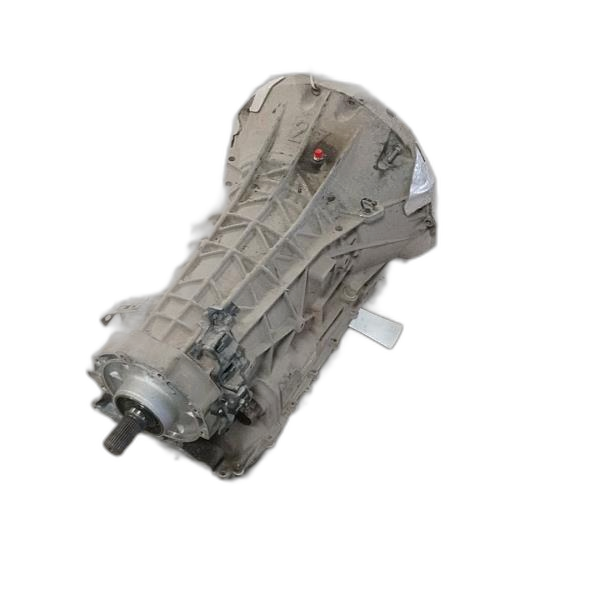
Below are the parts most often responsible for code P1788, ranked by how frequently each one is the actual culprit (per the diagnosis above). Tap any to see what we have for your vehicle.


The information in this article is provided for general reference and educational purposes only. Vehicle specifications, procedures, and part compatibility can vary by production date, trim level, and region. Always consult your vehicle's factory service manual and verify part numbers before purchasing or performing repairs. Safety-critical components such as airbags, seat belts, and braking systems should be installed by a qualified professional.
- 🧭 Diagnostic Flowchart
- 🎬 Helpful Videos
- 🛍️ Shop This Part
- What Does P1788 Mean?
- Can I Drive With P1788?
- Common Causes
- Symptoms
- Common Fixes & Costs
- Used vs. New Parts: Buying Guide
- What Happens If You Wait — Timeline
- Cost of Not Fixing It
- Diagnosis Steps
- When This Code Triggers (Freeze-Frame Conditions)
- Related Codes
- Climate & Environmental Factors
- How to Talk to a Mechanic About This Code
- Where to Take It: Dealer vs Independent vs Chain
- When to Walk Away From the Repair
- What Scan Tool You Need for This Code
- How to Clear the Code After You Fix It
- Will This Fail Emissions / State Inspection?
- Most Commonly Affected Vehicles
- Manufacturer-Specific Notes
- Real Owner Stories
- 2009 Mitsubishi Montero at 120K miles - Easy Fix
- 2005 Ford Explorer (5R55S) at 155K miles - Misdiagnosis Story
- 2006 Honda Odyssey at 130K miles - Unusual Root Cause
- How to Prevent This Code From Triggering
- Frequently Asked Questions
- Is it safe to drive my car with a P1788 code?
- Can I fix a P1788 code myself?
- How much does it cost to fix P1788?
- What is the most common misdiagnosis for P1788?
- Can a bad battery or ground wire cause a P1788 code?
- Will clearing the P1788 code fix the problem?
- What is the difference between P1788 and P0888?
- My Mitsubishi Pajero has a blinking 'N' light. Is that the P1788 code?
- Key Takeaways
- 🎟️ Get 5% Off