

OBD-II Code P1790: Comprehensive Guide to Transmission Malfunctions
What P1790 means, its manufacturer-specific variations, and how to diagnose and fix it for good.
- P1790 is a manufacturer-specific code, meaning its definition ranges from a Dodge 'Fault After Shift' to a GM 'TCM Checksum Error'.
- Expect harsh shifting, limp mode (stuck in 2nd or 3rd gear), or a no-start condition if the neutral safety switch fails.
- The top three causes are a faulty transmission range sensor, a failing Transmission Control Module (TCM), or damaged wiring harnesses.
- Test your battery and check transmission fluid levels before replacing a $500+ TCM, as low voltage frequently triggers false checksum errors.
- Stop driving immediately if the vehicle enters limp mode; continuing to drive overheats the fluid and turns a $200 sensor fix into a $3,000 rebuild.
What Does P1790 Mean?
P1790 is a manufacturer-specific code indicating a transmission system fault. Depending on the brand, it flags a mechanical slip immediately after a shift, a TCM checksum error, or a specific sensor failure.
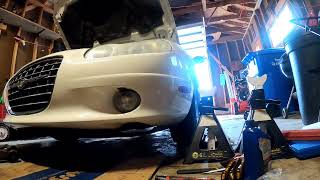
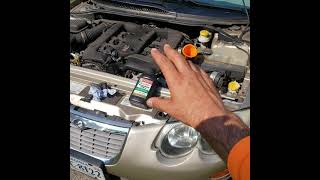
Technical definition: The SAE/OBD-II definition varies by manufacturer: 'Fault Immediately After Shift' (Chrysler/Dodge) 🎬 Watch: Troubleshooting Chrysler transmission codes and mechanical slips., 'TCM Checksum Error' (GM), 'Shift/Timing Solenoid Malfunction' (Toyota), or 'A/T Throttle Position Sensor Circuit' (Honda).
Can I Drive With P1790?

Yes, But With Caution. You can drive a short distance to a repair shop, but it is a significant gamble. Continuing to drive in 'limp mode' overheats the transmission, breaking down fluid and accelerating clutch wear. A $400 solenoid replacement quickly escalates into a $3,000 transmission rebuild.
Common Causes

- Faulty Transmission Range Sensor (Neutral Safety Switch) (Very Common) — A failed sensor sends incorrect gear positions to the TCM, causing shifting failures, no-start conditions, and the P1790 code.
- Faulty Transmission Control Module (TCM) (Common) — Internal hardware failure, software glitches, or checksum errors cause the TCM to misinterpret data and send incorrect shift commands.
- Damaged Wiring or Corroded Connectors (Common) — Frayed, shorted, or corroded wires leading to transmission sensors interrupt communication and trigger immediate fault codes.
- Faulty Shift Solenoid or Valve Body (Common) — If an electro-hydraulic shift solenoid sticks or fails electrically, the transmission cannot route fluid to engage gears correctly.
- Weak Battery or Failing Alternator (Less Common) — Low system voltage causes the TCM to behave erratically, leading to checksum errors or communication faults that trigger P1790.
- Low or Dirty Transmission Fluid (Less Common) — Incorrect fluid levels or broken-down fluid causes hydraulic pressure drops, leading to mechanical slips that the computer flags immediately after a shift.
- Internal Mechanical Failure (Uncommon) — Worn clutch packs, a failing torque converter, or a faulty oil pump prevent gears from engaging, usually accompanied by gear ratio error codes.
Symptoms

- Check Engine Light is On — The vehicle's computer detects a fault and stores the P1790 code, illuminating the malfunction indicator lamp (MIL).
- Vehicle Stuck in 'Limp Mode' — The transmission defaults to a single gear (often 2nd or 3rd) to prevent further damage, resulting in poor acceleration and high RPMs.
- Harsh or Delayed Shifting — The transmission slams into gear, hesitates before shifting, or slips between gears.
- Engine Won't Start — If the neutral safety switch fails, the car will not start in Park or Neutral because the computer blocks the starter engagement.
- Engine Stalls When Put in Gear — The engine dies immediately when shifted from Park into Drive or Reverse.
- Transmission Overheating — A malfunctioning solenoid fails to regulate fluid flow, increasing friction and heat, often accompanied by a burning smell.
Diagnostic Flowchart

Tap your situation to follow the diagnostic path that matches what you're seeing on this code.
Common Fixes & Costs
- Replace Transmission Range Sensor (Neutral Safety Switch) — Parts: $40-$150, Labor: $120-$300, ~1.5 hr book time (Intermediate)
- Replace the Transmission Control Module (TCM) — Parts: $250-$1,200, Labor: $200-$400, ~2.5 hr book time (Professional)
- Repair Damaged Wiring or Clean Ground Connections — Parts: $10-$50, Labor: $150-$400, ~2 hr book time (Intermediate)
- Replace a Faulty Shift Solenoid — Parts: $50-$450, Labor: $200-$500, ~3.5 hr book time (Advanced)
- TCM Reprogramming or Relearning — Parts: $0, Labor: $150-$300, ~1 hr book time (Professional)
DIY vs Professional
- Replace Transmission Range Sensor — Beginner: No
Tools: Socket set, wrenches, possibly a special alignment tool, multimeter. - Repair Damaged Wiring — Beginner: Yes (if visible and accessible)
Tools: Multimeter, wire strippers, crimpers, heat shrink tubing, soldering iron. - Replace Shift Solenoid — Beginner: No
Tools: Full socket set, torque wrench, drain pan, gasket scraper, new fluid, new gasket/sealant, multimeter. - TCM Reprogramming / Replacement — Beginner: No
Tools: Manufacturer-specific scan tool (e.g., GM MDI, Ford VCM) or high-end aftermarket tool with programming subscription.
Used vs. New Parts: Buying Guide
When a used part is worth it: A used TCM from a reputable salvage yard is a cost-effective solution for an older, high-mileage vehicle when the budget is tight and the vehicle's value doesn't justify a new OEM part.
Donor-vehicle mileage cap: roughly under 100000 miles for the part to have meaningful remaining life.
Donor quality checklist:
- Verify the part number matches exactly; electronic modules are not interchangeable even if they look identical.
- Ensure the donor vehicle was not scrapped due to a transmission-related failure.
- Check for a short-term warranty (30-90 days) from the seller to protect against receiving a dead-on-arrival part.
Decision logic:
- If The part is a simple sensor (like a range sensor) and is under $150 new → buy new — the small savings on a used part aren't worth the risk of premature failure.
- If The part is a TCM for a vehicle with over 120,000 miles and a tight budget → a used or remanufactured part is an acceptable risk, but expect a shorter lifespan.
- If The part is known for high failure rates (e.g., Ford Focus TCM) → favor a new or professionally remanufactured unit with an updated design and a longer warranty.
Warranty tradeoff: Used parts typically come with a 30-90 day warranty covering the part only. New aftermarket parts offer 1-year to limited lifetime warranties, while new OEM parts carry a 1-2 year warranty.
Worst-case if a used part fails: 500-1000. If a used TCM fails after installation, you pay for diagnostic and labor costs a second time, plus the cost of another replacement part.
What Happens If You Wait — Timeline
- 0-1 month: Check Engine Light illuminates. You notice occasional harsh shifts or a slight delay in gear engagement. The vehicle is not yet in limp mode. (MPG impact: 0-5%% · Added cost: $0-75 in wasted fuel)
- 1-3 months: Shifting problems become frequent. The transmission enters 'limp mode' intermittently, forcing a restart to regain normal operation. Slipping occurs under load. (MPG impact: 5-15%% · Added cost: $100-300 in wasted fuel and accelerated wear on clutches from slipping.)
- 3-6 months: The vehicle is permanently in 'limp mode,' stuck in 2nd or 3rd gear. Constant slipping and high RPMs cause the transmission fluid to overheat, break down, and lose lubrication. (MPG impact: 15-30%% · Added cost: $800-$1,800. Heat and slipping destroy the valve body and clutch packs.)
- 6+ months: Catastrophic internal failure occurs. The transmission fails to engage any gear, and the fluid is black and burnt. Worn clutches and a damaged torque converter require a complete rebuild. (MPG impact: N/A (undrivable)% · Added cost: $2,500-$5,000+)
Cost of Not Fixing It
- 0-1 month: Continued drivability issues like harsh shifting, poor acceleration, and a 5-10% drop in fuel economy. Increased stress on transmission components. (Added cost: 50-150)
- 1-6 months: Driving in 'limp mode' causes transmission fluid to overheat and break down, accelerating wear on clutches and solenoids. A simple sensor fix escalates to needing a valve body replacement. (Added cost: 800-1800)
- 6+ months: Catastrophic internal transmission failure. Worn clutches, a damaged torque converter, or a failed oil pump require a complete transmission rebuild or replacement. (Added cost: 2500-5000+)
Diagnosis Steps
- Read All Trouble Codes from All Modules
Use an advanced OBD-II scanner to read codes from the Engine Control Module (ECM) and Transmission Control Module (TCM). P1790 is often a secondary code; primary codes like P0700, P0705, P0720, or gear ratio errors (P0731-P0735) pinpoint the root cause.
Tools: Advanced OBD-II Scanner (Beginner) - Inspect Battery, Grounds, and Charging System
Verify the battery is fully charged (12.4V+ engine off) and the alternator charges correctly (13.5-14.5V engine running). Clean the main battery terminals and engine ground straps. Low voltage causes TCM checksum errors.
Tools: Multimeter, Wire Brush (Beginner) - Check Transmission Fluid Level and Condition
Ensure the transmission fluid is at the correct level according to the manufacturer's procedure. Dark brown/black fluid, a burnt smell, or metal particles indicate a severe internal failure.
Tools: Gloves, Rag, Dipstick (if applicable) (Beginner) - Test the Transmission Range Sensor (TRS)
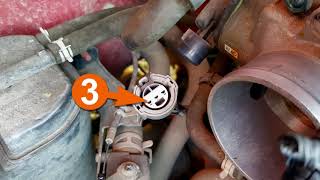
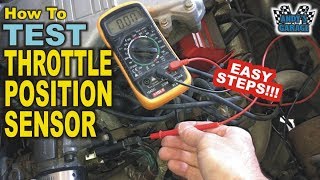
Using a multimeter, back-probe the TRS connector. Test the resistance or voltage of the sensor in each gear position (P, R, N, D) against service manual specifications to ensure it sends the correct signal to the TCM.
Tools: Multimeter, Service Manual, Back-probe Kit (Intermediate) - Inspect Wiring and Connectors
Visually inspect the wiring harness going to the transmission, especially around the range sensor and TCM. Look for chafing, melting, corrosion, or loose connections near hot exhaust components.
Tools: Flashlight, Mirror (Intermediate) - Test Shift Solenoids (Resistance Check)
Check the resistance of individual shift solenoids. For example, a Toyota ST solenoid requires 11-15 Ohms at 68°F. Readings below 10 Ohms indicate a short; readings above 100k Ohms indicate an open circuit. This requires dropping the transmission oil pan.
Tools: Multimeter, Socket Set, Gasket Scraper, Drain Pan, Service Manual (Advanced) - Perform a Voltage Drop Test on TCM Grounds
Set your multimeter to a low DC Volts scale. Place the positive lead on the negative battery terminal and the negative lead on the TCM ground pin. With the ignition on, the reading must be less than 0.1 volts. Higher readings require ground repair.
Tools: Multimeter, Service Manual, Back-probe Kit (Advanced) - Test Throttle Position Sensor (Honda/Acura)
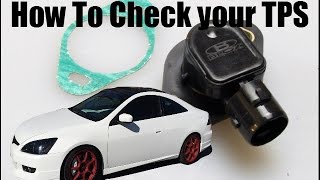
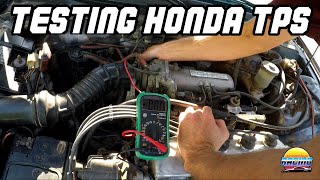
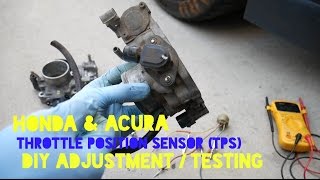
For Honda/Acura P1790, back-probe the TP sensor signal wire. Voltage must be ~0.5V at closed throttle and increase smoothly to ~4.5V at wide-open throttle. Dead spots indicate a faulty sensor.
Tools: Multimeter, Back-probe Kit (Advanced) - Analyze CAN Bus Communication (Mazda)
For communication-related P1790 codes, use an oscilloscope to check the CAN bus network at the diagnostic port. A healthy network shows mirror-image square wave signals. Distorted waveforms indicate a wiring or module problem.
Tools: Oscilloscope, Service Manual (Professional)
When This Code Triggers (Freeze-Frame Conditions)
- Engine Coolant Temp: 180-200°F (82-93°C) (The code sets when the vehicle is fully warmed up and running in closed loop.)
- RPM: 1500-3000 RPM (For 'Fault Immediately After Shift' variants, the code triggers during a gear change under normal acceleration.)
- Vehicle Speed: 25-55 mph (40-88 kph) (The fault logs at city or highway cruising speeds when the TCM commands a shift.)
- Transmission Fluid Temperature: 150-220°F (65-104°C) (The fault occurs once the transmission fluid reaches normal operating temperature.)
Related Codes
- P0700 — P0700 is a generic code from the ECM indicating the TCM has stored a fault. P1790 is the specific fault stored in the TCM. You must scan the TCM to find the P1790.
- P0705 — P0705 points to a 'Transmission Range Sensor Circuit Malfunction.' If you have P0705 with P1790, the range sensor or its circuit is the root cause.
- P0731-P0735 — These are 'Gear Ratio Error' codes. On Dodge/Chrysler products, P1790 is a secondary code set when a gear ratio code is detected within 1.3 seconds of a shift. Diagnose the gear ratio error code first.
- P0868 — P0868 means 'Transmission Fluid Pressure Low.' Low pressure causes a gear shift to fail, which the TCM flags by setting a P1790 'Fault Immediately After Shift' code. P0868 is the cause; P1790 is the symptom.
Climate & Environmental Factors
- Cold Weather: Temperatures below freezing cause transmission fluid to thicken, increasing hydraulic resistance. This leads to delayed or harsh shifts immediately after a cold start, triggering a 'Fault Immediately After Shift' P1790 code.
- High Humidity / Water Exposure: Humid climates or heavy road salt usage accelerate corrosion on wiring and ground points. Moisture wicks into connectors, compromising sensor signals and disrupting CAN bus communication.
How to Talk to a Mechanic About This Code
Say this: "I have a P1790 transmission code and would like to schedule a diagnostic. My vehicle is a [Your Make, Model, Year]. Based on the code's meaning for my car, I'd like you to start by checking the battery, grounds, and wiring to the transmission, as well as any other related codes in the TCM, before recommending major part replacements."
This signals you understand that P1790 has simple electrical causes. It directs the technician to perform a thorough diagnosis instead of immediately quoting an expensive TCM or transmission rebuild.
Avoid saying:
- 'My car is shifting weird, can you fix it?'
- 'Just replace whatever part is causing the P1790 code.'
- 'My check engine light is on, I think it's the transmission.'
Questions to ask before authorizing the repair:
- Can you show me the test results that confirm this part has failed (e.g., the voltage reading, resistance measurement, or failed sensor data)?
- Did you find any other fault codes in the Transmission Control Module?
- If you are recommending a TCM replacement, have you confirmed the battery, ground connections, and power supply to the module are all good?
- What is the warranty on this specific repair, and does it cover both parts and labor?
Where to Take It: Dealer vs Independent vs Chain
- Dealer:
Best for: Vehicles under warranty (powertrain or extended)., Repairs requiring manufacturer-specific software for programming or relearn procedures (e.g., GM 'Service Fast Learn')., Complex electronic issues on newer or European vehicles.
Downsides: Highest labor rates., Defaults to replacing large, expensive assemblies (like a full valve body) instead of smaller components. (Typical cost: +50% vs. baseline) - Independent Shop:
Best fit for most scenarios, especially if you find a well-regarded transmission specialist. They are best equipped to handle the mix of mechanical and electronic issues P1790 presents without the high dealer cost.
Best for: Out-of-warranty vehicles where the cause is a known issue (e.g., bad range sensor, wiring issue)., Shops that specialize in transmission repair will have deep expertise., Getting a second opinion on a dealer's diagnosis.
Downsides: Quality varies greatly; look for ASE certification and good reviews., May lack expensive, brand-specific tools for programming new modules. (Typical cost: +0% vs. baseline) - Chain Shop:
AVOID for P1790 diagnosis and repair. The complexity, manufacturer-specific definitions, and potential need for advanced electronic work are beyond the scope of most chain shops.
Best for: Simple, unrelated maintenance like oil changes or tires.
Downsides: Technicians lack specialized training for complex transmission diagnostics., High pressure to upsell common items; misdiagnoses complex P1790 codes as simpler issues., Not equipped for internal transmission work or module programming. (Typical cost: -10% vs. baseline)
When to Walk Away From the Repair
If the estimated repair cost exceeds 50% of the car's private-party value, sell or trade it in instead of repairing it.
- Car worth $4500, fix is $2800: Walk away. The repair cost is over 60% of the car's value. A $2,800 repair on a $4,500 car is a poor investment.
- Car worth $15000, fix is $1200: Fix it. The repair is less than 10% of the vehicle's value and is a worthwhile investment to keep a valuable car running well.
- Car worth $3000, fix is $1600: Borderline. The repair is just over the 50% threshold. If the rest of the car is in excellent condition and you need it to last another 1-2 years, it might be worth it. Get a second opinion before deciding.
What Scan Tool You Need for This Code
Minimum: A scanner that can read manufacturer-specific codes from the Transmission Control Module (TCM).
A basic $20 code reader only checks the engine module (ECM) and will likely only show P0700. It cannot access the TCM to read the specific P1790 code and its definition for your vehicle.
Budget: BlueDriver Pro (~$99) — Connects to your smartphone via Bluetooth to read and clear transmission codes, view freeze frame data, and graph live data from transmission sensors.
Mid-range: Foxwell NT510 Elite (~$150) — A handheld tool providing OE-level diagnostics for a specific car brand. It reads codes from the TCM, shows live sensor data, and performs bidirectional controls to command solenoids.
Professional: Autel MaxiCOM MK808S / MK808Z-TS (~$500) — A professional tablet scanner. It performs advanced special functions like 'Transmission Service Fast Learn' required for GM vehicles and resets transmission adaptations on Chrysler/Dodge.
Rent vs buy: Auto parts stores scan codes for free, but use basic readers that miss the P1790 code in the TCM. Buying a scanner in the $100-$150 range offers the best value and capability for this specific code.
How to Clear the Code After You Fix It
- Reconnect battery if it was disconnected for the repair.
- Use an OBD-II scan tool to formally clear the P1790 and any other related codes.
- Perform a specific transmission relearn procedure if required by the manufacturer (e.g., GM Service Fast Learn).
- Complete a full OBD-II drive cycle to allow readiness monitors to run.
Drive cycle (~20 minutes): A general drive cycle includes: 1) Cold start and idle for 2-3 minutes. 2) Drive at a steady speed of 55 mph for 5-10 minutes. 3) Perform several cycles of slowing down to 20 mph and smoothly accelerating back to 55 mph. 4) Come to a stop and idle for 1-2 minutes.
Readiness monitors affected: Comprehensive Component Monitor, Transmission-specific monitors
Before emissions retest: drive at least 50 miles to fully set monitors.
Watch out for:
- Disconnecting the battery clears the code but resets all readiness monitors, guaranteeing an emissions test failure until a full drive cycle is completed.
- The code returns immediately if the underlying mechanical or electrical fault is not repaired.
- Skipping a required manufacturer-specific relearn procedure after replacing a TCM causes the code to persist.
Will This Fail Emissions / State Inspection?
Yes — this code typically fails an OBD-II emissions inspection.
- California: An illuminated Check Engine Light from a P1790 code is an automatic failure of the smog check. All readiness monitors must be 'Ready' for the test.
- New York: During the NYS inspection, any active powertrain fault code like P1790 causes an automatic failure of the emissions portion of the inspection.
- Texas: In the 17 counties requiring emissions testing, an active P1790 code results in a failed OBD-II test. The vehicle cannot be registered until repaired.
Most Commonly Affected Vehicles
- Dodge/Chrysler/Jeep Grand Caravan, Ram, Durango, PT Cruiser, Town & Country (2003-2012) — P1790 means 'Fault Immediately After Shift,' indicating a mechanical or hydraulic issue detected right after a gear change. It is almost always a secondary code appearing with a primary gear ratio error code (e.g., P0734).
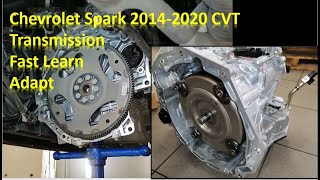
- Chevrolet / GM Spark, Cruze, Silverado (2012-2017) — P1790 is defined as 'Transmission Control Module Checksum Error.' For the 2014-2015 Spark, TSB PIP5732 notes this code always sets after a transmission replacement and requires a 'Transmission Service Fast Learn' procedure.
- Ford Focus (2012-2018) — Focus models with the DSP6 'PowerShift' dual-clutch transmission are known for widespread TCM failures that trigger this code. The TCM is subject to a warranty extension in many cases.
- Honda / Acura Integra, CL, Accord (1996-2003) — P1790 means 'A/T Throttle Position Sensor Circuit Malfunction.' The PCM detects an incorrect voltage from the TP sensor circuit, preventing the torque converter lock-up clutch from engaging.
- Hyundai Sonata, Elantra, Tucson (2011-2017) — This code is often related to issues with the transmission range sensor or the internal transmission temperature sensor harness, which becomes brittle from heat cycles and fails.
- Nissan Altima, Rogue, Sentra (2013-2018) — On CVT transmissions, P1790 is associated with internal TCM or valve body failures. A related 'transmission judder' requires a specific QR code relearn procedure after component replacement.
- Toyota Echo, Corolla, Avensis (2000-2007) — P1790 points to a 'Shift/timing solenoid (ST) circuit malfunction.' Diagnosis involves checking the solenoid's resistance (spec is 11-15 Ω) and testing the wiring between the solenoid and the ECM.
- Subaru Outback, Forester, Impreza (2010-2017) — On CVT transmissions, this code relates to valve body solenoid failures, a common issue stored alongside other solenoid performance codes.
- Mazda Mazda3, Mazda6 (2005-2012) — P1790 is defined as 'EPS Communication Malfunction.' This code has nothing to do with the transmission and points to a problem with the Electronic Power Steering system's communication.
Manufacturer-Specific Notes
- Dodge / Chrysler / Jeep: P1790 is almost always a secondary code meaning 'Fault Immediately After Shift.' It stores alongside a primary gear ratio error code (like P0734). Diagnosis must focus on the primary code's cause.
- GM (Chevrolet / GMC / Cadillac): P1790 is a 'Transmission Control Module Checksum' error. TSBs like PIP5732 note this code sets after transmission replacement and requires a 'Transmission Service Fast Learn' procedure to clear.
- Toyota: The definition is 'Shift/timing solenoid circuit malfunction,' pointing directly to an electrical issue with the 'ST' solenoid. The resistance must be between 11-15 Ohms.
- Mazda: P1790 indicates an 'EPS (Electronic Power Steering) Communication Malfunction.' Diagnosis must focus on the power steering system and CAN network, not the gearbox.
- Ford: Customer Satisfaction Program 14M02 for 2012-2016 Focus and 2011-2015 Fiesta models extends the TCM warranty to 10 years or 150,000 miles due to known electrical failures triggering P1790.
- Subaru: Subaru extended the CVT warranty on many 2010-2017 models to 10 years or 100,000 miles (TSB 16-107-17R), covering failures that trigger codes like P1790.
- Nissan: Nissan extended the CVT warranty on many models to 84 months or 84,000 miles, covering valve body or TCM failures related to P1790.
Real Owner Stories
2003 Dodge Grand Caravan, ~150K miles
Transmission suddenly locked into 2nd gear (limp mode). Scanner showed codes P0700, P0720, and P1790. Fluid level was overfull when checked cold.
What they tried:
- Replaced the output speed sensor indicated by the P0720 code, but limp mode persisted.
- Considered a $2,500 transmission rebuild suggested by a local shop.
- Forum members advised that P1790 ('Fault Immediately After Shift') is a secondary code and the overfull fluid was the primary trigger.
Outcome: The owner drained the excess transmission fluid to the correct level. The overfull condition caused fluid aeration and hydraulic pressure drops, triggering the fault codes. Correcting the level permanently resolved the limp mode.
Lesson: Always verify fluid levels before replacing parts. On Dodge/Chrysler vehicles, P1790 is a symptom of another failure; fix the primary code (like P0720) or physical issue first.
2014 Chevy Spark, mileage unknown
After a DIY transmission replacement, the car drove 100 feet and refused to accelerate. It threw codes P0700 and P1790 ('Transmission Control Module Checksum Error').
What they tried:
- The owner suspected a defective replacement transmission but researched the codes before removing it again.
Outcome: According to GM Technical Service Bulletin PIP5732, the P1790 checksum error always sets after a transmission or TCM replacement on these models. A shop performed the 'Transmission Service Fast Learn' procedure with a GM scan tool, calibrating the new components and clearing the code.
Lesson: On modern GM vehicles, P1790 is a mandatory, expected step in a major transmission repair. Always check for TSBs to avoid misdiagnosing a required software calibration as a hardware failure.
2007 Dodge Magnum, mileage unknown
Transmission stopped shifting and set code P1790. The owner prepared to buy a new Transmission Control Module (TCM).
What they tried:
- Posted on a diagnostic forum for a second opinion before spending $600 on a TCM.
Outcome: A technician noted that P1790 ('TCM Checksum Error' on this platform) frequently stems from a bad electrical environment. The owner found a heavily corroded main ground connection. Cleaning the ground restored proper voltage to the TCM, clearing the code instantly.
Lesson: A 'checksum error' means the computer is malfunctioning, often due to low voltage. Always test the battery, alternator, and main ground connections before replacing an expensive TCM.
How to Prevent This Code From Triggering
- Change transmission fluid at recommended intervals (Every 30,000-60,000 miles) — Degraded fluid loses lubrication and heat dissipation properties. This causes overheating that damages solenoids and the TCM, while dirty fluid physically clogs solenoid passages.
- Use the exact manufacturer-specified transmission fluid (Every time fluid is added or changed) — Incorrect fluid causes chemical incompatibilities that destroy internal seals and gaskets within solenoids, leading to hydraulic leaks and shifting failures.
- Maintain a healthy battery and electrical system (Annual battery test) — The TCM is highly sensitive to voltage drops. A weak battery causes unstable voltage, leading to TCM checksum errors, communication faults, and erratic solenoid behavior.
- Inspect and clean main ground connections (Every 50,000 miles) — Corroded ground straps create unstable electrical pathways, forcing the TCM to operate incorrectly and throw phantom codes like P1790.
Frequently Asked Questions
Can I fix a P1790 code myself?
You can DIY external repairs like replacing a transmission range sensor or fixing a visibly broken wire. Stop DIY and tow to a shop if the repair requires dropping the transmission pan to access solenoids or programming a new TCM.
What is a common misdiagnosis mistake with P1790?
A common mistake is replacing the Transmission Control Module (TCM) without performing a thorough diagnosis. Because P1790 is often a 'checksum error', technicians assume the module is bad. However, low battery voltage or poor ground connections frequently cause this error and must be checked first.
How much does it cost to fix a P1790 code?
A simple wiring repair costs $150-$400, while replacing a transmission range sensor runs $120-$300. A complex repair like replacing a shift solenoid pack costs $200-$500, and a TCM replacement ranges from $450-$1,600 including programming.
Will clearing the P1790 code fix the problem?
No. Clearing the code only turns off the Check Engine Light temporarily. The code returns as soon as the TCM detects the fault again, usually on the next drive cycle. You must repair the underlying cause.
Can a bad battery cause a P1790 code?
Yes. A weak battery causes low voltage conditions that lead to communication errors between modules or internal checksum errors in the TCM. Always test the battery and charging system before starting expensive repairs.
What is a 'checksum error' in the context of P1790?
A checksum error means the TCM ran an internal self-check and found its programming corrupt. This is caused by a software glitch, a voltage drop, an internal hardware failure, or a missing relearn procedure after a part replacement.
Why did P1790 appear right after I replaced my transmission?
On GM vehicles like the Chevy Spark, the P1790 'Checksum Error' always appears after a transmission or TCM replacement. It indicates a 'Transmission Service Fast Learn' procedure must be performed with a scan tool to calibrate the new components.
Can a transmission fluid service fix a P1790 code?
It is highly unlikely. A standard fluid and filter change will not fix a failed electronic component, a broken wire, or a worn-out mechanical part. If the fluid is burnt and full of debris, it indicates internal failure, and a fluid change is too late.
Key Takeaways
- P1790 is a manufacturer-specific code, meaning its definition ranges from a Dodge 'Fault After Shift' to a GM 'TCM Checksum Error'.
- Expect harsh shifting, limp mode (stuck in 2nd or 3rd gear), or a no-start condition if the neutral safety switch fails.
- The top three causes are a faulty transmission range sensor, a failing Transmission Control Module (TCM), or damaged wiring harnesses.
- Test your battery and check transmission fluid levels before replacing a $500+ TCM, as low voltage frequently triggers false checksum errors.
- Stop driving immediately if the vehicle enters limp mode; continuing to drive overheats the fluid and turns a $200 sensor fix into a $3,000 rebuild.
Helpful Videos

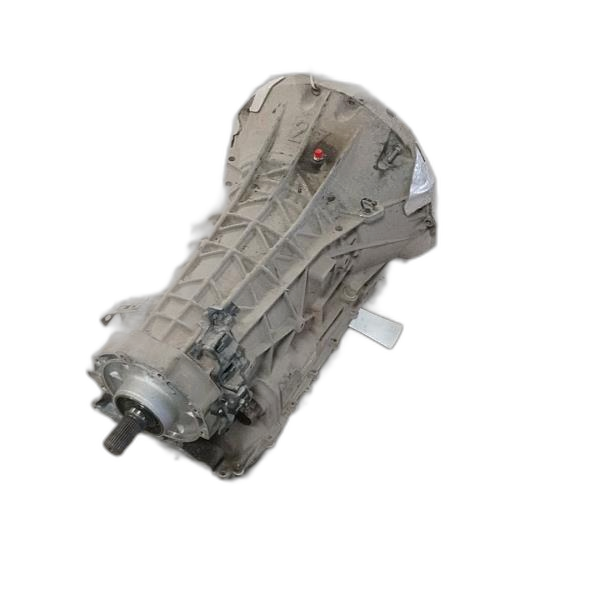
Shop the Parts Behind P1790
Below are the parts most often responsible for code P1790, ranked by how frequently each one is the actual culprit (per the diagnosis above). Tap any to see what we have for your vehicle.


The information in this article is provided for general reference and educational purposes only. Vehicle specifications, procedures, and part compatibility can vary by production date, trim level, and region. Always consult your vehicle's factory service manual and verify part numbers before purchasing or performing repairs. Safety-critical components such as airbags, seat belts, and braking systems should be installed by a qualified professional.
- 🧭 Diagnostic Flowchart
- 🎬 Helpful Videos
- 🛍️ Shop This Part
- What Does P1790 Mean?
- Can I Drive With P1790?
- Common Causes
- Symptoms
- Common Fixes & Costs
- DIY vs Professional
- Used vs. New Parts: Buying Guide
- What Happens If You Wait — Timeline
- Cost of Not Fixing It
- Diagnosis Steps
- When This Code Triggers (Freeze-Frame Conditions)
- Related Codes
- Climate & Environmental Factors
- How to Talk to a Mechanic About This Code
- Where to Take It: Dealer vs Independent vs Chain
- When to Walk Away From the Repair
- What Scan Tool You Need for This Code
- How to Clear the Code After You Fix It
- Will This Fail Emissions / State Inspection?
- Most Commonly Affected Vehicles
- Manufacturer-Specific Notes
- Real Owner Stories
- 2003 Dodge Grand Caravan, ~150K miles
- 2014 Chevy Spark, mileage unknown
- 2007 Dodge Magnum, mileage unknown
- How to Prevent This Code From Triggering
- Frequently Asked Questions
- Can I fix a P1790 code myself?
- What is a common misdiagnosis mistake with P1790?
- How much does it cost to fix a P1790 code?
- Will clearing the P1790 code fix the problem?
- Can a bad battery cause a P1790 code?
- What is a 'checksum error' in the context of P1790?
- Why did P1790 appear right after I replaced my transmission?
- Can a transmission fluid service fix a P1790 code?
- Key Takeaways
- 🎟️ Get 5% Off