

P1794 on 2014-2015 Mazda MAZDA6: i-ELOOP Capacitor Malfunction Guide
This code points to a problem with the i-ELOOP regenerative braking capacitor. The most common fix is replacing the expensive capacitor itself, but the issue can sometimes be a weak 12V battery or corroded wiring. This is not a DIY-friendly repair due to high voltage.
- P1794 means there's a fault with the i-ELOOP capacitor system, which is unique to certain Mazda models.
- Do not attempt to service the capacitor yourself due to a serious risk of electric shock. This is a job for a professional.
- Before agreeing to a costly capacitor replacement, ensure your mechanic has thoroughly tested the 12V battery's health and checked for corroded wiring, as these are cheaper potential fixes.
- A failing i-ELOOP system will result in worse fuel economy and the loss of the i-stop feature.
What's Unique About the 2014-2015 Mazda MAZDA6
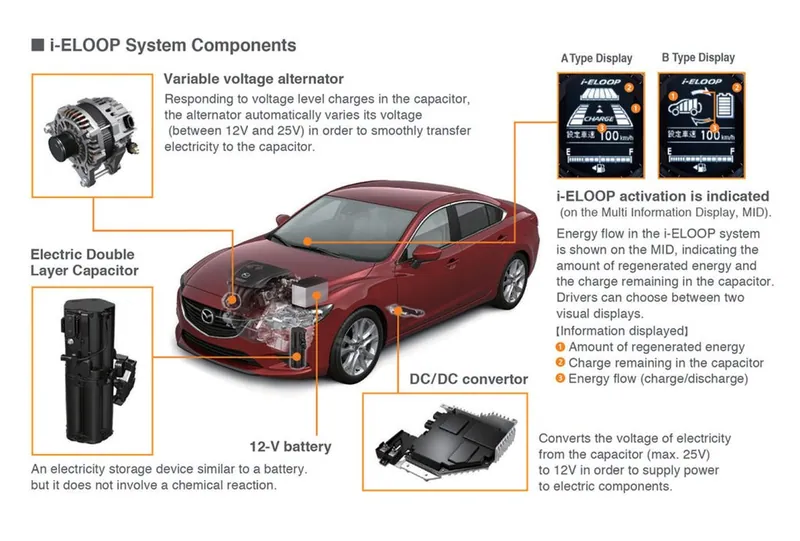
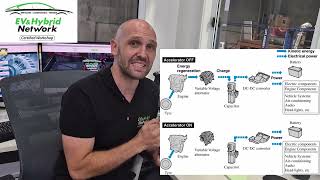
The 2014-2015 Mazda6 was one of the first vehicles to feature Mazda's i-ELOOP ('Intelligent Energy Loop') system. Unlike a traditional setup, i-ELOOP uses a variable voltage alternator that can generate up to 25 volts during deceleration. This energy is stored in a large, fast-charging capacitor, not the 12V battery, and is used to power the vehicle's electronics. This was advanced for its time but introduces unique failure points like the P1794 code, related specifically to the capacitor system, which are not found on cars with conventional charging systems.
Diagnostic Flowchart
Tap your situation to follow the diagnostic path that matches what you're seeing on this vehicle.
Symptoms You May Notice

- "i-ELOOP Inspection Required" message on the instrument cluster display. 🎬 Watch: What the i-ELOOP inspection warning looks like on your dash.
- Master warning light illuminated.
- Charging system warning light illuminated.
- i-stop warning light flashing.
- Auto start/stop (i-stop) system is disabled.
- Increased fuel consumption.
- Slightly longer engine crank time.
- Engine idle RPM fluctuating or juddering when stopped.
- Flickering or pulsating interior cabin lights.
- Replacing the alternator. While P1794 is a charging system code, it is specific to the capacitor loop. The alternator is typically not the cause unless a code like P2502 is also present.
- Replacing the DC-DC Converter. While possible, forum experiences suggest the capacitor is the point of failure in the vast majority of cases, even when symptoms might point to the converter.
Most Likely Causes
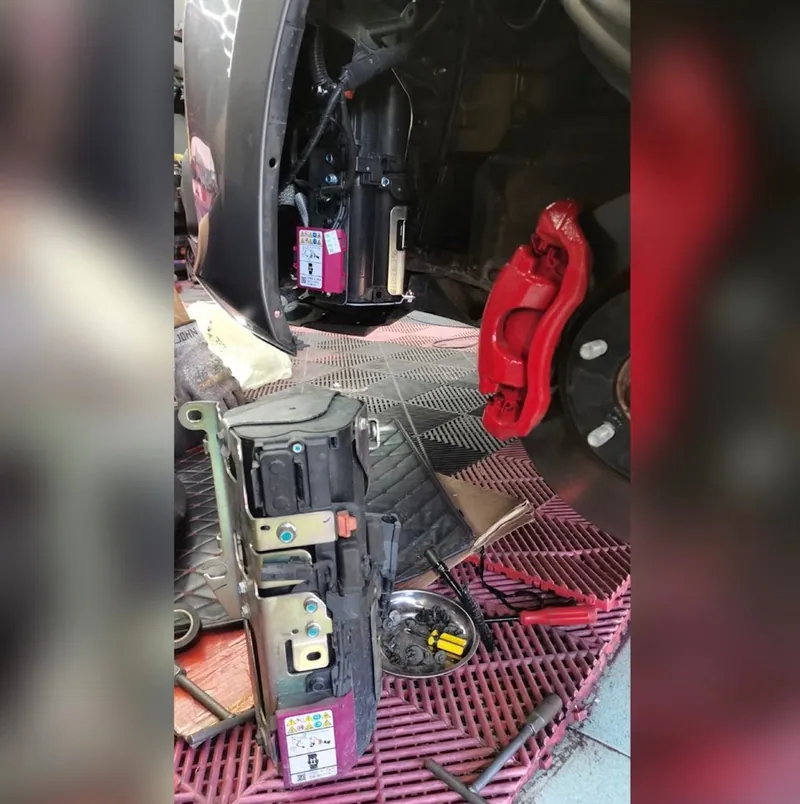
- i-ELOOP Capacitor Failure 🔴 High Probability The capacitor is a wear item that degrades over time, especially in hot climates, losing its ability to hold a proper charge. Forum discussions indicate failures are common between 6-7 years of ownership. The PCM detects this degradation via internal resistance and capacitance checks and sets the code.
How to confirm: A Mazda-specific diagnostic tool (M-MDS) is needed to read PIDs like 'CAP_SYS_13' (Capacitance Malfunction) or 'CAP_SYS_16' (Capacitor Malfunction). If these PIDs are 'ON', it confirms the PCM has condemned the capacitor.
Typical fix: Replace the i-ELOOP capacitor assembly. This requires special procedures to safely disconnect the service plug, discharge the old unit, and initialize the new one.
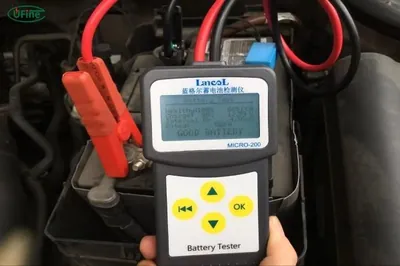
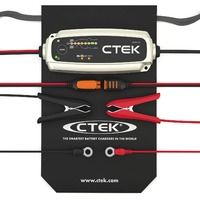
Est. part cost: $725-$1500 - Weak or Failing 12V Battery 🟡 Medium Probability → Shop Vehicle Battery The i-ELOOP system is highly sensitive to the health of the main 12V battery. A battery with high internal resistance or low state of health (SOH) can cause voltage irregularities that the PCM misinterprets as a capacitor fault. This is a very common misdiagnosis for a bad capacitor.
How to confirm: Perform a professional load test on the 12V battery. A simple voltage check is not enough. One diagnostic case showed a battery with 44% SOH and 4.5mΩ internal resistance was the root cause.
Typical fix: Replace the 12V battery with the correct type (Q85 EFB or AGM is specified) and perform a mandatory battery reset/adaptation procedure 🎬 Watch: How to perform the i-stop and battery initialization procedure. using a scan tool to inform the PCM of the new battery.
Est. part cost: $200-$350 - Corroded Connector Terminals ⚪ Low Probability A Mazda service bulletin (R078/17A) for other models with i-ELOOP notes that an oxide film can form on the signal harness connectors between the DC-DC converter and the capacitor, increasing resistance and triggering P1794:00.
How to confirm: Visually inspect the harness connectors (specifically 0117-302A and 303A mentioned in the TSB) for any signs of corrosion or oxidation.
Typical fix: Disconnect the connectors (after following safety procedures), spray the terminals with an electrical contact cleaner (DeoxIT D100S is specified), and reconnect them several times to break up the oxide film.
Est. part cost: $10-$20
Rare But Worth Checking
- DC-DC Converter Malfunction: The DC-DC converter manages voltage between the capacitor and the vehicle's 12V systems. A fault here can mimic a capacitor issue. Forum users report being quoted for this expensive repair, though it is less common than capacitor failure.
- PCM Software Issue: TSB 01-028/13 and its successor 01-001/14 were issued for early 2014 models (produced before Dec 3, 2013) to reprogram the PCM for overly sensitive P1794 detection logic. A dealer can verify if this update has been performed.
- Wiring Harness Damage: An open or short in the wiring between the capacitor, DC-DC converter, and PCM can cause this code, sometimes with a specific subtype like P1794:13 (Open Circuit). This is less common but should be checked, especially if there is evidence of physical damage or moisture intrusion near the capacitor in the front of the vehicle.
Diagnosis Steps
- Verify the code P1794:00 is present using a professional scan tool.
- Check for any related Technical Service Bulletins (TSBs) for your specific VIN, particularly 01-001/14 for early models.
- Perform a comprehensive test of the 12V battery. Check State of Health (SOH) and internal resistance, not just voltage. A failing battery is a common cause. If it fails, replace it with a Q85-rated EFB or AGM battery and perform the battery reset procedure.
- If the battery is good, use a Mazda-specific scan tool (M-MDS) to monitor i-ELOOP PIDs. Check 'CAP_SYS_16' or 'CAP_SYS_13'. If the value is 'ON', the PCM is commanding a capacitor replacement.
- Following all safety precautions including disconnecting the service plug, inspect the wiring harness and connectors between the capacitor and the DC-DC converter for corrosion, damage, or looseness.
- If all other components test good, the i-ELOOP capacitor is the most likely culprit and should be replaced.
- Follow the manufacturer's specific, safety-critical procedure to disconnect the service plug, remove the old capacitor, fully discharge it before disposal, and install the new one, ensuring to remove the transport jumper wire from the new part.
Parts You'll Likely Need
- i-ELOOP Capacitor
(OEM #GKH8-67-ZC0D)— This is the core component that fails. It degrades over time, triggering the P1794 code. The part number has been superseded by GKH8-67-ZC0, GKH8-67-ZC0A, GKH8-67-ZC0B, and GKH8-67-ZC0C.
Trusted brands: Mazda (OEM)
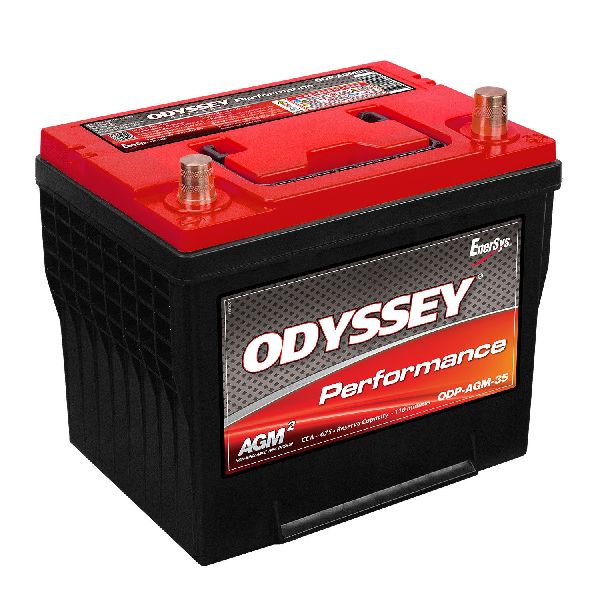
OEM price range: $725-$1516 - AGM/EFB Battery (Q85 Type) — A failing 12V battery is a frequent cause of a false P1794 code. The i-ELOOP system requires a specific Q85-rated battery to function correctly.
Trusted brands: Optima, Deka, NorthStar, Mazda (OEM)
OEM price range: $300-$576
Aftermarket price range: $250-$350
Technical Service Bulletins (TSBs) & Recalls
- 01-001/14: Supersedes earlier bulletins. For 2014-2015 Mazda6 with VINs lower than JM1GJ**162912, it details reprogramming the PCM if PID 'CAP_SYS_16' is ON. It also covers diagnosis for P1794 seen with P2502.
- 01-028/13: The original bulletin for 2014 Mazda6 models describing the 'i-ELOOP Inspection Required' message and the PCM reflash repair procedure.
- R078/17A: While for other models (Mazda2, CX-3, MX-5), it provides a relevant diagnosis for P1794 caused by oxide film on connector terminals, a possible cause on the Mazda6 as well.
Platform-Specific Known Issues
- Early 2014 models (produced before December 3, 2013) were subject to TSB 01-001/14 (which superseded 01-028/13). This TSB involved a PCM software update to correct overly sensitive fault detection logic for P1794.
Mechanic-Grade Diagnostic Values
- i-ELOOP Capacitor Capacitance — expected: 2.0 - 2.5 Farads. Failure: A value below this range indicates degradation.
- i-ELOOP Capacitor Equivalent Series Resistance (ESR) — expected: Below 10 milliohms (<0.010 Ω). Failure: A value above this indicates internal degradation.
- i-ELOOP Capacitor Voltage Range — expected: Nominal 25V, can be charged from 12V up to 25V by the variable voltage alternator.. Failure: Inability to reach or hold voltage near 25V during deceleration.
- Start Stop Unit Power Supply Voltage — expected: Above 6.5V. Failure: Voltage below 6.5V for 5 seconds or more will trigger DTC P1794:16.
Hidden / Shadow Codes Worth Checking
- P1794:00: Capacitor (i-ELOOP) system: Capacitor (i-ELOOP) malfunction. This is the general fault code. (see via Standard OBD-II scanner.)
- P1794:13: Capacitor Circuit Malfunction (Open Circuit). Indicates an open or broken wire, or an internal open circuit in the capacitor or DC-DC converter. (see via Professional scan tool, may appear with the primary code.)
- P1794:16: Start stop unit power supply voltage low input. Triggered when voltage at the unit is below 6.5V for more than 5 seconds, often pointing to a battery or primary power supply issue. (see via Professional scan tool, may appear with the primary code.)
- M-MDS PID: CAP_SYS_13: A specific PID indicating a 'Capacitor (i-ELOOP) capacitance malfunction'. If this PID is 'ON', Mazda procedure calls for capacitor replacement. (see via Mazda Modular Diagnostic System (M-MDS) scan tool.)
- M-MDS PID: CAP_SYS_16: A specific PID indicating a 'Capacitor (i-ELOOP) malfunction'. TSBs use the status of this PID to determine if a PCM reflash is the correct repair procedure. (see via Mazda Modular Diagnostic System (M-MDS) scan tool.)
Scan Tool Commands That Help
- Mazda M-MDS: Datalogger -> PCM -> PID Monitor — To view i-ELOOP specific PIDs (CAP_SYS_10, CAP_SYS_13, CAP_SYS_16, etc.) to pinpoint the exact failure mode (e.g., capacitance malfunction, open circuit) as determined by the PCM, which is critical for following TSB repair paths.
- Mazda M-MDS: Battery Condition Initialization Setting (i-stop setting) — This is a required reset procedure after replacing or disconnecting the 12V battery. Failure to perform this initialization will prevent the i-stop and i-ELOOP systems from operating correctly and may cause persistent warnings.
- Manual Procedure (No Tool): i-stop / Battery Initialization — After a battery replacement, if a scan tool is not available. The procedure involves a sequence of turning the ignition on (not starting), long-pressing the i-stop OFF switch, starting the engine, and letting it idle until the system resets.
Wiring & Ground Locations
- i-ELOOP Capacitor — In the lower left (driver's side) front corner of the engine compartment, located under the headlight and behind the front bumper.. This is the primary component for code P1794. Its location makes it susceptible to damage from minor front-end collisions.
- DC-DC Converter — Under the driver's seat.. This unit communicates with the capacitor. A wiring issue between the capacitor and this converter can trigger the code. Its interior location protects it from weather but not from potential damage from liquid spills inside the cabin.
- Ground Point G09 — Located on the left side of the dash.. A poor ground at this location can cause various electrical issues within the charging and control systems, potentially leading to a P1794 code.
- Ground Point G15 — Located behind the right end of the dash.. As with G09, a compromised ground connection here can create electrical faults that may be misinterpreted by the PCM as a component failure.
Real Owner Repair Stories
- RamForum.com user (2004 Dodge Ram 1500 4.7L (Note: Different vehicle, but same generic code P1794)) — Code P1794 (speed sensor fault on that platform) would appear 100% of the time when driving in rain or after a car wash.
❌ Tried (didn't work) Ignoring the problem, A transmission shop suggested replacing the entire controller.
✅ What actually fixed it A mechanic found the electrical connectors related to the transmission had no dielectric grease. After cleaning the connectors and applying grease to prevent water intrusion and shorting, the problem was permanently resolved. - YouTube video by SHADEY SHAHEED (2015 Mazda MX-5 (ND) with i-ELOOP) — i-stop did not work and the capacitor was not charging.
❌ Tried (didn't work) Initial state before the final fix.
✅ What actually fixed it The owner first replaced the 12V battery, then performed a manual capacitor reset. This involved disconnecting the capacitor's service plug and connecting a discharge cable until an indicator light went out, then reconnecting everything. This combination of a new battery and a capacitor reset resolved the issue.
When the Usual Fixes Don't Work
- While the P1794 code directly points to the i-ELOOP capacitor system, a significant number of real-world cases are initially caused by a weak or failing 12V battery. The system's voltage-sensing logic is highly sensitive, and an unhealthy battery can create conditions that the PCM misinterprets as a capacitor fault. Therefore, a professional load test of the 12V battery should be the first diagnostic step before considering the expensive capacitor replacement.
- In some instances where no hard component failure is found, the warning can be resolved by a simple system reset. Disconnecting the 12V battery for 30 minutes can clear glitches in the PCM's logic, restoring normal function for an extended period without any parts being replaced. This suggests that not every P1794 code indicates a definitive hardware failure.
OEM Part Supersession History
GKH8-67-ZC0→GKH8-67-ZC0A, then GKH8-67-ZC0B, then GKH8-67-ZC0C, and finally GKH8-67-ZC0D.— Likely internal revisions for improved reliability or manufacturing process changes.
Heads up: None noted. The latest part number, GKH8-67-ZC0D, replaces all previous versions and should be used for service.
Model Year Variations Within This Range
- 2014 models produced before December 3, 2013: These vehicles have a PCM with overly sensitive logic for detecting P1794. TSB 01-001/14 applies to vehicles with VINs lower than JM1GJ**162912 and calls for a PCM software update (reprogramming) as the primary fix, rather than immediate component replacement.
Helpful Videos

We Have This Part in Stock


The information in this article is provided for general reference and educational purposes only. Vehicle specifications, procedures, and part compatibility can vary by production date, trim level, and region. Always consult your vehicle's factory service manual and verify part numbers before purchasing or performing repairs. Safety-critical components such as airbags, seat belts, and braking systems should be installed by a qualified professional.
- Mazda MAZDA6:
- 🧭 Diagnostic Flowchart
- 🎬 Helpful Videos
- 🛍️ Shop This Part
- What's Unique About the 2014-2015 Mazda MAZDA6
- Symptoms You May Notice
- Most Likely Causes
- Rare But Worth Checking
- Diagnosis Steps
- Parts You'll Likely Need
- Technical Service Bulletins (TSBs) & Recalls
- Platform-Specific Known Issues
- Mechanic-Grade Diagnostic Values
- Hidden / Shadow Codes Worth Checking
- Scan Tool Commands That Help
- Wiring & Ground Locations
- Real Owner Repair Stories
- When the Usual Fixes Don't Work
- OEM Part Supersession History
- Model Year Variations Within This Range
- 🎟️ Get 5% Off