

OBD-II Code P1806: 4WD High Indicator / Transmission Circuit Malfunction
What P1806 means, why it triggers, and how to fix it
- On 1999-2007 GM trucks, fix P1806 by cleaning the G201 frame ground wire under the driver's door before replacing any parts.
- Test the 4WD dash selector switch with a multimeter; a healthy GM switch reads 1.0kΩ to 4.0kΩ depending on the button pressed.
- Do not treat P1806 as a 4WD issue on 2008-2015 Mitsubishi TC-SST models; it indicates a failing internal transmission shift fork sensor requiring a $3,000+ repair.
- Use an advanced OBD-II scanner capable of reading the Transfer Case Control Module (TCCM) to find hidden codes like C0327 that pinpoint the exact failure.
What Does P1806 Mean?
P1806 is a manufacturer-specific code. On GM and Ford trucks, it signals a failure in the 4WD indicator light circuit. On Mitsubishi, Nissan, or BMW, it points to a fault with a transmission position sensor, clutch actuator, or brake vacuum sensor.
Technical definition: SAE definitions vary by manufacturer. GM: '4-Wheel Drive High Indicator Circuit Short to Ground'. Ford: 'Transmission 4-Wheel Drive High Indicator Circuit Failure'. Mitsubishi: 'Shift Fork Position Sensor 3 and 4 System (Power supply voltage low)'.
Can I Drive With P1806?
Yes, But With Caution. You can drive, but your four-wheel drive (4WD) system is disabled, posing a safety risk in slippery conditions. Most GM and Ford trucks operate normally in 2WD. However, on Mitsubishi TC-SST models, this code indicates a direct transmission sensor fault causing erratic shifting; limit driving immediately to prevent internal transmission damage.
Common Causes
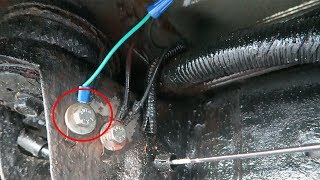
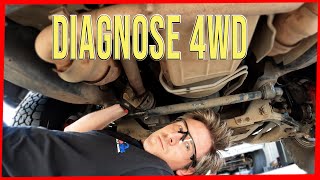
- Corroded or Broken Ground Wire (GM) (Very Common) — On 1999-2007 GM trucks, the G201 ground wire located on the frame under the driver's side door 🎬 Watch: How to find and clean the G201 ground wire. corrodes heavily. This poor ground interrupts the circuit for the Transfer Case Control Module (TCCM), directly causing this code.
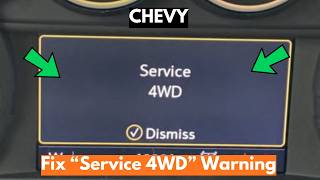
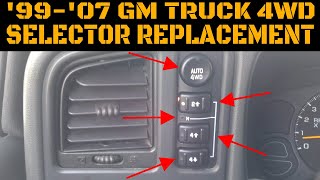
- Faulty 4WD Selector Switch (Dash Switch) (Very Common) — The electronic contacts or solder joints inside the dashboard switch wear out or crack, causing an intermittent or total loss of signal and triggering a 'Service 4WD' message. 🎬 See this walkthrough for replacing the dashboard selector switch.
- Damaged Wiring or Connectors (Common) — Wires leading to the 4WD switch, TCCM, or transfer case encoder motor fray, corrode, or disconnect on the vehicle's underbody where they are exposed to moisture and debris.
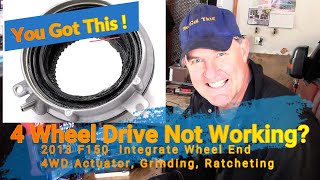
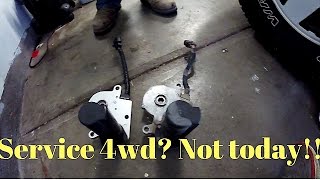
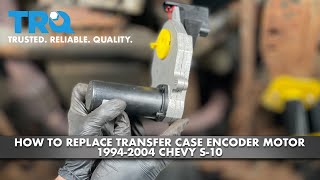
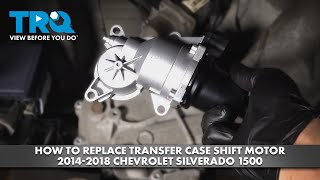
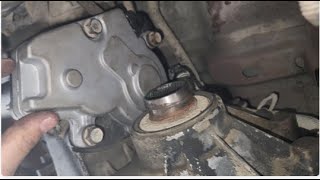
- Failed Transfer Case Encoder Motor/Position Sensor (Less Common) — The position sensor within the transfer case shift motor fails and sends an incorrect signal to the TCCM, triggering P1806 alongside code C0327. 🎬 Watch: Step-by-step guide to replacing the transfer case encoder motor.
- Failed Transfer Case Control Module (TCCM) (Less Common) — Internal electronic failure of the TCCM causes this code and a complete loss of 4WD functionality.
- Faulty Vacuum Actuator or Solenoid (Ford/Dodge) (Less Common) — A vacuum leak or failed vacuum solenoid prevents the front axle from engaging, creating a mismatch between the commanded state and the final indicator light status.
- Defective Transmission Position Sensor (Mitsubishi) (Rare) — On Mitsubishi models with the TC-SST transmission, this code points specifically to a low voltage failure of a shift fork position sensor inside the transmission.
- Brake Booster Vacuum System Fault (Nissan) (Rare) — A vacuum leak in the brake booster system causes the brake vacuum sensor to send an implausible signal to the ECU, triggering this code as a secondary fault.
Symptoms
- Service 4WD Light is On — The 'Service 4WD' message appears on the instrument cluster.
- 4WD System is Inoperative — The vehicle refuses to shift into or out of 4WD, remaining stuck in 2WD.
- Flashing 4WD Indicator Lights — The lights on the selector switch flash during mode changes but the shift fails to complete.
- Check Engine Light is On — When the code relates to a transmission sensor (Mitsubishi) or another non-4WD system (Nissan), the Check Engine Light illuminates.
- Grinding or Humming Noises — Grinding or humming emits from the front differential or transfer case area during failed attempts to engage 4WD.
Diagnostic Flowchart
Tap your situation to follow the diagnostic path that matches what you're seeing on this code.
Common Fixes & Costs
- Repair Ground Wire Connection — Parts: $5-$15, Labor: $75-$150, ~0.8 hr book time (DIY)
- Replace 4WD Selector Switch — Parts: $30-$120, Labor: $75-$150, ~0.7 hr book time (DIY)
- Replace Transfer Case Encoder Motor / Shift Motor — Parts: $150-$350, Labor: $150-$225, ~1.2 hr book time (Intermediate)
- Replace Transfer Case Control Module (TCCM) — Parts: $200-$600, Labor: $100-$250, ~1 hr book time (Intermediate)
- Replace Transmission Position Sensor (Mitsubishi) — Parts: $165-$250, Labor: $300-$500, ~3.5 hr book time (Professional)
Used vs. New Parts: Buying Guide
When a used part is worth it: For electronic modules like the TCCM, a used part from a reputable salvage yard with a warranty is cost-effective for older vehicles. Ensure the part number matches exactly.
Donor-vehicle mileage cap: roughly under 100000 miles for the part to have meaningful remaining life.
Donor quality checklist:
- Verify the donor vehicle's mileage and ensure it is not from a heavy road salt region.
- Inspect mechanical parts like an encoder motor for corrosion at the electrical connector.
- Always match OEM part numbers; superseded numbers are often incompatible.
Decision logic:
- If The part is a simple switch and the cost difference is under $50 → Buy new aftermarket or OEM for a longer warranty.
- If The part is an expensive electronic module (TCCM) on a vehicle over 150K miles → Buy a used, tested part with a 90-day warranty to save money.
- If The part is a known high-failure item with internal wear components (Encoder Motor) → Buy a new or remanufactured unit; used parts have limited remaining life.
Warranty tradeoff: Used parts offer a 30-90 day warranty. New aftermarket parts include a 1-year to limited lifetime warranty. New OEM parts offer a 1-2 year warranty.
Worst-case if a used part fails: $200-$500 if a used electronic part fails after the warranty period, requiring repeat labor.
What Happens If You Wait — Timeline
- 0-1 month: Code appears, 'Service 4WD' light is on. 4WD is disabled, but the vehicle drives normally in 2WD. The fault is likely an intermittent bad switch or ground. (MPG impact: 0%% · Added cost: $0)
- 1-6 months: Lack of use causes the transfer case shift motor to begin seizing. The problem remains contained to external electronics. (MPG impact: 0%% · Added cost: $0-$150)
- 6-12 months: Ignoring a disabled 4WD system masks developing mechanical issues like low fluid levels. Grinding or humming noises begin. (MPG impact: 0-5%% · Added cost: $250-$800)
- 12+ months: Catastrophic failure of the transfer case occurs from running with masked mechanical faults. Full transfer case replacement is required. (MPG impact: N/A% · Added cost: $2,500-$3,500+)
Cost of Not Fixing It
- Immediate: Loss of 4WD/AWD functionality. The vehicle remains in 2WD, creating a safety hazard in snow, ice, or heavy rain. (Added cost: 0)
- 1-6 Months: On GM/Ford, an intermittent electrical fault evolves into a mechanical failure of the transfer case if warning signs are ignored and the shift motor seizes. (Added cost: 0-$2500+)
- 6+ Months (Mitsubishi Specific): On a Mitsubishi TC-SST, continued driving leads to erratic shifting, clutch pack overheating, and internal transmission damage requiring a rebuild. (Added cost: $2000-$5000)
Diagnosis Steps
- Inspect the Ground Wire (GM)
On GM trucks (1999-2007), locate the black ground wire under the driver's side door attached to the frame body mount. Unbolt it, clean the wire terminal and frame surface to bare metal with a wire brush, and reattach securely. Resistance between the terminal and frame must be under 5 ohms.
Tools: Socket set, wire brush, multimeter (Beginner) - Check Fuses and Perform a Hard Reset
Inspect all fuses related to the 4WD system and TCCM. Disconnect both battery terminals and hold them together for 60 seconds to clear temporary electronic glitches in the TCCM.
Tools: Fuse puller, 10mm wrench (Beginner) - Scan the TCCM for Additional Codes
Use an advanced scan tool capable of reading the Transfer Case Control Module (TCCM) to check for specific codes (like C0306 or C0327) that pinpoint the exact failed circuit component.
Tools: Advanced OBD-II scan tool (Intermediate) - Test the 4WD Selector Switch
The dash switch is a resistor network. Using a multimeter set to Ohms (Ω), test resistance across the signal pins. On Ford: 2WD = 3.9kΩ, 4HI = 1.1kΩ, 4LO = 360Ω. On GM: 2HI = 1.0kΩ, Auto = 2.0kΩ, 4HI = 3.0kΩ, 4LO = 4.0kΩ. An open loop (OL) or identical reading for multiple buttons requires switch replacement.
Tools: Trim removal tool, multimeter, back-probe kit, wiring diagram (Advanced) - Inspect Wiring Harnesses
Visually inspect all wiring routing to the transfer case, front axle actuator, and TCCM. Look for damage, corrosion, melting, or loose connections, paying close attention to the highly exposed transfer case encoder motor connector.
Tools: Flashlight, inspection mirror (Intermediate) - Test the Encoder Motor Position Sensor
Identify the 5V reference, ground, and signal wires at the encoder motor connector. With the key on, verify ~5V on the reference wire and a ground under 5 ohms. Back-probe the signal wires; voltage must change as the transfer case shifts. Fixed or zero voltage indicates a failed sensor.
Tools: Multimeter, back-probe kit, wiring diagram (Advanced) - Inspect the TCCM and Connectors
Locate the TCCM behind the dash or kick panel. Disconnect its connectors and inspect for green corrosion or pushed-out pins. If all other components test good, the TCCM requires replacement.
Tools: Socket set, trim removal tools (Advanced)
When This Code Triggers (Freeze-Frame Conditions)
- Engine Coolant Temp: 180-210°F (The code most often sets when the engine is fully warmed up.)
- Vehicle Speed: Any (This fault is circuit-based and triggers at any speed, including at startup or while idling.)
- Engine RPM: Any (The fault is detected across the entire RPM range during continuous electrical circuit checks.)
- Battery Voltage: 11-14V (The control module runs this diagnostic when battery voltage is normal. On Mitsubishi, it triggers if sensor supply voltage drops below 3.07V.)
Related Codes
- C0306 — This GM code for the 'Motor A/B Circuit' points directly to the electrical motor inside the transfer case actuator. Seeing it with P1806 strongly suggests a failure of the complete encoder motor assembly.
- C0327 — Indicates an 'Encoder Circuit Malfunction'. If C0327 is present, the encoder sensor is the primary suspect; if only P1806 is present, the fault is in the wiring or switch downstream.
- U1000 — A CAN bus communication failure code. If the TCCM fails internally or loses ground, it stops communicating with other modules, logging a U1000 code.
- P0600 — Means 'Serial Communication Link Malfunction'. On Fords, a severely compromised TCCM disrupts the entire data bus, triggering P0600 alongside P1806.
Climate & Environmental Factors
- Humidity and Road Salt ('Rust Belt' Regions): Accelerates corrosion at the GM frame ground wire (G201) connection point, creating high resistance and triggering the code.
- Cold Weather: Causes cracked solder joints inside the 4WD selector switch to contract and lose contact, making intermittent faults more apparent.
- Vibration and Rough Roads: Shakes loose ground wires or failing switches, causing the 'Service 4WD' light to flicker on and off over bumps.
How to Talk to a Mechanic About This Code
Say this: "I have a [Your Vehicle Year/Make/Model] with a P1806 code and a 'Service 4WD' light. I'd like to schedule a diagnostic, and I'd like you to start by inspecting the 4WD selector switch and the main frame ground wire under the driver's side before checking the TCCM or encoder motor."
This signals to the mechanic that you are aware of the most common, inexpensive failure points for this specific code, preventing them from immediately quoting an expensive module replacement.
Avoid saying:
- 'My 4x4 is broken, please fix it.'
- 'My check engine light is on, can you look at it?'
- 'Just do whatever it takes to get the light off.'
Questions to ask before authorizing the repair:
- Did you test the resistance values of the 4WD dash switch?
- Did you physically inspect, clean, and test the G201 ground connection on the frame?
- Were there any other codes stored in the Transfer Case Control Module (TCCM)?
- If you're recommending a TCCM or encoder motor, can you confirm you've ruled out the switch, ground, and wiring harness?
- What is the warranty on the recommended parts and labor?
Where to Take It: Dealer vs Independent vs Chain
- Dealer:
Recommended for Mitsubishi TC-SST issues or if TCCM programming is required; otherwise, an independent shop is more cost-effective.
Best for: Vehicles under warranty., Mitsubishi models where P1806 indicates a complex internal transmission issue., Complex cases involving module programming that an independent shop cannot perform.
Downsides: Significantly higher labor rates and parts costs., May replace a whole assembly rather than diagnose a simpler wiring fault. (Typical cost: +50% vs. baseline) - Independent Shop:
Best overall choice for the most common P1806 scenarios (GM/Ford). They offer the best balance of expertise and value.
Best for: Out-of-warranty GM and Ford trucks., Diagnosing and repairing common causes like the dash switch, ground wire, or wiring issues.
Downsides: Quality varies; ensure the shop has technicians experienced with 4WD systems., May lack specialized tools for module programming on newer vehicles. (Typical cost: +0% vs. baseline) - Chain Shop:
AVOID for initial diagnosis. The manufacturer-specific nature of P1806 requires experience not guaranteed at a chain shop.
Best for: Simple, pre-diagnosed part replacement (e.g., you diagnosed a bad switch and just need it installed).
Downsides: Technician skill and diagnostic equipment are highly variable., High pressure to upsell leads to unnecessary repairs. (Typical cost: -10% vs. baseline)
When to Walk Away From the Repair
If the estimated repair cost for the 4WD system exceeds 40-50% of your vehicle's current private-party value, consider selling or trading it in.
- Car worth $4000, fix is $350: Fix it. This is a common and relatively inexpensive repair that restores significant functionality and safety.
- Car worth $4000, fix is $1800: Walk away. The repair cost approaches half the vehicle's value, and the risk of other age-related failures is high.
- Car worth $8000, fix is $3500: Borderline. This is likely a Mitsubishi transmission repair. Get a second opinion and weigh the vehicle's overall condition.
What Scan Tool You Need for This Code
Minimum: A scanner that reads manufacturer-specific 'enhanced' codes from the Transfer Case Control Module (TCCM), ABS, and Body Control Module (BCM).
A cheap generic OBD-II reader only checks engine codes and shows 'No Codes Found' for a P1806 fault isolated to the 4WD system. You must see TCCM-specific codes (like C0327) for an accurate diagnosis.
Budget: BlueDriver Pro or Kingbolen Soloscan (~$70) — Connects to a smartphone app and reads enhanced codes from the TCCM and ABS on many GM and Ford vehicles.
Mid-range: Foxwell NT510 Elite or Autel MaxiCOM MK808 (~$160) — Provides full system diagnostics, live data, and bi-directional control to command the TCCM to perform a shift.
Professional: Autel MaxiSys MS906 or Launch X431 Series (~$600-1200) — Offers full OEM-level diagnostics, bi-directional control, module programming capabilities, and detailed wiring diagrams.
Rent vs buy: Most parts store loaner tools are basic code readers and will NOT diagnose P1806. Investing in a 'Budget' or 'Mid-Range' scanner saves money on a single diagnostic visit.
How to Clear the Code After You Fix It
- Perform the physical repair.
- Reconnect the battery if disconnected.
- Use an OBD-II scan tool to formally clear the P1806 code and related DTCs.
- Perform a complete drive cycle to allow readiness monitors to run.
Drive cycle (~30 minutes): A GM-specific drive cycle includes: 1) Cold start (engine temp below 122°F). 2) Idle for 3 minutes with A/C and defroster on. 3) Accelerate to 55 mph and hold steady for 5 minutes. 4) Coast down to 20 mph without braking. 5) Repeat acceleration and coasting.
Readiness monitors affected: This code is not a primary emissions monitor, but clearing it resets all monitors., Monitors like Catalyst, EVAP, and O2 Sensor show 'Not Ready' until a full drive cycle completes.
Before emissions retest: drive at least 100 miles to fully set monitors.
Watch out for:
- Disconnecting the battery clears the light temporarily, but the code returns if the underlying fault remains.
- Taking the vehicle for an emissions test immediately after clearing codes results in an automatic failure.
Will This Fail Emissions / State Inspection?
Yes — this code typically fails an OBD-II emissions inspection.
- California: If P1806 illuminates the Check Engine Light, it is an automatic failure. If it only illuminates the 'Service 4WD' light, clearing the code resets readiness monitors, causing a failure until a drive cycle completes.
- New York: An active P1806 that illuminates the MIL results in a failed inspection.
- Texas: In emissions-testing counties, an active P1806 with an illuminated MIL causes the vehicle to fail the OBD-II scan.
Most Commonly Affected Vehicles
- Chevrolet Silverado, Tahoe, Suburban (1999-2007) — Extremely common. Almost always caused by the dash switch or the G201 ground on the frame under the driver's door.
- GMC Sierra, Yukon (1999-2007) — Shares the same platform and 4WD system components as Chevrolet, making it prone to identical switch and ground faults.
- Ford Ranger (1995-2006) — Prone to failures in the 4WD mode selector switch and the 4x4 Control Module.
- Ford F-150 (2004-2008) — Frequently suffers from vacuum leaks in the IWE system that engages the front hubs, preventing 4WD engagement.
- Nissan Titan, Frontier, Xterra (2004-2015) — P1806 is ambiguous on these models, linking to the 4WD system, brake vacuum sensor, or unrelated circuit failures.
- BMW X5, X6 (2007-2013) — Indicates a fault in the 4WD high range indicator circuit or a communication issue with the transfer case module (VTG).
- Mitsubishi Lancer Evolution / Ralliart (with TC-SST) (2008-2015) — Specifically relates to a 'Shift Fork Position Sensor 3 and 4 System' low voltage fault in the dual-clutch transmission.
- Cadillac Escalade (1999-2007) — Built on the GMT800/900 platform, it suffers from the exact same dash switch and frame ground wire failures as the Silverado.
Manufacturer-Specific Notes
- General Motors: The most common cause is the cheap dash-mounted selector switch or a corroded ground wire on the frame under the driver's door, not the expensive control module.
- Ford: The code often specifies a 'short to battery', pointing away from a bad ground and towards an internally shorted switch or a wire rubbing against a power source.
- Toyota / Lexus: These brands rarely use P1806. A similar code, B1806, indicates an 'Open in Front Passenger Side Squib Circuit', which is a critical airbag system code.
- Mitsubishi: P1806 specifically indicates a low voltage problem with the position sensor for shift forks 3 and 4 in the TC-SST automatic transmission, requiring internal repair.
- Nissan: P1806 is highly ambiguous, appearing alongside ABS and CAN codes. It links to the 4WD system, brake vacuum sensor, or transmission shift solenoids depending on the model.
- Kia: Do not confuse the P1806 DTC with Kia's Product Improvement Campaign PI1806, an unrelated ECU software update for the Knock Sensor Detection System.
Real Owner Stories
2004 Chevy Silverado 1500 at 150K miles
The 'Service 4WD' light illuminated, and the 4WD selector switch lights blinked without engaging the system. The transfer case shifted into low range but the front wheels received no power.
What they tried:
- Suspected a major component failure like the transfer case motor.
- Checked the main ground wire on the frame under the driver's door and cleaned it, but the problem persisted.
Outcome: A smaller, secondary ground wire hidden inside the protective loom had broken off its connector. Crimping a new ring terminal onto the wire and re-attaching it fixed the issue for under $5.
Lesson: On GM trucks, inspect all wires in the G201 ground bundle for hidden breaks or corrosion before spending money on parts.
2009 Mitsubishi Lancer Ralliart at 74K miles
The 'Transmission Service Required' light illuminated after 10 miles of driving in manual mode, causing a complete loss of drive.
What they tried:
- Noticed the problem only occurred when using the transmission's manual shift mode.
Outcome: The issue traced to a failing shift fork position sensor inside the TC-SST transmission. The glue holding the sensor failed, causing it to detach from the fork, requiring specialized internal repair.
Lesson: On a Mitsubishi TC-SST, P1806 is a direct warning of an internal transmission fault. Ignoring it leads to catastrophic transmission failure.
2005 Ford F-150 with intermittent 4WD
The 4x4 system failed to engage intermittently. The owner heard a click from the solenoid but the front wheels wouldn't lock in.
What they tried:
- Checked fuses and swapped relays related to the 4WD system.
- Suspected the vacuum lines or IWE solenoids.
Outcome: The problem was a failing transfer case shift motor. Replacing the electric shift motor ($150 part) and changing the transfer case fluid resolved the engagement issue.
Lesson: Intermittent engagement on Fords is often caused by lack of use seizing the shift motor. If cycling the system fails, the shift motor is the likely culprit.
How to Prevent This Code From Triggering
- Engage 4WD System Periodically (Once a month) — Cycling the 4WD system lubricates internal transfer case components and prevents the shift motor from seizing due to inactivity.
- Change Transfer Case Fluid (Every 30,000 - 50,000 miles) — Degraded fluid fails to lubricate gears, leading to overheating and mechanical failure. This is critical for transfer case longevity.
- Protect Underbody Electrical Connections (During underbody service or once every 1-2 years) — Applying dielectric grease to exposed connectors and sealing ground points prevents moisture and road salt from causing electrical faults.
- Maintain Matching Tires (At every tire rotation) — Mismatched tire sizes cause axles to rotate at different speeds, putting constant strain on the transfer case.
Frequently Asked Questions
Can I fix P1806 myself?
Yes, for GM and Ford trucks, many common fixes are highly DIY-friendly. Replacing the 4WD selector switch or cleaning the frame ground wire requires basic tools. These simple jobs save hundreds of dollars in shop labor.
What are the most common misdiagnosis mistakes for P1806?
The top mistake on GM/Ford trucks is replacing the expensive Transfer Case Control Module (TCCM) before testing the $40 dash switch and cleaning the main ground wire. On Toyota vehicles, mechanics often confuse the P1806 drivetrain code with the B1806 airbag code. On Nissan vehicles, assuming the code is strictly for the 4WD system leads to misdiagnosing brake booster or transmission faults.
I have a Toyota and got code P1806. What should I do?
Double-check the code with a high-quality scanner. Your vehicle likely has a B1806 code, which indicates a fault in the passenger-side airbag circuit. This is a critical safety system fault requiring immediate inspection, as P1806 is almost never used on Toyotas.
Why does the 'Service 4WD' light come on and then go away?
This indicates an intermittent fault, classic behavior for a failing dash switch or a corroded ground connection. Changes in temperature, humidity, or vehicle vibration temporarily restore the electrical connection. The light turns off until the physical connection breaks again.
What's the difference between 'short to ground' and 'short to battery'?
A 'short to ground' means the signal wire found an unwanted path to the vehicle's metal frame, dropping circuit voltage to zero. A 'short to battery' means the signal wire rubbed against a 12V power wire, spiking the circuit voltage. This distinction dictates whether you search for pinched wires against the frame or melted wires near power sources.
Can a P1806 code cause transmission damage?
On most GM and Ford vehicles, no, because the code isolates to the 4WD system. However, on a Mitsubishi with a TC-SST, the code directly indicates a transmission sensor fault. Ignoring this Mitsubishi-specific fault causes poor shifting and destroys the transmission's internal clutch packs.
Will replacing the battery fix a P1806 code?
Replacing the battery rarely fixes a P1806 code, as it represents a specific circuit fault. However, a fully charged and healthy battery is a mandatory first step for any electrical diagnosis. Proper base voltage ensures the control modules run their self-tests accurately.
Key Takeaways
- On 1999-2007 GM trucks, fix P1806 by cleaning the G201 frame ground wire under the driver's door before replacing any parts.
- Test the 4WD dash selector switch with a multimeter; a healthy GM switch reads 1.0kΩ to 4.0kΩ depending on the button pressed.
- Do not treat P1806 as a 4WD issue on 2008-2015 Mitsubishi TC-SST models; it indicates a failing internal transmission shift fork sensor requiring a $3,000+ repair.
- Use an advanced OBD-II scanner capable of reading the Transfer Case Control Module (TCCM) to find hidden codes like C0327 that pinpoint the exact failure.
Helpful Videos


Shop the Parts Behind P1806
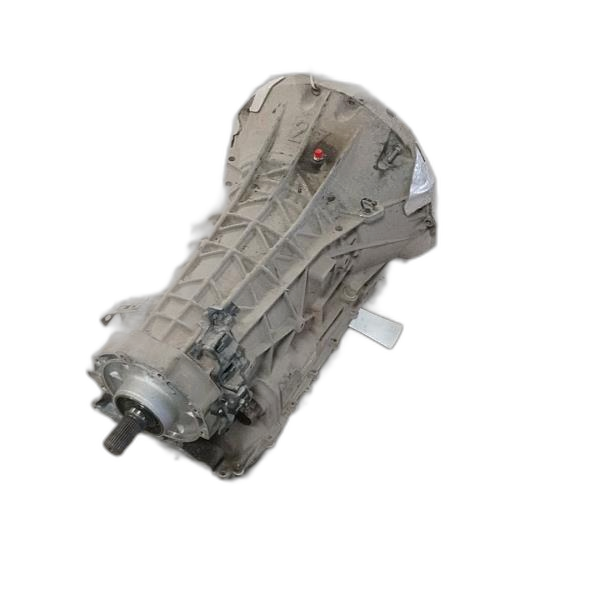
Below are the parts most often responsible for code P1806, ranked by how frequently each one is the actual culprit (per the diagnosis above). Tap any to see what we have for your vehicle.


The information in this article is provided for general reference and educational purposes only. Vehicle specifications, procedures, and part compatibility can vary by production date, trim level, and region. Always consult your vehicle's factory service manual and verify part numbers before purchasing or performing repairs. Safety-critical components such as airbags, seat belts, and braking systems should be installed by a qualified professional.
- 🧭 Diagnostic Flowchart
- 🎬 Helpful Videos
- 🛍️ Shop This Part
- What Does P1806 Mean?
- Can I Drive With P1806?
- Common Causes
- Symptoms
- Common Fixes & Costs
- Used vs. New Parts: Buying Guide
- What Happens If You Wait — Timeline
- Cost of Not Fixing It
- Diagnosis Steps
- When This Code Triggers (Freeze-Frame Conditions)
- Related Codes
- Climate & Environmental Factors
- How to Talk to a Mechanic About This Code
- Where to Take It: Dealer vs Independent vs Chain
- When to Walk Away From the Repair
- What Scan Tool You Need for This Code
- How to Clear the Code After You Fix It
- Will This Fail Emissions / State Inspection?
- Most Commonly Affected Vehicles
- Manufacturer-Specific Notes
- Real Owner Stories
- 2004 Chevy Silverado 1500 at 150K miles
- 2009 Mitsubishi Lancer Ralliart at 74K miles
- 2005 Ford F-150 with intermittent 4WD
- How to Prevent This Code From Triggering
- Frequently Asked Questions
- Can I fix P1806 myself?
- What are the most common misdiagnosis mistakes for P1806?
- I have a Toyota and got code P1806. What should I do?
- Why does the 'Service 4WD' light come on and then go away?
- What's the difference between 'short to ground' and 'short to battery'?
- Can a P1806 code cause transmission damage?
- Will replacing the battery fix a P1806 code?
- Key Takeaways
- 🎟️ Get 5% Off