

OBD-II Code P1819: Internal Mode Switch (Neutral Safety Switch) Malfunction
What P1819 means, why it triggers, and how to fix it
- P1819 typically indicates a failed Transmission Range Sensor, which physically prevents the engine from starting or locks the transmission into 2nd or 3rd gear.
- On 2005-2015 Nissan 4x4s and VW/Audi models, P1819 points to a 4WD transfer case actuator or mechatronic solenoid failure, making transmission sensor replacement a $300+ misdiagnosis.
- Before replacing any sensors, perform a 10-minute visual inspection of the shifter cable and external wiring harness, as a loose $0 cable adjustment frequently triggers this code.
- Driving with P1819 risks an immediate no-start stranding or sudden limp mode engagement, and ignoring the harsh shifting causes $2,000+ in internal transmission clutch damage within weeks.
What Does P1819 Mean?
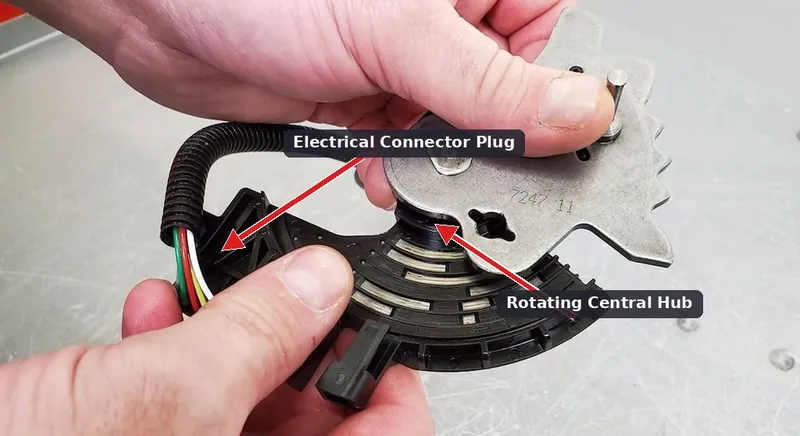
The P1819 code means the Powertrain Control Module (PCM) received an illogical signal from the Transmission Range Switch (also known as the Neutral Safety Switch or Internal Mode Switch). This switch tells the computer which gear is currently selected. The computer triggers this code when it sees an impossible combination, such as the switch indicating the vehicle is in 'Drive' while the ignition key is turned to 'Start'.
Technical definition: The SAE/OBD-II definition for P1819 is "Internal Mode Switch - No Start/Wrong Range." The PCM detected an invalid combination of signals from the Internal Mode Switch (IMS) for a specified duration. Manufacturers like Nissan and Volkswagen use this exact code for entirely different systems (4WD actuators and mechatronic solenoids), causing frequent misdiagnosis.
Can I Drive With P1819?
Yes, But With Caution. You can drive, but it is a significant gamble. Immediate risks include the engine failing to start or the transmission suddenly entering 'limp mode,' severely limiting your speed in traffic. Continuing to drive with harsh shifting causes accelerated wear on internal clutches and bands, quickly turning a $150 sensor issue into a $3,000 transmission rebuild. Get the vehicle diagnosed immediately to prevent catastrophic internal damage.
Common Causes

- Faulty Transmission Range Sensor / Internal Mode Switch (Very Common) — The switch contains moving internal contacts that wear out, corrode, or fail electronically over time, sending incorrect or blank signals to the computer.
- Misadjusted or Damaged Shifter Cable (Common) — The shifter cable physically connects the gear selector to the transmission. If it stretches or loosens, the switch won't align correctly with the selected gear, causing a signal mismatch.
- Corroded or Damaged Wiring/Connectors (Common) — The wiring harness for external range switches is exposed to moisture, road salt, and debris. Corrosion on the pins causes high resistance or shorts, disrupting the signal.
- Seized or Faulty Transfer Case Actuator (Nissan 4x4s) (Common) — On Nissan 4x4s, P1819 points to a 'Shift Actuator Circuit' fault in the 4WD transfer case. Infrequent use often causes the actuator motor to seize, though faulty relays or wiring can also trigger it.
- Failed Mechatronic Solenoid or Leaking Sleeve (VW/Audi/BMW) (Less Common) — On VW/Audi DSG transmissions, this code indicates a failed N216 pressure control solenoid. On BMWs, a leaking mechatronic sealing sleeve allows fluid to short out the main electrical connector.
- Low or Dirty Transmission Fluid (Less Common) — Extremely low or dirty fluid creates sediment buildup that interferes with the mechanical operation of internal switches or causes erratic hydraulic pressure readings.
- Faulty Powertrain Control Module (PCM) (Rare) — The vehicle's main computer can fail and misinterpret signals, but this is only considered after thoroughly testing the switch, wiring, and shifter cable.
Symptoms

- Engine Will Not Start or Cranks Only in Neutral — The switch fails to confirm the transmission is in Park or Neutral, triggering a safety lockout that prevents the starter from engaging.
- Harsh or Erratic Shifting — Without accurate gear data, the TCM commands maximum line pressure as a fail-safe, causing the transmission to slam violently into gear.
- Vehicle Enters 'Limp Mode' — The computer locks the transmission into a single gear (usually 2nd or 3rd) to prevent internal damage, severely limiting acceleration and top speed.
- Incorrect or Blank Gear Indicator on Dashboard (PRNDL) — The dashboard gear indicator fails to light up, highlights the wrong gear, or flashes a warning symbol.
- Engine Starts in Any Gear — A dangerous short circuit tricks the computer into thinking the vehicle is always in Park, allowing the engine to start in Reverse or Drive and causing sudden lurching.
- 4WD System Warning Light On (Nissan) (also visible on scanner) — On affected Nissan models, the '4WD' warning light illuminates, and the vehicle refuses to switch between 2WD and 4WD modes.
- Check Engine Light is On (also visible on scanner) — The PCM stores the P1819 trouble code and illuminates the Malfunction Indicator Lamp (MIL).
Diagnostic Flowchart
Tap your situation to follow the diagnostic path that matches what you're seeing on this code.
Common Fixes & Costs
- Adjust Shifter Cable — Parts: $0, Labor: $50-$150, ~0.8 hr book time (DIY)
- Repair or Clean Wiring Connector — Parts: $5-$25, Labor: $50-$150, ~0.5 hr book time (DIY)
- Replace Transmission Range Sensor (Neutral Safety Switch)
— Parts: $30-$200, Labor: $100-$300, ~1.5 hr book time
(Intermediate)
GM (Chevrolet/GMC) 4L60E/4L80E (external, pre-2009): OEM 24229422, 24221125 (Alt: ACDelco D2263C, Standard Motor Products NS-319) - Replace Transfer Case Actuator (Nissan)
— Parts: $200-$700, Labor: $100-$200, ~1.2 hr book time
(Intermediate)
Nissan Frontier / Titan / Xterra: OEM 33251-EA301 (Alt: Dorman 600-935) - Replace Molded Leadframe (Ford)
— Parts: $300-$550, Labor: $500-$1300, ~4.5 hr book time
(Advanced)
Ford F-150 / Expedition (6R80 Trans): OEM AL3Z-7G276-D (Alt: Dorman 926-149) - Replace Mechatronic Unit or Solenoid (VW/Audi)
— Parts: $200-$1500, Labor: $400-$800, ~4.0 hr book time
(Expert)
VW/Audi (DSG DQ250): OEM 02E321371E (Solenoid N216) (Alt: Wolfsburg Tuning Solenoid Kit)
Used vs. New Parts: Buying Guide
When a used part is worth it: Cost-effective for external, easily accessible parts like a GM external sensor or Nissan actuator. Never use for internal, high-labor parts like a Ford leadframe or VW mechatronic unit.
Donor-vehicle mileage cap: roughly under 70000 miles for the part to have meaningful remaining life.
Donor quality checklist:
- Verify donor mileage and ensure it was not scrapped due to a transmission failure.
- Match part numbers exactly; electronic revisions rarely interchange.
- Avoid rust-belt donors for external parts to minimize corrosion risks.
Decision logic:
- If The part is internal to the transmission (e.g., Ford Leadframe, VW Mechatronic). → Buy new OEM. High labor makes used part failure unacceptable.
- If The part is external and the vehicle is over 10 years old. → A used part is a reasonable gamble to save money.
- If The vehicle is newer and the cost of a new OEM part is under $200. → Buy new for the longer warranty and peace of mind.
Warranty tradeoff: Used parts offer 30-90 day parts-only warranties. If a used internal part fails, you pay the $500+ labor cost twice.
Worst-case if a used part fails: $500-$1500 if a used internal part fails after installation.
What Happens If You Wait — Timeline
- 0-1 month: Intermittent no-start in Park, requiring a shift to Neutral. Occasional harsh shift or flickering gear indicator. (MPG impact: 0-2%% · Added cost: $0-$300 (for a potential tow if stranded).)
- 1-3 months: Check Engine light stays on. TCM defaults to maximum line pressure, causing violent shifts and sudden limp mode engagement. (MPG impact: 2-5%% · Added cost: $50-$150 in wasted fuel due to inefficient operation.)
- 3-6 months: Maximum line pressure destroys internal clutch packs. Transmission fluid smells burnt. High risk of getting stuck in limp mode. (MPG impact: 5-10%% · Added cost: $500-$1200 for valve body or solenoid damage.)
- 6+ months: Catastrophic internal failure. Transmission slips badly or loses all forward gears. Requires complete rebuild. (MPG impact: 10-25%% · Added cost: $2,500-$5,000+ for a full transmission rebuild.)
Cost of Not Fixing It
- Immediate: Stranded by a no-start condition or sudden limp mode engagement in traffic. (Added cost: $100-$300 for a tow.)
- 1-3 months: TCM commands maximum line pressure as a fail-safe, causing violent shifts that rapidly wear out clutches and bands. (Added cost: $300-$850 to replace damaged solenoids or a valve body.)
- 3+ months: Cascading internal failure. Worn clutch material contaminates the hydraulic system, destroying the transmission. (Added cost: $2,000-$5,000 for a complete transmission rebuild or replacement.)
Diagnosis Steps
- Verify the Obvious: Shifter and Battery
Try starting the engine in both Park and Neutral. Wiggle the gear shifter while holding the key in the 'start' position. If it starts, you have a misadjusted shifter cable or a failing range switch. Ensure your battery provides at least 12.4V resting, as low voltage during cranking causes erratic module communication.
Tools: Digital Multimeter (Beginner) - Visually Inspect the Shifter Cable and Linkage
Inspect the point where the shifter cable connects to the transmission lever. Check for loose, bent, or corroded components. Have a helper move the shifter through the gears while you verify the linkage moves smoothly into each detent.
Tools: Flashlight (Intermediate) - Inspect the Transmission Range Sensor Connector
Locate the external Transmission Range Sensor. Unplug the electrical connector and inspect for corrosion, moisture, or bent pins. Clean any buildup with electrical contact cleaner and ensure the plug seats firmly.
Tools: Flashlight, Electrical Contact Cleaner (Intermediate) - Scan Tool Live Data Analysis
Connect an advanced scan tool and view live data from the Transmission Control Module. Observe the 'Transmission Range' or 'PRNDL' PID. As you move the shifter, the scan tool reading must instantly match the selected gear. Blank or jumping readings confirm a sensor circuit fault.
Tools: Advanced OBD-II Scan Tool (Beginner) - Check for a Misadjusted Switch
External range switches are adjustable via slotted mounting holes. Loosen the mounting bolts, place the transmission in Neutral, and align the physical marks on the switch with the marks on the transmission case before retightening.
Tools: Socket Set or Wrenches (Advanced) - Pro Tip: GM IMS Continuity Test
For GM 4L60E/4L80E transmissions, test the Internal Mode Switch (IMS) using a multimeter. Check the resistance of the four signal pins (A, B, C, P) against the ground pin. Compare the open/closed circuit patterns for each gear position against the factory service manual chart to pinpoint internal switch failure.
Tools: Digital Multimeter, Vehicle-Specific Service Manual (Advanced) - Pro Tip: Nissan Transfer Case Actuator Circuit Check
On Nissan 4x4s, verify 12V power reaches the transfer case control unit (TCCU) and relays. Check wiring continuity between the TCCU and the actuator motor. A corroded wire or faulty relay prevents the actuator from moving, setting the P1819 code.
Tools: Digital Multimeter, Vehicle-Specific Wiring Diagram (Advanced) - Pro Tip: VW/Audi N216 Solenoid Resistance Test
For VW/Audi DSG transmissions, P1819 points to the N216 pressure control solenoid. Access the mechatronic connector and measure resistance across the N216 pins. A healthy solenoid reads 2.5-5.5 Ohms; an open circuit (OL) confirms failure.
Tools: Digital Multimeter, Vehicle-Specific Wiring Diagram (Advanced) - Pro Tip: Ford 6R80 Leadframe DTC Correlation
On Ford 6R80 transmissions, P1819 rarely appears alone. If P1819 is accompanied by P0720, P0722, or P0731, it definitively confirms the internal molded leadframe assembly has failed and requires complete replacement.
Tools: Advanced OBD-II Scan Tool (Advanced)
When This Code Triggers (Freeze-Frame Conditions)
- Transmission Fluid Temp: 170-210°F (Sets when the transmission reaches full operating temperature, as thermal expansion disrupts failing electronic contacts.)
- Gear Selector Position: Invalid Signal (Logged during a gear shift or startup when the PCM receives an impossible signal (e.g., Park and Drive simultaneously).)
- Vehicle Speed: 0 mph (Triggers when attempting to start the engine while the sensor incorrectly reports a drive gear is engaged.)
- Engine RPM: 0-300 RPM (Captured during the startup sequence when the computer verifies gear position before engaging the starter.)
Related Codes
- P0705 — The generic OBD-II code for 'Transmission Range Sensor Circuit Malfunction.' Seeing P0705 alongside P1819 confirms the issue is the range sensor or its wiring, ruling out manufacturer quirks like Nissan 4WD actuators.
- P1810 — A GM-specific code for 'Transmission Fluid Pressure (TFP) Manual Valve Position Switch.' Seeing both codes together strongly points to a failure of the internal switch manifold on the valve body.
- P1820 - P1826 — GM-specific codes pointing to faults on individual circuits of the Internal Mode Switch. A code like P1820 ('Circuit A Low') tells you exactly which of the four signal wires has a short to ground.
- P0720 — On Ford 6R80 transmissions, 'Output Speed Sensor Circuit Malfunction' frequently appears alongside P1819. Because the OSS is integrated into the molded leadframe, P0720 confirms the entire leadframe assembly requires replacement.
Climate & Environmental Factors
- High Humidity / Road Salt: Accelerates corrosion on external range sensor connectors, wiring, and the shifter cable linkage, serving as the primary failure cause in rust-belt regions.
- Extreme Cold: Makes plastic connectors brittle and thickens internal lubricants in shifter mechanisms, straining components and increasing the risk of breakage during diagnosis.
- High Heat: Accelerates transmission fluid breakdown, creating varnish that causes internal solenoids (VW) or leadframe contacts (Ford) to stick and fail.
How to Talk to a Mechanic About This Code
Say this: "I have a P1819 code. I believe the issue is the [transmission range sensor / leadframe / transfer case actuator]. I'd like a diagnostic focusing on the live data from the transmission range sensor PID."
Signals you are informed, directs the tech to the probable cause, and prevents expensive exploratory diagnostics.
Avoid saying:
- 'My car won't start sometimes.'
- 'Just fix the check engine light.'
- 'I know it's the neutral safety switch.'
Questions to ask before authorizing the repair:
- Can you show me the faulty live data?
- Did you check the shifter cable adjustment first?
- What is the labor rate for internal parts?
- What is the warranty on the replacement part and your labor?
Where to Take It: Dealer vs Independent vs Chain
- Dealer:
Best for: Vehicles still under powertrain warranty, Complex manufacturer-specific issues like a VW mechatronic unit., Recalls or service campaigns related to the issue.
Downsides: Significantly higher labor rates, often 1.5x to 2x an independent shop., May recommend replacing a larger assembly when a smaller component has failed. (Typical cost: +75% vs. baseline) - Independent Shop:
Best fit for most P1819 scenarios. Reputable transmission specialists are more cost-effective than dealers for Ford leadframes.
Best for: Out-of-warranty vehicles with common P1819 causes, like a GM neutral safety switch or a Nissan transfer case actuator., Getting a second opinion on a high dealership quote., Building a long-term relationship with a trusted mechanic.
Downsides: Quality and expertise can vary greatly; look for ASE certification., May not have specialized tools for complex internal transmission work. (Typical cost: +0% vs. baseline) - Chain Shop:
AVOID for P1819 diagnosis and repair. Misdiagnosis is highly likely.
Best for: Simple, routine maintenance like oil changes and brake jobs.
Downsides: Technician skill varies dramatically., Lack diagnostic expertise and transmission-specific experience., May not be equipped to handle internal transmission repairs. (Typical cost: -10% vs. baseline)
When to Walk Away From the Repair
If the estimated repair cost exceeds 50% of the vehicle's private-party value, consider selling or trading it in.
- Car worth $4000, fix is $2200: Walk away. The repair cost is over half the car's value.
- Car worth $11000, fix is $1500: Fix it. The repair cost is well under the threshold.
- Car worth $7500, fix is $1300: Fix it. This is a reasonable cost to keep a more valuable vehicle on the road.
What Scan Tool You Need for This Code
Minimum: Reads manufacturer-specific transmission codes and views live data for the Transmission Range Sensor (PRNDL) PID.
Basic $20 readers only show the code. You need live data to confirm if the sensor's signal is actually incorrect.
Budget: BlueDriver Pro (~$90) — Reads enhanced codes and displays live data for external sensor diagnosis.
Mid-range: Autel MaxiCOM MK808 / MX808 (~$350) — Full system diagnostics and live data streams. Essential for Ford leadframe and Nissan transfer case issues.
Professional: Ross-Tech VCDS or Autel MaxiSYS MS906 (~$450-1200) — VCDS is mandatory for VW/Audi mechatronic diagnosis. Autel offers bidirectional control for relearn procedures.
Rent vs buy: Auto parts stores scan for free but lack live data. Buying a BlueDriver offers excellent value for DIY diagnosis.
How to Clear the Code After You Fix It
- Use an OBD-II scan tool to clear the diagnostic trouble codes (DTCs).
- Reset the transmission adaptive tables and Keep-Alive Memory (KAM) with a capable scan tool (crucial for Ford/GM).
- Perform the vehicle-specific transmission relearn drive cycle.
Drive cycle (~20 minutes): Cold start to operating temp. Shift N to D (hold 5s), N to R (hold 5s); repeat 5x. Accelerate gently through all gears to highway speed. Drive 2 mins in top gear. Brake to a stop and idle 1 min.
Readiness monitors affected: Comprehensive Component Monitor (CCM), Transmission
Before emissions retest: drive at least 50 miles to fully set monitors.
Watch out for:
- Disconnecting the battery clears the code but resets all readiness monitors, guaranteeing an emissions test failure.
- The code returns immediately if the underlying mechanical or electrical fault is not corrected.
- Failing to reset adaptive learning tables causes continued harsh shifting even after part replacement.
Will This Fail Emissions / State Inspection?
Yes — this code typically fails an OBD-II emissions inspection.
- California: An illuminated Check Engine Light results in an automatic failure. After repair, a drive cycle must be completed to set all readiness monitors before a re-test.
- New York: The NYS DMV vehicle inspection includes an OBD-II scan. Any fault code that illuminates the Check Engine Light is cause for an automatic failure.
- Texas: In counties requiring an emissions test, an illuminated Check Engine Light is an automatic failure. You must drive 50-100 miles to reset readiness monitors before re-inspection.
Most Commonly Affected Vehicles
- Chevrolet / GMC Silverado, Sierra, Tahoe, Suburban, Yukon (1999-2013) — Models before 2009 use an external, adjustable switch. Later models use a non-adjustable Internal Mode Switch (IMS) on the valve body, requiring pan removal for service.
- Ford F-150, Expedition, Mustang (2009-2017) — On 6R80 transmissions, this code almost always points to a failed internal molded leadframe. Ford issued Customer Satisfaction Program 19N01 extending warranty coverage, though most have now expired.
- Nissan Pathfinder, Frontier, Titan, Xterra (2005-2015) — P1819 is defined as 'Shift Actuator Circuit' and points to the 4WD transfer case, not the transmission. Diagnosis must focus on the transfer case motor, relays, and position sensors.
- Volkswagen / Audi Golf, Jetta, Passat, A3, A4 (2004-2013) — On DSG or Multitronic transmissions, P1819 indicates a fault with 'Pressure Control Valve 2 (N216)' inside the mechatronic unit, requiring complex hydraulic service.
- Pontiac Grand Prix, Bonneville (2000-2008) — These front-wheel-drive sedans commonly experience P1819 due to a failed internal mode switch located inside the transmission side cover.
- Buick LeSabre, Century, LaCrosse (2000-2011) — Vehicles equipped with the 4T65-E transmission frequently suffer internal mode switch failures, leading to no-start or harsh shifting conditions.
- BMW 5-Series (E60), 7-Series (E65/E66), X5 (E53), 3-Series (E90) (2002-2010) — Equivalent faults for transmission signal plausibility are caused by a leaking mechatronic sealing sleeve on ZF 6HP transmissions, which contaminates the main electrical connector.
- Cadillac Escalade, CTS, SRX (2004-2015) — Cadillac models equipped with GM 4Lxx and 6Lxx series transmissions experience P1819 due to failures of the external MLPS or internal IMS.
Manufacturer-Specific Notes
- General Motors (Chevrolet, GMC, Buick, Pontiac, Cadillac): For models 2009 and newer with 6L80 transmissions, the external switch was replaced by an Internal Mode Switch (IMS) attached to the valve body, requiring transmission pan removal to service.
- Ford: On F-150s with the 6R80 transmission, the sensor is part of the 'molded leadframe' inside the transmission. This high-failure part was covered under extended warranty program 19N01, which required specific DTCs like P0720 or P0722 to be present for replacement.
- Nissan: For 4x4 trucks, P1819 relates to the 4WD system's transfer case, not the primary gear selector. A common DIY fix is to cycle the 4WD system 10-15 times to unstick a seized actuator motor.
- Volkswagen / Audi: P1819 indicates a fault with 'Pressure Control Valve 2 (N216),' a solenoid inside the complex mechatronic unit on DSG transmissions. This repair requires specialist knowledge and often leads to full mechatronic unit replacement.
Real Owner Stories
2016 Ford F-150 5.0L at ~100k miles - The Misdiagnosis & High Quote
Truck suddenly went into 'limp mode', stuck in 5th or 3rd gear. The owner scanned it and found an output shaft speed sensor error alongside P1819.
What they tried:
- Took it to a Ford dealer. The dealer diagnosed a failed molded leadframe and quoted $2,200 for the repair.
- The quote included $537 for parts and over $1,200 for labor, which the owner felt was excessive.
Outcome: An independent transmission shop quoted a maximum of $1,300 for the same job. The owner moved the truck and saved $900.
Lesson: For the Ford 6R80 leadframe issue, dealership quotes are significantly higher than independent transmission shops. Always get a second opinion on internal repairs.
2011 Nissan Pathfinder R51 - The 4WD System Mystery
The '4WD' warning light came on and P1819 was stored. The transmission itself shifted perfectly.
What they tried:
- Owner followed the service manual troubleshooting steps with a multimeter, and all tests passed.
- Replaced transfer case relays and the Transfer Control Unit (TCU) with junkyard parts, but the code remained.
Outcome: The issue was a seized actuator motor from lack of use. Cycling the 4WD system (2WD to 4H, 4H to 4L, and back) 15 times freed up the motor and cleared the fault.
Lesson: On a Nissan 4x4, P1819 points to the 4WD transfer case. Before replacing parts, cycle the 4WD system multiple times to un-stick a seized actuator motor.
2004 Chevrolet Silverado - The Classic No-Start Fix
Vehicle would not crank or start when in Park, but started when shifted to Neutral. The gear indicator on the dash was incorrect.
What they tried:
- The owner confirmed the symptom by wiggling the shifter while trying to start the truck, which made a temporary connection.
- Diagnosis pointed to a classic external Neutral Safety Switch failure.
Outcome: The external switch on the side of the 4L60E transmission was replaced. The new switch was aligned and installed, resolving the no-start issue in under an hour.
Lesson: A 'starts in Neutral but not Park' condition on a GM truck is almost always the Neutral Safety Switch or its adjustment. On pre-2009 models, it is a very manageable DIY repair.
How to Prevent This Code From Triggering
- Cycle the 4WD system (for Nissan/Toyota 4x4s) (Once a month) — Moves the transfer case actuator motor, preventing it from seizing due to inactivity and lack of lubrication.
- Perform regular transmission fluid and filter changes (Every 30,000-60,000 miles) — Prevents sludge buildup that jams internal switches and dissipates heat that destroys electronics.
- Use dielectric grease on external connectors (When servicing or inspecting) — Seals external connectors against moisture and road salt, preventing pin corrosion.
- Address any fluid leaks immediately (Upon discovery) — Stops fluid from degrading wiring insulation and wicking into connectors (common on BMWs).
Frequently Asked Questions
Can I just bypass the neutral safety switch to start my car?
Technically possible on older vehicles by jumping the starter relay, but strongly discouraged. Bypassing removes the safety feature preventing in-gear starts, risking sudden vehicle lurching and accidents. It also fails to fix the underlying shifting issues.
Why does my car start in Neutral but not in Park?
This is a classic symptom of a failing transmission range switch or stretched shifter cable. The internal contacts for 'Park' are worn out, but the 'Neutral' contacts still function. Wiggling the shifter in Park often makes a temporary connection, confirming the physical switch or cable is the culprit.
What are the most common misdiagnosis mistakes for P1819?
The biggest mistake is ignoring manufacturer-specific definitions, like diagnosing a transmission sensor on a Nissan 4x4 when P1819 actually points to the transfer case. The second most common error is replacing the sensor without checking the shifter cable adjustment first. Always inspect the wiring connector for corrosion before buying parts.
My 4WD light is on with a P1819 code, but the transmission shifts fine. What's the problem?
On Nissan trucks and SUVs, P1819 indicates a fault in the 4WD transfer case shift actuator circuit, not the main transmission. The transmission will shift normally, but you cannot switch between 2WD and 4WD. The cause is typically a seized actuator motor from lack of use, a bad relay, or damaged wiring.
Is the Transmission Range Sensor the same as the Neutral Safety Switch?
Yes, 'Neutral Safety Switch' is the older term for the part that prevents starting in gear. 'Transmission Range Sensor' or 'Internal Mode Switch' are modern terms reflecting its expanded role. Today's sensors provide precise gear data (P, R, N, D) to control shift patterns and line pressure.
The repair shop says the switch is inside my transmission. Is that right?
Yes, many modern vehicles (like Ford 6R80 or GM 6L80 transmissions) locate the range sensor inside the transmission pan. It is often integrated into the valve body or a molded leadframe. This makes replacement labor-intensive, requiring fluid drainage and pan removal.
Can a bad battery cause a P1819 code?
Low system voltage causes unpredictable electrical problems and communication errors between modules. A battery dropping below 9-10V during engine cranking triggers false codes like P1819. Always verify your battery provides a steady 12.4V+ resting and 13.5V+ running before diagnosing complex electronic faults.
What is a molded leadframe on a Ford?
The molded leadframe in Ford's 6R80 transmission is a plastic assembly housing internal wiring, speed sensors, and the range sensor. It bolts directly to the valve body inside the transmission pan. These frequently fail, causing P1819, erratic shifting, or no-start conditions due to lost gear position signals.
Key Takeaways
- P1819 typically indicates a failed Transmission Range Sensor, which physically prevents the engine from starting or locks the transmission into 2nd or 3rd gear.
- On 2005-2015 Nissan 4x4s and VW/Audi models, P1819 points to a 4WD transfer case actuator or mechatronic solenoid failure, making transmission sensor replacement a $300+ misdiagnosis.
- Before replacing any sensors, perform a 10-minute visual inspection of the shifter cable and external wiring harness, as a loose $0 cable adjustment frequently triggers this code.
- Driving with P1819 risks an immediate no-start stranding or sudden limp mode engagement, and ignoring the harsh shifting causes $2,000+ in internal transmission clutch damage within weeks.
Helpful Videos
Shop the Parts Behind P1819
Below are the parts most often responsible for code P1819, ranked by how frequently each one is the actual culprit (per the diagnosis above). Tap any to see what we have for your vehicle.



The information in this article is provided for general reference and educational purposes only. Vehicle specifications, procedures, and part compatibility can vary by production date, trim level, and region. Always consult your vehicle's factory service manual and verify part numbers before purchasing or performing repairs. Safety-critical components such as airbags, seat belts, and braking systems should be installed by a qualified professional.
- 🧭 Diagnostic Flowchart
- 🎬 Helpful Videos
- 🛍️ Shop This Part
- What Does P1819 Mean?
- Can I Drive With P1819?
- Common Causes
- Symptoms
- Common Fixes & Costs
- Used vs. New Parts: Buying Guide
- What Happens If You Wait — Timeline
- Cost of Not Fixing It
- Diagnosis Steps
- When This Code Triggers (Freeze-Frame Conditions)
- Related Codes
- Climate & Environmental Factors
- How to Talk to a Mechanic About This Code
- Where to Take It: Dealer vs Independent vs Chain
- When to Walk Away From the Repair
- What Scan Tool You Need for This Code
- How to Clear the Code After You Fix It
- Will This Fail Emissions / State Inspection?
- Most Commonly Affected Vehicles
- Manufacturer-Specific Notes
- Real Owner Stories
- 2016 Ford F-150 5.0L at ~100k miles - The Misdiagnosis & High Quote
- 2011 Nissan Pathfinder R51 - The 4WD System Mystery
- 2004 Chevrolet Silverado - The Classic No-Start Fix
- How to Prevent This Code From Triggering
- Frequently Asked Questions
- Can I just bypass the neutral safety switch to start my car?
- Why does my car start in Neutral but not in Park?
- What are the most common misdiagnosis mistakes for P1819?
- My 4WD light is on with a P1819 code, but the transmission shifts fine. What's the problem?
- Is the Transmission Range Sensor the same as the Neutral Safety Switch?
- The repair shop says the switch is inside my transmission. Is that right?
- Can a bad battery cause a P1819 code?
- What is a molded leadframe on a Ford?
- Key Takeaways
- 🎟️ Get 5% Off