

Ultimate P1827 Guide: A Pro's Diagnostic & Repair Manual (All Manufacturers)
Beyond the basics: What P1827 *really* means for your Ford, Nissan, Kia, Mitsubishi and more.
- Search your specific make and model for P1827, as the definition ranges from a $30 Nissan relay failure to a $5,000 Mitsubishi transmission rebuild.
- Test the wiring harness and connectors with a multimeter for shorts or high resistance before replacing any $200+ sensors or modules.
- Inspect the 4WD relay and the main transfer case electrical connector first, as corrosion or a failed $20 relay causes over 50% of P1827 codes.
- Look for sister codes like P1828 (Nissan) or P1822 (Kia); their presence guarantees a shared power failure, usually a single relay or a water-logged connector.
- You can safely drive in 2WD mode, but ignoring the code for over 6 months risks frying the $800 Transfer Case Control Module due to persistent electrical shorts.
What Does P1827 Mean?
P1827 is a manufacturer-specific diagnostic trouble code (DTC) signaling a fault within the four-wheel drive (4WD) or all-wheel drive (AWD) system. The Powertrain Control Module (PCM) or Transfer Case Control Module (TCCM) detects an electrical or mechanical malfunction. This prevents the system from properly engaging, disengaging, or verifying its operational state, effectively disabling it and triggering a warning light.
Technical definition: The SAE/ISO definition for P1827 is not standardized and varies critically between manufacturers. Common definitions include 'Transmission 4-Wheel Drive Low Clutch Relay Circuit To Ground' (Ford), 'Clutch Pressure Switch' (Nissan), 'Pressure Sensor for 4WD Signal Wire Short to Battery' (Kia/Hyundai), 'Shift Fork Position Sensor 2 System' (Mitsubishi), and 'G Sensor / Yaw Rate Sensor Malfunction' (Suzuki).
Can I Drive With P1827?
Yes, But With Caution. You can safely drive in 2WD mode. However, the 4WD/AWD system is disabled, creating a significant safety risk in slippery or off-road conditions. Ignoring a circuit short for months damages the control module, turning a $200 wiring fix into a $1,000+ module replacement. On performance models like the Mitsubishi Evo X, ignoring this code causes catastrophic transmission damage costing over $5,000.
Common Causes
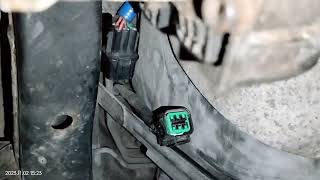
- Corroded or Damaged Wiring/Connectors (Very Common) — This is the number one cause across all brands. The wiring harness and connectors for transfer case motors, sensors, and relays are exposed to road salt and moisture. This causes corrosion, wires shorting to ground, or open circuits from broken wires.
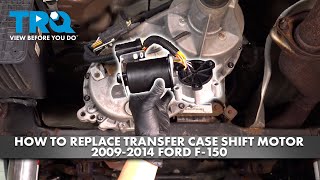
- Faulty 4WD Control Relay or Solenoid (Common) — The relay sending power to the transfer case shift motor or hydraulic pump is a frequent failure point on Ford and Nissan vehicles. It fails internally or its contacts corrode, preventing the 4WD system from activating.
- Defective Transfer Case Position/Pressure Sensor (Common) — Sensors reporting the shift fork's position or the hydraulic system's pressure to the control module fail, providing incorrect or no data. This is a primary cause on Nissan, Kia, and Hyundai models. 🎬 Watch: Diagnosing Kia Sportage 4WD circuit codes P1822 and P1827.
- Low System Voltage or Poor Main Ground Connection (Less Common) — A weak battery, failing alternator, or a corroded main chassis ground causes low or unstable voltage. Sensitive modules like the TCCM are highly susceptible to voltage drops and set false circuit codes.
- Faulty 4WD Selector Switch (Less Common) — The dashboard switch used to select 2WD/4WD/AWD modes wears out internally, sending an erratic signal to the TCCM interpreted as a circuit fault.
- Failed Transfer Case Control Module (TCCM) or Software Glitch (Rare) — Internal module failure occurs from voltage spikes or water intrusion. Occasionally, the module enters a logic-locked state requiring a hard reset or dealer software re-flash. Always test wiring before condemning the module.
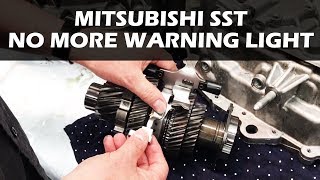
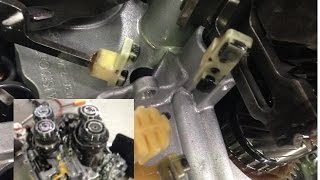
- Internal Transfer Case Mechanical Failure (Rare) — This severe cause includes a broken shift fork magnet (a known issue on Mitsubishi SST transmissions 🎬 See how detached magnets cause internal mechanical failure on SSTs.), a seized transfer case motor, a failed internal oil pump, or a clogged hydraulic filter.
Symptoms
- 4WD or AWD Warning Light is On — The '4WD', 'AWD', 'Service 4WD', or a similar warning indicator illuminates steadily or flashes on the instrument cluster.
- 4WD/AWD System is Inoperative — You cannot switch between 2WD, 4WD High, and 4WD Low. The selector switch light flashes briefly and reverts to the previous mode.
- Binding or Hopping Sensation During Tight Turns — On AWD systems, a fault causes the clutches to partially engage in 2WD mode. The vehicle feels like it is binding, hopping, or skipping during slow, tight turns on dry pavement.
- Unusual Noises from Under the Vehicle — Grinding, clunking, or whining sounds emit from the transfer case area when a shift is attempted or while driving.
- Harsh Shifting or Transmission Performance Issues — On Mitsubishi models with the TC-SST transmission, a P1827 code is accompanied by harsh gear engagement, erratic shifting, or a complete loss of vehicle movement.
Diagnostic Flowchart
Tap your situation to follow the diagnostic path that matches what you're seeing on this code.
Common Fixes & Costs
- Replacing the 4WD/Transfer Case Relay — Parts: $20-$70, Labor: $0-$100, ~0.2 hr book time (DIY)
- Repairing Damaged Wiring or Cleaning Connectors — Parts: $10-$40, Labor: $150-$500, ~1.5 hr book time (Intermediate)
- Replacing a Transfer Case Position or Pressure Sensor — Parts: $50-$200, Labor: $150-$350, ~1.5 hr book time (Intermediate)
- Replacing the AWD Coupling / Transfer Case Assembly — Parts: $1200-$3000, Labor: $400-$1500, ~4.5 hr book time (Professional)
- Replacing the Transfer Case Control Module (TCCM) — Parts: $250-$800, Labor: $100-$250, ~0.8 hr book time (Professional)
DIY vs Professional
- Replacing the 4WD/Transfer Case Relay 🟢 Beginner
Tools: None, or a small trim tool to access the fuse box. - Repairing Damaged Wiring or Cleaning Connectors 🟢 Beginner
Tools: Multimeter, wire strippers, crimpers, heat gun, contact cleaner, dielectric grease. - Replacing a Transfer Case Position or Pressure Sensor 🟢 Beginner
Tools: Wrenches, socket set, fluid drain pan and pump. - Replacing the Transfer Case Control Module (TCCM) 🟢 Beginner
Tools: Socket set, trim panel removal tools, bi-directional scan tool.
Used vs. New Parts: Buying Guide
When a used part is worth it: For expensive assemblies like a Kia/Hyundai AWD coupling or a complete transfer case, a used part from a low-mileage vehicle offers significant savings ($400 used vs $1200+ new). It is a poor choice for wear items like relays.
Donor-vehicle mileage cap: roughly under 80000 miles for the part to have meaningful remaining life.
Donor quality checklist:
- Verify the exact part number matches; variations exist between model years.
- Confirm the TCCM is from a vehicle with identical options.
- Avoid parts from flood-damaged vehicles or heavily salted regions.
Decision logic:
- If The part is a relay or an easily accessible external sensor. → Buy new. The low cost and high reliability outweigh any potential savings.
- If The part is a TCCM and your vehicle is 2015 or newer. → Favor new and budget for professional programming. Used modules are often incompatible.
- If The part is a complete AWD coupling or transfer case assembly and the vehicle is over 100k miles. → A warrantied used part is a reasonable choice to manage repair costs.
Warranty tradeoff: Used salvage parts offer a 30-90 day warranty on the part only. Aftermarket new parts have a 1-year warranty. New OEM parts carry a 12-month/12,000-mile warranty.
Worst-case if a used part fails: 600-1200. If a used TCCM or AWD coupling fails, you pay for labor a second time plus another replacement part.
What Happens If You Wait — Timeline
- 0-1 month: 4WD/AWD warning light is on. The system is disabled, leaving the vehicle in 2WD. No physical symptoms are apparent in most cases. (MPG impact: 0%% · Added cost: $0)
- 1-3 months: On Kia/Hyundai models, noticeable binding in turns causes accelerated rear tire wear. On other models, the wiring and TCCM driver circuits are under continuous electrical stress. (MPG impact: 1-3%% · Added cost: $200-400)
- 3-6 months: A persistent electrical short overheats and destroys the driver circuit inside the Transfer Case Control Module (TCCM), turning a wiring problem into a module failure. (MPG impact: 0-3%% · Added cost: $800-1200)
- 6+ months: On Mitsubishi TC-SST models, driving with a detached shift fork magnet allows it to be caught between moving gears, causing catastrophic internal transmission damage. (MPG impact: N/A% · Added cost: $5000+)
Cost of Not Fixing It
- 0-1 Month: Loss of 4WD/AWD capability, creating a safety risk in adverse weather or off-road conditions. No significant additional cost is likely. (Added cost: 0)
- 1-6 Months: A persistent circuit short overheats wiring or damages the Transfer Case Control Module (TCCM). On systems with binding symptoms, it causes accelerated tire wear and stress on axles. (Added cost: 800-1500)
- 6+ Months: On Mitsubishi Evo X models, continued driving leads to catastrophic failure of internal transmission components. On other vehicles, a damaged TCCM is the guaranteed outcome. (Added cost: 1000-5000)
Diagnosis Steps
- Identify Your Vehicle's Specific P1827 Definition
This is mandatory. Search '[Your Make Model Year] P1827'. The diagnostic path for a Ford 'Relay Circuit to Ground' is completely different from a Kia 'Pressure Sensor Short to Battery'.
Tools: Internet access (Beginner) - Scan for All Related Codes with an Advanced Tool
Use an OBD-II scanner capable of reading manufacturer-specific codes from the TCCM. The presence of sister codes like P1826 (Ford), P1828 (Nissan), or P1822 (Kia) pinpoints the exact shared circuit failure.
Tools: Advanced OBD-II Scanner (Beginner) - Inspect Fuses and Relays
Locate all fuses and relays labeled '4WD', 'TCCM', 'AWD', or 'Transfer Case'. Swap the 4WD relay with an identical one from a non-critical system (like the horn) to instantly test if the relay is the culprit.
Tools: Owner's manual, fuse puller (Beginner) - Perform a Detailed Visual Inspection of Wiring
Safely raise the vehicle. Meticulously inspect the wiring harness going to the transfer case assembly. Look for chafed wires, melted plastic, and green corrosion at the transfer case motor or AWD coupling connector.
Tools: Jack and jack stands, flashlight (Intermediate) - [PRO TIP] Analyze Live Data with a Bi-Directional Scanner
View live data from the TCCM to monitor the 4WD selector switch status, commanded relay states, and sensor voltages in real-time. Command the relay or motor to activate with the scanner to instantly confirm component functionality.
Tools: Bi-directional scan tool (Professional) - Test the Specific Component Circuit
Using a wiring diagram, test the wire identified by the code definition. For Ford, check for continuity between the control wire and chassis ground. For Kia, check for voltage on the pressure sensor signal wire with the key on.
Tools: Digital Multimeter, vehicle-specific wiring diagram (Advanced) - [PRO TIP] Perform a Voltage Drop Test
Perform a voltage drop test on the main power and ground wires to the TCCM and transfer case motor under load. A reading above 0.5 volts indicates excessive resistance requiring repair.
Tools: Digital Multimeter with long leads (Advanced) - Test the Component Itself
If wiring is good, test the component's internal resistance (shift motor), continuity (pressure switch), or signal voltage (position sensor) against service manual specifications.
Tools: Multimeter, service manual (Advanced) - [ADVANCED] Ford - Test Relay Circuit to Ground
Disconnect the TCCM and transfer case connector. Measure resistance between the clutch control circuit wire and chassis ground. It must be over 10,000 ohms. Low resistance confirms a short to ground.
Tools: Digital Multimeter, wiring diagram (Advanced) - [ADVANCED] Kia/Hyundai - Test Pressure Sensor Voltage
With the key on, back-probe the sensor signal wire at the AWD coupling connector. A steady 4.8V or higher confirms a short to power in the wiring or internally within the sensor assembly.
Tools: Digital Multimeter, wiring diagram (Advanced) - [ADVANCED] Mitsubishi - Check Shift Fork Position Counter PID
Monitor the 'shift fork 2 position counter' PID. A value of -500 counts or less, or 500 counts or more, for 180 milliseconds confirms the internal shift fork magnet has detached.
Tools: Advanced Bi-directional scan tool (Professional)
When This Code Triggers (Freeze-Frame Conditions)
- System Voltage: 11.5-14.5V (The code sets during the initial key-on self-test; voltage must be within operating range (not below 9V or above 16V).)
- Vehicle Speed: 0 mph (Triggers at startup when the TCCM checks all circuits before moving. It also triggers at low speeds if a shift is attempted.)
- Engine RPM: 0 or 650-800 RPM (Idle) (The fault is detected with the key on, engine off (KOEO) or immediately after starting the engine during the initial self-check.)
- Commanded State: N/A (Varies) (The fault logs when a 4WD mode shift is requested via the selector switch, or during a continuous self-test of a sensor circuit.)
Related Codes
- P1826 — On Ford vehicles, P1827 indicates a 'Circuit to Ground', while P1826 indicates the same circuit has a 'Short to Battery (Power)'. They are diagnosed by checking the same wire for unwanted voltage or ground.
- P1828 — On Nissan vehicles, P1828 ('Line Pressure Switch') appears alongside P1827. This combination guarantees a faulty transfer case relay cutting power to the hydraulic pump, causing system-wide pressure loss.
- P1822 — On Kia/Hyundai vehicles, P1822 ('AWD Pump Motor Circuit') accompanies P1827. Water intrusion into the shared rear differential connector causes both codes to set simultaneously.
- U-Series Codes (e.g., U1000, U0102) — U-codes indicate a CAN bus communication error. Seen with P1827, it means the TCCM has lost power, ground, or the communication wiring is damaged.
Climate & Environmental Factors
- Road Salt / High Humidity: Salt acts as an electrolyte, dramatically accelerating corrosion on exposed wiring harnesses and ground points. Regions using heavy road salt see a much higher incidence of this code, particularly on Kia/Hyundai and Ford models.
- Extreme Cold: Cold temperatures make wire insulation brittle and prone to cracking, allowing moisture to penetrate. It also causes mechanical shift motors to struggle or freeze.
How to Talk to a Mechanic About This Code
Say this: "I have a 4WD warning light on and my scanner shows code P1827. For my [Make, Model, Year], this points to a [specific definition]. I'd like to schedule a diagnostic appointment to test the integrity of that specific circuit, including the relay, wiring, and connectors, before we consider replacing any major components."
This signals to the shop that you understand P1827 is an electrical circuit code. It directs them to perform a proper electrical diagnosis with a multimeter, preventing them from immediately quoting an expensive part like a transfer case motor.
Avoid saying:
- 'My 4WD light is on, can you fix it?'
- 'Just replace whatever is broken.'
- 'I think I need a new transfer case.'
Questions to ask before authorizing the repair:
- What were the specific voltage, resistance, or continuity readings you got when you tested the circuit?
- Can you show me the corroded connector or damaged wire that you found?
- Did you test the component directly to confirm it has failed?
- Is this repair covered by a warranty on parts and labor, and for how long?
- Can you provide a written estimate that breaks down the cost of parts and labor?
Where to Take It: Dealer vs Independent vs Chain
- Dealer:
Best for: Vehicles still under warranty., Known manufacturer-specific failures requiring special tools or software (e.g., Mitsubishi Evo shift fork, TCCM re-flashing)., Complex electrical issues on very new or high-end European models.
Downsides: Significantly higher labor rates and parts costs., May default to replacing an entire assembly when a simpler wiring repair would suffice. (Typical cost: +40% vs. baseline) - Independent Shop:
Best fit for most P1827 scenarios. A good independent shop with strong electrical diagnostic skills offers the best balance of expertise and value for tracing a circuit fault.
Best for: Out-of-warranty vehicles where the cause is likely wiring, a relay, or a sensor., Most common versions of P1827 on Ford, Nissan, and GM vehicles., Building a relationship with a trusted mechanic for long-term vehicle care.
Downsides: Quality and diagnostic skill vary greatly. Look for shops with ASE-certified technicians and positive reviews for electrical work., May lack access to the very latest manufacturer TSBs or specialized programming tools. (Typical cost: +0% vs. baseline) - Chain Shop:
AVOID for diagnosis. P1827 requires specific diagnostic skill that is not the focus of chain shops. They are likely to misdiagnose the issue.
Best for: Extremely simple and obvious fixes, like swapping a clearly identified, accessible relay.
Downsides: Technician skill is highly variable and often not specialized in complex electrical diagnostics., High pressure to sell parts and services leads to misdiagnosis and unnecessary replacements., Generally not equipped or trained for tracing intermittent wiring faults under the vehicle. (Typical cost: -10% vs. baseline)
When to Walk Away From the Repair
If the estimated repair cost for the P1827 fault exceeds 40-50% of the car's current private-party value, sell or trade in the vehicle.
- Car worth $4000, fix is $350: Fix it. A wiring or relay fix is a small fraction of the car's value and restores a key safety feature.
- Car worth $8000, fix is $1800: Borderline. This is likely a full AWD coupling or transfer case motor replacement. Get a second opinion before authorizing.
- Car worth $6000, fix is $5000: Walk away. This scenario is typical for a Mitsubishi Evo/Ralliart with an internal transmission failure.
What Scan Tool You Need for This Code
Minimum: A scanner that reads manufacturer-specific codes from the Transfer Case Control Module (TCCM) and ABS. A basic engine code reader is insufficient.
A $20 scanner only reads generic engine codes (P0xxx). It cannot communicate with the 4WD module where P1827 is stored, incorrectly showing 'No Codes Found'.
Budget: FOXWELL NT604 Elite / Launch Creader CRP123 (~$90) — Reads and clears codes from the Engine, ABS, Airbag (SRS), and Transmission/Transfer Case modules.
Mid-range: BlueDriver Pro / XTOOL D7 (~$120) — Offers live data streaming for sensor values and bi-directional controls. This allows you to command a relay or motor to activate, which is extremely valuable for diagnosing a circuit fault.
Professional: Autel MaxiCOM MK808 / Launch X431 Series (~$450-1200) — Provides full bi-directional control, OEM-level diagnostics, access to manufacturer-specific PIDs, and ECU coding functions.
Rent vs buy: AutoZone's free loaner tool is typically a basic code reader that cannot access TCCM codes. Buying a 'midrange pick' is a wise investment that saves hundreds on diagnostic fees.
How to Clear the Code After You Fix It
- Use an OBD-II scan tool to clear the code from the TCCM/4WD module.
- Disconnecting the battery for 30 minutes works on older models but is not preferred.
- Perform a complete drive cycle to allow the system's readiness monitors to reset.
Drive cycle (~20 minutes): A general OBD-II drive cycle is sufficient. Cold start (sit for 8+ hours), idle for 2-3 minutes, drive in mixed city traffic for 10 minutes, then drive at a steady 55 mph for 5-10 minutes. Safely come to a stop and idle for 1 minute before shutting down.
Readiness monitors affected: This is a non-emissions code and does not directly affect emissions readiness monitors., However, clearing it with a scanner resets all monitors, requiring a full drive cycle before an emissions test.
Before emissions retest: drive at least 50 miles to fully set monitors.
Watch out for:
- Using a basic scanner that only clears engine codes will not clear a P1827 stored in the TCCM.
- The code returns immediately if the underlying electrical fault is not properly fixed.
- Failing to complete a drive cycle results in a failed emissions test due to 'Not Ready' monitors.
Will This Fail Emissions / State Inspection?
Yes — this code typically fails an OBD-II emissions inspection.
- California: An illuminated 'Service 4WD' light results in an emissions test failure. Clearing the code resets OBD readiness monitors, which must be 'Ready' to pass.
- New York: The NYS inspection checks for illuminated malfunction indicators. A 'Service 4WD' light constitutes a safety failure.
- Texas: In emissions-testing counties, an illuminated warning light fails the OBD-II portion of the test.
Most Commonly Affected Vehicles
- Ford Ranger / F-150 / Expedition (1995-2012) — Code means '4WD Low Clutch Relay Circuit To Ground'. Caused by a bad relay, faulty shift motor, or damaged wiring. On pre-2001 Rangers, the relay is integrated into the Generic Electronic Module (GEM).
- Nissan Pathfinder / Armada / Titan (2005-2012) — Code means 'Clutch Pressure Switch'. Caused by a failing brown transfer case relay (OEM P/N: 25230-7996A) in the IPDM. Models from 2005-2007 are highly prone to this, often setting P1828 simultaneously.
- Kia / Hyundai Sorento / Santa Fe / Tucson (2011-2018) — Code means 'Pressure Sensor for 4WD Signal Wire Short to Battery'. The primary cause is water intrusion into the AWD pump motor connector. TSB TRA086 addresses this, recommending sensor or coupling replacement.
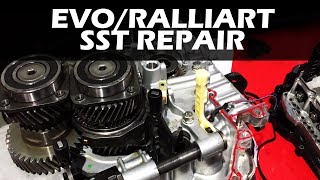
- Mitsubishi Lancer Ralliart / Lancer Evolution X (2008-2015) — Indicates 'Shift Fork Position Sensor 2 System' fault. The cause is a magnet ungluing from an internal shift fork, requiring transmission removal. TSB-13-22-003 covers the diagnostic procedure.
- Chevrolet / GMC Silverado / Sierra / Tahoe (2003-2014) — Relates to the 'Internal Mode Switch' (IMS) or its circuit. A failure prevents the module from verifying the physical gear selection.
- Suzuki Swift (2004-2010) — An outlier. P1827 points to a 'G Sensor / Yaw Rate Sensor Malfunction' in the electronic stability control system, unrelated to 4WD.
- Jeep Grand Cherokee / Commander (2005-2010) — Points to a fault in the transfer case shift motor circuit or the Final Drive Control Module (FDCM).
- Dodge Ram 1500 / Durango (2006-2012) — Indicates a problem with the transfer case encoder motor/position sensor or its wiring harness.
Manufacturer-Specific Notes
- Ford: The transfer case shift motor seizes from lack of use. Have a helper shift modes while you tap the motor with a hammer; if it engages, the motor is failing.
- Nissan: The brown transfer case relay (P/N 25230-7996A) in the engine bay fuse box causes P1827 over 80% of the time. Replace this inexpensive relay before attempting any wiring diagnostics.
- Kia / Hyundai: Water in the main electrical connector for the rear differential is the primary cause. Unplug it, clean the green corrosion, dry it, and apply dielectric grease per TSB TRA086.
- Mitsubishi: On TC-SST models, the cause is a small magnet detaching from an internal shift fork. This requires transmission removal and disassembly, covered under TSB-13-22-003.
Real Owner Stories
2006 Nissan Pathfinder - Easy Relay Fix
4WD warning light came on intermittently at low speed, with codes P1827 and P1828 stored. The 4WD system seemed to work fine otherwise.
What they tried:
- Owner researched forums and found that having both P1827 and P1828 codes simultaneously was unlikely to be two separate sensor failures.
- The common cause pointed to the transfer case relay in the IPDM which powers the hydraulic pump.
- The owner removed the relay, cleaned the terminals, tightened the female connections in the harness, and reinstalled it.
Outcome: The 4WD light stopped coming on and the codes did not return. The problem was solved with zero cost.
Lesson: When multiple related circuit codes appear at once, look for the single component that powers them. On Nissans, the transfer case relay is the prime suspect for P1827/P1828.
2020 Kia Telluride - Misdiagnosis & Warranty Hassle
At 37,000 miles, the vehicle started jerking and thumping from the rear during low-speed turns, feeling like a locked differential.
What they tried:
- Took it to the dealer, who initially called and said the behavior was 'normal'.
- Owner researched the issue, diagnosed it as a failed AWD coupling, and told the service advisor what part to replace.
- Other owners report similar experiences, with dealers attempting transmission flushes until shown a Technical Service Bulletin (TSB).
Outcome: After the owner insisted, the dealer replaced the AWD coupling assembly under warranty, fixing the problem.
Lesson: Don't accept 'it's normal' for binding symptoms. To confirm, temporarily remove the 4WD fuse; if the symptom disappears, the coupling is the fault. Cite TSB TRA086 to your service advisor.
2010 Mitsubishi Lancer Ralliart - Major Internal Failure
Service light on with P1827 code, erratic shifting, and transmission performance issues.
What they tried:
- Initial diagnosis pointed to the 'Shift Fork Position Sensor 2 System'.
- Expert diagnosis revealed a small magnet assembly had unglued itself from the internal transmission shift fork and fallen into the transmission case.
- The sensor was working, but couldn't detect the fork position because the magnet was gone.
Outcome: This required the entire TC-SST transmission to be removed and disassembled to replace the shift fork assembly. The labor cost thousands.
Lesson: On a Mitsubishi Evo X or Ralliart, P1827 is almost never a sensor issue. An advanced scan tool confirms this by showing the 'shift fork position counter' PID value is out of range.
How to Prevent This Code From Triggering
- Periodically Engage the 4WD System (Once a month) — Driving for a few miles in 4H lubricates the internal components of the transfer case and operates the shift motor, preventing them from seizing.
- Apply Dielectric Grease to At-Risk Connectors (Every 2-3 years or when exposed) — Disconnecting the main electrical connector, cleaning it, and applying dielectric grease seals out moisture and salt, preventing corrosion.
- Regularly Wash the Vehicle's Undercarriage (Seasonally, especially after winter) — Pressure washing the frame and drivetrain components washes away corrosive salt brine, dramatically reducing wiring harness corrosion.
- Change Transfer Case Fluid (Every 30,000-60,000 miles) — Clean fluid lubricates the gears and bearings, preventing overheating and mechanical wear that leads to catastrophic failure.
Frequently Asked Questions
I replaced the part but the P1827 code came back. What now?
P1827 is a circuit code, meaning the control module detects an electrical problem in the wiring to the part. You must test the wiring for continuity, shorts to ground, and shorts to power. The fault is the wire, not the part you replaced.
My cheap scanner says 'No Codes' but the 4WD light is on. Why?
Basic code readers only access generic powertrain codes from the main engine computer. P1827 is a manufacturer-specific code stored in a separate module like the TCCM. You need an advanced scanner that communicates with the transfer case or chassis modules.
Can a bad battery or alternator cause code P1827?
Yes. Electronic control modules require a stable voltage to operate correctly. A weak battery or failing alternator causes voltage to drop below the required 9-volt threshold during startup, triggering false diagnostic codes.
How do I test a 4WD relay?
Swap it with an identical relay from a non-critical circuit like the horn. If the horn stops working and the 4WD system works, the relay is bad. Alternatively, apply 12V power to the coil terminals and verify continuity across the switch terminals with a multimeter.
Is fixing a P1827 code expensive?
The cost ranges from a $30 DIY relay replacement to a $500 shop wiring repair. However, if the cause is an internal transmission failure on a Mitsubishi, the repair exceeds $5,000 due to extensive labor.
Why did my 4WD light come on if I never use 4WD?
The Transfer Case Control Module performs a self-test of its sensors and circuits every time you start the vehicle. A fault is detected continuously, even during normal 2WD driving, triggering the warning light.
Can low transfer case fluid cause a P1827 code?
Not directly, as P1827 is an electrical code. However, on systems with hydraulic pressure sensors, a severe fluid leak causes the pump to lose prime, leading to a pressure loss that triggers related codes. Low fluid causes severe mechanical damage and requires immediate attention.
Key Takeaways
- Search your specific make and model for P1827, as the definition ranges from a $30 Nissan relay failure to a $5,000 Mitsubishi transmission rebuild.
- Test the wiring harness and connectors with a multimeter for shorts or high resistance before replacing any $200+ sensors or modules.
- Inspect the 4WD relay and the main transfer case electrical connector first, as corrosion or a failed $20 relay causes over 50% of P1827 codes.
- Look for sister codes like P1828 (Nissan) or P1822 (Kia); their presence guarantees a shared power failure, usually a single relay or a water-logged connector.
- You can safely drive in 2WD mode, but ignoring the code for over 6 months risks frying the $800 Transfer Case Control Module due to persistent electrical shorts.
Helpful Videos

Shop the Parts Behind P1827
Below are the parts most often responsible for code P1827, ranked by how frequently each one is the actual culprit (per the diagnosis above). Tap any to see what we have for your vehicle.


The information in this article is provided for general reference and educational purposes only. Vehicle specifications, procedures, and part compatibility can vary by production date, trim level, and region. Always consult your vehicle's factory service manual and verify part numbers before purchasing or performing repairs. Safety-critical components such as airbags, seat belts, and braking systems should be installed by a qualified professional.
- 🧭 Diagnostic Flowchart
- 🎬 Helpful Videos
- 🛍️ Shop This Part
- What Does P1827 Mean?
- Can I Drive With P1827?
- Common Causes
- Symptoms
- Common Fixes & Costs
- DIY vs Professional
- Used vs. New Parts: Buying Guide
- What Happens If You Wait — Timeline
- Cost of Not Fixing It
- Diagnosis Steps
- When This Code Triggers (Freeze-Frame Conditions)
- Related Codes
- Climate & Environmental Factors
- How to Talk to a Mechanic About This Code
- Where to Take It: Dealer vs Independent vs Chain
- When to Walk Away From the Repair
- What Scan Tool You Need for This Code
- How to Clear the Code After You Fix It
- Will This Fail Emissions / State Inspection?
- Most Commonly Affected Vehicles
- Manufacturer-Specific Notes
- Real Owner Stories
- 2006 Nissan Pathfinder - Easy Relay Fix
- 2020 Kia Telluride - Misdiagnosis & Warranty Hassle
- 2010 Mitsubishi Lancer Ralliart - Major Internal Failure
- How to Prevent This Code From Triggering
- Frequently Asked Questions
- I replaced the part but the P1827 code came back. What now?
- My cheap scanner says 'No Codes' but the 4WD light is on. Why?
- Can a bad battery or alternator cause code P1827?
- How do I test a 4WD relay?
- Is fixing a P1827 code expensive?
- Why did my 4WD light come on if I never use 4WD?
- Can low transfer case fluid cause a P1827 code?
- Key Takeaways
- 🎟️ Get 5% Off