

OBD-II Code P1832: Manufacturer-Specific Drivetrain Fault
What P1832 means, why it triggers, and how to fix it across Ford, Kia, Hyundai, and Nissan
- Diagnose P1832 based on your vehicle make: it means a solenoid/ELD circuit fault on Fords, an AWD coupling failure on Kia/Hyundai, or a CAN communication error on Nissans.
- For 2011-2020 Kia and Hyundai models, P1832 almost always requires replacing the rear AWD coupling assembly, a repair costing between $950 and $1,550.
- On 2008 and newer Ford trucks, test the Electronic Locking Differential (ELD) coil resistance at the rear axle; a healthy coil reads exactly 3 to 4 ohms.
- For Nissan vehicles, do not replace 4WD parts; test the CAN bus network at the OBD-II port pins 6 and 14, looking for a healthy reading of 60 ohms.
What Does P1832 Mean?
P1832 is a manufacturer-specific powertrain code indicating a 4WD system fault, but its meaning depends entirely on the brand. On Ford trucks, it signifies an electrical circuit failure in the transfer case or differential lock-up solenoid. On Hyundai and Kia vehicles, it indicates the AWD coupling has overheated and shut down. On Nissan, it points to a CAN bus communication failure between the Traction Control System (TCS) and the 4WD control module.
Technical definition: The official definition varies by manufacturer. For Ford, it is 'Transmission Transfer Case Differential Lock-Up Solenoid Control Circuit Failure,' indicating an open or short in the solenoid's electrical circuit. For Hyundai and Kia, it is 'Clutch Thermal Overstress Shutdown,' triggered when the AWD control module calculates the multi-plate clutch has exceeded its thermal limit. For Nissan, it is 'TCS Operation Signal,' indicating a loss of communication from the ABS actuator over the CAN bus.
Can I Drive With P1832?
Yes, But With Caution. You can drive the vehicle, but your 4WD/AWD system is disabled. For Ford and Nissan, you lack traction in slippery conditions. For Kia/Hyundai, continued driving with a binding AWD coupling causes premature wear to tires, wheel bearings, and CV joints, adding $500-$1,500 in future repair costs.
Common Causes
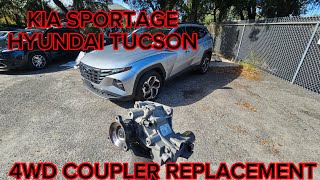
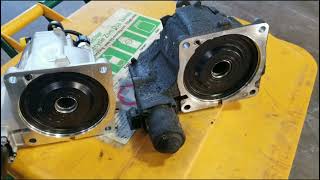
- Failed AWD Coupling Assembly (Hyundai/Kia) (Very Common) — On Hyundai and Kia vehicles, this code is triggered by an internal mechanical failure of the electro-hydraulic AWD coupling at the rear differential. 🎬 Watch: Step-by-step guide to replacing the AWD coupling assembly. The clutch pack wears or breaks, causing slip that the module interprets as overheating.
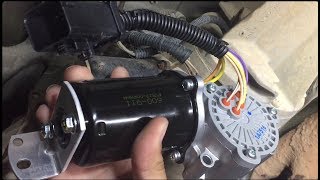
- Damaged or Corroded Wiring/Connectors (Ford) (Very Common) — The wiring harness running to the transfer case or rear differential is exposed to road debris and salt, causing wires to break or connectors to corrode. This is the primary cause of P1832 on Ford vehicles. 🎬 See how to troubleshoot and fix Ford 4x4 system issues.
- Failed Transfer Case Lock-Up Solenoid or ELD Coil (Ford) (Common) — The solenoid on older Fords or the Electronic Locking Differential (ELD) field coil on newer Fords fails electrically, resulting in an open or shorted circuit.
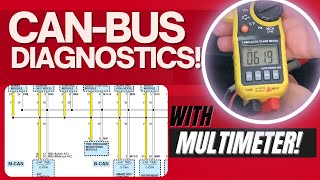
- CAN Bus Communication Failure (Nissan) (Common) — On Nissan vehicles, the cause is a fault on the Controller Area Network (CAN) communication bus, such as a broken wire, a bad terminating resistor, or a failed ABS control unit.
- Failed Transfer Case Control Module (TCCM) or GEM (Ford) (Common) — The control module fails internally. On 1997-2004 Ford trucks, the Generic Electronic Module (GEM) is a known failure point due to water intrusion from a leaky windshield.
- Blown Fuse or Faulty Relay (Less Common) — A blown fuse or a bad relay powering the 4WD module, TCCM, or solenoid causes this circuit fault code.
- Low or Contaminated Transfer Case/Differential Fluid (Less Common) — Burnt or low fluid causes mechanical binding or clutch slippage, leading to overheating (Kia/Hyundai) or excessive strain on electrical components (Ford).
- Internal Transfer Case Mechanical Failure (Rare) — A mechanical problem inside the transfer case, like a seized shift fork, stresses the electrical components and causes them to fail.
Symptoms
- Service 4WD, Check Engine, or ABS Light — A warning light illuminates on your dashboard. Depending on the vehicle, it is a wrench light, 'Service 4WD', ABS, or the Check Engine Light.
- 4WD/AWD System Inoperative & Unresponsive Switch — You cannot shift into 4-High or 4-Low, the system is stuck in 2WD, and turning the 4WD knob produces no clicking sounds or indicator light changes.
- Binding, Hopping, or Shuddering in Tight Turns (Kia/Hyundai) — A failing AWD coupling on Kia and Hyundai models causes a severe binding or jerking sensation from the rear of the vehicle during low-speed, tight turns.
- Clicking, Grinding, or Clunking Noises — Unusual noises emit from underneath the vehicle. On Fords, this is the transfer case motor struggling to engage. On Kia/Hyundai models, it is a clunking from the rear when turning from a stop.
Diagnostic Flowchart
Tap your situation to follow the diagnostic path that matches what you're seeing on this code.
Common Fixes & Costs
- Replacing the AWD Coupling Assembly (Kia/Hyundai) — Parts: $700-$1,050, Labor: $250-$500, ~4.5 hr book time (Professional)
- Repairing Damaged Wiring or Connector — Parts: $10-$50, Labor: $150-$450, ~1.5 hr book time (Intermediate)
- Replacing the Transfer Case Solenoid or ELD Coil (Ford) — Parts: $50-$150, Labor: $150-$400, ~2.5 hr book time (DIY)
- Replacing the Transfer Case Control Module (TCCM) — Parts: $100-$500, Labor: $100-$250, ~1.2 hr book time (Professional)
- Replacing the Entire Transfer Case Assembly — Parts: $2,100-$4,000, Labor: $650-$980, ~3.5 hr book time (Professional)
Used vs. New Parts: Buying Guide
When a used part is worth it: For the Kia/Hyundai AWD coupling, a used part from a low-mileage donor vehicle is a viable cost-saving option.
Donor-vehicle mileage cap: roughly under 80000 miles for the part to have meaningful remaining life.
Donor quality checklist:
- Verify the part number matches exactly.
- Check the VIN of the donor vehicle for its history.
- Avoid parts from regions with heavy road salt usage.
- Ensure the part comes with a 30-90 day warranty.
Decision logic:
- If The vehicle is under 100,000 miles and under powertrain warranty → Use the dealer for a new OEM part covered by warranty.
- If The vehicle is out of warranty and a new part is prohibitive → A used OEM part from a reputable salvage yard is a good alternative.
- If The part is an electronic module like a TCCM → Favor a new part, as used modules have hidden electrical issues and are locked to the donor's VIN.
Warranty tradeoff: Used parts come with a 30-90 day warranty covering the part only. New OEM parts installed by a dealer carry a 12-month/12,000-mile warranty on parts and labor.
Worst-case if a used part fails: 600-1000
What Happens If You Wait — Timeline
- 0-1 month (Kia/Hyundai): Code P1831 (Warning) is set. Subtle binding occurs on sharp turns. AWD system is functional but failing internally. (MPG impact: 0-2%% · Added cost: $0)
- 1-4 months (Kia/Hyundai): Code P1832 is set. Binding or shuddering in low-speed turns becomes severe. The AWD system is disabled by the control module. (MPG impact: 0%% · Added cost: $50)
- 4-12 months (Kia/Hyundai): Continued driving with the mechanically binding coupler puts significant stress on drivetrain components, damaging rear tires, wheel bearings, and CV joints. (MPG impact: 1-3%% · Added cost: $500-$1,500)
- 12+ months (Kia/Hyundai): Severe binding damages the rear differential's internal gears or the driveshaft, requiring a full driveline rebuild. (MPG impact: 3-5%% · Added cost: $1,500-$3,000)
Cost of Not Fixing It
- Immediate: Loss of 4WD/AWD functionality. You lack traction in slippery conditions, creating a safety hazard. (Added cost: 0)
- 1-6 months (Kia/Hyundai): Driving with a binding AWD coupler causes accelerated wear on tires, wheel bearings, and CV joints. (Added cost: 500-1500)
- 6+ months: Severe mechanical binding damages the rear differential or driveshaft, turning a single-component repair into a full driveline rebuild. (Added cost: 1500-3000)
Diagnosis Steps
- Verify Code and Check for Other DTCs
Use an advanced OBD-II scanner to read codes from ALL modules (TCCM, ABS, BCM). On a Kia/Hyundai, look for P1831. On a Ford, look for P1876 or P1838. On a Nissan, U-codes (e.g., U1000) confirm a network issue.
Tools: Advanced OBD-II Scanner (Beginner) - Inspect Fuses and Relays
Locate and inspect all fuses and relays related to the 4WD, TCCM, and ABS systems in both the cabin and engine bay fuse boxes.
Tools: Owner's Manual, Fuse Puller, Multimeter (Beginner) - [Pro Tip - Kia/Hyundai] Isolate the AWD Coupling
To confirm a mechanical fault in the AWD coupling, remove the 4WD fuse in the engine bay. Drive the vehicle in a parking lot and attempt tight, low-speed turns. If the binding symptom disappears, the AWD coupling assembly requires replacement.
Tools: Fuse Puller (Intermediate) - Perform a Thorough Visual Inspection
Inspect the wiring harness going to the transfer case, rear differential coupling, and wheel speed sensors. Look for broken wires, melted plastic, or green corrosion in connectors.
Tools: Flashlight, Safety Glasses (Intermediate) - [Pro Tip - Ford] Test Solenoid/ELD Coil Resistance
Disconnect the transfer case solenoid or ELD connector. Set a multimeter to ohms (Ω). For newer trucks (2011+ F-150, 2008+ Super Duty), measure resistance between the two pins on the ELD field coil; a good reading is 3-4 ohms. For older models, the lock-up solenoid reads 5-30 ohms. Infinite (OL) means an open circuit.
Tools: Multimeter, Wrench Set (Advanced) - [Pro Tip - Nissan] Test CAN Bus Integrity
Turn the ignition off and disconnect the negative battery terminal. Measure the resistance between Pin 6 (CAN High) and Pin 14 (CAN Low) at the OBD-II port. A healthy CAN bus reads exactly 60 Ω. A reading of 120 Ω indicates a failed terminating resistor or broken wire.
Tools: Multimeter (Advanced) - [Pro Tip - Nissan] Test CAN Bus Voltage
With the ignition ON, measure DC voltage at the OBD-II port. Pin 6 (CAN High) to ground averages 2.6V. Pin 14 (CAN Low) to ground averages 2.4V. Significant deviation indicates a short or open on the CAN bus wiring.
Tools: Multimeter (Advanced) - [Pro Tip - Kia/Hyundai] Analyze Scan Tool Live Data
Monitor PIDs for the AWD module. Watch 'AWD Clutch Current' and 'AWD Clutch Temperature'. When driving causes binding, the clutch temperature value rises rapidly. A lack of current when commanded points to a bad control module or wiring fault.
Tools: Advanced Bi-directional Scan Tool (Advanced) - Test Circuit for Voltage and Ground
Back-probe the component's electrical connector. Check for proper power and ground when the system is commanded on via a bi-directional scan tool. If the module sends voltage but it doesn't reach the connector, the wiring is faulty.
Tools: Multimeter, Wiring Diagram, Bi-directional Scan Tool (Advanced) - Check Fluid Level and Condition
Check the fluid in the transfer case and rear differential. Low, burnt, or contaminated fluid indicates a mechanical problem that is the root cause of the electrical failure.
Tools: Wrench Set, Fluid Pump (Intermediate)
When This Code Triggers (Freeze-Frame Conditions)
- Vehicle Speed: 10-40 mph (The TCCM/4WD module performs self-tests when the vehicle is moving at a steady speed.)
- System Voltage: 9-18 Volts (The fault is only set when the module has adequate voltage to run its diagnostics.)
- 4WD Mode: 2WD or Auto (For Ford, the fault is detected when switching modes. For Kia/Hyundai, it occurs when attempting to engage AWD from a FWD state.)
- Engine State: Running (The module requires the engine to be running to command components.)
Related Codes
- P1831 — On Hyundai/Kia, this 'Clutch Thermal Overstress - Warning' code is a precursor to P1832. Seeing both codes together is definitive proof of a failing AWD coupling.
- P1876 — On Ford vehicles, this 'Transfer Case 2-Wheel Drive Solenoid Circuit Failure' often appears with P1832. Having both codes simultaneously suggests a shared problem, like a faulty TCCM or damaged main harness.
- P1838 — This Ford code indicates a 'Transfer Case Shift Motor Circuit Failure'. P1838 points to the shift motor, while P1832 points to the lock-up solenoid.
- U1000 / U1001 — On Nissan vehicles, these CAN communication codes are stored with P1832. Their presence confirms P1832 is a network issue, directing focus to wiring or the ABS unit.
Climate & Environmental Factors
- Road Salt and Humidity (Salt Belt Regions): Accelerates corrosion of wiring harnesses, connectors, and control module pins. This is the primary contributor to P1832 on Ford vehicles with exposed undercarriage wiring.
- Extreme Cold: Thick differential fluid strains the Kia/Hyundai AWD coupling's internal hydraulic pump on startup, accelerating wear. Cold temperatures also make wire insulation brittle.
- High Ambient Heat: Reduces the cooling capacity of the Kia/Hyundai AWD coupling, causing it to reach the 'thermal overstress' limit faster during high-slip situations.
- Water Intrusion (Rainy Climates): On 1997-2004 Ford trucks, a leaking windshield seal allows rainwater to drip directly onto the GEM module and fuse box, causing P1832 and widespread electrical faults.
How to Talk to a Mechanic About This Code
Say this: "I have a P1832 code on my [Vehicle Make]. For a Ford, please inspect the wiring harness to the transfer case/rear axle and test the ELD coil resistance. For a Kia/Hyundai, I suspect the AWD coupling per TSB TRA086. For a Nissan, please start with a CAN bus network diagnostic. I need a specific diagnosis before quoting major parts."
Directs the technician to the most likely cause for your specific vehicle and prevents them from starting with an expensive, unnecessary repair.
Avoid saying:
- 'My 4WD light is on, can you fix it?'
- 'Just replace whatever is broken.'
- 'A friend told me it's the transfer case, can you replace it?'
Questions to ask before authorizing the repair:
- For Ford: What was the resistance reading of the solenoid/ELD coil?
- For Kia/Hyundai: Did pulling the 4WD fuse stop the binding symptom?
- For Nissan: What was the ohm reading on the CAN bus?
- Is programming required for the replacement module and is that included in the labor cost?
Where to Take It: Dealer vs Independent vs Chain
- Dealer:
Recommended for in-warranty repairs or when module programming is required.
Best for: Vehicles under powertrain warranty., Complex repairs on modern Fords requiring Programmable Module Installation (PMI).
Downsides: Highest labor rates., May push for full harness replacement instead of a simple wiring repair. (Typical cost: +50% vs. baseline) - Independent Shop:
Best overall fit for most out-of-warranty P1832 scenarios, provided you choose a reputable shop.
Best for: Out-of-warranty vehicles., Electrical diagnostics, such as tracing wiring faults on Fords or CAN bus issues on Nissans., Mechanical replacements like the AWD coupling on a Kia/Hyundai.
Downsides: Shop quality and diagnostic capabilities vary widely. (Typical cost: +0% vs. baseline) - Chain Shop:
AVOID for P1832 diagnosis and repair.
Best for: Simple, unrelated maintenance like oil changes or tires.
Downsides: Technicians lack specialized training for complex drivetrain or network diagnostics., High potential for misdiagnosis. (Typical cost: -10% vs. baseline)
When to Walk Away From the Repair
If the estimated repair cost exceeds 40-50% of the car's private-party value, consider selling or trading it in.
- Car worth $5000, fix is $3200: Walk away. The repair cost is over 60% of the vehicle's value.
- Car worth $12000, fix is $1550: Fix it. The repair cost is 13% of the car's value and restores a critical feature.
- Car worth $3500, fix is $1500: Borderline. At 43% of the car's value, the decision depends on the vehicle's overall condition.
What Scan Tool You Need for This Code
Minimum: A scanner that reads manufacturer-specific codes from the Transmission (TCM), ABS, and 4WD/GEM modules.
A basic $20 engine-only code reader will not see code P1832, as it is stored in a secondary module (TCCM, GEM, 4WD).
Budget: BlueDriver Pro or FORScan with OBDLink EX Adapter (~$120) — Reads enhanced codes for Ford and others. FORScan performs module tests on Fords.
Mid-range: Foxwell NT710 or Autel MaxiCheck MX808S (~$250-400) — Offers full-system diagnostics and bidirectional controls to command solenoids on a Ford or view live AWD data on a Kia.
Professional: Autel MaxiCOM MK906BT or LAUNCH X431 series (~$1000-1500) — Provides professional-level functions, including Programmable Module Installation (PMI) required when replacing a TCCM on modern Fords.
Rent vs buy: Free rental scanners at auto parts stores are basic readers and will not work for this code. Buy a capable scanner or pay a shop's $150-$250 diagnostic fee.
How to Clear the Code After You Fix It
- Use an OBD-II scan tool to clear codes from all modules (PCM, TCCM, ABS).
- Perform the specific drive cycle to allow readiness monitors to run.
- Cycle the 4WD system through all modes (2H, 4H, 4L) to confirm functionality.
Drive cycle (~20 minutes): Cold start and idle for 3 minutes. Drive at a steady speed between 40-55 mph for 15 minutes. Perform 10 minutes of stop-and-go city driving. Switch between 2WD, 4WD High, and 4WD Low while stationary.
Readiness monitors affected: This drivetrain code does not directly affect emissions readiness monitors., However, clearing the code resets all monitors, requiring a full drive cycle before an emissions test.
Before emissions retest: drive at least 50 miles to fully set monitors.
Watch out for:
- Clearing the code without fixing the hardware causes the code to return immediately.
- Forgetting to cycle the 4WD system through all modes after repair.
- Taking the vehicle for an emissions test immediately after clearing codes.
Will This Fail Emissions / State Inspection?
Yes — this code typically fails an OBD-II emissions inspection.
- California: An illuminated Check Engine Light is an automatic failure. The code must be fixed and all readiness monitors set to 'Ready'.
- Texas: In the 17 counties requiring emissions testing, a stored P1832 that illuminates the Check Engine Light causes an automatic failure.
- New York: An illuminated Malfunction Indicator Lamp results in a failed annual safety and emissions inspection.
Most Commonly Affected Vehicles
- Ford F-150 (1997-2016) — On 1997-2004 models, caused by a water-damaged GEM module. On 2011-2016 models, points to the Electronic Locking Differential (ELD) circuit.
- Ford F-250 / F-350 Super Duty (1999-2016) — On 1999-2007 models, typically the transfer case lock-up solenoid circuit. On 2008-2016 models, related to the ELD control circuit at the rear axle.
- Ford Expedition (1997-2006) — Shares the same 4WD system components and failure points as the F-150, including GEM/TCCM and wiring harness issues.
- Kia Sorento / Sportage (2011-2020) — Indicates 'Clutch Thermal Overstress Shutdown'. Almost always caused by a failed AWD coupling assembly. Kia TSB TRA086 recommends replacing the coupling.
- Hyundai Santa Fe / Tucson (2011-2020) — Points to a faulty AWD coupling assembly due to internal mechanical failure. Often appears with code P1831.
- Nissan Pathfinder / Armada / Titan (2004-2015) — Indicates a CAN communication problem between the 4WD module and the ABS module. Diagnosis must start with the CAN bus, not 4WD parts.
Manufacturer-Specific Notes
- Ford: On 1997-2004 trucks, the Generic Electronic Module (GEM) is attached to the interior fuse box. A leaking windshield seal allows water to drip into the GEM, causing P1832 and bizarre electrical problems.
- Kia / Hyundai: Kia TSB TRA086 directly addresses P1831 and P1832, confirming they are caused by a faulty 4WD coupling assembly and recommending complete replacement. A fluid change will not fix the issue.
- Nissan: P1832 is purely a communication fault. It means the 4WD control unit is not receiving the operational signal from the ABS/TCS module. Replacing 4WD components will not fix this code.
- Ford: Replacement of a Transfer Case Control Module (TCCM) on modern Fords requires Programmable Module Installation (PMI) using a dealer-level scan tool to match the vehicle's VIN.
Real Owner Stories
2016 Kia Sorento with P1832 after getting stuck in snow
While trying to get up a snowy hill, the AWD system shut down. The 'Service 4WD' light came on, showing code P1832.
Outcome: The owner successfully pushed for coupling replacement under warranty, avoiding a useless fluid change.
Lesson: For Kia/Hyundai, a fluid change is not the correct fix for P1832. Reference TSB TRA086 to ensure the coupling is replaced.
1998 Ford Expedition with no 4WD and P1832 code
The 'Service 4WD' light was on, and the vehicle would not shift into 4WD. Scanning revealed code P1832.
Outcome: The cause was a disconnected vacuum line. Reconnecting it restored 4WD function and cleared the code.
Lesson: On older Fords, thoroughly inspect all related lines and wires before assuming a major component has failed.
1997 Ford F-150 with multiple electrical issues and P1832
The truck experienced bizarre electrical problems (wipers, radio) and 4WD failure with code P1832 after rain.
Outcome: A glass shop confirmed the windshield seal was leaking. Resealing the windshield permanently fixed the water leak and all electrical problems.
Lesson: On 1997-2004 Ford trucks, P1832 combined with strange electrical issues means a leaking windshield is dripping water onto the GEM module. Reseal the windshield first.
How to Prevent This Code From Triggering
- Change Transfer Case / AWD Coupling Fluid (Every 30,000 miles) — Clean fluid provides proper lubrication and cooling, reducing mechanical wear and preventing sludge buildup that leads to overheating.
- Apply Dielectric Grease to Exposed Connectors (Whenever connectors are serviced) — Seals out moisture and salt on Ford undercarriage wiring, preventing the corrosion that causes open/short circuits.
- Proactively Reseal Leaky Windshields (1997-2004 Fords) (Once) — Prevents water from dripping directly onto the GEM/fuse box, avoiding catastrophic electrical failures.
- Engage 4WD System Periodically (Once a month for a few minutes) — Keeps internal gears, shift forks, and electric motors lubricated, preventing them from seizing due to inactivity.
- Avoid Aggressive Driving on High-Traction Surfaces (Kia/Hyundai) (Daily driving habit) — Hard acceleration while turning on dry pavement forces the clutch pack to slip under high load, generating excessive heat and accelerating wear.
Frequently Asked Questions
Why does the P1832 definition vary so much between Ford, Kia, and Nissan?
P1832 is a manufacturer-specific code, meaning each automaker assigns it to a different fault. Ford uses it for an electrical circuit fault in the transfer case or locking differential solenoid. Kia/Hyundai use it for a protective shutdown of the AWD coupling, while Nissan uses it to report a data communication loss.
What are the symptoms of a bad AWD coupler on a Kia or Hyundai?
You will feel a severe binding, shuddering, or hopping sensation from the rear of the vehicle during low-speed, sharp turns. You also hear a clunking or groaning noise in the same situations.
Will clearing the code fix my 4WD?
No. Clearing the code only erases the fault record temporarily. The control module detects the persistent hardware or communication failure during its next self-test, and the code returns immediately.
My mechanic says I just need to change the fluid for a P1832 on my Kia. Is this correct?
This is a common misdiagnosis. Changing the fluid will not fix the root cause of a P1832 code, which indicates the system has already shut down due to internal mechanical failure. Kia's Technical Service Bulletin (TRA086) specifies replacing the entire coupling assembly.
Is fixing a P1832 code expensive?
A simple wiring repair costs $150-$450. Replacing a Ford ELD coil costs $200-$550. Replacing a Kia/Hyundai AWD coupling is a major repair costing between $950 and $1,550 for parts and labor.
Can I fix this myself?
A DIYer can handle inspecting fuses, visually checking wiring, and replacing a Ford transfer case solenoid. However, diagnosing Nissan CAN bus issues or replacing a Kia/Hyundai AWD coupling requires professional tools and experience.
What is a GEM module on a Ford truck?
The Generic Electronic Module (GEM) controls body functions like power windows, wipers, and the 4x4 system on 1997-2004 Fords. It is notoriously prone to failure from water damage caused by a leaking windshield seal.
Key Takeaways
- Diagnose P1832 based on your vehicle make: it means a solenoid/ELD circuit fault on Fords, an AWD coupling failure on Kia/Hyundai, or a CAN communication error on Nissans.
- For 2011-2020 Kia and Hyundai models, P1832 almost always requires replacing the rear AWD coupling assembly, a repair costing between $950 and $1,550.
- On 2008 and newer Ford trucks, test the Electronic Locking Differential (ELD) coil resistance at the rear axle; a healthy coil reads exactly 3 to 4 ohms.
- For Nissan vehicles, do not replace 4WD parts; test the CAN bus network at the OBD-II port pins 6 and 14, looking for a healthy reading of 60 ohms.
Helpful Videos
Shop the Parts Behind P1832
Below are the parts most often responsible for code P1832, ranked by how frequently each one is the actual culprit (per the diagnosis above). Tap any to see what we have for your vehicle.


The information in this article is provided for general reference and educational purposes only. Vehicle specifications, procedures, and part compatibility can vary by production date, trim level, and region. Always consult your vehicle's factory service manual and verify part numbers before purchasing or performing repairs. Safety-critical components such as airbags, seat belts, and braking systems should be installed by a qualified professional.
- 🧭 Diagnostic Flowchart
- 🎬 Helpful Videos
- 🛍️ Shop This Part
- What Does P1832 Mean?
- Can I Drive With P1832?
- Common Causes
- Symptoms
- Common Fixes & Costs
- Used vs. New Parts: Buying Guide
- What Happens If You Wait — Timeline
- Cost of Not Fixing It
- Diagnosis Steps
- When This Code Triggers (Freeze-Frame Conditions)
- Related Codes
- Climate & Environmental Factors
- How to Talk to a Mechanic About This Code
- Where to Take It: Dealer vs Independent vs Chain
- When to Walk Away From the Repair
- What Scan Tool You Need for This Code
- How to Clear the Code After You Fix It
- Will This Fail Emissions / State Inspection?
- Most Commonly Affected Vehicles
- Manufacturer-Specific Notes
- Real Owner Stories
- 2016 Kia Sorento with P1832 after getting stuck in snow
- 1998 Ford Expedition with no 4WD and P1832 code
- 1997 Ford F-150 with multiple electrical issues and P1832
- How to Prevent This Code From Triggering
- Frequently Asked Questions
- Why does the P1832 definition vary so much between Ford, Kia, and Nissan?
- What are the symptoms of a bad AWD coupler on a Kia or Hyundai?
- Will clearing the code fix my 4WD?
- My mechanic says I just need to change the fluid for a P1832 on my Kia. Is this correct?
- Is fixing a P1832 code expensive?
- Can I fix this myself?
- What is a GEM module on a Ford truck?
- Key Takeaways
- 🎟️ Get 5% Off