

OBD-II Code P1835: Kick-Down Switch Circuit Malfunction
What P1835 means, why it triggers, and how to fix it
- Code P1835 disables your vehicle's 'passing gear' by indicating a failure in the kick-down switch circuit, preventing automatic downshifts at 100% throttle.
- Verify your manufacturer's specific definition before replacing parts; on Ford models, P1835 indicates a 4WD transfer case fault, while on VW/Audi, it flags a failing $1,500 mechatronics unit.
- For standard kick-down faults, replacing the $20-$80 pedal switch resolves the issue in over 60% of cases, followed by repairing chafed wiring.
- Driving with a standard P1835 code reduces passing safety, but ignoring manufacturer-specific pressure solenoid faults causes catastrophic transmission failure costing upwards of $4,000.
What Does P1835 Mean?
P1835 indicates a fault in the kick-down switch circuit. This switch tells the automatic transmission to downshift to the lowest possible gear for maximum acceleration at full throttle. When this circuit fails, the vehicle loses its 'passing gear' function.
Technical definition: While the generic OBD-II definition is 'Kick-Down Switch Circuit', this code's meaning varies drastically. Ford defines it as 'Transfer Case Differential Lock-Up Solenoid Short to Ground'. VW/Audi defines it as 'Pressure Control Valve 5 (N233) - Short to Plus'. Always verify the manufacturer-specific definition.
Can I Drive With P1835?
Yes, But With Caution. For the standard kick-down switch definition, you can drive, but acceleration for passing or merging is severely limited, posing a safety risk. For manufacturer-specific faults (VW/Audi, Mercedes, Ford, Hyundai), continued driving destroys the transmission or transfer case, escalating repair costs from $200 to over $4,000.
Common Causes
- Faulty kick-down switch (Very Common) — The switch on the accelerator pedal assembly or throttle body is the most frequent failure point. Internal contacts wear out, stick, or break from repeated use.
- Wiring or connector issues (Common) — Circuit wires chafe or short to ground/power. Electrical connectors suffer from corrosion, moisture intrusion, or bent pins, causing signal loss.
- Faulty Transfer Case Component (Ford) (Manufacturer Specific) — On Ford 4WD models, this code flags a short in the transfer case differential lock-up solenoid, completely unrelated to throttle position.
- Failed pressure control solenoid (VW/Audi/Mercedes) (Manufacturer Specific) — The transmission solenoid responsible for executing the downshift or controlling line pressure fails electrically. These are often integrated into a costly mechatronics unit.
- Misadjusted switch or accelerator linkage (Less Common) — The switch is not physically activated at full throttle because the throttle cable or pedal stop is out of adjustment. A bunched-up floor mat also prevents full pedal travel.
- Fluid contamination of wiring harness (Less Common) — On certain Mercedes-Benz models, transmission fluid leaks from a housing connector and wicks up the wiring harness, shorting out control modules.
- Blown fuse (Rare) — A short circuit blows the system fuse, creating an open circuit and logging the P1835 code.
- Faulty Powertrain or Transmission Control Module (PCM/TCM) (Rare) — The control module has a failed internal driver circuit. Consider this only after exhaustively ruling out wiring and component failures.
Symptoms
- Check Engine Light is on — The vehicle's computer illuminates the Malfunction Indicator Lamp (MIL) on the dashboard.
- No downshift at full throttle — The transmission fails to shift to a lower gear for rapid acceleration when the gas pedal is floored.
- Vehicle stuck in one gear (Limp Mode) — With internal transmission faults (VW/Mercedes), the transmission locks into 2nd or 3rd gear to prevent catastrophic damage.
- Harsh, delayed, or erratic shifting — The transmission shifts harshly, slips between gears, or shifts at incorrect RPMs, indicating a pressure control solenoid failure.
- Sluggish acceleration — The vehicle feels underpowered when attempting to pass or climb hills because it cannot access its lowest gear range.
Diagnostic Flowchart
Tap your situation to follow the diagnostic path that matches what you're seeing on this code.
Common Fixes & Costs
- Replace Kick-Down Switch
— Parts: $20-$80, Labor: $75-$150, ~0.8 hr book time
(DIY)
Mercedes-Benz C-Class (W203): OEM - Repair Wiring or Replace Connector
— Parts: $5-$50, Labor: $100-$400, ~2 hr book time
(Intermediate)
Universal: OEM - Adjust Accelerator Pedal/Linkage
— Parts: $0, Labor: $50-$100, ~0.5 hr book time
(DIY)
Jeep Grand Cherokee (ZJ, 1994-1998): OEM - Replace Transmission/Transfer Case Solenoid
— Parts: $50-$200, Labor: $200-$500, ~3 hr book time
(Professional)
Ford Explorer (4WD): OEM - Replace/Repair Mechatronics Unit
— Parts: $400-$1500, Labor: $400-$800, ~4.5 hr book time
(Professional)
VW/Audi (with DQ250 DSG): OEM
DIY vs Professional
- Replace Kick-Down Switch — Beginner: Yes
Tools: Socket set, screwdrivers. - Adjust Accelerator Pedal/Linkage — Beginner: Yes
Tools: Basic hand tools, flashlight. - Repair Wiring or Replace Connector — Beginner: No
Tools: Multimeter, wire strippers, crimpers, soldering iron, heat shrink. - Replace Transmission/Transfer Case Solenoid — Beginner: No
Tools: Jack stands, comprehensive socket set, torque wrench, fluid drain pan. - Replace/Repair Mechatronics Unit — Beginner: No
Tools: Specialized scan tools for programming, fluid pump, torque wrench.
Used vs. New Parts: Buying Guide
When a used part is worth it: For expensive electronic components like a VW Mechatronics unit or Mercedes Conductor Plate, a professionally refurbished unit saves thousands. Never buy a used $20 kick-down switch.
Donor-vehicle mileage cap: roughly under 60000 miles for the part to have meaningful remaining life.
Donor quality checklist:
- Verify the part number matches exactly.
- Seek parts from a reputable rebuilder offering testing and a warranty.
- Avoid parts with external damage, corrosion, or burnt fluid smells.
Decision logic:
- If The part is a simple kick-down switch (<$100) → Always buy new OEM. Used parts are not worth the labor risk.
- If The part is a complex electronic module and the vehicle is high-value → Buy a new OEM part for maximum reliability and warranty coverage.
- If The vehicle is over 10 years old and the budget is tight → A professionally refurbished unit with a 1-year warranty is the most cost-effective alternative.
Warranty tradeoff: Salvage yard parts carry 30-day warranties. Refurbished units offer 1-year warranties. New OEM parts installed by a dealer carry 2-year warranties.
Worst-case if a used part fails: $800 if a used electronic module fails, requiring repeat labor and a second replacement part.
What Happens If You Wait — Timeline
- 0-2 weeks: Code appears. Standard faults cause loss of passing gear. Solenoid faults cause slight shift hesitation. (MPG impact: 0-1%% · Added cost: $0)
- 1-3 months: Solenoid faults cause noticeably harsher shifts. Transmission fluid degrades rapidly from excess heat caused by slipping clutches. (MPG impact: 2-5%% · Added cost: $100 in wasted fuel and accelerated clutch wear.)
- 3-6 months: Sustained incorrect line pressure causes severe overheating. VW mechatronics units suffer permanent damage. Ford transfer case shorts damage the control module. (MPG impact: 5-15%% · Added cost: $1,000. Simple solenoid fixes now require expensive valve body replacements.)
- 6+ months: Catastrophic failure. The transmission fails to engage gears. The mechatronics unit or transfer case is destroyed. The vehicle is undrivable. (MPG impact: N/A% · Added cost: $4,000+. Full transmission or transfer case replacement is required.)
Cost of Not Fixing It
- Immediate: Loss of passing power creates a safety risk. Manufacturer-specific faults trigger harsh shifting or limp mode. (Added cost: Negligible)
- 1-3 months: Continued driving with pressure solenoid faults causes harsh shifts and slipping, accelerating wear on transmission clutches and overheating the fluid. (Added cost: $500 - $1,500 (Requires valve body or clutch pack replacement).)
- 6+ months: Ignoring a pressure solenoid or transfer case fault destroys the mechatronics unit, transfer case, or the entire transmission due to sustained overheating. (Added cost: $2,500 - $5,000+ (Full transmission or transfer case replacement).)
Diagnosis Steps
- Scan for All DTCs
Use an OBD-II scanner to read all codes. Note P0700 (TCM Fault), P1836 (Open Circuit), or P1837 (Short Circuit) to provide diagnostic context.
Tools: OBD-II Scanner (Beginner) - Verify Manufacturer Definition
Stop and verify the code definition for your specific VIN. If you own a Ford, VW, Hyundai, or Mitsubishi, P1835 points to 4WD or internal transmission components, not the kick-down switch.
Tools: Service Manual or Pro Scan Tool (Beginner) - Perform a Visual Inspection
Inspect the accelerator pedal, throttle body, and transmission connectors. Remove floor mats blocking the pedal. Look for damaged wires or corroded connectors.
Tools: Flashlight (Beginner) - Test the Switch Mechanically
With the engine off, press the gas pedal to the floor. Listen for an audible 'click' from the switch. No click means the switch is broken or misadjusted.
Tools: None (Beginner) - Test Switch Continuity
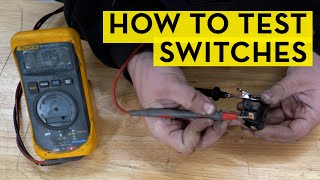
Disconnect the switch. Using a multimeter set to ohms, test the terminals. It must show infinite resistance (OL) at rest and near-zero resistance (<1 Ω) when pressed.
Tools: Multimeter (Intermediate) - Inspect the Wiring Harness
Trace the wiring from the switch to the control module. Disconnect connectors and check for bent pins. Perform a 'wiggle test' on the harness while monitoring the signal to find intermittent shorts.
Tools: Flashlight, Multimeter (Intermediate) - [ADVANCED] Monitor Live Data PIDs
Use an advanced scan tool to monitor the kick-down switch PID. The status must change from 'Off' to 'On' exactly when the pedal hits the floor. For VW/Ford, monitor commanded solenoid state vs. actual pressure.
Tools: Advanced Scan Tool (Advanced) - [ADVANCED] Test Solenoid Resistance
For manufacturer-specific solenoid codes, measure resistance across the solenoid pins. Compare to service manual specs (typically 5-30 ohms). 0 Ohms indicates a short; OL indicates an open circuit.
Tools: Multimeter, Service Manual (Advanced) - [PRO TIP] Check Reference Voltage
Key on, engine off. Backprobe the switch connector. One wire must have a 5V or 12V reference voltage from the PCM. The signal wire voltage must toggle predictably when the switch activates.
Tools: Multimeter with backprobe pins (Advanced) - [PRO TIP] Perform a Voltage Drop Test
Connect one multimeter lead to the battery positive and the other to the switch power wire. A reading above 0.5V indicates excessive resistance. Repeat for the ground side (limit 0.2V).
Tools: Multimeter (Advanced)
When This Code Triggers (Freeze-Frame Conditions)
- Engine Coolant Temp: 185-210°F (The fault logs when the engine reaches full operating temperature.)
- Vehicle Speed: 45-65 mph (The code sets while driving at a constant highway speed, a common condition for ECU circuit integrity tests.)
- Engine Load: 25-50% (The engine is under moderate load, consistent with cruising on a flat road.)
Related Codes
- P0700 — A generic code indicating the Transmission Control Module (TCM) detected a fault and requested the Check Engine Light. It always appears alongside specific transmission codes like P1835.
- P1836 — 'Kick-Down Switch Failed Open' means the module never receives the 'on' signal, pointing directly to a broken wire, disconnected plug, or dead switch.
- P1837 — 'Kick-Down Switch Failed Short' means the module always receives the 'on' signal, indicating a shorted switch or a signal wire shorted to power.
- P1833 / P1834 — Related to the same family of components on manufacturer-specific definitions, such as 'Transfer Case Solenoid Open Circuit' on a Ford.
Climate & Environmental Factors
- Road Salt & High Humidity: Saltwater acts as an electrolyte, accelerating corrosion of wiring, connector pins, and ground points exposed under the vehicle. This creates high resistance or intermittent shorts that trigger P1835.
- Extreme Cold: Cold temperatures make wire insulation brittle and prone to cracking, exposing bare wire to moisture and causing short circuits.
How to Talk to a Mechanic About This Code
Say this: "I have a P1835 code on my [Make, Model, Year]. Please confirm the manufacturer-specific definition first. If it's a Ford, focus on the transfer case solenoid. If it's a VW, check the N233 valve in the mechatronics unit. If it's a standard definition, perform a full circuit test on the kick-down switch before replacing parts."
This signals you are informed and prevents the shop from defaulting to a generic, incorrect diagnosis, directing them to the correct manufacturer-specific path immediately.
Avoid saying:
- 'My check engine light is on, can you fix it?'
- 'My car won't accelerate right, I think it's the transmission.'
- 'Just replace the kick-down switch.'
Questions to ask before authorizing the repair:
- What is the exact definition of P1835 for my specific VIN?
- What electrical tests (voltage drop, resistance, live data) confirmed the failure?
- Have you ruled out a wiring harness short as the root cause?
- Is a remanufactured mechatronics unit a viable alternative to a new one?
- What is the warranty on parts and labor?
Where to Take It: Dealer vs Independent vs Chain
- Dealer:
Recommended for VW, Audi, and newer Mercedes due to specialized coding tools required for mechatronics issues.
Best for: Vehicles under warranty., Complex VW/Audi mechatronics or Mercedes conductor plate faults., Checking for applicable warranty extensions.
Downsides: Labor rates are $150-$250/hr., Dealers default to expensive, full-assembly replacements. (Typical cost: +50% vs. baseline) - Independent Shop:
Excellent choice, but you MUST find a brand-specific specialist for VW/Ford/Hyundai faults to avoid misdiagnosis.
Best for: Out-of-warranty vehicles with standard kick-down switch faults., Brand-specialist shops for complex out-of-warranty repairs., Getting a second opinion on a $4,000 dealer quote.
Downsides: General mechanics lack specific tools for DSG or Ford transfer case diagnostics. (Typical cost: +0% vs. baseline) - Chain Shop:
AVOID. They will misinterpret the code's meaning on Fords and VWs, leading to wasted money on incorrect repairs.
Best for: Routine maintenance like oil changes.
Downsides: Technicians lack in-depth training for complex, manufacturer-specific codes. (Typical cost: -10% vs. baseline)
When to Walk Away From the Repair
If the estimated repair cost exceeds 50% of the car's private-party value, seriously consider selling or trading it in.
- Car worth $9000, fix is $3800: Borderline. The repair is 42% of the car's value. Investigate refurbished mechatronics units before proceeding.
- Car worth $12000, fix is $150: Fix it. The repair cost is minor compared to the vehicle's value.
- Car worth $3000, fix is $2200: Walk away. The repair cost is 73% of the car's value. It is not financially sensible.
What Scan Tool You Need for This Code
Minimum: A scanner that reads manufacturer-specific trouble codes and displays live sensor data.
A $20 generic reader only shows 'P1835' without the crucial manufacturer definition (e.g., 'Transfer Case Solenoid'). It cannot display the live data needed to confirm the diagnosis.
Budget: BlueDriver Pro (~$120) — Provides manufacturer-specific code definitions and graphs live data PIDs like switch status.
Mid-range: Foxwell NT510 Elite (~$180) — Offers full system diagnostics and bidirectional control to test solenoids. Essential for diagnosing VW/Audi mechatronics issues.
Professional: Launch X431 CRP919E (~$450) — Provides OEM-level diagnostic functions and performs the adaptations required when replacing a mechatronics unit.
Rent vs buy: Rent a basic scanner to confirm the code definition. BUY a tool with live data capabilities to actually diagnose the electrical fault.
How to Clear the Code After You Fix It
- Use an OBD-II scan tool to manually clear the diagnostic trouble code.
- Perform a complete drive cycle to run the vehicle's readiness monitors.
- Rescan the vehicle to ensure P1835 does not return.
Drive cycle (~20 minutes): Start with a cold engine. Idle for 3 minutes. Drive in mixed city/highway conditions, including 5 minutes of steady cruising at 55 mph. Perform three smooth accelerations to wide-open throttle.
Readiness monitors affected: Comprehensive Component Monitor, Transmission
Before emissions retest: drive at least 50 miles to fully set monitors.
Watch out for:
- Disconnecting the battery resets all readiness monitors to 'Not Ready', guaranteeing an emissions test failure.
- The code returns immediately upon key-on if a hard electrical short has not been repaired.
Will This Fail Emissions / State Inspection?
Yes — this code typically fails an OBD-II emissions inspection.
- California: An illuminated Check Engine Light is an automatic failure. All required readiness monitors must be 'Complete'.
- New York: An active P1835 code causes an automatic failure during the mandatory OBD-II check.
- Texas: An illuminated Check Engine Light results in an automatic failure. You are allowed one 'Not Ready' monitor for vehicles 2001 and newer.
Most Commonly Affected Vehicles
- Ford Explorer, Ranger (with 4WD) (1995-2011) — CRITICAL: P1835 means 'Transmission Transfer Case Differential Lock-Up Solenoid Short Circuit To Ground,' a 4WD system fault, not a kick-down issue.
- Volkswagen / Audi Golf, Jetta, A3, TT (with DQ250/DSG) (2004-2013) — P1835 (VAG code 18243) points to 'Pressure Control Valve 5 (N233) - Short to Plus,' an internal mechatronics unit fault requiring professional repair.
- Mercedes-Benz C-Class, E-Class, S-Class (1990-2006) — Older models suffer pedal switch failures. Models with the 722.9 transmission (post-2004) log P1835 for an internal 'Pressure control valve 5' fault on the conductor plate.
- Jeep Grand Cherokee (ZJ, WJ) (1994-2004) — Caused by a misadjusted or stretched throttle valve (TV) cable serving the kickdown function, rather than an electronic switch.
- Hyundai Tucson, Santa Fe (with AWD) (2010-2016) — Defined as 'Pressure Sensor for 4WD Supply Offset Failure,' indicating a fault in the AWD coupling's hydraulic pressure sensor.
- Mitsubishi Lancer, Outlander (with TC-SST) (2008-2015) — Indicates a 'Shift Fork Position Sensor 4 System' fault. Diagnosis must begin by checking CAN bus integrity.
- BMW 3-Series (E46), 5-Series (E39) (1995-2006) — Uses a kick-down switch integrated into the accelerator pedal module that fails internally.
Manufacturer-Specific Notes
- Ford: For 4WD Fords, P1835 signifies a 'Transfer Case Differential Lock-Up Solenoid Short Circuit To Ground'. Diagnosis must focus entirely on the transfer case components, not the throttle pedal.
- Volkswagen / Audi: For DQ250 DSG transmissions, P1835 (VAG 18243) is 'Pressure Control Valve 5 (N233) - Short to Plus.' This is a common internal mechatronics fault. Check with a dealer for applicable service campaigns.
- Hyundai / Kia: On AWD models, P1835 means 'Pressure Sensor for 4WD Supply Offset Failure.' The 4WD control unit detects an out-of-range value from the AWD coupling pressure sensor.
- Mitsubishi: On TC-SST transmissions, P1835 indicates a 'Shift Fork Position Sensor 4 System' fault. Service information mandates CAN bus diagnostics first to rule out communication errors.
Real Owner Stories
2012 VW CC with 109K miles
Car entered limp mode in first gear. Dealer quoted $8,000 for a new transmission.
What they tried:
- Scanned codes pointing to the mechatronics unit.
- Took the car to an independent VW specialist for a second opinion.
Outcome: The independent shop utilized a mechatronics repair service for $600 and coded the unit for $400, saving the owner $7,000 over the dealer's full-replacement quote.
Lesson: Dealers default to full transmission replacement for mechatronics faults. Independent specialists offer targeted, cost-effective rebuilds.
2010 Ford Explorer (4WD)
Check Engine Light on with code P1835. Owner assumed it was a throttle pedal issue.
What they tried:
- Researched the specific definition for their vehicle.
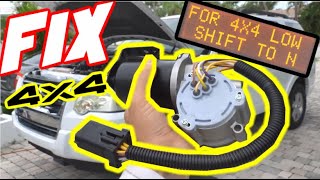
Outcome: The owner discovered P1835 means 'Transfer Case Differential Lock-Up Solenoid Short Circuit To Ground' on Fords. They replaced the transfer case shift motor assembly, resolving the 4WD fault.
Lesson: Never assume the generic 'Kick-Down Switch' definition applies. Verifying the manufacturer-specific code prevents wasting money on the wrong parts.
1984 Mercedes-Benz 300D
Transmission refused to downshift at full throttle.
What they tried:
- Replaced the kick-down switch under the accelerator pedal, which failed to fix the issue.
Outcome: The owner learned the system relies on a mechanical 'Bowden' cable and a transmission solenoid. Adjusting the stretched Bowden cable restored the kick-down function.
Lesson: Older vehicles use mechanical cables alongside electrical switches. Replacing the switch without checking mechanical adjustments leads to unresolved issues.
How to Prevent This Code From Triggering
- Change transmission fluid and filter (Every 40,000-60,000 miles) — Clean fluid prevents debris from clogging sensitive solenoids and valve bodies, ensuring proper hydraulic pressure and cooling.
- Change transfer case fluid (4WD/AWD) (Every 30,000 miles) — Prevents overheating and wear of internal clutches and solenoids, which directly causes P1835 on Ford models.
- Replace all four tires simultaneously on AWD vehicles (As needed) — Mismatched tire sizes force the transfer case to constantly compensate, overheating fluid and destroying the lock-up solenoid.
Frequently Asked Questions
What is a kick-down switch?
It is a sensor that detects when the accelerator pedal is pressed to the floor. It sends a signal to the transmission to downshift to the lowest possible gear for maximum acceleration.
What happens if you don't fix a P1835 code?
For a simple switch fault, you lose passing power. However, ignoring a pressure solenoid (VW/Mercedes) or drivetrain (Ford/Hyundai) issue destroys the transmission or transfer case, costing over $4,000.
What are common misdiagnosis mistakes for P1835?
The biggest mistake is assuming the generic 'kick-down switch' definition applies to all cars. Replacing a pedal switch on a Ford Explorer wastes money when the real problem is the 4WD transfer case.
Can I fix a P1835 code myself?
You can easily DIY a simple kick-down switch replacement or remove a floor mat obstruction. However, internal transmission solenoids, mechatronics units, or complex wiring shorts require a professional.
How much does it cost to fix P1835?
Costs vary dramatically based on the cause. A DIY kick-down switch replacement costs under $100, while a shop wiring repair runs $150-$400. Internal transmission solenoid or mechatronics repairs on European vehicles range from $400 to over $4,000 at a dealership.
Will my car fail an emissions test with a P1835 code?
Yes, an illuminated Check Engine Light results in an automatic failure during an OBD-II emissions inspection.
Is the kick-down switch the same as the throttle position sensor (TPS)?
No. The TPS is a variable resistor tracking exact throttle position, while the kick-down switch is a simple on/off switch that only activates at 100% wide-open throttle.
Key Takeaways
- Code P1835 disables your vehicle's 'passing gear' by indicating a failure in the kick-down switch circuit, preventing automatic downshifts at 100% throttle.
- Verify your manufacturer's specific definition before replacing parts; on Ford models, P1835 indicates a 4WD transfer case fault, while on VW/Audi, it flags a failing $1,500 mechatronics unit.
- For standard kick-down faults, replacing the $20-$80 pedal switch resolves the issue in over 60% of cases, followed by repairing chafed wiring.
- Driving with a standard P1835 code reduces passing safety, but ignoring manufacturer-specific pressure solenoid faults causes catastrophic transmission failure costing upwards of $4,000.
Helpful Videos
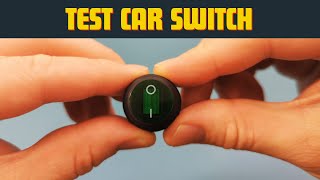
Shop the Parts Behind P1835
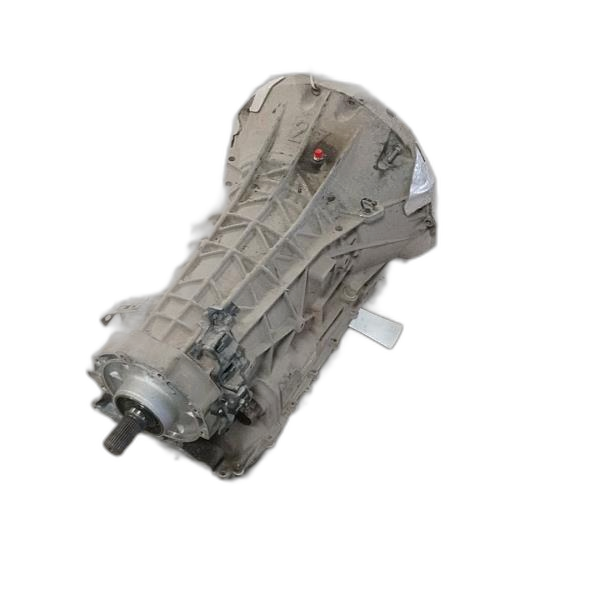
Below are the parts most often responsible for code P1835, ranked by how frequently each one is the actual culprit (per the diagnosis above). Tap any to see what we have for your vehicle.




The information in this article is provided for general reference and educational purposes only. Vehicle specifications, procedures, and part compatibility can vary by production date, trim level, and region. Always consult your vehicle's factory service manual and verify part numbers before purchasing or performing repairs. Safety-critical components such as airbags, seat belts, and braking systems should be installed by a qualified professional.
- 🧭 Diagnostic Flowchart
- 🎬 Helpful Videos
- 🛍️ Shop This Part
- What Does P1835 Mean?
- Can I Drive With P1835?
- Common Causes
- Symptoms
- Common Fixes & Costs
- DIY vs Professional
- Used vs. New Parts: Buying Guide
- What Happens If You Wait — Timeline
- Cost of Not Fixing It
- Diagnosis Steps
- When This Code Triggers (Freeze-Frame Conditions)
- Related Codes
- Climate & Environmental Factors
- How to Talk to a Mechanic About This Code
- Where to Take It: Dealer vs Independent vs Chain
- When to Walk Away From the Repair
- What Scan Tool You Need for This Code
- How to Clear the Code After You Fix It
- Will This Fail Emissions / State Inspection?
- Most Commonly Affected Vehicles
- Manufacturer-Specific Notes
- Real Owner Stories
- 2012 VW CC with 109K miles
- 2010 Ford Explorer (4WD)
- 1984 Mercedes-Benz 300D
- How to Prevent This Code From Triggering
- Frequently Asked Questions
- What is a kick-down switch?
- What happens if you don't fix a P1835 code?
- What are common misdiagnosis mistakes for P1835?
- Can I fix a P1835 code myself?
- How much does it cost to fix P1835?
- Will my car fail an emissions test with a P1835 code?
- Is the kick-down switch the same as the throttle position sensor (TPS)?
- Key Takeaways
- 🎟️ Get 5% Off