

OBD-II Code P1842: Transfer Case Lock-Up Switch Circuit Failure
What P1842 means, why it triggers, and how to fix it
- P1842 disables your 4WD system, locking the vehicle in 2WD, but remains safe to drive in dry conditions.
- Test your battery first; a resting voltage below 12.4V frequently triggers false P1842 codes on European vehicles like Land Rover and BMW.
- Replacing a faulty transfer case shift motor is the most common fix on American trucks, costing between $300 and $575.
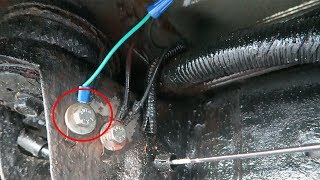
- Do not replace the Transfer Case Control Module (TCCM) without first cleaning its main ground wire on the frame, a $5 fix that solves many GM truck issues.
What Does P1842 Mean?
P1842 indicates your Powertrain Control Module (PCM) detected an electrical fault in the switch that confirms the transfer case has locked the front and rear axles. This system is essential for 4WD operation. When triggered, the computer disables the 4WD system to prevent mechanical damage.
Technical definition: The SAE/ISO definition for P1842 is "Transmission Transfer Case Differential Lock-Up Feedback Switch Circuit Failure". The control module is not receiving the correct electrical signal from the feedback switch circuit, which reports the lock-up status of the transfer case differential.
Can I Drive With P1842?
Yes, But With Caution. Driving is safe, but your Four-Wheel Drive (4WD) system is disabled, leaving the vehicle in Two-Wheel Drive (2WD). This poses a safety risk in slippery conditions like snow or heavy rain. On Saab or BMW models, this code signifies a transmission shifting issue that causes harsh shifting or 'limp mode'; stop driving immediately to prevent transmission damage.
Common Causes
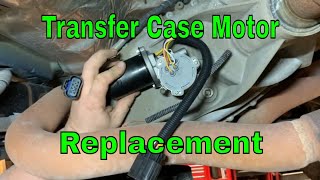
- Faulty Transfer Case Shift Motor/Encoder (Very Common) — The electric motor that physically shifts the transfer case contains a position sensor (encoder) that fails. This is the most frequent cause, as the assembly is exposed to harsh under-vehicle conditions.
- Corroded Wiring, Connectors, or Grounds (Common) — Wiring harnesses and ground straps leading to the transfer case suffer damage from road debris, moisture, and salt. A corroded ground connection for the Transfer Case Control Module (TCCM) is a notorious trigger on GM trucks.
- Low Battery Voltage (Common) — Vehicle control modules require stable voltage. A weak battery causes modules to malfunction and generate false codes during startup, particularly on European makes like Land Rover and BMW.
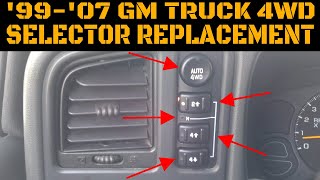
- Defective 4WD Selector Switch (Less Common) — The dashboard switch used to select 2WD or 4WD fails internally, sending an incorrect request to the TCCM and triggering the fault.
- Failed Transfer Case Control Module (TCCM) (Less Common) — The TCCM is the dedicated computer for the 4WD system. It fails internally, causing it to misinterpret signals or send incorrect commands to the shift motor.
- Faulty Neutral Safety Switch (XYZ Switch) (Rare) — On specific vehicles like the Land Rover Discovery 2, a failing neutral safety switch sends erroneous data to the transmission and transfer case modules, triggering this fault.
- TCM Software Glitch (Rare) — The code triggers due to a software issue within the Transmission Control Module (TCM). A dealer must reflash or update the module's software to resolve it.
Symptoms
- "Service 4WD" Light Illuminated — The dashboard displays a "Service 4WD" message or a dedicated 4WD warning light.
- 4WD System Inoperative — You cannot switch between 2WD, 4WD High, and 4WD Low. The vehicle remains stuck in 2WD.
- Flashing 4WD Selector Lights — The indicator lights on the dashboard 4WD switch blink continuously instead of staying solid.
- Check Engine Light Illuminated — The general Malfunction Indicator Lamp (MIL) illuminates alongside 4WD-specific warnings.
- Harsh Shifting or Stuck in Gear — On BMW or Saab models, you experience harsh gear changes, delayed shifts, or the transmission enters 'limp mode' (stuck in one gear).
Diagnostic Flowchart
Tap your situation to follow the diagnostic path that matches what you're seeing on this code.
Common Fixes & Costs
- Replace Transfer Case Shift Motor
— Parts: $150 - $350, Labor: $150 - $225, ~1.2 hr book time
(Intermediate)
Ford F-150 (2004-2008): OEM 8L3Z-7G360-A (Alt: Dorman 600-911)
Chevy/GMC 1500/2500 (1999-2007): OEM 12474401 (Alt: Dorman 600-901) - Repair Damaged Wiring or Grounds — Parts: $10 - $50, Labor: $150 - $450, ~2.0 hr book time (Professional)
- Replace 4WD Selector Switch
— Parts: $30 - $150, Labor: $75 - $150, ~0.7 hr book time
(DIY)
Chevy/GMC (2003-2007, without Auto 4WD): OEM 19259312 (Alt: Dorman 901-053) - Replace Battery — Parts: $150 - $350, Labor: $25 - $75, ~0.4 hr book time (DIY)
- Replace Transfer Case Control Module (TCCM)
— Parts: $200 - $800, Labor: $100 - $300, ~1.0 hr book time
(Intermediate)
Chevy/GMC (1999-2007): OEM 15196781 (Alt: Dorman 599-192)
Used vs. New Parts: Buying Guide
When a used part is worth it: A used transfer case shift motor from a low-mileage, rust-free donor vehicle is a budget-friendly option for older trucks where a new part exceeds the vehicle's value.
Donor-vehicle mileage cap: roughly under 75000 miles for the part to have meaningful remaining life.
Donor quality checklist:
- Verify the donor vehicle was not scrapped due to a 4WD system failure.
- Avoid parts from rust-belt states; motor housings and connectors are highly prone to corrosion.
- Match the part number exactly, including electrical connector pinouts.
Decision logic:
- If The vehicle has under 100K miles or you plan to keep it long-term → Buy a new OEM or high-quality aftermarket part (like Dorman) for reliability and warranty coverage.
- If The budget is tight and you are performing the labor yourself → A used part is a viable risk; test the motor with a 12V source before installation.
- If The part is for a European make (BMW, Land Rover) → Buy a new part to avoid diagnostic nightmares caused by faulty used electronics.
Warranty tradeoff: Salvage yards offer 30-90 day warranties on the part only. New aftermarket parts include 1-year to lifetime warranties. New OEM parts carry 1-2 year warranties.
Worst-case if a used part fails: $200 - $500 (Cost of the replacement part plus repeat labor if the used motor fails).
What Happens If You Wait — Timeline
- 0-1 month (4WD Fault): Code P1842 is set, 'Service 4WD' light is on. The 4WD system is disabled and the vehicle is locked in 2WD. No other symptoms are present. (MPG impact: 0%% · Added cost: $0)
- 1+ months (4WD Fault): The 4WD system remains inoperative. The shift motor seizes from disuse, making eventual repair slightly more difficult, but no progressive mechanical damage occurs. (MPG impact: 0%% · Added cost: $0)
- 0-3 months (Transmission Fault - BMW/Saab): Code P1842 is set with a Check Engine Light. The driver experiences intermittent harsh or delayed gear shifts as the faulty solenoid struggles to regulate hydraulic pressure. (MPG impact: 2-5%% · Added cost: $50-$150 in wasted fuel and accelerated fluid breakdown.)
- 3-6+ months (Transmission Fault - BMW/Saab): Shifting becomes consistently harsh, and the transmission skips gears or enters 'limp mode'. This puts severe strain on clutch packs and internal components. (MPG impact: 5-15%% · Added cost: $1500-$4000 (Risk of needing a full transmission rebuild increases dramatically).)
Cost of Not Fixing It
- Short-Term (0-3 months): Loss of 4WD capability. This is an inconvenience and a safety risk in slippery conditions. For most trucks, there is no immediate risk of further mechanical damage. (Added cost: $0)
- Medium-Term (3-12 months): On Saab or BMW models, continued driving causes accelerated wear on clutch packs and internal transmission components due to harsh shifting and incorrect hydraulic pressures. (Added cost: $1500 - $4000 (for transmission rebuild))
- Long-Term (12+ months): Ignoring a transmission-related P1842 leads to catastrophic transmission failure. For 4WD faults, the shift motor seizes from disuse, but additional costs remain minimal. (Added cost: $3000 - $7000 (for transmission replacement))
Diagnosis Steps
- Test Battery Voltage
Ensure the battery is fully charged (12.4V+ with engine off) and the alternator is charging correctly (13.6V+ with engine running). Low voltage is the leading cause of false module codes.
Tools: Multimeter (Beginner) - Check for Related Codes
Use an OBD-II scanner to read all codes from the PCM and TCCM. Companion codes like C0327 or P1867 pinpoint the exact component failure.
Tools: OBD-II Scanner (Beginner) - Inspect 4WD Fuses
Check the fuses related to the 4WD system, TCCM, and transmission. A blown fuse indicates a short circuit that must be traced.
Tools: Owner's Manual, Fuse Puller (Beginner) - Visually Inspect Wiring and Grounds
Inspect the wiring harness going to the transfer case shift motor for chafing, melting, or corrosion. Clean the main ground wire from the TCCM to the vehicle frame.
Tools: Flashlight, Wire Brush, Dielectric Grease (Intermediate) - Test the 4WD Selector Switch
Test the dashboard selector switch for proper resistance and voltage signals as you change modes to verify it sends the correct command to the TCCM.
Tools: Multimeter, Wiring Diagram (Intermediate) - Test Shift Motor Power and Polarity
Disconnect the transfer case motor. Connect a multimeter between the two motor control circuits. Have an assistant shift from 2WD to 4WD. The multimeter must show battery voltage (12V), and reverse polarity (-12V) when shifting back. If voltage is present but the motor doesn't run, the motor is dead.
Tools: Multimeter, Assistant (Advanced) - Back-Probe the Encoder Signal
Back-probe the encoder signal wires at the motor connector. With the ignition on, measure the voltage to ground. As an assistant shifts through 4WD ranges, voltage must change smoothly between 0V and 5V. A stuck voltage indicates a failed encoder.
Tools: Multimeter with T-pins, Assistant (Advanced) - Test GM Encoder Motor Resistance
On GM trucks, disconnect the motor and measure resistance between the two motor control pins. Normal reading is 0.5 to 35 ohms. Infinite or zero resistance means the motor failed.
Tools: Multimeter (Advanced) - Check Encoder Live Data
Use a bi-directional scan tool to monitor live data PIDs for the transfer case encoder position. The voltage or count must change smoothly as you command shifts. Frozen or out-of-range values point to a harness or encoder fault.
Tools: Bi-directional Scan Tool (Advanced) - Test the TCCM Power and Ground
Check for 12V power and solid ground directly at the TCCM connector. If the TCCM receives correct inputs from the switch but sends no output to the motor, the module requires replacement.
Tools: Multimeter, Wiring Diagram (Advanced)
When This Code Triggers (Freeze-Frame Conditions)
- Vehicle Speed: 0 - 45 mph (Sets at key-on during the system self-test or when a shift into/out of 4WD is attempted.)
- Engine RPM: 0 or 800 - 2000 RPM (Triggers at idle or during normal driving when the control module polls the sensor.)
- System Voltage: 11.8V - 14.5V (Often detected during a module self-check immediately after engine start. Low voltage is a primary trigger.)
- Engine Load: 15 - 50% (Sets under normal, low-to-moderate engine load as this is an electrical, not performance-related, fault.)
Related Codes
- P1843 — Indicates an 'Open Circuit' in the same feedback switch system. P1842 is a general failure, while P1843 specifically points to a broken wire or disconnected sensor.
- P1867 — A Ford-specific code for 'Transfer Case Contact Plate General Circuit Failure.' Seeing P1842 and P1867 together guarantees a failed position sensor inside the shift motor.
- C0327 — A GM chassis code for 'Encoder Circuit Malfunction.' Paired with P1842, it confirms the fault is the encoder sensor inside the transfer case shift motor assembly.
- P0700 — A generic PCM code indicating the Transmission or Transfer Case Control Module stored a fault. P0700 is the messenger; P1842 is the actual problem.
Climate & Environmental Factors
- Cold Climates and Road Salt: Road salt and brine spray onto the undercarriage, acting as an electrolyte that drastically accelerates corrosion on the transfer case motor, electrical connectors, and ground points.
- Humidity and Water Intrusion: High-humidity environments or deep water crossings force moisture into electrical connectors. This shorts circuit pins and triggers failure codes.
- Galvanic Corrosion: Transfer cases with magnesium housings bolted with steel bolts suffer galvanic corrosion when exposed to salt, eating away the housing and damaging nearby wiring.
How to Talk to a Mechanic About This Code
Say this: "I have a P1842 code on my vehicle. I've already checked the battery and fuses. I'd like to book a diagnostic appointment to determine if the issue is with the shift motor, the TCCM, or the wiring. Please start by checking for power at the transfer case motor and inspecting the TCCM ground."
This directs the mechanic to start with the most common diagnostic steps, saving time and money. It avoids a 'shotgun' approach of replacing parts without a clear diagnosis.
Avoid saying:
- 'My 4WD isn't working, can you fix it?' (Too vague, invites a lengthy diagnostic process)
- 'Just replace the transfer case motor.' (You might be wrong and pay for an unnecessary part)
- 'Do whatever it takes to fix it.' (An open invitation for upselling)
Questions to ask before authorizing the repair:
- Can you show me the corroded wire/connector or the failed part?
- Did you confirm there is power being sent to the motor, but the motor isn't responding?
- If recommending a TCCM, have you confirmed it has proper power and ground?
- What is the warranty on the recommended parts and labor?
Where to Take It: Dealer vs Independent vs Chain
- Dealer:
Best for: Vehicles under warranty, Repairs involving software updates or module programming (reflashing a TCCM), Manufacturer-specific quirks on newer or European vehicles (Land Rover, BMW, Subaru)
Downsides: Significantly higher labor rates and parts costs., Defaults to replacing entire assemblies instead of smaller, failing components. (Typical cost: +40% vs. baseline) - Independent Shop:
Best fit for most common scenarios, especially on domestic trucks. An independent shop with strong electrical diagnostic skills is ideal.
Best for: Out-of-warranty American trucks (Ford, GM, Dodge) where P1842 is a common problem., Electrical diagnostics like tracing bad wires or cleaning ground connections., Cost-conscious consumers looking for a balance of expertise and value.
Downsides: Quality varies greatly; look for ASE certifications., Lacks expensive, dealer-level tools for programming certain modules. (Typical cost: +0% vs. baseline) - Chain Shop:
AVOID for diagnosing P1842. This code requires nuanced electrical troubleshooting, not just reading a code and replacing a part.
Best for: Simple, unrelated maintenance like oil changes or tires.
Downsides: Technicians lack the deep diagnostic experience needed for complex electrical codes., Business model incentivizes upselling unnecessary parts. (Typical cost: -10% vs. baseline)
When to Walk Away From the Repair
If the estimated repair cost for the P1842 fault exceeds 50% of your vehicle's private-party value, seriously consider selling or trading it in.
- Car worth $5000, fix is $450: Fix it. This is a minor cost to restore a key feature and maintain vehicle value.
- Car worth $4000, fix is $2500: Walk away. The repair cost is over 60% of the car's value. This is a bad investment, especially for transmission issues.
- Car worth $15000, fix is $1100: Fix it. The repair cost is well below the 50% threshold and protects the value of a more expensive vehicle.
What Scan Tool You Need for This Code
Minimum: A scanner that reads manufacturer-specific codes from the TCM/TCCM and displays live data for transfer case position sensors.
A basic $20 code reader only shows a generic P0700 or won't connect to the transfer case module. You need to see the specific P1842 code and live data from the encoder to verify signals.
Budget: BlueDriver Pro (~$100) — Reads specific codes from the TCCM, displays freeze-frame data, and graphs live data from position sensors to determine if the encoder works.
Mid-range: Foxwell NT510 Elite (~$180) — Offers deep, vehicle-specific diagnostics. Reads live data with graphing and provides bi-directional control to perform active tests on the shift motor.
Professional: Autel MaxiCOM MK808 / XTOOL D7S (~$450-600) — Provides full bi-directional control to command the TCCM to shift, activate the motor, and perform module coding if the TCCM requires replacement.
Rent vs buy: For a one-time diagnosis, a parts store loaner tool confirms the code but lacks live data. If diagnosing yourself, buying a capable scanner like the BlueDriver or Foxwell NT510 is a worthwhile investment.
How to Clear the Code After You Fix It
- Reconnect the battery if disconnected during repair.
- Use an OBD-II scan tool to erase P1842 and related fault codes.
- Perform a complete drive cycle to run readiness monitors and confirm the fix.
Drive cycle (~20 minutes): Start the engine cold. Idle for 3 minutes. Drive in mixed city traffic with several stops. Accelerate to 55 mph and hold for 5 minutes. Coast down to 20 mph without braking. Accelerate back to highway speed. Allow the vehicle to cool completely.
Readiness monitors affected: Comprehensive Component Monitor, Catalyst Monitor, Oxygen Sensor Monitor
Before emissions retest: drive at least 50 miles to fully set monitors.
Watch out for:
- Disconnecting the battery clears the code but resets all readiness monitors, causing an automatic emissions test failure.
- The code returns immediately upon startup if the underlying electrical fault remains.
Will This Fail Emissions / State Inspection?
Yes — this code typically fails an OBD-II emissions inspection.
- California: An illuminated Check Engine Light is an automatic failure. You must complete a full drive cycle to set readiness monitors after repair before retesting.
- New York: An active P-code that commands the Malfunction Indicator Lamp (MIL) on results in an automatic OBD-II inspection failure.
- Texas: Active DTCs fail the inspection. Clearing the code in the parking lot results in a 'Not Ready' status, which also fails the test.
Most Commonly Affected Vehicles
- Ford F-150 (2004-2011) — Highly prone to transfer case shift motor failure. The internal contact plate wears out, requiring replacement of the entire motor assembly.
- Chevrolet Silverado / Tahoe (1999-2007) — Notorious for faulty push-button 4WD selector switches and severe corrosion on the main TCCM ground wire located on the frame rail under the driver's door.
- GMC Sierra / Yukon (1999-2007) — Shares the Chevrolet platform and suffers identical failures with the dash switch, TCCM grounds, and the encoder motor itself.
- Dodge Ram 1500 (2002-2008) — Experiences high rates of transfer case shift motor failure, often preceded by a grinding noise when attempting to shift into 4WD.
- Land Rover Discovery 2 (1999-2004) — P1842 is frequently triggered by low battery voltage or a faulty XYZ switch (neutral safety switch) corroded by water dripping from the A/C drain.
- Subaru Legacy / Outback (2010-2012) — Indicates a 'Transmission Fluid Pressure Sensor/Switch C Circuit' failure. TSB 16-90-13R requires a TCM software update or a new torque converter.
- Jeep Grand Cherokee (WJ) (1999-2004) — Part of a cascade of faults originating from a weak battery, a faulty gearbox plug adapter, or a failed gear shifter module PCB.
Manufacturer-Specific Notes
- General Motors (Chevy/GMC): Early 2000s trucks suffer from poor ground connections. Cleaning the main TCCM ground on the frame rail under the driver's door resolves the code in many cases.
- Ford: The internal contact plate inside the transfer case shift motor wears out, triggering codes P1842 and P1867 simultaneously. The entire motor requires replacement.
- Land Rover: Control modules are hyper-sensitive to voltage. A weak battery sets false codes. Always test the battery before replacing the expensive XYZ switch.
- Saab: P1842 relates to a 'Torque Limitation Signal' circuit failure causing harsh shifting. This is a transmission issue, completely unrelated to 4WD.
- Subaru: P1842 indicates a torque converter or software issue. Subaru extended the CVT warranty to 10 years/100,000 miles for affected vehicles; check dealer coverage first.
- Volkswagen / Audi: P1842 is an informational code meaning 'Please check DTC Memory of instrument panel ECU.' The actual fault lies in the instrument cluster, not the drivetrain.
- BMW: Defined as '1-2 Shift Solenoid Circuit Low Voltage,' pointing to an internal automatic transmission problem requiring immediate attention to prevent damage.
Real Owner Stories
2005 Chevy Silverado 1500 at 155K miles - The 'Easy' Ground Fix
The 'Service 4WD' light came on intermittently. When trying to engage 4WD, the selector switch lights flashed and returned to 2WD. Codes P1842 and C0327 were present.
What they tried:
- Replaced the 4WD selector switch on the dash for $45, but the problem persisted.
- Considered replacing the TCCM but decided to check wiring first.
Outcome: The owner located the main TCCM ground wire on the truck's frame rail below the driver's door. The bolt was heavily corroded. They cleaned the frame and ring terminal with a wire brush, applied dielectric grease, and re-secured it. This $5 fix solved the problem completely.
Lesson: On GM trucks, always inspect and clean the TCCM ground connection on the frame before replacing expensive components. It is a high-leverage, low-cost diagnostic step.
2002 Land Rover Discovery 2 at 120K miles - A Tale of Misdiagnosis
Vehicle went into 'limp mode' with flashing M&S lights and a flashing 'D' on the gear selector. Codes P1842 and P1843 were stored.
What they tried:
- Replaced the XYZ neutral safety switch based on forum advice, but the problem remained.
- Cleaned the CAN bus wiring connectors at the ECU with no change.
- Tested the battery voltage before a cold start, reading 11.9V.
Outcome: A new AGM battery was installed, bringing resting voltage to 12.6V. Upon starting, all fault codes cleared and limp mode disappeared. The original XYZ switch was likely fine.
Lesson: Land Rover electronics are notoriously sensitive to voltage. Verify the battery provides at least 12.4V at rest before replacing a $600 XYZ switch.
2006 Ford F-150 at 180K miles - The Intermittent Failure
4WD would not engage. No lights, no clicks, no sound from the transfer case. Codes P1842 and P1867 were stored.
What they tried:
- Checked all 4WD-related fuses, which were intact.
- Replaced the IWE solenoid on the firewall, which did not resolve the issue.
- Tested for voltage at the transfer case shift motor connector and found none.
Outcome: Despite the lack of voltage in one test, the combination of P1842 and P1867 on a Ford strongly indicates a failed internal position sensor. The owner replaced the entire transfer case shift motor assembly (Dorman 600-911), restoring perfect 4WD function.
Lesson: Specific code combinations point directly to known failure patterns. On Ford trucks, P1842 + P1867 guarantees the shift motor assembly failed internally.
How to Prevent This Code From Triggering
- Periodically Engage 4WD System (Once a month) — Activating the 4WD system cycles the transfer case motor, preventing internal gears and electric motor brushes from seizing due to inactivity.
- Change Transfer Case Fluid (Every 30,000-60,000 miles) — Clean fluid lubricates internal gears, reducing wear. Neglecting fluid changes leads to mechanical failure that damages the shift mechanism.
- Apply Dielectric Grease to Connectors (During any related service or inspection) — Dielectric grease on weather seals prevents moisture and road salt from reaching electrical pins, significantly reducing corrosion-related circuit failures.
- Inspect and Protect Undercarriage Wiring (Annually (before winter)) — Visually inspect the wiring harness for chafing. Applying a corrosion inhibitor spray to the underbody protects connectors and ground points from salt.
Frequently Asked Questions
What's the most common mistake when diagnosing P1842?
Assuming P1842 means the same thing for all vehicles. It points to a 4WD motor on a Ford, a shift solenoid on a BMW, or an instrument cluster on a VW. Always check battery voltage and grounds before replacing expensive parts.
Can a weak battery cause a P1842 code?
Yes. Control modules require stable voltage to operate correctly. A weak battery causes voltage drops during startup, leading to glitches and false fault codes in the TCCM.
What does 'Service 4WD' mean on a Chevy or GMC?
The 'Service 4WD' message is a common symptom of code P1842 on GM trucks. It points directly to a faulty push-button selector switch, a bad TCCM ground wire, or a failed transfer case encoder motor.
Can I fix a P1842 code myself?
Yes, if the problem is a blown fuse, a weak battery, or a faulty dash switch. Replacing the transfer case motor is manageable for an intermediate DIYer with basic hand tools. Diagnosing complex wiring issues or reprogramming a TCCM requires a professional.
Will clearing the code fix the problem?
No. Clearing the code only turns the light off temporarily. The code returns immediately when the TCCM runs its self-test and detects the active electrical fault.
Is it safe to drive with the P1842 code?
Yes, the vehicle operates normally in 2WD, though lacking 4WD is a safety risk in slippery conditions. However, on BMW or Saab models where this code indicates a transmission shifting problem, stop driving immediately to prevent severe internal damage.
How much does it cost to fix P1842?
Costs range from $5 for a cleaned ground wire to over $500 for a new transfer case shift motor. A new 4WD dash switch costs around $100 to $300 installed. Replacing the TCCM is the most expensive repair, often exceeding $800 with programming.
Can low transmission or transfer case fluid cause P1842?
No. P1842 is strictly an electrical circuit code. While low fluid causes serious mechanical damage, it does not trigger this specific electrical fault.
Key Takeaways
- P1842 disables your 4WD system, locking the vehicle in 2WD, but remains safe to drive in dry conditions.
- Test your battery first; a resting voltage below 12.4V frequently triggers false P1842 codes on European vehicles like Land Rover and BMW.
- Replacing a faulty transfer case shift motor is the most common fix on American trucks, costing between $300 and $575.
- Do not replace the Transfer Case Control Module (TCCM) without first cleaning its main ground wire on the frame, a $5 fix that solves many GM truck issues.
Helpful Videos
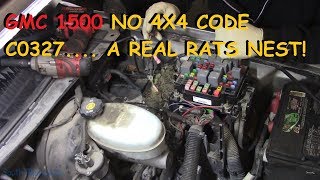
Shop the Parts Behind P1842
Below are the parts most often responsible for code P1842, ranked by how frequently each one is the actual culprit (per the diagnosis above). Tap any to see what we have for your vehicle.



The information in this article is provided for general reference and educational purposes only. Vehicle specifications, procedures, and part compatibility can vary by production date, trim level, and region. Always consult your vehicle's factory service manual and verify part numbers before purchasing or performing repairs. Safety-critical components such as airbags, seat belts, and braking systems should be installed by a qualified professional.
- 🧭 Diagnostic Flowchart
- 🎬 Helpful Videos
- 🛍️ Shop This Part
- What Does P1842 Mean?
- Can I Drive With P1842?
- Common Causes
- Symptoms
- Common Fixes & Costs
- Used vs. New Parts: Buying Guide
- What Happens If You Wait — Timeline
- Cost of Not Fixing It
- Diagnosis Steps
- When This Code Triggers (Freeze-Frame Conditions)
- Related Codes
- Climate & Environmental Factors
- How to Talk to a Mechanic About This Code
- Where to Take It: Dealer vs Independent vs Chain
- When to Walk Away From the Repair
- What Scan Tool You Need for This Code
- How to Clear the Code After You Fix It
- Will This Fail Emissions / State Inspection?
- Most Commonly Affected Vehicles
- Manufacturer-Specific Notes
- Real Owner Stories
- 2005 Chevy Silverado 1500 at 155K miles - The 'Easy' Ground Fix
- 2002 Land Rover Discovery 2 at 120K miles - A Tale of Misdiagnosis
- 2006 Ford F-150 at 180K miles - The Intermittent Failure
- How to Prevent This Code From Triggering
- Frequently Asked Questions
- What's the most common mistake when diagnosing P1842?
- Can a weak battery cause a P1842 code?
- What does 'Service 4WD' mean on a Chevy or GMC?
- Can I fix a P1842 code myself?
- Will clearing the code fix the problem?
- Is it safe to drive with the P1842 code?
- How much does it cost to fix P1842?
- Can low transmission or transfer case fluid cause P1842?
- Key Takeaways
- 🎟️ Get 5% Off