

OBD-II Code P1843: 1-2 Shift Solenoid Circuit High Voltage
What P1843 means, why it triggers, and how to fix it
- P1843 indicates a high voltage short in the 1-2 shift solenoid circuit, most commonly affecting GM vehicles with 4L60E transmissions.
- Always verify the code definition for your specific make, as P1843 means a 4x4 switch failure on Fords and a pressure sensor fault on Chryslers.
- Test the external wiring harness and ground connections before dropping the transmission pan, as chafed wires cause this code more often than a failed $30 solenoid.
- Stop driving immediately if the transmission enters 'limp mode' (stuck in 2nd or 3rd gear) to prevent a $2,500+ complete mechanical rebuild.
What Does P1843 Mean?
P1843 means the Powertrain Control Module (PCM) or Transmission Control Module (TCM) detects high voltage in the 1-2 shift solenoid electrical circuit. This indicates a short to a power source, preventing the computer from controlling the solenoid and stopping the transmission from shifting correctly.
Technical definition: 1-2 Shift Solenoid Circuit High Input. This is the standard definition for General Motors (GM) vehicles. Because 'P1' codes are manufacturer-specific, verify the exact definition for your make and model.
Can I Drive With P1843?
Yes, But With Caution. You can drive, but we strongly advise against it. Your transmission will shift harshly, get stuck in one gear ('limp mode'), or fail to shift entirely. Continuing to drive overheats the transmission, accelerating wear on internal clutch packs and turning a $200 electrical repair into a $3,000 complete rebuild.
Common Causes
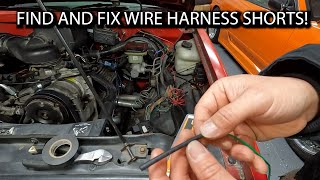
- Damaged External Wiring or Connectors (Very Common) — Frayed wires shorting to power or corroded connectors are the primary cause of high voltage codes. The external transmission harness frequently rubs against the chassis or hot exhaust components, melting the insulation. 🎬 Watch: How to find and repair shorts in your wiring harness.
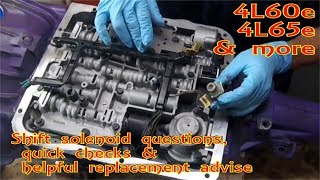
- Failed 1-2 Shift Solenoid (Common) — The electro-mechanical solenoid inside the transmission fails with an internal short circuit, causing it to draw incorrect voltage and stick in one position.
- Internal Transmission Harness Failure (Common) — The wiring harness located inside the transmission oil pan becomes brittle from constant heat cycles and fluid exposure, causing internal shorts between the solenoid and the pass-through connector.
- Poor Electrical Ground (Less Common) — A loose or corroded ground connection for the transmission creates a voltage differential that the computer misinterprets as a 'high voltage' condition on the circuit.
- Low or Dirty Transmission Fluid (Less Common) — Severely degraded fluid overheats the transmission and damages electrical components. Heavy metal debris in the fluid also bridges electrical contacts, causing intermittent shorts.
- Faulty Transmission Control Module (TCM) (Rare) — The TCM's internal driver transistor for the 1-2 solenoid fails, sending incorrect voltage signals. Diagnose this only after ruling out all wiring and solenoid faults.
Symptoms
- Transmission Stuck in Gear (Limp Mode) — The transmission refuses to shift out of 2nd or 3rd gear to prevent further mechanical damage. This is a protective measure initiated by the TCM. 🎬 See how to diagnose and fix a transmission stuck in limp mode.
- Harsh or Delayed Shifting — The shift from 1st to 2nd gear feels jerky, delayed, or violently slams into gear as the computer struggles to control hydraulic pressure.
- Transmission Slipping — The engine RPMs spike, but the vehicle does not accelerate properly because the gear is not fully engaged.
- Check Engine Light is On (also visible on scanner) — The vehicle's computer logs the electrical fault and illuminates the Malfunction Indicator Lamp (MIL). Code P0700 often appears alongside P1843.
- Transmission Overheating (also visible on scanner) — Disrupted fluid flow increases internal friction. The transmission runs significantly hotter, triggering a warning light or producing a burnt fluid smell.
Diagnostic Flowchart
Tap your situation to follow the diagnostic path that matches what you're seeing on this code.
Common Fixes & Costs
- Repair Damaged Wiring or Connectors — Parts: $10-$50, Labor: $125-$300, ~1.5 hr book time (Intermediate)
- Replace the 1-2 Shift Solenoid
— Parts: $25-$60, Labor: $150-$350, ~2.0 hr book time
(Intermediate)
Chevrolet Silverado / GMC Sierra (4L60E/4L65E): OEM {'part_number': '24230298', 'brand': 'ACDelco', 'estimated_cost': '$25-$50'} (Alt: {"part_number": "S9871", "brand": "Carquest", "estimated_cost": "$30-$40"}) - Clean or Repair Ground Connections — Parts: $5-$20, Labor: $50-$150, ~0.8 hr book time (DIY)
- Replace Internal Transmission Harness
— Parts: $40-$90, Labor: $150-$350, ~2.0 hr book time
(Intermediate)
Chevrolet Silverado / GMC Sierra (4L60E): OEM {'part_number': '15320476', 'brand': 'ACDelco', 'estimated_cost': '$60-$90'} - Replace Transmission Fluid and Filter — Parts: $50-$120, Labor: $100-$250, ~1.0 hr book time (DIY)
- Replace the Transmission Control Module (TCM) — Parts: $200-$900, Labor: $200-$800 (Includes Programming), ~3.0 hr book time (Professional)
Used vs. New Parts: Buying Guide
When a used part is worth it: Never buy a used shift solenoid. The labor to access the part inside the transmission pan is the most expensive part of the job. A new solenoid costs $25-$50, making used parts an unnecessary risk.
Donor-vehicle mileage cap: roughly under 40000 miles for the part to have meaningful remaining life.
Donor quality checklist:
- Verify the part number exactly; 1-2 and 2-3 shift solenoids are often identical but confirming is critical.
- Avoid parts from transmissions that failed due to internal mechanical damage.
Decision logic:
- If The part is a shift solenoid or internal harness. → Always buy new OEM (e.g., ACDelco). The labor cost makes doing the job twice financially ruinous.
- If The Transmission Control Module (TCM) requires replacement. → A pre-programmed remanufactured TCM is a cost-effective alternative to a brand new dealer unit.
Warranty tradeoff: Used parts carry a 30-day part-only warranty. New OEM solenoids carry a 1-year warranty and guarantee correct resistance values out of the box.
Worst-case if a used part fails: $350 if a used solenoid fails, requiring you to pay for the fluid, gasket, and labor a second time.
What Happens If You Wait — Timeline
- 0-2 weeks: Check Engine Light on with P1843. Shifting is occasionally harsh or delayed. Limp mode is intermittent. (MPG impact: 0-5%% · Added cost: $0)
- 2 weeks - 3 months: Harsh shifting becomes frequent. The transmission enters limp mode consistently. Increased friction generates excess heat, and fuel economy drops noticeably. (MPG impact: 5-15%% · Added cost: $50-$200 in wasted fuel and accelerated fluid degradation.)
- 3-6 months: Sustained high heat causes clutch materials to glaze. Fluid becomes contaminated with metal debris. The transmission begins slipping. (MPG impact: 15-25%% · Added cost: $800-$1,500 for valve body replacement or clutch pack service.)
- 6+ months: Catastrophic failure. Widespread clutch failure and a damaged transmission pump prevent the vehicle from moving at all. (MPG impact: >25%% · Added cost: $2,500-$4,000+ for a complete transmission rebuild.)
Cost of Not Fixing It
- 0-1 month: Erratic shifting, poor fuel economy, and high risk of being stranded in limp mode. (Added cost: $50-$150 in wasted fuel.)
- 1-6 months: Increased internal friction from harsh shifts glazes clutch packs and contaminates fluid with metal debris. (Added cost: $800-$1,500 for valve body replacement or clutch pack service.)
- 6+ months: Catastrophic internal damage. Worn clutches and a damaged transmission pump necessitate a complete overhaul. (Added cost: $2,500-$4,000 for a complete transmission rebuild.)
Diagnosis Steps
- Read Trouble Codes & Freeze Frame Data
Use an OBD-II scanner to confirm P1843. Check for related codes like P0700 (General Fault) or P0751 (Performance Fault). Note the freeze frame data to see the vehicle's speed and temperature when the code triggered.
Tools: OBD-II Scanner (Beginner) - Inspect External Wiring & Connectors
Visually inspect the wiring harness from the transmission to the TCM. Look for melted insulation, pinched wires, or green corrosion on the main transmission pass-through connector.
Tools: Flashlight, Mirror (Intermediate) - Check Transmission Fluid Level & Condition
Pull the transmission dipstick. The fluid must be at the correct level and appear reddish-pink. Black, gritty, or burnt-smelling fluid indicates severe mechanical wear that electrical fixes cannot solve.
Tools: Rag/Paper Towel (Beginner) - Perform a Voltage Drop Test on the Ground Circuit
Set a multimeter to DC Volts. Place the positive lead on the battery's negative terminal and the negative lead on the transmission case. A reading above 0.05 volts indicates a bad ground connection that must be cleaned.
Tools: Multimeter (Intermediate) - Check for Short to Voltage in the Harness
Disconnect the harness from the TCM and the transmission. Connect the multimeter's negative lead to a chassis ground. Probe the 1-2 shift solenoid signal wire at the transmission connector with the positive lead. With the key on, a reading of 12V confirms a short to power in the harness.
Tools: Multimeter, Wiring Diagram (Advanced) - Test the Shift Solenoid Resistance
Drop the transmission pan. Unplug the internal harness from the solenoid and measure resistance across its two pins. A GM 4L60E solenoid reads 20-30 ohms. Near zero or infinite resistance confirms a failed solenoid.
Tools: Socket Set, Drain Pan, Multimeter, Service Manual (Advanced) - Test Solenoid Functionality with a 9V Battery
With the solenoid removed, briefly apply power from a 9-volt battery to its terminals using jumper wires. A healthy solenoid makes a sharp 'click'. No click means the internal valve is mechanically stuck.
Tools: 9V Battery, Jumper Wires (Advanced) - Analyze Scan Tool Live Data PIDs
Using an advanced scan tool, monitor '1-2 Shift Solenoid Commanded State' and 'Circuit Voltage'. If the TCM commands the solenoid 'Off' but the voltage reads 12V, the TCM is actively seeing the short circuit.
Tools: Advanced Scan Tool (Advanced) - Perform a Harness 'Wiggle Test'
With the key on, have a helper monitor the live solenoid voltage on a scan tool. Vigorously wiggle sections of the wiring harness. If the voltage fluctuates, you have located an intermittent short.
Tools: Advanced Scan Tool, Helper (Advanced) - Test the Transmission Control Module (TCM)
If the solenoid, internal harness, and external wiring test perfectly, the TCM is the culprit. This requires a professional oscilloscope to verify the module's internal driver is failing to ground the circuit.
Tools: Advanced Scan Tool, Oscilloscope (Professional)
When This Code Triggers (Freeze-Frame Conditions)
- Engine Coolant Temp: 185-210°F (Vehicle at full operating temperature.)
- RPM: 1200-2000 (During or just after an attempted 1-2 shift under light to moderate acceleration.)
- Engine Load: 25-50% (Steady throttle application, not heavy acceleration.)
- Vehicle Speed: 15-25 mph (The typical speed range where a 1-2 shift occurs.)
Related Codes
- P1842 — The direct opposite of P1843, indicating '1-2 Shift Solenoid Circuit Low Voltage'. P1843 is a short to power, while P1842 is a short to ground or an open circuit.
- P0751 — A generic code for 'Shift Solenoid A Performance'. The high voltage condition of P1843 prevents the solenoid from working, causing the computer to flag this mechanical performance failure. Fix P1843 first.
- P0700 — A general 'Transmission Control System Malfunction' code. It is an informational request from the TCM to illuminate the Check Engine Light. You must scan the TCM to find the underlying P1843 code.
- P0753 — The generic OBD-II equivalent for 'Shift Solenoid A Electrical'. On many non-GM vehicles, you will see P0753 instead of P1843 for the exact same electrical fault.
Climate & Environmental Factors
- High Humidity: Moisture penetrates aging connector seals, leading to corrosion and electrical shorts that trigger high voltage codes.
- Road Salt (Winter Climates): Corrosive salt spray contaminates underbody connectors and ground points, creating high resistance in the transmission circuits.
- Extreme Heat: Sustained high temperatures cause wire insulation near the exhaust to become brittle and crack, exposing copper wire and causing shorts to power.
How to Talk to a Mechanic About This Code
Say this: "I have a P1843 code on my vehicle and the transmission is shifting harshly. I'd like to schedule a diagnostic to test the 1-2 shift solenoid circuit. Please check the external wiring and grounds before condemning the solenoid or TCM."
This signals you are an informed consumer. It directs the technician to perform a proper electrical diagnosis instead of immediately quoting an expensive part or a full rebuild.
Avoid saying:
- 'My transmission is acting weird, can you fix it?' (Too vague, invites a broad and expensive diagnosis).
- 'Just replace the 1-2 shift solenoid.' (Don't diagnose for the mechanic; the problem is often the wiring).
- 'Give me a price over the phone.' (Impossible for a proper electrical diagnosis).
Questions to ask before authorizing the repair:
- What were the results of the solenoid resistance test and the ground voltage drop test?
- Did you check the wiring harness for shorts to power? Can you show me where the fault was?
- Before we replace the TCM, can you confirm you've ruled out all wiring and solenoid issues?
- What is the parts and labor warranty for this specific repair?
Where to Take It: Dealer vs Independent vs Chain
- Dealer:
Recommended only if the vehicle is under warranty or if TCM programming is required.
Best for: Vehicles under powertrain warranty., Complex TCM programming is required.
Downsides: Highest labor rates, often 1.5-2x more than independent shops., May prefer to replace a larger assembly (like a valve body) rather than troubleshoot a specific circuit. (Typical cost: +50% vs. baseline) - Independent Shop:
Best Fit. A reputable independent transmission specialist efficiently traces the electrical fault without defaulting to the most expensive solution.
Best for: Out-of-warranty vehicles where cost is a factor., Shops specializing in transmission repair., General repair shops with strong electrical diagnostic capabilities.
Downsides: Quality and expertise vary widely. Vet the shop by checking for ASE certifications. (Typical cost: +0% vs. baseline) - Chain Shop:
Approach with Caution. Be wary of any shop that immediately recommends a transmission rebuild without a thorough electrical diagnosis.
Best for: Simple, routine maintenance like oil changes or brake jobs.
Downsides: High pressure to meet sales targets leads to upselling unnecessary repairs., Technician skill and diagnostic equipment are inconsistent. (Typical cost: -10% vs. baseline)
When to Walk Away From the Repair
If the estimated repair cost exceeds 50% of the car's private-party value, seriously consider selling or trading it in.
- Car worth $3000, fix is $1700: Walk away. The repair cost is nearly 60% of the car's value. It is not a sound financial decision.
- Car worth $10000, fix is $350: Fix it. This is a minor repair cost compared to the vehicle's value.
- Car worth $6000, fix is $3500: Borderline to Walk Away. This repair is for a full transmission rebuild, costing over 50% of the car's value. Unless the vehicle is pristine, it is time to move on.
What Scan Tool You Need for This Code
Minimum: A scanner that reads manufacturer-specific transmission codes and displays live data PIDs for the transmission system.
A basic $20 code reader only shows the P1843 code. It cannot display the live circuit voltage or solenoid command status from the TCM, which is essential to determine if the fault is in the wiring, solenoid, or TCM.
How to Clear the Code After You Fix It
- Use an OBD-II scan tool to clear the diagnostic trouble codes.
- Do not disconnect the battery, as this clears all learned transmission adaptations.
- Perform a complete drive cycle to allow the readiness monitors to run.
Drive cycle (~20 minutes): Start the engine cold and idle for 3 minutes with the A/C on. Accelerate to 55 mph at half throttle and hold a steady speed for 5 minutes. Coast down to 20 mph without braking. Accelerate back to 55 mph and hold for 5 minutes. Coast to a stop.
Readiness monitors affected: Catalyst Monitor, Oxygen (O2) Sensor Monitor, Evaporative (EVAP) System Monitor
Before emissions retest: drive at least 50 miles to fully set monitors.
Watch out for:
- Clearing the code without fixing the electrical short causes the code to return immediately upon shifting.
- Taking the vehicle for an emissions test before the readiness monitors are set results in an automatic failure.
- Failing to let the vehicle cool down completely prevents the cold-start monitors from running.
Will This Fail Emissions / State Inspection?
Yes — this code typically fails an OBD-II emissions inspection.
- California: An illuminated Check Engine Light is an automatic smog check failure. A full drive cycle must be completed after repairs to set all readiness monitors before re-testing.
- New York: Any active diagnostic trouble code, including P1843, causes an immediate failure of the NYS OBD-II emissions inspection.
- Texas: In emissions-testing counties, an active Check Engine Light is an automatic failure. P1843 prevents a passing result regardless of tailpipe emissions.
Most Commonly Affected Vehicles
- Chevrolet Silverado 1500 (1999-2013) — Models with the 4L60E/4L65E transmission frequently experience P1843 due to failed solenoids or damaged internal wiring harnesses.
- GMC Sierra 1500 (1999-2013) — Mechanically identical to the Silverado, suffering from the exact same 4L60E solenoid and wiring circuit faults.
- Cadillac DeVille / DTS (1994-2011) — Equipped with the 4T80-E transmission, where P1843 is a specific manufacturer code for the 1-2 shift solenoid circuit.
- Chevrolet Camaro (1994-2002) — These rear-wheel-drive cars use the 4L60E transmission. Harness routing near the exhaust is a common point of failure.
- Oldsmobile Aurora (1995-2003) — Used the 4T80-E transmission paired with the Northstar V8. Diagnostics are identical to Cadillac models.
Manufacturer-Specific Notes
- Ford / Jaguar: P1843 means 'Transmission Transfer Case Differential Lock-Up Feedback Switch Open Circuit'. It relates to the 4x4 system, not a transmission shift solenoid.
- Chrysler / Dodge / Jeep: P1843 means 'Transmission Fluid Pressure Sensor/Switch F Circuit High'. This points to a pressure sensor circuit, not a shift solenoid.
- BMW: P1843 means 'Pressure Regulator Valve 3 Lower Threshold', indicating a hydraulic fault with a specific pressure control valve.
- Subaru: P1843 means 'Transmission Fluid Pressure Sensor/Switch D Circuit', indicating a pressure sensor issue.
- Volkswagen / Audi: P1843 translates to 'Check DTC Memory Of Distance Control ECU', which relates to adaptive cruise control and is completely unrelated to the transmission.
- Land Rover: P1843 means 'CAN Timeout Monitoring', indicating a communication loss between the transmission ECU and the engine ECU.
- General Motors: P1843 strictly refers to the 1-2 Shift Solenoid Circuit High Voltage. GM has issued numerous TSBs for 4L60E transmission electrical faults.
Real Owner Stories
2001 GMC Savana 1500 (5.7L) with 4L60E - The Parts Cannon
The owner experienced slipping in first gear and jerky shifting. They replaced the 1-2 and 3-4 shift solenoids, PWM solenoid, 1-2 accumulator, MAF sensor, and fuel pump.
What they tried:
- Replaced multiple solenoids and sensors without testing.
- Changed transmission fluid and filter.
Outcome: The symptoms persisted because the owner replaced parts without confirming the root cause. Slipping is a sign of mechanical wear (burnt clutch packs) that electrical solenoids cannot fix.
Lesson: Never fire the 'parts cannon'. Before replacing multiple electrical parts, perform a proper diagnosis including a pressure test and examining the fluid for clutch material. Mechanical failures require rebuilds, not solenoids.
2006 Chevy Silverado 1500 with 4L60E - Multiple Solenoid Codes
The truck was stuck in second gear and threw codes P0758, P0740, P0753, P0785, and P1810 simultaneously.
What they tried:
- Checked the transmission fuse.
- Posted symptoms on a forum before buying parts.
Outcome: Forum experts identified that a cluster of solenoid codes indicates a total loss of power to the transmission. The owner found a blown 'IGN0' fuse caused by a short in the internal transmission harness.
Lesson: Multiple electrical fault codes rarely mean all those parts failed at once. This pattern points to a single common cause: a loss of power or ground. Diagnose the main power feed and fuses before replacing any solenoids.
2003 Chevy 1500 with 4L60E - Post-Rebuild Failure
Immediately after a professional transmission rebuild, the truck had no speedometer, no gear indicator, and would not shift out of first gear.
What they tried:
- Parked the vehicle and sought advice.
- Noticed the driver's side door panel also lost power.
Outcome: Experts advised that electrical issues appearing right after a major repair are caused by the repair itself. The shop had pinched the main wiring harness between the transmission bellhousing and the engine block.
Lesson: If a major electrical problem appears immediately after a professional repair, return to the shop. The issue is likely a pinched harness or forgotten connector. A DIY attempt could void your warranty.
How to Prevent This Code From Triggering
- Change transmission fluid and filter per manufacturer's schedule (Every 30,000 to 60,000 miles) — Clean fluid prevents debris from clogging solenoid screens and maintains proper cooling, reducing heat-related electrical failures.
- Install an auxiliary transmission cooler (Once, especially if towing) — Heat is the number one killer of transmissions. An external cooler keeps fluid temperatures stable, protecting sensitive electronic solenoids from heat damage.
- Regularly inspect external wiring and connectors (During every oil change) — Catching a rubbing harness or corroded ground point before it fails prevents high voltage shorts and P1843 codes.
- Address engine and battery issues promptly (As they occur) — A weak battery or failing alternator provides unstable voltage, causing erratic behavior and false codes from the TCM.
Frequently Asked Questions
What is a shift solenoid and what does it do?
A shift solenoid is a small, electronically controlled valve inside your automatic transmission. The car's computer sends it an electrical signal to open or close, directing hydraulic fluid to shift gears. There is a specific solenoid for each gear combination.
What does 'Circuit High Voltage' actually mean?
It means the voltage on the signal wire for the 1-2 shift solenoid is higher than the computer expects. The computer expects near 0V when the solenoid is off. Seeing 12V indicates a short circuit to a power source.
Can a bad battery or ground cause a P1843 code?
Yes. A weak battery provides unstable voltage, causing modules to set false codes. More commonly, a bad ground connection creates a voltage potential on the ground line, which the computer misinterprets as high voltage.
Why does this code have different meanings for different cars?
OBD-II codes starting with 'P1' are manufacturer-specific. Automakers use 'P1' codes to define specific problems on their own vehicles. This is why P1843 means a shift solenoid on a Chevy but a 4x4 switch on a Ford.
What are the most common misdiagnosis pitfalls for P1843?
The biggest mistake is replacing the 1-2 shift solenoid without testing the wiring first. The problem is frequently caused by a chafed wire shorting to power or a bad ground.
Can I fix P1843 myself?
Yes, if the issue is an accessible wiring short, a bad ground, or the shift solenoid itself. Replacing the solenoid requires dropping the transmission pan, which is messy but manageable for intermediate DIYers. If diagnostics point to a bad TCM, take the vehicle to a professional.
Will clearing the code fix the problem?
No. P1843 is a 'hard fault', meaning the computer detects the high voltage immediately upon its next self-test. The code returns as soon as you attempt to drive.
How much does a shop charge to diagnose a P1843 code?
Most repair shops charge a diagnostic fee ranging from $100 to $200. This covers the initial investigation, scanning for codes, and performing basic circuit tests.
Key Takeaways
- P1843 indicates a high voltage short in the 1-2 shift solenoid circuit, most commonly affecting GM vehicles with 4L60E transmissions.
- Always verify the code definition for your specific make, as P1843 means a 4x4 switch failure on Fords and a pressure sensor fault on Chryslers.
- Test the external wiring harness and ground connections before dropping the transmission pan, as chafed wires cause this code more often than a failed $30 solenoid.
- Stop driving immediately if the transmission enters 'limp mode' (stuck in 2nd or 3rd gear) to prevent a $2,500+ complete mechanical rebuild.
Helpful Videos

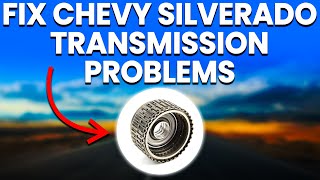
Shop the Parts Behind P1843
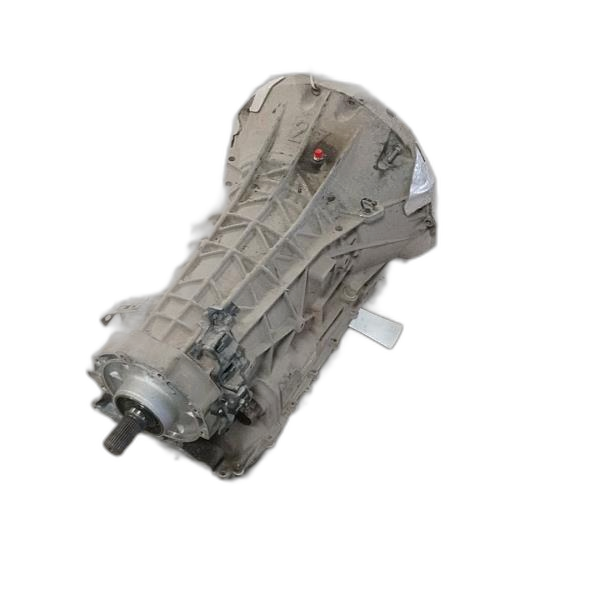
Below are the parts most often responsible for code P1843, ranked by how frequently each one is the actual culprit (per the diagnosis above). Tap any to see what we have for your vehicle.


The information in this article is provided for general reference and educational purposes only. Vehicle specifications, procedures, and part compatibility can vary by production date, trim level, and region. Always consult your vehicle's factory service manual and verify part numbers before purchasing or performing repairs. Safety-critical components such as airbags, seat belts, and braking systems should be installed by a qualified professional.
- 🧭 Diagnostic Flowchart
- 🎬 Helpful Videos
- 🛍️ Shop This Part
- What Does P1843 Mean?
- Can I Drive With P1843?
- Common Causes
- Symptoms
- Common Fixes & Costs
- Used vs. New Parts: Buying Guide
- What Happens If You Wait — Timeline
- Cost of Not Fixing It
- Diagnosis Steps
- When This Code Triggers (Freeze-Frame Conditions)
- Related Codes
- Climate & Environmental Factors
- How to Talk to a Mechanic About This Code
- Where to Take It: Dealer vs Independent vs Chain
- When to Walk Away From the Repair
- What Scan Tool You Need for This Code
- How to Clear the Code After You Fix It
- Will This Fail Emissions / State Inspection?
- Most Commonly Affected Vehicles
- Manufacturer-Specific Notes
- Real Owner Stories
- 2001 GMC Savana 1500 (5.7L) with 4L60E - The Parts Cannon
- 2006 Chevy Silverado 1500 with 4L60E - Multiple Solenoid Codes
- 2003 Chevy 1500 with 4L60E - Post-Rebuild Failure
- How to Prevent This Code From Triggering
- Frequently Asked Questions
- What is a shift solenoid and what does it do?
- What does 'Circuit High Voltage' actually mean?
- Can a bad battery or ground cause a P1843 code?
- Why does this code have different meanings for different cars?
- What are the most common misdiagnosis pitfalls for P1843?
- Can I fix P1843 myself?
- Will clearing the code fix the problem?
- How much does a shop charge to diagnose a P1843 code?
- Key Takeaways
- 🎟️ Get 5% Off