

OBD-II Code P1844: Transmission System Malfunction
What P1844 means, why it triggers, and how to fix it
- Always look up the manufacturer-specific definition for P1844 first, as it means 'CVT Speed Sensor Failure' on a 2016 Honda but 'Shift Fork Malfunction' on a 2010 Mitsubishi.
- Check your transmission fluid level and condition immediately; contaminated fluid causes over 30% of pressure-related P1844 codes and is the cheapest $150 fix.
- Stop driving if your vehicle enters 'limp mode' (stuck in 3rd or 4th gear), as continuing to drive overheats the transmission and escalates a $300 sensor repair into a $3,000 rebuild.
- Use an advanced OBD-II scanner capable of reading live transmission data (PIDs) to diagnose P1844, as a basic $20 code reader cannot pinpoint the failing solenoid or sensor.
What Does P1844 Mean?
P1844 is a manufacturer-specific code, meaning its definition changes depending on your car's make. It signals that the vehicle's Powertrain or Transmission Control Module (PCM/TCM) detects a fault within the automatic transmission's complex control system. This indicates an issue with a hydraulic pressure switch, a speed sensor, a shift fork, a solenoid, or the wiring that connects them.
Technical definition: The official SAE/ISO definition for P1844 is not standardized and varies significantly by manufacturer. Common definitions include 'Transmission Fluid Pressure Sensor/Switch Circuit Malfunction' (Subaru, Nissan), 'CVT Drive Pulley Speed Sensor Circuit Malfunction' (Honda), 'Shift Fork 3 Malfunction' (Mitsubishi), 'Transmission Transfer Case Differential Lock-Up Feedback Switch Short Circuit To Battery' (Ford, Land Rover), 'Torque Reduction Signal Circuit Desired By TCM' (GM), or 'Grid Position Not Learned' (Suzuki).
Can I Drive With P1844?
Yes, But With Caution. You can drive, but it risks severe damage. The transmission often shifts harshly, gets stuck in one gear (limp mode), or behaves unpredictably. On vehicles like the Land Rover Freelander, limp mode results in very slow acceleration, creating a safety hazard in traffic. On Mitsubishi models with the TC-SST, you lose all odd or even gears. Avoid all but essential short-distance driving and have it inspected immediately to prevent catastrophic transmission damage, which adds thousands to the repair cost.
Common Causes
- Faulty Transmission Speed or Pressure Sensor (Very Common) — Sensors that monitor the transmission's input/output speed or internal fluid pressure fail, sending incorrect data to the computer. This is a primary cause for this code in many modern Honda vehicles with CVTs. 🎬 Watch: Diagnosing Honda CVT input shaft speed sensor circuit faults.
- Faulty Transmission Solenoid(s) (Very Common) — Solenoids manage fluid flow inside the transmission. They stick, fail electronically, or clog with dirty fluid, causing shifting problems. This is a frequent cause across many brands like Subaru and Land Rover.
- Low, Contaminated, or Incorrect Transmission Fluid (Common) — Fluid that is low, old, or dirty causes overheating and prevents solenoids and sensors from working correctly. Using the wrong type of fluid (e.g., standard ATF in a Suzuki AGS system) causes seals to fail and components to jam, triggering this code.
- Wiring Harness or Connector Issues (Common) — Wires and connectors for transmission components become damaged, corroded, or disconnected, interrupting signals. On Land Rover Freelanders, water intrusion into the main transmission connectors causes a short and triggers limp mode.
- Internal Valve Body Contamination or Failure (Common) — Metallic debris or sludge from normal wear accumulates inside the intricate passages of the valve body, causing solenoids or valves to stick. This triggers a pressure-related code and often requires replacing the entire valve body assembly.
- CAN Bus Communication Failure (Less Common) — The problem sometimes lies in the communication network (CAN bus) connecting the vehicle's modules. A fault here causes one module to send erroneous data, leading the TCM to incorrectly set a P1844 code. Mitsubishi service information warns to diagnose the CAN bus first.
- Internal Mechanical Failure (Shift Fork, etc.) (Rare) — For manufacturers like Mitsubishi, P1844 points to a serious internal mechanical issue like a malfunctioning shift fork in the TC-SST transmission, which requires a full rebuild or replacement.
- Faulty Transmission Control Module (TCM) (Rare) — In rare instances, the problem lies within the transmission's computer (TCM) itself. It misinterprets sensor signals or has an internal circuit failure. Consider this only after thoroughly testing all related components and wiring.
Symptoms
- Check Engine Light or Other Warning Lights On — The most common symptom is an illuminated Check Engine Light. On some vehicles, lights like 'AT OIL TEMP' (Subaru), 'Service Required' (Mitsubishi), or traction control lights also flash or turn on.
- Transmission Stuck in 'Limp Mode' — The vehicle gets stuck in a single gear (often 2nd, 3rd, or 4th) to protect the transmission from further damage. The gear indicator on the dash flashes 'F' and '4' on some Land Rover models.
- Erratic or Harsh Shifting — The transmission shifts abruptly, delays shifts, hesitates, or feels like it slips between gears.
- Cruise Control Disabled — The vehicle's computer automatically disables the cruise control system when this transmission fault is detected. This is a very common symptom on Subaru models.
- Blinking Gear Position Indicator — On certain Honda models, the 'D' on the shift position indicator blinks to signal a transmission fault, even if the main Check Engine Light does not illuminate.
- Vehicle Stuck in Odd or Even Gears Only — On Mitsubishi models with the TC-SST dual-clutch transmission, this code causes the vehicle to lose access to all odd-numbered gears (1, 3, 5, R) or all even-numbered gears (2, 4, 6), a definitive sign of a shift fork malfunction.
Diagnostic Flowchart
Tap your situation to follow the diagnostic path that matches what you're seeing on this code.
Common Fixes & Costs
- Transmission Fluid and Filter Change — Parts: $75-$200, Labor: $150-$300, ~1.5 hr book time (DIY)
- Replace a Faulty Transmission Speed or Pressure Sensor — Parts: $50-$200, Labor: $150-$400, ~2 hr book time (Intermediate)
- Replace a Faulty Transmission Solenoid — Parts: $30-$120, Labor: $200-$500, ~2.5 hr book time (Intermediate)
- Replace Transmission Valve Body — Parts: $600-$2500, Labor: $400-$1000, ~4.5 hr book time (Professional)
- Perform AGS 'Gear Learning' Procedure (Suzuki) — Parts: $0, Labor: $100-$200, ~1 hr book time (Professional)
- Replace TC-SST Transaxle Assembly (Mitsubishi) — Parts: $3000-$7000, Labor: $1000-$2000, ~10 hr book time (Professional)
DIY vs Professional
- Transmission Fluid and Filter Change 🟢 Beginner
Tools: Socket set, drain pan, funnel, torque wrench, new fluid and filter/gasket. - Replace External Sensor (e.g., Honda CVT Speed Sensor) 🟢 Beginner
Tools: Socket set, torque wrench, rags. - Replace Internal Solenoid or Sensor 🟢 Beginner
Tools: Full socket set, torque wrench, drain pan, new fluid, possibly snap-ring pliers. - Replace Valve Body 🟢 Beginner
Tools: Extensive toolset, torque wrench (in-lbs), vehicle lift, service manual, advanced scan tool for relearn procedure.
Used vs. New Parts: Buying Guide
When a used part is worth it: For external electronic components like speed sensors on high-mileage vehicles (>150k miles), a used OEM part is a cost-effective choice. For major mechanical assemblies like a complete transmission or valve body, a used part from a low-mileage, accident-damaged vehicle is a viable option on a tight budget.
Donor-vehicle mileage cap: roughly under 80000 miles for the part to have meaningful remaining life.
Donor quality checklist:
- Verify the part number matches exactly; manufacturer revisions are common.
- For valve bodies or solenoids, avoid parts from vehicles scrapped due to transmission failure.
- Ask for the VIN of the donor car to verify mileage and check its history.
- Inspect electrical connectors for corrosion or damage.
Decision logic:
- If The part is an internal electronic component like a solenoid or pressure switch → Buy new OEM or high-quality aftermarket. The labor to access these parts is high, making the risk of a used part failing not worth the savings.
- If The vehicle is a Subaru with a valve body issue → Buy a new OEM valve body. Aftermarket and rebuilt units fail prematurely, leading to repeat repairs.
- If The part is a complete transmission assembly for a high-value vehicle (e.g., Mitsubishi TC-SST) → A low-mileage used unit from a reputable salvage yard with a good warranty saves thousands over a new or rebuilt unit.
Warranty tradeoff: Used parts typically come with a 30-90 day warranty covering the part only, not labor. New aftermarket parts usually offer a 1-3 year warranty. New OEM parts offer a 1-year warranty, which extends if installed by a dealer.
Worst-case if a used part fails: $500-1500. If a used internal part like a solenoid or valve body fails, you pay for the labor to remove and replace it all over again, plus the cost of another part.
What Happens If You Wait — Timeline
- 0-1 month: Code is set, Check Engine Light is on. Cruise control disables. Shifting issues are intermittent or only noticeable when the transmission is very hot or cold. (MPG impact: 0-5%% · Added cost: $0)
- 1-4 months: Shift quality noticeably degrades with more frequent harsh shifts or hesitation. The transmission enters 'limp mode' intermittently. Fluid begins to darken and smell slightly burnt from increased clutch slippage and heat. (MPG impact: 5-10%% · Added cost: $50-$150 in wasted fuel. The original problem (e.g., a sensor) is still fixable, but secondary damage is beginning.)
- 4-8 months: Limp mode becomes a regular occurrence. The transmission fluid is now dark brown or black and contaminated with clutch material and fine metal shavings. This abrasive fluid begins to damage seals and clog the valve body and solenoids. (MPG impact: 10-20%% · Added cost: $800-$2,500. A simple sensor/solenoid fix is no longer enough. The valve body sustains damage and requires replacement.)
- 8+ months: Catastrophic failure. Widespread contamination and overheating destroy internal components like clutch packs and the torque converter. The transmission slips severely, makes grinding noises, or fails to engage altogether, leaving you stranded. (MPG impact: 20-30%+% · Added cost: $3,500-$8,000+. The transmission is beyond a simple repair and requires a complete rebuild or replacement.)
Cost of Not Fixing It
- 0-1 month: Erratic shifting, entry into 'limp mode,' and a 5-15% drop in fuel economy are common. The vehicle becomes unreliable and unsafe in traffic. (Added cost: Negligible, besides fuel costs.)
- 1-6 months: Continued driving with incorrect fluid pressure or slipping components generates excessive heat and friction. This contaminates the fluid with clutch material and metal shavings, leading to valve body and solenoid damage. (Added cost: $800-$2,500. A problem that starts as a $500 solenoid fix escalates into a $2,000 valve body replacement.)
- 6+ months: Catastrophic internal transmission failure. Widespread contamination and overheating destroy clutch packs, gears, and the torque converter. The transmission requires a complete rebuild or replacement. (Added cost: $3,500-$8,000+. Ignoring initial warning signs leads to complete failure, costing thousands more than the initial repair.)
Diagnosis Steps
- Research Manufacturer-Specific Definition
Search online for 'P1844 [Your Car's Make, Model, and Year]' to find the exact definition. This is the most important step and dictates all further diagnostics. A P1844 on a Honda is a completely different problem than on a Ford.
Tools: Internet Access (Intermediate) - Read All Fault Codes from All Modules
Use a professional-grade OBD-II scanner to read codes from the Engine (ECU), Transmission (TCM), and ABS modules. The presence of other codes (like P0700, P184B, or U-series codes) is critical for diagnosis.
Tools: Advanced OBD-II Scanner (Beginner) - Check Transmission Fluid Level and Condition
With the vehicle on level ground, follow the manufacturer's procedure to check the transmission fluid. It should be at the 'Full' mark and look clean (usually red). If it's brown, black, smells burnt, or contains metallic particles, it indicates a problem. If it looks like a strawberry milkshake, water has contaminated the fluid.
Tools: Rag, Gloves (Beginner) - Inspect Wiring and Connectors
Visually inspect the wiring harness going to the transmission, especially the main connector and any external sensors. Look for chafed wires, corrosion in pins, or loose connections. On Land Rovers, pay close attention to the two large round connectors for signs of water damage.
Tools: Flashlight, Mirror (Intermediate) - Pro Tip (Subaru): Test Pressure Sensor Voltage & Live Data
For Subaru models with a pressure sensor fault, use a scan tool and multimeter. With the ignition ON and engine OFF, back-probe the sensor's power supply wire at the TCM. Per TSB 16-102-16, the voltage should be between 4.6V and 5.4V. Then, using the scan tool's live data function during a drive, monitor the Secondary Oil Pressure. It should fluctuate normally between 0.5 MPa and 1.5 MPa. A fixed, out-of-range, or zero reading indicates a sensor or circuit failure.
Tools: Advanced OBD-II Scanner, Multimeter, Back-probe Kit, Service Manual (Advanced) - Pro Tip (Honda): Perform Dynamic Drive Pulley Sensor Test
For 2016+ Hondas, this code requires a specific dynamic test. Raise the vehicle on a lift, disable Vehicle Stability Assist (VSA), and run the car in Drive at a speed over 19 mph (30 km/h) for at least 5 seconds. Monitor the 'Drive Pulley Rotation' PID on the Honda Diagnostic System (HDS) or a compatible advanced scanner. The scanner must display 'Forward'. If it displays any other value or is blank, the failure is confirmed.
Tools: Vehicle Lift, Advanced OBD-II Scanner (HDS or equivalent) (Advanced) - Pro Tip (Mitsubishi): Analyze Shift Fork Position Data
On TC-SST models, P1844 is a logic fault, not an electrical one you can test with a multimeter. Use a scan tool to monitor live data. The TCM sets the code if it detects abnormal conditions, such as the shift fork 3 position sensor reading more than 1.8mm of movement from neutral when it should be stationary, or if it detects movement from the wrong shift fork during a commanded shift. This confirms an internal mechanical or hydraulic control problem.
Tools: Advanced OBD-II Scanner (Advanced) - Pro Tip: Test Component Electrical Resistance
For accessible sensors or solenoids (like on Ford or Land Rover), disconnect the component and set a multimeter to Ohms (Ω). Touch the probes to the component's electrical terminals. Compare the reading to the manufacturer's specification in the service manual (e.g., a solenoid might be 10-20 Ohms). A reading of 'OL' (Open Loop/infinite resistance) or near zero Ohms (short circuit) indicates a failed component that needs replacement.
Tools: Multimeter, Service Manual (Advanced)
When This Code Triggers (Freeze-Frame Conditions)
- Engine Coolant Temp: 175-210°F (80-99°C) (The code typically sets when the vehicle is fully warmed up, as the TCM needs stable operating temperatures to run its diagnostic monitors.)
- RPM: 1500-3000 RPM (Often triggered during steady-state cruising or light acceleration, when the TCM expects predictable sensor readings and shift behavior.)
- Vehicle Speed: 30-60 mph (48-97 km/h) (Highway or city cruising speeds are common trigger conditions, as the TCM actively monitors gear ratios, sensor speeds, and solenoid performance.)
- Gear Position: In Drive (D), often during a shift (The fault is frequently detected during a gear shift event or while holding a specific gear where a pressure or speed discrepancy is noticed by the control module.)
Related Codes
- P0700 — This is a general transmission fault code that simply means the Transmission Control Module (TCM) has stored a fault. It frequently appears alongside P1844 to signal a transmission-related issue. P0700 is the messenger; P1844 is the specific message. You diagnose the P1844 code.
- P0761 — On Subaru vehicles, the diagnostic procedure for P1844 often directly refers to the procedure for P0761 (Shift Solenoid 'C' Performance/Stuck Off). This indicates that the pressure circuit fault (P1844) is a symptom caused by the malfunctioning solenoid (P0761). To fix P1844, you must diagnose and repair the root cause identified by P0761.
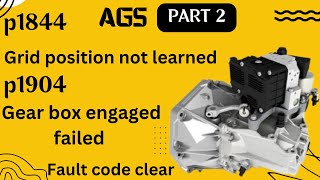
- P1904 — On Suzuki models with Auto Gear Shift (AGS), P1904 ('Gear box engaged failed') often appears with P1844 ('Grid position not learned'). P1844 means the system needs calibration, while P1904 indicates a mechanical failure to engage a gear. If a 'Gear Learning' procedure fails, it points to the mechanical fault of P1904.
- P184B — On Mitsubishi models with the TC-SST transmission, P184B ('Shift Fork 4 Malfunction') is a companion code to P1844 ('Shift Fork 3 Malfunction'). The presence of either code points to a severe internal transmission failure related to the shift fork assemblies.
Climate & Environmental Factors
- High Humidity / Water Exposure: Water is a primary enemy of transmission electronics. On the Land Rover Freelander, P1844 is notoriously caused by water seeping into the two large, round transmission electrical connectors, causing a short circuit. On any vehicle, driving through deep water forces moisture past seals or into transmission vents, contaminating fluid and causing widespread failure. High humidity in coastal or tropical climates accelerates corrosion on any exposed connector pins.
- Extreme Cold: Very low temperatures increase the viscosity (thickness) of transmission fluid. This causes intermittent hydraulic pressure issues during cold starts, potentially triggering pressure sensor-related faults like P1844 on a Subaru. The issue often disappears once the vehicle warms up. While not a direct cause of failure, it unmasks a borderline sensor or solenoid.
How to Talk to a Mechanic About This Code
Say this: "I have a [Your Year, Make, Model] with a P1844 trouble code and the check engine light is on. I understand this is a manufacturer-specific code and on my vehicle it often points to [mention specific cause, e.g., 'the CVT drive pulley speed sensor' for a Honda, or a 'pressure switch circuit fault' for a Subaru]. I want to schedule a diagnostic appointment to confirm the exact cause. Can you tell me your diagnostic fee and if you have experience with this specific issue on my type of vehicle?"
This signals to the shop that you are an informed consumer. It directs them to the likely cause, discourages them from starting with a generic or unnecessarily expensive diagnosis (like a 'shotgun' parts replacement), and establishes that you expect a specific, evidence-based diagnosis rather than a guess.
Avoid saying:
- 'My transmission is acting weird, can you fix it?' (Too vague, invites a wide range of expensive suggestions).
- 'Just do whatever it takes to fix the light.' (Gives the shop a blank check).
- 'I got a quote over the phone for $X...' (Phone estimates for complex codes are a red flag and often a bait-and-switch tactic).
Questions to ask before authorizing the repair:
- What specific tests did you perform to confirm this diagnosis? (e.g., 'Did you monitor the live data from the sensor?' or 'Did you test the wiring harness?')
- Can you show me the failed part or a printout of the diagnostic data?
- Is this repair a guaranteed fix for the P1844 code, or are there other potential causes?
- What is the warranty on the parts and labor for this specific repair?
Where to Take It: Dealer vs Independent vs Chain
- Dealer:
Recommended for in-warranty vehicles or when a specific manufacturer software procedure is the only known fix.
Best for: Vehicles still under powertrain warranty., Complex, make-specific issues requiring proprietary software, such as a Suzuki AGS 'Gear Learning' or a Subaru TCM software update., Known pattern failures on newer cars (e.g., a 2018 Honda CR-V with a P1844).
Downsides: Highest labor rates, often 1.5-2x more than independent shops., May default to replacing a large assembly (like a valve body or entire transmission) when a smaller component repair is possible. (Typical cost: +50% vs. baseline) - Independent Shop:
Best overall value, but ONLY if you choose a reputable shop that specializes in transmissions. A general-purpose indie shop may misdiagnose this code.
Best for: Out-of-warranty vehicles where the cause is a known, accessible part like an external sensor or solenoid., Finding a shop that specializes in transmissions or a specific make (e.g., a Subaru-specialist indie shop).
Downsides: Quality and expertise vary widely; a general mechanic may lack the specific tools or knowledge for P1844., May not have access to the latest manufacturer TSBs or proprietary scan tool functions. (Typical cost: +0% vs. baseline) - Chain Shop:
AVOID. This code requires specialized diagnostic expertise that is beyond the scope of most chain repair shops.
Best for: Simple, unrelated maintenance like oil changes or tire rotations.
Downsides: Technicians are typically not transmission specialists and lack the in-depth diagnostic training for complex codes like P1844., Business model often encourages upselling and may lead to misdiagnosis or unnecessary repairs. (Typical cost: -10% vs. baseline)
When to Walk Away From the Repair
If the estimated repair cost exceeds 40% of the car's private-party market value, you should seriously consider selling the vehicle as-is or trading it in rather than repairing it.
- Car worth $3000, fix is $2500: Walk away. The repair cost is over 80% of the car's value. It is not a sound financial decision.
- Car worth $9000, fix is $1500: Fix it. The repair cost is only about 17% of the car's value, which is well below the threshold.
- Car worth $20000, fix is $8000: Borderline. This applies to cases like a Mitsubishi TC-SST failure. At 40% of the vehicle's value, the decision depends heavily on the car's overall condition and your intent to keep it long-term.
What Scan Tool You Need for This Code
Minimum: A scanner that can read manufacturer-specific transmission codes and display live data PIDs (Parameter IDs) for the transmission.
A basic $20 code reader only shows a generic 'P0700' or the 'P1844' code without the specific definition for your car. It cannot view the live sensor data (like pressures or speeds) needed to determine if a sensor, solenoid, or wiring is the actual problem, leading you to guess and waste money on parts.
Budget: BlueDriver Pro or similar advanced Bluetooth scanner (~$100) — Reads manufacturer-specific transmission codes, defines them for your vehicle, and can graph live data from transmission sensors. This is often enough to diagnose faulty external sensors on makes like Honda or check pressure readings on a Subaru.
Mid-range: Foxwell NT510 Elite or Innova 5610 (~$150) — Includes all budget-pick features plus bidirectional controls and special functions. This level of tool is required to perform critical procedures like a Suzuki AGS 'Gear Learning' or trigger a Subaru 'Dynamic Check Mode'. It can command solenoids and other actuators to test their function directly.
Professional: Autel MaxiCOM MK808 / MK808S or XTOOL D7S (~$450-600) — Offers full bidirectional control, all OEM-level diagnostic functions, and can perform advanced 'relearn' or 'adaptation' procedures required after replacing a valve body or entire transmission. This is essential for ensuring the new components work correctly with the vehicle's computer.
Rent vs buy: For P1844, buying is often necessary. The free tool rental programs at auto parts stores typically offer basic code readers that lack the ability to read manufacturer-specific live data or perform the special functions required for an accurate diagnosis. If you plan to do more than just read the code, you will need to buy at least a mid-range scanner.
How to Clear the Code After You Fix It
- Use a compatible OBD-II scan tool to erase the Diagnostic Trouble Codes (DTCs) from all modules (TCM, ECU).
- Perform a complete drive cycle to allow the onboard diagnostic monitors to run and confirm the repair.
- For fixes like a valve body or transmission replacement, perform a specific 'relearn' or 'calibration' procedure using a professional scan tool.
Drive cycle (~20 minutes): A general drive cycle involves: 1) Cold start (sit for 8+ hours). 2) Idle for 2-3 minutes. 3) Drive at a steady speed of 55 mph for 5-10 minutes. 4) Perform 5-10 minutes of stop-and-go city driving. 5) Allow the vehicle to coast down from speed without braking where safe. The goal is to experience a variety of driving conditions to run all readiness monitors.
Readiness monitors affected: Transmission Components, Comprehensive Component Monitor, Catalyst (CAT) Monitor, Evaporative System (EVAP) Monitor
Before emissions retest: drive at least 50 miles to fully set monitors.
Watch out for:
- Disconnecting the battery clears the code but resets all readiness monitors to 'Not Ready', causing an automatic emissions test failure.
- The code returns immediately if the underlying mechanical or electrical fault is not properly repaired.
- Some manufacturer-specific drive cycles are very precise and difficult to complete in normal traffic.
Will This Fail Emissions / State Inspection?
Yes — this code typically fails an OBD-II emissions inspection.
- California: An illuminated Check Engine Light causes an automatic smog check failure. After repairs, complete a full drive cycle to set all readiness monitors before a re-test is possible.
- New York: The NYS vehicle safety inspection includes an OBD-II emissions test. A P1844 code causes the vehicle to fail this inspection.
- Texas: In counties requiring emissions testing, an active P1844 code and illuminated Check Engine Light result in an automatic failure. Clearing the code without fixing the issue also fails the test due to 'Not Ready' monitors.
Most Commonly Affected Vehicles
- Subaru Outback, Legacy, Crosstrek (2005-2014) — Relates to the 'Transmission Fluid Pressure Sensor/Switch E Circuit,' sometimes requiring a valve body replacement. For 2010-2014 models, TSB 16-90-12R suggests a fluid flush and a specific 'Dynamic Check Mode' resolves the issue without parts replacement. The 2012-2014 models had updated TCM logic released to address this code.
- Honda Civic, CR-V, Accord (2016-2023+) — This code typically points to a failure in the 'CVT Drive Pulley Speed Sensor' circuit. The sensor is located externally on the transmission end cover. The 2016-2021 Civic is a commonly affected model. Newer 2022+ models also experience this issue.
- Land Rover Freelander (2002-2005) — On these models, it means 'Transmission Transfer Case Differential Lock-Up Feedback Switch Short Circuit To Battery.' It is frequently caused by water getting into the two large, round transmission electrical connectors, which puts the vehicle into 'F4' limp mode.
- Mitsubishi Lancer Evolution, Ralliart (with TC-SST) (2008-2015) — The code translates to 'Shift Fork 3 Malfunction' in the twin-clutch automated manual transmission. This is a severe internal fault that requires transaxle assembly replacement and is not a simple fix.
- Suzuki Celerio, Wagon R, Swift (with AGS) (2014-2022) — Indicates 'Grid position not learned' in the Auto Gear Shift (AGS) system. This often appears with P1904 ('Gear box engaged failed') and requires a 'Gear Learning' procedure with a scan tool. The fault is caused by using incorrect fluid or a failing actuator.
- Ford F-150, Explorer, Ranger (4WD) (1997-2010) — On many 4WD models, the code translates to 'Transmission Transfer Case Differential Lock-Up Feedback Switch Short Circuit To Battery,' pointing to an issue in the transfer case control system, often the feedback switch or its wiring.
- Chevrolet / GMC Silverado, Sierra, various models (2007-2014) — Commonly defined as 'Torque Reduction Signal Circuit Desired By TCM.' The TCM requests the engine computer to reduce torque during a shift to prevent damage. A fault in this communication circuit triggers the code, often leading to performance issues without a direct transmission hardware failure.
- Nissan Titan, Navara, NP300 (2010-2018) — On 4WD trucks like the Titan, this code points to the 'Differential Lock Solenoid Relay.' On others like the Navara, it relates to the transmission fluid pressure sensor circuit, similar to the Subaru definition.
Manufacturer-Specific Notes
- Honda: The code points specifically to the CVT Drive Pulley Speed Sensor. Diagnosis requires a specific dynamic test: drive over 19 mph for 5+ seconds and verify the 'Drive Pulley Rotation' PID reads 'Forward' on a scan tool. No recalls are active, but it's a widely documented failure on 2016+ models.
- Subaru: Often defined as 'Transmission Fluid Pressure Sensor/Switch E Circuit.' It is often intermittent and disables cruise control. TSB `16-90-12R` suggests a fluid flush and 'Dynamic Check Mode' fixes it. For deeper diagnosis, TSB `16-102-16` provides specs: check for 4.6-5.4V at the sensor and 0.5-1.5 MPa of pressure in live data.
- Land Rover: The definition is 'Transmission Transfer Case Differential Lock-Up Feedback Switch Short Circuit To Battery.' It is notoriously triggered by water getting into the main transmission electrical connectors, causing a short that puts the vehicle into a very slow 'F4' limp mode.
- Mitsubishi: On models with the TC-SST dual-clutch transmission, this code indicates a 'Shift Fork 3 Malfunction.' The root cause is often a magnet detaching from the steel shift fork inside the transmission. Repair requires a specialized jig to re-glue the magnet in the exact position (within 0.5mm tolerance), making a full transaxle replacement the common fix. No specific warranty extension is noted, but the issue is well-known in the enthusiast community.
- GM (Chevrolet/GMC): The code means 'Torque Reduction Signal Circuit Desired By TCM.' This is a communication issue where the transmission asks the engine to cut power for a smooth shift, but the signal is lost or invalid. It causes sluggish performance and does not indicate a physical part failure in the transmission itself.
Real Owner Stories
2014 Subaru Outback at 125K miles - Intermittent Fault
Check Engine Light, flashing 'AT OIL TEMP' light, and disabled cruise control appeared during long highway trips, especially in summer. No noticeable shifting problems. The code sometimes cleared on its own after a day or two.
Outcome: The owner opted to first try a less expensive fix based on TSB 16-90-12R. Another shop performed a full fluid flush and a TCM software update/relearn. The code did not return.
Lesson: For intermittent pressure-related codes on Subarus with no other symptoms, investigate cheaper software and fluid-based solutions described in Technical Service Bulletins before agreeing to an expensive valve body replacement.
2003 Land Rover Freelander - Sudden Limp Mode
After driving through some standing water, the vehicle suddenly went into 'F4' limp mode. The dash displayed flashing 'F' and '4', the temp gauge maxed out, and multiple warning lights (EML, TC, ABS) came on. The vehicle was stuck in 4th gear with very slow acceleration.
Outcome: The connectors were found to be wet. After being disconnected, thoroughly dried, and re-secured with a cable tie to ensure a tight fit, the fault cleared and normal operation was restored.
Lesson: On a Land Rover Freelander, P1844 accompanied by 'F4' limp mode is very frequently caused by water intrusion into the main transmission connectors. Always check and dry these connectors before assuming a catastrophic internal failure.
2014 Mitsubishi Lancer Evolution MR at 60K miles - Severe Internal Failure
The 'Transmission Service Required' light came on. The car lost all odd gears (1, 3, 5, R) and skipped from 2nd to 4th gear. Restarting the car sometimes temporarily restored function.
Outcome: The entire TC-SST transmission was replaced under warranty for a $500 deductible. A full rebuild from a specialist shop was quoted at over $7,000. The underlying cause was the common shift fork magnet detachment issue.
Lesson: On a Mitsubishi with the TC-SST, P1844 (Shift Fork 3 Malfunction) is a serious internal fault. It is not a sensor or fluid issue. Repair almost always requires a full transmission replacement or a highly specialized rebuild, which is very expensive without a warranty.
2017 Honda CR-V - Repeat Failures & Misdiagnosis
A 2015 CR-V had its transmission, valve body, and TCM replaced. A few months later, shifting issues returned with a P1844 code. A shop replaced the speed sensor and valve body again. Less than a month later, the same problems and code reappeared.
Outcome: The issue was ongoing. The underlying problem was likely not the parts being replaced but something else in the system, such as a wiring harness issue, a faulty ground, or a problem with the replacement transmission itself causing repeat failures of the electronic components.
Lesson: If a specific part (like a sensor or valve body) fails repeatedly in a short time, the root cause is likely not the part itself. Suspect a persistent electrical issue (bad ground, short in harness) or a larger mechanical problem causing the electronic parts to fail. Simply replacing the same part again is unlikely to be a permanent fix.
How to Prevent This Code From Triggering
- Perform regular transmission fluid changes with OEM-spec fluid. (Every 30,000-60,000 miles, or more often for heavy use (towing, city driving).) — Clean, fresh fluid maintains correct hydraulic pressure, prevents overheating, and keeps contaminants from clogging narrow passages in solenoids and the valve body.
- Inspect and clean external transmission wiring and connectors. (Annually, especially in regions with high humidity or road salt.) — Prevents corrosion and water intrusion that causes short circuits, a primary trigger for P1844 on vehicles like the Land Rover Freelander.
- Install an auxiliary transmission fluid cooler. (Once, for vehicles used for towing or in hot climates.) — Excessive heat accelerates fluid breakdown and causes electronic components like solenoids and sensors to fail prematurely.
- Allow the vehicle to warm up for a minute before driving aggressively. (Daily habit, especially in cold weather.) — Allows the transmission fluid to thin out and reach operating temperature, ensuring proper lubrication and preventing the hydraulic pressure spikes that stress seals and solenoids on a cold transmission.
- For high-mileage vehicles (>100k miles), consider cleaning accessible solenoid screens. (During a transmission pan-drop fluid service.) — Fine metallic debris clogs the small filter screens on solenoids, restricting fluid flow and causing shifting issues. Cleaning them restores function without requiring part replacement.
Frequently Asked Questions
Can I fix a P1844 code myself?
A DIY fluid change fixes low or dirty fluid issues. However, replacing internal solenoids or sensors requires advanced mechanical skills and specialized tools. Stop DIY diagnosis and tow the vehicle to a transmission specialist if you lack a bidirectional scanner or must open the transmission case.
How much does it cost to fix P1844?
Costs vary widely by manufacturer: a fluid change is $150-$350, while a sensor or solenoid replacement runs $300-$700. Valve body replacements range from $1,200 to $2,500. Severe internal failures, like a Mitsubishi shift fork, require transaxle replacements exceeding $8,000.
What is the most common misdiagnosis for P1844?
The most common mistake is not researching the manufacturer-specific definition. A technician might replace a valve body on a Subaru for a pressure code when a fluid flush would have worked, or replace a TCM on a Honda when the external speed sensor was the actual, cheaper culprit.
Can using the wrong transmission fluid cause P1844?
Absolutely. This is a known issue on Suzuki AGS systems. Using standard automatic transmission fluid (ATF) instead of the specified AMT actuator fluid causes internal seals to swell and pistons to jam, leading to a P1844 'Grid position not learned' code.
What is 'limp mode' and why does P1844 cause it?
Limp mode is a self-preservation feature where the TCM forces the transmission into a single, 'safe' gear (like 3rd or 4th) when a serious fault is detected. This prevents further damage but results in poor acceleration and high RPMs at speed. P1844 triggers it because the TCM can no longer trust the data it receives to shift safely.
Will clearing the code make it go away?
You can clear the code with an OBD-II scanner, but it almost certainly returns as soon as the computer runs its diagnostic checks again. Clearing the code only erases the message, not the underlying mechanical or electrical problem.
Why did my cruise control stop working with this code?
Many vehicles are programmed to disable non-essential features like cruise control when a significant powertrain fault is detected. This is a safety precaution to ensure the driver has full control of the vehicle when the transmission is not behaving predictably. This is very common on Subarus with a P1844 code.
Key Takeaways
- Always look up the manufacturer-specific definition for P1844 first, as it means 'CVT Speed Sensor Failure' on a 2016 Honda but 'Shift Fork Malfunction' on a 2010 Mitsubishi.
- Check your transmission fluid level and condition immediately; contaminated fluid causes over 30% of pressure-related P1844 codes and is the cheapest $150 fix.
- Stop driving if your vehicle enters 'limp mode' (stuck in 3rd or 4th gear), as continuing to drive overheats the transmission and escalates a $300 sensor repair into a $3,000 rebuild.
- Use an advanced OBD-II scanner capable of reading live transmission data (PIDs) to diagnose P1844, as a basic $20 code reader cannot pinpoint the failing solenoid or sensor.
Helpful Videos
Shop the Parts Behind P1844
Below are the parts most often responsible for code P1844, ranked by how frequently each one is the actual culprit (per the diagnosis above). Tap any to see what we have for your vehicle.


The information in this article is provided for general reference and educational purposes only. Vehicle specifications, procedures, and part compatibility can vary by production date, trim level, and region. Always consult your vehicle's factory service manual and verify part numbers before purchasing or performing repairs. Safety-critical components such as airbags, seat belts, and braking systems should be installed by a qualified professional.
- 🧭 Diagnostic Flowchart
- 🎬 Helpful Videos
- 🛍️ Shop This Part
- What Does P1844 Mean?
- Can I Drive With P1844?
- Common Causes
- Symptoms
- Common Fixes & Costs
- DIY vs Professional
- Used vs. New Parts: Buying Guide
- What Happens If You Wait — Timeline
- Cost of Not Fixing It
- Diagnosis Steps
- When This Code Triggers (Freeze-Frame Conditions)
- Related Codes
- Climate & Environmental Factors
- How to Talk to a Mechanic About This Code
- Where to Take It: Dealer vs Independent vs Chain
- When to Walk Away From the Repair
- What Scan Tool You Need for This Code
- How to Clear the Code After You Fix It
- Will This Fail Emissions / State Inspection?
- Most Commonly Affected Vehicles
- Manufacturer-Specific Notes
- Real Owner Stories
- 2014 Subaru Outback at 125K miles - Intermittent Fault
- 2003 Land Rover Freelander - Sudden Limp Mode
- 2014 Mitsubishi Lancer Evolution MR at 60K miles - Severe Internal Failure
- 2017 Honda CR-V - Repeat Failures & Misdiagnosis
- How to Prevent This Code From Triggering
- Frequently Asked Questions
- Can I fix a P1844 code myself?
- How much does it cost to fix P1844?
- What is the most common misdiagnosis for P1844?
- Can using the wrong transmission fluid cause P1844?
- What is 'limp mode' and why does P1844 cause it?
- Will clearing the code make it go away?
- Why did my cruise control stop working with this code?
- Key Takeaways
- 🎟️ Get 5% Off