

OBD-II Code P1867: Transfer Case Contact Plate General Circuit Failure
The Ultimate 2026 Guide to What P1867 Means, Why It Triggers, and How to Fix It for Good
- On Ford and Nissan trucks, Code P1867 indicates a failed transfer case shift motor, corroded internal contacts, or a broken wiring harness.
- Driving with P1867 is safe in 2WD, but driving on dry pavement while stuck in 4WD causes severe drivetrain binding and up to $8,000 in transfer case damage.
- Always inspect the wiring harness for chafing near the firewall and transmission before spending $250+ on a replacement shift motor.
- When installing a new shift motor, apply a bead of RTV silicone sealant around the housing seam to prevent the moisture intrusion that caused the original failure.
What Does P1867 Mean?

The trouble code P1867 means the Powertrain Control Module (PCM) detects a problem with the electronic system that shifts your truck into four-wheel drive. Specifically, it lacks the correct signal from the position sensor (contact plate) inside the transfer case shift motor. The computer shuts the system down as a safety measure because it cannot verify if the truck is in 2WD, 4WD High, or 4WD Low.
Technical definition: Transmission Transfer Case Contact Plate General Circuit Failure. The Powertrain Control Module (PCM) or Transfer Case Control Module (TCCM) lost the position signal from the transfer case shift motor's internal contact plates, which report the current gear (e.g., 2H, 4H, 4L).
Can I Drive With P1867?
Yes, But With Caution. You can still drive your vehicle, but your four-wheel drive (4WD) system is inoperative and stuck in its last known position (usually 2WD). Driving in 2WD with this code active poses no immediate mechanical risk. However, if the system fails and gets stuck in 4WD High or 4WD Low, you must avoid driving on dry, high-traction pavement. Doing so causes severe drivetrain binding, leading to catastrophic failure of the transfer case, driveshafts, or axles, with repair costs ranging from $2,000 to $8,000.
Common Causes

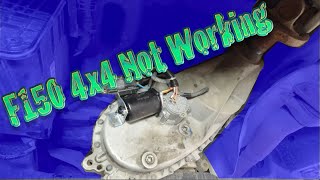
- Failed Transfer Case Shift Motor & Corroded Contacts (Very Common) — This is the most frequent cause. The electric motor that physically shifts the transfer case fails internally. Moisture and road grime penetrate the sensor housing, corroding the metal contact plates and preventing a clear electrical signal from reaching the computer.
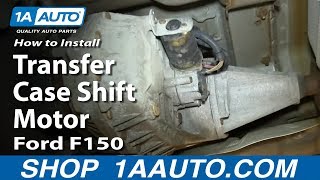
- Chafed or Broken Wiring Harness (Very Common) — On Ford trucks, the shift motor wiring harness rubs against the transmission case, frame, or firewall, eventually breaking the wires. This is frequently misdiagnosed as a bad shift motor. 🎬 Watch: How to inspect the wiring harness for common faults. The main electrical connector at the motor is also a major weak point for dirt and water intrusion.
- Incorrectly Installed or Indexed Motor (Less Common) — A new shift motor comes pre-indexed for 2WD. If the transfer case itself is not in 2WD during installation, the motor shaft will not align. The motor installs only one way; if it doesn't line up, the transfer case must be manually shifted to match.
- Installation of a Faulty Used Part (Less Common) — Using a salvage yard shift motor is risky. These used parts often have pre-existing internal corrosion, hidden damage, or broken connector pins, causing the P1867 code to return immediately after installation.
- Stuck Transfer Case Mechanism (Rare) — If the 4WD system remains unused for over a year, the mechanical linkage inside the transfer case seizes. When the shift motor tries to move the gear, the physical resistance burns out the motor or triggers a fault code.
- Faulty Transfer Case Control Module (TCCM) (Rare) — A separate computer module controls the 4WD system on many vehicles. This module occasionally fails, sending false error codes or failing to operate the shift motor correctly.
Symptoms

- Four-Wheel Drive (4WD) Does Not Engage or Disengage — The vehicle refuses to shift into or out of 4H or 4L when you turn the selector switch. It remains stuck in its last known position (usually 2WD).
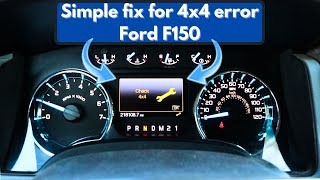
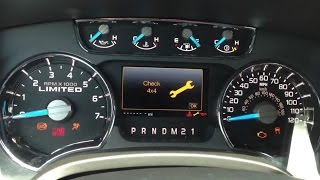
- 'Check 4x4' or 'Service 4WD' Light is On — A warning message appears on the instrument cluster, indicating a hard fault in the 4WD system.
- Clicking or Whirring Noise From Underneath the Vehicle — You hear a distinct clicking or a short electrical whirring sound from the transfer case area when attempting to engage 4WD. This is the shift motor trying to move but failing.
- 4WD Selector Switch Lights Flash, Then Go Out — The lights on the 4WD switch flash for several seconds and then turn off or revert to the previous mode, indicating a failed shift attempt.
- Vehicle Stuck in Neutral (No-Drive Condition) — In severe failure cases, the transfer case gets stuck in a neutral position between gears. The engine revs, but no power reaches the wheels, rendering the vehicle immobile.
Diagnostic Flowchart
Tap your situation to follow the diagnostic path that matches what you're seeing on this code.
Common Fixes & Costs
- Replace Transfer Case Shift Motor — Parts: $140-$350, Labor: $100-$175, ~1 hr book time (Intermediate)
- Repair Damaged Wiring or Connector — Parts: $10-$50, Labor: $150-$300, ~2.5 hr book time (Intermediate)
- Clean Shift Motor Contact Plate — Parts: $5-$15, Labor: $0, ~0.8 hr book time (DIY)
- Replace Transfer Case Control Module (TCCM) — Parts: $150-$400, Labor: $50-$100, ~0.5 hr book time (Professional)
Used vs. New Parts: Buying Guide

When a used part is worth it: A used transfer case shift motor from a low-mileage, non-corroded donor vehicle is a budget-friendly option for an older, high-mileage truck where a new OEM part exceeds 10% of the vehicle's value.
Donor-vehicle mileage cap: roughly under 70000 miles for the part to have meaningful remaining life.
Donor quality checklist:
- Verify the donor vehicle was not from a rust-belt state to avoid pre-existing corrosion.
- Inspect the electrical connector pins on the used part for any signs of green or white corrosion or physical damage.
- Match the part number exactly.
Decision logic:
- If The cost of a new OEM or quality aftermarket motor is less than $250 → Buy new. The warranty and assurance of a non-corroded part are worth the price difference.
- If Vehicle is over 10 years old or has >150,000 miles and budget is the primary concern → A used part is an acceptable risk, but understand it has a significantly shorter lifespan.
- If You live in a high-humidity or rust-belt area → Buy a new part, and seal it with RTV silicone upon installation to prevent moisture failure.
Warranty tradeoff: Used parts from salvage yards typically offer a 30-90 day warranty covering only the part. New aftermarket parts come with a 1-year to limited lifetime warranty.
Worst-case if a used part fails: $250-$450 if a used part fails after installation, requiring repeat labor and a second part purchase.
What Happens If You Wait — Timeline
- Immediate: Code P1867 is set, the 'Check 4x4' light illuminates, and the 4WD system becomes inoperative. The vehicle is stuck in its last known mode, usually 2WD. (MPG impact: 0%% · Added cost: $0)
- First time 4WD is needed: The vehicle gets stuck in snow or mud where 4WD is necessary for mobility. This represents a safety risk, but no mechanical damage has occurred yet. (MPG impact: 0%% · Added cost: $150-$300 (Potential towing bill))
- Weeks to Months (If failure occurs while in 4WD): If the motor fails and locks the transfer case into 4H or 4L, driving on dry pavement causes drivetrain wind-up (binding). You feel the vehicle jerk or hop during turns. (MPG impact: 5-10% (Due to drivetrain drag)% · Added cost: $250-$500 (Premature wear on tires, U-joints, and axle shafts))
- Several miles of driving while bound: Catastrophic failure from continued driving on pavement in 4WD. The immense stress destroys the transfer case chain, gears, or housing, and damages the differentials. (MPG impact: N/A (Vehicle likely disabled)% · Added cost: $2,000 - $8,000 (Cost to replace transfer case and drivetrain components))
Cost of Not Fixing It
- Immediate: Loss of four-wheel drive capability. The vehicle is stuck in its last known position (usually 2WD), creating a mobility issue in snow or off-road conditions. (Added cost: $0)
- Weeks to Months: If the transfer case fails while stuck in 4WD High or Low, driving on dry pavement causes severe drivetrain binding. This destroys the transfer case, driveshafts, U-joints, or differentials. (Added cost: $2,000 - $8,000)
- Long-Term: Ignoring the warning light masks other severe issues in the 4WD system. Continued moisture intrusion damages nearby electrical components. (Added cost: $500+)
Diagnosis Steps

- Read the Trouble Codes
Confirm P1867 is the active code. Check for related codes like P1861 (Plate D Short) or C1728 (Unable to Transition) to pinpoint the specific electrical fault.
Tools: OBD-II Scanner (Beginner) - Inspect the Wiring and Connector
Visually inspect the wiring harness going to the transfer case shift motor. Focus on the area between the engine and transmission and near the firewall, as this is a known chafe point. Unplug the connector and check for green/white corrosion or broken pins.
Tools: Flashlight, Mirror (Beginner) - Test the Shift Motor (Tap Test)
While the motor is on the vehicle, have a helper try to engage 4WD while you lightly tap the motor housing with a hammer. If this jars a stuck motor or corroded contact into working temporarily, the motor assembly requires replacement.
Tools: Hammer or rubber mallet (Intermediate) - Pro Tip: Live Data Scan Tool Analysis
Monitor the PIDs for the transfer case contact plates (Plate A, B, C, D). Command a shift from 2H to 4H. The states must change from 'Open' to 'Closed' in sequence. If the values do not change, you have a bad position sensor or broken wiring.
Tools: Advanced OBD-II Scanner with Live Data (Advanced) - Pro Tip: Harness 'Wiggle Test'
If a new motor was installed and the code returned, a broken wire is highly likely. Connect a multimeter to the harness connector at the motor end and the TCCM end. Wiggle and pull the wiring harness along its length. A reading that cuts in and out indicates an intermittent break.
Tools: Multimeter with long leads (Advanced) - Advanced Test: Quantitative Resistance Values (Ford TSB 06-9-8)
With the transfer case in 2H and the motor unplugged, measure resistance between the signal return (Pin 10) and the contact plate pins on the motor. Pins 5, 9, and 13 must show continuity to Pin 10 (<5 ohms). Pin 1 to Pin 10 must show an open circuit (>10,000 ohms). Readings outside these values confirm a failed internal contact plate.
Tools: Digital Multimeter, TSB 06-9-8 Documentation (Advanced) - Pro Tip: Bench Test the Motor
Apply 12V power and ground to the two large pins in the connector that operate the motor itself (not the sensor pins). The motor must spin. Reversing polarity spins it in the opposite direction. If it doesn't move, the motor is dead.
Tools: 12V Power Source, Jumper Wires (Intermediate)
When This Code Triggers (Freeze-Frame Conditions)
- Vehicle Speed: 0 mph (The code sets during the initial key-on self-test before the vehicle moves.)
- Engine RPM: 0 or Idle RPM (Fault is detected when the control module attempts to verify the transfer case position at startup.)
- Commanded Gear: 2H to 4H (or vice-versa) (The fault triggers when a shift is commanded via the dash switch, but the position sensor feedback does not change.)
- Module Voltage: 11.5-12.5V (The fault occurs if system voltage is low, but most often sets when voltage is normal and the motor or wiring is the true cause.)
Related Codes
- P1861 — 'Transfer Case Contact Plate D Short Circuit To Ground' is more specific than P1867. Focus diagnosis on testing for a direct short between the 'Plate D' circuit wire and the vehicle's ground.
- C1728 — 'Transfer Case Unable to Transition' often appears with P1867. C1728 is the general alarm ('failed to shift') and P1867 is the specific reason ('lost position signal').
- P1820 — 'Transfer Case Low to High Shift Relay Circuit Failure' points specifically to the control relay that sends power to the shift motor, rather than the motor's position sensor circuits.
- U0418 — 'Invalid Data Received from Brake System Control Module' indicates a communication network problem. Diagnose CAN bus issues or ABS module problems before focusing solely on the transfer case motor.
Climate & Environmental Factors
- High Humidity & Water Exposure: Moisture penetrates the shift motor housing, causing corrosion on the internal contact plates and electrical pins. This leads to signal loss and triggers the P1867 code.
- Cold Climates & Road Salt: Vehicles in the 'Rust Belt' see a higher failure rate. Salt accelerates corrosion of the motor housing, electrical connector pins, and nearby wiring.
How to Talk to a Mechanic About This Code
Say this: "I have a 'Check 4x4' light and a P1867 code on my Ford. I'd like an estimate to diagnose whether it's the transfer case shift motor or a wiring harness issue, which I know are the two most common causes."
This signals to the shop that you are an informed consumer. It focuses their diagnostic time on the most likely failures, preventing them from suggesting a full transfer case teardown. It establishes a clear, limited scope for the initial diagnosis.
Avoid saying:
- 'My 4x4 is broken, can you fix it?'
- 'My 'Check 4x4' light is on, can you look at it?'
- 'Just do whatever it takes to fix it.'
Questions to ask before authorizing the repair:
- Did you test the wiring harness for continuity and check for the common chafe points before condemning the motor?
- If the motor needs replacement, what is the price difference between an OEM Motorcraft part and a quality aftermarket one like Dorman?
- Does your labor estimate include applying RTV sealant to the new motor to prevent water intrusion?
- Can you show me the broken wire or the failed motor before I authorize the replacement?
Where to Take It: Dealer vs Independent vs Chain
- Dealer:
Recommended only if the vehicle is under warranty or as a last resort for complex module programming. For a simple motor or wiring fault, a dealer is the most expensive option.
Best for: Vehicles still under a bumper-to-bumper warranty., Complex electrical issues where an independent shop has already ruled out the motor and wiring, pointing to a possible TCCM failure requiring programming.
Downsides: Highest labor rates, typically 1.5-2x more than an independent shop., Unwilling to install customer-supplied or aftermarket parts to save costs. (Typical cost: +50% vs. baseline) - Independent Shop:
Best fit. This is a bread-and-butter repair for most competent independent shops. They diagnose it efficiently and offer cost-saving options like aftermarket parts.
Best for: Out-of-warranty vehicles where cost is a factor., Diagnosing and repairing common, well-documented issues like P1867.
Downsides: Shop quality and diagnostic skill vary. Look for shops with good reviews that specialize in domestic trucks or electrical systems. (Typical cost: +0% vs. baseline) - Chain Shop:
Use with caution. Acceptable if you are certain the shift motor is bad and just need it replaced, but avoid them for initial diagnosis.
Best for: Simple parts replacement when you have already diagnosed the problem yourself.
Downsides: Technicians lack the specific diagnostic experience to differentiate a wiring fault from a motor fault., High pressure to upsell leads to replacing parts that aren't broken. (Typical cost: -10% vs. baseline)
When to Walk Away From the Repair
If the estimated repair cost exceeds 40-50% of the car's private-party value, seriously consider selling the vehicle as-is or trading it in.
- Car worth $4000, fix is $600: Fix it. The repair cost is low compared to the vehicle's value and restores a key feature, preserving its resale value.
- Car worth $12000, fix is $600: Fix it. This is a minor and expected repair for a vehicle of this value.
- Car worth $2500, fix is $600: Borderline, but likely worth fixing. A non-functional 4x4 system reduces the private-party sale value by at least the cost of the repair, especially in regions with winter weather.
What Scan Tool You Need for This Code
Minimum: A scanner that reads manufacturer-specific codes (not just generic P0 codes) and views live data PIDs from the Transfer Case Control Module (TCCM).
A basic $20 code reader only confirms the P1867 code. It cannot show you the live data for the transfer case contact plates (Plate A, B, C, D), which is essential for determining if the motor's sensor is sending a signal or if the wiring is dead.
Budget: FORScan with ELM327/OBDLink Adapter (~$40) — This is the best DIY option for Ford owners. It provides dealer-level access, allowing you to view all Ford-specific PIDs for the transfer case contact plates and clear codes from the TCCM.
Mid-range: Foxwell NT510 Elite for Ford (~$180) — A dedicated handheld scanner offering full-system diagnostics for Ford vehicles. It reads live data from the transfer case module and performs bidirectional tests without needing a laptop.
Professional: Autel MaxiCOM MK808S (~$450) — A professional-grade tablet scanner providing full bidirectional control and extensive live data graphing. It commands the transfer case to shift while you watch the live data response, making diagnosis definitive.
Rent vs buy: A free rental scanner from an auto parts store reads and clears the code, but it will NOT have the Ford-specific live data needed to properly diagnose P1867. You must buy a capable scanner.
How to Clear the Code After You Fix It
- Reconnect battery if disconnected.
- Use an OBD-II scan tool to clear fault codes from the PCM/TCCM.
- Perform a key cycle (off then on).
- With the transmission in Neutral, cycle the 4WD selector switch through all modes (2H, 4H, 4L) to confirm function and calibrate the module.
Drive cycle (~20 minutes): A specific drive cycle is not required for P1867, as it is a body/powertrain code, not an emissions monitor code. After clearing the code, a short test drive including several stops and starts is sufficient.
Readiness monitors affected: None directly. This code does not affect emissions readiness monitors.
Watch out for:
- Disconnecting the battery does not clear the code from the Transfer Case Control Module (TCCM). You must use a scan tool.
- The 'Check 4x4' light remains on until the code is cleared with a proper scan tool, even if the mechanical repair is successful.
Will This Fail Emissions / State Inspection?
No — by itself this code doesn't fail OBD inspection (but it can keep readiness monitors from setting, which causes a separate fail).
- California: This code does not cause an emissions test failure, as it is not related to a monitored smog component. The 'Check 4x4' light does not fail a smog test.
- New York: Since P1867 typically only illuminates the 'Service 4WD' light, it will not cause an emissions test failure unless the primary 'Check Engine' MIL is also on for a different reason.
- Texas: The 'Service 4WD' light alone will not fail the test. P1867 does not affect emissions readiness monitors.
Most Commonly Affected Vehicles
- Ford F-150 (2004-2020) — Extremely common on models with Electronic-Shift-On-the-Fly (ESOF). The shift motor fails from moisture, and the wiring harness chafes.
- Ford Expedition (2003-2017) — Shares the same 4WD system and shift motor design as the F-150, making it equally susceptible.
- Ford F-250 / F-350 Super Duty (2005-2019) — These heavy-duty trucks use a similar ESOF system, and the shift motor is a well-documented failure point.
- Lincoln Navigator (2003-2017) — Uses the same underlying 4WD hardware as the Expedition and suffers from identical shift motor failures.
- Ford Ranger (2001-2011) — Older Ranger models with electronic 4WD experience this code due to shift motor or wiring problems.
- Nissan Patrol (Y62), Armada, Titan (2008-2020) — Code P1867 indicates a failure of the transfer case shift motor or control system, presenting with symptoms identical to the Ford issue.
- Volkswagen Jetta, Tiguan, Golf, Passat (2016-Present) — CRITICAL NOTE: On modern VWs, P1867 indicates a 'Missing Message from Steering Wheel Control Module'. This is a CAN bus communication error, NOT a 4WD fault.
- Chevrolet / GMC Silverado, Sierra, Tahoe, Suburban (1999-2013) — CRITICAL NOTE: On GM vehicles, P1867 means 'Torque Converter Clutch (TCC) PWM Solenoid Control Circuit High Voltage'. This is a transmission code, not a 4WD fault.
Manufacturer-Specific Notes
- Ford: This code is overwhelmingly a Ford-specific problem related to the electronic shift motor. Ford issued TSB 06-9-8 detailing specific resistance checks. Do not confuse a P1867 fault with a grinding noise from the front wheels; that noise is the IWE (Integrated Wheel End) system losing vacuum, a separate issue.
- GM (Chevrolet/GMC): On GM vehicles, P1867 means 'Torque Converter Clutch (TCC) PWM Solenoid Control Circuit High Voltage'. It is a transmission code, and diagnosis must focus on the transmission valve body and solenoids.
- Volkswagen / Audi: On VW and Audi vehicles, P1867 indicates a data bus communication problem, specifically a 'Missing Message from Steering Control Module (J527)'. It has nothing to do with the drivetrain or 4WD system.
- Nissan: Nissan trucks use a similar electronic shift-on-the-fly system to Ford. P1867 points to a failed transfer case shift motor or a related wiring issue, identical to an F-150.
Real Owner Stories
2010 F-150 with 'Check 4x4' light
The 'Check 4x4' warning appeared on the dash, and the truck would not shift into 4WD. A scan revealed code P1867.
What they tried:
- Removed the three T15 screws holding the sensor cap on the back of the shift motor.
- Manually rotated the internal contact plate back and forth several times to clean corrosion off the contacts.
Outcome: After reassembling the sensor and clearing the codes, the 'Check 4x4' light went out and all 4WD functions were restored. The total cost was $0.
Lesson: Before spending $250+ on a new motor, try the 'free fix' of cleaning the internal contacts. It is a very common failure point and resolves the issue without replacing the entire motor assembly.
2013 F-150 FX4, P1867 code returned after replacing motor
'Check 4x4' light was on. The owner replaced the transfer case shift motor, but the P1867 code immediately returned.
What they tried:
- Replaced the transfer case shift motor (no change).
- Replaced the 4WD vacuum solenoid (no change).
- Took it to a shop where they diagnosed a broken wire in the harness.
Outcome: A broken wire was found in the harness where it passes through the firewall down to the transfer case motor. Repairing this single wire resolved the issue.
Lesson: If a new shift motor does not fix P1867, the problem is almost certainly in the wiring harness. Thoroughly inspect the harness for chafing near the firewall and transmission before buying parts.
2005 F-150 FX4 with P1867 and a grinding noise
Vehicle had an intermittent grinding noise from the front end and eventually set a P1867 code.
What they tried:
- Replaced the IWE solenoid and check valves.
- Replaced the transfer case shift motor.
- Diagnosed failed IWE actuators (hubs).
Outcome: The root cause of the grinding was the IWE vacuum system, not the P1867 code. The P1867 fault was a secondary, unrelated failure of the shift motor.
Lesson: A grinding noise from the front wheels on a Ford truck is almost always the IWE system failing due to a vacuum leak. Diagnose the IWEs separately. Don't assume P1867 is the cause of the grinding.
2009 F-150 with P1867 after buying a used motor
Owner got code P1867 and replaced the shift motor with a cheaper one from a salvage yard.
What they tried:
- Installed the used shift motor, but the 4x4 still didn't work.
- Bench-tested the used motor with a 12V battery and confirmed the motor itself would spin.
Outcome: The issue persisted, leaving the owner unsure if the fault was the used motor's sensor, a broken wire, or another issue.
Lesson: Buying a used shift motor is a gamble. Even if the motor spins on a bench test, the delicate internal position sensor or the connector pins are often faulty, leading you to chase the same problem twice.
How to Prevent This Code From Triggering
- Exercise the 4WD System Monthly (Once per month) — Engaging 4H for a few miles on a low-traction surface lubricates the internal gears and moves the shift motor, preventing mechanical seizure from lack of use.
- Seal the New Shift Motor with RTV Sealant (During replacement) — Applying a thin bead of oil-resistant RTV silicone sealant around the motor's housing seam creates a waterproof barrier, dramatically extending the part's life.
- Inspect and Secure the Wiring Harness (During oil changes) — The shift motor harness rubs against the frame or transmission, leading to chafed wires. Visually inspect the harness and use zip ties to secure it away from sharp metal edges.
- Clean Electrical Connectors Proactively (Every 2-3 years, especially in rust-belt regions) — Road salt causes corrosion on the transfer case motor connector pins. Periodically disconnecting, cleaning, and applying dielectric grease prevents this electrical failure point.
Frequently Asked Questions
I replaced the shift motor, but the P1867 code came back. What now?
If a new motor doesn't fix the issue, the cause is almost certainly a broken wire in the harness between the control module and the motor. Carefully inspect the wiring where it passes between the engine and transmission or through the firewall. These are known chafe points where wires rub through and break.
Is the grinding noise from my front wheels related to the P1867 code?
Indirectly, but they are separate problems requiring separate fixes. The grinding noise on Ford trucks is typically caused by the front wheel hubs (IWEs) partially engaging due to a loss of vacuum. Diagnose the IWE system separately, as a P1867 fault indicates a transfer case issue, not a hub vacuum leak.
Do I need to program a new transfer case shift motor?
No programming is needed for the motor itself, but a calibration procedure is often necessary. Put the transmission in neutral and cycle the 4WD selector switch through all modes to help the system relearn positions. If the 'Service 4WD' light remains on, use a scan tool to clear the stored fault codes from the TCCM.
Why does my truck make a clicking noise when I try to shift to 4WD?
That clicking or whirring sound is the transfer case shift motor attempting to engage but failing to complete the shift. The internal electric motor runs briefly before the control module detects the position hasn't changed and cuts power. This is a classic symptom of a failing motor or a bad position sensor.
Is replacing the transfer case shift motor a hard job to do myself?
For most people with basic mechanical skills, it is a highly manageable DIY job taking 1-2 hours. The motor is usually held on by three or four 10mm bolts and is easily accessible on the back of the transfer case. The most critical step is applying RTV sealant to the new motor to prevent future moisture damage.
A mechanic quoted me over $800 for the repair. Is that too high?
A straightforward shift motor replacement at an independent shop typically costs between $240 and $525. However, if the problem is a difficult-to-find broken wire, diagnostic time adds several hours of labor, pushing the bill toward $800. Always ask for a detailed breakdown of the quote to see how much is parts versus diagnostic labor.
What is the difference between an 'engineering number' and a 'service number' on a Ford part?
The number stamped directly on your old motor is the engineering number used for factory manufacturing. The number on the box of a new Ford part is the service number used for sales and repairs. They will not match, but they refer to the exact same part, so verify fitment using your vehicle's year and model.
Can a bad battery cause 4x4 problems and trigger a P1867 code?
Yes. The 4WD system relies on multiple electronic modules that require a stable 12V supply to communicate correctly. A weak battery causes low voltage, leading to communication errors and triggering codes like P1867 even if the shift motor is perfectly fine.
Key Takeaways
- On Ford and Nissan trucks, Code P1867 indicates a failed transfer case shift motor, corroded internal contacts, or a broken wiring harness.
- Driving with P1867 is safe in 2WD, but driving on dry pavement while stuck in 4WD causes severe drivetrain binding and up to $8,000 in transfer case damage.
- Always inspect the wiring harness for chafing near the firewall and transmission before spending $250+ on a replacement shift motor.
- When installing a new shift motor, apply a bead of RTV silicone sealant around the housing seam to prevent the moisture intrusion that caused the original failure.
Helpful Videos

Shop the Parts Behind P1867
Below are the parts most often responsible for code P1867, ranked by how frequently each one is the actual culprit (per the diagnosis above). Tap any to see what we have for your vehicle.


The information in this article is provided for general reference and educational purposes only. Vehicle specifications, procedures, and part compatibility can vary by production date, trim level, and region. Always consult your vehicle's factory service manual and verify part numbers before purchasing or performing repairs. Safety-critical components such as airbags, seat belts, and braking systems should be installed by a qualified professional.
- 🧭 Diagnostic Flowchart
- 🎬 Helpful Videos
- 🛍️ Shop This Part
- What Does P1867 Mean?
- Can I Drive With P1867?
- Common Causes
- Symptoms
- Common Fixes & Costs
- Used vs. New Parts: Buying Guide
- What Happens If You Wait — Timeline
- Cost of Not Fixing It
- Diagnosis Steps
- When This Code Triggers (Freeze-Frame Conditions)
- Related Codes
- Climate & Environmental Factors
- How to Talk to a Mechanic About This Code
- Where to Take It: Dealer vs Independent vs Chain
- When to Walk Away From the Repair
- What Scan Tool You Need for This Code
- How to Clear the Code After You Fix It
- Will This Fail Emissions / State Inspection?
- Most Commonly Affected Vehicles
- Manufacturer-Specific Notes
- Real Owner Stories
- 2010 F-150 with 'Check 4x4' light
- 2013 F-150 FX4, P1867 code returned after replacing motor
- 2005 F-150 FX4 with P1867 and a grinding noise
- 2009 F-150 with P1867 after buying a used motor
- How to Prevent This Code From Triggering
- Frequently Asked Questions
- I replaced the shift motor, but the P1867 code came back. What now?
- Is the grinding noise from my front wheels related to the P1867 code?
- Do I need to program a new transfer case shift motor?
- Why does my truck make a clicking noise when I try to shift to 4WD?
- Is replacing the transfer case shift motor a hard job to do myself?
- A mechanic quoted me over $800 for the repair. Is that too high?
- What is the difference between an 'engineering number' and a 'service number' on a Ford part?
- Can a bad battery cause 4x4 problems and trigger a P1867 code?
- Key Takeaways
- 🎟️ Get 5% Off