

OBD-II Code P1868: Transmission Fluid Life / 4WD Indicator Circuit Fault
What P1868 means, why it triggers, and how to fix it
What Does P1868 Mean?
Code P1868 has two distinct definitions. On General Motors (GM) vehicles, the transmission fluid has reached 0% lifespan and requires replacement. On Ford vehicles, the four-wheel-drive (4WD) dashboard indicator light circuit has failed.
Technical definition: The official OBD-II definition for P1868 is manufacturer-specific. For General Motors, it is 'Transmission Fluid Life'. For Ford, it is 'Transmission Automatic 4-Wheel Drive Indicator (Lamp) Circuit Failure'.
Can I Drive With P1868?
Yes, But With Caution. You can drive, but limit mileage. On GM vehicles, driving over 1,000 miles with degraded fluid increases friction and heat, warping components and escalating a $300 maintenance service into a $2,500+ repair. On Ford vehicles, the 4WD system fails to indicate engagement, posing a safety risk in hazardous conditions.
Common Causes
- Transmission Fluid Life Monitor at 0% (GM) (Very Common) — The Transmission Control Module (TCM) calculates fluid life based on mileage, temperature, and load. When the algorithm hits 0%, it triggers P1868 as a mandatory maintenance reminder.
- Failure to Reset the Fluid Life Monitor (GM) (Very Common) — If a technician changes the transmission fluid but fails to perform a software reset using a bi-directional scan tool, the TCM retains the old 0% data and keeps the code active.
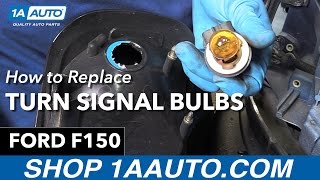
- Faulty or Burnt-Out 4WD Indicator Bulb (Ford) (Common) — The control module detects an open circuit from a burnt-out dashboard bulb that indicates 4WD engagement, immediately setting the code.
- Degraded or Burnt Transmission Fluid (GM) (Common) — Fluid loses its lubricating and cooling properties over time. Increased friction and overheating accelerate the fluid life calculation, triggering the code prematurely.
- Damaged 4WD Indicator Wiring (Ford) (Less Common) — Corroded or loose wiring behind the instrument cluster or at the transfer case control module breaks the indicator lamp circuit.
- Worn TCC Regulator Valve Bore (GM) (Less Common) — Wear inside the valve body causes fluid leakage and torque converter clutch (TCC) slippage. This generates excess heat, rapidly degrading the fluid and triggering P1868 alongside P1870.
- Faulty Torque Converter Clutch (TCC) Solenoid (GM) (Rare) — A failing TCC solenoid causes erratic lock-up behavior, shearing the fluid and generating heat that forces the fluid life monitor to 0%.
Symptoms
- Check Engine Light On — The primary and often only symptom, especially for the GM fluid life reminder.
- 4WD Indicator Light Inoperative (Ford) — The dashboard light (e.g., '4x4', 'AWD') fails to illuminate when the system engages.
- Harsh or Delayed Shifting (GM) — Degraded fluid causes rough gear engagements and noticeable shift delays.
- Transmission Slipping or Shuddering (GM) — Severe fluid degradation causes RPM flares between gears or a rumble-strip shudder during light acceleration.
- Transmission Fluid Life at 0% (scan-tool only — no driver-felt sign) — An advanced scan tool reading the 'Transmission Fluid Life' PID shows 0%.
Common Fixes & Costs
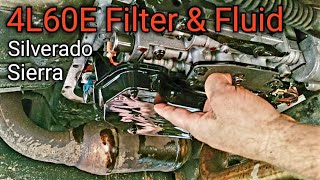
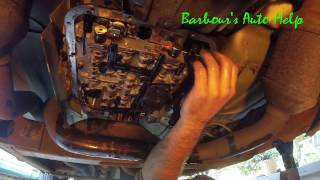
- Transmission Fluid and Filter Change (GM) 🎬 Watch: Step-by-step Silverado transmission fluid and filter change guide. — Parts: $80-$150, Labor: $150-$300, ~1.5 hr book time (Intermediate)
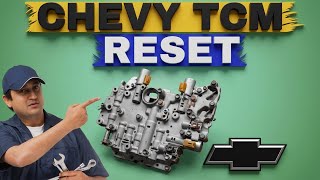
- Reset Transmission Fluid Life Monitor (GM) — Parts: $0, Labor: $50-$150, ~0.5 hr book time (Professional)
- Replace Instrument Cluster Bulb (Ford) 🎬 Watch: How to access and replace Ford instrument cluster bulbs. — Parts: $5-$20, Labor: $150-$350, ~2.0 hr book time (Intermediate)
- Repair Wiring Harness — Parts: $20-$50, Labor: $150-$400, ~2.0 hr book time (Professional)
- Replace TCC Solenoid (GM) — Parts: $40-$90, Labor: $250-$500, ~2.5 hr book time (Advanced)
DIY vs Professional
- Transmission Fluid and Filter Change 🟢 Beginner
Tools: Socket set, torque wrench, large drain pan, fluid pump, safety glasses. - Reset Transmission Fluid Life Monitor 🟢 Beginner
Tools: Bi-directional OBD-II scan tool with manufacturer-specific software. - Replace Instrument Cluster Bulb (Ford) 🟢 Beginner
Tools: Trim removal tools, 7mm socket set, Torx drivers. - Replace TCC Solenoid (GM) 🟢 Beginner
Tools: Fluid change tools, snap ring pliers, pick set.
Used vs. New Parts: Buying Guide
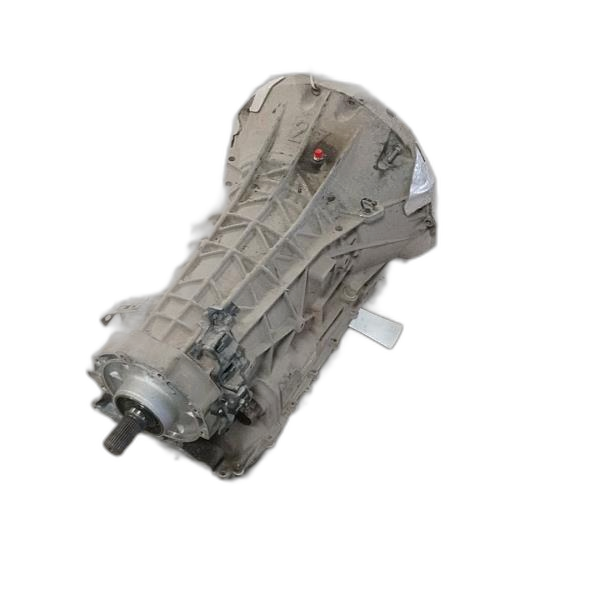
When a used part is worth it: A used transmission is only necessary if ignoring P1868 leads to catastrophic failure. It makes sense for vehicles over 15 years old where a $3,000 rebuild exceeds the car's value.
Donor-vehicle mileage cap: roughly under 100000 miles for the part to have meaningful remaining life.
Donor quality checklist:
- Pull the dipstick on the donor unit; fluid must be red, not black or burnt.
- Match part numbers and model years exactly (e.g., a 1995 4L60E will not work in a 1996+ truck).
- Avoid transmissions from vehicles with heavy front-end collision damage.
Decision logic:
- If Vehicle is less than 10 years old → Purchase a remanufactured transmission with a 3-year warranty.
- If Vehicle is over 15 years old and budget is tight → Source a used transmission from a low-mileage donor.
Warranty tradeoff: Used transmissions offer 30-90 day part-only warranties, leaving you liable for repeat labor if it fails. Remanufactured units offer 1-3 year warranties covering parts and labor.
Worst-case if a used part fails: $1,500-$2,500 to pay for a second installation and source another unit.
What Happens If You Wait — Timeline
- 0-1 month: Code P1868 appears (GM). The fluid life monitor hits 0%. The fluid is due for service but is not yet causing mechanical symptoms. (MPG impact: 0-2%% · Added cost: $0)
- 1-6 months: Fluid viscosity degrades. Increased friction generates excess heat, causing occasional harsh shifts or a light shudder during TCC lockup. (MPG impact: 2-5%% · Added cost: $50-$150 in accelerated clutch wear.)
- 6-12 months: Sustained high temperatures harden seals and glaze clutch packs. The TCC regulator valve bore wears, causing slippage and setting code P1870. (MPG impact: 5-10%% · Added cost: $500-$1,500 for valve body or solenoid repairs.)
- 12+ months: Catastrophic failure. Debris clogs solenoids and passages. The transmission slips badly or stops moving entirely. (MPG impact: 15-25%+% · Added cost: $2,500-$5,000+ for a complete transmission rebuild.)
Cost of Not Fixing It
- 0-3 months: GM vehicles experience increased internal friction and heat, leading to harsher shifting. Ford vehicles lose visual confirmation of 4WD engagement. (Added cost: $0)
- 3-12 months: GM clutch packs glaze and the torque converter clutch slips, warping internal components. A simple fluid change no longer fixes the resulting shudder. (Added cost: $500-$1,500 for valve body repairs.)
- 12+ months: Widespread internal damage from heat and circulating debris destroys the GM transmission, requiring a complete replacement. (Added cost: $2,500-$5,000+)
Diagnosis Steps
- Identify Vehicle Manufacturer
Determine if your vehicle is a GM product (Chevrolet, GMC, Cadillac) or a Ford. This dictates the entire diagnostic path: fluid life (GM) versus indicator circuit (Ford).
Tools: OBD-II Scanner (Beginner) - View Transmission Fluid Life Data (GM)
Use an advanced OBD-II scanner to view the 'Transmission Fluid Life' data PID. A reading of 0% confirms the fluid requires replacement and a software reset.
Tools: Advanced OBD-II Scanner (Intermediate) - Test 4WD Indicator Light (Ford)
Engage the four-wheel-drive system. If the dashboard indicator light fails to illuminate, the bulb or its immediate circuit is the confirmed fault.
Tools: None (Beginner) - Check Transmission Fluid Condition (GM)
Pull the transmission dipstick (if equipped). Fluid should be bright red. Dark brown or black fluid smelling of burnt toast confirms severe degradation requiring immediate service.
Tools: Shop Towel, Gloves (Beginner) - Monitor Transmission Fluid Temperature (GM)
Monitor the Transmission Fluid Temperature (TFT) PID while driving. Temperatures consistently exceeding 200°F cut fluid lifespan in half, pointing to a slipping TCC or clogged cooler as the root cause.
Tools: Advanced OBD-II Scanner (Advanced) - Test 4WD Bulb Circuit (Ford)
Remove the instrument cluster. Probe the 4WD bulb socket with a multimeter set to DC volts while 4WD is engaged. 12V confirms a bad bulb. 0V confirms a wiring fault between the cluster and control module.
Tools: Multimeter, Trim Removal Tools (Advanced) - Inspect Wiring Harness
Visually inspect the main transmission harness (GM) or instrument cluster wiring (Ford) for chafed wires, melted insulation, or corroded connector pins.
Tools: Flashlight (Intermediate) - Test TCC Solenoid Resistance (GM)
If TCC slippage is suspected, disconnect the transmission harness. Measure resistance between the TCC solenoid control pin and ground. A healthy 1996+ 4L60E solenoid reads 10-15 Ohms. Out-of-spec readings require replacement.
Tools: Multimeter, Wiring Diagram (Advanced)
When This Code Triggers (Freeze-Frame Conditions)
- Engine Coolant Temp: 180-200°F (Sets when the vehicle reaches full operating temperature.)
- RPM: 1500-2500 RPM (Triggers during steady-state cruising.)
- Engine Load: 20-50% (Occurs under light to moderate engine load.)
- Vehicle Speed: 45-65 mph (Sets at highway speeds while the TCM monitors TCC lockup and temperature.)
Related Codes
- P0700 — A generic code indicating the Transmission Control Module (TCM) has requested the Check Engine Light to turn on. It always accompanies P1868 on GM vehicles.
- P1870 — Indicates actual mechanical slippage inside the transmission. P1868 is a proactive fluid warning; P1870 means physical damage or wear has already occurred.
- P0868 — Indicates low transmission fluid pressure. On Nissan CVTs, this is the functional equivalent of GM's P1868, signaling severely degraded fluid has clogged internal filters.
- P0741 — Indicates the Torque Converter Clutch is stuck off. Often appears with P1868 when a failing TCC solenoid overheats and destroys the transmission fluid.
Climate & Environmental Factors
- High Ambient Temperature / Towing: Accelerates transmission fluid breakdown. Operating temperatures above 200°F cause fluid to oxidize rapidly, forcing the GM fluid life monitor to reach 0% much faster than in cooler climates.
- High Humidity / Road Salt: Moisture and salt corrode wiring harnesses and instrument cluster circuit boards, directly causing the open circuit that triggers the Ford P1868 code.
How to Clear the Code After You Fix It
- For GM, use a bi-directional scan tool to perform the 'Transmission Oil Life Reset' function.
- For Ford, replace the faulty instrument cluster bulb.
- Use a standard OBD-II scanner to clear P1868 and any generic codes like P0700.
- Perform a 30-minute drive cycle to verify the code does not return.
Drive cycle (~30 minutes): Start the engine cold and idle for 5 minutes. Drive in stop-and-go city traffic for 15 minutes, followed by 10 minutes of steady highway cruising at 55-65 mph.
Readiness monitors affected: Comprehensive Component Monitor
Before emissions retest: drive at least 50 miles to fully set monitors.
Watch out for:
- Clearing the code on a GM vehicle without performing the digital fluid life reset guarantees the code will return immediately.
- Disconnecting the battery resets all emissions monitors to 'Incomplete', causing an automatic failure at state inspections.
Will This Fail Emissions / State Inspection?
Yes — this code typically fails an OBD-II emissions inspection.
- California: An illuminated Check Engine Light is an automatic failure. Clearing the code resets monitors to 'Incomplete', requiring a 50-mile drive cycle before retesting.
- New York: Any active Malfunction Indicator Lamp (MIL) results in an immediate OBD-II inspection failure.
Most Commonly Affected Vehicles
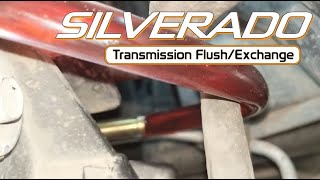
- Chevrolet Silverado 1500 (1999-2013) 🎬 See how to perform a transmission fluid exchange on this model. — Commonly triggers when the 4L60E or 6L80 transmission fluid life monitor reaches 0%.
- Ford F-150 (1997-2008) — Frequently caused by a burnt-out 4WD indicator bulb in the instrument cluster.
- GMC Sierra 1500 (1999-2013) — Shares the exact same fluid life monitor logic and transmission options as the Silverado.
Manufacturer-Specific Notes
- General Motors (Chevrolet, GMC, Cadillac): P1868 is strictly a maintenance reminder. The fluid life monitor must be reset with a scan tool after service. Shudder symptoms on 8-speed models are addressed by TSB 18-NA-355, requiring a specific fluid flush.
- Ford: P1868 is entirely unrelated to transmission fluid. It specifically targets an electrical open circuit in the 4WD dashboard indicator lamp, usually fixed by replacing a $5 bulb.
- Nissan: Nissan CVTs use code P0868 (Low Fluid Pressure) to indicate severe fluid degradation, serving as the functional equivalent to GM's P1868 maintenance warning.
Real Owner Stories
2008 Chevy Silverado with P1868 and no symptoms
A 2008 Silverado triggered a P1868 code with no shifting issues. The owner performed a DIY fluid and filter change, but the code remained.
What they tried:
- Checked fluid level (normal but dark).
- Performed a pan drop and filter change with DEXRON-VI.
- Attempted to clear the code with a basic $20 reader.
Outcome: The code returned immediately because the Transmission Oil Life Monitor required a software reset. The owner paid a local shop $75 for a half-hour of labor to perform the reset with a bi-directional scanner, permanently clearing the code.
Lesson: A fluid change alone does not fix a GM P1868 code. You must perform a digital reset of the fluid life monitor.
2006 Ford F-150 with P1868 and dead 4x4 light
The '4x4' dashboard light failed to illuminate when engaging four-wheel drive, followed shortly by a P1868 Check Engine Light.
What they tried:
- Checked transfer case shift motor and fuses (all functional).
- Removed the instrument cluster to access the rear circuit board.
Outcome: The owner found a burnt-out type-194 bulb behind the 4x4 indicator. Replacing the $5 bulb restored the light and permanently resolved the P1868 code. The hardest part was carefully removing the dashboard trim.
Lesson: On Ford trucks, P1868 is an electrical circuit fault, not a transmission failure. Always check the dashboard bulb first.
How to Prevent This Code From Triggering
- Change transmission fluid and filter regularly (Every 30,000-60,000 miles) — Fresh fluid provides optimal lubrication and heat dissipation, preventing the oxidation that triggers the GM fluid life monitor.
- Install an auxiliary transmission cooler (One-time upgrade for towing vehicles) — Keeps fluid temperatures below 200°F under heavy load, dramatically extending fluid lifespan and preventing premature P1868 codes.
- Use exact manufacturer-specified fluid (Every fluid change) — Incorrect fluid lacks specific friction modifiers, causing TCC shudder, overheating, and rapid fluid degradation.
Frequently Asked Questions
Can I just clear the P1868 code and keep driving?
Clearing the code temporarily turns off the light, but it returns immediately if the root cause remains. On GM vehicles, ignoring it leads to severe transmission damage. On Fords, your 4WD status remains unknown.
Does a P1868 code mean I need a new transmission?
No. It is almost always a routine maintenance reminder for GM vehicles or a minor electrical bulb fault for Ford vehicles. Addressing it promptly prevents the need for a new transmission.
Do I need a full transmission flush or just a drain and fill?
A standard pan drop and filter change resolves this code safely. A pressurized flush on a high-mileage transmission dislodges debris, clogging valve body passages and causing immediate failure.
Why did the P1868 code return after changing my fluid?
The transmission fluid life monitor requires a software reset using a bi-directional OBD-II scan tool. Disconnecting the battery or using a basic code reader fails to reset this specific module.
What is the difference between P1868 and P1870 on a Chevy?
P1868 is a proactive maintenance reminder triggered by a calculated fluid lifespan. P1870 is a reactive fault code triggered when the computer detects actual mechanical slippage inside the transmission.
Can a bad TCC solenoid cause a P1868 code?
Yes. A failing TCC solenoid causes the torque converter to slip, generating excessive heat that rapidly boils and degrades the transmission fluid. The computer detects this accelerated breakdown and triggers P1868 prematurely.
Helpful Videos
Shop the Parts Behind P1868
Below are the parts most often responsible for code P1868, ranked by how frequently each one is the actual culprit (per the diagnosis above). Tap any to see what we have for your vehicle.



The information in this article is provided for general reference and educational purposes only. Vehicle specifications, procedures, and part compatibility can vary by production date, trim level, and region. Always consult your vehicle's factory service manual and verify part numbers before purchasing or performing repairs. Safety-critical components such as airbags, seat belts, and braking systems should be installed by a qualified professional.
- 🎬 Helpful Videos
- 🛍️ Shop This Part
- What Does P1868 Mean?
- Can I Drive With P1868?
- Common Causes
- Symptoms
- Common Fixes & Costs
- DIY vs Professional
- Used vs. New Parts: Buying Guide
- What Happens If You Wait — Timeline
- Cost of Not Fixing It
- Diagnosis Steps
- When This Code Triggers (Freeze-Frame Conditions)
- Related Codes
- Climate & Environmental Factors
- How to Clear the Code After You Fix It
- Will This Fail Emissions / State Inspection?
- Most Commonly Affected Vehicles
- Manufacturer-Specific Notes
- Real Owner Stories
- 2008 Chevy Silverado with P1868 and no symptoms
- 2006 Ford F-150 with P1868 and dead 4x4 light
- How to Prevent This Code From Triggering
- Frequently Asked Questions
- Can I just clear the P1868 code and keep driving?
- Does a P1868 code mean I need a new transmission?
- Do I need a full transmission flush or just a drain and fill?
- Why did the P1868 code return after changing my fluid?
- What is the difference between P1868 and P1870 on a Chevy?
- Can a bad TCC solenoid cause a P1868 code?
- 🎟️ Get 5% Off