

P1870 on 2001-2004 Chevrolet Astro: Transmission Slipping, Causes, and Fixes
On a 2001-2004 Chevy Astro, code P1870 is almost always caused by a worn valve body, leading to a harsh 1-2 shift. The fix is to repair the valve body with an aftermarket kit, which is complex, or replace the valve body assembly. Expect a shop repair to cost between $500 and $1000.
- P1870 on your Astro almost always points to a worn TCC regulator valve bore in the transmission valve body.
- The most obvious symptom is not the slip itself, but the computer's reaction: a very harsh, jarring shift from 1st to 2nd gear.
- Do not immediately assume you need a new transmission. This issue can often be permanently fixed by repairing or replacing only the valve body.
- This is not a simple DIY fix. Repairing the valve body requires special tools, and replacing it is a complex job best left to a professional transmission shop.
- Driving with the issue for an extended period can cause more severe damage, so it's best to get it diagnosed and repaired promptly.
What's Unique About the 2001-2004 Chevrolet ASTRO
The Chevrolet Astro in this year range uses the 4L60-E automatic transmission, which is famously prone to this specific problem. The root cause is typically not a major internal failure, but rather wear in a specific bore within the aluminum valve body that houses the TCC regulator valve. The constant oscillation of the steel valve wears the aluminum bore, creating a hydraulic leak that prevents the torque converter clutch from locking up firmly. This known design issue has led to a robust aftermarket of specialized repair kits (like those from Sonnax and TransGo) to permanently fix the worn valve body bore, often by reaming the bore and installing a new sleeve and valve.
Diagnostic Flowchart
Tap your situation to follow the diagnostic path that matches what you're seeing on this vehicle.
Symptoms You May Notice
- Extremely harsh or banging shift from 1st to 2nd gear.
- Check Engine Light or Service Engine Soon light is on.
- Transmission may be prevented from shifting into 4th gear (Overdrive), especially when hot.
- A feeling of slipping or RPM fluctuation at highway speeds when the torque converter should be locked.
- Higher than normal engine RPM at cruising speeds.
- Condition is often worse or only happens when the transmission is hot (above 180°F / 82°C).
- Replacing only the TCC solenoid without addressing the worn valve body bore. If the bore is worn, a new solenoid will not fix the hydraulic leak and the code will return.
- Rebuilding or replacing the entire transmission when only a valve body repair or replacement was needed. This is a significantly more expensive repair that may not be necessary if the code is caught early and there is no other internal damage.
Most Likely Causes
- Worn TCC Regulator Valve Bore in Valve Body 🔴 High Probability → Shop Transmission Valve Body The 4L60-E valve body is aluminum, and the constant oscillation of the steel TCC regulator valve wears the bore over time, creating a hydraulic leak. This is a well-documented design flaw.
How to confirm: A technician can monitor TCC slip RPM with a professional scan tool. If slip is excessive (over 50-100 RPM) when the TCC is commanded on, and fluid/solenoids are good, a worn bore is the likely cause. A vacuum test on the valve body bore can confirm a leak; a healthy bore should hold at least 15 in-Hg of vacuum. The issue is often more pronounced when the transmission fluid is hot.
Typical fix: Recondition the valve body by reaming the bore and installing an aftermarket sleeve and valve kit (like a Sonnax 77754-04K or TransGo SK-4L60E). Alternatively, replace the entire valve body with a remanufactured, updated unit. 🎬 Watch: How to install a remanufactured valve body in a 4L60E.
Est. part cost: $50-$150 for a repair kit, $200-$400 for a remanufactured valve body. - Faulty TCC Solenoid (PWM) 🟡 Medium Probability → Shop Transmission Valve Body
How to confirm: The solenoid can be tested for correct resistance with a multimeter (should be 10-11 ohms at ~68°F). It can also be commanded on/off with a scan tool to check for an audible click. Sometimes they fail intermittently when hot or fail mechanically (leak) while still testing good electrically.
Typical fix: Replace the TCC Pulse Width Modulated (PWM) solenoid, which is located on the valve body. This is often done as a preventative measure during a valve body repair. The ACDelco part number is 24227792.
Est. part cost: $30-$60 - Low or Contaminated Transmission Fluid ⚪ Low Probability → Shop Transmission Assembly
How to confirm: Check the transmission fluid level and condition with the engine running and transmission warm. If the fluid is dark, smells burnt, or contains metal/clutch material, there is a more serious internal problem.
Typical fix: Perform a transmission fluid and filter change. If the fluid is severely degraded, this is unlikely to fix the P1870 code by itself but is a necessary first step and may reveal evidence of a larger failure.
Est. part cost: $50-$100 for fluid and a filter.
Rare But Worth Checking
- Failing Torque Converter: → Shop Automatic Transmission Torque Converter The internal clutch within the torque converter can fail, or the seals on the turbine shaft can leak, causing slippage. This is a much more involved and expensive repair that requires transmission removal.
- Faulty Internal Wiring Harness: The wiring harness inside the transmission can become brittle and fail, causing intermittent connection to the TCC solenoid. On some models, the TCC solenoid is integrated into the harness assembly.
- Faulty Mass Airflow (MAF) Sensor: Though less common, some owners have reported that a faulty or dirty MAF sensor can cause incorrect calculations for engine load, leading the computer to command incorrect line pressures and trigger harsh shifting similar to the P1870 failsafe mode.
Diagnosis Steps
- Check and verify the transmission fluid level and condition.
- Use a professional scan tool to confirm P1870 is the primary code. Check for other codes like P0894 or P0741.
- Monitor live data with the scan tool. Drive the vehicle to operating temperature (over 180°F is ideal) and observe the 'TCC Slip Speed' data PID when the TCC is commanded 'ON' at a steady cruise. A slip of more than 50-100 RPM indicates a problem.
- If slip is confirmed, drop the transmission pan and inspect for excessive metal shavings or clutch material, which would indicate a severe internal failure.
- If the pan is clean, test the TCC PWM solenoid's resistance with a multimeter. It should read between 10 and 11 ohms at room temperature.
- If the solenoid tests good, the next step is to remove the valve body.
- Carefully inspect the TCC regulator valve bore for wear. A visible ridge or scoring is a definitive sign of the common failure. A vacuum test is a more precise method.
- Based on findings, either replace the TCC solenoid, repair the valve body bore with a reaming kit, or replace the entire valve body assembly.
Parts You'll Likely Need
- TCC Regulator & Isolator Valve Kit — This is the most common fix, as it directly addresses the root cause of the worn valve body bore. Requires special tools to install.
Trusted brands: Sonnax (P/N: 77754-04K), TransGo (P/N: SK-4L60E)
Aftermarket price range: $50-$150 - Remanufactured Valve Body — A complete replacement for those who do not have the tools to ream the original valve body. It's a more direct swap but costs more. Often comes with updated valves pre-installed.
Trusted brands: ACDelco (Reman), Sonnax (Updated)
OEM price range: $300-$500
Aftermarket price range: $200-$400 - TCC Lock-Up Solenoid (PWM)
(OEM #ACDelco 24227792)— Often replaced as a preventative measure while the valve body is out, or if it fails electrical tests.
Trusted brands: ACDelco, Rostra
OEM price range: $40-$70
Aftermarket price range: $25-$50 - Transmission Filter and Pan Gasket Kit — Required for any repair that involves dropping the transmission pan.
Trusted brands: ACDelco, Wix
OEM price range: $30-$50
Aftermarket price range: $15-$30 - 1-2 and 3-4 Shift Solenoids
(OEM #ACDelco 24230298)— While not the direct cause of P1870, these are often replaced preventatively since they are accessible when the pan is dropped and are critical for shifting.
Trusted brands: ACDelco
OEM price range: $20-$40 each
Aftermarket price range: $15-$30 each
Related Codes That Often Appear With This One
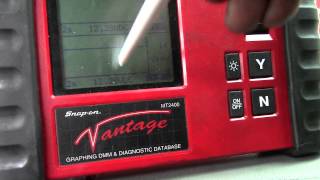
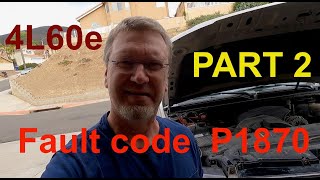
- P0894 — P0894 is also defined as 'Transmission Component Slipping'. They are often set together as they both relate to the same detected slip condition. 🎬 Watch: Understanding the P1870 code and how it affects your transmission. Official GM TSBs for this issue list both codes together. [⭐ MANUFACTURER TSB — highest authority]
- P0741 — P0741 indicates 'Torque Converter Clutch Circuit Performance or Stuck Off'. This code is more specific to the TCC circuit and can appear alongside P1870 if the computer detects both a general slip and a specific TCC performance issue.
Technical Service Bulletins (TSBs) & Recalls
- 01-07-30-023B: Details the cause of P1870 as wear in the TCC isolator/regulator valve bore, noting it occurs after 20,000+ miles and is most apparent when the transmission is hot. Recommends replacing the valve body.
- PIP5340A: Mentions that if DTC P0894 or P1870 are found, the GM Technical Assistance Center should be contacted. [⭐ MANUFACTURER TSB — highest authority]
- PIP5340: An earlier version of the same bulletin with the same guidance. [⭐ MANUFACTURER TSB — highest authority]
Platform-Specific Known Issues
- General Motors issued Technical Service Bulletin #01-07-30-023B for a wide range of vehicles with the 4L60-E, including the Astro. It explicitly states the cause of P1870 is often wear in the TCC isolator and regulator valve bore in the control valve body and that the symptom may be hard to duplicate until the transmission is hot.
- An earlier TSB, #PIP5340A, acknowledges that codes P0894 and P1870 can occur and advises technicians to contact the GM Technical Assistance Center, indicating the issue was complex enough to require specialized support. [⭐ MANUFACTURER TSB — highest authority]
Mechanic-Grade Diagnostic Values
- TCC PWM Solenoid Resistance — expected: 10 - 11 Ohms at 68°F (20°C). Failure: An open circuit (no continuity) or resistance far outside this range indicates a failed solenoid.
- 1-2 and 2-3 Shift Solenoid Resistance — expected: 20 - 40 Ohms. Failure: Readings outside this range suggest a faulty solenoid.
- EPC (Pressure Control) Solenoid Resistance — expected: 3.5 - 8.0 Ohms. Failure: Readings outside this range indicate a problem with the EPC solenoid.
- TCC Slip Speed (Scan Tool) — expected: 50 RPM or less with TCC commanded ON at steady cruise.. Failure: Sustained slip speed over 100 RPM indicates a slip condition that will set P1870.
- Valve Body Bore Vacuum Test — expected: 15 in-Hg or higher. Failure: A low reading, especially below 10 in-Hg, indicates significant wear in the TCC regulator valve bore, causing a hydraulic leak.
Scan Tool Commands That Help
- GM Tech 2: TCC Commanded ON/OFF — Use this bidirectional control while driving to manually engage and disengage the torque converter clutch. This helps isolate whether the problem is in the control circuit (PCM, wiring) or the hydraulic/mechanical components (solenoid, valve, converter). If the TCC locks on command but not automatically, it points towards a sensor input or PCM logic issue.
- GM Tech 2: P1870 Diagnostic Test — This is a specific function found under Powertrain > Special Functions > Transmission Output Controls. It likely runs a guided test or provides specific data PIDs relevant to diagnosing the P1870 slip condition.
Wiring & Ground Locations
- Engine to Firewall Ground Strap — Typically runs from the rear of the passenger side cylinder head to the firewall.. This strap is critical for providing a stable ground path for the transmission and engine electronics. If loose, corroded, or missing, voltage spikes from solenoid operation can cause erratic behavior and damage sensitive electronics, potentially contributing to shifting issues.
- G105 — On or near the thermostat housing.. This is a primary engine ground point for the Powertrain Control Module (PCM) and multiple sensors. A poor connection here can cause a wide range of driveability issues, including incorrect data being sent to the PCM for transmission control.
- Transmission Case Connector (Pin T) — The main round connector on the passenger side of the transmission case.. Pin T is the specific circuit for the TCC apply solenoid. Testing for voltage and continuity at this pin can confirm if the command from the PCM is reaching the transmission.
Real Owner Repair Stories
- GMTNation forum user (1995 Chevrolet Suburban with 4L60-E (184,000 miles)) — Classic P1870 with a very hard 1-2 shift.
❌ Tried (didn't work) A complete transmission overhaul, including performing the Sonnax valve reaming fix for the TCC bore.
✅ What actually fixed it After the rebuild failed to solve the P1870 code, the owner replaced the internal transmission wiring harness (which included the TCC solenoid), the separate TCC PWM solenoid, and the EPC solenoid (force motor). This combination of new electrical components finally resolved the code.
"I Checked Everything" — The Actual Cause
- A common scenario is the TCC solenoid passing a resistance (ohm) test, leading a mechanic to believe it's functional. However, the solenoid can still be faulty by failing mechanically (sticking) or hydraulically (leaking internally). A bench test using low-pressure air (around 40 psi) can reveal these non-electrical failures by confirming the valve actuates and seals properly.
OEM Part Supersession History
Pre-2001 4L60-E Valve Body→Post-2001 4L60-E Valve Body— GM made subtle design changes to the TCC regulator and isolator valve circuit around 2001 to reduce the likelihood of bore wear that causes code P1870.
Heads up: While earlier valve bodies can physically fit, using a 2001 or later valve body is recommended as it contains the updated design.
Model Year Variations Within This Range
- 2001-2002 vs 2003-2004: The Electronic Pressure Control (EPC) solenoid connector style changed. 2001-2002 models use a black solenoid with spade-style terminals. 2003 and later models use a solenoid with a more modern, integrated connector. While electrically similar in function and resistance, they are not physically interchangeable without changing the internal harness.
Helpful Videos


We Have This Part in Stock


The information in this article is provided for general reference and educational purposes only. Vehicle specifications, procedures, and part compatibility can vary by production date, trim level, and region. Always consult your vehicle's factory service manual and verify part numbers before purchasing or performing repairs. Safety-critical components such as airbags, seat belts, and braking systems should be installed by a qualified professional.
- Chevrolet ASTRO:
- 🧭 Diagnostic Flowchart
- 🎬 Helpful Videos
- 🛍️ Shop This Part
- What's Unique About the 2001-2004 Chevrolet ASTRO
- Symptoms You May Notice
- Most Likely Causes
- Rare But Worth Checking
- Diagnosis Steps
- Parts You'll Likely Need
- Related Codes That Often Appear With This One
- Technical Service Bulletins (TSBs) & Recalls
- Platform-Specific Known Issues
- Mechanic-Grade Diagnostic Values
- Scan Tool Commands That Help
- Wiring & Ground Locations
- Real Owner Repair Stories
- "I Checked Everything" — The Actual Cause
- OEM Part Supersession History
- Model Year Variations Within This Range
- 🎟️ Get 5% Off