

OBD-II Code P1884: Invalid Engine Data Received
The Ultimate Guide to What P1884 Means, Why It Triggers, and How to Fix It for Good
- P1884 is a manufacturer-specific communication failure between the engine and transmission control modules.
- Land Rover owners must use a specialized scan tool (like Nanocom or Hawkeye) to read the 2-digit sub-code required to pinpoint the exact fault.
- Code definitions vary wildly by brand—meaning 'CAN message invalid' on Land Rovers, but 'Secondary Gear Speed Sensor' on Hondas.
- The top 3 real-world causes are a faulty Throttle Position Sensor, oil contamination in the ECM connector, and a failing Mass Airflow (MAF) sensor.
- Always test battery voltage (targeting 12.6V resting) and inspect air intake hoses for vacuum leaks before replacing expensive sensors or modules.
What Does P1884 Mean?
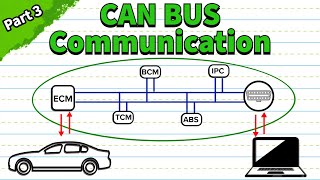
P1884 is a manufacturer-specific powertrain code. Most commonly appearing on Land Rovers, it signifies the Transmission Control Module (TCM) received an invalid message from the Engine Control Module (ECM) over the Controller Area Network (CAN bus). Your car's computers constantly share data on throttle position, engine torque, and road speed. P1884 indicates a critical communication breakdown, leaving the transmission guessing what the engine is doing.
Technical definition: The official SAE definition for P1884 is not standardized. On Land Rovers, it means 'CAN message invalid,' indicating a module communication error. On specific Chevrolets, it translates to a '4-3 gear shift malfunction'. For Hondas, it means 'Secondary Gear Speed Sensor 2 Circuit Malfunction.' On certain Suzukis, it points to an 'Integral Time Malfunction Supplying Air' in the air suspension.
Can I Drive With P1884?
Yes, But With Caution. You can drive, but it risks severe transmission damage. You will experience poor engine performance, rough idling, stalling, and dangerously harsh shifting. On many vehicles, this code triggers a 'limp-home mode,' severely limiting speed. Continuing to drive with harsh shifting causes accelerated wear on internal transmission components, potentially turning a simple sensor fix into a $2,500-$8,000 transmission rebuild. Diagnose the issue within 50 miles to prevent catastrophic damage.
Common Causes
- Faulty Throttle Position Sensor (TPS) or Pedal Assembly (Very Common) — The TPS tells the ECM how far you press the gas pedal. If it sends erratic data, or if the physical pedal assembly becomes loose, the TCM rejects the signal as invalid. This is the most frequent cause on Land Rover models.
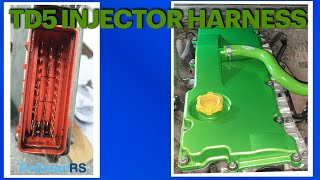
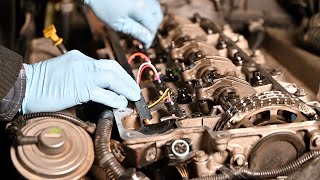
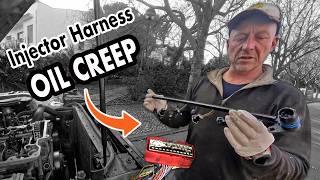
- Oil Ingress in ECM Connector (Land Rover TD5) (Very Common) — On Land Rover TD5 engines, oil migrates down the fuel injector wiring harness and contaminates the Engine Control Module (ECM) red connector plug. This oil disrupts sensitive low-voltage CAN bus signals.
- Faulty Mass Airflow (MAF) Sensor (Common) — A dirty or failing MAF sensor provides incorrect air volume data. This causes an incorrect engine load calculation by the ECM, which the TCM flags as implausible.
- Low Battery Voltage or Bad Grounds (Common) — Control modules require stable voltage to communicate. A weak battery, failing alternator, or corroded ground straps corrupt CAN bus data packets.
- Damaged or Corroded Wiring/Connectors (Less Common) — Wiring for the engine and transmission modules chafes, melts, or corrodes. On Land Rover Discovery models, the harness near the transmission XYZ switch rubs against a protruding bolt, causing shorts.
- Incorrect or Aggressive ECU Remap (Tune) (Less Common) — An aftermarket engine tune causes the ECM to report torque values outside the stock TCM's programmed range. The TCM flags this as an 'invalid message'.
- Faulty Transmission Control Module (TCM) or Engine Control Module (ECM) (Rare) — Module failure is the least likely cause. Exhaustively rule out wiring and sensor inputs before condemning a module.
Symptoms
- Flashing M and S Lights (Limp Mode) — On Land Rovers, the 'Manual' and 'Sport' mode lights flash, indicating a transmission fault and locking the vehicle in 'limp-home mode'.
- Harsh or Incorrect Shifting — The automatic transmission shifts gears with a violent bang, gets stuck in 3rd or 4th gear, or the torque converter locks erratically.
- Engine Revs Unexpectedly — The engine revs to 1500rpm or higher at idle without pedal input, pointing directly to a throttle position sensor fault. 🎬 See this guide on locating and replacing the throttle position sensor.
- Poor Engine Performance — The engine idles roughly, hesitates on acceleration, or stalls when coming to a stop.
- Check Engine Light (MIL) is On — The service engine soon or check engine light illuminates on the dashboard.
Diagnostic Flowchart
Tap your situation to follow the diagnostic path that matches what you're seeing on this code.
Common Fixes & Costs
- Replace Throttle Pedal Assembly — Parts: $150-$450, Labor: $100-$200, ~1 hr book time (DIY)
- Clean Oil from ECM Connector and Replace Injector Harness — Parts: $50-$150, Labor: $100-$250, ~1.5 hr book time (DIY)
- Replace Mass Airflow (MAF) Sensor — Parts: $100-$300, Labor: $50-$100, ~0.5 hr book time (DIY)
- Replace Car Battery — Parts: $150-$300, Labor: $0-$50, ~0.5 hr book time (DIY)
- Repair Damaged Wiring Harness — Parts: $20-$100, Labor: $200-$800, ~4 hr book time (Professional)
- Replace Transmission Speed Sensor (Honda) — Parts: $40-$90, Labor: $85-$125, ~1 hr book time (DIY)
- Reprogram Transmission Control Module (TCM) — Parts: $0, Labor: $100-$250, ~1 hr book time (Professional)
Used vs. New Parts: Buying Guide
When a used part is worth it: For the Throttle Pedal Assembly, a used part from a low-mileage scrapped vehicle is a cost-effective option. It is not a typical wear item, so a good used unit lasts the remaining life of the vehicle.
Donor-vehicle mileage cap: roughly under 80000 miles for the part to have meaningful remaining life.
Donor quality checklist:
- Match the part number exactly, including superseded numbers.
- Verify the donor car wasn't scrapped for a related electronic or engine issue.
- Visually inspect the connector pins for corrosion.
Decision logic:
- If Vehicle has low mileage (<80K) and you plan to keep it long-term → Buy a new OEM part for peace of mind and warranty.
- If Vehicle has high mileage (>150K) and you are on a tight budget → A used part is a great choice. The financial risk is low.
- If The cost of a new aftermarket part is close to a used OEM part → Favor the new aftermarket part for its warranty.
Warranty tradeoff: Used parts typically offer a 30-day part-only warranty, leaving you liable for labor if it fails. New aftermarket parts offer 1-year warranties. New OEM parts provide the best warranty.
Worst-case if a used part fails: 300-500. This covers paying for labor a second time plus another replacement part.
What Happens If You Wait — Timeline
- 0-1 month: Intermittent Check Engine Light and flashing transmission warning lights. Symptoms like harsh shifting occur briefly then disappear. (MPG impact: 0-5%% · Added cost: $0-50 in wasted fuel)
- 1-3 months: The vehicle enters 'limp-home mode' frequently. Harsh, banging shifts become the norm, making the vehicle feel unsafe. (MPG impact: 5-15%% · Added cost: $50-150 in wasted fuel)
- 3-6 months: Uncontrolled shifts cause mechanical damage. Transmission clutch packs glaze and shift solenoids are damaged by erratic pressures. (MPG impact: 10-20%% · Added cost: $500-1200 (Requires valve body or solenoid work).)
- 6+ months: Catastrophic internal transmission failure. A clutch pack burns out or a hard part breaks. The vehicle loses drive completely. (MPG impact: N/A (Vehicle undrivable)% · Added cost: $2500-8000 (Full transmission rebuild required).)
Cost of Not Fixing It
- 0-1 month: Annoying and unsafe driving experience due to harsh shifting, stalling, and limp-home mode. Fuel economy drops by 5-15%. (Added cost: 50-100)
- 1-6 months: Continued harsh shifting causes accelerated wear on transmission clutch packs and solenoids. A simple sensor fix escalates into needing a valve body replacement. (Added cost: 500-1200)
- 6+ months: Catastrophic internal transmission damage. The cumulative stress breaks hard parts, leading to a complete loss of drive requiring a full rebuild. (Added cost: 2500-8000)
Diagnosis Steps
- Read Manufacturer-Specific Sub-Codes
A basic OBD-II scanner only shows 'P1884'. You MUST use an advanced scanner (like Nanocom or Hawkeye for Land Rover) to read manufacturer-specific sub-codes. This narrows the problem from a generic error to a specific component, such as 'P1884-18: Throttle position invalid'.
Tools: Advanced OBD-II Scanner (Intermediate) - Verify Battery and Charging System Health
Ensure the battery is fully charged. Use a multimeter to check battery voltage with the engine off (12.6V) and running (13.7-14.7V). Clean corrosion from terminals and verify main engine ground straps are tight.
Tools: Multimeter, Battery Terminal Brush, Basic Hand Tools (Beginner) - Inspect the Air Intake System Thoroughly
Check for unmetered air between the MAF sensor and the engine. Inspect for loose intercooler hoses, split vacuum lines, and poorly seated air filter boxes. A loose hose clamp is a frequent culprit.
Tools: Flashlight, Basic hand tools (screwdriver, pliers) (Beginner) - Test the Throttle Position Sensor (TPS) Signal
Using an advanced scanner's live data, monitor the TPS percentage. It must read 0% at rest and sweep smoothly to 100% as you press the pedal, with no dropouts. Alternatively, back-probe the TPS signal wire with a multimeter to verify a smooth 0.5V to 4.5V sweep.
Tools: Advanced Scanner or Multimeter (Intermediate) - Inspect Critical Wiring Harnesses
Visually inspect wiring for the TPS, MAF sensor, and TCM. On Land Rover TD5s, pull back the boot on the red ECM plug to check for engine oil contamination. On Discovery IIs, inspect the harness near the transmission XYZ switch for chafing.
Tools: Flashlight, Inspection Mirror, Contact Cleaner (Intermediate) - Analyze MAF Sensor Live Data
Monitor the Mass Airflow (MAF) sensor PID. For a Land Rover V8 or TD5, a healthy sensor reads 4.5-7 g/s at a warm idle. This value must increase smoothly with RPM, reaching 15-25 g/s at 2500 RPM. Static or out-of-range readings indicate a faulty sensor or major vacuum leak.
Tools: Advanced OBD-II Scanner (Intermediate) - [PRO TIP] Reset Transmission Adaptations
If you corrected an ECU tune or replaced a major component, the TCM retains 'learned' bad habits. Use a scan tool to 'Reset Adaptive Values' in the transmission ECU, forcing it to relearn shift pressures from scratch.
Tools: Advanced OBD-II Scanner (Intermediate) - [ADVANCED] Test CAN Bus Resistance
Disconnect the battery. Measure resistance between Pin 6 (CAN High) and Pin 14 (CAN Low) at the OBD-II port. A healthy CAN bus reads 60 Ω. A reading of 120 Ω indicates a missing terminating resistor or open circuit. A reading near 0 Ω indicates a short.
Tools: Multimeter, OBD-II Breakout Box (recommended) (Advanced) - [ADVANCED] Test CAN Bus Voltages
With the battery reconnected and ignition 'ON' (engine off), measure voltage at the OBD-II port. Pin 6 to ground is ~2.5V, and Pin 14 to ground is ~2.5V. When communicating, CAN High toggles to ~3.5V and CAN Low to ~1.5V. A line stuck at 0V or 5V indicates a short.
Tools: Multimeter or Oscilloscope, OBD-II Breakout Box (recommended) (Advanced)
When This Code Triggers (Freeze-Frame Conditions)
- Engine Coolant Temp: 180-205°F (82-96°C) (The fault is most often logged when the engine is fully warmed up and operating in closed-loop mode.)
- Engine RPM: 1500-2500 RPM (Occurs during steady-state cruising or light acceleration, not typically at idle or full throttle.)
- Vehicle Speed: 35-55 mph (56-88 km/h) (Triggered at cruising speeds where the TCM expects stable and plausible data from the engine.)
- Engine Load: 25-60% (Occurs under moderate engine load when the ECM and TCM actively manage torque for shifting.)
Related Codes
- P0121 / P0122 / P0123 — These Throttle Position Sensor (TPS) codes are a direct cause of P1884. The ECM logs the TPS fault, and when it sends faulty throttle data to the TCM, the TCM logs P1884. Fix the TPS first.
- P0102 — This 'Mass Air Flow (MAF) Circuit Low Input' code often appears with P1884. P1884 is the symptom, while P0102 points to the cause. Fix the P0102 issue first.
- P0171 / P0174 — These 'System Too Lean' codes indicate unmetered air or a failing MAF sensor, causing the ECM to miscalculate engine load. The TCM flags this incorrect data as invalid, triggering P1884.
- P0705 — Indicates a fault in the Transmission Range Sensor (XYZ switch) circuit. On a Land Rover Discovery, the XYZ switch harness chafes and shorts out, disrupting both the range sensor signal and general CAN bus messages.
Climate & Environmental Factors
- Cold Weather: Freezing temperatures expose weak batteries, causing voltage drops during startup that corrupt CAN bus communication and trigger P1884 as a 'ghost' code.
- High Humidity / Water Ingress: Direct water exposure (e.g., from a clogged A/C drain dripping on the XYZ switch) accelerates corrosion on wiring connectors, leading to short circuits that cause communication faults.
- Altitude: On some vehicles, P1884 includes a sub-code for 'Altitude shift control invalid', implying the TCM did not receive a valid barometric pressure signal, affecting shift scheduling.
How to Talk to a Mechanic About This Code
Say this: "I have a P1884 code on my [Make, Model]. I need to schedule a diagnostic appointment with a technician who has a scanner that reads manufacturer-specific sub-codes and live data. Are you equipped for that level of diagnostics?"
This signals you understand a basic code reader is insufficient. It screens out shops that guess or 'throw parts' at the problem, directing them toward a proper diagnostic process.
Avoid saying:
- 'Just fix whatever's wrong'
- 'My check engine light is on, can you look at it?'
- 'My car is shifting funny, I think it's the transmission'
Questions to ask before authorizing the repair:
- What was the specific manufacturer sub-code found with the P1884?
- Did you view live data to confirm the sensor was sending faulty readings?
- Did you verify the battery voltage and check the main ground connections?
- Can you show me the faulty readings on the scan tool?
- What is the warranty on the recommended parts and labor?
Where to Take It: Dealer vs Independent vs Chain
- Dealer:
A safe, but expensive option. Guaranteed to have the right diagnostic tools.
Best for: Vehicles under warranty., Manufacturer-specific software updates (like the Chevrolet Optra TSB)., Complex CAN bus issues on newer vehicles.
Downsides: Highest labor rates., May recommend replacing a whole assembly when only a small component failed. (Typical cost: +50% vs. baseline) - Independent Shop:
Best overall fit, IF you find a reputable independent shop that specializes in your vehicle's brand.
Best for: Out-of-warranty vehicles, especially if you find a make-specific specialist., Common P1884 causes like sensor replacement or wiring checks.
Downsides: A general shop may not have the specific scanner needed for your vehicle., You must vet the shop's reputation. (Typical cost: +0% vs. baseline) - Chain Shop:
AVOID for diagnosing P1884. The complexity is beyond the scope of most chain shops.
Best for: Simple maintenance like oil changes.
Downsides: Unlikely to have the manufacturer-specific scan tools needed., High risk of misdiagnosis and being sold unnecessary parts. (Typical cost: -10% vs. baseline)
When to Walk Away From the Repair
If the estimated repair cost exceeds 50% of the car's private-party value, seriously consider selling or trading in the vehicle.
- Car worth $4000, fix is $2200: Walk away. The repair cost is over 50% of the car's value.
- Car worth $12000, fix is $1500: Fix it. The cost is well below the 50% threshold.
- Car worth $2500, fix is $800: Borderline. Get a second opinion to ensure the diagnosis is accurate before proceeding.
What Scan Tool You Need for This Code
Minimum: A tool that reads manufacturer-specific codes and live data. For Land Rover, this is non-negotiable to see P1884 sub-codes.
A basic $20 code reader only shows 'P1884,' which is useless for diagnosis on most-affected vehicles. It cannot read sub-codes or view live sensor data streams.
Budget: Autel MaxiAP AP200 (~$70) — A Bluetooth dongle that pairs with your smartphone. Allows purchase of a specific manufacturer software pack to read sub-codes and live data.
Mid-range: iCarsoft LR V3.0 or Foxwell NT510 Elite (~$160-200) — Handheld tools designed specifically for Land Rover/Jaguar. They read sub-codes, display live data, and perform special functions like resetting transmission adaptations.
Professional: Autel MaxiCOM MK808 / GAP IIDTool (~$400-600) — Professional-level diagnostics. The GAP IIDTool is the enthusiast's gold standard for modern Land Rovers, allowing deep configuration and programming.
Rent vs buy: RENTING is NOT recommended. Free 'loan-a-tool' scanners from auto parts stores are basic readers that CANNOT read the necessary sub-codes. Buying a mid-range scanner pays for itself by avoiding one misdiagnosis.
How to Clear the Code After You Fix It
- Ensure all repairs are complete and the battery is fully charged.
- Use an OBD-II scan tool to select the 'Clear/Erase Codes' function.
- Perform a complete drive cycle to allow the vehicle's readiness monitors to run and confirm the fix.
Drive cycle (~30 minutes): 1) Cold start (engine off for 8+ hours). 2) Idle for 3 minutes with A/C on. 3) Drive in stop-and-go traffic for 15 minutes. 4) Drive at a steady highway speed (55-60 mph) for 10 minutes. 5) Allow the vehicle to cool down completely.
Readiness monitors affected: All monitors reset to 'Not Ready' when codes are cleared., The underlying cause of P1884 often relates to the Catalyst, O2 Sensor, and Fuel System monitors.
Before emissions retest: drive at least 100 miles to fully set monitors.
Watch out for:
- Taking the vehicle for an emissions test immediately after clearing the code results in an automatic failure for 'Not Ready' monitors.
- Disconnecting the battery to clear the code erases learned memory from the TCM, causing poor performance until it relearns.
- Not performing a varied drive cycle fails to set the EVAP monitor, which requires specific cruising conditions.
Will This Fail Emissions / State Inspection?
Yes — this code typically fails an OBD-II emissions inspection.
- California: An illuminated Check Engine Light is an automatic failure. You must complete a drive cycle to set all readiness monitors to 'Ready' before re-testing.
- New York: A vehicle with an active Check Engine Light automatically fails the emissions portion of the annual state inspection.
- Texas: An active P1884 code causes the vehicle to fail the OBD-II test, preventing registration renewal until repaired.
Most Commonly Affected Vehicles
- Land Rover Discovery II (L318) (1999-2004) — The most common vehicle for P1884. It uses this single generic code to cover at least 9 different CAN faults.
- Land Rover Range Rover (P38a & L322) (1999-2005) — Shares a similar electronic architecture to the Discovery II, making it prone to the same communication-based P1884 faults.
- Chevrolet Optra / Lacetti (2004-2005) — P1884 specifically indicates a '4-3 gear shift malfunction'. TSB 05-07-30-020A advises against parts replacement and calls for a TCM reprogram.
- Honda Civic, Fit, Accord (2001-2011) — P1884 has a unique definition: 'Secondary Gear Speed Sensor 2 Circuit Malfunction'. Diagnosis focuses exclusively on this sensor and its wiring.
- Ford Various Models (Explorer, Crown Victoria) (1996-2008) — P1884 relates to the 'TCC Enable/Shift Light Circuit,' indicating an issue with the torque converter clutch solenoid system.
- BMW Various models with ZF automatic transmissions (1999-2006) — P1884 is defined as 'Engine Torque Invalid' or a shift circuit fault (e.g., '4-5 Shift Circuit High'), pointing to an internal hydraulic issue.
- Suzuki Various Models with Air Suspension (2001-2006) — P1884 means 'Integral Time Malfunction Supplying Air,' indicating the air suspension compressor ran too long without reaching target pressure.
- Jeep Grand Cherokee (WJ, WK) (1999-2010) — When it appears on a generic scanner, it points to a general CAN bus communication error rather than a specific Jeep-defined fault.
Manufacturer-Specific Notes
- Land Rover: A generic scanner showing only P1884 is useless. You MUST use a Land Rover-specific tool to read the sub-code (e.g., '18: Throttle position invalid'). Diagnosis is pure guesswork without this.
- Chevrolet: For the Optra/Lacetti, GM TSB 05-07-30-020A explicitly states the fix for P1884 is to reprogram the TCM with updated software, not to replace hardware.
- Land Rover: Per TSB Fault Reference #6 for 1999 models, codes P0501, P0722, and P1884 falsely trigger on a cold start if the driver engages 'Drive' and applies throttle too quickly.
- Honda: The P1884 definition points directly to the secondary transmission speed sensor. Diagnosis focuses exclusively on that sensor, its wiring, and connector.
- General: This is often a 'ghost' code appearing after a dead battery. Clear the codes and perform a full drive cycle to see if the fault returns before starting repairs.
Real Owner Stories
2002 Land Rover Discovery II, 140K miles
Engine idled roughly and stalled. Check Engine Light was on with code P1884 and a MAF code.
What they tried:
- Cleaned the MAF sensor thoroughly.
Outcome: Cleaning the MAF sensor cleared the MAF code, but P1884 remained. The owner learned a Land Rover-specific scanner was needed to read the sub-code to determine which of the 9 possible faults P1884 referred to.
Lesson: On a Land Rover, a generic P1884 is not enough information. Guessing is expensive. Invest in a proper scan tool.
2004 Chevrolet Optra, mileage unknown
Check Engine Light was on with a harsh 4-3 downshift.
What they tried:
- Technician identified DTC P1884, meaning '4-3 gear shift malfunction'.
Outcome: Following GM TSB 05-07-30-020A, the dealer reprogrammed the TCM with an updated calibration. This reduced error sensitivity and fixed the issue without replacing parts.
Lesson: Always check for TSBs. For the Chevy Optra, P1884 is a known software issue requiring a reprogram, not hardware.
2000 Land Rover Discovery II TD5, mileage unknown
Car went into limp mode with flashing M+S lights. Multiple 'Driver Demand' faults logged with P1884.
What they tried:
- Cleared codes, but they returned immediately.
- Cleaned MAP/IAT sensor.
Outcome: The combination of P1884 and 'Driver Demand' faults pointed directly to a failed throttle pedal assembly, a common failure pattern.
Lesson: When P1884 is accompanied by other codes, the other codes point to the root cause. 'Driver Demand' faults mean the throttle pedal assembly needs replacement.
2014 Honda Civic, 160K miles
Speedometer randomly dropped to 0 mph, triggering P1884 for 'Secondary Gear Speed Sensor'.
What they tried:
- Shop replaced the Vehicle Speed Sensor (VSS) and ABS sensors.
Outcome: The problem returned. The issue was not the sensor, but a wiring problem between the sensor and the ECU.
Lesson: If replacing the speed sensor doesn't work on a Honda, meticulously inspect the wiring harness for damage before suspecting module failure.
How to Prevent This Code From Triggering
- Inspect and clean major ground straps (Every 15,000 miles or annually) — Corroded ground straps create electrical noise that corrupts CAN bus signals, triggering communication faults.
- Check the red ECU plug for oil (Land Rover TD5) (Every oil change (5,000-7,500 miles)) — Proactively checking for oil allows you to clean the connector and replace the injector harness before it causes limp-home mode.
- Change automatic transmission fluid and filter (Every 30,000-60,000 miles) — Clean fluid ensures proper hydraulic pressure, preventing mechanical stress misinterpreted by sensitive control modules.
- Test battery health annually (Annually, especially before winter) — A weak battery is a primary cause of transient, low-voltage CAN bus errors that log a P1884.
- Use shielded, twisted-pair wiring for CAN bus repairs (During any wiring repair) — Using untwisted wire introduces electromagnetic interference into the network, causing random communication errors.
Frequently Asked Questions
Can I fix a P1884 code myself?
Yes, many common causes are DIY-friendly. Cleaning the MAF sensor, checking for loose hoses, and replacing the battery or throttle pedal assembly are achievable for a home mechanic.
Why did my mechanic say they can't diagnose P1884 without a better scanner?
On a Land Rover, P1884 is a generic code covering multiple faults. A specialized scanner is required to read the specific sub-code that pinpoints the failing system. Without it, they would be guessing with your money.
I replaced the Throttle Position Sensor (TPS) but P1884 came back. What now?
Before replacing another part, check for vacuum leaks between the MAF and throttle body. An air leak causes incorrect MAF readings, which the TCM interprets as an invalid signal, mimicking a TPS fault.
Can an aftermarket engine tune cause a P1884 code?
Absolutely. An aggressive ECU remap causes the engine to report torque values outside the stock transmission computer's programmed range. The TCM flags this as 'invalid', so your first diagnostic step is flashing back to the stock map.
My scanner says P1884 is a 'Driver Demand' fault. What does that mean?
This means there is a problem with the accelerator pedal. The 'driver's demand' for power is communicated via the throttle position sensor. This points directly to an issue with the accelerator pedal assembly.
Will clearing the code make the problem go away?
No. Clearing the code only extinguishes the check engine light temporarily. If the underlying problem isn't fixed, the code returns as soon as the computer's self-test runs again.
How can a weak battery cause a transmission communication code?
The CAN bus network relies on precise, low-voltage digital signals. A weak battery causes voltage drops that corrupt these signals. The transmission computer receives a garbled message and flags it as invalid.
Key Takeaways
- P1884 is a manufacturer-specific communication failure between the engine and transmission control modules.
- Land Rover owners must use a specialized scan tool (like Nanocom or Hawkeye) to read the 2-digit sub-code required to pinpoint the exact fault.
- Code definitions vary wildly by brand—meaning 'CAN message invalid' on Land Rovers, but 'Secondary Gear Speed Sensor' on Hondas.
- The top 3 real-world causes are a faulty Throttle Position Sensor, oil contamination in the ECM connector, and a failing Mass Airflow (MAF) sensor.
- Always test battery voltage (targeting 12.6V resting) and inspect air intake hoses for vacuum leaks before replacing expensive sensors or modules.
Helpful Videos


Shop the Parts Behind P1884
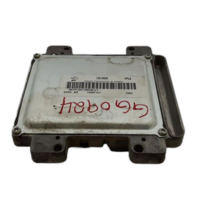
Below are the parts most often responsible for code P1884, ranked by how frequently each one is the actual culprit (per the diagnosis above). Tap any to see what we have for your vehicle.

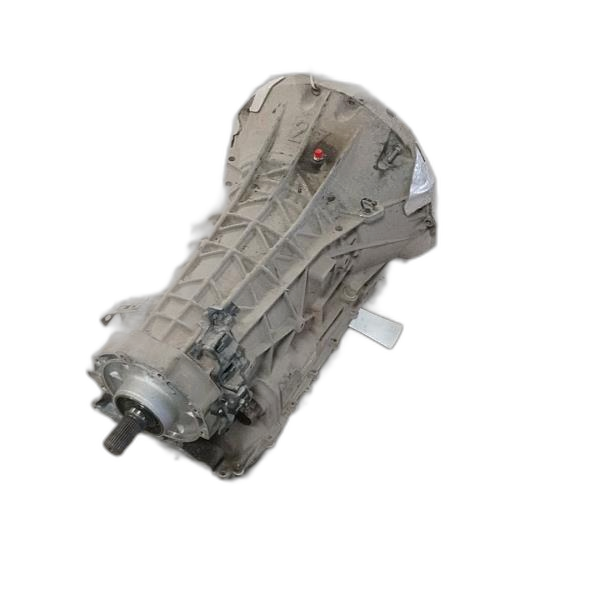


The information in this article is provided for general reference and educational purposes only. Vehicle specifications, procedures, and part compatibility can vary by production date, trim level, and region. Always consult your vehicle's factory service manual and verify part numbers before purchasing or performing repairs. Safety-critical components such as airbags, seat belts, and braking systems should be installed by a qualified professional.
- 🧭 Diagnostic Flowchart
- 🎬 Helpful Videos
- 🛍️ Shop This Part
- What Does P1884 Mean?
- Can I Drive With P1884?
- Common Causes
- Symptoms
- Common Fixes & Costs
- Used vs. New Parts: Buying Guide
- What Happens If You Wait — Timeline
- Cost of Not Fixing It
- Diagnosis Steps
- When This Code Triggers (Freeze-Frame Conditions)
- Related Codes
- Climate & Environmental Factors
- How to Talk to a Mechanic About This Code
- Where to Take It: Dealer vs Independent vs Chain
- When to Walk Away From the Repair
- What Scan Tool You Need for This Code
- How to Clear the Code After You Fix It
- Will This Fail Emissions / State Inspection?
- Most Commonly Affected Vehicles
- Manufacturer-Specific Notes
- Real Owner Stories
- 2002 Land Rover Discovery II, 140K miles
- 2004 Chevrolet Optra, mileage unknown
- 2000 Land Rover Discovery II TD5, mileage unknown
- 2014 Honda Civic, 160K miles
- How to Prevent This Code From Triggering
- Frequently Asked Questions
- Can I fix a P1884 code myself?
- Why did my mechanic say they can't diagnose P1884 without a better scanner?
- I replaced the Throttle Position Sensor (TPS) but P1884 came back. What now?
- Can an aftermarket engine tune cause a P1884 code?
- My scanner says P1884 is a 'Driver Demand' fault. What does that mean?
- Will clearing the code make the problem go away?
- How can a weak battery cause a transmission communication code?
- Key Takeaways
- 🎟️ Get 5% Off