

OBD-II Code P1888: Drivetrain Sensor & Communication Fault
What P1888 means, why it triggers, and how to fix it
- P1888 is a manufacturer-specific code: it means a Differential Oil Temperature sensor fault on Fords, a TCC solenoid failure on Chevrolets, a CVT speed sensor issue on Hondas, or a coolant valve short on VW/Audis.
- On Ford and Lincoln 4x4s, P1888 disables the 4WD system to prevent overheating; test the DOT sensor for a baseline resistance of 2,200-3,000Ω at 68°F before replacing it.
- For Chevrolet trucks with a 4L60-E transmission, a P1888 TCC solenoid fault causes engine stalling at stops and requires a $340-$650 repair involving dropping the transmission pan.
- Volkswagen and Audi owners must immediately unplug the N82 Coolant Shut-Off valve and check for green/white crust; coolant wicking into this connector destroys the wiring harness and triggers P1888.
- Never replace a sensor for P1888 without first verifying the 5-volt reference signal and ground at the connector, as damaged wiring causes over 40% of these recurring codes.
What Does P1888 Mean?
P1888 is a manufacturer-specific OBD-II code indicating a fault in a drivetrain-related sensor or communication circuit. Its meaning varies entirely by brand. On Ford, Lincoln, and Mercury vehicles, it signals a problem with the Differential Oil Temperature (DOT) sensor circuit in the 4x4 system. For Chevrolet, it indicates a Torque Converter Clutch (TCC) solenoid failure. On Hondas, it points to a CVT speed sensor, and on Volkswagen/Audi, it flags a short in the coolant shut-off valve.
Technical definition: There is no universal SAE/ISO definition for P1888. The most common manufacturer-specific definitions are: * **Ford/Lincoln/Mercury:** Differential Oil Temperature Sensor Circuit Malfunction. * **Honda:** Problem in CVT Speed Sensor Circuit. * **Chevrolet/GM:** Torque Converter Clutch (TCC) Solenoid Circuit Malfunction. * **Audi/VW:** Coolant Shut-Off Valve (N82) Short Circuit to B+. * **Jaguar:** Engine Coolant Level Sensor Circuit Low. * **Toyota (CVT):** Pulley Pressure Control Solenoid Valve Failure. * **Mazda:** Differential Oil Temperature Sensor Circuit Failure.
Can I Drive With P1888?
Yes, But With Caution. For Ford 4x4s, driving in 2WD is safe temporarily, but prolonged use risks undetected overheating. For Chevrolet, a stuck TCC solenoid causes dangerous engine stalling at stops and increases transmission temperatures by over 50°F, risking a $3,000 rebuild. For Honda CVTs, driving with erratic speed sensor data destroys the start clutch, turning a $200 sensor fix into a $4,000 transmission replacement.
Common Causes
- Damaged Wiring or Connectors (Very Common) — The wiring harness for drivetrain sensors is exposed to road debris, moisture, and exhaust heat. Corrosion, short circuits to power or ground, or open circuits are the leading causes of this code across all makes.
- Failed Differential Oil Temperature (DOT) Sensor (Ford) (Very Common) — Located on the differential or transfer case, this sensor fails from heat cycles, vibration, and age, sending incorrect temperature data to the 4x4 control module.
- Failed Torque Converter Clutch (TCC) Solenoid (Chevy) (Common) — The TCC solenoid inside the transmission pan fails electrically or clogs with contaminated fluid, preventing the torque converter from locking or unlocking properly. 🎬 Watch: Step-by-step guide to replacing the TCC solenoid.
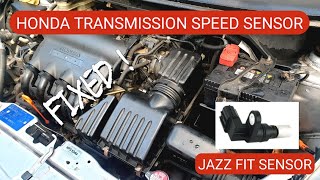
- Failed CVT Speed Sensor (Honda) (Common) — The CVT speed sensor suffers thermal failure, working normally when cold but providing erratic readings to the TCM once the transmission reaches operating temperature.
- Coolant Migration into Wiring Harness (VW/Audi) (Common) — The Coolant Shut-Off Valve (N82) leaks coolant internally through its electrical connector. This coolant wicks down the wiring harness, causing shorts and communication failures with multiple modules.
- Low or Contaminated Drivetrain Fluid (Less Common) — Low fluid in a Ford transfer case causes genuine overheating, which the sensor correctly reports. In Chevys and Hondas, degraded fluid causes solenoids to stick and clutches to slip.
- Faulty Control Module (TCCM/TCM/PCM) (Rare) — The 4WD, Transmission, or Powertrain Control Module fails internally. This is a last-resort diagnosis after exhaustively testing all sensors, wiring, and connectors.
Symptoms
- '4x4' or 'AWD' Warning Light & Disabled System — On Ford, Lincoln, and Mercury vehicles, the 4WD/AWD system is disabled by the computer as a fail-safe, locking the vehicle in two-wheel drive.
- Check Engine Light On — The primary indicator for Chevy, Honda, and VW vehicles where P1888 relates to a transmission or engine component.
- Engine Stalling When Stopping — On Chevrolet vehicles, a TCC solenoid stuck in the 'on' position keeps the torque converter locked at low speeds, stalling the engine like a manual transmission without the clutch pressed.
- Transmission Slipping, Shuddering, or RPM Fluctuations — Chevrolets exhibit a vibration or 200-300 RPM surge at highway speeds (40-50 mph). Hondas manifest a severe judder or hesitation when accelerating from a stop.
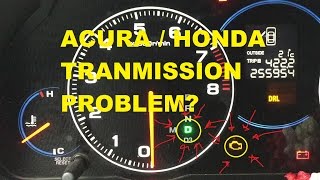
- Blinking 'D' (Drive) Indicator Light — Specific to Honda CVTs, a blinking 'D' light indicates a critical transmission fault, directly tied to the erratic speed sensor data. 🎬 See how to replace a faulty Honda CVT speed sensor.
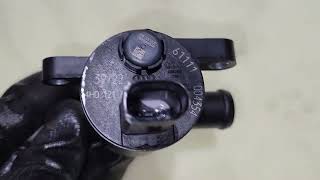
- Reduced Heater Performance — On Volkswagen/Audi models, a faulty Coolant Shut-Off Valve (N82) prevents hot coolant from reaching the heater core, eliminating cabin heat. 🎬 Watch: How to replace the N82 coolant shut-off valve.
Diagnostic Flowchart
Tap your situation to follow the diagnostic path that matches what you're seeing on this code.
Common Fixes & Costs
- Repair Damaged Wiring or Connector — Parts: $15-$60, Labor: $150-$400, ~2.5 hr book time (Intermediate)
- Replace Differential Oil Temperature (DOT) Sensor (Ford) — Parts: $20-$100, Labor: $100-$150, ~1.0 hr book time (DIY)
- Replace CVT Speed Sensor (Honda) — Parts: $55-$110, Labor: $100-$150, ~0.8 hr book time (Intermediate)
- Replace Coolant Shut-Off Valve (N82) (VW/Audi) — Parts: $50-$150, Labor: $120-$250, ~1.5 hr book time (Intermediate)
- Replace Torque Converter Clutch (TCC) Solenoid (Chevy) — Parts: $40-$120, Labor: $300-$530, ~3.5 hr book time (Professional)
- Change Drivetrain Fluid — Parts: $50-$120, Labor: $100-$200, ~0.8 hr book time (DIY)
DIY vs Professional
- Replace Differential Oil Temperature (DOT) Sensor — Beginner: Yes. This is a straightforward introductory repair.
- Replace Torque Converter Clutch (TCC) Solenoid — Beginner: No. Leave this to experienced DIYers or professionals.
- Replace CVT Speed Sensor (Honda) — Beginner: Yes, if comfortable working in tight engine bay spaces.
- Repair Damaged Wiring or Connector — Beginner: Beginners can fix visible breaks. Tracing hidden shorts requires advanced experience.
Used vs. New Parts: Buying Guide
When a used part is worth it: For electronic sensors and solenoids, buying new is mandatory. The labor to install them outweighs the minimal savings, and used electronic parts are not tested for heat-related intermittent failures.
Donor-vehicle mileage cap: roughly under 40000 miles for the part to have meaningful remaining life.
Donor quality checklist:
- There are no reliable visual cues for internal electronic sensor quality.
- Obtain used modules from reputable dismantlers with clear return policies.
- Match part numbers exactly. A different number from a donor vehicle will not communicate correctly.
Decision logic:
- If The part is an electronic sensor or solenoid. → Buy new. The risk of a used part failing and requiring a second labor charge is unacceptable.
- If The required part is a complete control module (TCCM, PCM) costing over $800 new. → A used module from a low-mileage, non-flood vehicle is cost-effective, though it requires dealer programming.
Warranty tradeoff: Salvage yards offer 30-90 day part-only warranties. New aftermarket parts offer 1-year warranties. New OEM parts carry 12-month/12,000-mile warranties covering parts and labor at dealerships.
Worst-case if a used part fails: $300-$700 if a used sensor fails, requiring repeat diagnostic and labor charges.
What Happens If You Wait — Timeline
- 0-1 month: Chevy TCC: Intermittent shudder at 45-55 mph. Honda CVT: Occasional hesitation from a stop when hot. Blinking 'D' light appears briefly. (MPG impact: 3-5%% · Added cost: $0-$50 in wasted fuel.)
- 1-4 months: Chevy TCC: Shudder becomes consistent. Torque converter fails to lock, dropping highway MPG. Honda CVT: Juddering is regular. Blinking 'D' light stays on. (MPG impact: 10-15%% · Added cost: $100-$250 in wasted fuel and accelerated fluid breakdown.)
- 4-9 months: Chevy TCC: Solenoid fails 'stuck on', stalling the engine at stops. Chronic slip overheats fluid, wearing clutches. Honda CVT: Faulty speed signal damages the start clutch. (MPG impact: 15-20%% · Added cost: $500-$1500 as internal mechanical wear begins.)
- 9+ months: Catastrophic transmission failure. The burnt fluid and worn clutches require a complete transmission rebuild or replacement. (MPG impact: 20%+% · Added cost: $2,500 - $8,000 for a complete transmission rebuild or replacement.)
Cost of Not Fixing It
- 0-3 months: Chevy TCC issues cause a 15% drop in fuel economy and shuddering. Honda CVT issues cause intermittent juddering. Ford 4x4 systems remain disabled. (Added cost: $50-$150 in wasted fuel.)
- 3-12 months: Chronic slippage overheats transmission fluid, accelerating internal wear. Erratic speed signals destroy Honda start clutches. VW coolant leaks wick down the wiring harness, shorting other modules. (Added cost: $2500-$4500 for a transmission rebuild or VW harness replacement.)
- 12+ months: Catastrophic transmission failure. A Chevy 4L60-E requires a full rebuild. A Honda CVT requires complete replacement. (Added cost: $4000-$8000 for a complete transmission replacement.)
Diagnosis Steps
- Confirm Code & Analyze Live Data
Use a pro-grade scanner to read the manufacturer-specific definition of P1888. Monitor live data: check 'TCC Slip Speed' on Chevys (should drop near zero on lock-up), DOT temperature on Fords (look for illogical values like -40°F), or compare CVT speed to Vehicle Speed on Hondas.
Tools: Professional OBD-II Scanner (Beginner) - Perform a Targeted Visual Inspection
Locate the suspect component based on the vehicle make. Inspect the sensor, connector, and wiring harness for breaks, melted insulation from exhaust heat, or green/white corrosion.
Tools: Flashlight, safety glasses (Beginner) - Check Drivetrain Fluid Level & Condition
Verify the transfer case/differential fluid on Fords, or transmission fluid on Chevys/Hondas. Dark brown, black, or burnt-smelling fluid indicates severe internal wear or overheating.
Tools: Clean rag, fluid dipstick or pump (Beginner) - Inspect N82 Valve for Coolant Leak (VW/Audi)
Disconnect the N82 Coolant Shut-Off Valve electrical connector. Inspect the pins and harness for moisture or greenish-white crust. If coolant is present, the valve has failed and the harness requires extensive cleaning or replacement.
Tools: Screwdriver, flashlight (Beginner) - Test DOT Sensor & Circuit (Ford)
Disconnect the DOT sensor. Turn ignition ON. Verify a 5-volt reference signal on the connector to ground. Next, measure the sensor's resistance. It should read ~8,000-10,000Ω at 32°F, ~2,200-3,000Ω at 68°F, and ~250-350Ω at 176°F. Open or shorted readings confirm a bad sensor.
Tools: Multimeter, back-probe pins (Intermediate) - Test CVT Speed Sensor Voltage (Honda)
Back-probe the CVT speed sensor connector with the ignition on. Verify the 5V reference and ground. Safely rotate the wheels; the signal wire voltage must fluctuate between 1.5V and 3.5V. A constant 0V or 5V indicates a dead sensor.
Tools: Multimeter, back-probe pins, jack stands (Advanced) - Test TCC Solenoid Resistance (Chevy)
Access the TCC solenoid connector. Measure its resistance. A functional on/off TCC solenoid on a 4L60-E reads 20-40 ohms. A PWM TCC solenoid reads 10-11 ohms at 68°F. Infinity (open) or near-zero (short) confirms failure.
Tools: Multimeter, socket set, drain pan (Advanced)
When This Code Triggers (Freeze-Frame Conditions)
- Vehicle Speed: 40-55 mph (Sets during steady-state highway cruising, especially for Chevrolet TCC solenoid issues where the computer attempts torque converter lock-up.)
- Engine RPM: 1500-2500 RPM (Corresponds with light-load highway cruising speeds where lock-up is expected.)
- Transmission Fluid Temp: 175-210°F (Honda CVT sensors and Chevy TCC solenoids often fail thermally, manifesting only after the transmission is fully warmed up.)
- Engine Load: 20-50% (Indicates a steady throttle position without heavy acceleration, the prime condition for the ECU to test lock-up or sensor circuits.)
Related Codes
- P0741 — On Chevrolets, P1888 is the electrical circuit fault, while P0741 is the mechanical performance fault. P1888 prevents the TCC from locking, which triggers P0741.
- P1870 — A GM code for 'Transmission Component Slipping'. Paired with P1888, it confirms the TCC solenoid failure is causing mechanical slip, often resulting in brutally harsh 1-2 shifts.
- P1890 — On Honda CVTs, P1888 (Speed Sensor) appears first. Ignoring it causes erratic control valve body operation, triggering P1890. Always fix P1888 first.
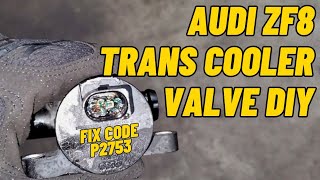
- P2753 / P2755 — On VW/Audi, these codes alongside P1888 confirm coolant has migrated from the N82 valve into the transmission fluid cooler control circuits, requiring extensive harness repair.
Climate & Environmental Factors
- Cold Climates / Road Salt: Salt spray accelerates corrosion of exposed wiring harnesses and low-mounted components like the Ford DOT sensor, causing open or short circuits.
- High Ambient Heat: High operating temperatures shorten the life of electronic components. Honda CVT speed sensors and Chevy TCC solenoids frequently suffer thermal failure, malfunctioning only when the vehicle is hot.
How to Talk to a Mechanic About This Code
Say this: "I have a [Your Car's Year, Make, Model] with a P1888 code. My research shows this is a manufacturer-specific code. Please confirm its exact meaning for my vehicle—whether it's the Ford 4x4 sensor, the Chevy TCC solenoid, the Honda CVT sensor, or the VW coolant valve. Plan to test the specific component circuit for voltage and resistance, not just read the code."
This signals you are an informed customer. It directs the shop to perform a make-specific diagnosis and sets the expectation that replacing a part without testing the circuit is unacceptable.
Avoid saying:
- 'My check engine light is on, can you just fix it?'
- 'I have a P1888, just replace the sensor.'
- 'Do whatever you think is best.'
Questions to ask before authorizing the repair:
- What is the specific definition of P1888 for my vehicle?
- Did you test the sensor and its circuit with a multimeter? What were the voltage and resistance readings?
- Have you inspected the wiring harness and connector for physical damage, corrosion, or coolant contamination?
- If the fix is a transmission solenoid, does the estimate include a new filter, gasket, and OEM-spec fluid?
- What is the warranty on this specific repair, covering both parts and labor?
Where to Take It: Dealer vs Independent vs Chain
- Dealer:
A strong choice for VW/Audi cases due to the complexity of the coolant leak, or if a software update is required. Otherwise, an independent shop is more cost-effective.
Best for: Vehicles under warranty, Complex manufacturer-specific issues like the VW/Audi coolant wicking problem, Repairs requiring TSB-related software updates (Honda and GM)
Downsides: Significantly higher labor rates than independent shops., May recommend replacing a whole assembly when a wiring repair suffices. (Typical cost: +50% vs. baseline) - Independent Shop:
The best overall fit for most out-of-warranty P1888 repairs. Look for ASE-certified technicians with transmission or electrical experience.
Best for: Out-of-warranty vehicles where cost is a major factor., Common P1888 faults like a Ford DOT sensor or Chevy TCC solenoid.
Downsides: Diagnostic skill varies; shops without professional scan tools will struggle., May lack the ability to perform manufacturer-specific software updates. (Typical cost: +0% vs. baseline) - Chain Shop:
AVOID for this code. The diagnosis for P1888 requires more than a simple code read. A chain shop is highly likely to misdiagnose the issue.
Best for: Simple, routine maintenance like oil changes or brake jobs.
Downsides: Technicians lack the diagnostic tools and training for complex, make-specific codes., Business models pressure technicians to replace parts without thorough diagnosis. (Typical cost: -10% vs. baseline)
When to Walk Away From the Repair
If the estimated repair cost exceeds 50% of your car's private-party value, seriously consider selling or trading it in instead of repairing it.
- Car worth $8000, fix is $650: Fix it. A $650 TCC solenoid replacement on an $8,000 truck is a sensible repair.
- Car worth $6000, fix is $4500: Walk away. The repair cost for a transmission rebuild is 75% of the vehicle's value. It is not a sound investment.
- Car worth $3000, fix is $1800: Borderline. The repair cost is 60% of the car's value. Unless the car is in excellent condition, it's time to move on.
What Scan Tool You Need for This Code
Minimum: A tool that reads manufacturer-specific trouble codes and views live data PIDs.
A generic $20 code reader only shows 'P1888' with no definition. You MUST know the manufacturer-specific meaning to begin diagnosis. Viewing live data like sensor temperatures or TCC slip speed is essential to confirm the fault.
Budget: BlueDriver Pro or OBD Fusion App with OBDLink Adapter (~$80-120) — Reads manufacturer-specific codes for major brands and displays customizable live data graphs on your smartphone. This is the minimum required to identify the P1888 fault.
Mid-range: Foxwell NT809 or XTOOL A30D (~$150-350) — Offers full-system diagnostics, reads manufacturer codes, and graphs live data. Provides limited bidirectional controls to test components like solenoids directly from the scanner.
Professional: Autel MaxiCOM MK808 / MK808BT (~$450-600) — Provides comprehensive OE-level diagnostics, robust live data, and full bidirectional control to command solenoids and actuators. This is the tool a professional shop uses.
Rent vs buy: Renting a scanner from a parts store is insufficient, as loaner tools rarely read manufacturer-specific definitions. Buy a tool in the 'Budget Pick' category at a minimum.
How to Clear the Code After You Fix It
- Use an OBD-II scan tool to clear the diagnostic trouble code.
- Disconnecting the negative battery terminal for 15 minutes clears codes but resets all vehicle memory and OBD-II readiness monitors.
- Perform a complete drive cycle to allow the vehicle's computer to re-learn and verify the repair.
Drive cycle (~30 minutes): A generic OBD-II drive cycle includes: a cold start (sit for 8+ hours), 3 minutes of idling, 10 minutes of steady highway driving (55 mph), followed by 15 minutes of stop-and-go city driving.
Readiness monitors affected: Comprehensive Component Monitor (CCM), Evaporative System (EVAP) Monitor, Catalyst Monitor, Oxygen (O2) Sensor Monitor
Before emissions retest: drive at least 100 miles to fully set monitors.
Watch out for:
- Clearing the code without performing a repair results in the code returning immediately once the computer re-runs the failed test.
- Taking the vehicle for an emissions test immediately after clearing codes results in an automatic 'Not Ready' failure.
Will This Fail Emissions / State Inspection?
Yes — this code typically fails an OBD-II emissions inspection.
- California: An illuminated Check Engine Light is an automatic smog failure. All readiness monitors must be set to 'Ready' before re-testing.
- New York: An illuminated Malfunction Indicator Lamp (MIL) causes an automatic failure of the OBD-II emissions inspection.
- Texas: In emissions-testing counties, an illuminated Check Engine Light is an automatic failure. The vehicle must be driven to set readiness monitors after clearing the code.
Most Commonly Affected Vehicles
- Ford Explorer (2002-2010) — Extremely common for the DOT sensor or its wiring on the transfer case/rear differential to fail.
- Ford Ranger (2001-2011) — Shares the 4x4 system with the Explorer and is equally prone to DOT sensor and wiring failures.
- Chevrolet Silverado, Tahoe, Suburban (2000-2013) — P1888 indicates a TCC solenoid circuit fault in the 4L60-E transmission, causing shuddering and stalling.
- Mercury Mountaineer (2002-2010) — Mechanically identical to the Ford Explorer, suffering from the exact same DOT sensor issues.
- Honda Fit/Jazz (2005-2008) — P1888 points to a faulty CVT Speed Sensor. Symptoms worsen as the car warms up, triggering a blinking 'D' light.
- Volkswagen Golf GTI (Mk7) (2015-2020) — P1888 indicates a short for the Coolant Shut-Off Valve (N82). TPI 2043381 addresses coolant migrating into the wiring harness.
- Jaguar X-Type, S-Type (2002-2008) — P1888 is an Engine Coolant Level Sensor circuit fault, unrelated to the drivetrain.
- Toyota Various CVT Models (2010-2022) — Indicates a fault with a Pulley pressure control solenoid valve inside the CVT, requiring professional repair.
Manufacturer-Specific Notes
- Ford / Lincoln / Mercury: The code means 'Differential Oil Temperature Sensor Circuit Malfunction.' The 4WD system is immediately disabled as a fail-safe to prevent overheating damage.
- Honda: P1888 means 'Problem in CVT Speed Sensor Circuit.' It causes the 'D' indicator to blink and presents as a judder from a stop that worsens as fluid heats up.
- Chevrolet: Points to the Torque Converter Clutch (TCC) solenoid circuit. Failure manifests as a highway-speed shudder, a 15% drop in fuel economy, or dangerous engine stalling at stops.
- Audi / Volkswagen: Defines P1888 as 'Coolant shut-off valve (N82): Short circuit to B+.' The root cause is the N82 valve leaking coolant into its own connector, destroying the wiring harness.
- Mazda: On 4WD models, P1888 indicates a 'Differential Oil Temperature Sensor Circuit Failure', requiring continuity checks between the sensor and the 4WD control module.
Real Owner Stories
2008 Honda Fit at 45k miles with P1888
The 'D' light blinked and the Check Engine Light illuminated after driving for 20 minutes. The car struggled to shift. The problem vanished if the car cooled down for two hours.
What they tried:
- A mechanic performed a transmission fluid change and cleared the code.
Outcome: The P1888 code returned immediately, accompanied by P1890 (Transmission Control Valve Body). The ignored sensor problem caused erratic valve body operation.
Lesson: Thermal failure (problems appearing only when hot) is a classic failing sensor symptom. Do not just change the fluid; replace the specific component the code identifies to prevent cascading transmission damage.
2004 GMC Sierra with multiple transmission codes
The truck suffered hard 1-2 shifts, a Check Engine Light, and limp mode. Codes pointed to TCC and shift solenoid circuits.
What they tried:
- Tested resistance of all solenoids; all were in spec.
- Checked wiring harness for opens/shorts; all wiring was good.
- Replaced the 3-2 shift solenoid, but the issue persisted.
Outcome: The root cause was a faulty ignition switch. A worn rotary contact caused low voltage on the circuit shared by all transmission solenoids. Replacing the $35 ignition switch resolved all codes.
Lesson: When multiple unrelated circuit codes appear simultaneously, suspect a shared power or ground source. A faulty ignition switch mimics widespread solenoid failures.
2015 VW GTI with P1888 and no heat
The cabin heater stopped working and the car threw code P1888, 'Coolant Shut-Off Valve (N82): Short circuit to B+'.
What they tried:
- The owner replaced the N82 valve under the air intake box, but the code returned immediately.
Outcome: The N82 valve leaked coolant internally into its electrical connector. The moisture wicked down the wiring harness, causing shorts. The harness required extensive cleaning and partial replacement.
Lesson: Always disconnect the N82 valve and inspect the connector for green/white crust. If coolant is present, replacing the valve without repairing the contaminated wiring will not fix the issue.
How to Prevent This Code From Triggering
- Perform regular drivetrain fluid changes with OEM-spec fluid (Per manufacturer schedule (e.g., Honda CVT fluid every 30k miles)) — Clean fluid prevents overheating and lubricates internal parts. Degraded fluid causes solenoids to stick and clutches to slip.
- Inspect and clean low-mounted electrical connectors (Every 1-2 years in rust-belt regions) — Connectors for the Ford DOT sensor are exposed to road salt. Cleaning and applying dielectric grease prevents corrosion and short circuits.
- Keep the engine and transmission cooling systems healthy (Check coolant monthly; service per schedule.) — Overheating destroys transmissions. Ensuring radiators and fans work prevents fluid breakdown and thermal failure of sensors.
- Protect wiring harnesses from heat and abrasion (During any under-hood maintenance) — Securing wiring away from hot exhaust manifolds prevents melted insulation and short circuits.
Frequently Asked Questions
What are the symptoms of a P1888 code?
Symptoms vary entirely by vehicle make. Fords show a '4x4' light and disable 4WD. Chevys shudder at highway speeds or stall at stops. Hondas hesitate and flash a blinking 'D' light.
Can I drive my car with a P1888 code?
Drive Fords in 2WD temporarily. Tow Chevys if stalling occurs to prevent accidents. Stop driving Hondas immediately to avoid a $4,000 transmission replacement.
I replaced the sensor but the P1888 code came back. What's next?
The circuit is the problem, not the sensor. Test for a 5V reference signal and continuity between the connector and the control module. On VWs, this guarantees coolant has contaminated the wiring harness.
Why do my symptoms only happen after the car warms up?
Electronic components like Honda CVT sensors and Chevy TCC solenoids suffer thermal failure. Internal resistance changes as they heat up, causing faulty signals. Test these parts at operating temperature to confirm the failure.
How much does it cost to fix code P1888?
Ford DOT sensors cost $120-$250 to replace. Honda CVT sensors run $155-$260, while Chevy TCC solenoids require dropping the transmission pan and cost $340-$650. Wiring repairs vary from $150 to over $400 depending on the damage.
Will changing my transmission fluid fix a P1888 code?
Only if the fluid is severely low or burnt, causing a genuine overheat condition that the sensor correctly reports. If the sensor or wiring has failed electrically, new fluid will not clear the code.
What is the difference between a P1888 on a Ford vs. a Chevy?
They are completely unrelated faults sharing the same code number. Ford P1888 is a 4x4 fluid temperature sensor issue. Chevy P1888 is an automatic transmission torque converter clutch solenoid failure.
Key Takeaways
- P1888 is a manufacturer-specific code: it means a Differential Oil Temperature sensor fault on Fords, a TCC solenoid failure on Chevrolets, a CVT speed sensor issue on Hondas, or a coolant valve short on VW/Audis.
- On Ford and Lincoln 4x4s, P1888 disables the 4WD system to prevent overheating; test the DOT sensor for a baseline resistance of 2,200-3,000Ω at 68°F before replacing it.
- For Chevrolet trucks with a 4L60-E transmission, a P1888 TCC solenoid fault causes engine stalling at stops and requires a $340-$650 repair involving dropping the transmission pan.
- Volkswagen and Audi owners must immediately unplug the N82 Coolant Shut-Off valve and check for green/white crust; coolant wicking into this connector destroys the wiring harness and triggers P1888.
- Never replace a sensor for P1888 without first verifying the 5-volt reference signal and ground at the connector, as damaged wiring causes over 40% of these recurring codes.
Helpful Videos

Shop the Parts Behind P1888
Below are the parts most often responsible for code P1888, ranked by how frequently each one is the actual culprit (per the diagnosis above). Tap any to see what we have for your vehicle.



The information in this article is provided for general reference and educational purposes only. Vehicle specifications, procedures, and part compatibility can vary by production date, trim level, and region. Always consult your vehicle's factory service manual and verify part numbers before purchasing or performing repairs. Safety-critical components such as airbags, seat belts, and braking systems should be installed by a qualified professional.
- 🧭 Diagnostic Flowchart
- 🎬 Helpful Videos
- 🛍️ Shop This Part
- What Does P1888 Mean?
- Can I Drive With P1888?
- Common Causes
- Symptoms
- Common Fixes & Costs
- DIY vs Professional
- Used vs. New Parts: Buying Guide
- What Happens If You Wait — Timeline
- Cost of Not Fixing It
- Diagnosis Steps
- When This Code Triggers (Freeze-Frame Conditions)
- Related Codes
- Climate & Environmental Factors
- How to Talk to a Mechanic About This Code
- Where to Take It: Dealer vs Independent vs Chain
- When to Walk Away From the Repair
- What Scan Tool You Need for This Code
- How to Clear the Code After You Fix It
- Will This Fail Emissions / State Inspection?
- Most Commonly Affected Vehicles
- Manufacturer-Specific Notes
- Real Owner Stories
- 2008 Honda Fit at 45k miles with P1888
- 2004 GMC Sierra with multiple transmission codes
- 2015 VW GTI with P1888 and no heat
- How to Prevent This Code From Triggering
- Frequently Asked Questions
- What are the symptoms of a P1888 code?
- Can I drive my car with a P1888 code?
- I replaced the sensor but the P1888 code came back. What's next?
- Why do my symptoms only happen after the car warms up?
- How much does it cost to fix code P1888?
- Will changing my transmission fluid fix a P1888 code?
- What is the difference between a P1888 on a Ford vs. a Chevy?
- Key Takeaways
- 🎟️ Get 5% Off