

OBD-II Code P1889: A Comprehensive Guide to All-Wheel Drive and Engine Faults
Why P1889 is more than just an 'AWD Pump Performance' code and how to fix it correctly the first time.
- P1889 disables AWD on Land Rover, Volvo, and Ford vehicles, but triggers a critical engine overheating limp mode on 2013-2020 VW/Audi models.
- On Haldex-equipped vehicles, a P1889-14 suffix code guarantees the internal pump motor brushes are worn out, requiring a $500-$900 pump and fluid replacement.
- For 2017-2019 Jaguar and Land Rover models, check the transfer case actuator serial number; units at or below 10854769 are defective and must be replaced per TSB SSM74179.
- Never replace an entire transfer case or transmission for this code without first testing the $250 bolt-on actuator or pump, which causes 90% of P1889 failures.
What Does P1889 Mean?
P1889 is a manufacturer-specific code indicating the vehicle's computer detected a performance problem with the electric pump controlling the all-wheel drive (AWD) or four-wheel drive (4WD) system. This pump generates hydraulic pressure to engage the clutch pack sending power to all four wheels. When triggered, the control module disables the AWD system as a fail-safe. However, its meaning varies dramatically by manufacturer. On Volkswagen and Audi models, it points to a critical failure in the engine's cooling system. On Honda vehicles, it signals a fault within the CVT transmission.
Technical definition: The official SAE/OBD-II definition for P1889 is "Oil Pressure Pump Performance". This indicates the relevant control module (TCCM, DEM, ECM) detected the electric pump's performance is outside its expected range. On Jaguar, Land Rover, Volvo, and Ford, this refers to the pump in the transfer case or active coupling. On Volkswagen/Audi, it translates to a "Coolant Shut-Off Valve (N82)" fault. On Honda, it means a "CVT Speed Sensor 2 Circuit" problem.
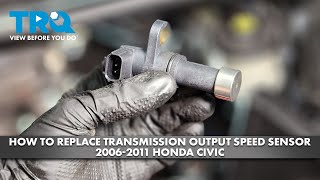
🎬 Watch: How to replace the transmission output speed sensorCan I Drive With P1889?
Yes, but with major caveats For Jaguar, Land Rover, Ford, and Volvo, you can drive, but the vehicle locks into two-wheel drive, severely reducing traction in slippery conditions. For VW/Audi, P1889 indicates a critical cooling system failure; driving causes rapid overheating and severe engine damage. For Honda, it signals a transmission fault causing unpredictable shifting. Address the code immediately based on your specific manufacturer.
Common Causes
- Failed AWD/Haldex Pump or Actuator (Very Common) — The electric motor inside the pump or actuator wears out, specifically the internal carbon brushes. On Gen 4 Haldex systems (LR2, Evoque, Volvo), this creates an open circuit and is the primary cause of the code.
- Faulty Coolant Shut-Off Valve / Thermostat Housing (VW/Audi) (Very Common) — On VW/Audi models like the Golf GTI and A3, P1889 is a cooling system code. It points directly to a failure of the N82 coolant shut-off valve, which requires replacing the entire integrated thermostat housing assembly.
- Defective Transfer Case Actuator (Jaguar/Land Rover) (Common) — On 2017-2019 Jaguar (F-Pace, XE, XF) and Land Rover (Velar) models, TSBs SSM74179 and SSM74180 identify a specific batch of faulty actuators by serial number (units at or below 10854769).
- Dirty Fluid and Clogged Pump Filter (Common) — AWD/Haldex fluid degrades and contaminates with clutch material. This sludge clogs the pump's small filter screen, starving the pump for oil. The resulting strain causes the pump to overheat and burn out.
- Faulty AWD Pressure/Temperature Sensor (Ford) (Less Common) — On 2005-2007 Ford Freestyle, Five Hundred, and Mercury Montego models, TSB 08-4-11 specifies that if P1889 is the ONLY code present in the DEM, the cause is a faulty oil pressure/temperature sensor, not the pump.
- Damaged Wiring or Corroded Connector (Less Common) — The wiring and electrical connector for the pump/actuator sit under the vehicle exposed to the elements. Water intrusion causes corrosion, leading to a poor connection, short circuit, or open circuit.
- Faulty Engine Oil Pressure Control Solenoid (Ford Focus ST Diesel) (Rare) — On Ford models with variable pressure oil pumps, P1889 indicates a problem with the main engine oil pressure regulation, caused by a faulty switch or control solenoid near the oil filter.
Symptoms
- 'Traction Reduced' or 'AWD/Transmission Fault' Warning — A dashboard message appears indicating a traction system problem. On Land Rovers, this misleadingly says 'Transmission Fault,' even though the main gearbox is perfectly fine.
- Vehicle is Stuck in Two-Wheel Drive — The vehicle suffers a significant loss of traction, front wheel spin on acceleration, and poor handling on slippery surfaces because the all-wheel drive system is disabled.
- Engine Overheating or Limp Mode (VW/Audi) — On Volkswagen and Audi models, the temperature gauge spikes erratically, triggering limp mode to protect the engine from severe overheating damage.
- Juddering or Binding on Tight Turns — A shuddering, skipping, or binding sensation emits from the drivetrain when making sharp, low-speed turns. This is the primary symptom on affected Jaguar and Land Rover models.
- Flashing 'D' Light and Erratic Shifting (Honda) — On Honda models, the 'D' (Drive) indicator on the shifter display flashes, accompanied by harsh or unpredictable transmission shifts.
Diagnostic Flowchart
Tap your situation to follow the diagnostic path that matches what you're seeing on this code.
Common Fixes & Costs
- Replace AWD/Haldex Pump, Filter, and Fluid — Parts: $250-$450, Labor: $250-$450, ~2 hr book time (Intermediate)
- Replace Engine Thermostat & Water Pump Assembly (VW/Audi) — Parts: $250-$450, Labor: $650-$1050, ~5 hr book time (Advanced)
- Replace Transfer Case Actuator and Fluid (JLR) — Parts: $300-$500, Labor: $300-$500, ~2.5 hr book time (Intermediate)
- Change Transfer Case/Haldex Fluid and Clean Pump Screen — Parts: $60-$120, Labor: $150-$250, ~1 hr book time (DIY)
- Replace AWD Pressure/Temperature Sensor (Ford) — Parts: $50-$100, Labor: $150-$300, ~1.5 hr book time (DIY)
Used vs. New Parts: Buying Guide
When a used part is worth it: Buying used Haldex pumps, JLR actuators, or VW thermostat assemblies is highly discouraged. These components fail due to internal wear and plastic fatigue; a used part has an unknown lifespan.
Donor-vehicle mileage cap: roughly under 40000 miles for the part to have meaningful remaining life.
Donor quality checklist:
- Match the part number exactly, including suffix revisions.
- Ensure the donor vehicle has no water damage or electrical fires.
- Avoid parts from regions with heavy road salt use.
Decision logic:
- If The part is a Haldex pump or VW thermostat assembly. → Buy new from the OEM or a reputable aftermarket brand. The high labor cost makes a repeat failure with a used part financially ruinous.
- If The part is an entire transfer case assembly. → A low-mileage used assembly is cost-effective, but only if the specific bolt-on component causing P1889 is confirmed non-serviceable.
- If The part is a control module (DEM, TCCM). → A used module works, but verify if it requires VIN programming, which adds cost and complexity.
Warranty tradeoff: Used parts offer 30-90 day warranties. New aftermarket parts offer 1-year to lifetime warranties. New OEM parts carry 1-2 year warranties.
Worst-case if a used part fails: $500-$1500 if a used part fails shortly after installation due to repeated labor charges.
What Happens If You Wait — Timeline
- Immediate: AWD Scenario: 'Traction Reduced' light appears, AWD disables. VW/Audi Scenario: Check Engine Light illuminates, intermittent temperature spikes occur. (MPG impact: 0-2%% · Added cost: $0)
- 1-4 weeks: AWD Scenario: A failing pump draws high current, risking damage to the AWD control module. VW/Audi Scenario: Overheating becomes frequent, stressing the plastic thermostat housing. (MPG impact: 2-5%% · Added cost: $0 to $1200)
- 1-6 months: AWD Scenario: Continued driving with juddering stresses U-joints. VW/Audi Scenario: Repeated overheating warps the plastic housing and blows the head gasket. (MPG impact: 5-10%% · Added cost: $500 to $3500)
- 6+ months: AWD Scenario: Hard failure of AWD components. VW/Audi Scenario: Coolant mixes with oil, leading to catastrophic engine failure requiring full replacement. (MPG impact: 10-25%% · Added cost: $8000-$15000)
Cost of Not Fixing It
- Immediate: AWD vehicles operate in 2WD only, losing traction. VW/Audi vehicles risk severe engine overheating and limp mode activation. (Added cost: 0)
- 1-6 months: A failing AWD pump draws high current, burning out the $1,200 AWD control module. VW/Audi overheating cycles warp the cylinder head or blow the head gasket. (Added cost: $1200-$3500)
- 6+ months: VW/Audi coolant mixes with oil, destroying internal bearings and requiring a complete engine replacement. (Added cost: $8000-$15000)
Diagnosis Steps
- Check for Technical Service Bulletins (TSBs)
Before touching a wrench, search for TSBs for your specific VIN. JLR (SSM74179), Ford (08-4-11), and Land Rover (LTB00795NAS2) published explicit repair instructions that prevent thousands of dollars in misdiagnosis.
Tools: Smartphone or Computer (Beginner) - Perform a Full System Scan
Use an advanced OBD-II scanner to read manufacturer-specific codes from all modules (TCCM, DEM, ECM). Note any suffix codes (e.g., P1889-14, P1889-71) as they provide the exact electrical failure type.
Tools: Advanced Bi-Directional Scanner (Beginner) - Test the Haldex Pump Motor Resistance
Disconnect the pump connector and measure resistance between the two pins. A healthy Gen 4 pump reads 2.2-2.5 ohms; Gen 5 reads ~0.5 ohms. A reading of infinity (open circuit) guarantees the internal brushes are destroyed.
Tools: Multimeter (Advanced) - Perform a Pump 'Tap Test'
While a helper cycles the ignition on, firmly tap the body of the Haldex pump motor with a screwdriver handle. If the pump momentarily whirs to life, the motor brushes are stuck or worn, confirming the pump needs replacement.
Tools: Screwdriver or Small Hammer (Intermediate) - Inspect Fluid Level and Condition
Safely lift the vehicle and check the transfer case or Haldex fluid. Dark, thick, or metallic-smelling fluid indicates severe contamination. A thick paste of metallic sludge on the pump's filter screen confirms a clogged system.
Tools: Vehicle Lift or Jack Stands, Socket Set (Intermediate) - Command the Pump and Monitor Pressure
Use a bi-directional scan tool to command the AWD pump on. If the pump runs but pressure does not build, the filter is clogged. If the pump does not run but receives power and ground, the motor is dead.
Tools: Bi-Directional Scan Tool (Advanced) - Inspect Wiring and Connectors
Meticulously inspect the electrical connector and harness for green corrosion, chafed wires, and bent pins. On VW/Audi models, check for coolant leaking directly into the N82 valve's electrical connector.
Tools: Flashlight, Multimeter (Intermediate) - Monitor Live Data for JLR Actuator
On Jaguar and Land Rover models, use a JLR-specific scan tool to monitor TCCM live data. Suffix codes P1889-18 (current too low), P1889-19 (current too high), and P1889-71 (actuator stuck) point directly to a failed actuator.
Tools: JLR Pathfinder/SDD Scan Tool (Advanced)
When This Code Triggers (Freeze-Frame Conditions)
- Engine Coolant Temp: 185-210°F (85-99°C) (The fault logs when the engine reaches full operating temperature.)
- Vehicle Speed: 25-60 mph (40-97 kph) (The code sets during steady city or highway cruise conditions when the system actively monitors pump performance.)
- Module Voltage: 13.2-14.5 V (The fault registers when the charging system operates normally, ruling out a general low-voltage battery condition.)
Related Codes
- P188E — On Jaguar and Land Rover vehicles, this code for 'Transfer Case Actuator Motor Current' frequently stores with P1889. Seeing them together definitively proves the transfer case actuator failed.
- P0961 — This code for Pressure Control Solenoid Performance appears with P1889 on Land Rover and Ford models. P1889 points directly to the electrical failure of the pump motor itself.
- 00448 (VAG) — This is the true Volkswagen/Audi specific code for a defective Haldex AWD pump. If you see P1889 on a VAG car, it refers to the coolant valve, not the AWD system.
- P0118 (VW/Audi) — P0118 for 'Engine Coolant Temperature Sensor Circuit High' often appears alongside P1889. Seeing both codes strongly points to the entire thermostat/water pump assembly as the root cause.
Climate & Environmental Factors
- Humidity and Road Salt: High humidity and road salt accelerate corrosion of the pump's exposed electrical connector, leading to intermittent electrical faults triggering P1889.
- Extreme Cold: In very cold weather, contaminated AWD fluid thickens, putting severe strain on the pump motor during startup and causing weak pumps to fail.
How to Clear the Code After You Fix It
- Use a compatible OBD-II scan tool to erase the codes from the specific module (DEM, TCCM, ECM).
- For Haldex systems, perform a pump prime or bleed procedure with an advanced scan tool.
- For JLR actuators, perform the mandatory 'Transfer Case Clutch and Range Change Mechanism Calibration' with a compatible scanner.
- Perform a complete drive cycle to reset readiness monitors.
Drive cycle (~30 minutes): Perform a cold start and idle for 3 minutes. Drive in mixed stop-and-go conditions for 15 minutes. Drive at a steady highway speed (55 mph) for 10 minutes. Allow the vehicle to cool down completely.
Readiness monitors affected: Comprehensive Component Monitor, Catalyst Monitor
Before emissions retest: drive at least 50 miles to fully set monitors.
Watch out for:
- Disconnecting the battery does not clear this manufacturer-specific code.
- The code returns immediately if the underlying mechanical fault or fluid contamination is not repaired.
- Skipping the required software calibration after replacing a JLR actuator guarantees the repair will fail.
Will This Fail Emissions / State Inspection?
Yes — this code typically fails an OBD-II emissions inspection.
- California: An illuminated Check Engine Light or AWD malfunction light from code P1889 results in an automatic failure of the smog check's OBD-II inspection.
- New York: Any fault code illuminating the Malfunction Indicator Lamp (MIL), including P1889, causes an automatic emissions inspection failure.
- Texas: Vehicles with an active P1889 code and illuminated Check Engine Light fail the OBD portion of the annual safety inspection.
Most Commonly Affected Vehicles
- Land Rover LR2, Range Rover Evoque (2009-2015) — Extremely common failure of the Gen 4 Haldex pump due to worn motor brushes, logging code P1889-14. The fix is replacing the pump, filter, and fluid together.
- Jaguar F-Pace, XE, XF (2017-2019) — A known defect with the transfer case actuator (serial numbers below 10854770) causes this code. The fix is actuator replacement and calibration, not the entire transfer case.
- Land Rover Range Rover Velar (2018-2019) — Shares the same faulty transfer case actuator issue as Jaguar models, covered by TSB SSM74180.
- Volkswagen / Audi Golf GTI, Golf R, A3, S3 (2013-2020) — P1889 indicates a fault with the Coolant Shut-Off Valve (N82), causing overheating. This is NOT an AWD fault on these models.
- Ford Freestyle, Five Hundred, Montego (2005-2007) — TSB 08-4-11 states if P1889 is the only code stored, the cause is a faulty oil pressure/temperature sensor on the DEM, not the pump.
- Volvo S60, XC60, XC90 (AWD) (2008-2016) — Prone to Gen 4 Haldex pump failure (P1889-14) from worn brushes. Requires pump and fluid replacement.
- Honda Fit, Civic (CVT) (2008-2021) — P1889 indicates a 'Problem in CVT Speed Sensor 2 Circuit.' This is a transmission issue causing harsh shifting and limp mode.
Manufacturer-Specific Notes
- Jaguar / Land Rover: For 2017-2019 models, the cause is almost always a faulty transfer case actuator with a serial number at or below 10854769. Replace the actuator per TSB SSM74179; do not replace the transfer case.
- Volkswagen / Audi: P1889 is a red herring for AWD issues. It means 'Coolant Shut-Off Valve Short Circuit' and points to a failed thermostat housing causing overheating. Check eligibility for the U55 warranty extension (8 years/80,000 miles).
- Ford / Volvo / Land Rover (Haldex): On Gen 4 Haldex systems, the code is usually P1889-14, indicating an electrical open circuit inside the pump motor from worn brushes. Replacing the pump, filter, and fluid together is the only complete repair.
- Honda: P1889 is not an AWD code. It refers to a 'Problem in CVT Speed Sensor 2 Circuit,' causing erratic shifting and a flashing 'D' light. Diagnosis must focus on transmission sensors.
Real Owner Stories
2013 VW GTI with ~70k miles
Car began to overheat rapidly, with the temperature gauge jumping to 125°C, triggering limp mode. No signs of actual engine heat or coolant loss.
What they tried:
- A shop replaced the 'coolant shut off valve' (N82), which resolved the issue for four days before it returned.
Outcome: The root cause is a known failure of the entire thermostat and water pump assembly. The final repair requires replacing the whole assembly, not just the valve.
Lesson: On a VW/Audi, P1889 is a cooling system code. Intermittent, rapid overheating points directly to the thermostat housing assembly, a common failure requiring full replacement.
2013 Range Rover Evoque with 'Gearbox Fault' message
A 'Gearbox Fault, Traction Reduced' warning appeared. A scan revealed code P1889-14, indicating an issue with the rear Haldex unit oil pump.
What they tried:
- The owner took the vehicle to a Land Rover specialist.
Outcome: The specialist replaced the Haldex oil pump, filter, and fluid. This cleared the P1889-14 code and restored full AWD functionality.
Lesson: The 'Gearbox Fault' message is misleading. P1889-14 points directly to a failed Haldex pump due to worn internal brushes. Replace the pump, filter, and fluid together.
2017 Jaguar F-Pace with 'Traction Reduced' warning and juddering
The 'Traction Reduced' warning illuminated, and the owner experienced a juddering sensation from the drivetrain during low-speed turns.
What they tried:
- A general mechanic suggested replacing the entire transfer case.
Outcome: The correct diagnosis, per Jaguar TSB SSM74179, is a faulty transfer case actuator. The fix is replacing only the bolt-on actuator and performing a software calibration.
Lesson: Always check TSBs. For 2017-2019 JLR models, P1889 is a faulty actuator, not the transfer case. Replacing the wrong part wastes thousands of dollars.
How to Prevent This Code From Triggering
- Service Haldex/AWD Fluid and Filter/Screen (Every 30,000 miles) — Clutch packs shed material, contaminating fluid and clogging the pump's filter screen. Clean fluid prevents the pump from starving, overheating, and burning out.
- Use Correct, Manufacturer-Specific AWD Fluid (Every service) — Haldex fluid is a specific non-lubricating fluid designed to promote friction. Using standard gear oil causes a total loss of AWD and damages the clutches.
- Inspect and Clean Electrical Connectors (Every 40,000 miles) — The pump connector is exposed to road salt. Cleaning it with contact cleaner and applying dielectric grease prevents electrical failures.
Frequently Asked Questions
Can I just clear the P1889 code and keep driving?
You can clear it, but it returns immediately. The code indicates a hard hardware failure or severe fluid contamination. Clearing the code does not fix the underlying mechanical issue.
What happens if I ignore the P1889 code?
On AWD systems, you permanently lose all-wheel drive and risk burning out the control module. On VW/Audi vehicles, ignoring it causes catastrophic engine overheating. On Hondas, it causes unpredictable transmission shifting.
My mechanic wants to replace the whole transfer case. Is that necessary?
Almost never. The problem is overwhelmingly a cheaper, bolt-on part like the pump or actuator. Show your mechanic the specific TSBs for your vehicle to prevent an incorrect, thousands-of-dollars misdiagnosis.
How can I prevent the P1889 code from happening?
For AWD systems, change the Haldex or transfer case fluid and filter every 30,000 miles. Clean fluid prevents the pump's filter screen from clogging. This stops the pump from starving, overheating, and burning out.
Why did my VW overheat and go into limp mode with an AWD code?
On VW and Audi models, P1889 is not an AWD code. It specifically points to a failed Coolant Shut-Off Valve (N82) inside the thermostat housing. You must replace the entire thermostat assembly to fix the overheating.
What does the P1889 suffix code mean?
Suffixes pinpoint the exact electrical failure. For example, -14 means an open circuit (worn brushes), -18 means low current, and -71 means the actuator is mechanically stuck. Always read the suffix code with an advanced scanner.
Key Takeaways
- P1889 disables AWD on Land Rover, Volvo, and Ford vehicles, but triggers a critical engine overheating limp mode on 2013-2020 VW/Audi models.
- On Haldex-equipped vehicles, a P1889-14 suffix code guarantees the internal pump motor brushes are worn out, requiring a $500-$900 pump and fluid replacement.
- For 2017-2019 Jaguar and Land Rover models, check the transfer case actuator serial number; units at or below 10854769 are defective and must be replaced per TSB SSM74179.
- Never replace an entire transfer case or transmission for this code without first testing the $250 bolt-on actuator or pump, which causes 90% of P1889 failures.
Helpful Videos
Shop the Parts Behind P1889
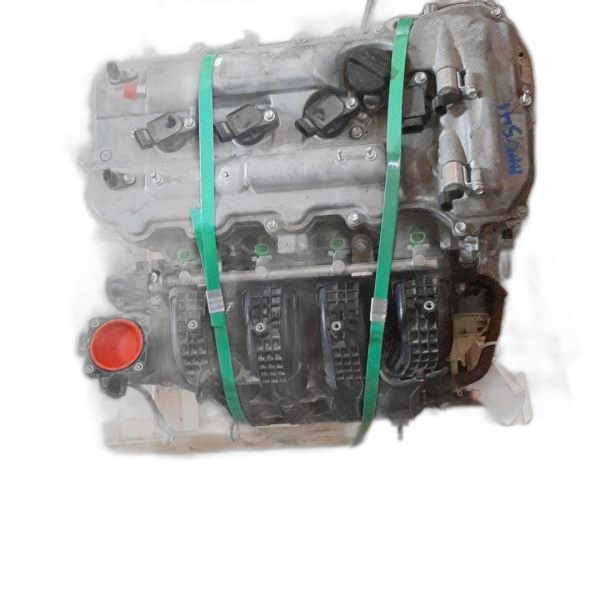
Below are the parts most often responsible for code P1889, ranked by how frequently each one is the actual culprit (per the diagnosis above). Tap any to see what we have for your vehicle.




The information in this article is provided for general reference and educational purposes only. Vehicle specifications, procedures, and part compatibility can vary by production date, trim level, and region. Always consult your vehicle's factory service manual and verify part numbers before purchasing or performing repairs. Safety-critical components such as airbags, seat belts, and braking systems should be installed by a qualified professional.
- 🧭 Diagnostic Flowchart
- 🎬 Helpful Videos
- 🛍️ Shop This Part
- What Does P1889 Mean?
- Can I Drive With P1889?
- Common Causes
- Symptoms
- Common Fixes & Costs
- Used vs. New Parts: Buying Guide
- What Happens If You Wait — Timeline
- Cost of Not Fixing It
- Diagnosis Steps
- When This Code Triggers (Freeze-Frame Conditions)
- Related Codes
- Climate & Environmental Factors
- How to Clear the Code After You Fix It
- Will This Fail Emissions / State Inspection?
- Most Commonly Affected Vehicles
- Manufacturer-Specific Notes
- Real Owner Stories
- 2013 VW GTI with ~70k miles
- 2013 Range Rover Evoque with 'Gearbox Fault' message
- 2017 Jaguar F-Pace with 'Traction Reduced' warning and juddering
- How to Prevent This Code From Triggering
- Frequently Asked Questions
- Can I just clear the P1889 code and keep driving?
- What happens if I ignore the P1889 code?
- My mechanic wants to replace the whole transfer case. Is that necessary?
- How can I prevent the P1889 code from happening?
- Why did my VW overheat and go into limp mode with an AWD code?
- What does the P1889 suffix code mean?
- Key Takeaways
- 🎟️ Get 5% Off