

P1889 on 2015-2020 Audi A3 1.8T: Coolant Shut-Off Valve Fault Causes and Fixes
On a 2015-2020 Audi A3, code P1889 almost always indicates a failure of the thermostat and water pump assembly. This is a very common issue, and the typical fix is to replace the entire unit, which can cost between $600 and $1,200 at a shop. Many vehicles are covered by a warranty extension due to a class-action lawsuit.
- P1889 on your Audi A3 is a serious cooling system fault, not a transmission or AWD problem.
- The cause is almost always a failed water pump and thermostat housing assembly, a known weak point on this engine.
- Do not ignore this code. Continued driving can lead to engine overheating and catastrophic failure.
- Before paying for a repair, contact an Audi dealer with your VIN to check if your vehicle is covered by the water pump warranty extension.
- The correct repair is to replace the entire water pump and thermostat assembly, not just one component.
What's Unique About the 2015-2020 Audi A3
For the 2015-2020 Audi A3 with the 1.8T EA888 Gen 3 engine, this code is a notorious platform-specific issue. The problem is not usually the valve in isolation, but the entire water pump and thermostat housing assembly it's integrated into. This assembly is made of plastic that becomes brittle from heat cycles and is prone to cracking, leaking, and internal failures. Due to the high failure rate, this part was the subject of a class-action lawsuit, leading to a warranty extension for many affected vehicles.
Symptoms You May Notice
- Check Engine Light is on
- Engine overheating or temperature gauge reading higher than normal
- Temperature gauge fluctuating erratically
- Engine entering 'limp mode' to prevent damage
- Low coolant warning light on the dashboard
- Visible coolant leak (pink or orange fluid) under the front, center of the car
- A sweet smell of coolant from the engine bay
- No heat from the cabin heater
- Replacing only the N82 valve without the rest of the housing. While this might temporarily clear the electrical fault code, the plastic housing is often the root cause and is likely to fail soon after, requiring the job to be done again.
- Mistaking P1889 for an All-Wheel Drive (AWD) system fault. On other manufacturers, this code can relate to the AWD pump, but on VW/Audi vehicles, it is strictly a cooling system code. The VAG-specific code for a Haldex AWD pump failure is 00448.
- Replacing only the water pump when the thermostat housing is the source of the leak, or vice-versa. Due to the integrated design and shared labor, replacing the complete assembly is the only recommended, long-term fix.
Most Likely Causes
- Failed Water Pump / Thermostat Housing Assembly 🔴 High Probability → Shop Integrated Thermostat Housing Assembly The original housing is made from plastic that degrades from constant heat cycles, leading to cracks, leaks, and internal failure of the integrated N82 valve. The failure is so common that it affects nearly every vehicle with an EA888 Gen 3 engine, typically between 50,000 and 80,000 miles.
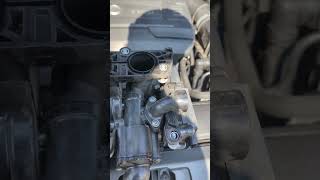
How to confirm: Visually inspect the assembly, which is located on the front of the engine below the intake manifold, for signs of pink/orange coolant crust or active leaks. A pressure test of the cooling system will often confirm the leak's location. A scan tool can confirm the P1889 electrical fault. 🎬 Watch: Fixing P1889 codes, overheating, and limp mode issues.
Typical fix: Replace the entire water pump and thermostat housing assembly. It is strongly recommended to replace both parts at the same time, even if only one has failed, due to their shared location and similar failure rates. The serpentine belt is often replaced at the same time.
Est. part cost: $250-$500 - Damaged Wiring or Electrical Connector ⚪ Low Probability Coolant from a leaking N82 valve can seep into the electrical connector and travel up the wiring harness via wicking action, causing corrosion and short circuits. This can cause the P1889 code to persist even after the housing is replaced if the harness is not inspected and cleaned.
How to confirm: Disconnect the electrical connector at the Coolant Shut-Off Valve (N82) and inspect for any signs of moisture, corrosion (green or white powder), or backed-out pins. Follow the harness to check for other areas of damage or melted insulation.
Typical fix: If corrosion is present, the connector and affected section of the wiring harness may need to be repaired or replaced. Using a crimp repair with a heat-shrink sleeve is the preferred method over soldering, which can make the wire brittle. The source of the leak (the valve/housing) must also be replaced.
Est. part cost: $20-$150
Rare But Worth Checking
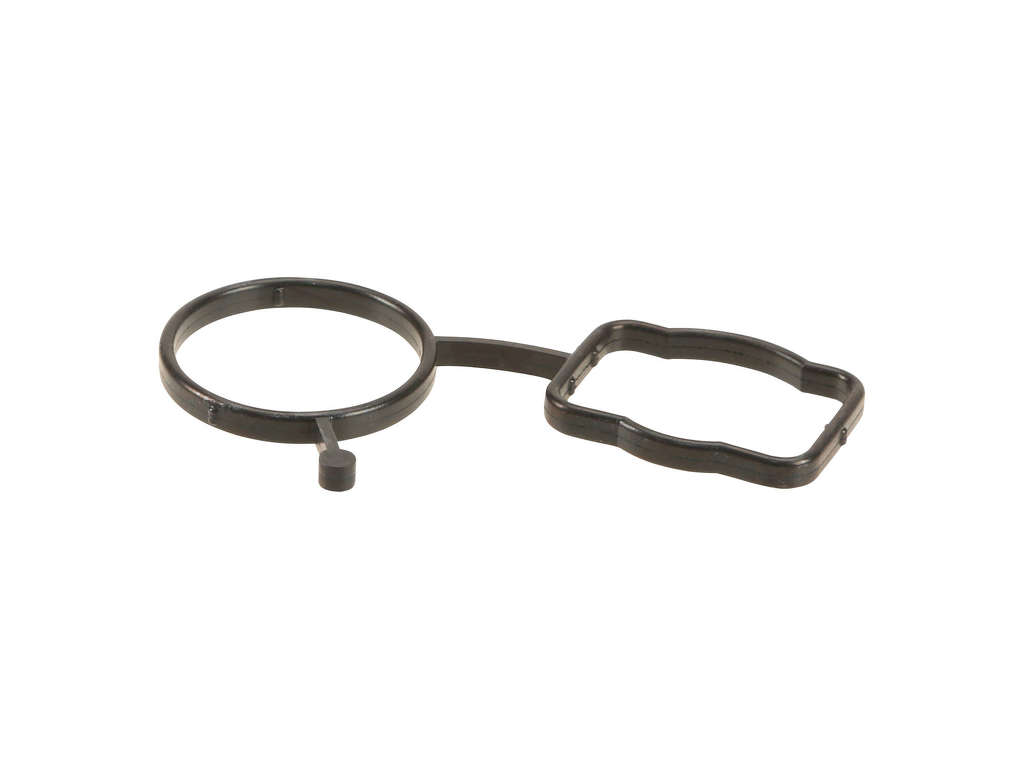
- Leaking Oil Cooler Union O-Ring:
Diagnosis Steps
- Read the fault codes with an OBD-II scanner to confirm P1889 is present.
- Check the coolant level in the expansion tank. If it is low, a leak is likely.
- With the engine cool, visually inspect the water pump and thermostat housing assembly on the front of the engine. Look for signs of dried pink/orange coolant residue or active drips. This may require a mirror and flashlight as access is tight.
- Inspect the electrical connector on the Coolant Shut-Off Valve (N82) for corrosion, moisture, or damage.
- If no obvious leak is found, a technician will perform a cooling system pressure test to pinpoint the source of the leak.
- If no leak is found but the code persists, the wiring to the N82 valve should be tested for continuity and shorts to ground or power.
- Given the high failure rate, if the vehicle is near or over 60,000 miles and has the original assembly, replacement is the most likely diagnosis.
- Before starting repairs, contact an Audi dealer with the VIN to check for coverage under the water pump warranty extension (U55).
Parts You'll Likely Need
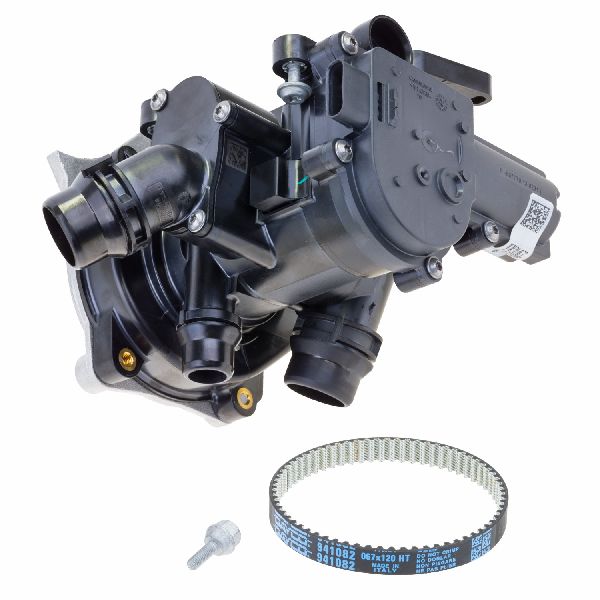
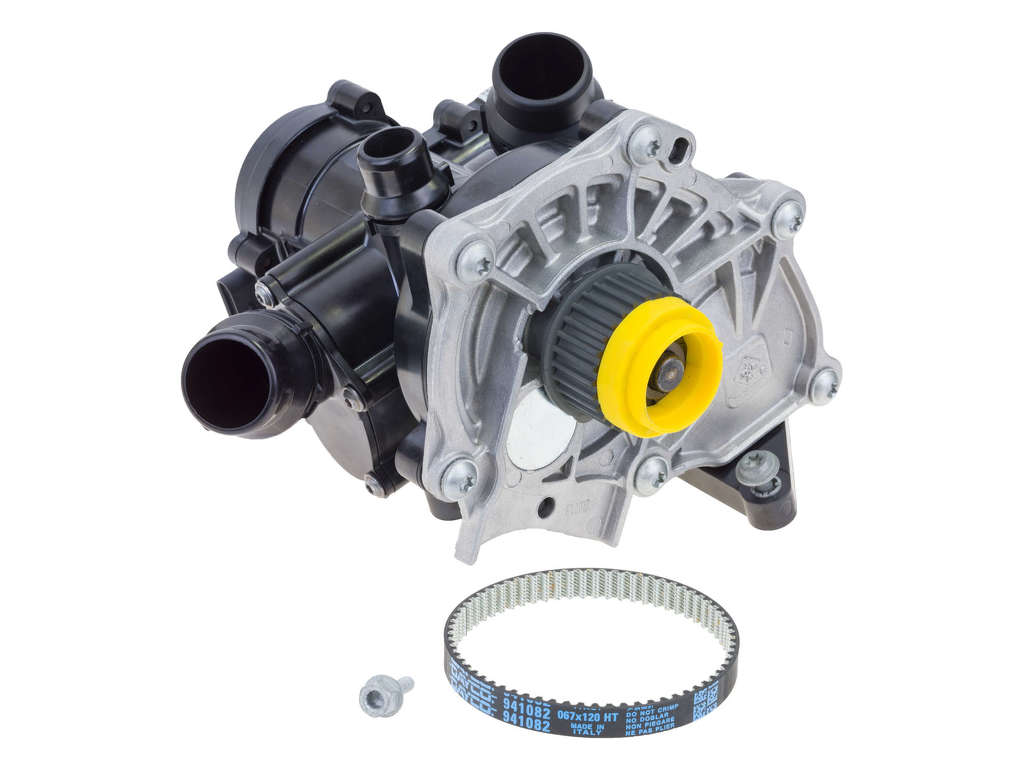
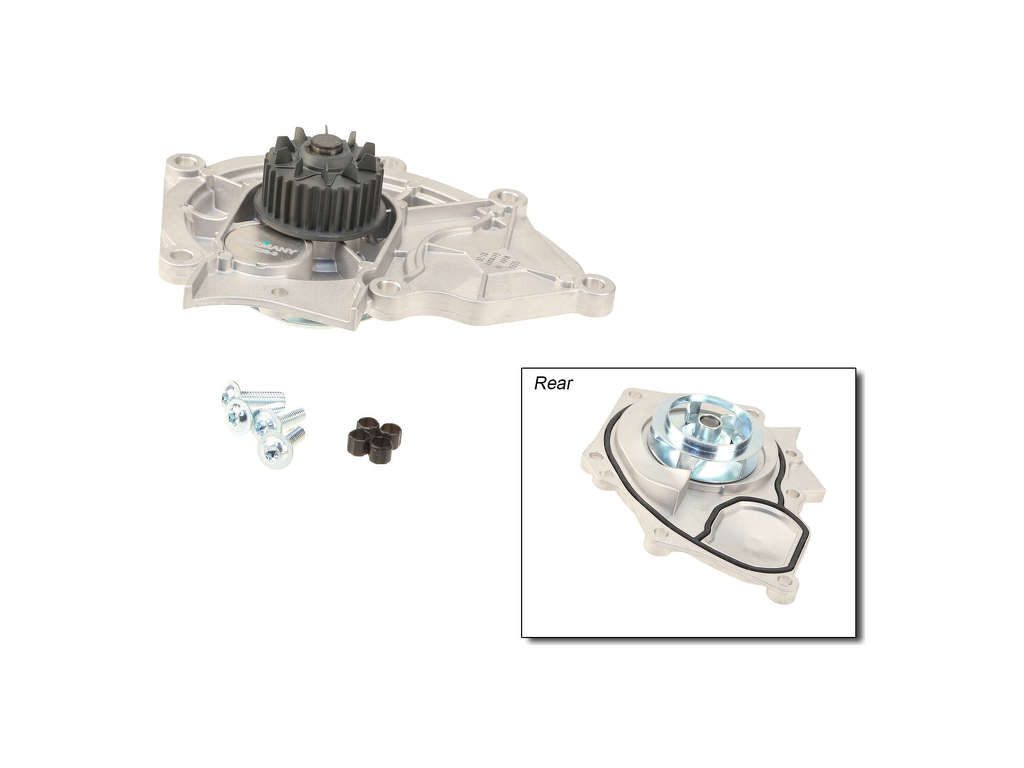
- Water Pump and Thermostat Housing Assembly
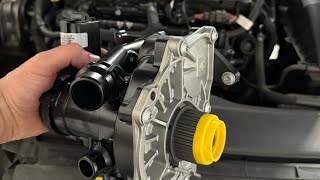
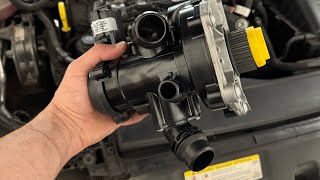
(OEM #06L121111P)— This is the complete assembly that contains the failure-prone plastic housing and the N82 valve that triggers code P1889. Replacing the entire unit is the standard, reliable repair. The part number has been revised multiple times from suffixes like F, G, H, J, K, L, and M, with 'P' being the latest, most durable version. 🎬 Watch: How to properly install the new thermostat and pump.
Trusted brands: Genuine VW/Audi, INA, Mahle, Continental
OEM price range: $350-$500
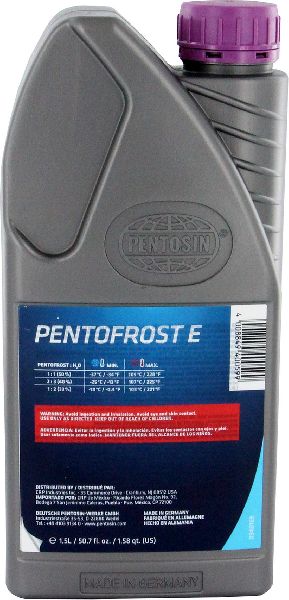
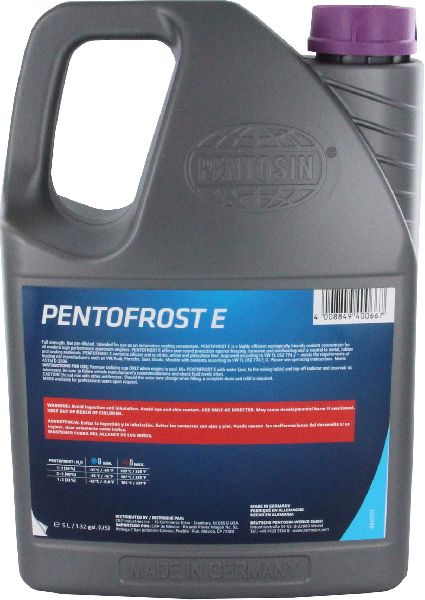
Aftermarket price range: $200-$350 - G13 or G12evo Coolant — The cooling system must be drained and refilled with the correct type of VAG-specific coolant as part of the repair.
Trusted brands: Genuine VW/Audi, Pentosin
OEM price range: $25-$40
Aftermarket price range: $20-$30
Related Codes That Often Appear With This One
- P2181 — P2181 ('Cooling System Performance') is a general code indicating the engine is not reaching operating temperature correctly. It frequently appears with P1889 because a faulty N82 valve or a leaking system disrupts proper temperature regulation.
- P2681 — P2681 ('Engine Coolant Bypass Valve Control Circuit/Open') points to a fault in a related part of the thermal management system, often logged when the main thermostat assembly fails.
- P0118 — P0118 ('Engine Coolant Temperature Sensor Circuit High') can appear alongside P1889, as the sensor is part of the same system and its readings can be affected by the valve's malfunction or coolant leaks.
Technical Service Bulletins (TSBs) & Recalls
- VW RoW market TPI 2043381: This Technical Product Information document from Volkswagen pertains to DTCs P1889 and P19A2, acknowledging the issue and often pointing towards inspection of the wiring and valve integrated into the thermostat housing.
Platform-Specific Known Issues
- A class-action settlement resulted in a warranty extension for the water pump and thermostat assembly for many 2014-2021 VW and Audi models. The extension typically covers one repair for up to 8 years or 80,000 miles, whichever comes first. Owners should contact an Audi dealership with their VIN to verify if their specific vehicle is covered under this program. The dealer can check for warranty key 'U55' in their system to confirm eligibility.
Scan Tool Commands That Help
- VCDS (VAG-COM) or ODIS: Engine (01) -> Output Tests — To manually command the N82 Coolant Shut-Off Valve to open and close. This directly tests the valve's solenoid and mechanical function, helping to isolate the fault between the valve itself, the wiring, or the ECU.
- VCDS (VAG-COM) or ODIS: Engine (01) -> Basic Settings -> Bleeding cooling system — This is a required procedure after replacing the water pump/thermostat assembly. The function runs the various coolant pumps and valves in a specific sequence to purge air from the complex cooling circuits, preventing air pockets that can cause overheating.
- VCDS (VAG-COM) or ODIS: Engine (01) -> Adaptation — While not always required for this specific part replacement, resetting learned values may be necessary if other related components were disturbed or if drivability issues persist post-repair. No specific adaptation is documented as mandatory for the N82 valve itself.
Wiring & Ground Locations
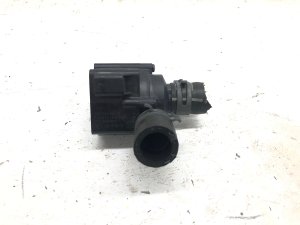
- N82 - Coolant Shut-Off Valve Connector — On the thermostat housing assembly, below the intake manifold on the front of the engine.. This is the primary connection point for the component that triggers P1889. Inspecting for coolant intrusion, corrosion, or backed-out pins is a critical diagnostic step.
- N82 Connector Pin 1 — On the 2-pin connector (T2jk) for the N82 valve.. According to wiring diagrams, this pin carries the control signal from the ECU. On some diagrams, it is a Green/Gray (gn/gr) wire leading to pin 22 of the ECU's 91-pin connector (T91).
- N82 Connector Pin 2 — On the 2-pin connector (T2jk) for the N82 valve.. This pin provides the power feed for the valve. On some diagrams, it is a White/Gray (ws/gr) wire leading to pin 72 of the ECU's 105-pin connector (T105). Testing for voltage and continuity on these specific pins is essential for diagnosing a wiring fault.
- J623 - Engine Control Unit — Located in the plenum chamber, under the plastic cowl cover at the base of the windshield.. The J623 module sends the command to the N82 valve. In rare cases, a failure of the driver circuit within the ECU can mimic a valve or wiring fault, making this the last component to check.
Real Owner Repair Stories
- The Auto Connect YouTube Channel (2015 Audi A3 1.8T) — Car was towed in, in limp mode, running hot, with code P1889.
❌ Tried (didn't work) Directly diagnosed as a cooling system blockage/leak.
✅ What actually fixed it Replaced the entire thermostat housing and the water pump assembly. The mechanic noted the housing was leaking and internally blocked, preventing coolant flow. After replacement, the car ran perfectly with no limp mode or overheating. - Reddit user in r/GolfGTI (VW Golf GTI (with same EA888 Gen3 engine and N82 valve)) — No heat, diagnosed as a faulty N82 coolant shut-off valve.
❌ Tried (didn't work) Purchased a cheap, non-OEM replacement valve from Amazon for under $100 CAD.
✅ What actually fixed it The cheap aftermarket part failed catastrophically ('the top popped off'), leaving the user stranded. The strong advice was to buy the genuine OEM part to avoid a repeat failure.
OEM Part Supersession History
06L121111F, 06L121111G, 06L121111H, 06L121111J, 06L121111K, 06L121111L, 06L121111M→06L121111P— The original plastic housings were prone to cracking and internal failures due to heat degradation. Subsequent revisions aimed to improve the material composition and design for better durability. 'P' is the latest and most robust version available.
Heads up: All previous versions should be replaced with the latest 'P' revision. Do not install an older revision part, even if it is new old stock.
Diagnostic Flowchart
Other Known Issues on This Vehicle
Issues unrelated to this code that are worth knowing about as an owner of this generation:
- Intake Valve Carbon Buildup 🟠 Medium — Common on all Direct Injection (GDI) engines, including the EA888. Typically requires cleaning every 40,000-80,000 miles. Symptoms include rough idle, hesitation, and loss of power.
- PCV Valve Failure 🟠 Medium — The PCV (Positive Crankcase Ventilation) valve diaphragm can tear, causing a significant vacuum leak. Symptoms include a whistling or honking noise from the engine bay, rough idle, stalling, and excessive oil consumption.
- Panoramic Sunroof Frame Cracks / Drain Clogs 🔴 High — The plastic sunroof frame is prone to developing stress cracks, and the drain tubes can clog, leading to water leaking into the headliner and damaging electronics like the sunroof motor. This was also subject to a class-action lawsuit. (Ref: Class-action lawsuit settlement extended warranty for some vehicles.)
- Turbocharger Wastegate Actuator Failure 🟠 Medium — The electronic wastegate actuator on the IS20/IS38 turbo can fail, leading to boost control problems and fault codes. While the actuator can be replaced separately, dealers often recommend replacing the entire turbocharger.
Used vs. New Parts: Buying Guide for This Vehicle
When a used part is the smart pick: For this specific repair, obtaining a used water pump/thermostat assembly from a junkyard is NEVER a smart choice. The part has an extremely high failure rate due to the plastic degrading with heat cycles, so a used part is likely near the end of its life regardless of donor vehicle condition.
What to inspect on the donor part:
- Not applicable. Do not source this part used.
OEM-only on this vehicle (don't cheap out):
- Water Pump and Thermostat Housing Assembly: While some aftermarket options exist, the safest and most reliable repair uses a Genuine VW/Audi part, specifically the latest revision (06L121111P). This ensures you have the most updated materials and design to prevent a premature repeat failure.
Aftermarket brands forum-validated for this vehicle:
- INA: Mentioned on forums as a reliable OEM-equivalent supplier; INA is part of the Schaeffler group which is a major OEM supplier to VAG.
- Mahle / Continental: Both are reputable OEM suppliers and their versions of this assembly are considered reliable alternatives to the Genuine part.
- USP Motorsports / BAR-TEK: These brands offer upgraded versions with metal components (e.g., aluminum housing or metal impeller) for enthusiasts seeking higher durability than the OEM plastic design.
Brands owners have reported issues with on this vehicle:
- Unbranded, low-cost parts from marketplaces like Amazon or eBay. A real-world owner reported a catastrophic failure of a cheap aftermarket valve, resulting in being stranded. The significant price difference often reflects inferior materials and quality control.
Real Owner Stories
Aggregated from forums and TSBs cited above. Mileages and costs reflect what owners reported in those sources.
2016 Audi A3 2.0T
Symptoms: P1889 code appeared immediately after being cleared, even though the water pump had recently been replaced.
What fixed it: The persistent code pointed to a likely wiring issue in the harness leading to the coolant shut-off valve.
Source hint: AudiWorld Forums
2015-2020 Audi A3
Symptoms: Check Engine Light with code P1889 stored, caused by the N82 valve.
What fixed it: The common fix reported by owners was replacing the entire thermostat housing assembly.
Source hint: Reddit (r/GolfGTI, r/Audi)
Audi S3 (8V) — ~65000 miles
Symptoms: Visible coolant leak from the front of the engine due to the common failure of the plastic housing.
What fixed it: A complete replacement of the water pump and thermostat assembly resolved the leak.
Source hint: FCP Euro DIY Video
Related OBD-II Codes
Frequently Asked Questions
Is the P1889 code and its repair covered by any warranty on my 2015-2020 Audi A3?
My A3 is at 75,000 miles and just threw a P1889 code. What is the most likely cause?
I replaced the water pump assembly, but the P1889 code came back immediately. What did I miss?
To fix P1889, should I replace just the thermostat or the whole water pump unit?
Is there an official Technical Service Bulletin (TSB) for code P1889?
My Audi A3 is overheating and I smell something sweet. Is this related to P1889?
Helpful Videos
Used OEM Parts in Stock
New Aftermarket Parts Available

The information in this article is provided for general reference and educational purposes only. Vehicle specifications, procedures, and part compatibility can vary by production date, trim level, and region. Always consult your vehicle's factory service manual and verify part numbers before purchasing or performing repairs. Safety-critical components such as airbags, seat belts, and braking systems should be installed by a qualified professional.
- Audi A3:
- 🧭 Diagnostic Flowchart
- 🎬 Helpful Videos
- 🛍️ Shop This Part
- What's Unique About the 2015-2020 Audi A3
- Symptoms You May Notice
- Most Likely Causes
- Rare But Worth Checking
- Diagnosis Steps
- Parts You'll Likely Need
- Related Codes That Often Appear With This One
- Technical Service Bulletins (TSBs) & Recalls
- Platform-Specific Known Issues
- Scan Tool Commands That Help
- Wiring & Ground Locations
- Real Owner Repair Stories
- OEM Part Supersession History
- Other Known Issues on This Vehicle
- Used vs. New Parts: Buying Guide for This Vehicle
- Real Owner Stories
- 2016 Audi A3 2.0T
- 2015-2020 Audi A3
- Audi S3 (8V) — ~65000 miles
- Related OBD-II Codes
- Frequently Asked Questions
- 🎟️ Get 5% Off