

OBD-II Code P1890: Dual Meanings — 4WD Circuit Failure vs. Critical Transmission Fault
The Ultimate Guide to P1890: What it means for your truck's 4WD or your Honda's CVT, and how to fix it.
- P1890 signals either a 4WD circuit fault in North American trucks or a critical CVT transmission failure in 2015-2016 Hondas.
- For 2015-2016 Honda Accord and CR-V owners, an active P1890 code mandates a full $5,000+ transmission replacement per Honda TSB 16-053.
- On Ford, GM, and Dodge trucks, a faulty $50 dash selector switch or a failed transfer case shift motor causes 80% of P1890 codes.
- Never replace a 4WD shift motor without testing the selector switch resistance first, as misdiagnosis wastes an average of $400 in parts and labor.
What Does P1890 Mean?
P1890 is a manufacturer-specific code with two distinct meanings. For most North American trucks (Ford, GM, Dodge), it signifies a failure in the electronic circuit controlling the four-wheel-drive system. The Powertrain Control Module (PCM) or Transfer Case Control Module (TCCM) detects an incorrect or missing confirmation signal from the transfer case shift motor or selector switch. For 2015-2016 Honda vehicles, P1890 indicates a 'CVT Speed Control System' failure, where the transmission belt slips due to a software-induced loss of hydraulic pressure—a critical fault.
Technical definition: Official definitions vary by manufacturer. For Ford, it is 'Transmission 4WD Mode Select Return Input Circuit Failure'. For Honda, it is 'CVT Speed Control System'. For Audi/VW, it is 'Signal Wire for Tiptronic Error'. For BMW, it indicates a 'System Voltage Malfunction'.
Can I Drive With P1890?
It Depends This code carries two distinct meanings. For most trucks (Ford, GM, Dodge), it indicates a 4WD system failure. You can drive, but 4WD is disabled. Avoid low-traction conditions. Driving on dry pavement with a transfer case stuck in 4WD causes severe drivetrain binding, destroying the transfer case and differentials. For affected Hondas, Audis, and VWs, this code signals a critical transmission fault requiring immediate shop attention. Continued driving in affected Hondas guarantees catastrophic CVT failure, costing $5,000 to $8,000.
Common Causes
- Incorrect PCM/TCM Software (Honda-Specific) (Very Common) — On 2015-2016 Honda Accords and CR-Vs, the primary cause is a software flaw in the PCM. An 'incorrect learning value' causes a drop in CVT hydraulic pressure, leading to belt slippage and triggering P1890. This is addressed by Honda TSB 16-053.
- Faulty 4WD Selector Switch (Very Common) — The dash-mounted knob or button used to select 2WD, 4H, or 4L is a high-use electrical component. Its internal contacts and resistors wear out, preventing it from sending the correct mode request to the control module.
- Failed Transfer Case Shift Motor (Encoder Motor) (Very Common) — This motor, mounted on the transfer case, physically shifts the gears for 4WD. Exposed to road salt and moisture, the motor burns out or its internal position sensor fails, preventing it from reporting its position to the TCCM.
- Damaged Wiring or Corroded Connectors (Common) — The wiring harness running to the transfer case is vulnerable. Driveshaft chafing, road debris, or water intrusion at the connector pins causes an open or short circuit. GM TSB 22-NA-187 highlights water intrusion at the transfer case actuator connector for 2019+ trucks.
- Internal CVT Mechanical Failure (Honda) (Common) — This is the direct result of the Honda software issue. Once the CVT belt slips due to low pressure, it destroys the pulley surfaces. Per Honda's TSB, an active P1890 code means the transmission is internally damaged and requires replacement.
- Failing Integrated Wheel End (IWE) Solenoid or Vacuum Leak (Ford) (Common) — On 2004-2015 Ford F-150s, the 4WD system links to a vacuum-operated hub engagement system (IWE). A failing IWE solenoid or cracked vacuum line causes 4WD engagement problems associated with P1890.
- Blown Fuse or Faulty Relay (Less Common) — The 4WD system relies on dedicated fuses and relays. A simple blown fuse disables the entire system and triggers the code.
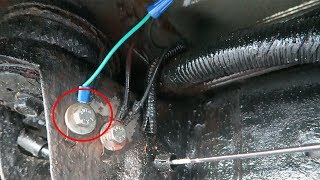
- Faulty Transfer Case Control Module (TCCM) (Less Common) — The dedicated 4WD computer fails due to corrosion or internal electronic faults. A bad ground to the TCCM also triggers this code, especially on older GM models. 🎬 Watch: How to quickly fix the Service 4WD light on GM trucks.
- Faulty Gear Selector Module (Audi/VW) (Less Common) — On Audis with Tiptronic transmissions, P1890 points to an electrical fault in the shifter assembly, often caused by a bad ground connection within the center console.
Symptoms
- Service 4x4 Light is On — The most common symptom for Ford, GM, and Dodge vehicles is the illumination of the 'Service 4WD' or a similar warning light on the dashboard.
- Engine RPM Surges at Highway Speed (Honda) — The key symptom for affected Honda models is a sudden, noticeable jump in engine RPM without an increase in vehicle speed, indicating the CVT belt is slipping.
- 4WD Will Not Engage or Disengage — The vehicle remains in 2WD when 4WD is selected, or it gets stuck in 4WD, causing tire hopping and binding on dry pavement.
- Flashing 'D' (Drive) Indicator Light (Honda) — On many Honda models, a transmission problem causes the 'D' on the gear position indicator to flash.
- Flashing 4WD Indicator Lights — When attempting to shift, the light for the selected 4WD mode blinks and then goes out or returns to the previous setting, indicating a fault.
- Grinding or Clicking Noise from Front Wheels (Ford) — A grinding noise from the front end, especially when letting off the gas, indicates a problem with the IWE vacuum system related to 4WD engagement. 🎬 Watch: An in-depth guide to diagnosing Ford F-150 grinding and IWE issues.
Diagnostic Flowchart
Tap your situation to follow the diagnostic path that matches what you're seeing on this code.
Common Fixes & Costs
- PCM/TCM Software Update (Honda-specific) — Parts: $0, Labor: $150-$250, ~1.2 hr book time (Professional)
- Replace 4WD Selector Switch
— Parts: $30-$80, Labor: $75-$150, ~0.8 hr book time
(DIY)
Chevy Silverado (2003-2007): OEM 19259312, 15164519 (Alt: Dorman 901-072)
Dodge Ram 1500 (2011-2012): OEM 4602973AC (Alt: Dorman 901-473) - Replace Transfer Case Shift Motor
— Parts: $150-$400, Labor: $150-$300, ~1.5 hr book time
(Intermediate)
Ford F-150 (2009-2011): OEM AL3Z7G360A (Alt: Dorman 600-928)
Chevy Silverado (2003-2007): OEM 12474401 (Alt: Dorman 600-901) - Replace CVT Transmission (Honda-specific, if damaged)
— Parts: $4000-$6000, Labor: $1000-$2000, ~9.5 hr book time
(Professional)
Honda Accord (2015-2016, 2.4L): OEM 20031-5C5-A13 (Alt: Remanufactured units from specialty suppliers) - Repair Damaged Wiring or Clean Connectors — Parts: $10-$30, Labor: $150-$400, ~2 hr book time (Intermediate)
- Replace IWE Solenoid and/or Vacuum Lines (Ford)
— Parts: $30-$100, Labor: $100-$200, ~0.8 hr book time
(DIY)
Ford F-150 (Many years): OEM 7L1Z-9H465-B (Alt: Dorman 600-400) - Replace Transfer Case Control Module (TCCM) — Parts: $250-$600, Labor: $100-$200, ~1 hr book time (Professional)
Used vs. New Parts: Buying Guide
When a used part is worth it: For common 4WD parts like a transfer case shift motor or selector switch, a used OEM part from a low-mileage, accident-damaged vehicle is a cost-effective alternative to expensive new OEM parts.
Donor-vehicle mileage cap: roughly under 100000 miles for the part to have meaningful remaining life.
Donor quality checklist:
- Verify the donor vehicle's mileage and ensure it was not scrapped due to a drivetrain-related failure.
- Avoid parts from rust-belt regions, as corrosion is a primary failure mode for external components like the shift motor.
- Match the OEM part number exactly. Superseded or visually similar parts have different internal wiring or clocking.
Decision logic:
- If The part is a simple electrical switch (e.g., 4WD selector) and the cost difference is small → Buy new aftermarket. The risk of a used switch having worn contacts is high.
- If The part is a transfer case shift motor and budget is the top priority → A used OEM part is often more reliable than a new, non-OEM aftermarket part. A remanufactured unit is a middle ground.
- If The vehicle is critical for daily use and long-term reliability is paramount → Buy a new OEM part. It offers the best guarantee of fit, function, and longevity.
Warranty tradeoff: Used parts typically offer a 30-90 day warranty. Aftermarket new parts come with a 1-year to limited lifetime warranty. New OEM parts carry a manufacturer's warranty, often 1-2 years.
Worst-case if a used part fails: $300-$600 if a used or cheap aftermarket shift motor fails prematurely, requiring repeat labor costs plus the price of another part.
What Happens If You Wait — Timeline
- 0-2 weeks (Honda): Initial RPM surge is noticed on the highway. Check Engine Light may not be on yet. No mechanical damage has occurred. (MPG impact: 0-5%% · Added cost: $0 (if fixed with software update now for $200))
- 2 weeks - 2 months (Honda): RPM surges become frequent. The CVT belt slips consistently, setting code P1890. The metal belt scores and destroys the metal pulley surfaces. (MPG impact: 5-15%% · Added cost: $6,000+ (CVT replacement is now required per Honda TSB).)
- 0-1 month (4WD Truck, stuck in 4WD): Vehicle is stuck in 4H or 4L. Driver notices tire hopping and binding during turns on dry pavement. 'Service 4WD' light is on. (MPG impact: 10-25%% · Added cost: $0 (if immediately disengaged or repaired))
- 1-3 months (4WD Truck, stuck in 4WD): Continued driving on pavement causes extreme stress on the drivetrain. The transfer case chain stretches or breaks, and differential gears are damaged. (MPG impact: 15-30%% · Added cost: $2,500-$5,000 (Cost to replace a destroyed transfer case and driveline components).)
- 3+ months (4WD Truck, 4WD inoperative): 4WD simply doesn't work. A faulty connector allows moisture to slowly corrode the shift motor's internal electronics or the TCCM pins. (MPG impact: 0%% · Added cost: $500-$1,200 (A simple switch repair becomes a new TCCM and harness replacement).)
Cost of Not Fixing It
- Immediate (Honda): Ignoring the RPM surge symptom leads to rapid and irreversible damage to the CVT belt and pulleys. The vehicle loses motive power completely. (Added cost: $6,000-$8,000 for a full CVT replacement, versus a $200 software update if caught before the P1890 code sets.)
- Immediate (4WD Truck): If the transfer case is stuck in 4H or 4L, driving on dry, high-traction surfaces causes severe drivetrain binding. This destroys the transfer case, front/rear differentials, and driveshafts. (Added cost: $2,500-$5,000 for transfer case and driveline repairs.)
- 1-6 months (4WD Truck): If the 4WD is simply inoperative (stuck in 2WD), the main risk is further damage to electrical components. Moisture enters a faulty switch or connector, leading to corrosion that destroys the wiring harness or TCCM. (Added cost: $500-$1,200 to replace a TCCM and repair harness connectors, versus a sub-$100 switch replacement initially.)
Diagnosis Steps
- CRITICAL FIRST STEP: Identify the Code's Meaning for Your Vehicle
Determine if your vehicle uses P1890 for a 4WD system or a transmission fault. Search '[Your Make/Model/Year] P1890 meaning' immediately. If you own a 2015-2016 Honda Accord or CR-V, proceed directly to the Honda-specific steps. Misdiagnosing this is a multi-thousand dollar mistake.
Tools: Internet Access (Beginner) - Honda Diagnosis: Check for TSB 16-053 and Scan for Code
For 2015-2016 Accords/CR-Vs, diagnosis follows Honda TSB 16-053. A dealer or shop with Honda i-HDS software must connect to the vehicle. 1) If symptoms (RPM surge) are present BUT DTC P1890 IS NOT SET, update the PCM software. 2) If DTC P1890 IS SET, the CVT is internally damaged and MUST be replaced, followed by a software update.
Tools: Honda i-HDS or J2534 Pass-Thru Tool (Professional) - 4WD Diagnosis: Check Fuses and Relays
For trucks, start with the basics. Consult the owner's manual to locate fuses for the '4WD', 'TCCM', or 'Drivetrain Control'. Visually inspect them and replace any blown fuses with identical amperage replacements.
Tools: Owner's Manual, Fuse Puller (Beginner) - [PRO TIP] 4WD Diagnosis: Test the Mode Selector Switch with a Multimeter
The 4WD selector switch sends different resistance values to the TCCM for each position. Remove the switch and use a multimeter set to Ohms (Ω) to test resistance between the signal and return pins. For many Ford trucks, values are approximately: 2WD: 3.9kΩ, 4H: 1.1kΩ, and 4L: 360Ω. Infinite resistance or no change between positions indicates a bad switch.
Tools: Multimeter, Service Manual, Trim Removal Tools (Advanced) - 4WD Diagnosis: Test the Transfer Case Shift Motor
With a helper, cycle the 4WD switch while safely under the vehicle. You should hear or feel the motor attempt to run. If there is voltage at the motor's connector when the switch is turned but no movement, the motor has failed. If there is no voltage, the problem is upstream (TCCM, wiring, or switch).
Tools: Multimeter, Jack and Jack Stands, Helper (Intermediate) - 4WD Diagnosis: Visually Inspect Wiring and Connectors
Raise the vehicle on jack stands. Follow the wiring harness from the transmission to the transfer case. Look for chafed wires or melted plastic. Unplug the large electrical connector on the transfer case shift motor and check for green or white corrosion. On 2019+ GM trucks, check for a torn grommet on the actuator connector.
Tools: Jack and Jack Stands, Flashlight (Intermediate) - [PRO TIP] 4WD Diagnosis: Monitor TCCM Live Data
A professional scan tool displays live data from the TCCM. Monitor 'Transfer Case Switch Position'. As you turn the 4WD knob, the reading should change instantly. If it doesn't change, the problem is the switch or wiring. If it changes but 4x4 doesn't engage, suspect the TCCM, shift motor, or wiring between them.
Tools: Bi-directional Scan Tool (Advanced) - Ford IWE System Diagnosis: Test for Vacuum
For F-150s with a grinding noise, test the IWE vacuum system. Disconnect the vacuum line leading to the front wheels at the IWE solenoid and attach a handheld vacuum pump. A healthy system pulls 20-24 inHg of vacuum at idle in 2H. If it cannot hold at least 10 inHg, there is a leak causing the hubs to partially engage.
Tools: Handheld Vacuum Pump/Gauge (Advanced) - [PRO TIP] Honda Diagnosis: Analyze Live Data for Slippage
Using a Honda-compatible scan tool, monitor live data PIDs for 'Target Drive Pulley Speed' and 'Actual Drive Pulley Speed'. P1890 triggers when the PCM detects a difference of 500 RPM or more for at least 18 seconds. This quantitative measurement confirms active belt slippage.
Tools: Honda i-HDS or compatible professional scan tool (Professional)
When This Code Triggers (Freeze-Frame Conditions)
- Vehicle Speed: 35-65 mph (Honda) / 0-15 mph (4WD Trucks) (For Honda, the fault sets during steady highway cruising. For trucks, it sets when attempting to shift the 4WD system at low speed or from a stop.)
- Engine RPM: 1800-3000 RPM (The code triggers under steady-state cruise (Honda) or during a brief period of changing engine load as the 4WD system is commanded to engage (Trucks).)
- Engine Load: 25-50% (The fault occurs under moderate, constant load conditions rather than during heavy acceleration or deceleration.)
- Engine Coolant Temp: 180-210°F (82-99°C) (The vehicle is at full operating temperature when the diagnostic monitor runs and detects the fault.)
Related Codes
- P1867 — A Ford-specific code for 'Transfer Case Contact Plate General Circuit Failure.' P1890 is a general return circuit failure, while P1867 specifically faults the position sensor inside the shift motor. If you have P1867, the shift motor assembly is the culprit.
- U0102 — 'Lost Communication With Transfer Case Control Module.' U0102 means the TCCM is completely offline. P1890 means the TCCM is online but reporting a specific fault. Fix U0102 first by checking the TCCM's main power and ground.
- C0327 — Indicates a fault in the 'Encoder Circuit' of the transfer case motor. It is functionally similar to P1867. The diagnostic path focuses on testing the shift motor's internal position sensor and wiring.
- P0746 — Honda-specific: 'Pressure Control Solenoid A Performance or Stuck Off'. This code appears alongside P1890 in Honda CVTs, pointing to a problem with the hydraulic control system and reinforcing the diagnosis of a pressure-related failure.
Climate & Environmental Factors
- Road Salt and High Humidity (Rust Belt/Coastal Regions): Moisture and salt significantly accelerate corrosion of underbody components. This is a primary contributor to P1890 on trucks, causing failure of the transfer case shift motor, its electrical connector, and the TCCM ground wire. GM issued service bulletin 22-NA-187 for 2019+ trucks specifically to address water intrusion into the transfer case actuator connector.
- Extreme Cold: Extreme cold causes older, brittle plastic vacuum lines (like those in the Ford IWE system) to crack, leading to vacuum leaks. It also causes moisture inside electrical connectors or the shift motor housing to freeze and expand, damaging internal components.
How to Talk to a Mechanic About This Code
Say this: "{'truck_4wd': "I have a P1890 code and a 'Service 4WD' light. Please instruct the technician to test the 4WD selector switch and its wiring before quoting a transfer case shift motor.", 'honda_cvt': 'I have a 2015/2016 Honda Accord/CR-V with a slipping transmission and a P1890 code. Please follow Honda TSB 16-053 to determine if the PCM software needs an update or if the transmission requires replacement.'}"
{'truck_4wd': 'This signals you are an informed customer. It directs the shop away from automatically quoting the expensive shift motor and forces a proper electrical diagnosis.', 'honda_cvt': "This prevents a shop from charging you for a transmission you don't need (if the code isn't set) or attempting a useless fluid change when a replacement is mandatory (if the code is set)."}
Avoid saying:
- 'My 4x4 isn't working, can you fix it?' (Too vague, invites a high quote)
- 'My Honda is acting weird on the highway.' (Does not convey the urgency of the P1890 issue)
- 'Just do whatever it takes to fix the light.'
Questions to ask before authorizing the repair:
- For a truck: Did you test the resistance of the selector switch, and what were the readings? Did you confirm voltage is reaching the shift motor?
- For a Honda: Can you show me on the repair order that you confirmed whether DTC P1890 is currently stored in the PCM?
- For a Honda transmission replacement: Is the replacement a new OEM unit or remanufactured? What is the warranty?
- Will you update the PCM software after installing the new transmission, as required by the TSB?
Where to Take It: Dealer vs Independent vs Chain
- Dealer:
Mandatory for the Honda P1890 software update/diagnosis per the TSB. Recommended for in-warranty trucks.
Best for: Honda vehicles (2015-2016) with P1890. They are familiar with TSB 16-053 and have the required i-HDS software., Vehicles still under powertrain warranty., Complex electrical issues on newer trucks requiring manufacturer-specific programming.
Downsides: Highest labor rates, often 1.5x to 2x an independent shop., Less willing to install customer-supplied or aftermarket parts. (Typical cost: +50% vs. baseline) - Independent Shop:
Best fit for most truck 4WD repairs. For Hondas, ensure they have J2534 pass-thru capabilities and follow the TSB precisely.
Best for: Out-of-warranty trucks (Ford, GM, Dodge) with the 4WD version of P1890., Owners wanting flexible parts options (OEM vs. aftermarket).
Downsides: Quality varies widely; vet shops based on reviews and ASE certifications., May lack specialized tools for brand-specific procedures like the Honda PCM update. (Typical cost: +0% vs. baseline) - Chain Shop:
AVOID. This code requires specific diagnostic paths beyond the scope of chain repair shops. The risk of misdiagnosis is extremely high.
Best for: Simple maintenance like oil changes or tires.
Downsides: Technician skill is highly variable., Lack in-depth diagnostic tools for complex electrical or transmission codes., Business model pressures technicians to upsell unnecessary services. (Typical cost: -10% vs. baseline)
When to Walk Away From the Repair
If the estimated repair cost exceeds 40-50% of the car's current private-party market value, seriously consider selling the vehicle as-is.
- Car worth $11000, fix is $7500: Walk away. A $7,500 transmission replacement on a 2015 Honda CR-V worth $11,000 is nearly 70% of the vehicle's value.
- Car worth $8000, fix is $700: Fix it. A $700 repair for a transfer case shift motor on a 2010 F-150 worth $8,000 makes economic sense.
- Car worth $3500, fix is $1800: Borderline / Walk away. Spending over 50% of the vehicle's value on a repair is risky unless the rest of the vehicle is in excellent condition.
What Scan Tool You Need for This Code
Minimum: A scanner that reads manufacturer-specific codes (TCCM and TCM) and displays live data PIDs. A basic $20 code reader is NOT sufficient for P1890.
A basic reader cannot differentiate between a 4WD module fault and a transmission module fault. For trucks, you need live data like 'Transfer Case Switch Position'. For Hondas, you must read codes directly from the transmission controller.
Budget: BlueDriver Pro (~$90) — Connects to a smartphone app and reads enhanced codes from Transmission and 4WD systems. It displays live data, essential for verifying the 4WD selector switch signal.
Mid-range: Innova 5610 / Foxwell NT604 Elite (~$200-350) — These handheld units offer full-system diagnostics and live data graphing. The Innova 5610 adds bidirectional controls, allowing you to command the TCCM to cycle the shift motor.
Professional: Autel MaxiCOM MK808 / XTOOL D7 (~$400-700) — These tablet scanners offer full bidirectional control and access to all manufacturer PIDs. They perform nearly all dealer-level diagnostic commands needed for the 4WD system.
Rent vs buy: For a one-time truck diagnosis, a rental scanner from an auto parts store is sufficient if it reads 4WD codes. Otherwise, buying the BlueDriver is a solid investment. For Hondas, a scanner only confirms the code; the actual software update requires dealer tools.
How to Clear the Code After You Fix It
- Use a compatible OBD-II scan tool to clear the Diagnostic Trouble Code (DTC) from the control module's memory.
- For 4WD systems, cycle the ignition and test the 4WD selector switch to confirm engagement/disengagement.
- Perform a complete drive cycle to allow the vehicle's readiness monitors to run.
Drive cycle (~25 minutes): From a cold start (coolant temp below 122°F), idle for 2-3 minutes. Drive at a steady speed of 55 mph for 3-5 minutes. Perform 15-20 minutes of mixed city/highway driving with several stop-and-go periods. Allow the vehicle to cool down.
Readiness monitors affected: Comprehensive Component Monitor, Catalyst Monitor
Before emissions retest: drive at least 50 miles to fully set monitors.
Watch out for:
- Disconnecting the battery clears the code but resets all readiness monitors to 'Not Ready', guaranteeing an emissions test failure.
- The code returns immediately if the underlying mechanical or electrical fault is not properly repaired.
- Forgetting to clear the code with a scan tool after the repair leaves the Check Engine Light on until cleared.
Will This Fail Emissions / State Inspection?
Yes — this code typically fails an OBD-II emissions inspection.
- California: An illuminated Check Engine Light from code P1890 is an automatic failure of the smog check's OBD-II inspection. All readiness monitors must be 'Ready', requiring 50-100 miles of driving after a repair before re-testing.
- New York: The NYS DMV inspection includes an OBD-II scan. An active P1890 trouble code causes the vehicle to fail the emissions portion of the inspection.
- Texas: In the 17 Texas counties requiring emissions testing, an active P1890 code and illuminated Check Engine Light is an automatic failure. In non-emissions counties, the code itself does not cause a failure.
Most Commonly Affected Vehicles
- Honda Accord & CR-V (2015-2016) — Code means 'CVT Speed Control System' due to a software flaw causing belt slippage. Addressed by TSB 16-053. If code P1890 is set, transmission replacement is required.
- Ford F-150 (2004-2015) — Extremely common issue. Failures involve the shift motor, selector switch, or the related IWE vacuum system. 2004-2008 models are particularly known for electrical issues.
- Ford Explorer (2002-2010) — The transfer case shift motor and its internal position sensor (encoder) are the most frequent failure points.
- Dodge Ram 1500 (2006-2012) — Presents with a 'Service 4WD' light due to a failed transfer case shift motor or a faulty selector switch.
- Chevrolet Silverado 1500 (2003-2007) — Known for 'Service 4WD' message caused by failures in the selector switch, encoder motor, or a corroded TCCM ground wire.
- Honda Fit (2015-2020) — P1890 means 'Problem in Shift Control System' related to the CVT, causing poor acceleration, shuddering, and a flashing 'D' light.
- Audi A6 / Q7 (2005-2014) — On models with Tiptronic transmissions, this code points to a faulty gear selector module or a bad ground wire in the center console shifter assembly.
- BMW 3-Series (E90) / 5-Series (E60) (2005-2013) — P1890 indicates a 'System Voltage Malfunction'. This points to a problem with the battery, alternator, or Intelligent Battery Sensor (IBS) and requires electrical system diagnosis.
Manufacturer-Specific Notes
- Honda: On 2015-2016 Accord and CR-V models, P1890 means 'CVT Speed Control System' and is a critical failure code. Per TSB 16-053, if the code is set, the transmission must be replaced. If only symptoms are present, a software update is the fix.
- General Motors (GM): On 2019+ Silverado and Sierra models, a 'Service 4WD' message is caused by water intrusion at the transfer case actuator connector due to a torn grommet (TSB 22-NA-187). On older GM vehicles, P1890 means 'Throttle Position Signal Input', unrelated to 4WD.
- Audi / Volkswagen: For Audi and VW models with Tiptronic automatic transmissions, P1890 means 'Signal Wire for Tiptronic Error.' This is caused by a faulty gear selector module or a poor ground connection for the shifter assembly in the center console.
- BMW: For many BMW models, P1890 is defined as 'System Voltage (On-board Network) - Malfunction'. This code suggests a problem with the vehicle's electrical system, such as a failing battery or alternator, and is not related to the transmission.
- Toyota: On some Toyota models, P1890 translates to 'Sequential Gearshift Control Circuit Failure', indicating a problem with the manual shifting (sport mode) function of the automatic transmission.
Real Owner Stories
2010 Ford F-150 Lariat with 130K miles - Misdiagnosis Chase
Grinding noise from the front end during light acceleration; code P1890 was present. The noise stopped when switching to 4WD.
What they tried:
- Shop replaced driver's side wheel bearing - no change.
- Shop replaced the IWE actuator - no change.
- Owner replaced the IWE solenoid and check valve - still grinding.
- Another shop diagnosed a vacuum leak and quoted $2,200 for a new hub, actuator, CV axle, and vacuum line.
Outcome: The owner replaced all quoted parts themselves for $450, but the grinding persisted. The root cause was an intermittent vacuum loss under acceleration not caught by static tests.
Lesson: For Ford IWE grinding, test the system for vacuum loss dynamically (while driving or simulating load). A simple vacuum pump test at idle misses leaks caused by tiny cracks in vacuum lines.
2007 Chevy Silverado 1500 with 165K miles - The Simple Fix
'Service 4WD' light came on, and the selector switch lights were dead. 4WD would not engage. Code P1890 was stored.
What they tried:
- Checked the 4WD fuse in the under-hood fuse box; it was fine.
- Inspected the wiring connector at the transfer case; it was clean and dry.
- Decided to test the cheapest part first.
Outcome: Replaced the 4WD selector switch in the dash (Dorman 901-072). The part cost $45 and took 15 minutes to install. This immediately cleared the code and restored full 4WD function.
Lesson: On GM trucks, the selector switch is a highly common failure point. If the switch lights are dead or behave erratically, replace the switch before diagnosing expensive motors or modules.
2015 Honda CR-V with 85K miles - The TSB Lifesaver
Experienced a sudden engine RPM surge from 2,500 to 4,000 RPM while cruising on the highway at 65 mph. The 'D' drive indicator flashed, and the Check Engine Light came on.
What they tried:
- Towed the vehicle to an independent shop.
- The shop scanned the code and found P1890 'CVT Speed Control System'.
Outcome: Aware of Honda TSB 16-053, the owner insisted the shop check the TSB's diagnostic flow. Because P1890 was set, the TSB dictated a full CVT replacement. A Honda dealer confirmed the diagnosis, costing $7,500.
Lesson: For 2015-2016 Honda Accord/CR-V, the presence of symptoms vs. the stored code dictates the repair. Symptoms with NO code require a $200 software update. If P1890 is set, the transmission is destroyed. Do not attempt fluid changes.
How to Prevent This Code From Triggering
- Engage 4WD system periodically (Once a month for a few miles) — Cycles the shift motor and lubricates the internal gears and seals of the transfer case. This prevents seals from drying out and the motor from seizing due to inactivity.
- Change Honda CVT fluid regularly (Every 25,000-30,000 miles) — Fresh fluid maintains the correct friction properties needed for the belt and pulleys, prevents overheating, and extends transmission life.
- Change transfer case fluid (Every 30,000-50,000 miles) — Removes metal shavings and broken-down fluid, ensuring proper lubrication for the gears and chain. Low or contaminated fluid causes internal wear.
- Keep the undercarriage clean (After every off-road trip or exposure to road salt) — Washing away mud and salt prevents corrosion on electrical connectors, ground wires, and the shift motor housing.
Frequently Asked Questions
Can I just ignore P1890 if I never use four-wheel drive?
For a truck, you can temporarily ignore it, but it's risky. A small electrical fault allows moisture into connectors, leading to a much more expensive TCCM or harness repair later. If you own a Honda with this code, ignoring it guarantees complete, catastrophic transmission failure.
Is fixing a P1890 code expensive?
The cost varies dramatically based on the vehicle. For a truck, it ranges from a $30 DIY switch to a $600 shift motor replacement at a shop. For a 2015-2016 Honda, it requires either a $200 software update or an $8,000 transmission replacement.
What's the most common mistake when fixing P1890?
The biggest mistake is replacing parts without a full diagnosis. For trucks, this means replacing the expensive shift motor when the cheap dash switch failed. For Hondas, it means replacing a $7,000 transmission when only a software update was needed.
My truck makes a grinding noise, is it related to P1890?
If you have a 2004-2015 Ford F-150, that grinding is likely from the IWE (Integrated Wheel End) system. A vacuum leak causes the front hubs to partially engage while driving. This related issue is often caused by a bad IWE solenoid or cracked vacuum lines.
Could a weak or old battery cause this code?
Yes, low system voltage causes unpredictable faults in electronic modules, including the TCCM. On BMWs, P1890 specifically points to a system voltage problem. Always ensure your battery is healthy and the alternator charges at 13.5V-14.5V before diagnosing complex electronics.
I replaced the 4x4 shift motor, but the code came back. What's next?
If a new shift motor didn't fix it, the fault lies upstream. Test the selector switch for correct resistance at each position. Then, check for 12V power and a solid ground at the TCCM, and inspect the wiring harness for continuity.
What does 'Service 4WD' mean on my Chevy or GMC?
This message is the primary symptom for P1890 on GM trucks. The most frequent causes are a bad dash selector switch, a failed encoder motor, or a bad ground connection to the TCCM.
Key Takeaways
- P1890 signals either a 4WD circuit fault in North American trucks or a critical CVT transmission failure in 2015-2016 Hondas.
- For 2015-2016 Honda Accord and CR-V owners, an active P1890 code mandates a full $5,000+ transmission replacement per Honda TSB 16-053.
- On Ford, GM, and Dodge trucks, a faulty $50 dash selector switch or a failed transfer case shift motor causes 80% of P1890 codes.
- Never replace a 4WD shift motor without testing the selector switch resistance first, as misdiagnosis wastes an average of $400 in parts and labor.
Helpful Videos

Shop the Parts Behind P1890
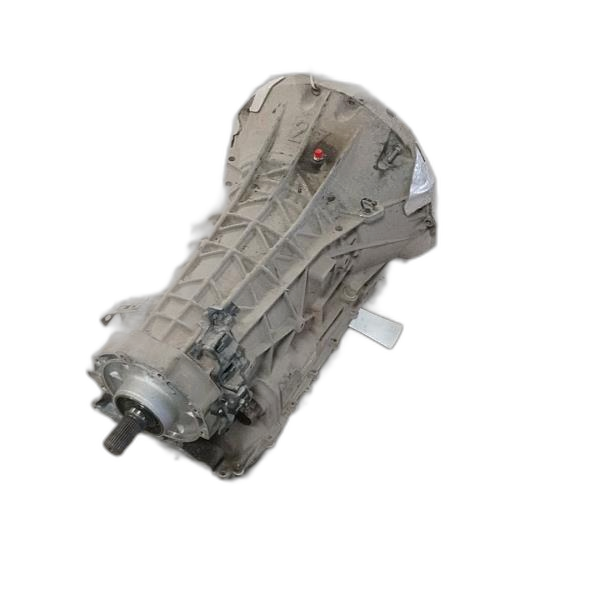
Below are the parts most often responsible for code P1890, ranked by how frequently each one is the actual culprit (per the diagnosis above). Tap any to see what we have for your vehicle.





The information in this article is provided for general reference and educational purposes only. Vehicle specifications, procedures, and part compatibility can vary by production date, trim level, and region. Always consult your vehicle's factory service manual and verify part numbers before purchasing or performing repairs. Safety-critical components such as airbags, seat belts, and braking systems should be installed by a qualified professional.
- 🧭 Diagnostic Flowchart
- 🎬 Helpful Videos
- 🛍️ Shop This Part
- What Does P1890 Mean?
- Can I Drive With P1890?
- Common Causes
- Symptoms
- Common Fixes & Costs
- Used vs. New Parts: Buying Guide
- What Happens If You Wait — Timeline
- Cost of Not Fixing It
- Diagnosis Steps
- When This Code Triggers (Freeze-Frame Conditions)
- Related Codes
- Climate & Environmental Factors
- How to Talk to a Mechanic About This Code
- Where to Take It: Dealer vs Independent vs Chain
- When to Walk Away From the Repair
- What Scan Tool You Need for This Code
- How to Clear the Code After You Fix It
- Will This Fail Emissions / State Inspection?
- Most Commonly Affected Vehicles
- Manufacturer-Specific Notes
- Real Owner Stories
- 2010 Ford F-150 Lariat with 130K miles - Misdiagnosis Chase
- 2007 Chevy Silverado 1500 with 165K miles - The Simple Fix
- 2015 Honda CR-V with 85K miles - The TSB Lifesaver
- How to Prevent This Code From Triggering
- Frequently Asked Questions
- Can I just ignore P1890 if I never use four-wheel drive?
- Is fixing a P1890 code expensive?
- What's the most common mistake when fixing P1890?
- My truck makes a grinding noise, is it related to P1890?
- Could a weak or old battery cause this code?
- I replaced the 4x4 shift motor, but the code came back. What's next?
- What does 'Service 4WD' mean on my Chevy or GMC?
- Key Takeaways
- 🎟️ Get 5% Off