

P1890 on 2016-2021 Honda Civic: CVT Speed Control System Failure Causes and Fixes
Code P1890 on a 2016-2021 Honda Civic indicates a critical internal failure of the CVT transmission, usually belt slippage. If this code is stored, the transmission assembly likely needs to be replaced, a very expensive repair. If only symptoms are present without the code, a software update at a dealership might prevent the failure. This issue is well-documented in Honda Technical Service Bulletins for similar models like the Accord and CR-V.
- P1890 on a 10th Gen Civic is a critical transmission code indicating severe belt slippage.
- Do not drive the vehicle if this code is present; it is unsafe and will lead to complete transmission failure.
- The diagnosis is straightforward for a dealer: if the code is stored, the CVT is replaced. If only symptoms are present, a software update may prevent failure.
- This is not a DIY repair. It requires dealer-level tools and involves either a software flash or a complete transmission replacement.
- Always use Honda Genuine HCF-2 fluid in these transmissions.
What's Unique About the 2016-2021 Honda Civic
The 10th generation Civic uses a CVT that is sensitive to hydraulic pressure, which is managed by the vehicle's software. For several Honda models of this era, an error in the software's 'learning value' could cause an unexpected drop in hydraulic pressure, leading to belt slippage, especially at highway speeds. While a widely known TSB (16-053) specifically addresses this on the 2015-16 Accord and CR-V, the same failure pattern applies to the Civic. Manufacturer Bulletin #ACA08032016902 notes that an incorrect learning value in the PCM may cause a pressure problem in the CVT, leading to a surge in RPM because the belt slips. The diagnostic path is critical: if the code is set, the transmission is likely already damaged beyond repair and requires replacement.
Symptoms You May Notice
- Check Engine Light is on
- Blinking 'D' (Drive) position indicator on the dashboard
- Engine RPM surges without an increase in vehicle speed, especially at highway speeds
- Vehicle hesitates or has poor acceleration
- Erratic or harsh shifting sensations
- Screeching or whining noise from the transmission, especially at highway speeds
- In severe cases, complete loss of ability to move in Drive or Reverse
- Replacing individual speed sensors. This code is triggered by a calculated slip ratio between two pulleys, not a single failed sensor. While a sensor *could* be part of the problem, it's rarely the root cause when P1890 is set.
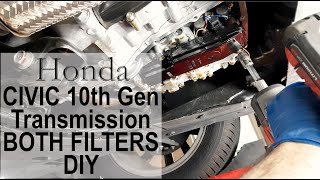
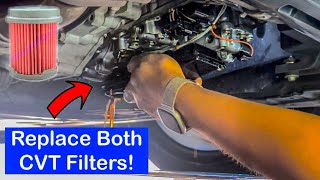
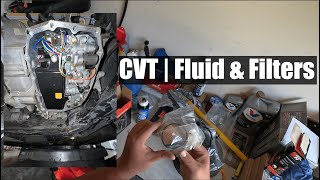
- Changing the CVT fluid. While old or incorrect fluid (non-Honda HCF-2) can cause CVT problems, it will not fix the internal mechanical damage or software logic error that triggers a P1890 code. It is, however, a critical maintenance item. 🎬 Watch: Step-by-step guide for a Honda CVT fluid change
- Assuming a used transmission will fix the problem without a software update. Several owner accounts describe installing a second-hand transmission only to have the same P1890 code return because the root software issue was not addressed.
Most Likely Causes
- Internal CVT Failure (Belt/Pulley Damage) 🔴 High Probability A known software issue can cause a drop in hydraulic pressure, leading to belt slippage that damages the belt and pulley surfaces. As noted in Bulletin #PUD - 2015-16 CR, if the belt slips long enough, the transmission will be damaged and DTC P1890 will set. Once the P1890 code is triggered, this damage is usually considered irreversible by Honda. This is the terminal stage of the problem that starts with the software.
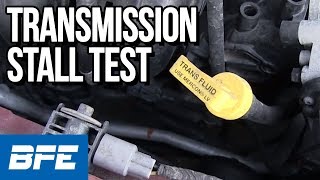
How to confirm: A professional technician will use a Honda i-HDS scan tool to confirm that DTC P1890 is stored. A stall speed test may also be performed; a result over 3,500 RPM condemns the transmission. 🎬 See how a professional performs a CVT stall speed test
Typical fix: Replace the entire CVT assembly and update the powertrain control module (PCM) software to the latest version to prevent a repeat failure. A used or remanufactured transmission must also be followed by a software update.
Est. part cost: $3000-$7500 - Faulty Powertrain Control Module (PCM) Software 🟡 Medium Probability → Shop Engine Control Module (ECM) This is the root cause that often leads to the mechanical failure. Manufacturer Bulletin #A16053 describes a problem in the CVT under certain driving conditions that causes a surge in RPM because the belt slips at highway speeds, eventually setting DTC P1890. If caught very early (symptoms like RPM surging are present but the P1890 code is not yet stored), a software update can correct the hydraulic pressure logic and save the transmission.
How to confirm: Connect a Honda i-HDS scan tool and check for stored DTCs. If no codes are present but symptoms like RPM surging exist, check for available software updates via the Honda service network. TSB 16-053 explicitly outlines this diagnostic path.
Typical fix: Update the PGM-FI/PCM software at a Honda dealership or qualified shop with a J2534 pass-thru device.
Est. part cost: $0-$200 - Failed CVT Control Valve Body ⚪ Low Probability → Shop Transmission Valve Body The valve body controls hydraulic pressure. While less common than a full CVT failure for this code, it can malfunction and cause pressure issues. It's considered a possible cause if stall speed tests are below 2,000 RPM.
How to confirm: This is diagnosed by a professional after performing a stall speed test and ruling out other issues. If the stall speed is abnormally low (under 2,000 RPM), it points to the valve body instead of the main assembly.
Typical fix: Replace the CVT control valve body assembly.
Est. part cost: $700-$1100
Diagnosis Steps
- Connect a Honda-compatible scan tool (like the i-HDS) to the OBD-II port.
- Check for any stored Diagnostic Trouble Codes (DTCs).
- If DTC P1890 is stored: The CVT assembly has suffered internal damage. According to Honda's service procedure for related models (TSB 16-053), the transmission must be replaced.
- If DTC P1890 is NOT stored, but symptoms like RPM surging are present: The issue is likely the PCM software. The vehicle should be taken to a dealer to have the PGM-FI software updated.
- A professional will perform a 'stall speed test' to further diagnose. If the stall RPM is over 3,500, it confirms internal slippage and the need for replacement. If it's between 2,000-3,500 RPM, further diagnosis is needed. If it's below 2,000 RPM, it may indicate a faulty control valve body.
- After any repair (software update or transmission replacement), clear all codes and perform a test drive, driving steadily at 37 mph (60 km/h) for at least one minute to confirm the fix.
Parts You'll Likely Need
- CVT Assembly
(OEM #20031-5CK-A10 (1.5L Turbo), 20031-5DM-000 (2.0L))— This is the required fix if code P1890 is stored, as it indicates irreversible internal belt and pulley damage. Part numbers vary by engine and model year.
Trusted brands: Honda (Genuine OEM), Berkeley Standard (Remanufactured), Moveras (Remanufactured)
OEM price range: $5000-$7500
Aftermarket price range: $3000-$5000 (Remanufactured) - CVT Control Valve Body
(OEM #27000-5X9-014)— In the less common scenario where a stall test indicates a valve body failure rather than a full mechanical failure, this part is replaced. This part number supersedes 27000-5LJ-014, 27000-5LJ-024, and others.
Trusted brands: Honda (Genuine OEM)
OEM price range: $700-$1050
Aftermarket price range: $400-$700 (Remanufactured) - Honda Genuine HCF-2 CVT Fluid
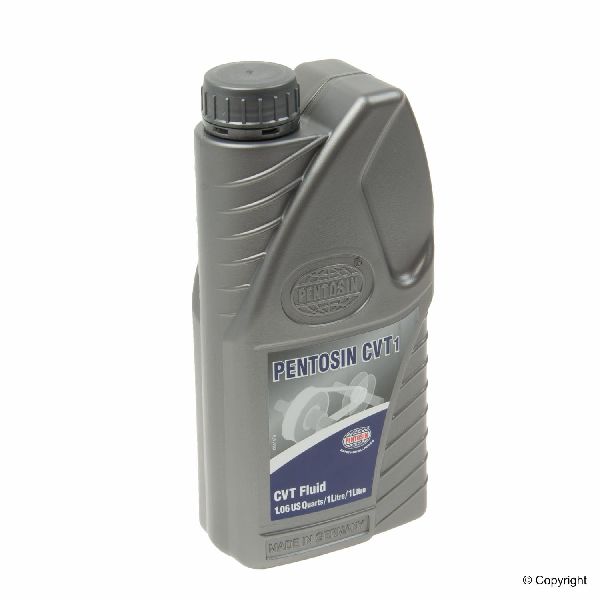
(OEM #08200-HCF2)— This specific fluid is required any time the CVT is serviced or replaced. Using any other fluid can cause damage and will void warranties. A full replacement requires more fluid than a simple drain and fill.
Trusted brands: Honda (Genuine OEM)
OEM price range: $15-$25 per quart
Technical Service Bulletins (TSBs) & Recalls
- TSB 16-053: While officially for the 2015-16 Accord and CR-V, this bulletin details the exact failure pattern (software causing pressure drop, setting P1890) and repair procedure (update software or replace CVT) relevant to the Civic.
- TSB 16-057: A supplemental bulletin for some 2015 CR-Vs that required a special software application to complete the update from TSB 16-053, highlighting the complexity of the software fix.
- Bulletin #A16057: Notes that some vehicles previously updated with vibration software will require a special application software to address the pressure problem that leads to DTC P1890.
- Bulletin #ACA08032016902: Announces a product update to address incorrect CVT operation and DTC P1890 caused by an incorrect learning value in the PCM.
Platform-Specific Known Issues
- A product update and warranty extension for the CVT was issued for many Honda models around this time due to software issues causing premature failure. Owners should check with a Honda dealer using their VIN to see if any coverage applies, even if the vehicle is outside the standard 5-year/60,000-mile powertrain warranty.
- For some related models like the HR-V, Honda extended the CVT warranty to 7 years or 150,000 miles due to the possibility of early belt deterioration. While not officially for the Civic for this specific issue, it shows Honda's acknowledgement of CVT problems and may provide leverage for a goodwill repair request.
Mechanic-Grade Diagnostic Values
- CVT Stall Speed Test — expected: 2,000 - 3,500 RPM. Failure: A stall speed over 3,500 RPM indicates a slipping belt/pulley and condemns the CVT assembly. A stall speed below 2,000 RPM points to a faulty control valve body.
- Engine Speed during steady-state cruise — expected: 2,200 - 3,100 RPM. Failure: When driving at a constant 37 mph (60 km/h) with the throttle position sensor voltage at 2.0V, an engine speed outside this range suggests a transmission problem.
- P1890 Malfunction Threshold — expected: Difference between target and actual drive pulley speed < 500 RPM.. Failure: A difference of 500 RPM or more that persists for at least 18 seconds will trigger DTC P1890.
Hidden / Shadow Codes Worth Checking
- P271E: CVT Primary Drive Belt. While not a direct sub-code for P1890, Honda issued software updates for related models (like the HR-V) that added this DTC to provide more specific monitoring of CVT belt health. This indicates an evolution in Honda's diagnostic strategy for these transmissions. (see via This code becomes available in the PCM after a specific dealer-installed software update has been performed.)
Scan Tool Commands That Help
- Honda i-HDS: PGM-FI Software Update — This is the primary fix if symptoms are present but DTC P1890 is NOT stored. It is also mandatory after replacing the CVT assembly to prevent a repeat failure. It is performed using the J2534 Rewrite application.
- Honda i-HDS: Start Clutch Calibration — This procedure is required whenever the CVT assembly, valve body, or engine is replaced, or if the battery has been disconnected for an extended period. It allows the PCM to relearn the clutch engagement points and pressure feedback.
- Honda i-HDS: Replace TCM/PCM Menu - Read/Write Data — When replacing the PCM, this function is used to transfer critical A/T ID characterization data from the original module to the new one to ensure proper transmission operation.
Wiring & Ground Locations
- G101 — On the engine block, typically on the thermostat housing, specifically on the water pipe side of the housing.. This is the main power and logic ground termination point for the PCM and several critical transmission components, including the transmission range switch and shift control solenoids. A poor connection at G101 can cause erratic behavior of the entire powertrain control system.
- PCM Connectors — The Powertrain Control Module (PCM) is located in the engine bay. Its connectors contain the pins for the CVT drive and driven pulley speed sensors.. Technicians may need to test for continuity or voltage at the PCM connector pins for the speed sensors (Drive Pulley Speed Sensor and Driven Pulley Speed Sensor) to rule out a wiring issue between the sensors and the control module, though this is a rare cause for P1890.
Real Owner Repair Stories
- Reddit user in r/askcarguys (2020 model year, purchased used at 96k miles) — CVT failed on the highway one to two months after purchase.
❌ Tried (didn't work) Not applicable as failure was catastrophic.
✅ What actually fixed it The CVT assembly was replaced under the certified used warranty. However, the owner reports that even after replacement, the car 'revs and acts like it doesn't really want to move' when going up hills, suggesting potential lingering issues or dissatisfaction with normal CVT behavior. - NHTSA ODI #10930309 — An owner reported that after a software update was completed, they still observed a surge in RPM when driving at highway speeds, noting that if the belt slips, the transmission will be damaged and DTC P1890 will set.
OEM Part Supersession History
20031-5CK-A10→Unknown, part is discontinued.— End of life for the part number. A Honda dealer must provide the current replacement part number using the vehicle's VIN.
Heads up: The original part number 20031-5CK-A10 for the 1.5L Turbo engine's CVT assembly is listed as discontinued by Honda parts retailers. A superseding part number must be sourced from a dealer.
Model Year Variations Within This Range
- 2016-2021: The specific software version within the PCM is the most critical variation. As shown by TSBs for related models (like 16-053 and 16-057 for the CR-V), a vehicle's repair history and previously installed updates can affect which new software update is required, sometimes complicating the repair.
Diagnostic Flowchart
Used vs. New Parts: Buying Guide for This Vehicle
When a used part is the smart pick: Due to the very high cost of a new OEM transmission (up to $8,500), a used part from a salvage yard is a financially pragmatic choice for many owners. However, it is an extremely high-risk purchase if not vetted properly.
Donor-vehicle mileage cap: roughly under 75000 miles for the part to have meaningful remaining life.
What to inspect on the donor part:
- MUST have a verifiable and complete service history showing consistent CVT fluid changes with Honda HCF-2 fluid every 25,000-40,000 miles.
- A transmission from a vehicle with patchy or missing service records should be avoided at all costs, regardless of mileage.
- If possible, inspect the fluid from the donor transmission. It should not be dark, burnt, or contain excessive metallic particles.
- Check the VIN of the donor vehicle with a Honda dealer for any applicable product updates or warranty extensions related to the CVT.
OEM-only on this vehicle (don't cheap out):
- CVT Assembly: While a used OEM part is an option, there are no widely trusted 'new' aftermarket CVT assemblies. Stick with Genuine Honda (new, remanufactured) or a verified used OEM unit.
- CVT Fluid: Only Honda Genuine HCF-2 fluid (P/N 08200-HCF2) should ever be used. Using universal or other brands of CVT fluid is a leading cause of judder, overheating, and premature failure.
Brands owners have reported issues with on this vehicle:
- Any non-HCF-2 compatible CVT fluid.
Real Owner Stories
Aggregated from forums and TSBs cited above. Mileages and costs reflect what owners reported in those sources.
2016 Accord
Symptoms: Experienced RPM surging and a screeching noise on the highway, which was followed by the P1890 code appearing.
What fixed it: The owner learned that the transmission needed to be replaced and that a software update was critical to prevent the new unit from failing the same way.
Source hint: driveaccord.net: Thread 'Accord Transmission_Need Help_p 1890' (2020)
2015 Civic
Symptoms: The vehicle experienced a sudden transmission failure and stored the P1890 code.
What fixed it: After an initial misdiagnosis of faulty sensors, the dealership determined the CVT had failed and required replacement.
Cost: $2500-$3500
Source hint: civicforums.com: Thread '2014 civic broken cvt belt' (2018)
Frequently Asked Questions
My 2017 Civic is surging on the highway but the Check Engine Light isn't on. What's the first step?
The dealership diagnosed my 2018 Civic with code P1890 and said the whole CVT needs to be replaced. Is this correct?
Is the CVT in my 2016-2021 Civic covered by a warranty extension for this P1890 issue?
Can I just update the software to fix the P1890 code and avoid replacing the transmission?
Is it a good idea to install a used CVT from a junkyard to save money?
The TSB 16-053 mentioned in the article is for an Accord/CR-V. Why does it apply to my Civic?
Helpful Videos

We Have This Part in Stock

The information in this article is provided for general reference and educational purposes only. Vehicle specifications, procedures, and part compatibility can vary by production date, trim level, and region. Always consult your vehicle's factory service manual and verify part numbers before purchasing or performing repairs. Safety-critical components such as airbags, seat belts, and braking systems should be installed by a qualified professional.
- Honda Civic:
- 🧭 Diagnostic Flowchart
- 🎬 Helpful Videos
- 🛍️ Shop This Part
- What's Unique About the 2016-2021 Honda Civic
- Symptoms You May Notice
- Most Likely Causes
- Diagnosis Steps
- Parts You'll Likely Need
- Technical Service Bulletins (TSBs) & Recalls
- Platform-Specific Known Issues
- Mechanic-Grade Diagnostic Values
- Hidden / Shadow Codes Worth Checking
- Scan Tool Commands That Help
- Wiring & Ground Locations
- Real Owner Repair Stories
- OEM Part Supersession History
- Model Year Variations Within This Range
- Used vs. New Parts: Buying Guide for This Vehicle
- Real Owner Stories
- 2016 Accord
- 2015 Civic
- Frequently Asked Questions
- 🎟️ Get 5% Off