

P1890 on 2015-2016 Honda CR-V: CVT Speed Control System Causes and Fixes
On a 2015-2016 Honda CR-V, code P1890 is almost always caused by outdated Powertrain Control Module (PCM) software. This leads to a CVT belt slip. The fix is a software update from a Honda dealer, which was covered under a product update campaign. If ignored, this can cause catastrophic transmission failure requiring a full replacement at a cost of $5,000-$8,000.
- P1890 on a 2015-2016 CR-V is a very specific problem addressed by a Honda product update campaign.
- The root cause is faulty PCM software, not an initial mechanical failure.
- The number one symptom is a surge in engine RPM at highway speeds without a change in vehicle speed.
- Immediate action is required. Check with a Honda dealer about TSB A16053. A simple software update can prevent a catastrophic, multi-thousand-dollar transmission replacement.
- Do not allow a non-specialist shop to attempt repairs without first investigating the official Honda software fix.
What's Unique About the 2015-2016 Honda CR-V
The fourth-generation CR-V (2015-2016 models) and its platform-mate, the 2015-2016 Accord, were subject to a specific software flaw that was the root cause for this transmission problem. Unlike many transmission codes that point directly to a mechanical failure, P1890 on these specific vehicles is most often a software issue that, if left unaddressed, *causes* a severe mechanical failure. Honda acknowledged this widespread problem and issued multiple Technical Service Bulletins (TSBs) and a product update campaign to reprogram the control module to prevent transmission damage. The campaign was detailed in TSB 16-053.
Diagnostic Flowchart
Tap your situation to follow the diagnostic path that matches what you're seeing on this vehicle.
Symptoms You May Notice
- Sudden surge in engine RPM without an increase in vehicle speed, especially at highway speeds.
- Check Engine Light (Malfunction Indicator Lamp) is on.
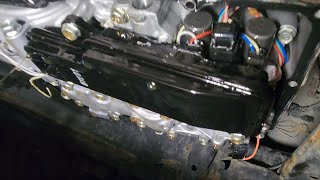
- Vehicle may feel like it's slipping out of gear or shuddering between 1000-2000 RPM. 🎬 Watch this video to help diagnose and solve transmission issues.
- Poor or erratic acceleration.
- A screeching noise from the transmission, similar to a wet fan belt, may be heard during the slipping events.
- Replacing transmission solenoids. While solenoids can cause issues in other transmissions, the overwhelming cause for P1890 on this CR-V is the software or a resulting complete CVT failure, not an individual solenoid.
- Assuming a used transmission will fix the issue without a software update. One owner reported replacing the transmission with a used unit, but the problem persisted because the root software issue was not addressed, and the replacement transmission was also likely faulty.
Most Likely Causes
- Outdated Powertrain Control Module (PCM) Software 🔴 High Probability → Shop Engine Control Module (ECM) A specific software flaw was identified by Honda. An 'incorrect learning value' in the original software causes low hydraulic pressure in the CVT, leading to belt slip.
How to confirm: A Honda dealer can check the vehicle's VIN against their records for product update eligibility (related to TSBs A16053, A16057) and verify the current software version using the i-HDS system. The campaign was announced on August 3, 2016.
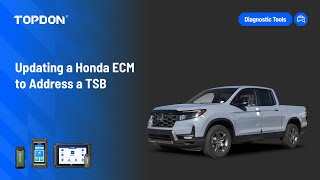
Typical fix: Update the PGM-FI (Programmed Fuel Injection) software. This must be done by a Honda dealer or a qualified shop with a J2534 pass-thru device and Honda software. The update was performed free of charge under the product update campaign.
Est. part cost: $0-$200 - Damaged or Failed CVT Assembly 🟡 Medium Probability This is a direct consequence of the software issue not being addressed. Prolonged belt slippage caused by the software flaw leads to permanent damage to the CVT belt and/or pulleys, necessitating replacement.
How to confirm: If the P1890 code is actively stored in the PCM (not just pending), Honda's official procedure dictates transmission replacement. A technician may also perform a stall test; a result over 3,500 RPM indicates internal failure.
Typical fix: Complete replacement of the CVT assembly, followed by the mandatory PCM software update. Owners report costs from $5,500 (used) to $7,500+ (new) for this repair.
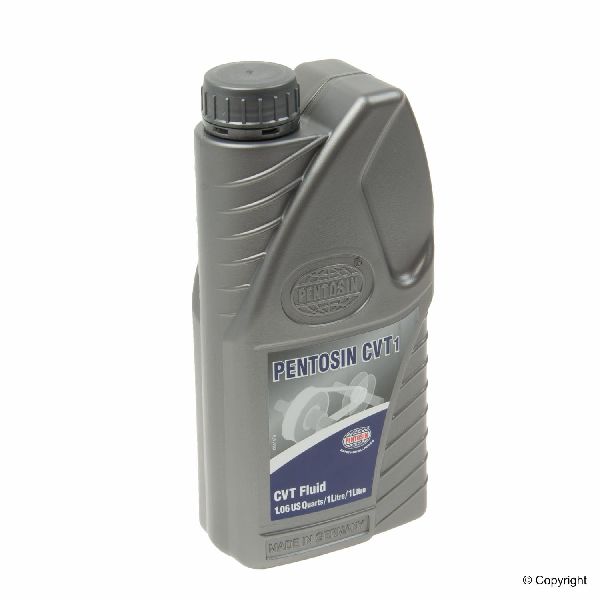
Est. part cost: $4000-$7500 - Low or Degraded CVT Fluid ⚪ Low Probability While not the primary documented cause for this specific TSB-related issue, low or incorrect fluid (anything other than Honda HCF-2) can cause pressure problems and slipping in any CVT. Regular fluid changes every 30,000 miles are recommended by some technicians to prolong CVT life.
How to confirm: Check the CVT fluid level and condition according to the owner's manual procedure. The fluid should be at the correct level and not appear burnt or contain excessive debris.
Typical fix: Perform a CVT fluid drain and fill using only genuine Honda HCF-2 fluid. 🎬 Watch: Step-by-step guide to changing your CVT fluid and filter.
Est. part cost: $75-$150
Diagnosis Steps
- Connect an OBD-II scanner (preferably a Honda i-HDS system) to the vehicle.
- Check for stored Diagnostic Trouble Codes. Specifically, check if P1890 is actively stored or pending.
- Contact a Honda dealer or use an online VIN checker to see if the vehicle is eligible for the product update campaign related to TSBs A16053, A16057, or ACA08032016902.
- If the campaign is open, take the vehicle to a dealer for the corrective action.
- The dealer will connect their i-HDS tool and check for DTCs.
- If DTC P1890 is NOT stored, the dealer will update the PGM-FI software as per TSB 16-053.
- If DTC P1890 IS stored, the dealer will replace the entire CVT assembly and then update the PGM-FI software. This was done free of charge under the campaign.
- If the vehicle is not eligible for the campaign, verify the CVT fluid level and condition. Ensure only Honda HCF-2 fluid is used.
- If the fluid is correct and the code is present, perform a stall test. If the stall speed is over 3,500 RPM, the transmission requires replacement. If it is below 2,000 RPM, the control valve body may be the issue.
- If the vehicle requires transmission replacement, it must be followed by a PCM software update.
Parts You'll Likely Need
- Continuously Variable Transmission (CVT) Assembly
(OEM #20031-5LK-A03 (FWD Model))— This is required if the original software flaw was not corrected in time, causing the internal CVT belt to slip to the point of permanent damage. Honda's procedure mandates replacement if code P1890 is set.
Trusted brands: Honda (OEM), Moveras (Remanufactured), NuTech by ATK (Remanufactured)
OEM price range: $5000-$7500
Aftermarket price range: $3000-$5000 - Honda Genuine HCF-2 CVT Fluid
(OEM #08200-HCF2)— This is the only approved fluid for this transmission. Using any other fluid can cause performance issues and damage. It is required when replacing the transmission or servicing the fluid.
Trusted brands: Honda (OEM)
OEM price range: $15-$25 per quart
Technical Service Bulletins (TSBs) & Recalls
- A16053 / ACA08032016902: Product Update for 2015-16 Accord and CR-V for DTC P1890. Details the cause as an incorrect PCM learning value leading to CVT belt slip and outlines the repair procedure (software update or transmission replacement).
- A16057: Special software application for certain 2015 CR-Vs that had a previous software update for a different issue (vibration at idle).
- PUD - 2015-16 CR: Product update detailing that if the CVT belt slips long enough, the transmission will be damaged and set DTC P1890.
Platform-Specific Known Issues
- A product update campaign was issued by Honda for 2015-16 CR-Vs to address this specific issue.
- The problem is an 'incorrect learning value in the PCM' which causes a pressure drop in the CVT, leading to belt slippage at highway speeds.
- Honda's official repair procedure is conditional: if the code P1890 is not set, only a software update is needed. If the code is set, the transmission must be replaced along with the software update.
- Some 2015 CR-Vs that had a previous software update for an idle vibration issue required a special, different software application (per TSB A16057) to fix the P1890 problem.
- In California, the DMV would not renew a vehicle's registration until this emissions-related recall/product update was completed.
Mechanic-Grade Diagnostic Values
- CVT Stall Speed Test — expected: 2,000-3,500 RPM. Failure: A stall speed over 3,500 RPM indicates a failed transmission requiring replacement. A stall speed below 2,000 RPM may indicate a faulty control valve body.
- Engine Speed at 37 mph (60 km/h) — expected: 2,200-3,100 RPM with throttle position sensor voltage at 2.0V. Failure: If the engine speed is outside this range under these specific conditions, it points towards a transmission replacement being necessary.
- DTC P1890 Malfunction Threshold — expected: Difference between target and actual drive pulley speed should be less than 500 RPM.. Failure: A difference of 500 RPM or more that persists for at least 18 seconds will set the DTC.
Scan Tool Commands That Help
- Honda i-HDS (or compatible J2534 device): PCM/TCM Reset — After replacing the transmission or control valve body, a PCM/TCM reset is required to clear learned values and initialize the new components.
- Honda i-HDS: Start Clutch Calibration — This procedure is required whenever the battery is disconnected, the transmission or engine is replaced, or the valve body is replaced. It allows the PCM to relearn the feedback signal for the start clutch control. It can be done via a specific driving procedure or a stationary procedure with the scan tool.
- Honda i-HDS: PGM-FI Software Update — This is the primary corrective action for vehicles that have not yet set the P1890 code. It corrects the 'incorrect learning value' that causes the issue. It must be performed as part of the repair even if the transmission is replaced.
Wiring & Ground Locations
- Transmission Wiring Harness — Connects to various sensors on the CVT assembly, including pressure switches and speed sensors, and routes back to the PCM.. While the primary cause is software, a thorough diagnosis of other transmission codes that may appear with P1890 would involve checking for continuity and voltage at sensor connectors on this harness.
- PCM Connectors (A, B, etc.) — Located in the engine bay, the Powertrain Control Module (PCM) has multiple large connectors where the transmission harness terminates.. Advanced diagnostics for related sensor codes might require checking for voltage or resistance at specific pin terminals on the PCM connectors to isolate a fault between the sensor, wiring, and the module itself.
OEM Part Supersession History
20031-5LK-A00, 20031-5LK-A02→20031-5LK-A03— Part has been updated or revised by the manufacturer. The original part number 20031-5LK-A03 is noted by some suppliers as discontinued, indicating it was replaced by a newer revision or a remanufactured unit program.
Heads up: When replacing the transmission, it is critical to ensure the mandatory PGM-FI software update is performed, as a new or used transmission with old software will exhibit the same failure.
Model Year Variations Within This Range
- 2015 only: Some 2015 CR-Vs had a previous, unrelated software update to address an idle vibration. These specific vehicles cannot be directly updated with the main P1890 software (from TSB 16-053). They require a special procedure outlined in a separate bulletin, TSB 16-057, to prepare the PCM before the P1890 fix can be applied.
Helpful Videos

We Have This Part in Stock

The information in this article is provided for general reference and educational purposes only. Vehicle specifications, procedures, and part compatibility can vary by production date, trim level, and region. Always consult your vehicle's factory service manual and verify part numbers before purchasing or performing repairs. Safety-critical components such as airbags, seat belts, and braking systems should be installed by a qualified professional.
- Honda CR-V:
- 🧭 Diagnostic Flowchart
- 🎬 Helpful Videos
- 🛍️ Shop This Part
- What's Unique About the 2015-2016 Honda CR-V
- Symptoms You May Notice
- Most Likely Causes
- Diagnosis Steps
- Parts You'll Likely Need
- Technical Service Bulletins (TSBs) & Recalls
- Platform-Specific Known Issues
- Mechanic-Grade Diagnostic Values
- Scan Tool Commands That Help
- Wiring & Ground Locations
- OEM Part Supersession History
- Model Year Variations Within This Range
- 🎟️ Get 5% Off