

OBD-II Code P1894: 4WD System Communication Failure / CVT Pressure Control Malfunction
What P1894 means, why it triggers, and how to fix it
- P1894 indicates a 4WD communication failure on GM vehicles and a critical CVT pressure control malfunction on Hondas.
- Inspect and clean the TCCM ground wire (G113) on the driver's side frame rail to fix the most common cause of P1894 on GM trucks.
- Drive GM vehicles safely in 2WD with an active P1894, but expect the 4WD system to remain completely disabled until repaired.
- Stop driving Honda vehicles with a flashing 'D' light and P1894 immediately to prevent a $3,000 transmission replacement.
- Test Honda CVT solenoid resistance to confirm it falls within the required 3.8-6.8 Ω range before replacing any transmission parts.
What Does P1894 Mean?
P1894 is a manufacturer-specific code with two distinct meanings. On General Motors (GM) vehicles, the Transfer Case Control Module (TCCM) is not communicating correctly with the Engine Control Module (ECM). This communication briefly reduces engine power during 4WD shifts for smooth transitions. On Honda vehicles, it indicates a 'CVT Drive Pulley Pressure Control Valve Malfunction' within the automatic transmission.
Technical definition: For GM, P1894 means 'Engine Torque Delivered Signal Circuit Malfunction'. The ECM did not receive a valid torque reduction request from the TCCM. For Honda, it means 'CVT Drive Pulley Pressure Control Solenoid Circuit Malfunction'. The Transmission Control Module (TCM) sets this code when the measured electrical current through the solenoid's circuit does not match the commanded duty cycle for at least one second, indicating an open or short circuit. It also triggers if TCM input voltage drops below 6V for 2 seconds.
Can I Drive With P1894?
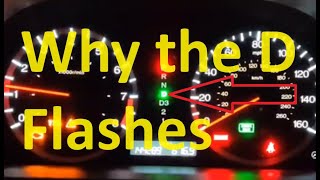
Yes, But With Caution. For GM vehicles, yes, but your 4-wheel drive system is disabled. The vehicle is safe to operate in 2-wheel drive, but you risk being stranded in situations requiring 4WD (e.g., snow, mud). For Honda vehicles, driving is not recommended. The car enters a 'limp mode' with severely reduced power and a flashing 'D' light. 🎬 See why your Honda's D light is flashing and how to fix it. Continued driving causes irreversible internal transmission damage due to incorrect hydraulic pressures, turning a simple solenoid repair into a $3,000-$8,000 transmission replacement.
Common Causes
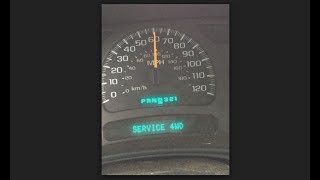
- Faulty or Corroded Transfer Case Control Module (TCCM) Ground Wire (GM) (Very Common) — On GM trucks and SUVs, the main ground wire for the 4WD system (G113) sits on the frame rail exposed to moisture 🎬 Watch: How to fix the common GM service 4x4 light. and road salt. When this connection corrodes, the TCCM loses power and cannot communicate, making this the number one cause of P1894.
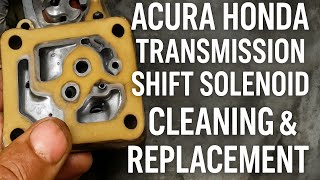
- Failed CVT Drive Pulley Pressure Control Solenoid (Honda) (Common) — The solenoid valve inside the Honda CVT transmission fails electrically when its internal coil develops an open or a short. This prevents it from responding to the PCM's commands to regulate hydraulic pressure.
- Damaged or Corroded Wiring or Connectors (Common) — Wiring harnesses leading to the TCCM (GM) or the CVT valve body (Honda) suffer damage from road debris, heat, or chafing. On Hondas, a short-to-ground in the wiring between the PCM and the solenoid is a frequent culprit.
- Failed Transfer Case Control Module (TCCM) (GM) (Common) — The TCCM fails internally due to age, voltage spikes, or moisture intrusion. When the module's internal logic or drivers fail, it stops communicating with the ECM.
- Failed Transfer Case Encoder Motor (GM) (Less Common) — The encoder motor physically shifts the transfer case and contains a position sensor. If the sensor fails, it cannot report its position to the TCCM, triggering a communication fault.
- Low System Voltage / Bad Battery (Less Common) — A weak battery causes system voltage to drop below the 10.5V threshold required for stable module operation. This triggers unpredictable communication errors between the TCCM, ECM, and TCM.
- Faulty Powertrain Control Module (PCM) (Honda) (Rare) — If the driver circuit within the PCM that controls the pressure solenoid burns out, it cannot send the correct signal, triggering P1894 even if the solenoid and wiring are intact.
- Contaminated or Low Transmission Fluid (Honda) (Rare) — Extremely dirty or low CVT fluid causes the mechanical parts of the pressure control valve to stick. This puts extra strain on the solenoid, leading to its eventual electrical failure.
Symptoms
- Service 4WD Light On (GM) — The vehicle's computer illuminates this warning light on the dashboard to alert you of the 4WD system fault.
- Blinking 'D' (Drive) Indicator Light (Honda) — The 'D' light on the instrument cluster flashes continuously to indicate a critical transmission fault.
- 4WD System is Inoperative (GM) — You cannot shift into or out of any 4WD mode. The system disables itself and remains in 2WD.
- Vehicle in 'Limp Mode' (Honda) — The transmission enters a self-protection mode, limiting engine RPM to 3000 and locking the transmission in a single gear ratio, resulting in poor acceleration.
- 4WD Selector Switch Lights are Off or Flashing (GM) — The indicator lights on the dash-mounted 4WD selector switch flash for a few seconds on startup and then go out, indicating a failed TCCM self-test.
- Harsh or No Shifting (Honda) — The Honda CVT fails to change ratios, feeling stuck in one gear. Engagement into Drive or Reverse is harsh or delayed.
- Clicking Noise from Under Vehicle (GM) — A clicking noise emits from the TCCM or transfer case as the module makes repeated, unsuccessful attempts to communicate or engage the motor.
Diagnostic Flowchart
Tap your situation to follow the diagnostic path that matches what you're seeing on this code.
Common Fixes & Costs
- Repair or Relocate GM Ground Wire (G113) — Parts: $5-$20, Labor: $120-$200, ~1.0 hr book time (DIY)
- Replace Honda CVT Pressure Control Solenoid — Parts: $150-$350, Labor: $300-$600, ~3.5 hr book time (Professional)
- Replace Transfer Case Control Module (TCCM) (GM) — Parts: $200-$500, Labor: $100-$200, ~1.0 hr book time (Intermediate)
- Replace Transfer Case Encoder Motor (GM) — Parts: $150-$400, Labor: $150-$300, ~2.0 hr book time (Intermediate)
- Repair Damaged Wiring Harness — Parts: $10-$50, Labor: $200-$600, ~3.0 hr book time (Professional)
DIY vs Professional
- Repair or Relocate GM Ground Wire (G113) — Beginner: Yes
Tools: Socket set, wire brush, sandpaper, dielectric grease. - Replace Honda CVT Pressure Control Solenoid — Beginner: No
Tools: Socket set, torque wrench, drain pan, new CVT fluid. - Replace Transfer Case Control Module (TCCM) (GM) — Beginner: Yes, with caution.
Tools: Socket set. - Replace Transfer Case Encoder Motor (GM) — Beginner: No
Tools: Socket set, torque wrench, jack stands.
Used vs. New Parts: Buying Guide
When a used part is worth it: For a GM TCCM on an older truck, a used module from a salvage yard is cost-effective if it doesn't require programming. For a Honda CVT solenoid, a used part is too risky due to high labor costs.
Donor-vehicle mileage cap: roughly under 100000 miles for the part to have meaningful remaining life.
Donor quality checklist:
- Verify the exact part number matches your original module.
- Source TCCMs from vehicles in dry climates to minimize corrosion risk.
- Ensure the salvage yard offers a 30-day warranty.
Decision logic:
- If The part is a GM TCCM that does not require programming → A warrantied used part offers significant savings.
- If The part is a GM TCCM that requires dealer programming → Buy a new OEM or high-quality aftermarket part that includes a programming tool.
- If The part is a Honda CVT solenoid → Buy a new OEM solenoid. The labor to access it is too high to risk a used part failing.
Warranty tradeoff: Used parts have a 30-day warranty covering the part only. New aftermarket parts carry a 1-year warranty. Labor is never covered for used parts.
Worst-case if a used part fails: $500 if a used part fails, representing the repeat diagnostic and labor costs.
What Happens If You Wait — Timeline
- Immediate: Code sets, 'Service 4WD' light illuminates. 4WD system disables. Vehicle remains safely drivable in 2WD. (MPG impact: 0%% · Added cost: $0)
- Ongoing: The fault persists without causing further mechanical damage. The only risk is getting stuck in conditions requiring 4WD. (MPG impact: 0%% · Added cost: $150 (average cost of a tow if stuck))
- 0-1 week: Code sets, 'D' light flashes. Transmission enters 'limp mode' with limited RPM. No permanent damage occurs if driving stops immediately. (MPG impact: 15%% · Added cost: $0)
- 1 week - 1 month: Continued driving with incorrect hydraulic pressure causes the CVT belt and pulleys to slip and wear prematurely. Juddering or hesitation begins. (MPG impact: 25%% · Added cost: $100 in wasted fuel, but repair is still limited to the solenoid.)
- 1-3 months: Significant wear destroys the CVT belt and pulleys. The initial electrical problem has created a catastrophic mechanical failure. (MPG impact: 30%% · Added cost: $3,000 - $8,000 for a complete transmission replacement.)
Cost of Not Fixing It
- Immediate (GM): No 4-wheel drive capability. Vehicle is stuck in 2WD, posing a safety issue in snow or mud. (Added cost: $150 for a tow if you get stuck.)
- Immediate (Honda): Vehicle enters 'limp mode' with severely reduced power and a flashing 'D' light, making it unsafe for highway use. (Added cost: $0 if parked immediately.)
- 1-3 Months (Honda): Continued driving with incorrect hydraulic pressures destroys the CVT's pulleys and belt. (Added cost: $3,000 - $8,000 for a complete CVT transmission replacement.)
Diagnosis Steps
- Read the Trouble Codes
Use an OBD-II scanner to confirm P1894. On GM vehicles, scan for chassis codes ('C' codes); C0327 points directly to the encoder motor. On Hondas, this code confirms a CVT solenoid issue.
Tools: OBD-II Scanner (Beginner) - Inspect the TCCM Ground Wire (GM)
On GM trucks, locate ground G113 on the driver's side frame rail below the door. Inspect the black wire and ring terminal for breakage or corrosion. Clean the frame contact point to bare metal and reattach. This fixes 80% of GM P1894 codes.
Tools: Wrenches, Wire Brush, Sandpaper, Dielectric Grease (Intermediate) - Test the CVT Solenoid Circuit Resistance (Honda)
Disconnect the CVT drive pulley pressure control valve connector. Using a multimeter set to Ohms (Ω), measure resistance between the two solenoid terminals. Resistance must be between 3.8 and 6.8 Ω. If infinite (open) or near zero (short), replace the solenoid.
Tools: Multimeter, Service Manual (Advanced) - Check System Voltage
Check battery voltage with the engine off (>12.4V) and running (13.7V-14.7V). Stable voltage above 10.5V is required for modules to operate without throwing communication errors.
Tools: Multimeter (Beginner) - Inspect Wiring and Connectors
Visually inspect the wiring harness going to the transfer case (GM) or CVT valve body (Honda). Look for chafing or melting. Unplug connectors at the control module and component to check for corrosion or backed-out pins.
Tools: Flashlight, Inspection Mirror (Intermediate) - Check for Short to Ground in Solenoid Harness (Honda)
Disconnect the PCM connectors. Check for continuity between the specific PCM connector pins for the solenoid and a chassis ground. There should be NO continuity. Continuity indicates a short to ground in the wiring harness.
Tools: Multimeter, Vehicle-Specific Wiring Diagram (Advanced) - Test the Control Module
If all wiring, grounds, and components test good, the control module (TCCM for GM, PCM for Honda) has failed. Swap with a known-good module, noting that many require VIN-specific programming.
Tools: Service Manual, Advanced Scan Tool (Advanced) - Scope Test the Torque Reduction Request Signal (GM - Pro Tip)
Using an oscilloscope, back-probe the torque reduction signal wire at the ECM connector. Command a 4WD shift. The TCCM should pull the voltage low for a fraction of a second. No signal change confirms an internal TCCM failure.
Tools: Oscilloscope, Wiring Diagram, Probing Kit (Professional) - Verify PCM Command vs. Solenoid Current Draw (Honda - Pro Tip)
Monitor the commanded duty cycle (%) of the CVT solenoid on a scan tool while using a low-amp current clamp on the solenoid wire. If the PCM commands 50% but the clamp reads 0 amps, it confirms an open circuit.
Tools: Advanced Scan Tool, Low-Amp Current Clamp (Professional)
When This Code Triggers (Freeze-Frame Conditions)
- Fault Trigger (GM): Key On, or 4WD Shift Attempt (The code sets during the initial power-on self-test when the TCCM fails to communicate, or when the driver attempts a 4WD shift.)
- Fault Trigger (Honda): Engine Running (The code sets when the TCM commands the pressure control solenoid but detects an open or short in the circuit for at least one second.)
- Engine RPM: 700-3000 RPM (Occurs at idle during startup (GM) or at any RPM while driving when a gear ratio change is commanded (Honda).)
- Control Module Voltage: 11.5V - 14.5V (The code typically sets when system voltage is within the normal operating range, ruling out a dead battery as the primary trigger.)
Related Codes
- C0327 — A GM chassis code for 'Encoder Circuit Malfunction'. If present with P1894, the fault is almost certainly in the transfer case encoder motor or its wiring, not the TCCM.
- P1875 — Specific to the dash-mounted 4WD selector switch circuit on GM vehicles. You can have P1894 without P1875 if the switch works but the TCCM fails to act on the command.
- P1890 — On Hondas, P1890 means 'CVT Speed Control System'. It appears with P1894 and points to a severe hydraulic control issue within the CVT caused by the faulty solenoid.
Climate & Environmental Factors
- Road Salt and Moisture: In regions with snow, road salt severely accelerates corrosion. The exposed location of the GM TCCM ground wire (G113) makes it extremely vulnerable, causing the ground connection to fail and triggering the code.
- High Humidity: Moisture penetrates electrical connectors that are not perfectly sealed, leading to pin corrosion and intermittent signal loss in both GM and Honda harnesses.
How to Talk to a Mechanic About This Code
Say this: "For a GM vehicle: 'I have a P1894 code. Please inspect the TCCM ground wire on the frame rail before quoting other parts.' For a Honda: 'I have a P1894 code with a flashing D light. I need a diagnosis of the CVT pressure control solenoid circuit, including resistance checks, before discussing a transmission replacement.'"
This signals you are an informed consumer. For GM, it directs them to the cheapest fix first. For Honda, it prevents an immediate jump to a costly transmission replacement.
Avoid saying:
- 'My Service 4WD light is on, can you fix it?'
- 'My car is acting weird and the D is blinking.'
- 'Just do whatever it takes to fix it.'
Questions to ask before authorizing the repair:
- Can you show me the corroded ground (GM) or the failed solenoid resistance reading (Honda)?
- What is the specific resistance reading you got from the solenoid? (Should be 3.8-6.8 Ω for Honda)
- If the ground/solenoid is good, what is your next diagnostic step?
- Will you provide a written estimate that breaks down parts and labor?
Where to Take It: Dealer vs Independent vs Chain
- Dealer:
A safe but expensive option. Necessary if a new TCCM requires dealer programming.
Best for: Vehicles still under warranty, When a module replacement requires proprietary VIN programming
Downsides: Labor rates are $150-$250 per hour., Dealers prefer replacing entire modules rather than repairing wiring. (Typical cost: +50% vs. baseline) - Independent Shop:
Best fit. Most competent shops handle the GM ground wire fix easily. For Honda, a transmission specialist correctly diagnoses the electrical fault.
Best for: Out-of-warranty vehicles, Shops that specialize in Honda transmissions or auto electrical diagnostics
Downsides: Expertise varies; vetting through reviews is crucial. (Typical cost: +0% vs. baseline) - Chain Shop:
AVOID for this code. The risk of an expensive misdiagnosis is too high.
Best for: Routine maintenance like oil changes and tires.
Downsides: Technicians lack specialized experience for complex electrical diagnostics., High risk of quoting a new transmission for a simple solenoid fault. (Typical cost: -10% vs. baseline)
When to Walk Away From the Repair
If the estimated repair cost exceeds 50% of the car's private-party value, consider selling the car as-is.
- Car worth $4500, fix is $500: Fix it. A $500 repair for a TCCM on a $4,500 Silverado is well below the threshold.
- Car worth $3500, fix is $4000: Walk away. A $4,000 quote for a transmission replacement on a $3,500 Honda Fit signals you should get a second opinion or sell the car.
What Scan Tool You Need for This Code
Minimum: A scanner that reads manufacturer-specific codes for the Engine, Transmission, and Chassis (C-codes).
A basic $20 reader misses the Honda transmission code entirely or fails to see the related C0327 code on a GM vehicle.
Budget: BlueDriver Pro Scan Tool (~$100) — Reads engine, transmission, and chassis codes. Confirms P1894 on both GM and Honda and sees related codes.
Mid-range: Foxwell NT809 (~$350) — Offers bidirectional control. You can command the Honda pressure control solenoid to see if it responds, or test GM TCCM functions.
Professional: Autel MaxiSys MS906 Pro (~$1200) — Provides dealer-level diagnostics, including module programming necessary if you replace a TCCM that requires VIN coding.
Rent vs buy: For a one-time diagnosis, auto parts stores offer free code reading. If you repair your own vehicles, buying a mid-range scanner is a worthwhile investment.
How to Clear the Code After You Fix It
- Reconnect battery if disconnected during repair.
- Use an OBD-II scan tool to clear all Diagnostic Trouble Codes (DTCs).
- Perform a complete drive cycle to allow vehicle readiness monitors to run.
Drive cycle (~30 minutes): A drive cycle includes a cold start, 5 minutes of idling, 15 minutes of mixed city/highway driving (steady speeds between 40-60 mph), and a cool-down period.
Readiness monitors affected: Comprehensive Component Monitor, Transmission-related monitors
Before emissions retest: drive at least 50 miles to fully set monitors.
Watch out for:
- Clearing the code without fixing the hardware failure causes the code to return immediately on the next self-test.
- Disconnecting the battery resets readiness monitors, causing an automatic emissions test failure until a drive cycle is completed.
- Failing to perform a required relearn procedure after replacing a GM TCCM.
Will This Fail Emissions / State Inspection?
Yes — this code typically fails an OBD-II emissions inspection.
- California: On Hondas, this code illuminates the MIL, causing an automatic smog failure. On GMs, the communication issue prevents readiness monitors from setting, also causing a failure.
- New York: An active P1894 code that illuminates the check engine light results in an automatic failure of the NY emissions inspection.
Most Commonly Affected Vehicles
- Chevrolet Silverado 1500 / 2500HD (1999-2007) — Extremely common due to the placement of the TCCM ground wire (G113) on the driver's side frame rail.
- GMC Sierra 1500 / 2500HD (1999-2007) — Shares the identical G113 ground wire design and high failure rate as the Silverado.
- Chevrolet Tahoe / Suburban (2000-2006) — Shares the same 4WD system, TCCM, and vulnerable grounding scheme as the trucks.
- Honda Fit / Jazz (2007-2013) — P1894 indicates a CVT Drive Pulley Pressure Control Valve Malfunction, causing a blinking 'D' light and limp mode.
- Honda Civic Hybrid (2003-2005) — Uses a CVT that sets P1894 for a pressure control solenoid circuit failure inside the transmission.
Manufacturer-Specific Notes
- General Motors: P1894 exclusively refers to a 4WD communication fault. Diagnosis must immediately focus on inspecting and cleaning the TCCM ground wire (G113) on the frame before replacing parts.
- Honda: P1894 is a critical transmission code, not a 4WD code. It causes a blinking 'D' light and puts the car into 'limp mode', requiring immediate attention to prevent transmission destruction.
- Volkswagen / Audi: On DSG transmissions, P1894 translates to an 'inadmissible signal' from the gear selector lever, usually caused by a faulty microswitch within the shifter assembly.
Real Owner Stories
2004 Chevy Silverado 1500, 145K miles - The Classic Ground Fix
Owner reported the 'Service 4WD' light came on and the selector switch lights flashed on startup then went out. 4WD was completely dead.
What they tried:
- Initially suspected a bad push-button selector switch.
- Researched the common G113 ground wire issue online.
Outcome: Located the G113 ground on the driver's side frame rail. The wire and terminal were heavily corroded. Owner cleaned the frame to bare metal with a wire brush, cleaned the ring terminal, and reattached it with dielectric grease. The 'Service 4WD' light went out and all functions were restored.
Lesson: On a GM truck with P1894, always inspect and clean the TCCM ground wire (G113) on the frame before buying parts. It is the most common cause and a nearly free fix.
2008 Honda Fit, 110K miles - Blinking 'D' Light Misdiagnosis
While driving, the 'D' indicator began flashing, the Check Engine Light illuminated, and the car entered 'limp mode'.
What they tried:
- A general repair shop scanned the code and quoted a full transmission replacement for $4,200.
- Owner sought a second opinion from a Honda specialist.
- The specialist tested the CVT pressure control solenoid's resistance and found an open circuit.
Outcome: The specialist replaced only the faulty CVT pressure control solenoid on the valve body. Total repair cost was $750. The transmission operated perfectly afterward.
Lesson: A P1894 code on a Honda does not automatically mean the transmission is destroyed. Get a diagnosis from a shop experienced with Honda CVTs to avoid a costly misdiagnosis.
2002 GMC Sierra 2500HD, 210K miles - A Deeper Electrical Problem
'Service 4WD' light was on, P1894 code present. The 4WD system was dead.
What they tried:
- Performed the G113 ground wire fix. No change.
- Replaced the 4WD selector switch. No change.
- Replaced the TCCM with a used unit. No change.
- Took the truck to an auto electrical shop.
Outcome: A technician found the wiring harness running along the frame had rubbed through against a crossmember, causing a short in the communication wire between the TCCM and ECM. The wire was repaired, restoring the system.
Lesson: If the common ground fix fails, thoroughly inspect the wiring harness for physical damage before replacing expensive modules.
How to Prevent This Code From Triggering
- Proactively Clean and Protect GM Ground Wire (G113) (Once, then inspect annually) — Cleaning the frame ground and coating it with dielectric grease prevents the most common failure point for P1894 on GM trucks.
- Regular Undercarriage Washes in Winter (Monthly during winter in salt-belt states) — Road salt accelerates corrosion of the frame and electrical grounds. Washing the undercarriage removes the corrosive salt that destroys the G113 ground.
- Adhere to Honda CVT Fluid Change Intervals (Every 30,000 miles, using only Genuine Honda HCF-2 fluid) — Clean fluid is critical for CVT health. Degraded or incorrect fluid fails to lubricate properly, stressing and eventually destroying electrical components like the pressure control solenoid.
- Maintain a Healthy Battery (Test annually after 3 years) — Control modules require stable voltage. A weak battery causes voltage drops during startup, triggering communication errors like P1894.
Frequently Asked Questions
What is the famous 'ground wire fix' for P1894 on a Chevy Silverado?
This refers to repairing the TCCM ground wire (G113) located on the outside of the driver's side frame rail. The fix involves removing the bolt, cleaning the wire's ring terminal and the frame surface to bare metal, and re-securing it tightly. This resolves the communication error in over 80% of cases.
Can I fix P1894 myself?
Yes, DIY-savvy GM owners can often perform the frame ground wire repair with basic tools for under $20. However, Honda owners should leave internal CVT solenoid replacements to professionals. Incorrect transmission repairs easily cause catastrophic mechanical failure.
My 4WD selector switch lights are flashing and then go out. Is the switch bad?
No, this is a classic symptom of the Transfer Case Control Module (TCCM) failing its startup self-test. When the TCCM cannot communicate with the ECM, it logs the fault and shuts the 4WD system down. The flashing lights indicate the failed attempt, not a broken switch.
What does the CVT pressure control solenoid actually do?
The pressure control solenoid is an electronically controlled valve inside a Honda CVT. The Powertrain Control Module (PCM) sends an electrical signal to open or close this valve, regulating the high-pressure fluid that squeezes the pulleys to change gear ratios. Code P1894 means the electrical circuit controlling this valve has failed.
What are the most common misdiagnosis mistakes for P1894?
The biggest mistake on GM vehicles is replacing the expensive TCCM or encoder motor before checking the simple frame ground wire. For Hondas, the most costly error is replacing the entire transmission when only the $250 pressure control solenoid has failed. Always verify the specific manufacturer definition before buying parts.
Can a bad battery cause code P1894?
Yes, all vehicle control modules require stable voltage above 10.5V to communicate properly. A weak battery causes voltage drops during startup, triggering random communication errors between the TCCM and ECM. Always verify your battery and charging system are healthy before diagnosing complex electronic faults.
If I clear the code, will it fix the problem?
No, clearing the code only erases the fault record temporarily. Because P1894 triggers from a hard electrical circuit failure, the control module detects the fault again during its next self-test. The warning light returns immediately upon startup or the next 4WD shift attempt.
Key Takeaways
- P1894 indicates a 4WD communication failure on GM vehicles and a critical CVT pressure control malfunction on Hondas.
- Inspect and clean the TCCM ground wire (G113) on the driver's side frame rail to fix the most common cause of P1894 on GM trucks.
- Drive GM vehicles safely in 2WD with an active P1894, but expect the 4WD system to remain completely disabled until repaired.
- Stop driving Honda vehicles with a flashing 'D' light and P1894 immediately to prevent a $3,000 transmission replacement.
- Test Honda CVT solenoid resistance to confirm it falls within the required 3.8-6.8 Ω range before replacing any transmission parts.
Helpful Videos

Shop the Parts Behind P1894
Below are the parts most often responsible for code P1894, ranked by how frequently each one is the actual culprit (per the diagnosis above). Tap any to see what we have for your vehicle.



The information in this article is provided for general reference and educational purposes only. Vehicle specifications, procedures, and part compatibility can vary by production date, trim level, and region. Always consult your vehicle's factory service manual and verify part numbers before purchasing or performing repairs. Safety-critical components such as airbags, seat belts, and braking systems should be installed by a qualified professional.
- 🧭 Diagnostic Flowchart
- 🎬 Helpful Videos
- 🛍️ Shop This Part
- What Does P1894 Mean?
- Can I Drive With P1894?
- Common Causes
- Symptoms
- Common Fixes & Costs
- DIY vs Professional
- Used vs. New Parts: Buying Guide
- What Happens If You Wait — Timeline
- Cost of Not Fixing It
- Diagnosis Steps
- When This Code Triggers (Freeze-Frame Conditions)
- Related Codes
- Climate & Environmental Factors
- How to Talk to a Mechanic About This Code
- Where to Take It: Dealer vs Independent vs Chain
- When to Walk Away From the Repair
- What Scan Tool You Need for This Code
- How to Clear the Code After You Fix It
- Will This Fail Emissions / State Inspection?
- Most Commonly Affected Vehicles
- Manufacturer-Specific Notes
- Real Owner Stories
- 2004 Chevy Silverado 1500, 145K miles - The Classic Ground Fix
- 2008 Honda Fit, 110K miles - Blinking 'D' Light Misdiagnosis
- 2002 GMC Sierra 2500HD, 210K miles - A Deeper Electrical Problem
- How to Prevent This Code From Triggering
- Frequently Asked Questions
- What is the famous 'ground wire fix' for P1894 on a Chevy Silverado?
- Can I fix P1894 myself?
- My 4WD selector switch lights are flashing and then go out. Is the switch bad?
- What does the CVT pressure control solenoid actually do?
- What are the most common misdiagnosis mistakes for P1894?
- Can a bad battery cause code P1894?
- If I clear the code, will it fix the problem?
- Key Takeaways
- 🎟️ Get 5% Off