

Ultimate P1934 Guide: In-Depth Diagnosis and Repair for Vehicle Speed Signal Fault
The most comprehensive guide to understanding, diagnosing, and fixing OBD-II code P1934, trusted by technicians.
- Code P1934 indicates the Powertrain Control Module (PCM) lost the vehicle speed signal, instantly disabling ABS, traction control, and the speedometer.
- Scan all modules for 'U' communication codes (like U0121 or U0073) before replacing parts; these codes prove the fault is a network or module failure, not a simple wheel speed sensor.
- Test the battery and alternator first, as a resting voltage below 12.5V or AC ripple above 500mV causes the CAN bus to crash and triggers false P1934 codes.
- On 2005-2011 Ford Focus models, a faulty instrument cluster is the primary cause of P1934, requiring a $200-$400 cluster rebuild rather than sensor replacement.
What Does P1934 Mean?
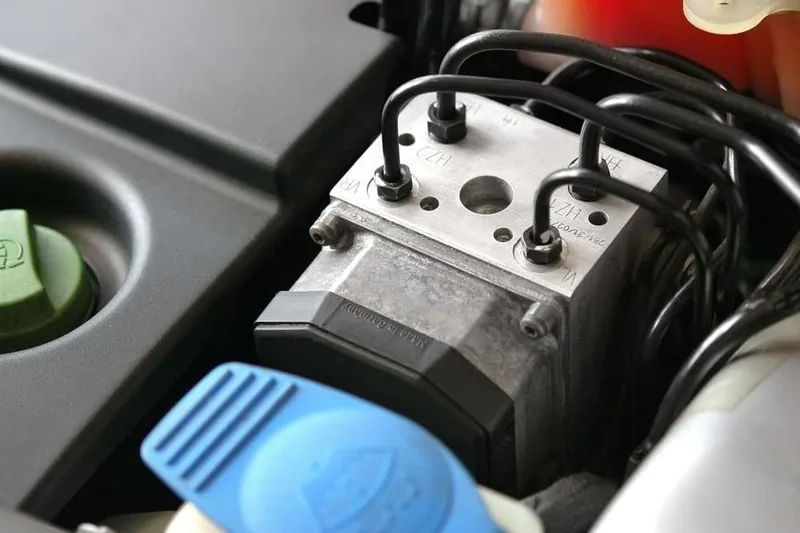
Code P1934 means the Powertrain Control Module (PCM) detects an illogical, erratic, or missing vehicle speed signal. The PCM requires this data to manage engine performance, transmission shift points, and safety systems. The Anti-lock Brake System (ABS) module calculates this signal using wheel speed sensors and broadcasts it over the Controller Area Network (CAN) bus.
Technical definition: The official SAE/OBD-II definition for P1934 is 'Vehicle Speed Signal'. It indicates the Powertrain Control Module (PCM) is receiving an implausible or absent vehicle speed message from another module, typically the Anti-lock Brake System (ABS) module, over the Controller Area Network (CAN) bus. This differs from a P0500 code, which points to a failure of a dedicated vehicle speed sensor (VSS) reporting directly to the PCM.
Can I Drive With P1934?
Yes, But With Caution. You can drive the vehicle, but limit trips to a short drive to a repair shop. Critical safety systems (ABS, Traction/Stability Control) are disabled, significantly increasing the risk of losing control. The transmission often shifts harshly or enters 'limp mode,' and the speedometer fails. Extended driving damages the transmission.
Common Causes

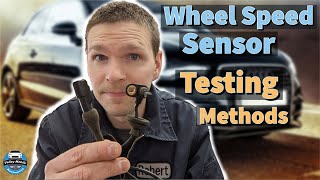
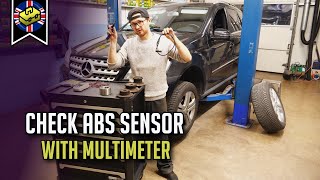
- Faulty Wheel Speed Sensor (Very Common) — One of the four wheel speed sensors failed. Exposed to road debris, moisture, and heat, these sensors are the most common failure point. A bad sensor prevents the ABS module from accurately calculating vehicle speed. 🎬 Watch: A simple guide to testing wheel speed sensors with a multimeter.
- Damaged Wiring or Connectors (Common) — The wiring harness leading to a wheel speed sensor is frayed, broken, shorted, or corroded. This occurs frequently where the harness flexes for steering or suspension travel.
- Low Battery Voltage or Poor Ground Connection (Common) — A weak battery or a corroded main ground causes widespread electrical gremlins, disrupting communication between modules. This triggers P1934, often accompanied by communication codes (U-codes).
- Communication (CAN Bus) Network Failure (Less Common) — A break or short in the CAN bus wiring prevents the PCM from receiving the speed signal from the ABS module. On some Ford models, a failing instrument cluster disrupts the entire network. 🎬 Watch: How to identify a failing Ford Focus instrument cluster.
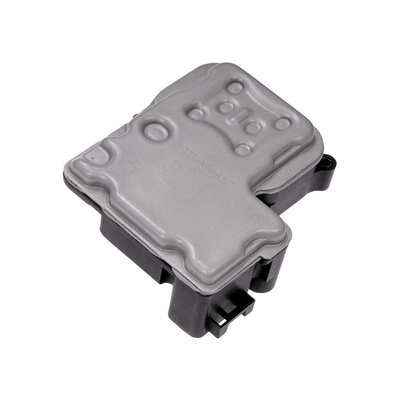
- Failing ABS Control Module (Less Common) — The ABS module itself malfunctions. It receives correct data from the wheel sensors but fails to process it or send the vehicle speed signal to the PCM. This is a known issue on 2004-2013 Volvo and Jaguar models. 🎬 See how to repair a common Volvo ABS module failure.
- Damaged or Debris-Covered ABS Tone Ring (Uncommon) — The toothed or magnetic ring (reluctor ring) that the wheel speed sensor reads is cracked, rusted, or covered in metallic debris, causing an erratic signal.
- Alternator/Charging System Fault (Rare) — A failing alternator produces excessive AC ripple (electrical noise) on the vehicle's electrical system. This interference disrupts CAN bus communications.
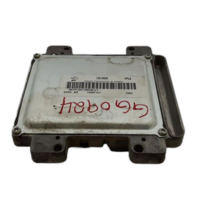
- Failing Powertrain Control Module (PCM) (Rare) — The main engine computer is faulty and cannot interpret the vehicle speed signal. Consider this only after exhaustively testing the ABS module and network.
Symptoms
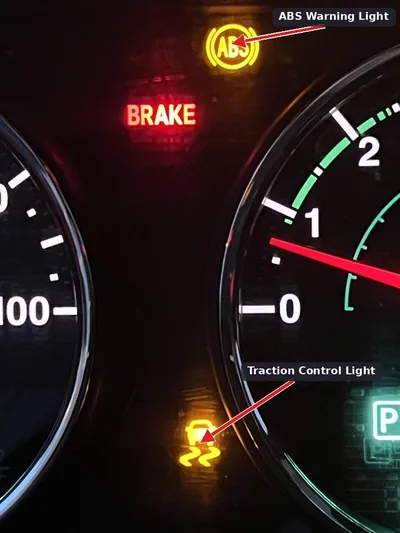
- ABS Light On — The Anti-lock Braking System warning light illuminates because the system disables itself due to unreliable speed data.
- Traction/Stability Control Light On — The warning light for the traction control (TCS) or stability control (ESC) system turns on as these systems disable.
- Speedometer Malfunction — The speedometer reads 0 mph at all times, bounces erratically, or displays an incorrect speed.
- Erratic or Harsh Transmission Shifting — The automatic transmission shifts abruptly, at incorrect times, or enters 'limp mode,' locking into a single gear to prevent damage.
- Check Engine Light On — The check engine light (Malfunction Indicator Lamp) illuminates because the PCM logged a fault.
- Cruise Control Inoperative — The cruise control system refuses to engage because it cannot determine vehicle speed.
- Power Steering Warning Light — On vehicles with speed-sensitive electronic power steering, steering assist feels heavy or inconsistent.
- Odometer Displaying Dashes — The digital odometer displays dashes ('-----') instead of mileage because it lacks distance data.
Diagnostic Flowchart
Tap your situation to follow the diagnostic path that matches what you're seeing on this code.
Common Fixes & Costs
- Replace a Faulty Wheel Speed Sensor — Parts: $30-$150 per sensor, Labor: $120-$250, ~1.5 hr book time (DIY)
- Repair Damaged Wiring or Connector — Parts: $15-$75 for connectors or wire pigtail, Labor: $150-$400, ~2.5 hr book time (Intermediate)
- Replace Wheel Hub Assembly — Parts: $150-$450 (if tone ring is integrated), Labor: $200-$400, ~2 hr book time (Intermediate)
- Replace the ABS Control Module — Parts: $400-$1,200+ (new or remanufactured), Labor: $150-$300 (may require programming), ~2 hr book time (Professional)
- Repair or Replace Instrument Cluster — Parts: $200-$800 (repair service or used unit), Labor: $100-$250, ~1.5 hr book time (Professional)
- Replace the Powertrain Control Module (PCM) — Parts: $800-$1,500+ (new or remanufactured), Labor: $150-$250 (requires programming), ~1.5 hr book time (Professional)
DIY vs Professional
- Replace a Faulty Wheel Speed Sensor — Beginner: True
Tools: Jack and jack stands, socket/wrench set, torque wrench, penetrating oil. - Repair Damaged Wiring or Connector — Beginner: False
Tools: Multimeter, wire strippers, quality crimp tool or soldering iron, heat shrink tubing, wiring diagrams. - Replace Wheel Hub Assembly — Beginner: False
Tools: Large breaker bar, torque wrench, axle nut socket, hub puller (sometimes), basic hand tools. - Replace the ABS Control Module — Beginner: False
Tools: Socket/wrench set, flare nut wrenches (if separating from hydraulic unit), professional-grade scan tool with programming capabilities. - Repair or Replace Instrument Cluster — Beginner: False
Tools: Dashboard trim removal tools, socket set, professional-grade scan tool with PATS (Ford) or immobilizer programming function.
Used vs. New Parts: Buying Guide
When a used part is worth it: For a simple bolt-on wheel speed sensor, a used OEM part from a reputable auto recycler is a cost-effective option for older, high-mileage vehicles. Avoid used sensors from rust-belt vehicles as they are prone to corrosion damage.
Donor-vehicle mileage cap: roughly under 100000 miles for the part to have meaningful remaining life.
Donor quality checklist:
- Match the part number exactly; visual matches are not sufficient.
- Ask for the donor vehicle's mileage and avoid parts from vehicles with over 100,000 miles.
- Ensure the seller offers at least a 90-day warranty.
Decision logic:
- If The price of a new, quality aftermarket sensor (e.g., Bosch, NTK, VDO) is close to the price of a used OEM sensor → buy the new aftermarket part for its warranty and guaranteed condition.
- If The vehicle is less than 10 years old and the budget allows → buy a new OEM or OEM-supplier part to ensure perfect compatibility and longevity.
- If The failure is a complex electronic module like an ABS controller or instrument cluster → favor a professional repair service for your original part over a used part, as this avoids programming issues.
Warranty tradeoff: Used parts typically come with a 30-90 day functional warranty covering the part only. New aftermarket parts carry a 1-year to limited lifetime warranty. New OEM parts have a 1-2 year warranty.
Worst-case if a used part fails: $150-$400 if a used sensor fails after installation, requiring repeat labor costs plus the price of another part.
What Happens If You Wait — Timeline
- 0-1 month: Code P1934 sets. ABS, Traction Control, and Check Engine lights illuminate. Speedometer fails and transmission shifts harshly. Cruise control disables. (MPG impact: 0-5%% · Added cost: $0)
- 1-4 months: Continued harsh shifting puts excessive stress on transmission clutch packs, bands, and the torque converter. The transmission enters 'limp mode' more frequently. (MPG impact: 5-15%% · Added cost: $50-$200 in wasted fuel due to inefficient shifting. Risk of premature wear on transmission fluid and internal components increases.)
- 4-12 months: Significant wear on transmission clutch materials occurs from constant abrupt gear changes. Solenoid valves begin failing from stress. The vehicle is a severe safety hazard due to the lack of ABS. (MPG impact: 10-20%% · Added cost: $500-$3,500+. Cumulative stress leads to internal transmission damage requiring a major repair or rebuild.)
- 12+ months: Catastrophic transmission failure occurs. The vehicle becomes undrivable. The initial electronic fault caused a major mechanical failure. (MPG impact: N/A (Vehicle likely inoperable)% · Added cost: $3,000-$5,000+. A full transmission replacement is necessary.)
Cost of Not Fixing It
- Immediate: Loss of ABS and Traction/Stability Control creates a significant safety risk. The speedometer fails and unexpected, harsh transmission shifting occurs. (Added cost: N/A)
- 1-3 months: Continued harsh shifting causes premature wear on transmission clutches, solenoids, and internal mechanical parts. Fuel economy decreases due to inefficient shift patterns. (Added cost: $500-$3,500+ for transmission repair if damage occurs.)
- 3+ months: Increased risk of accelerated wear on the entire drivetrain. The vehicle remains permanently in 'limp mode,' severely limiting usability and leading to complex mechanical failures. (Added cost: $1000-$5000+)
Diagnosis Steps

- Perform a Full System Scan
Use a professional-grade OBD-II scanner capable of reading codes from all modules (PCM, ABS, TCM, BCM). Note all codes present. The presence of U-codes (U0121, U0073) proves a communication network failure rather than just a sensor.
Tools: Advanced OBD-II Scanner (Beginner) - Monitor Live Wheel Speed Sensor Data
Using your scanner's live data function, monitor the speed readings from all four wheel speed sensors simultaneously while driving slowly. All sensors must read a plausible, matching speed. A sensor that reads zero, is erratic, or lags behind the others is the primary suspect.
Tools: Advanced OBD-II Scanner (Beginner) - Visually Inspect the Suspect Sensor, Wiring, and Tone Ring
Raise and safely support the vehicle. At the wheel identified in Step 2, thoroughly inspect the wheel speed sensor for physical damage. Follow its wiring harness, looking for chafing, breaks, or corroded connectors. Inspect the ABS tone ring for cracks, missing teeth, or heavy rust.
Tools: Flashlight, Jack and Jack Stands (Intermediate) - Check for Power and Ground at the Sensor Connector
For active sensors, use a multimeter to check for reference voltage (usually 5V or 12V) and a good ground at the sensor's electrical connector (with the sensor unplugged and ignition on). If either is missing, the problem is in the wiring harness or the ABS module, not the sensor.
Tools: Multimeter, Vehicle-Specific Wiring Diagram (Intermediate) - [PRO TIP] Test the Wheel Speed Sensor with a Multimeter
For older, passive (2-wire inductive) sensors, disconnect it and measure resistance. It should be within the manufacturer's spec, typically 950-2,200 ohms. For newer, active (2 or 3-wire Hall-effect) sensors, resistance tests are invalid. Instead, back-probe the signal wire with the sensor connected and ignition on. Spin the wheel by hand; you should see a fluctuating DC voltage.
Tools: Multimeter, Jack and Jack Stands, Vehicle-Specific Resistance Specs (Intermediate) - [PRO TIP] Test the CAN Bus Network Integrity
If all sensors test good but communication codes (U-codes) are present, test the CAN bus. With the battery disconnected, measure the resistance between the CAN High and CAN Low pins at the OBD-II port (pins 6 and 14). A healthy network reads approximately 60 ohms. A reading of 120 ohms indicates one terminating resistor is offline.
Tools: Multimeter, Vehicle-Specific Wiring Diagram (Advanced) - [PRO TIP] Test for AC Ripple from Alternator
A failing diode in the alternator induces AC voltage (ripple) onto the DC electrical system, disrupting module communication. Set a multimeter to AC Volts. With the engine running and electrical loads on, touch the probes to the battery terminals. Readings above 500mV (0.5V) indicate a faulty alternator causing the communication codes.
Tools: Multimeter with AC Voltage function (Advanced) - [PRO TIP] Analyze the CAN Bus Signal with an Oscilloscope
For intermittent issues, connect an oscilloscope to the CAN High and CAN Low lines. A healthy signal shows two clean, mirror-image square waves. Look for distorted waveforms, noise, or signals shorted to power or ground, indicating a wiring or module fault.
Tools: Automotive Oscilloscope (Advanced) - Isolate the Faulty Module
If the CAN bus wiring tests bad, begin unplugging modules one by one from the network (ABS, PCM, Instrument Cluster) while monitoring resistance or the oscilloscope pattern. When the faulty module is disconnected, the network reading returns to normal (60 ohms).
Tools: Multimeter or Oscilloscope, Wiring Diagram (Advanced)
When This Code Triggers (Freeze-Frame Conditions)
- Vehicle Speed: 0 or Erratic (The code sets when the PCM expects a valid speed signal (e.g., above 10 mph based on RPM and gear) but receives 0 mph or a signal that doesn't match other sensors.)
- Engine RPM: 1500-3000 RPM (Occurs during steady driving or acceleration when the discrepancy between engine speed and reported vehicle speed becomes illogical.)
- Engine Load: 20-70% (The fault triggers under various load conditions, as the PCM constantly cross-references vehicle speed with engine output to control the transmission.)
- Gear Position: Any Forward Gear (The fault logs when the transmission is in gear and the PCM detects vehicle movement via RPM but receives no corresponding vehicle speed signal from the ABS module.)
Related Codes
- P0500 — Generic code for 'Vehicle Speed Sensor A Malfunction.' If P1934 is present, the problem is in the ABS system or the CAN network. If only P0500 is present, the fault is a dedicated speed sensor on the transmission reporting directly to the PCM.
- U0121 — 'Lost Communication With ABS Control Module.' If present with P1934, the PCM isn't receiving any data from the ABS module. This points directly to a failed ABS module, a blown fuse, or a break in the CAN bus wiring.
- U0073 — 'Control Module Communication Bus A Off.' This indicates a general network failure affecting multiple modules. If seen with P1934, the problem is a short in the main CAN bus wiring or a failure in a critical gateway module (like the instrument cluster).
- C-codes for specific wheel sensors (e.g., C0031, C0034, C0037, C0040) — These are ABS-specific codes for individual wheel speed sensors. If you have one of these codes alongside P1934, it is a near-certain diagnosis that the corresponding wheel speed sensor or its circuit is the root cause.
Climate & Environmental Factors
- Humidity and Road Salt: High humidity and road salt in winter climates dramatically accelerate corrosion. This attacks wiring harness connectors, ground points, and ABS tone rings, leading to signal interruption and sensor failure.
- Cold Weather: Extreme cold makes aged plastic insulation on wiring harnesses brittle, causing it to crack and expose wires when flexed. It also causes microscopic cracks in old solder joints within control modules to separate, leading to intermittent open circuits.
- Heat: High ambient and under-hood temperatures accelerate the breakdown of wiring insulation and contribute to the premature electronic failure of control modules located in the hot engine bay.
How to Talk to a Mechanic About This Code
Say this: "I have a P1934 code and related ABS/Traction control lights on. I'd like to schedule a diagnostic. Please start by reading all codes from the ABS and powertrain modules and checking the live data from all four wheel speed sensors before recommending any part replacements."
This signals that you understand the code relates to the ABS and communication systems, not just a generic engine fault. It directs the technician to perform a proper data-driven diagnosis rather than immediately guessing a wheel speed sensor is bad.
Avoid saying:
- 'My check engine light is on, can you look at it?'
- 'My speedometer isn't working, just fix it.'
- 'I think I need a new speed sensor, can you replace it?'
Questions to ask before authorizing the repair:
- What were the results of the live data test from the wheel speed sensors? Did one read differently from the others?
- Were there any other codes present, specifically any 'U' communication codes like U0121 or U0073?
- If you are recommending an ABS module or instrument cluster, can you confirm you checked for power, ground, and communication network integrity at the module's connector?
- What is the warranty on this specific repair, covering both parts and labor?
Where to Take It: Dealer vs Independent vs Chain
- Dealer:
Best for: Vehicles still under warranty, Complex manufacturer-specific quirks (e.g., Ford instrument cluster, Volvo ABS modules), Repairs that require module programming with proprietary software.
Downsides: Highest labor rates and part costs., Defaults to replacing an entire expensive assembly when a smaller component or repair is feasible. (Typical cost: +50% vs. baseline) - Independent Shop:
Best overall fit. A good independent shop handles the vast majority of P1934 causes, from sensors and wiring to sending out modules for repair, offering the best balance of expertise and value.
Best for: Out-of-warranty vehicles where the cause is a common failure like a wheel speed sensor or wiring., Shops that specialize in diagnostics or your specific vehicle brand., Cost-effective diagnosis and repair for most P1934 scenarios.
Downsides: Quality and diagnostic capability vary widely; vet shops carefully., Lacks expensive, dealer-level tools for programming brand new modules. (Typical cost: +0% vs. baseline) - Chain Shop:
Use with caution. Acceptable for a straightforward wheel speed sensor swap if you are certain that is the problem. AVOID for initial diagnosis, intermittent faults, or if any communication (U-codes) are present.
Best for: Simple, clear-cut wheel speed sensor replacements *after* a proper diagnosis has already been made.
Downsides: Not equipped for complex electrical or network diagnostics (CAN bus, module failures)., High pressure to upsell and technicians lack the specialized diagnostic experience for this code. (Typical cost: -10% vs. baseline)
When to Walk Away From the Repair
If the estimated repair cost exceeds 40-50% of the car's private-party value (check Kelley Blue Book or Edmunds), seriously consider selling or trading in the vehicle instead of repairing it.
- Car worth $5000, fix is $2200: Borderline. The repair is approaching 50% of the car's value. Get a second opinion before authorizing, especially if the fix involves an expensive module.
- Car worth $15000, fix is $1200: Fix it. The repair cost is well below the threshold and restores critical safety systems.
- Car worth $3000, fix is $1800: Walk away. The repair cost is over 50% of the vehicle's value. It is not a sound financial decision.
What Scan Tool You Need for This Code
Minimum: A scanner that reads and clears codes from the ABS/SRS systems and displays live data from the wheel speed sensors.
A basic $20-$50 code reader only checks for engine (powertrain) codes. It cannot see the ABS module, which is the source of the P1934 fault. You will be unable to see specific ABS codes or view the live wheel speed sensor data needed to find the problem.
Budget: BlueDriver Pro Scan Tool (~$100) — Connects to your smartphone via Bluetooth. It reads and clears ABS codes, and crucially, it graphs live data from all four wheel speed sensors so you can see which one is failing.
Mid-range: Foxwell NT630 Plus / Innova 5610 (~$150-350) — These are powerful handheld units. They offer full ABS/SRS diagnostics, live data graphing, and add bidirectional controls. This allows you to perform an 'automated bleed' of the ABS pump after replacing a module.
Professional: Autel MaxiCOM MK808S / XTOOL D7 (~$450-600) — These professional-grade tablets provide full system diagnostics, advanced bidirectional controls, and service functions. They are essential for complex jobs like programming a new ABS module to the vehicle's VIN.
How to Clear the Code After You Fix It
- Use an OBD-II scan tool to clear the P1934 and any related ABS or communication (U-codes) faults.
- Turn the ignition off for at least 30 seconds.
- Perform the specific drive cycle to allow the onboard readiness monitors to run and confirm the fix.
Drive cycle (~20 minutes): A general drive cycle includes: a cold start (sit for 8+ hours), idle for 2-3 minutes, 10 minutes of mixed city/suburban driving (including several stops), followed by 5-10 minutes of steady highway speed driving (55-60 mph).
Readiness monitors affected: Comprehensive Component Monitor (CCM), Catalyst Monitor, Evaporative System (EVAP) Monitor
Before emissions retest: drive at least 50 miles to fully set monitors.
Watch out for:
- Clearing the code with a scanner without performing a drive cycle leaves readiness monitors incomplete, causing an emissions test failure.
- If you only fix the P1934 code but not the underlying ABS codes (like a specific wheel sensor fault), the code returns immediately once the vehicle moves.
- Disconnecting the battery clears the code but erases all readiness monitors and learned memory for the engine and transmission, causing poor performance until it relearns.
Will This Fail Emissions / State Inspection?
Yes — this code typically fails an OBD-II emissions inspection.
- California: An illuminated Check Engine Light results in an automatic failure of the smog check. After repairs, a complete drive cycle must be performed to set all readiness monitors before a re-test.
- New York: A vehicle with an active Check Engine Light automatically fails the emissions portion of the annual state inspection. Clearing the code right before the test results in a failure due to incomplete readiness monitors.
- Texas: In the 17 counties requiring emissions testing, an illuminated Malfunction Indicator Lamp (MIL) is an automatic test failure. The vehicle must be repaired and pass a re-inspection to renew registration.
Most Commonly Affected Vehicles
- Ford Focus (2005-2014) — Extremely common. On 2005-2011 models, this is frequently caused by failing solder joints within the instrument cluster, which acts as a CAN gateway. On 2012-2014 models, wiring harness issues are more prevalent.
- Ford Fiesta (2010-2018) — Often reported with this code, typically caused by a faulty front wheel speed sensor or a damaged wiring harness in the engine bay.
- Ford Focus ST (2013-2018) — Owners report this code appearing intermittently, sometimes triggered by engaging/disengaging sport mode. It often points to an underlying wiring or sensor issue.
- Volvo S40, V50, XC60, Various Models (2004-2013) — On many Volvo models, P1934 specifically points to an internal malfunction of the Brake Control Module (BCM)/ABS module, which fails to send a valid speed signal.
- BMW Various Models (E90, F30, etc.) (2005-2018) — While BMW uses different codes, the symptoms are identical. A faulty rear wheel speed sensor is a very common cause of speedometer failure and a cascade of ABS/DSC warning lights.
- Jaguar S-Type, XF (2004-2010) — Often appears with U0121 (Lost Communication With ABS Module), pointing to a failed ABS module, a bad ground, or a CAN bus wiring fault. This causes a cascade of errors including 'Cannot apply parkbrake'.
- Land Rover LR3, Range Rover Sport (2005-2009) — Triggered by a failing alternator producing excessive AC ripple voltage, which disrupts module communication. It is also caused by a faulty wheel speed sensor or ABS module.
- Subaru Outback, Legacy (2005-2019) — The cause is a wheel speed sensor or, on older models, a dedicated Vehicle Speed Sensor (VSS) on the transmission. Diagnosis requires checking which sensor type the vehicle uses for the primary speed signal.
- Mazda Mazda3, Mazda5, Mazda6 (Diesel) (2004-2013) — On Mazda diesel vehicles, P1934 is defined as 'Fuel Additive Pump Control Circuit High' related to the diesel particulate filter (DPF). It has nothing to do with vehicle speed. Verify the code definition for your specific engine.
Manufacturer-Specific Notes
- Ford: On 2005-2011 Focus models, the instrument cluster is a common failure point. Bad solder joints inside the cluster, which acts as a CAN bus gateway, disrupt communication between the ABS module and the PCM, triggering P1934 along with U-codes. Tapping on the dashboard causes symptoms to appear or disappear.
- Volvo: For many 2004-2013 models, the P1934 code is a strong indicator of an internal electronic failure within the Brake Control Module (BCM). The module receives correct signals from the wheel sensors but fails to transmit a valid vehicle speed signal over the CAN bus. A professional rebuild of the original module is the standard repair.
- Jaguar / Land Rover: On models from the mid-2000s, this code appears as part of a 'Christmas tree' effect on the dash, with multiple unrelated warning lights. This cascade of faults frequently points to a complete communication breakdown caused by a faulty ABS module, water ingress affecting wiring, or a failing battery/alternator.
- Mazda: On many diesel Mazda vehicles, P1934 is defined as 'Fuel Additive Pump Control Circuit High' and has nothing to do with vehicle speed. It relates to the system that injects an additive for the diesel particulate filter (DPF). Always verify the code definition with a manufacturer-specific resource.
Real Owner Stories
2006 Ford Focus at 115K miles with intermittent non-starting and multiple codes
Owner experienced intermittent non-starting issues and power loss while driving. A scanner revealed P1934, U0073 (Control Module Communication Bus Off), and P0500.
Outcome: The root cause was failing solder joints inside the instrument cluster. Tapping on the dashboard made the symptoms appear or disappear. The fix was sending the original instrument cluster to a specialist for a $250 repair, avoiding expensive key reprogramming.
Lesson: On a 2005-2011 Ford Focus, if P1934 appears with U-codes (especially U0073), the instrument cluster is the primary suspect, not the wheel speed sensors.
2008 Volvo V50 with intermittent ABS/ESC lights and P1934
An intermittent 'ABS/ESC Service Required' message appeared on the dash. A scan showed code P1934 and an intermittent signal code from the rear right wheel sensor.
Outcome: The owner removed the ABS module and discovered cracked solder joints on several main connector pins. Re-soldering the cracked joints permanently cleared the code. Professional repair services for this cost around $550.
Lesson: On 2004-2013 Volvo models, P1934 strongly indicates an internal ABS module failure, even if a specific wheel sensor code is present. Do not automatically replace the sensor.
2007 Jaguar S-Type with a 'Christmas Tree' dash and multiple faults
After sitting for a few weeks, the car started but displayed a cascade of errors: 'Cannot apply parkbrake,' 'ABS fault,' 'Restricted Performance,' and the odometer showed dashes. Codes included P1934 and U0121.
Outcome: The owner fully charged the battery overnight. Upon reconnection, all fault messages and codes disappeared. The low voltage caused the CAN bus network to become unstable.
Lesson: With complex electrical systems in Jaguar/Land Rover vehicles, a weak battery causes a storm of communication faults. Always verify the battery is fully charged (12.6V+) before diagnosing expensive module failures.
How to Prevent This Code From Triggering
- Periodically Clean Wheel Speed Sensors and Tone Rings (During every brake service or tire rotation) — Brake dust and metallic debris accumulate on the magnetic sensor head or tone ring, weakening the signal and causing erratic readings. Cleaning these components with brake cleaner restores signal strength.
- Apply Dielectric Grease to Connectors (When replacing a sensor or if a connector is unplugged.) — Dielectric grease protects electrical contacts from moisture and oxygen. Applying a small amount to the inside of a wheel speed sensor connector seal prevents corrosion, a primary cause of signal loss.
- Inspect and Secure Wiring Harnesses (Annually or during under-vehicle service.) — Wiring for wheel speed sensors is exposed to stress from suspension movement. Ensuring harnesses are properly secured prevents chafing, shorts, and breaks.
- Maintain a Healthy Battery and Clean Terminals (Ongoing) — Modern control modules are highly sensitive to voltage. A weak battery causes low voltage conditions that lead to random communication errors between modules, triggering P1934.
Frequently Asked Questions
Is it safe to drive with code P1934?
Driving is not recommended. Your ABS and traction control will not function, severely compromising your ability to control the car in an emergency stop. The speedometer fails, and harsh transmission shifting damages internal components.
I replaced a wheel speed sensor, but the P1934 code came back. What's next?
The fault is likely not the sensor itself. Meticulously inspect the wiring and connector for damage, check the ABS tone ring for cracks, and verify the sensor receives power from the ABS module. If communication codes are present, the issue is the ABS module or the CAN network.
Why are my ABS, traction control, and power steering lights on with a P1934 code?
All of these systems rely on accurate vehicle speed data to function correctly. Because P1934 indicates this data is missing or corrupt, the vehicle's main computer disables these systems as a safety precaution. It cannot trust the information it receives.
Can a bad battery cause a P1934 code?
Yes, a weak battery providing low voltage causes unpredictable behavior in electronic modules and disrupts CAN bus communication. This triggers P1934 and a variety of 'U' (communication) codes. Always ensure your battery rests above 12.5V before diving into complex diagnostics.
What is the difference between P1934 and P0500?
P0500 is a generic code for a dedicated vehicle speed sensor fault, often found on older transmissions. P1934 is a manufacturer-specific code indicating the speed signal, calculated by the ABS module, is lost on the communication network. Seeing P1934 proves the problem is related to the ABS system or the network bus.
How much does it cost to fix code P1934?
Costs range from $130 for a DIY wheel speed sensor replacement to over $1,500 for a new ABS module. A professional wiring repair typically costs $150 to $400. Rebuilding a faulty instrument cluster or ABS module averages $500 to $800 including labor.
Can I fix a P1934 myself?
A DIYer with basic experience can replace a wheel speed sensor or visually inspect wiring. However, diagnosing CAN bus network faults or replacing modules requires advanced tools like a professional scanner or oscilloscope. Stop DIY and consult a shop if you see multiple 'U' codes alongside P1934.
What does it mean when P1934 is a 'pending' code?
A 'pending' code means the PCM detected the fault, but it has not occurred consistently enough to illuminate the Check Engine Light. This points to a developing problem, like a loose connection or a wiring harness starting to chafe. Address it before it becomes a hard fault.
Key Takeaways
- Code P1934 indicates the Powertrain Control Module (PCM) lost the vehicle speed signal, instantly disabling ABS, traction control, and the speedometer.
- Scan all modules for 'U' communication codes (like U0121 or U0073) before replacing parts; these codes prove the fault is a network or module failure, not a simple wheel speed sensor.
- Test the battery and alternator first, as a resting voltage below 12.5V or AC ripple above 500mV causes the CAN bus to crash and triggers false P1934 codes.
- On 2005-2011 Ford Focus models, a faulty instrument cluster is the primary cause of P1934, requiring a $200-$400 cluster rebuild rather than sensor replacement.
Helpful Videos


Shop the Parts Behind P1934
Below are the parts most often responsible for code P1934, ranked by how frequently each one is the actual culprit (per the diagnosis above). Tap any to see what we have for your vehicle.




The information in this article is provided for general reference and educational purposes only. Vehicle specifications, procedures, and part compatibility can vary by production date, trim level, and region. Always consult your vehicle's factory service manual and verify part numbers before purchasing or performing repairs. Safety-critical components such as airbags, seat belts, and braking systems should be installed by a qualified professional.
- 🧭 Diagnostic Flowchart
- 🎬 Helpful Videos
- 🛍️ Shop This Part
- What Does P1934 Mean?
- Can I Drive With P1934?
- Common Causes
- Symptoms
- Common Fixes & Costs
- DIY vs Professional
- Used vs. New Parts: Buying Guide
- What Happens If You Wait — Timeline
- Cost of Not Fixing It
- Diagnosis Steps
- When This Code Triggers (Freeze-Frame Conditions)
- Related Codes
- Climate & Environmental Factors
- How to Talk to a Mechanic About This Code
- Where to Take It: Dealer vs Independent vs Chain
- When to Walk Away From the Repair
- What Scan Tool You Need for This Code
- How to Clear the Code After You Fix It
- Will This Fail Emissions / State Inspection?
- Most Commonly Affected Vehicles
- Manufacturer-Specific Notes
- Real Owner Stories
- 2006 Ford Focus at 115K miles with intermittent non-starting and multiple codes
- 2008 Volvo V50 with intermittent ABS/ESC lights and P1934
- 2007 Jaguar S-Type with a 'Christmas Tree' dash and multiple faults
- How to Prevent This Code From Triggering
- Frequently Asked Questions
- Is it safe to drive with code P1934?
- I replaced a wheel speed sensor, but the P1934 code came back. What's next?
- Why are my ABS, traction control, and power steering lights on with a P1934 code?
- Can a bad battery cause a P1934 code?
- What is the difference between P1934 and P0500?
- How much does it cost to fix code P1934?
- Can I fix a P1934 myself?
- What does it mean when P1934 is a 'pending' code?
- Key Takeaways
- 🎟️ Get 5% Off